
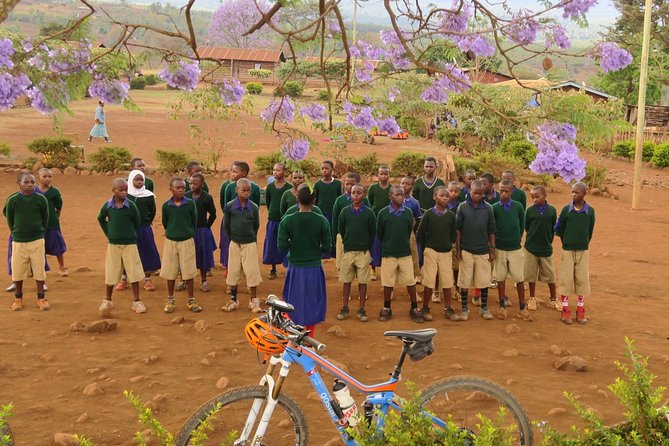
Reviewed · MOSHI & KILIMANJARO TOURS
Kilimanjaro 360
The best part of Kilimanjaro 360 is that you see the mountain from every side without joining the standard summit crowd. Over six cycling days, you move from coffee and banana farms to dry Maasai plains, wildlife country, forest edges, crater-lake shores, and Chagga villages.
I like the mix of scenery and culture, especially the contrast between Olpopongi Maasai country and the Chagga foothills. I also like the practical support: a mechanic, cook, support vehicle, camping equipment, meals, snacks, water, and airport transfers are all built into the price.
The main caution is that this is a real endurance trip, not a gentle sightseeing ride. Some days run to 73 kilometers, with steep climbs and mixed road surfaces. Also, one serious customer complaint involved a canceled booking and money not being returned, so get all payment and refund terms in writing before you pay.
Kilimanjaro 360 at a glance
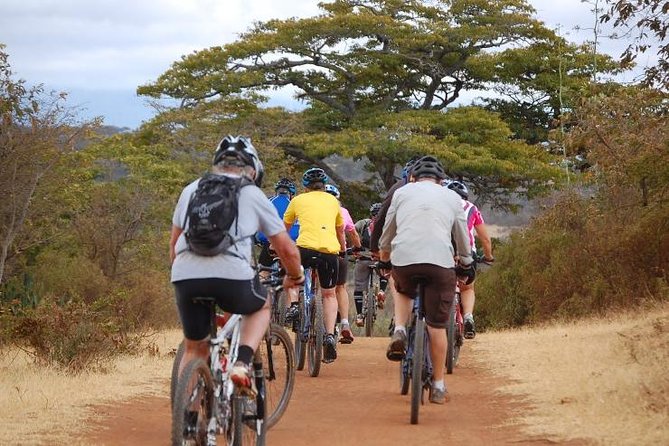
- Six days on the bike: Ride a broad circuit around Kilimanjaro over six active days, with an arrival day and departure day added to make an eight-day trip.
- Maasai and Chagga cultures: Visit Olpopongi Maasai Cultural Village and Museum, then pass through Chagga coffee and banana country near Marangu.
- Wildlife country without a safari vehicle: Cycle through Enduimet Wildlife Management Area, an important route for elephants moving between Tanzania and Kenya.
- A night beside Lake Chala: Camp near the turquoise crater lake on the Kenya-Tanzania border after a mostly downhill riding day.
- Full logistical support: The package includes mountain bikes, helmets, a mechanic, guides, cook, driver, support vehicle, camping gear, food, water, and entry fees.
- A small-group format: The maximum group size is 16, and the scheduled start time is 7:00 a.m.
What the $2,690 price really covers
At $2,690 per person, Kilimanjaro 360 is not cheap. But this is not simply a guided bike rental. You are paying for an eight-day package with airport pickup and return, hotel nights before and after the ride, six days of cycling support, camping, meals, water, snacks, park and village fees, and a crew that includes a bike mechanic and cook.
That matters in northern Tanzania. A self-guided ride around Kilimanjaro would require you to arrange bikes, route finding, food, luggage transport, camping equipment, local permissions, and emergency support. Here, the support vehicle can carry supplies and help if a mechanical problem or a difficult stretch becomes too much.
The package includes mountain bikes and helmets, plus two to three liters of water per day, fruit, snacks, and a first-aid kit. It also includes tents, sleeping bags, mattresses, tables, and chairs. You should still budget for your Tanzanian visa, laundry, travel insurance, medical insurance, and crew tips.
The accommodation mix is part of the appeal. You begin and end at Keys Hotel in Moshi, spend nights in camping settings near Snowcap Cottages and Lake Chala, and stay at Simba Farm along the way. The standard is not a luxury lodge circuit, but it gives you a good range of rural Tanzania without making you carry your own camp.
A few more Moshi & Kilimanjaro days to compare
- Kilimanjaro climb by Lemosho Route (7-day)
★ 5.0 · 651 reviews - Safari Serengeti And Ngorongoro
★ 5.0 · 288 reviews - Kilimanjaro climb, Machame Route (7-day)
★ 5.0 · 262 reviews
Day 1: Moshi, bike fitting, and a gentle test ride
Your airport pickup starts the trip in a useful way. You are transferred from Kilimanjaro International Airport to Moshi, the town at the foot of the mountain, then meet the guide for a briefing and bike fitting.
Do not treat the fitting as a formality. A comfortable saddle position, properly adjusted handlebars, and a bike suited to your height can make a major difference after several long days. If you arrive in the morning or afternoon, you can take a short test ride through a nearby sugar plantation and surrounding villages.
That test ride lets you check the brakes, gears, saddle, and helmet before the serious mileage begins. You spend the night at Keys Hotel, with dinner included. The listed start time for the tour is 7:00 a.m., so use this first evening to organize clothing, water, sunscreen, and anything you want in easy reach during the ride.
Day 2: From fertile farms to Maasai country
The first full ride crosses from the greener southern side of Kilimanjaro toward the drier west. The opening section runs through coffee and banana plantations, where the mountain’s lower slopes support intensive farming.
As you continue west, the scenery changes to open grassland and acacia woodland. The contrast is one of the strongest features of the whole circuit. Instead of seeing Kilimanjaro from one narrow route, you watch the soil, vegetation, farms, and settlement patterns change around the mountain.
The ride ends at Olpopongi Maasai Cultural Village and Museum. This is the clearest cultural stop on the trip, giving you a chance to learn about Maasai life in the area rather than simply passing through a village on a bike.
The western plains are associated with Maasai communities and wildlife. You can expect a more open, dry setting than the coffee-growing south, with broad views back toward Kilimanjaro. This day is about six hours of riding, and the package includes admission and dinner.
Day 3: Enduimet Wildlife Management Area and Simba Farm
Day three takes you into Enduimet Wildlife Management Area, an important conservation area near the Kenyan border and close to Amboseli National Park. The area is known as a movement route for wildlife, including African elephants.
This is not presented as a conventional game drive, so keep your expectations sensible. You are cycling through wildlife country, not entering a guaranteed animal-viewing experience. The reward is the chance to see how people, livestock, agriculture, and wildlife share the same broad region.
The ride begins on open plains marked by acacia trees. Near the lower slopes of Kilimanjaro, the surroundings become greener and more cultivated. The area is mainly Maasai, though Chagga, Meru, and Pare communities also live in the region.
You finish at Simba Farm, set above broad wheat and barley fields. That setting gives the day a different feel from the previous one. After dry plains and acacia, you see large-scale farming and cooler-looking upland country. The riding time is about six hours, with admission included.
A change of scene while you are in Moshi & Kilimanjaro:
- Kilimanjaro Climbing Lemosho Route 8 Days.
★ 5.0 · 186 reviews - Climbing Kilimanjaro – Machame Route
★ 5.0 · 170 reviews - Climbing Kilimanjaro through 7 days Machame Route
★ 5.0 · 151 reviews - Kilimanjaro climb, Lemosho Route (8-day)
★ 5.0 · 148 reviews
Day 4: Toward Rongai and the Kenyan border
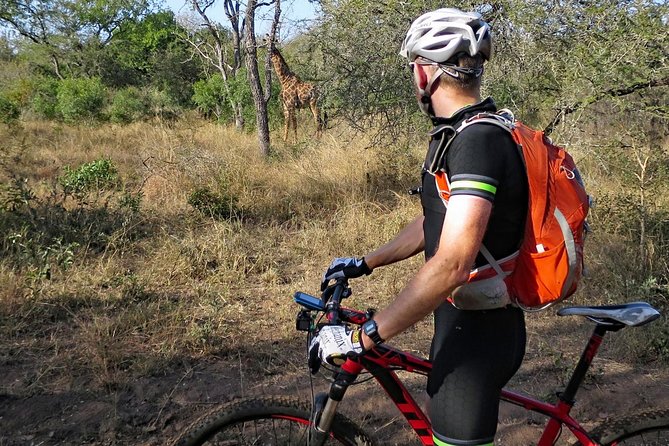
The fourth day heads northeast toward Nalemoru village near Kenya. Nalemoru marks the starting point of the Rongai route up Kilimanjaro, so this section brings you close to one of the mountain’s major climbing approaches without asking you to climb it.
The route passes open farmland and several towns as it rises toward the foothills and Rongai forest. The views behind you open toward the western plains, while the road gradually leads into greener highland country.
This is one of the longer stages, at 73 kilometers, with a mixture of tarmac and dirt road. That distance is a useful warning. Even if the route feels manageable early in the day, the accumulated effort from the first three rides will count.
The night is described as camping at Snowcap Cottages on the edge of Rongai forest. On a clear day, you may see Kilimanjaro’s two major peaks, Kibo and Mawenzi. The package includes breakfast, lunch, and dinner.
Day 5: A downhill run to Lake Chala
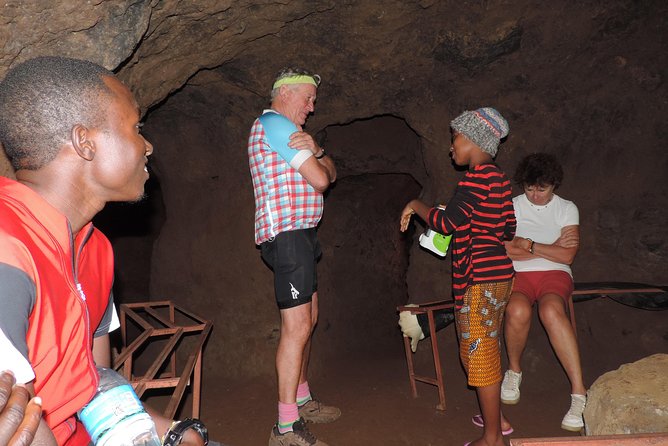
After the climbing of day four, day five gives you a mostly downhill ride toward Lake Chala. The lake sits on the border between Tanzania and Kenya in a volcanic caldera and is fed by underground springs from Kilimanjaro.
The water is described as blue and green, with plants, trees, wildlife, and steep volcanic surroundings. You camp at Lake Challa Campsite beside the lake, making this one of the more memorable nights of the circuit.
The ride covers 65 kilometers on tarmac and dirt roads. Downhill does not mean effortless. You still need to manage braking, loose surfaces, heat, and the physical effect of five consecutive days in the saddle. Still, the direction of travel should make this a welcome change after the previous day’s climb.
Lake Chala is a strong reason to choose the full circuit instead of a simple out-and-back ride from Moshi. You get a different side of Kilimanjaro and a quiet natural setting that feels far removed from town. Breakfast, lunch, dinner, camping equipment, and entry fees are included.
Day 6: Marangu, coffee farms, and Kinukamori Waterfalls
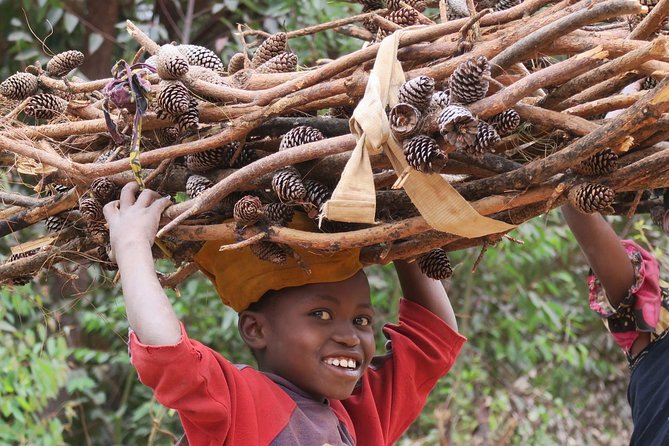
Day six is shorter but still challenging because it climbs toward Marangu village in the foothills. This is Chagga country, marked by coffee and banana plantations and a more settled, cultivated feel.
The cultural experience here is informal and immediate. You pass through the village by bike, seeing daily life at close range, rather than visiting only a staged attraction. The tour description notes local greetings as you ride through, so expect a social route with people close to the road.
The detour to Kinukamori Waterfalls breaks up the cycling. You can walk down to the base, cool off near the water, and hear from a local Chagga guide about local traditions, customs, and the legend connected with the falls.
This stop is valuable because it adds interpretation to the scenery. Without a local guide, a waterfall can be just a photo stop. Here, the visit connects the place to the people who live around it.
The day ends at camp in Marangu. It is worth keeping some energy in reserve for the walk to and from the falls. The riding is shorter than on days four and five, but the climb and the accumulated fatigue make it no easy rest day.
Day 7: The final 37 kilometers into Moshi
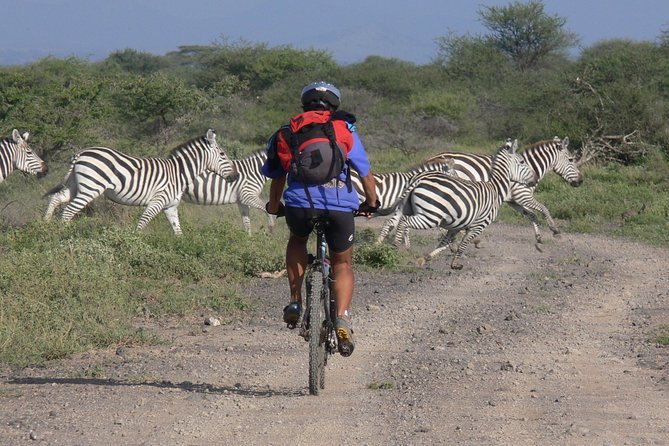
The final cycling day begins among villages and plantations on Kilimanjaro’s slopes. The first half includes several steep ascents and descents, so do not assume the short distance makes it simple.
The second half becomes a gradual downhill ride toward Moshi. You use back roads through suburbs and the outskirts of town, finishing at Keys Hotel after six days on the bike.
At 37 kilometers and roughly four hours, this is a reasonable final stage. You still get a proper last workout, but you have time to reach town, wash up, and enjoy the closing dinner. The celebration includes sparkling wine, which is a fitting finish after a week of dusty roads, climbs, camping, and long views of Kilimanjaro.
Past bookings have specifically praised guides named George, Baraka, Richard, and Yasin. You should not assume every departure has the same staff, but these names are useful when discussing your booking and asking who will lead your group.
Day 8: A quiet Moshi departure day
The final day is left open before your flight. Depending on your departure time, you can explore Moshi and shop for souvenirs before the airport transfer.
This flexible day is practical. International flights and airport transfers do not always line up neatly with a packed activity schedule, and an extra morning reduces the pressure to rush from camp to the airport.
Breakfast is included. The package also includes transfer to the airport, but you should confirm the timing with the operator once your flight details are known.
Roads, fitness, bikes, and group size
You need a moderate level of physical fitness. The cycling days are generally about six hours, with distances of 73 kilometers and 65 kilometers on two of the longer stages. There are also steep ascents and descents, dirt roads, tarmac, heat, and several consecutive days of effort.
The route is not described as a technical mountain-bike course. The challenge comes mainly from distance, hills, changing surfaces, and endurance. If you regularly ride long distances, you will have a better base for this trip. If your cycling experience is limited to short recreational rides, ask about a private or adjusted version before booking.
That flexibility is worth discussing. A past booking was adapted to suit a private group’s ability, and another family with children aged 15 and 18 completed the tour. Those examples do not guarantee a custom route, but they suggest that the operator may be able to adjust the plan for a suitable private group.
The maximum group size is 16. That is small enough for a personal feel, though the actual group could be smaller or larger depending on departure. Ask about group size, bike frame options, and replacement equipment before arrival. Several bookings specifically valued the range of bike sizes and the helpful rental service.
Food, camping, and support on the road
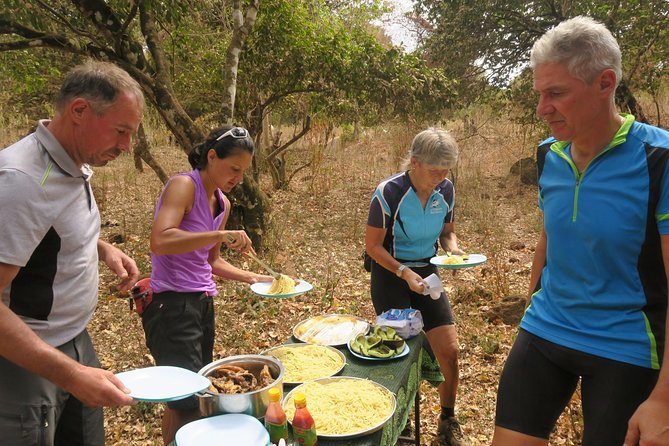
Food is a major part of the package. Breakfast, lunch, and dinner are listed throughout the trip, along with fruit, snacks, and two to three liters of water per day. A cook travels with the group, so you are not left to find every meal after a tiring ride.
Camping equipment includes tents, sleeping bags, mattresses, tables, and chairs. That is a meaningful saving in effort. You can focus on riding instead of carrying a tent, finding a campsite, or arranging dinner.
Camping still means camping. Conditions can vary, and you should bring personal items that make nights outdoors easier. The supplied information confirms the equipment, but not the exact tent arrangement, shower facilities, or electrical access at every site. Ask those questions if comfort is important to you.
A support vehicle, driver, guide team, mechanic, and first-aid kit give the trip a useful safety net. They do not remove the need to ride within your limits, drink regularly, and tell the guide early if you are struggling.
The strongest reasons to book, and the reasons to pause
I would choose this trip for the variety of Tanzania in one loop. You see farms, dry plains, wildlife habitat, forest, villages, a crater lake, and the busy edges of Moshi without spending every day in a vehicle.
The second strong reason is the combination of support and independence. You still pedal your own route, but you are not carrying all your food and camping equipment or solving every mechanical problem alone. Past bookings give particular credit to the bikes, route planning, food, campsites, and staff support.
The drawbacks are just as clear. Six cycling days require commitment, and the schedule does not leave much room for a rest day once the circuit begins. The scenery changes, but the physical work remains constant.
The package also costs more than a basic bike rental. It makes its best financial sense if you value the crew, meals, camping setup, entries, transport, and route planning. If you already own suitable equipment and have strong navigation and repair skills, a shorter self-guided rental could cost less, but it would not offer the same level of support.
Finally, pay attention to the operator’s booking terms. The stated policy allows a full refund when you cancel at least 24 hours before the start time. A late cancellation is not refundable, and poor weather may lead to a new date or full refund. Because one published account alleges a major refund problem after cancellation, request written confirmation of the payment schedule, refund rules, and what happens if the operator cancels.
Who Kilimanjaro 360 suits best
This trip is a good match for you if you want an active way to see Kilimanjaro and prefer local roads to a standard sightseeing circuit. It suits cyclists who can handle long days, mixed surfaces, basic camping, and a steady routine of riding, eating, resting, and riding again.
It also works well for a private family group or friends who want a major shared challenge. The previous family booking included teenagers aged 15 and 18, while another private group adjusted the route to fit its ability.
You should pause if you want luxury lodging every night, short rides, or a guaranteed wildlife viewing experience. You should also think carefully if you dislike dirt roads, steep climbs, or changing accommodation.
Should you book Kilimanjaro 360?
Book it if you want to earn your views of Kilimanjaro by bicycle and value a well-supported route through very different parts of northern Tanzania. The Maasai cultural stop, Enduimet wildlife country, Rongai forest, Lake Chala, and Chagga villages give the trip more depth than a simple loop on a map.
Before paying, confirm the guide team, bike size, group size, camping facilities, refund terms, and how the route can be adjusted for your fitness. If those details suit you, the $2,690 price can be fair for an all-in active trip with transport, meals, equipment, and crew support. If not, look for a shorter or private version rather than forcing yourself through six demanding days.
FAQ
How long is Kilimanjaro 360?
The experience lasts approximately eight days, including arrival and departure days. Six of those days are spent cycling around Kilimanjaro.
Where does the tour start?
The tour begins with pickup at Kilimanjaro International Airport, followed by transfer to Moshi. The scheduled start time is 7:00 a.m.
Is airport pickup included?
Yes. Pickup from Kilimanjaro International Airport and transfer back to the airport are included.
What accommodation is provided?
You stay at Keys Hotel in Moshi before and after the cycling section. The package also includes camping, including nights at Snowcap Cottages and Lake Challa Campsite, as well as accommodation connected with Simba Farm.
Are mountain bikes and helmets included?
Yes. Mountain bikes and helmets are included, along with camping equipment and support services.
What road surfaces should I expect?
The route uses both tarmac and dirt roads. The cycling includes steep ascents and descents, so you need a moderate level of physical fitness.
How far is the longest listed cycling day?
The longest listed distance is 73 kilometers on day four. Day five covers 65 kilometers, and the final day covers 37 kilometers.
Are meals included?
Yes. Breakfast, lunch, and dinner are included in the package, along with snacks, fruit, and two to three liters of water per day.
What is the maximum group size?
The maximum group size is 16 people.
What is the cancellation policy?
You can cancel at least 24 hours before the experience start time for a full refund. Cancellations or changes made less than 24 hours before the start are not accepted for a refund. If poor weather causes the tour to be canceled, you are offered another date or a full refund.
Newly listed around Moshi & Kilimanjaro
- Climb Mount Kilimanjaro: 7 Days Machame Route★ 5.0 · 3 reviews
- 6 Days Mount Kilimanjaro Climbing via Rongai Route★ 5.0 · 3 reviews
- Explore 1 day Ngorongoro Crater Budget Group Safari from Arusha★ 5.0 · 3 reviews
- Mt. Kilimanjaro Day Hiking★ 5.0 · 3 reviews
- Chemka (Kikuletwa) Hot Springs, Tanzania★ 5.0 · 3 reviews
- Guided City tour of Moshi★ 4.3 · 3 reviews
- 8 Day Tanzania Family Safari★ 5.0 · 3 reviews
- Rongai Route 7 Days★ 5.0 · 3 reviews
Moshi & Kilimanjaro Tours, compared.







