
Reviewed · KILIMANJARO CLIMBS
Climb Kilimanjaro 8-Day Lemosho Route with Stunning Scenic Views
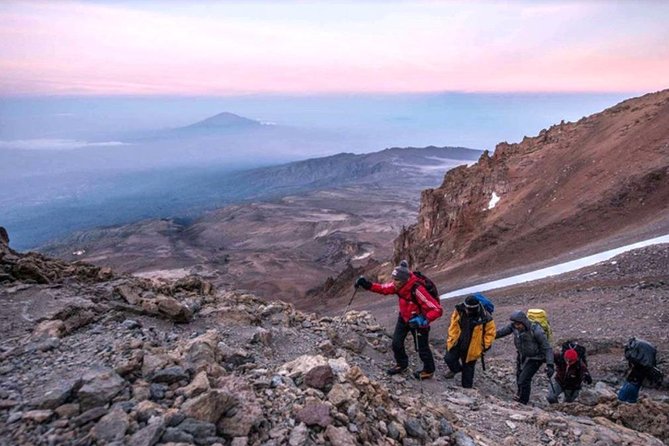
The best feature of this Kilimanjaro climb is its eight-day pace. You spend extra time gaining height before summit night, then reach Barafu Camp around lunchtime on Day 6, giving you several hours to eat and rest before the midnight start. That matters on a mountain where tired legs and thin air can end an otherwise good attempt.
I like the route’s changing scenery, from rainforest to the open Shira Plateau and stark high-altitude desert. I also like the practical support: guides, assistant guides, porters, a cook, camping furniture, mattresses, fresh drinking water, and hot wash water are included. The catch is that this is still a serious physical test, especially the Barranco Wall and the 12 to 14-hour summit day.
Key points to know before booking
- Eight days improves your acclimatization: The longer schedule gives you more time at altitude than a compressed seven-day climb.
- The route crosses several climate zones: Expect rainforest, plateau views, semi-desert slopes, volcanic rock, and a cold summit zone.
- Barranco Wall is the route’s hands-on challenge: No technical climbing is needed, but you will use your hands on a steep section.
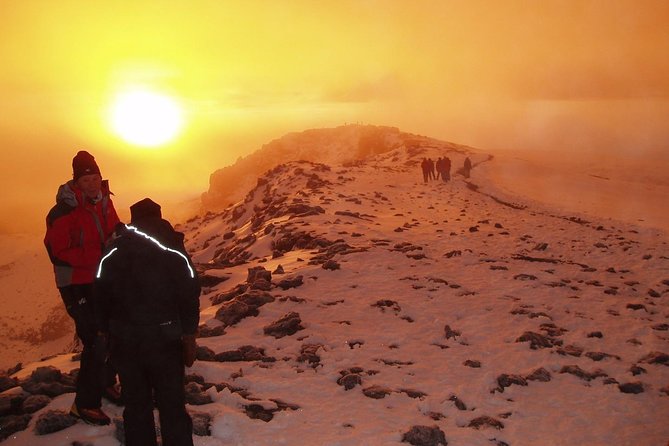
- Summit night begins around midnight: You climb to Uhuru Peak by sunrise, then descend all the way to Mweka Camp.
- The price covers the mountain operation: Guides, porters, cook, tents, meals, water, park fees, and emergency oxygen are included.
- Plan for extra costs: Flights, visas, insurance, personal gear, medicine, snacks, tips, and a portable toilet are not included.
Why the 8-day Lemosho route makes sense
Kilimanjaro is not a technical mountain climb on this route. You do not need ropes or advanced climbing skills, but you do need steady fitness, patience, and the ability to walk uphill for several hours on consecutive days.
The Lemosho route earns its reputation for a gentler schedule because it allows your body more time to adjust to rising altitude. That does not make the summit easy. The high point is 5,895 meters, and the final ascent begins after you have already spent six days hiking.
The extra day is especially useful before the summit push. On Day 6, you reach Barafu Camp at about 4,673 meters after a relatively short hike. You can eat lunch, organize your layers, and sleep or rest before leaving around midnight. A seven-day version usually gives you less recovery time before this hardest section.
I would choose this itinerary over a shorter one unless you are already well acclimatized and have strong mountain experience. The extra day costs more time and may cost more money, but it gives you a better chance to handle the altitude without rushing.
More Kilimanjaro routes:
- Kilimanjaro climb by Lemosho Route (7-day)
★ 5.0 · 651 reviews - Kilimanjaro climb, Machame Route (7-day)
★ 5.0 · 262 reviews - Kilimanjaro Climbing Lemosho Route 8 Days.
★ 5.0 · 186 reviews
Day 1: Rainforest walking to Mti Mkubwa Camp
After breakfast, you transfer from Moshi to Londorossi Gate, where the climbing registration takes place. The first walking section runs from about 2,100 meters to 2,780 meters and takes three to four hours.
The rainforest is a good introduction because the trail is greener and more sheltered than the upper mountain. This is not yet a brutal day, but you are beginning the process of gaining height. Walk slowly from the start. The mountain rewards an unhurried pace.
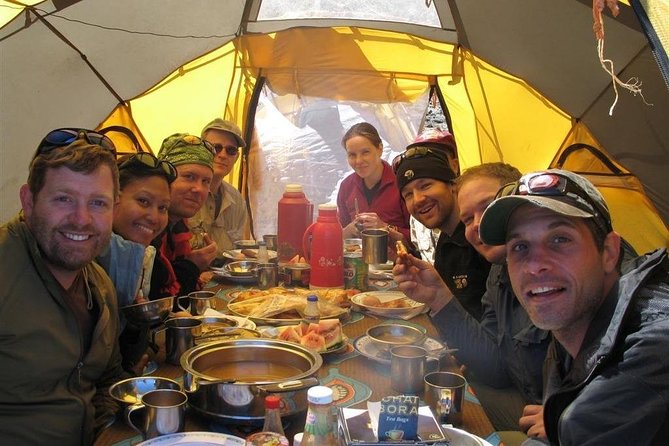
Mti Mkubwa is your first camp. The listed program includes camping equipment, a mattress, chairs, tables, dinner, and hot water for washing. A cook prepares the meals, which is a useful comfort after a travel day and a short first hike.
Day 2: Leaving the trees for Shira Camp One
The second day takes you from 2,780 meters to 3,500 meters, with five to six hours on the trail. You continue through the upper rainforest before reaching the Shira Plateau.
This is where the scenery opens up. You get your first glimpse of Kibo Peak, the volcanic summit cone that you will later approach from above. The change from enclosed forest to wide views helps you understand the scale of the mountain.
Shira 1 Camp is also your first night at a height where some people begin to notice altitude effects. The sensible plan is to drink regularly, eat even when your appetite drops, and tell your guide about headaches, nausea, or unusual fatigue.
The route description calls this day six hours, while the walking estimate is five to six hours. That small difference is normal for a mountain schedule, since breaks, camp setup, and the pace of your group affect the total day.
Day 3: A gentler Shira Plateau crossing
Day 3 is shorter, with four to five hours of walking from 3,500 meters to 3,850 meters. You cross the Shira Plateau toward Shira 2 Camp.
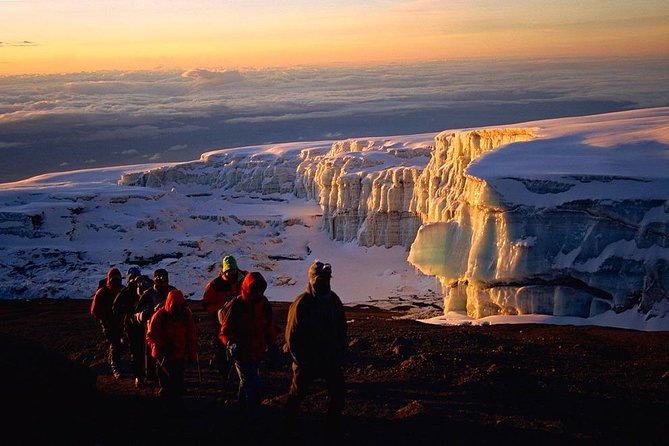
This is a valuable day because the walking is described as gentle, yet you continue gaining altitude. You can look across toward Mount Meru and the surrounding wilderness rather than focusing only on your boots. The broad views are one of the strongest reasons to take Lemosho instead of a faster approach.
Do not mistake a shorter day for a free day. At nearly 4,000 meters, the height matters more than the distance. Keep your pace calm and use the afternoon to eat, rest, and prepare clothing for colder conditions.
A few more Moshi & Kilimanjaro days to compare
- Safari Serengeti And Ngorongoro
★ 5.0 · 288 reviews - Climbing Kilimanjaro – Machame Route
★ 5.0 · 170 reviews - Climbing Kilimanjaro through 7 days Machame Route
★ 5.0 · 151 reviews - Kilimanjaro climb, Lemosho Route (8-day)
★ 5.0 · 148 reviews
Day 4: Lava Tower acclimatization and Barranco Camp
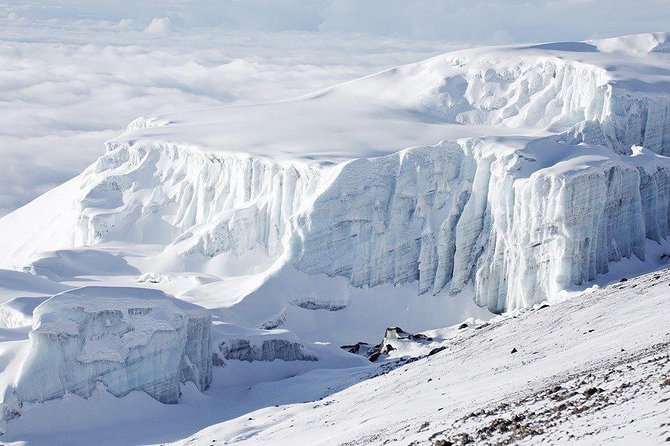
Day 4 is one of the smartest parts of the itinerary. You climb from 3,850 meters toward the Lava Tower at 4,600 meters, then descend to Barranco Camp at about 3,900 meters.
This is the classic climb high, sleep lower pattern. You briefly reach a greater height, giving your body a useful altitude workout, but you spend the night lower than the day’s high point. The route takes six to seven hours across semi-desert terrain.
The descent to Barranco Camp brings you beneath the Barranco Wall, a large rocky feature that looks more alarming than it feels for many fit hikers. Still, it is a reminder that the route is about to become more demanding.
You should expect a dry, exposed day. The provided emergency oxygen is for emergencies only, not a shortcut to the summit. A basic first aid kit is included, but personal medicine and water purification tablets are your responsibility.
Day 5: Climbing the Barranco Wall to Karanga
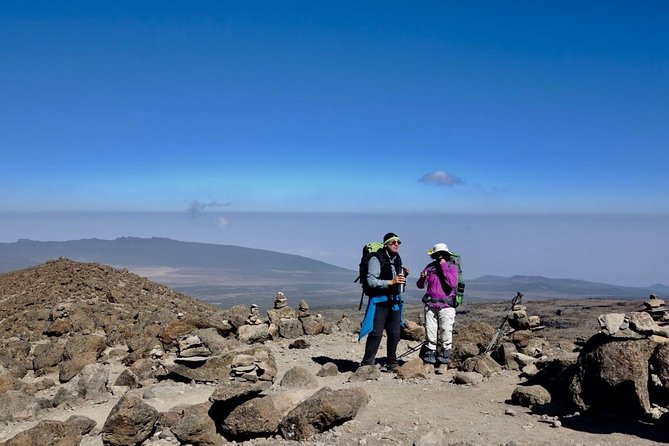
The Barranco Wall is the most distinctive obstacle before summit day. You climb a steep section from Barranco Camp at 3,900 meters to Karanga Camp at about 4,035 meters, with four to five hours of hiking.
You do not need technical climbing equipment, but you may use your hands for balance and support. The important skill here is not speed. Let the guide set a steady pace, keep your pack secure, and watch where you place your feet.
The height gain on paper is modest, yet the route can feel strenuous because it rises and falls over rocky ground. Karanga is useful as an acclimatization camp before Barafu. It also breaks the approach to base camp into manageable pieces instead of making you push straight from Barranco to the summit base.
Day 6: Barafu Camp and the long wait for midnight
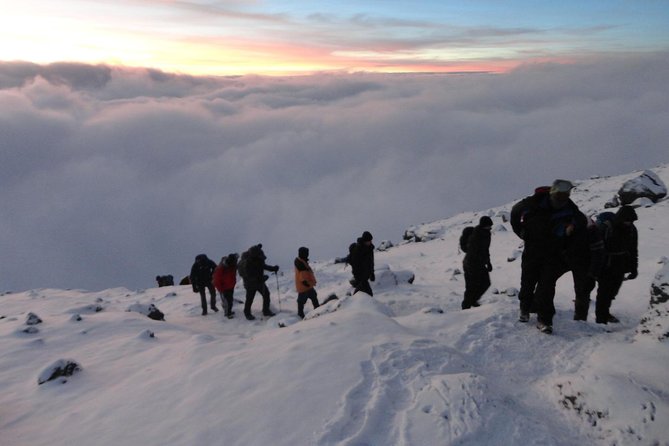
The trail rises from 4,035 meters to Barafu Camp at 4,673 meters. The walk takes about four to five hours, and the early arrival is a major benefit of the eight-day plan.
Barafu means you are at the summit base. From here, the mountain becomes less about scenery and more about energy management. Eat the included lunch, drink what you can, check your headlamp and warm layers, and rest. You may not sleep well at this height, so quiet recovery still counts.
The night schedule is demanding. You will start around midnight, often after only a few hours of lying down. That is why a shorter pre-summit day matters. You are not trying to arrive at Barafu late in the afternoon and immediately turn around for the summit.
Camping equipment, sleeping mattresses, tables, and chairs are provided. A portable toilet is optional but highly recommended, and it costs extra. For many people, that is money well spent at high camps.
Day 7: Uhuru Peak and a 12 to 14-hour summit day
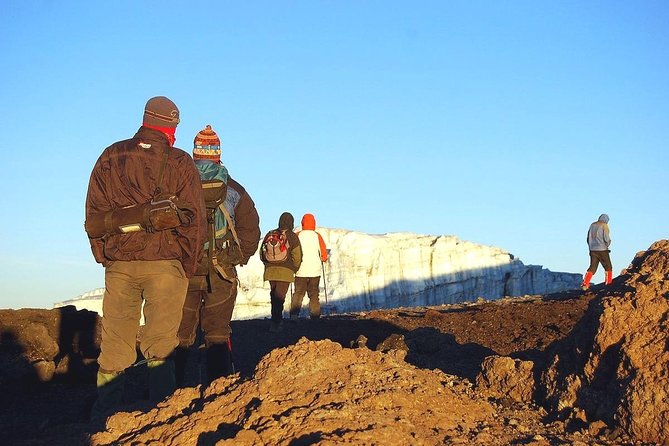
Summit day is the hard truth behind the attractive route name. You climb from Barafu to Uhuru Peak at 5,895 meters, then descend to Mweka Camp at 3,068 meters. The full day takes 12 to 14 hours.
You leave around midnight and aim to reach the summit by sunrise. The climb is slow and steep, with cold conditions and limited sleep. The final stretch is not a sightseeing walk. It is a test of pacing, breathing, and determination.
At the top, you reach Uhuru Peak, the highest point on Kilimanjaro. If you reach Stella Point at 5,685 meters but do not continue to Uhuru, you receive a green completion certificate. Reaching Uhuru Peak earns a gold certificate.
After the summit, the descent is not an afterthought. Going down from 5,895 meters to Mweka Camp is a major day in itself, and tired legs can make loose ground awkward. Follow the guide’s instructions, eat when food is offered, and do not spend all your energy celebrating at the top.
The company’s team has included main guides such as Justin JT and Sam on past climbs, while other staff names connected with trip planning and support include Mariam, Frazier, and Brian. Your booking should confirm who will lead your group, since a particular guide is not guaranteed by the supplied program.
Day 8: Mweka Trail, certificates, and a hot lunch
The final descent takes about three hours through rainforest to Mweka Gate. The change back to thick forest is welcome after the cold, dry upper mountain.
At the gate, hikers sign their names with the national park before receiving completion certificates. You are served a hot lunch, then transferred back to Moshi for showers and rest.
This last day also includes tipping the guide, assistant guides, cook, and porters. Gratuities are not included, so bring a plan for this expense. The exact amount is not stated in the trip details, and you should ask the operator for current guidance before you go.
What the $3,373.24 price covers
At $3,373.24 per person, this is not a low-cost walking holiday. The value depends on how much of the mountain operation is included, and here the list is substantial.
The price covers park fees, taxes, a qualified mountain guide, assistant guides, porters, and a cook, along with their wages. It also includes tents, camp chairs, tables, sleeping mattresses, fresh drinking water, and hot water for a daily wash.
Food is provided throughout the climb: seven dinners, seven breakfasts, and eight lunches. That reduces the amount of food you need to carry and gives you regular meals during a physically demanding week.
Emergency oxygen and a basic first aid kit are included. Oxygen is intended for emergencies only, so you should not treat it as a normal part of summit preparation.
The price does not cover flights, visas, travel insurance, health insurance, personal equipment, medicine, purification tablets, snacks, unspecified drinks, or tips. You can rent personal hiking gear from equipment shops in Moshi, which may help if you do not want to buy cold-weather clothing for one trip.
A portable toilet is not included but is highly recommended. Add that cost to your real budget, along with insurance and gratuities. Yellow fever vaccination is compulsory according to the provided requirements.
The support team and private-tour format
This is a private activity, so only your group participates. That gives you more control over pace and rest stops than a large mixed group, though the mountain schedule still sets firm limits.
The support team is central to the experience. Your guide leads the route and monitors the group, assistant guides provide additional support, porters move camp equipment, and the cook handles meals. Strong organization matters here because the summit attempt depends on having camp ready, food available, and the right equipment in place.
Past company trips have received especially strong praise for guide and porter care, clear preparation, friendly service, and food. One account described the meals as better than expected, and another singled out the team for helping a younger climber through minor altitude sickness. Those details suggest a personal style of support, but they do not remove the need for your own fitness and good judgment.
Ask before departure how luggage is divided, what weight limits apply to porter loads, which personal gear can be rented, and who your lead guide will be. Those questions are more useful than simply asking if the climb is difficult.
Who should choose this Kilimanjaro climb
I would recommend this route to a fit first-time high-altitude hiker who values scenery and a better acclimatization schedule. It also suits private groups, families with appropriate fitness, and friends who want a quieter-feeling route with several distinct camping areas.
It is not a casual holiday. You should be comfortable with four to seven hours of walking on most days, a steep rocky section at Barranco, and a summit day lasting up to 14 hours. A moderate fitness level is required, but you should honestly assess your uphill endurance before booking.
Experienced, already acclimatized mountaineers may prefer the seven-day Lemosho option. For most people, though, removing a day to save time is a poor trade on a mountain where altitude is the main problem.
Booking, cancellation, and practical timing
Pickup is offered, and the meeting point is in Moshi Urban, Tanzania. The activity ends back at that meeting point after the Mweka descent, lunch, and transfer from the gate.
The listed operating period runs from January 4, 2020, through June 18, 2026, with availability shown every day from midnight to 11:30 p.m. Confirmation is received when you book.
You can cancel for a full refund if you do so at least three full days before the local start time. Cancellations or changes made inside that window are not refunded or accepted.
Group discounts are offered, so ask about them if you are arranging a private climb with friends or family. Since the tour is already private, the discount may make the per-person cost more attractive for a larger group.
Should you book the 8-day Lemosho climb?
Book it if you want the scenic Lemosho route, prefer a slower altitude schedule, and can handle a demanding summit night. The strongest reasons are the extra acclimatization day, the early arrival at Barafu, the broad change in scenery, and the substantial team and camping support included in the price.
Think twice if your fitness is low, your schedule cannot allow a full eight days, or you are looking for a soft adventure with comfortable sleep each night. Kilimanjaro remains hard even on one of its more forgiving routes.
For a first climb, I would favor this eight-day version over the seven-day alternative. Bring suitable personal gear, budget for insurance, tips, a portable toilet, and small extras, and ask for the confirmed guide team before paying. With those details clear, Pinnacle Adventures & Safaris offers a well-supported way to take on Kilimanjaro without rushing the mountain.
FAQ
How long does the Kilimanjaro climb last?
The climb lasts approximately eight days, beginning and ending in Moshi, Tanzania.
Is the 8-day Lemosho route suitable for beginners?
The route is considered one of the easier Kilimanjaro routes because its longer schedule allows more time for acclimatization. You still need a moderate fitness level, and the summit day is strenuous.
Do I need technical climbing experience?
No technical climbing is required. You will still climb the steep Barranco Wall and tackle a demanding summit ascent.
What is the highest point reached?
The highest point is Uhuru Peak at 5,895 meters.
How long is summit day?
The summit day takes approximately 12 to 14 hours. You start around midnight, reach Uhuru Peak by sunrise, and then descend to Mweka Camp.
Are meals included?
Yes. The package includes seven dinners, seven breakfasts, and eight lunches.
Is camping equipment provided?
Yes. Tents, camp chairs, tables, and sleeping mattresses are included. A portable toilet is optional, highly recommended, and not included.
Is emergency oxygen provided?
Yes. Emergency oxygen is included for use in emergencies only and is not provided as regular summit assistance.
What is excluded from the price?
Flights, visas, travel and health insurance, gratuities, personal items, personal hiking gear, medicine, water purification tablets, snacks, and meals or drinks not specified are excluded.
Newly listed around Moshi & Kilimanjaro
- Climb Mount Kilimanjaro: 7 Days Machame Route★ 5.0 · 3 reviews
- 6 Days Mount Kilimanjaro Climbing via Rongai Route★ 5.0 · 3 reviews
- Explore 1 day Ngorongoro Crater Budget Group Safari from Arusha★ 5.0 · 3 reviews
- Mt. Kilimanjaro Day Hiking★ 5.0 · 3 reviews
- Chemka (Kikuletwa) Hot Springs, Tanzania★ 5.0 · 3 reviews
- Guided City tour of Moshi★ 4.3 · 3 reviews
- 8 Day Tanzania Family Safari★ 5.0 · 3 reviews
- Serengeti Safari with Sirikwa Travel★ 5.0 · 3 reviews
Kilimanjaro Climbs, compared.








Browse the lists this tour appears in