
Reviewed · MOSHI & KILIMANJARO TOURS
9 Days 8 Nights Walking Safari
The unusual heart of this trip is not just the search for lions and elephants. You also walk through the Ngorongoro area with Maasai guides and donkeys, descend into Empakaai Crater, visit villages, and reach Lake Natron beneath Oldoinyo Lengai, the Mountain of God. This is a safari with real walking, not a string of vehicle-only game drives.
I like the mix of wildlife and local life, especially the chance to prepare Maasai donkeys and trek toward Embulmbul village. I also like the practical value: park fees, camping equipment, transport, guides, and all three daily meals are included. The main caution is that the day-by-day plan is not fully detailed, and the physical demands of the walks should be clarified before you pay.
Key points at a glance
- Ngorongoro and Empakaai Crater: See the famous crater ecosystem by vehicle, then walk down Empakaai to look for flamingos.
- Maasai-led walking: Prepare donkeys with local Maasai guides and trek toward Embulmbul village.
- Oldoinyo Lengai and Lake Natron: Visit a rare active volcano known for its cool carbonatitic lava and see the lake beneath it.
- Small vehicle groups: Each 4×4 vehicle carries a maximum of four people, while the overall activity allows up to 12.
- Full-board pricing: Breakfast, lunch, dinner, entrance fees, camping equipment, and driver-guides are included.
- Moderate fitness required: This is not a passive sightseeing trip. Expect crater walking and trekking on several days.
What this 9-day walking safari actually offers
At $2,688 per person, this is a broad northern Tanzania circuit rather than a single-park safari. The route begins and ends at Springlands Hotel in Moshi, with pickup offered and the listed meeting point at Kilimanjaro Airport.
The experience combines several travel styles:
- Wildlife viewing from a 4×4 with a roof for game viewing
- Walking in the Ngorongoro region
- Camping and full-board accommodation
- Visits with Maasai communities
- A visit to Oldoinyo Lengai and Lake Natron
- Time in markets and ordinary local settings
The wildlife side includes Ngorongoro Crater, Lake Manyara National Park, the Lake Eyasi area, Serengeti National Park, and Olduvai Gorge in the stated highlights. The daily schedule, however, gives more detail for the Ngorongoro, Maasai, Empakaai, Oldoinyo Lengai, and Lake Natron sections than it does for Serengeti or Olduvai Gorge.
That matters. Before booking, I would ask Zara Tours for the exact park sequence, camping locations, driving times, and the number of game drives in each park. The headline itinerary promises a lot in nine days, so clear timing will help you know how much time you really get on foot and how much is spent in the vehicle.
More Safaris in Moshi
- Safari Serengeti And Ngorongoro
★ 5.0 · 288 reviews - Big Five Safari In Tanzania
★ 5.0 · 99 reviews - Unforgettable Tanzania Safari And Zanzibar Beach
★ 5.0 · 97 reviews
Day 1: A useful start in Moshi
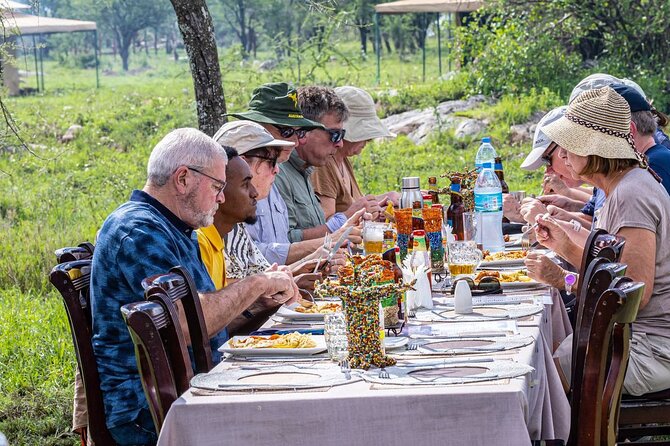
Your first day begins at Springlands Hotel in Moshi. You receive a welcome, a mountain and safari briefing, and a room at the hotel. Meals are available.
This is a sensible first night if you are arriving through Kilimanjaro Airport or combining the trip with a mountain climb. The briefing gives you a chance to ask about luggage, clothing, walking pace, camping, and the vehicle route before leaving town.
The hotel night also gives you a buffer after a long flight. I would use it to check that you have sun protection, a refillable water bottle, sturdy walking shoes, and a warm layer for high crater country. The supplied information confirms breakfast, lunch, and dinner are included across the nine-day program, though the first-day wording says meals are available rather than giving a detailed meal schedule.
Day 2: Ngorongoro Crater and the Big Five
The second day centers on a drive through the crater with an accredited driver. The crater is one of Tanzania’s strongest wildlife settings, and the stated aim is to look for the Big Five: black rhinoceros, elephant, lion, buffalo, and leopard.
The value here lies in having a driver-guide who can handle both safe driving and wildlife spotting. Several guide names associated with the company include Tarimo, Yesse, Salehe, Musa, Bright, and Isdory. You should request your assigned guide in advance if that matters to you, since the information does not promise a particular person for this departure.
There is no guarantee you will see every member of the Big Five. That is especially true of leopard and black rhino, which can be elusive. Still, a full crater drive gives you a strong chance to see a wide range of animals in one compact area.
Ask how much time is reserved inside the crater. A long transfer followed by a short drive would feel very different from a full wildlife day. The vehicle has a viewing roof, and the maximum of four people per vehicle is a real advantage when you want an unobstructed view or room for camera gear.
Day 3: Donkeys, Maasai guides, and Embulmbul
This is where the trip moves away from a standard safari format. You prepare Maasai donkeys with local Maasai people, using the provided equipment, and begin the trek toward Embulmbul village.
The donkeys are not just a colorful detail. They carry equipment and make a walking route possible without asking you to haul camping supplies yourself. You still need a moderate level of fitness, since the day involves walking and outdoor conditions rather than a short village visit.
A Maasai guide adds useful local context, but you should approach the encounter with respect and patience. This is a chance to learn through conversation and observation, not a staged wildlife performance. Ask before photographing people, listen to explanations about the route, and remember that the village is a lived-in community.
The precise walking distance and elevation are not provided. Get those figures before booking, especially if you have knee, ankle, or breathing concerns.
More Safaris in Moshi & Kilimanjaro:
- 8-Day Essence of Tanzania Safari – Luxury
★ 5.0 · 72 reviews - Great Migration Safari In Tanzania
★ 5.0 · 71 reviews - Serengeti, Ngorongoro and Tarangire 4 Days Safari
★ 5.0 · 59 reviews - 6 Days 5 Night Safari
★ 5.0 · 57 reviews
Day 4: Walking into Empakaai Crater
After lunch, you walk down into Empakaai Crater to view its flamingo population, then return to camp on the crater rim for dinner and an overnight stay. The listed walking time is about five hours.
This is one of the most distinctive parts of the route. Empakaai is not visited from a safari vehicle. You experience the change in elevation on foot, with the crater rim giving you a different sense of scale than a roadside viewpoint.
The flamingos are a seasonal and natural sight, so their numbers can vary. The crater walk is also the clearest sign that this program is not suitable for anyone seeking a fully low-effort safari.
I like the overnight on the rim because it keeps the day connected to the setting. You do not simply walk down, take a quick look, and rush away. Dinner and camp follow the walk, allowing the crater to remain part of your evening.
The wording says admission is included and no separate ticket is charged for this stop. Camping equipment is supplied, but ask what is provided inside your tent and what personal sleeping items you need to bring.
Day 5: Learning local customs and daily life
The fifth day focuses on meeting people from the local ward and learning about their way of life, culture, norms, and traditions.
The description is broad, so the exact village, activities, and walking time should be confirmed. That lack of detail is not necessarily a problem, but it does mean you should avoid assuming a specific ceremony, meal, craft demonstration, or homestay is included.
For me, this type of day can be the most meaningful part of a long safari when it is handled well. You get a look beyond national parks and wildlife lists. You also have a chance to ask how land, livestock, markets, and family life fit together in the area.
Keep your expectations grounded. A short community visit cannot explain every part of Maasai life. The best approach is to treat it as an introduction and let your guide explain what is appropriate to see and discuss.
Day 6: Oldoinyo Lengai, the Mountain of God
Oldoinyo Lengai is known for its unusual low-temperature carbonatitic lava. It is described as the only active volcano known to emit natrocarbonatites, and local Maasai people call it the Mountain of God.
You may not climb the volcano on this itinerary. The schedule identifies the mountain as a destination and cultural point of interest, but it does not state that a summit ascent is included. Ask directly before you pack technical climbing gear or assume a strenuous volcanic climb.
The mountain gives this trip a strong geological side. Tanzania is not only about animals. Oldoinyo Lengai connects local belief, volcanic science, and the dry country around Lake Natron. Even a viewpoint or guided visit can add depth to the route.
Because the itinerary includes several remote walking sections, ask how this day connects with the previous camp and the next stop. Transfer times can shape the experience as much as the sightseeing.
Day 7: Lake Natron, the lake, village, and volcano
Your guide accompanies you on a trek around Lake Natron, a place linked in the itinerary with Oldoinyo Lengai, a Maasai village, and the lake itself.
The area is also associated with flamingos and other birdlife in the wider trip description. The stated wildlife list includes hippos, monkeys, leopards, storks, pelicans, and greater and lesser flamingoes around the northern Tanzania lakes and forests.
Lake Natron is a good fit for you if you want scenery and walking alongside wildlife. It is less predictable than a zoo-like checklist. Birds move, water levels change, and conditions can affect what you see.
Take the word trek seriously. The program requires moderate physical fitness, but no route length, shade information, or terrain details are supplied. Ask about walking hours, water arrangements, and the expected pace.
Day 8: Maasai markets and everyday Tanzania
The eighth day brings you to the Maasai central market, flea and street markets, and other everyday African street scenes.
This is a useful change of rhythm after several days of parks and remote camps. Markets show you how people buy, sell, socialize, and move through ordinary daily life. You may find crafts and souvenirs, but the stronger reason to go is to see a community setting rather than another scenic stop.
Carry small amounts of cash only if Zara Tours confirms purchases are expected, since personal expenses are excluded. Keep bargaining polite, ask before taking photographs, and do not treat the market as a backdrop.
The itinerary does not give the market location or opening hours. Ask whether this is a morning or afternoon stop and how much time is allocated.
Day 9: Return to Moshi and departure preparation
The final day returns you to Springlands Hotel in Moshi. You receive a room to prepare for departure.
That final hotel access can be helpful after camping. You can organize luggage, wash up, and sort your onward travel before leaving. Airport transfers are not included, so arrange your transfer to or from Kilimanjaro Airport separately.
The meeting information lists Kilimanjaro Airport and Kilimanjaro National Park in Tanzania. Confirm your exact pickup point and final drop-off plan, especially if you are flying soon after the scheduled return.
What the $2,688 price covers
The price has solid value if you want a guided, full-board trip with several costly components already bundled. Included items are national park gate fees, transport with driver-guides, camping equipment, a Maasai guide, donkeys, full-board accommodation on a double-occupancy basis, and breakfast, lunch, and dinner.
The 4×4 vehicles have viewing roofs, and each vehicle carries no more than four people. That small vehicle arrangement is important. You are less likely to fight for a window or crane over a crowded row when wildlife appears.
The accommodation wording needs clarification. It mentions full-board double-occupancy lodge safari accommodation while also listing camping equipment and crater-rim camping. Ask which nights are in lodges, which are in tents, and whether single occupancy costs extra.
Not included are driver-guide tips, airport transfers, personal expenses, visa fees, and travel insurance. Those costs can add up, so include them in your real budget. Vegetarian meals are available if requested at booking.
Who should book this experience
I would choose this trip if you want more than a conventional game-drive schedule. It suits you if you like walking, cultural visits, camping, geology, and wildlife in roughly equal measure.
It is also a good option for someone who wants the major northern Tanzania sights in one package, including Ngorongoro, Serengeti, Olduvai Gorge, Lake Manyara, and the Lake Natron area. But ask for the final route in writing, since the supplied daily schedule does not explain every named park in equal detail.
I would hesitate if you need a precise hour-by-hour plan, guaranteed luxury lodging, or a trip with very little walking. The five-hour Empakaai outing and the other treks make physical readiness important.
The company has a 5 out of 5 rating from 11 submitted ratings and a 100 percent recommendation figure. The strongest praise centers on careful organization, friendly support, wildlife spotting, and guides such as Tarimo, Salehe, Musa, Bright, and Isdory. Use that as a helpful signal, but ask who will lead your own departure and how the walking days will be managed.
Should you book the 9-day walking safari?
Book it if you want a varied Tanzania journey with Maasai culture, crater walking, volcano scenery, and classic wildlife in the same trip. The included meals, park fees, equipment, and small vehicle capacity make the $2,688 price reasonable for a full-board package.
Before booking, confirm the exact Serengeti and Olduvai Gorge schedule, accommodation by night, walking distances, airport arrangements, and whether Oldoinyo Lengai is a viewpoint visit or a climb. If those details match your expectations, this offers a more personal and active way to see northern Tanzania than a vehicle-only safari.
FAQ
How long is the walking safari?
The experience lasts approximately nine days and eight nights.
Where does the experience begin?
The stated meeting information lists Kilimanjaro Airport and Kilimanjaro National Park in Tanzania. The first hotel stop is Springlands Hotel in Moshi, so confirm the exact pickup point with Zara Tours.
Where does the experience end?
The final stop is Springlands Hotel in Moshi, where you receive a room to prepare for departure.
Is pickup offered?
Yes, pickup is offered. Confirm the exact pickup location and timing when booking.
Are park entrance fees included?
Yes. National park gate fees and entrance fees for the included activities are covered.
Are meals included?
Yes. Breakfast, lunch, and dinner are included. Vegetarian food is available if you request it at booking.
Is camping equipment provided?
Yes. Camping equipment is included, along with a Maasai guide and donkeys for the walking sections.
How many people can join the activity?
The total activity allows a maximum of 12 people. Each vehicle has a maximum of four people.
How fit do I need to be?
You should have a moderate level of physical fitness. One listed activity involves about five hours of walking down into Empakaai Crater and back to camp, and other days include trekking.
Are airport transfers included?
No. Transfers to and from the airport are not included. Visa fees, travel insurance, personal expenses, and driver-guide tips are also separate.
Can I cancel for a full refund?
Yes, if you cancel at least 24 hours before the experience start time. Cancellations or changes made less than 24 hours in advance are not accepted for a refund, and cut-off times use local time.
More Walking Tours in Moshi & Kilimanjaro
- Kilimanjaro: Village Walk, Coffee Tour, Waterfall, and Lunch
★ 4.5 · 56 reviews - Walking Day Tour to Safari in Arusha National Park
★ 5.0 · 5 reviews - Moshi Town: Walking Tour: Theme Urban lifestyle
★ 3.1 · 4 reviews - Full-Day Moshi Private Forest Walk and Local Market Tour
★ 5.0 · 4 reviews
Newly listed around Moshi & Kilimanjaro
- Climb Mount Kilimanjaro: 7 Days Machame Route★ 5.0 · 3 reviews
- 6 Days Mount Kilimanjaro Climbing via Rongai Route★ 5.0 · 3 reviews
- Explore 1 day Ngorongoro Crater Budget Group Safari from Arusha★ 5.0 · 3 reviews
- Mt. Kilimanjaro Day Hiking★ 5.0 · 3 reviews
- Chemka (Kikuletwa) Hot Springs, Tanzania★ 5.0 · 3 reviews
- Guided City tour of Moshi★ 4.3 · 3 reviews
- 8 Day Tanzania Family Safari★ 5.0 · 3 reviews
- Serengeti Safari with Sirikwa Travel★ 5.0 · 3 reviews
Moshi & Kilimanjaro Tours, compared.








Browse the lists this tour appears in