
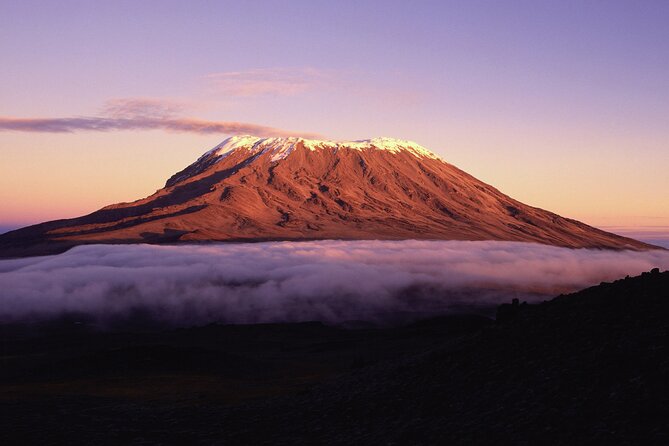
Reviewed · KILIMANJARO CLIMBS
8 Day Climbing Kilimanjaro Via Lemosho Route
Kilimanjaro’s Lemosho Route gives you the mountain in changing moods: rainforest, open moorland, volcanic rock, giant groundsel, alpine desert, and a cold final push to Uhuru Peak at 19,341 feet. The eight-day schedule is long enough to build in useful acclimatization, while the western approach brings some of the finest views on the mountain.
I especially like the slow early pace and the smart overnight stops at Moir, Karanga, and Barafu. I also like the comfort of Signature Camping, with spacious tents and included breakfasts, lunches, and dinners. The catch is simple: this is a serious high-altitude climb, not a sightseeing walk. Altitude sickness can stop even fit people from reaching the top.
Key points before you book
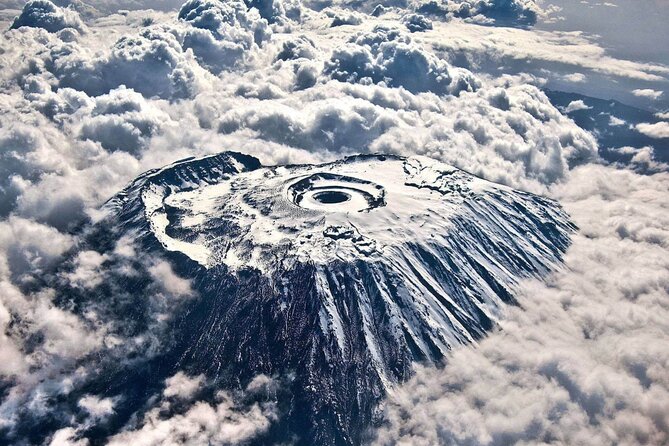
- Lemosho’s six ecological zones: Move from Afromontane rainforest through heather, moorland, alpine desert, and the arctic summit zone.
- A measured eight-day schedule: Extra nights at altitude give you more time to adjust before the summit attempt.
- A dramatic summit night: Leave just before midnight, reach Stella Point around sunrise, then continue to Uhuru Peak.
- Signature Camping comfort: Spacious tents, cooked meals, and a proper camp routine soften the rough edges of mountain life.
- A demanding Barranco Wall crossing: You may use all four limbs as you climb this steep, rocky section.
- A small review record with strong praise: Specific guides named in past trips include Yobu Eliamani Mbwambo, Rama, and Paulo.
Why the Lemosho Route is worth eight days
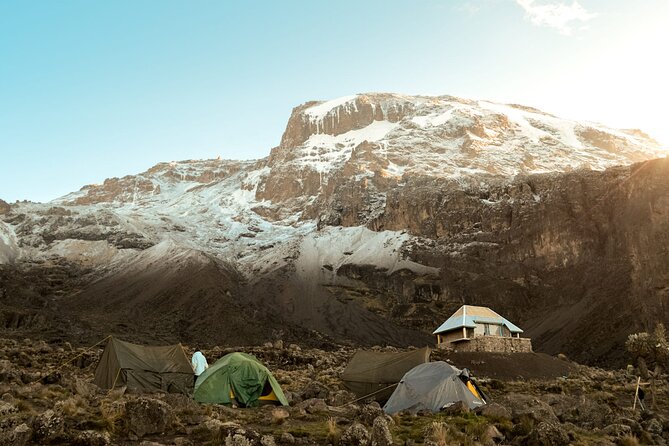
The Lemosho Route approaches Kilimanjaro from the west, beginning at Londorossi Gate. That matters because the first day starts in rainforest rather than on a dry, crowded track. The route then crosses the broad Shira Plateau before joining the southern circuit toward Barranco, Karanga, and Barafu.
You are not simply walking uphill for a week. The scenery changes sharply as the air thins. At lower elevations, you may watch for wildlife among trees and moss. Higher up, the plants become squat and strange, and eventually almost nothing survives except rock, ice, and wind.
The eight-day format also gives you a better rhythm than a rushed ascent. You gain height, sleep, gain more height, and sometimes climb high before descending to sleep lower. That pattern is valuable because your body needs time to adjust.
Still, no itinerary can guarantee a summit. One past family group had a parent affected by altitude sickness who did not reach the top. That is an important reminder to treat the mountain with respect and to accept a turnaround as a sound decision, not a failure.
More Kilimanjaro routes:
- Kilimanjaro climb by Lemosho Route (7-day)
★ 5.0 · 651 reviews - Kilimanjaro climb, Machame Route (7-day)
★ 5.0 · 262 reviews - Kilimanjaro Climbing Lemosho Route 8 Days.
★ 5.0 · 186 reviews
Day 1: Rainforest at Londorossi Gate
The first day begins with a long vehicle ride from Arusha to the Lemosho starting point. The stated meeting time is 8:00 a.m., and pickup is offered. The driving portion is part of the day’s commitment, so do not expect to arrive at the trailhead after a quick transfer.
At Londorossi Gate, you meet the mountain crew and begin walking from about 7,742 feet to 9,498 feet. The hike covers roughly four miles and takes three to four hours. The pace is intentionally gentle, which is exactly right on day one.
The trail enters Afromontane rainforest, with thick vegetation and a better chance of seeing signs of wildlife than you will later on. Lunch is eaten on the trail, and Forest Camp is reached by mid-afternoon.
That early arrival gives you time to settle into camp instead of stumbling in after dark. It also lets you learn how the team organizes meals, tents, and personal gear. You should use this time to notice how you feel, because small altitude symptoms are easier to manage when reported early.
Day 2: From forest to the Shira Plateau
Day two climbs from 9,498 feet to about 11,500 feet over five miles. Plan on five to six hours of walking. The forest thins into podocarpus and juniper woodland, then opens into heather country with lichen-covered volcanic rock.
This is your first major change in scenery. You leave the sheltered forest and reach the Shira Plateau, a huge high plain formed when an older volcanic peak collapsed. Kibo, Kilimanjaro’s main summit, comes into view from here, often making the mountain feel much closer than it did the day before.
You eat lunch on the trail and reach Shira 1 Camp in the middle of the afternoon. The distance is manageable, but the increase in altitude is not trivial. Walk slowly, drink what your guides advise, and avoid wasting energy on a fast first half of the day.
The open plateau can also feel more exposed than the forest. Weather changes quickly on Kilimanjaro, so keep warm layers and rain protection accessible rather than buried at the bottom of your bag.
Day 3: High moorland and Moir Camp
The third day crosses the Shira Plateau, one of the highest plateaus on Earth, then climbs from 11,500 feet to about 13,800 feet. The seven-mile route takes five to seven hours, with three to four hours of especially scenic walking across moorland meadows before lunch.
After the meal, you continue upward toward Moir Camp, also referred to as Moir Hut. The camp sits in a stark setting surrounded by the Lent Hills. If you have enough energy, an afternoon walk in those hills offers a useful acclimatization hike.
This is one of the days where the schedule shows good judgment. You are gaining substantial height, but you are not yet trying for the summit. A short additional walk, followed by rest, helps you spend time high on the mountain without immediately committing to the hardest terrain.
Moir Camp may also be the point where the trip begins to feel less like an ordinary hike. The air is thinner, the vegetation is sparse, and every climb takes more effort. That is normal. You should judge the day by steady progress, not by your usual walking speed.
A few more Moshi & Kilimanjaro days to compare
- Safari Serengeti And Ngorongoro
★ 5.0 · 288 reviews - Climbing Kilimanjaro – Machame Route
★ 5.0 · 170 reviews - Climbing Kilimanjaro through 7 days Machame Route
★ 5.0 · 151 reviews - Kilimanjaro climb, Lemosho Route (8-day)
★ 5.0 · 148 reviews
Day 4: Lava Tower, giant groundsel, and Barranco
Day four is designed around the climb-high, sleep-lower principle. You rise from Moir Camp at 13,800 feet to 15,223 feet at Lava Tower, then descend to Barranco Camp at about 13,044 feet. The seven-kilometer day takes four to six hours.
The high section crosses terrain where little plant or animal life can handle the temperature swings. Lunch is normally near Lava Tower, a volcanic rock formation. There is an optional ascent of the 300-foot tower if you feel strong, but it is not a requirement. Saving energy may be the wiser choice, since Barranco still lies ahead.
The descent leads through the Garden of the Senecios, a remarkable area filled with giant groundsel and giant lobelias. These plants give the upper mountain a peculiar, almost prehistoric look. Barranco Valley is also among the prettiest sections of the route, with steep rock walls and broad views.
This day can be tiring because of the high point, even though you sleep lower. You should not interpret the descent as an easy finish. At altitude, a downhill trail still demands concentration, especially on loose volcanic ground.
Day 5: The Barranco Wall and Karanga Camp
Day five is shorter, covering about three miles in four to five hours. The main challenge comes right away: the Barranco Wall.
The wall looks intimidating from camp, but the route is described as a hands-and-feet scramble rather than a technical rock climb. You may use all four limbs as you work upward, then cross the top of the Karanga Valley. The section requires care, but the short distance means you can focus on movement instead of rushing.
From the wall, the path rises and falls through several inclines and declines before reaching Karanga Camp at roughly 13,123 feet. That up-and-down pattern can be more tiring than a steady slope, particularly after several days of walking.
The overnight stop is placed here for acclimatization, not just convenience. You spend more time at altitude before moving toward Barafu. The camp is also known for dramatic sunsets over the southern glacial valleys and ice fields, which tower high above the route.
If the weather is clear, this can be one of the best evenings for looking across the mountain. But keep the evening quiet. The summit attempt is close, and rest now is worth more than squeezing every last minute from the view.
Day 6: Barafu Camp and the long pause before the summit
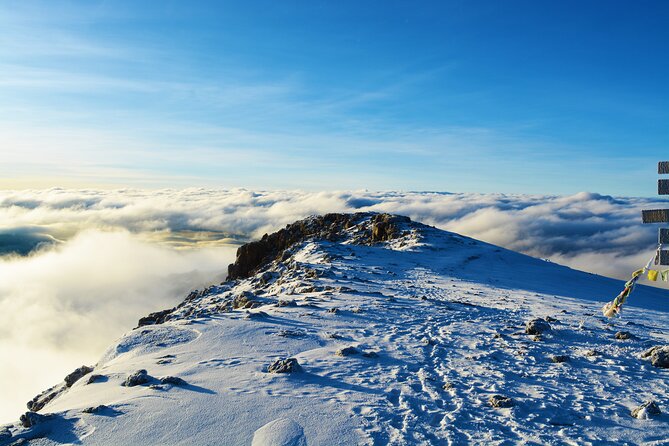
Day six takes you from about 15,288 feet to Barafu Camp, listed at roughly 15,288 feet in the route details, before the summit push begins later. The climbing section is a half-day, followed by lunch and a long rest period.
Barafu means ice, and the setting matches the name. Alpine desert, bare volcanic ground, and strong winds replace the plants you saw lower down. Mawenzi Peak often appears across the horizon, a sharp and impressive companion to Kibo.
An early dinner is followed by an attempt to sleep before the midnight departure. That sleep may be broken or shallow. Do not panic if you cannot rest perfectly. The important thing is to lie down, stay warm, and conserve energy.
This is also the point where your packing choices matter most. Keep your warmest clothing, headlamp, water, snacks, and essential layers ready before bed. You will not want to search through a duffel in the dark while the rest of the group is preparing to leave.
Day 7: Stella Point, Uhuru Peak, and the descent
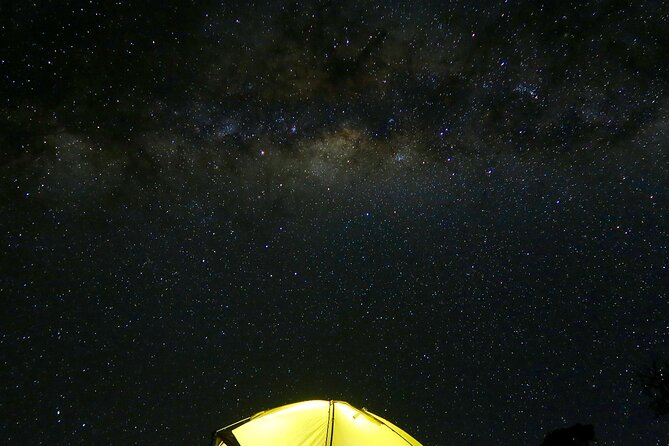
The summit day begins just before midnight. It is the coldest and windiest part of the climb, and progress is intentionally slow. Patience matters more than speed.
By dawn, you aim to reach Stella Point at 18,652 feet. The sunrise over Mawenzi Peak is one of the major rewards of this route. From Stella Point, the final stretch to Uhuru Peak reaches 19,341 feet, the Roof of Africa.
The summit celebration is usually brief. At this altitude, you need to take photographs, enjoy the moment, and begin descending before fatigue becomes a problem. The descent is still long and demanding, even though gravity is helping.
The supplied schedule gives different timing details for the summit day, with an eight-hour ascent and a four to six-hour descent described in one section, while another shorter time appears later. Treat the summit day as a full, strenuous day rather than planning around the shortest figure.
After the summit section, you continue down to a lower camp at about 12,467 feet. The drop in elevation should help, but your legs may be tired and the loose surface can make the descent uncomfortable. Trekking poles, if you use them, are especially useful here.
Day 8: Forest descent and return to Moshi
The final day continues downhill through montane forest to about 5,380 feet. The published walking time is around three to four hours, although the overall day is listed as approximately ten hours. That longer figure likely reflects the descent, farewell, pickup, and transfer back to your hotel.
Around midday, you say goodbye to the crew and return to Moshi. A shower and celebratory dinner are well earned after the summit effort.
The last day can feel surprisingly long because you are tired and still need to travel. Keep a clean change of clothes accessible rather than packed out of reach. The end of the climb is not only the summit photo. It is also the moment when you can finally relax and process the week.
Camping, meals, and the value of $2,670
The listed price is $2,670 per person. For an eight-day guided Kilimanjaro climb, the value depends heavily on what you expect from camp life and what you still need to arrange yourself.
The package includes eight breakfasts, nine lunches, and eight dinners. The meal count reflects the long summit schedule, when you need food before and during the demanding final effort. Meals are not a minor detail on this mountain. Regular eating helps you maintain strength when altitude suppresses your appetite.
Signature Camping is another strong point. Spacious tents and a more comfortable camp setup can make a real difference after five or six hours on rocky ground. You should still expect mountain conditions, not hotel service, but the added room and organized meals are useful comforts.
The price does not include your visa or international flights. Pickup is offered, and the experience begins in the Moshi area, but you should confirm exactly where your pre-climb accommodation and airport transfers fit into your own plans.
The maximum listed group size is 100 people. That is a large possible cap, even if a particular departure is smaller. Ask about your expected group size, guide-to-climber ratio, and how the crew handles summit pacing before paying. The specific guides associated with past departures include Yobu Eliamani Mbwambo, Rama, Paulo, and William, but the information does not guarantee who will lead your climb.
What the guide team adds
A Kilimanjaro guide does more than point toward the summit. The guides set the pace, explain the changing zones, organize the camp routine, and help you understand when a symptom deserves attention.
Past departures have singled out Yobu Eliamani Mbwambo for an eight-day Lemosho climb. Rama and Paulo have also led a Lemosho trip, adapting the walking plan to the group and completing one ascent in six days. William has been praised for helping with preparation and equipment advice before the climb.
That last point is especially useful. You should ask for the current equipment list early, then check whether the operator provides any shared or rented gear. The supplied information confirms guide support and meals, but it does not specify every item included in the camping setup.
The team’s ability to adapt is valuable, but you should not read flexibility as permission to rush. One group shortened the route, while this package is built around eight days. The longer plan is the better fit if acclimatization is your priority.
Fitness, altitude, and who should choose this climb
The official requirement is moderate physical fitness. In practical terms, you need to handle repeated days of walking, long uphill sections, rocky descents, cold mornings, and a summit night that begins before midnight.
You do not need to be a technical climber for this route. The Barranco Wall involves scrambling, but the major challenge is endurance and altitude. The summit is a high-altitude hike, not a rope-and-ice expedition.
The biggest unknown is how your body responds above 13,000 feet. A family member on a past trip developed altitude sickness and did not summit. That outcome is possible even if you train hard, so choose an operator that takes symptoms seriously and be ready to turn around if needed.
This climb suits you if you want changing scenery, a slower eight-day schedule, organized camping, and the chance to reach Africa’s highest point. It is less suitable if you want a relaxed holiday, dislike basic camp routines, or need a guaranteed summit result.
Practical details before you commit
Confirmation is provided at booking, and the meeting time is 8:00 a.m. The start point is in or near Moshi, with pickup offered. The activity is near public transportation, but international flights and visas are your responsibility.
Free cancellation is available up to 24 hours before the local start time for a full refund. Changes or cancellations made inside that 24-hour window are not accepted for a refund.
Before booking, I would ask three direct questions:
- How many people are expected in my group?
- Which guide team will lead my departure?
- What equipment is supplied, rented, or left for me to bring?
Those answers can change how you judge the $2,670 price. A clear equipment plan and a reasonable group size are worth knowing before you arrive in Tanzania.
Should you book the eight-day Lemosho climb?
I would choose this tour if your main goal is to give yourself a sensible chance at Uhuru Peak while enjoying Kilimanjaro’s best scenery. The eight-day pacing, high overnight stops, spacious tents, and full meal plan make it a stronger choice than a rushed ascent.
I would not book it expecting an easy walk or a guaranteed summit. You need moderate fitness, patience, warm clothing, and the good sense to follow your guides if altitude symptoms appear.
For an ambitious first high-altitude climb, Lemosho offers a memorable route with a clear progression from forest to arctic rock. Confirm your guide assignment and group size, then book if you are ready for the mountain on its own terms.
FAQ
Where does the Kilimanjaro climb begin?
The climb begins at Londorossi Gate on Kilimanjaro’s Lemosho Route. Pickup is offered, and the experience starts from the Moshi area with an 8:00 a.m. meeting time.
How long is the experience?
The climb lasts approximately eight days. Walking times vary by day, from about three to seven hours on most route days, with a much longer summit effort.
What altitude does the route reach?
The route reaches Uhuru Peak at approximately 19,341 feet. You pass through several ecological zones, ending in the harsh arctic zone near the summit.
Are meals included?
Yes. The package includes eight breakfasts, nine lunches, and eight dinners.
Are international flights and visas included?
No. International flights and visas are not included in the listed price.
How fit do I need to be?
You should have a moderate level of physical fitness. The route includes repeated uphill and downhill walking, a scramble over the Barranco Wall, cold conditions, and a strenuous summit attempt beginning just before midnight.
Can I cancel for a full refund?
Yes, if you cancel at least 24 hours before the experience’s local start time. Cancellations or changes made less than 24 hours before the start are not accepted for a refund.
Newly listed around Moshi & Kilimanjaro
- Climb Mount Kilimanjaro: 7 Days Machame Route★ 5.0 · 3 reviews
- 6 Days Mount Kilimanjaro Climbing via Rongai Route★ 5.0 · 3 reviews
- Explore 1 day Ngorongoro Crater Budget Group Safari from Arusha★ 5.0 · 3 reviews
- Mt. Kilimanjaro Day Hiking★ 5.0 · 3 reviews
- Chemka (Kikuletwa) Hot Springs, Tanzania★ 5.0 · 3 reviews
- Guided City tour of Moshi★ 4.3 · 3 reviews
- 8 Day Tanzania Family Safari★ 5.0 · 3 reviews
- Serengeti Safari with Sirikwa Travel★ 5.0 · 3 reviews
Kilimanjaro Climbs, compared.








Browse the lists this tour appears in