
Reviewed · KILIMANJARO CLIMBS
9 Days Mount Kilimanjaro Climb Machame Route
Kilimanjaro’s Machame Route gives you the mountain’s classic climb: rainforest, open high country, volcanic rock, Barranco Wall, and a midnight push to Uhuru Peak at 5,895 meters. The seven trekking days are wrapped in two nights in Moshi, which makes this a more settled plan than a rushed climb.
I like the built-in altitude work, especially the climb to Lava Tower followed by a lower night at Barranco Camp. I also like the small maximum of six people and the full mountain crew, including guides, cook, and porters. The main caution is the price, $3,250 per person, plus tips, and the summit day can last up to 12 hours.
Key points to know before booking
- Seven days on the mountain: The Moshi hotel nights bring the full trip to nine days.
- Lava Tower acclimatization: You climb to 4,630 meters, then sleep lower at Barranco Camp.
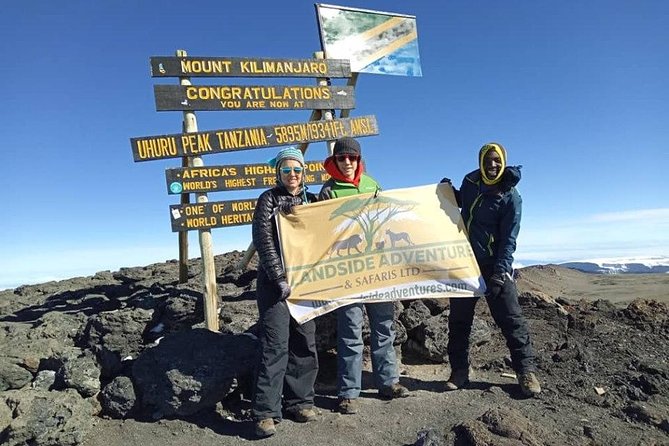
- Midnight summit attempt: Reach Uhuru Peak at 5,895 meters, then descend to Millennium Camp.
- Small group size: The maximum is six people, useful for pacing and guide attention.
- Full camping support: Tents, sleeping mattresses, tables, chairs, meals, treated water, guides, cooks, and porters are included.
- A serious final descent: The return from the summit involves loose footing, tired legs, and a long drop in altitude.
What this nine-day Kilimanjaro trip really includes
This is best understood as a seven-day Machame climb with two Moshi hotel nights. You arrive in Tanzania, sleep near Moshi, spend seven days walking from Machame Gate to Mweka Gate, then return to the lodge before your airport transfer.
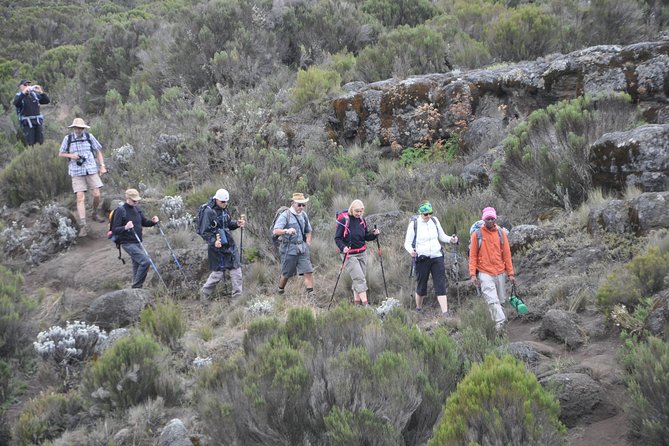
The route is popular for good reason. It shows you several of Kilimanjaro’s major ecological zones, and its up-and-down profile gives your body useful time to adjust to thin air. It is not a casual hike, though. The highest point is nearly 5,900 meters, and altitude, not technical climbing, is the main challenge.
You do not need climbing ropes or advanced mountaineering skills based on the information provided. You do need moderate fitness, patience, warm clothing, rain protection, and the discipline to walk slowly. The guides set the pace, monitor you on the summit climb, and handle much of the practical work in camp.
The maximum group size is six. That matters on a mountain route where people rarely move at exactly the same speed. A smaller party can make meal times, camp departures, and guide communication easier, though individual pace will still depend on altitude and fitness.
More Kilimanjaro routes:
- Kilimanjaro climb by Lemosho Route (7-day)
★ 5.0 · 651 reviews - Kilimanjaro climb, Machame Route (7-day)
★ 5.0 · 262 reviews - Kilimanjaro Climbing Lemosho Route 8 Days.
★ 5.0 · 186 reviews
Night one at Stella Maris Lodge near Moshi
Your airport pickup takes you to Stella Maris Lodge in about 30 to 40 minutes. The lodge is before Moshi town and has a view of Mount Kilimanjaro, so you can get your first look at the mountain before walking it.
This first night is functional rather than touristic. You have a comfortable bed and hot shower, both worth appreciating before several nights in a tent. The sensible plan is to sleep early, since the guide and support crew arrive the next morning for a briefing.
Airport transfers are included at both ends. On the final day, the usual checkout time is 11:00 AM. A late checkout may be available for a later flight, but an extra charge can apply.
Day two: Machame Gate to Machame Camp
The mountain portion begins with a drive to Machame Gate, at about 1,800 meters. There, the crew handles climbing permits and registration with the search and rescue service before you start walking.
The first stretch passes through rainforest toward Machame Camp at 3,010 meters. This is a beautiful opening to the route, but it is also one of the wettest sections. Tropical showers are highly possible, so keep rain protection in your daypack rather than buried in your main luggage.
Bring spare clothes. Damp socks and a wet shirt become a problem quickly when the trail continues for hours. The walk is listed at roughly two hours in the supplied schedule, though you should treat mountain timing as flexible because permits, trail conditions, and group pace can affect the day.
This is your first night at altitude. Do not race through the forest simply because the trail feels manageable. A slow start helps you save energy for the higher camps.
Day three: Shira Camp and the first altitude lesson
After breakfast, you climb to Shira Camp at 3,845 meters. The rainforest falls away, and the views open toward the Shira Plateau. This change is one of the route’s great rewards: you move from wet forest to broad, exposed volcanic country in a single day.
The walking itself is not described as especially difficult, but you may notice the altitude. Headaches, unusual tiredness, and a slower rhythm can appear even when the trail is not steep. Tell your guide how you feel, and let the group’s slow pace work for you.
After lunch and rest at Shira, the group makes an acclimatization climb toward Lava Tower, gaining about 300 meters before returning to camp. This is an important part of the schedule. You spend time higher than your sleeping altitude, then return lower for the night.
That climb also gives your body and your guide useful information. If the altitude affects you at Shira, it is better to address it early, while the route still offers room to adjust.
A few more Moshi & Kilimanjaro days to compare
- Safari Serengeti And Ngorongoro
★ 5.0 · 288 reviews - Climbing Kilimanjaro – Machame Route
★ 5.0 · 170 reviews - Climbing Kilimanjaro through 7 days Machame Route
★ 5.0 · 151 reviews - Kilimanjaro climb, Lemosho Route (8-day)
★ 5.0 · 148 reviews
Day four: Lava Tower at 4,630 meters, then Barranco
This is one of the most useful days on the route. You leave Shira Camp at 3,845 meters and climb to Lava Tower at 4,630 meters. The trail’s rise-and-fall pattern can feel tiring, but the high point is there for acclimatization as much as for scenery.
Lunch at Lava Tower gives you extra time at altitude. Then you descend about 650 meters to Barranco Camp, at 3,960 meters. This is the classic climb high, sleep lower pattern, and it is one of the strongest reasons to choose a longer Machame itinerary.
Barranco Camp sits below the famous Barranco Wall. From camp, the wall looks steep and imposing. The next morning, you climb it, but the route is described as straightforward rather than technical. It is more of a careful mountain walk than a rock-climbing problem.
You will want warm layers for camp and a rain jacket close at hand during the day. The exposed upper sections can feel very different from the humid forest you left behind.
Day five: Barranco Wall and Karanga Camp
An early start helps you avoid crowding on Barranco Wall. The climb takes about an hour and is considered manageable despite its appearance. At the top, you get a strong photo view with Kibo Peak behind you.
The trail then becomes a series of ups and downs toward Karanga Camp. This is not a simple steady climb. You gain altitude, lose some, and repeat the pattern. The guides choose the best line for each person, which is another reason a six-person maximum is useful.
Karanga Camp sits at 4,035 meters. After lunch, you make an acclimatization climb toward Barafu, reaching about 4,270 meters before returning to Karanga for the night.
The day covers about five kilometers and takes around four to five hours, not counting the extra acclimatization walk. It is shorter than summit day, but you should not treat it as an easy rest day. The repeated slopes and thin air can take more out of you than the distance suggests.
Day six: Barafu Camp and the last rest before the summit
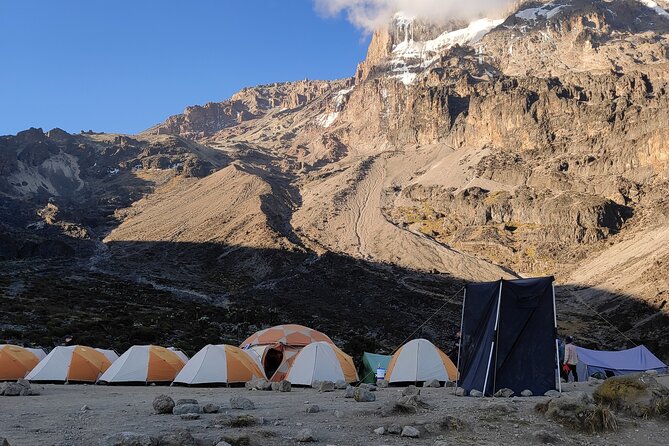
You climb from Karanga at 4,035 meters to Barafu Summit Camp at 4,673 meters. The crew prepares the camp ahead of you, including tents and sleeping bags, so you can focus on eating, drinking, and resting.
After lunch and recovery time, you climb toward Kosovo Summit Camp, reaching about 4,800 meters before returning to Barafu. This extra high point supports acclimatization, but it also makes the day feel long at an already serious altitude.
The main job after dinner is sleep. The summit attempt begins around midnight, so you will not have a normal night. Keep your summit clothing and headlamp ready, and make the most of any rest you can get.
The route from Karanga to Barafu is about six kilometers and takes four to five hours. The acclimatization walk adds another two kilometers and one to two hours. The schedule looks tidy on paper, but the altitude can slow everything down.
Day seven: Uhuru Peak and the long descent to Millennium Camp
The summit push starts around midnight from Barafu Camp. You climb from 4,673 meters to Uhuru Peak at 5,895 meters. The walk is not technical, but the thin air is severe, and this is where steady pacing matters most.
A guide accompanies every two climbers during the summit climb to monitor conditions and help keep safety first. The summit schedule includes time at Uhuru Peak and the chance to walk near the glacier before descending.
After about two hours of rest at Barafu, you continue down to Millennium Camp at 3,820 meters. The day is listed at 15.5 kilometers and seven to 12 hours. In practice, the summit portion, return to Barafu, rest, and descent make this the hardest day by far.
Do not underestimate the way down. Loose footing and tired legs create real risks, and the provided guidance specifically warns about damaged toenails and falls. Short steps, careful foot placement, and properly secured boots matter. Trekking poles, if you use them, can be especially helpful here, though they are not listed among the inclusions.
Millennium Camp is lower and closer to the forest line. Reaching it should give you a better chance of sleeping well after the summit effort.
Day eight: Mweka Gate, certificates, and the lodge
Breakfast at Millennium Camp is followed by the final descent to Mweka Gate at about 1,640 meters. The distance is 13.5 kilometers and the walking time is listed at five to six hours.
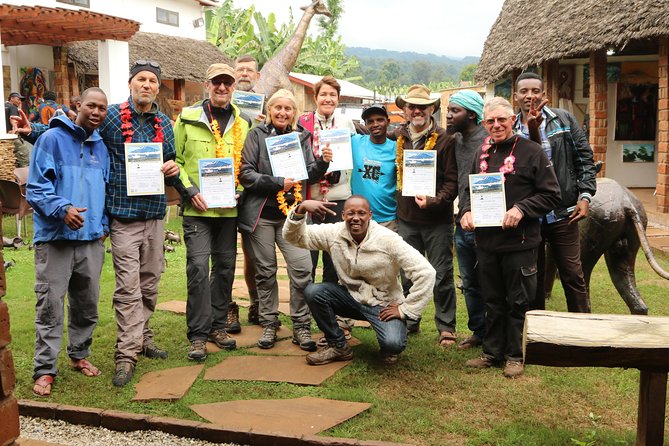
The forest returns as you lose altitude. This last day is still a proper hike, but it should feel different from the summit push. The crew celebrates with you, and you receive a climb certificate after reaching the offices. You then drive back to your lodge.
The certificate is a small physical reminder of a large effort, but the practical reward is simpler: a bed, a shower, and a full meal after a week of camping.
Meals, camp equipment, and mountain support
The price includes breakfast on all nine days, seven lunches, and six dinners. Meals are available for vegetarian and non-vegetarian diets. A cook is part of the crew, so you are not expected to prepare food after a demanding day on the trail.
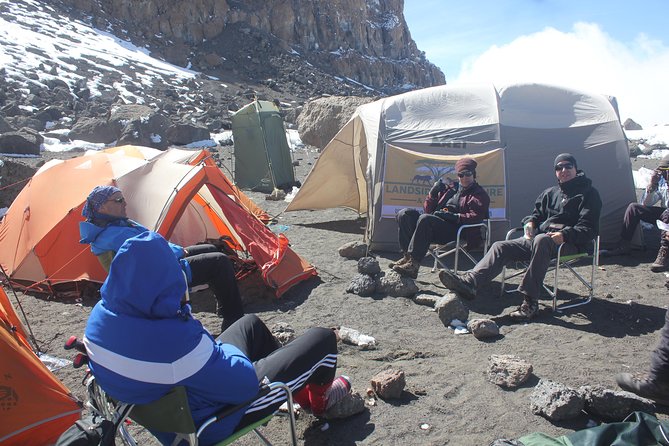
Treated drinking water is included. Sleeping mattresses, tables, and chairs are also provided. The crew sets up tents and sleeping bags before you reach Barafu, and the general camping arrangement is designed to let you recover between walks.
Guides, porters, and a cook are included. Names associated with the company’s wider mountain team include Kim, Oscar, Moses, Pius, and Julius, while Maxon is noted for handling questions and trip arrangements. Your exact guide team should be confirmed before departure, since named staff are not guaranteed in the trip details.
Tips are not included. Set aside money for them, and ask the operator for current guidance before the climb. Tipping is a normal part of the mountain budget, not a surprise to discover after reaching the gate.
What the $3,250 price represents
At $3,250 per person, this is a major purchase. The value comes from the length of the route and the amount of support rather than from luxury. You are paying for airport transfers, Moshi accommodation, permits and park arrangements as handled by the crew, food, treated water, tents, sleeping equipment, guides, cooks, and porters.
A shorter climb may look cheaper at first, but extra days can improve your chance of coping with altitude. Here, the itinerary gives you several acclimatization climbs, including the high point at Lava Tower and the extra walk toward Kosovo Camp. That is meaningful value for a first Kilimanjaro attempt.
The price does not include tips, and no separate list of personal gear is provided. You should budget for your own clothing, footwear, rain gear, and other personal mountain items. Ask for a complete packing list before paying, since those costs can add up.
The booking terms are strict. This experience is non-refundable and cannot be changed for any reason, so you should be confident about your dates, fitness, travel insurance, and flight plans before booking.
Who should choose this Machame climb
This trip suits you if you want the classic Kilimanjaro route and prefer a small, fully supported group. It is a good fit for someone comfortable with camping, long walking days, early starts, and a midnight summit attempt.
You should have moderate physical fitness. That does not mean you need to be an elite athlete, but you should be ready for repeated uphill and downhill walking, high altitude, cold conditions, and limited sleep before the summit.
The route may not suit you if you want a relaxed holiday with flexible schedules. The climb has fixed camps, demanding altitude changes, and a strict summit timetable. The final two days are particularly tough, with the summit day followed by a long descent and then another half-day walk to Mweka Gate.
The small group size is helpful, but it does not remove the basic risks of altitude. Listen to your guide, report symptoms promptly, and understand that reaching the summit can never be guaranteed by a schedule alone.
Should you book it?
I would choose this trip if you want a structured Machame climb with strong acclimatization planning and a full support crew. The Lava Tower to Barranco sequence, the small maximum group, and the careful summit supervision are the best reasons to consider it.
I would pause before booking if the fixed, non-refundable terms make you uneasy or if $3,250 does not leave room for tips and personal gear. Confirm the exact guide team, packing requirements, hotel details, and current cancellation conditions before payment.
For a fit person who wants Kilimanjaro’s major trail sections without rushing the altitude schedule, this is a sensible nine-day plan. You get the mountain, not a padded resort version of it, and the hard work begins long before the summit comes into view.
FAQ
How long is the Mount Kilimanjaro Machame Route experience?
The full experience lasts approximately nine days. Seven days are spent climbing from Machame Gate to Mweka Gate, with hotel nights in Moshi at the beginning and end.
Where does the climb start and finish?
The climb starts at Machame Gate in Kilimanjaro National Park and finishes at Mweka Gate. The wider experience starts and ends in Moshi, with airport transfers included.
What is the highest point reached?
The highest point is Uhuru Peak at 5,895 meters. The summit attempt starts around midnight from Barafu Camp at 4,673 meters.
Are airport transfers included?
Yes. Roundtrip airport transfers are included, including pickup from Kilimanjaro Airport and the final hotel-to-airport transfer.
Are meals included?
Yes. The package includes nine breakfasts, seven lunches, and six dinners. Vegetarian and non-vegetarian meals are available.
What equipment and staff are included?
Professional mountain guides, a cook, porters, treated drinking water, sleeping mattresses, tables, chairs, tents, and sleeping bags are included.
How many people can join the climb?
The maximum group size is six people. You should have a moderate level of physical fitness for this activity.
Newly listed around Moshi & Kilimanjaro
- Climb Mount Kilimanjaro: 7 Days Machame Route★ 5.0 · 3 reviews
- 6 Days Mount Kilimanjaro Climbing via Rongai Route★ 5.0 · 3 reviews
- Explore 1 day Ngorongoro Crater Budget Group Safari from Arusha★ 5.0 · 3 reviews
- Mt. Kilimanjaro Day Hiking★ 5.0 · 3 reviews
- Chemka (Kikuletwa) Hot Springs, Tanzania★ 5.0 · 3 reviews
- Guided City tour of Moshi★ 4.3 · 3 reviews
- 8 Day Tanzania Family Safari★ 5.0 · 3 reviews
- Serengeti Safari with Sirikwa Travel★ 5.0 · 3 reviews
Kilimanjaro Climbs, compared.








Browse the lists this tour appears in