
Reviewed · KILIMANJARO CLIMBS
10 Days Machame Route Kilimanjaro Climb
Kilimanjaro’s Machame Route gives you the mountain in chapters: thick rainforest, open moorland, high desert, glaciers, and the stark volcanic summit. The approach is scenic and varied, but it asks more of you than the gentler Marangu Route, with steeper trails and longer hiking days.
I like the careful acclimatization pattern, especially the climb to about 4,250 meters before sleeping lower at Barranco. I also like the strong mountain support: guides, porters, a chef, boiled or filtered water, oxygen, oximeters, a hyperbaric chamber, and Flying Doctors Insurance are included. The drawback is simple: summit night is long, cold, and demanding, so this is not a casual sightseeing holiday.
Key points before you book
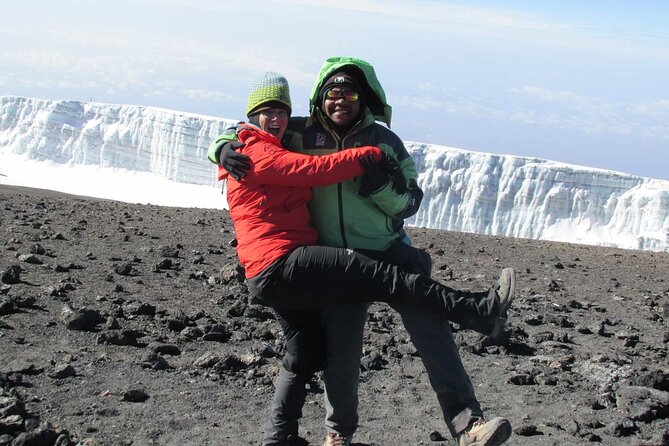
- The Machame Route takes you through five climate zones, from tropical forest to the icy, oxygen-thin summit zone.
- Barranco Wall is a hands-on scramble, not a technical climb, and it is one of the most memorable sections.
- The summit push begins around midnight, with Uhuru Peak reached after roughly seven to eight hours of climbing.
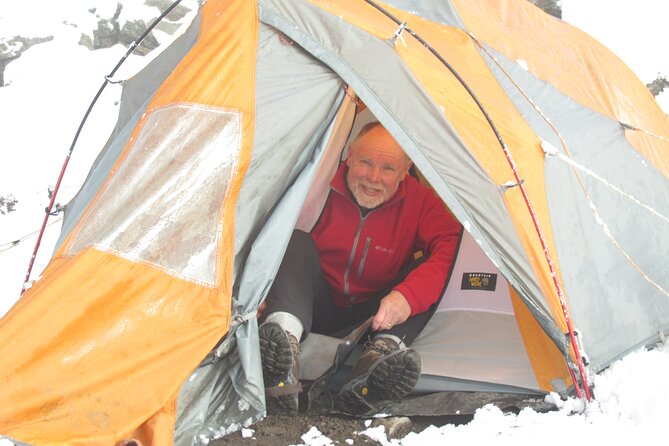
- You sleep in mountain camps, not huts, so you need to be comfortable with basic camping and changing weather.
- The private format suits one group, while group discounts may help reduce the per-person price.
- Safety support is unusually detailed, with emergency oxygen, pulse oximeters, a hyperbaric chamber, and Flying Doctors Insurance included.
Why Machame is Kilimanjaro’s popular scenic route
The Machame Route approaches Kilimanjaro from the southwest and descends by the Mweka Route. That gives you different scenery on the way up and down, rather than sending you over the same trail twice.
The route is prized for its variety. You start beneath tall tropical forest, then move into moorland where the trees thin out. Higher up, the mountain turns dry and spare, with grasses, lichens, volcanic rock, glaciers, and wide views across the Shira Plateau.
You also get several signature Kilimanjaro moments. The Shira Plateau opens the view toward Kibo and Mount Meru. The Barranco Wall adds a short, exciting scramble. The southern circuit passes beneath Kilimanjaro’s southern ice fields when the weather is clear.
The price is $3,025 per person. That is a serious amount of money, but it covers the major operating costs of a guided climb: park fees, camping, mountain staff salaries, meals, water, and several forms of emergency support. You still need to budget for flights, visas, tips, personal purchases, drinks, and travel insurance.
More Kilimanjaro routes:
- Kilimanjaro climb by Lemosho Route (7-day)
★ 5.0 · 651 reviews - Kilimanjaro climb, Machame Route (7-day)
★ 5.0 · 262 reviews - Kilimanjaro Climbing Lemosho Route 8 Days.
★ 5.0 · 186 reviews
Moshi arrival and preparation, Days 1 and 2
Your trip leader meets you at Kilimanjaro International Airport and takes you to a Moshi hotel, either Bristol Cottages or Parkview Inn. The transfer is listed as about one hour, depending on conditions.
The first day is deliberately quiet. That matters after an international flight, since the climb begins with a demanding week of walking rather than a gentle warm-up. Use the time to sleep, check your bags, and settle into the pace of Tanzania.
Day 2 gives you a morning to rest. After lunch, you attend an orientation and equipment check, followed by a town tour. I like this setup because a proper equipment check can catch small problems before they become painful ones on the mountain.
The town tour also gives you a little time in Moshi instead of treating it only as a launch point. Dinner and the night are again at Bristol Cottages or Parkview Inn. The stated start time is 8:00 a.m., though the Day 3 departure is described as around 9:30 a.m. Confirm the exact pickup time with the operator before you arrive.
Into the rainforest at Machame Gate, Day 3
After breakfast, you drive to Machame Gate, where you meet the guides and porters and begin walking. The first camp sits at about 3,000 meters, and the hike takes roughly five to seven hours.
This is a full first day. The trail passes through thick tropical forest, with a steady upward grade that can feel harder than the distance suggests. Humidity, roots, mud, and uneven ground may slow you down, especially if rain arrives.
The best approach is to walk slowly from the start. On Kilimanjaro, the familiar advice to go pole pole, or slowly, is practical rather than decorative. Your guide sets the pace, and you should resist the urge to race ahead while your legs still feel fresh.
You camp overnight and receive breakfast, lunch, and dinner as part of the mountain service. Camping means you trade some comfort for a route that feels more remote and scenic than the hut-based alternative.
Shira Plateau and the first real altitude lesson, Day 4
The next day takes four to five hours and is described as an easier acclimatization day. You cross streams, a river gorge, and moorland before reaching camp on the Shira Plateau.
This is one of the route’s great scenic changes. The forest gives way to open ground, and views toward Kilimanjaro and Mount Meru can appear across the plateau. The sense of space grows quickly once the trees fall behind.
Although the day is shorter, do not dismiss it as a rest day. You are already gaining altitude, and the purpose is to help your body adjust without exhausting it. Keep drinking the supplied boiled or filtered water, eat even if your appetite drops, and tell the guide about headaches, nausea, unusual tiredness, or poor sleep.
The altitude may affect people differently. The itinerary gives you a gradual pattern, but no route can guarantee that you will feel well at height.
A few more Moshi & Kilimanjaro days to compare
- Safari Serengeti And Ngorongoro
★ 5.0 · 288 reviews - Climbing Kilimanjaro – Machame Route
★ 5.0 · 170 reviews - Climbing Kilimanjaro through 7 days Machame Route
★ 5.0 · 151 reviews - Kilimanjaro climb, Lemosho Route (8-day)
★ 5.0 · 148 reviews
High desert and Barranco Camp, Day 5
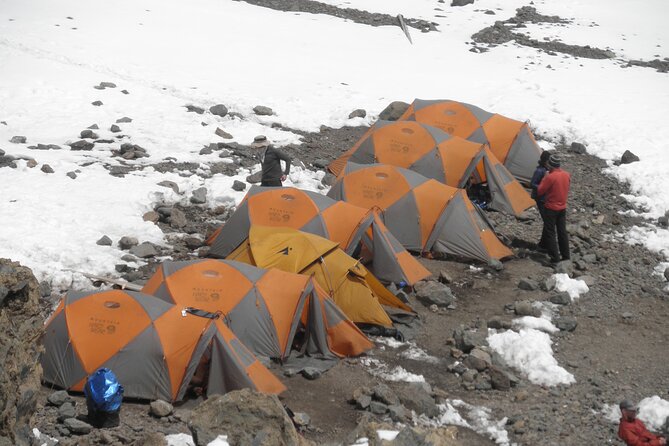
Day 5 is an important acclimatization day. You climb to about 4,250 meters, or roughly 15,000 feet, before descending into Barranco Camp. The hiking time is listed as five to six hours, with about four hours of ascent before the path turns toward the gorge.
The vegetation becomes sparse here. Grasses and lichens replace the thicker growth below, and the mountain takes on a dry, high-altitude character. Views toward the Western Breach of Kibo add drama, though cloud and weather can limit what you see.
The up-and-down pattern can be tiring. You are climbing high enough to stress your body, then giving back some height before sleeping. That is useful for acclimatization, but it can feel harder than a simple uphill walk.
Barranco Camp sits in a gorge, surrounded by steep mountain walls. This is the kind of place where a warm meal and a dry sleeping bag matter. The crew provides three meals, but personal snacks are still useful if you tend to eat small amounts throughout the day.
Scrambling up the Barranco Wall, Day 6
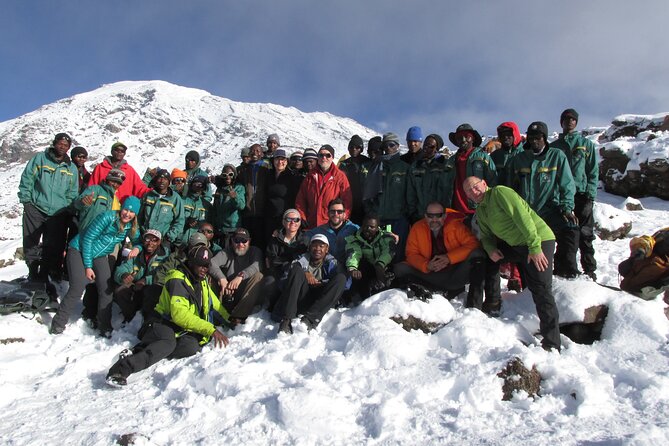
The morning begins with the Barranco Wall. It is not a technical climb, but you will use your hands in places and move carefully over uneven rock.
This section often becomes a highlight because it feels more active than a standard trail. The guides help manage the pace and route, but you should still bring confidence, patience, and a free pair of hands. Trekking poles are useful on the wider trail, though you may need to stow or shorten them during the scramble.
After the wall, you follow the Kibo South Circuit. In clear weather, you may see the southern glaciers. The day is relatively short, at three to four hours, and camp is reached around lunchtime after crossing ridges and valleys near the Karanga Valley.
That early arrival is valuable. You get a morning of walking without spending the entire day on your feet, leaving time to eat, rest, and prepare for the higher camps. The route still rises and falls, so do not assume the short mileage makes it effortless.
Barafu Camp and the wait for summit night, Day 7
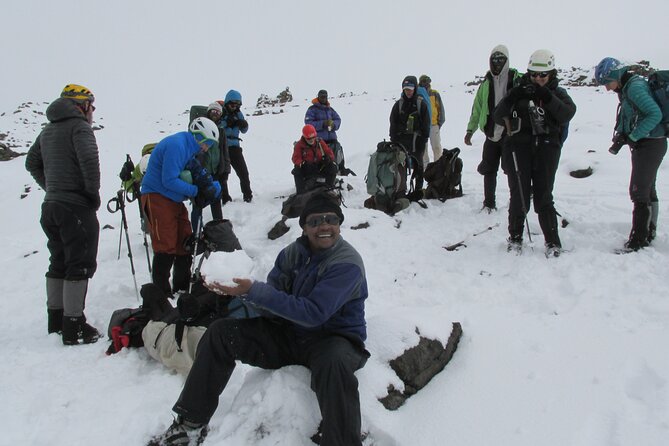
The trail climbs steadily toward Barafu Camp. As you gain height, the air grows colder and the plant life nearly disappears.
Barafu means ice in Kiswahili, and the camp sits on an exposed ridge. It is the staging point for the summit attempt, not a place for a long afternoon of sightseeing. The day takes four to five hours, with arrival expected around lunchtime.
This is when organization helps. Sort your warm layers, headlamp, water, gloves, snacks, and trekking poles before trying to sleep. The summit departure is around midnight, so you may have only a short period to rest.
The exposed setting can make Barafu feel stark and uncomfortable. That is part of the trade-off on this route. You are high, cold, and close to the summit, but the camp is not designed for luxury.
Uhuru Peak and the long return, Day 8
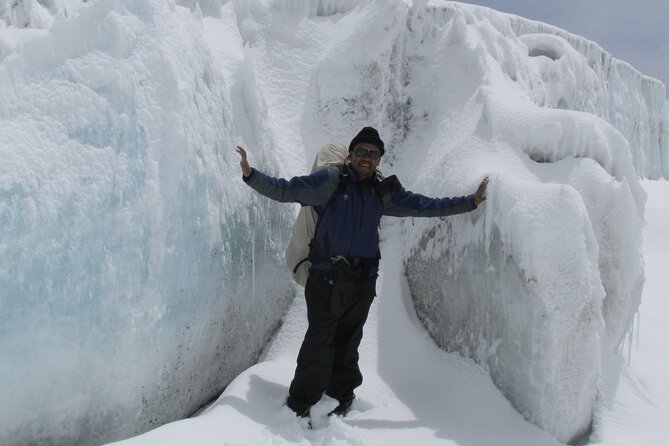
Summit day is the hardest section by far. You leave around midnight and climb toward Stella Point on a steep trail. The section to the crater rim takes about six to seven hours, followed by roughly one more hour to Uhuru Peak.
The route passes near Rebmann Glacier and between Rebmann and Ratzel glaciers. At about 4,870 meters, even simple movement takes effort. Your guide will set a slow pace, and you should focus on steady steps rather than distance.
You reach Uhuru Peak, at 5,895 meters, or 19,340 feet, around 8:00 a.m. Early morning often offers the clearest conditions, with wide views across Africa before clouds build. Weather is never guaranteed, so the achievement is the summit itself, not a perfect photograph.
After the summit, you descend by the Mweka side of the mountain. The supplied itinerary is cut off at this point, but it clearly continues the descent toward the lower mountain and the final Mweka Gate hike on Day 9.
This is a very long day. The descent can be hard on knees and toes after hours of climbing, and tiredness increases the chance of slipping. Trekking poles are specifically recommended, and I would treat them as essential equipment for this itinerary.
Mweka Gate and the return to Moshi, Day 9
The final hike takes three to four hours and drops about 3,500 feet to Mweka Gate. The trail can be steep and slippery when wet, so poles remain useful even though the summit is behind you.
At the gate, you say goodbye to the mountain crew and have a picnic lunch. Then you return to the Moshi hotel for a hot shower at Bristol Cottages or Parkview Inn.
This final day can feel surprisingly emotional. The guides, chef, and porters have been part of your daily routine, and the farewell is a real part of the experience rather than a minor administrative stop.
The included staff salaries cover the operating cost of the climb, but tips are not included. Plan for tipping separately and ask during orientation how the company handles it.
Airport, safari, or Zanzibar, Day 10
On Day 10, you are transferred to Kilimanjaro International Airport if you are heading home. If you continue to safari or Zanzibar, pickup is arranged from your hotel for the next part of your trip.
The extra day helps keep the climb from ending in a rushed airport transfer. Still, check your flight time carefully and confirm the transfer details, especially if your departure is early.
Guides, safety, meals, and camping
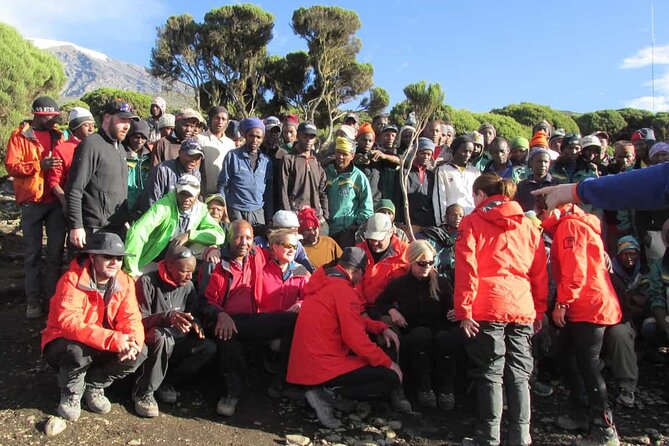
The experience is run by Real Life Adventure Travel. Freddie Chikima is specifically associated with the company, and Hans and Wilfred are named as guides who have led summit attempts. The available information also points to a strong emphasis on personal care, encouragement, and support during the climb.
You have a guide, chef, and porters on the mountain. Meals include seven breakfasts, seven lunches, and six dinners, with the final picnic lunch on the descent. Alcoholic and soft drinks are not included, so bring money if you want to buy drinks outside the supplied meal and water arrangements.
The safety package is one of the strongest practical features. It includes emergency oxygen, oximeters, a hyperbaric chamber, and Flying Doctors Insurance. These provisions do not remove the risks of altitude, but they show that the operator has planned for medical problems rather than treating them as an afterthought.
This is a private activity, so only your group participates. That can make the pace and communication easier to manage, though the price may be higher than a large shared departure. Group discounts are offered, which could improve the value if you are booking with friends or family.
What the $3,025 price really covers
At $3,025 per person, this is not a budget mountain holiday. The cost becomes easier to judge when you look at what is included: all park fees, mountain camping, staff salaries, meals, filtered or boiled water, airport pickup, hotel nights in Moshi, and emergency support.
You still pay for international or local flights, visa fees, drinks, tips, personal spending, and travel insurance. Those extras can add up, so build them into your total before comparing this trip with another operator.
I see the value mainly in the 10-day schedule. Longer itineraries generally give you more time to adjust to altitude than a compressed climb, and this route includes several deliberate acclimatization sections. The price also covers a private group rather than placing you in a mixed party.
The important question is not simply cost per day. Ask what safety equipment, park fees, staff pay, meals, and support are included, then compare like with like.
Who should book this climb?
I would recommend it to you if you have moderate fitness and some hiking or backpacking experience. You do not need technical climbing skills for the Barranco Wall, but you do need to handle long days, steep trails, cold conditions, basic camping, and a midnight summit start.
This is a good fit for an adventurous private group that wants varied scenery and a slower 10-day schedule. It also works well if you plan to add a safari or Zanzibar afterward, since the final day is arranged around onward travel.
I would hesitate if you want hut accommodation, short walking days, or a relaxed holiday with only a little exercise. The Machame Route is scenic because it is demanding, not because it is easy.
Free cancellation is available up to 24 hours before the experience starts. Changes or cancellations made inside that window are not accepted for a refund.
Should you book the 10-day Machame Route climb?
Book this trip if you want Kilimanjaro’s most varied scenery, a private group, strong logistical support, and more acclimatization time than a short climb. The Barranco Wall, Shira Plateau, southern glaciers, and Uhuru Peak give the route plenty of memorable sections.
Before paying, confirm the exact Day 8 descent plan, hotel choice, tipping practice, equipment requirements, and airport transfer time. If you are prepared for a long summit night and basic mountain camping, the 10-day schedule offers a sensible balance of challenge, scenery, and support.
FAQ
Where does the Kilimanjaro climb start and finish?
The activity starts in Moshi, Tanzania, with airport pickup from Kilimanjaro International Airport. After the mountain descent, you return to your Moshi hotel, and the overall activity ends back at the meeting point.
How long is the Machame Route experience?
The experience lasts approximately 10 days. It includes arrival and preparation in Moshi, seven mountain hiking days, a return to Moshi, and departure or onward travel arrangements.
What is included in the price?
The price includes park fees, mountain camping, guide, chef, and porter salaries, boiled or filtered water, emergency oxygen, oximeters, a hyperbaric chamber, Flying Doctors Insurance, seven breakfasts, seven lunches, and six dinners.
Is this a private tour?
Yes. Only your group participates in the activity. Group discounts are available.
What fitness level is required?
A moderate level of physical fitness is required. The Machame Route is considered challenging, with steep trails, long hiking days, a midnight summit attempt, and a descent that can be slippery when wet.
Can I cancel for a full refund?
You can cancel up to 24 hours before the experience start time for a full refund. Cancellations or changes made less than 24 hours before the start time are not accepted for a refund.
Newly listed around Moshi & Kilimanjaro
- Climb Mount Kilimanjaro: 7 Days Machame Route★ 5.0 · 3 reviews
- 6 Days Mount Kilimanjaro Climbing via Rongai Route★ 5.0 · 3 reviews
- Explore 1 day Ngorongoro Crater Budget Group Safari from Arusha★ 5.0 · 3 reviews
- Mt. Kilimanjaro Day Hiking★ 5.0 · 3 reviews
- Chemka (Kikuletwa) Hot Springs, Tanzania★ 5.0 · 3 reviews
- Guided City tour of Moshi★ 4.3 · 3 reviews
- 8 Day Tanzania Family Safari★ 5.0 · 3 reviews
- Serengeti Safari with Sirikwa Travel★ 5.0 · 3 reviews
Kilimanjaro Climbs, compared.








Browse the lists this tour appears in