
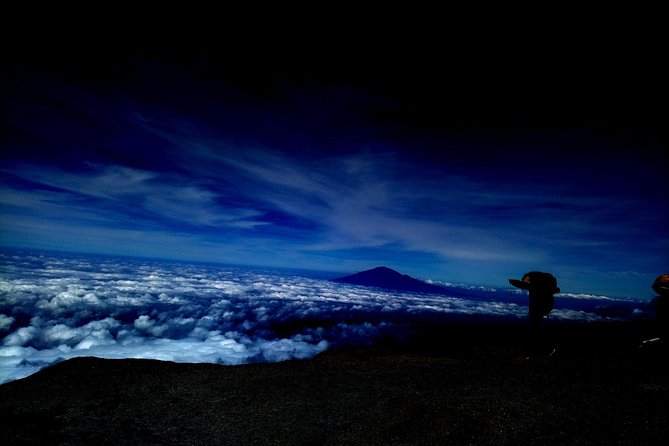
Reviewed · KILIMANJARO CLIMBS
5 Days Marangu route Climbing Mt. Kilimanjaro
Kilimanjaro’s Marangu Route gives you Africa’s highest summit through five very different zones, from monkey-filled rainforest to a stark alpine desert. I like the practical hut accommodation and the strong support package, including meals, porters, oxygen, and a first-aid kit. Guide Bakari is singled out by name for patience and care. The catch is the schedule: five days is fast, with a hard midnight summit push and limited time to adjust to altitude.
I also like that the price includes two nights in Moshi, airport transfers, park and hut fees, and transportation to the trailhead. That makes budgeting easier. Still, you need a strong fitness level, good warm clothing, and realistic expectations. This is not a gentle scenic walk, even though the route is often considered the most straightforward way up the mountain.
Key points before you book
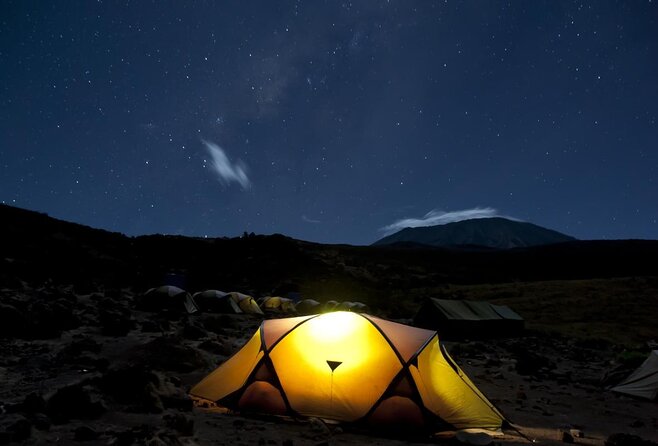
- Five days on the Marangu Route: You hike through rainforest, heathland, alpine desert, and the high summit zone before returning through the forest.
- Hut accommodation: You sleep at Mandara, Horombo, and Kibo encampments rather than camping in tents.
- Summit night begins around midnight to 2 am: Expect darkness, cold, steep switchbacks, scree, and a long descent afterward.
- Useful inclusions: Park fees, hut fees, meals, treated water, porters, a cook, guides, oxygen, and emergency equipment are covered.
- Small maximum group: The stated limit is 15 people, which should allow more direct contact with the guide team than a very large departure.
- Good support in Moshi: Two nights of accommodation and airport transfers are included, helping simplify the start and finish.
Why the Marangu Route suits some climbers
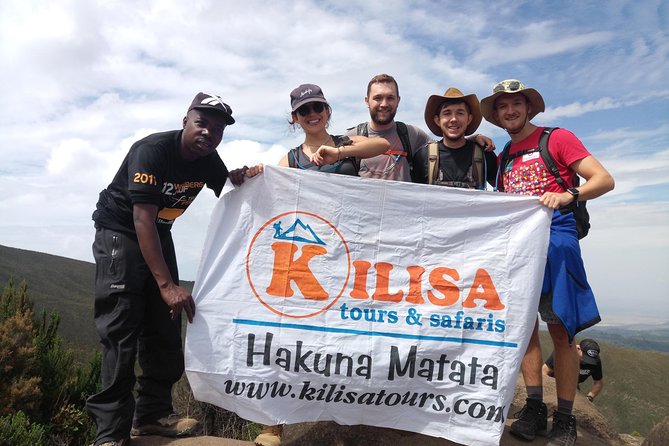
The Marangu Route is a good fit if you want a guided Kilimanjaro climb with hut beds rather than tent camping. You walk up and down the same general route, which is less varied than some other approaches, but the huts make the nights simpler.
The route is also easy to understand. Day 1 starts at the Kilimanjaro National Park Gate and finishes at Mandara. Day 2 continues to Horombo. Day 3 reaches Kibo, where you rest before the summit attempt. After Uhuru Peak, you descend to Horombo, then leave the mountain through Mandara and the park gate on Day 5.
The five-day length deserves careful thought. You gain less time for altitude adjustment than on a longer climb. The schedule includes a substantial ascent each day, followed by the summit night on Day 4. If you have never spent time at high altitude, you should take the physical demands seriously and discuss the trip with a medical professional before booking.
The tour requires a strong fitness level. That does not mean you need to be an elite athlete, but you should be ready for several hours of walking each day, steep uphill sections, cold conditions, and a very long summit day.
More Kilimanjaro routes:
- Kilimanjaro climb by Lemosho Route (7-day)
★ 5.0 · 651 reviews - Kilimanjaro climb, Machame Route (7-day)
★ 5.0 · 262 reviews - Kilimanjaro Climbing Lemosho Route 8 Days.
★ 5.0 · 186 reviews
Day 1: rainforest from the park gate to Mandara
The day begins after breakfast and a briefing, followed by about an hour of driving to the Kilimanjaro National Park Gate. Registration takes place there before you begin walking.
The first day covers about 8 kilometers, with three to four hours of hiking. You climb from roughly 1,860 meters to 2,700 meters through montane forest. This is the most tropical section of the route, with towering eucalyptus trees, bird life, and the possibility of seeing colobus monkeys.
Mandara is your first mountain hut stop. If you have enough energy, the side trip to Maundi Crater offers a useful view over northern Tanzania and toward Kenya. I like this option because it adds a short viewpoint without changing the character of the day.
The forest can be damp, so keep rain gear easy to reach. Even when the day feels warm, you should not bury your warmer clothing at the bottom of your bag. Your lunch and dinner are included, and the support team provides treated and filtered drinking water.
Day 2: open heathland and views of Mawenzi
Day 2 leaves the forest behind and climbs across open moorland to Horombo, at about 3,700 meters. The distance is around 12 kilometers, and the walking time is listed as five to six hours.
This is a longer day than the first. The vegetation changes noticeably, with giant lobelias and groundsels appearing along the route. You also begin to see the peaks of Mawenzi and Kibo, giving you a clearer sense of the climb ahead.
Horombo is an important overnight stop because altitude may begin to affect you here. Headache, tiredness, poor sleep, or a reduced appetite can occur at elevation. The guide team should know how you are feeling, so speak up early rather than trying to hide symptoms.
The huts remove one common problem: setting up a tent after a tiring climb. You still need to carry your personal day items, and you should keep your sleeping and warm layers organized before reaching camp. Breakfast, lunch, and dinner are included on this day.
Day 3: from Horombo to Kibo across the moonscape
Day 3 covers about 9 kilometers in five to six hours, rising from 3,700 meters to about 4,700 meters. The trail passes the last watering point and crosses the saddle between Mawenzi and Kibo.
At first, you remain in upper heathland. Then plant life thins out and the surroundings become a bare alpine desert, described in the program as a moonscape. This is one of the most striking changes on the climb. The colorful lower zones are gone, replaced by rock, dust, and wide open ground.
Kibo is your base before the summit attempt. Dinner is followed by rest and preparation for the night climb. The timing matters: you may eat early and try to sleep before midnight, although altitude and anticipation can make that difficult.
Use this afternoon to prepare every layer, battery, snack, and headlamp. You do not want to search through your bag in the dark. The route has no watering point after the one mentioned earlier, so make sure you understand how the water supply will be handled. Treated and filtered water is included throughout the trek.
More five day trips in Moshi & Kilimanjaro:
- 5 Days Camping Tarangire, Serengeti & Ngorongoro crater & Visiting Maasai
★ 5.0 · 58 reviews - 5-Day Majestic Tanzania Safari – High End All Inclusive
★ 5.0 · 44 reviews - 5 Day Mid range Tanzania Safari
★ 5.0 · 34 reviews - 5 days Tanzania Camping Safari
★ 5.0 · 29 reviews
Day 4: the midnight climb to Uhuru Peak
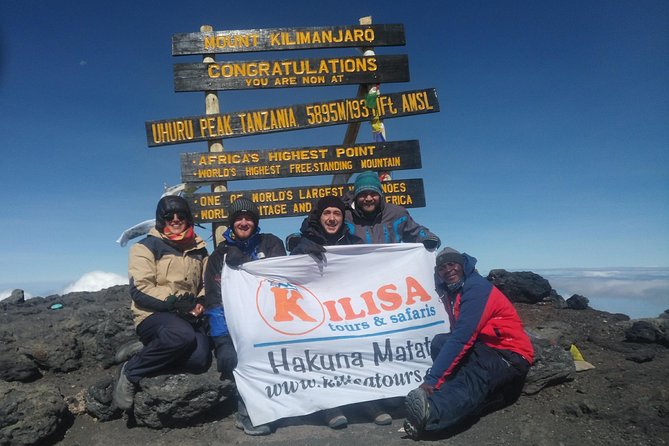
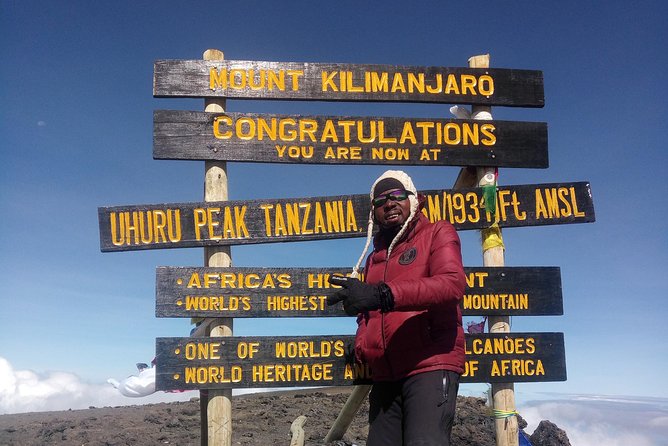
Day 4 is the hardest part of the experience. The climb begins sometime between midnight and 2 am, using a headlamp or flashlight. You ascend steep scree, or snow if conditions require it, toward Gilman’s Point on the crater rim, then continue to Uhuru Peak, the highest point in Africa.
The supplied schedule cuts off before giving the full summit elevation, so I would confirm the exact climbing times and expected return schedule with Kilisa Tours & Safaris before departure. The important point is that you begin above 4,700 meters and climb into a much colder, thinner-air environment.
This section includes many switchbacks. The advice to walk pole pole, meaning slowly, is practical rather than decorative. A steady pace gives you a better chance of managing the altitude and conserving energy. An optimistic attitude helps too, but it should never replace honest communication with your guide.
You need all your warm layers. The start is in darkness, and the cold continues until you lose elevation. Gloves, a hat, headlamp, and accessible rain or wind protection are essential based on the conditions described. Your phone or camera battery may also struggle in the cold, so keep it protected.
At the summit, you can take photographs at Uhuru Peak before beginning the descent. The views are described as wide and striking from the upper route, but remember that clouds, snow, wind, or poor visibility can change what you see.
You descend to Kibo for lunch and a rest, then continue to Horombo. This is a huge day because the route combines the summit ascent with a long descent. Arriving at Horombo is not the end of the effort, but it gives you a proper hut stop before the final walk out.
The package includes portable oxygen tanks, an oxygen meter, and an emergency first-aid kit. These are reassuring safety tools, not guarantees against altitude illness. A careful guide will monitor your condition and make decisions based on safety.
Day 5: the muddy forest descent to Moshi
After breakfast, you descend from Horombo through moorland to Mandara Hut, then continue through the forest to the Marangu gate. The listed distance is about 20 kilometers, with four to five hours of hiking, descending from roughly 3,700 meters to 1,700 meters.
The route is generally easier on the lungs than the summit day, but the distance can feel long after your overnight climb. Lower sections may be wet and muddy. Gaiters and trekking poles are useful, and you may find shorts and a T-shirt comfortable at the lowest elevations. Keep rain gear and a warmer layer within reach because mountain weather can change.
A vehicle waits at Marangu Gate for the roughly one-hour drive back to your Moshi accommodation. Airport transfers are also included between Kilimanjaro International Airport and your accommodations in Moshi, which is helpful if you do not want to arrange separate transport around a demanding climb.
What the $2,330 price covers
At $2,330 per person, this is not a bare-bones trail package. The price includes two nights in Moshi, private airport transport, transport to and from the national park gate, park entry fees, hut fees, rescue fees, government taxes, and 18 percent VAT.
On the mountain, you receive a guide team, cook, and porters, along with three hot meals a day. Breakfast is listed five times, lunch four times, and dinner four times. Treated and filtered drinking water, hot water for washing, oxygen, and a first-aid kit are also part of the package.
That list gives the price real value, especially if you were planning to pay park fees, accommodation, food, transfers, and mountain staff separately. The main extra cost to plan for is tipping the guides, porters, and cook. Travel insurance and flights are not included.
Ask for a clear explanation of the tipping recommendation, the Moshi hotel details, and the exact summit-day schedule before paying. These questions do not change the listed price, but they help you understand the full budget.
The human side of the support team
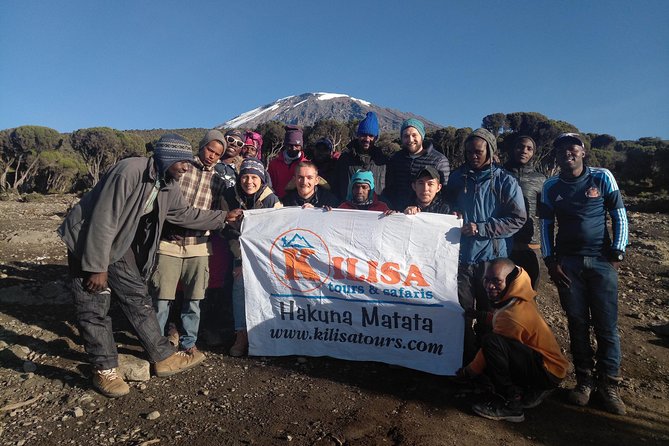
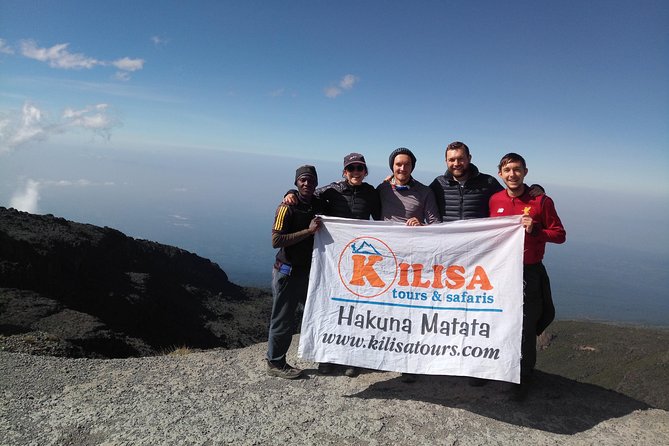
The most strongly praised part of the experience is the guide service. Bakari is specifically described as professional, patient, cheerful, kind, helpful, and attentive. Those qualities matter most on the summit night, when a calm guide and clear explanations can make a difficult climb feel manageable.
The company’s communication also receives repeated positive attention. Rama is named as someone who checked in before the climb and explained the day-by-day plan. Naick is mentioned for providing information about Tanzania and Kilimanjaro before arrival. Juliana handles follow-up communication from the company.
You should still ask who your lead guide will be at the time of booking, since the named staff may vary. The maximum group size is 15 people, and the package includes a cook and porters as well as mountain guides. That gives you a support structure rather than leaving you to manage food, water, and camp logistics alone.
Remember that a successful climb depends on the whole team, not only on the person walking beside you. Treat porters fairly, pack within the operator’s stated limits, and budget for tips before you arrive.
Practical preparation for this five-day climb
You need clothing for several climates. The forest can be wet, the moorland can feel mild during the day, and the summit section can be bitterly cold. Pack layers rather than one heavy coat, and keep rain gear accessible.
A headlamp or flashlight is required for the summit start. Trekking poles can help on both the steep ascent and the muddy final descent. Gaiters are useful on Day 5, particularly if rain has made the lower trail soft.
Your most important preparation is pacing. Do not race on Day 1 or Day 2 because the first sections feel pleasant. The altitude becomes a bigger concern around Horombo and Kibo, and you need energy for the summit night.
The company provides hot water for washing, but you should still expect basic mountain-hut conditions rather than hotel comfort. You should also confirm what personal equipment is supplied, since the provided details do not list sleeping bags, trekking poles, clothing, or other rental items.
The group limit of 15 is reasonable, but the pace may not suit everyone equally. Tell the guide if you are struggling. The package includes safety equipment, yet the best safety measure is early, honest communication.
Who should book this Kilimanjaro climb
I would recommend this trip to a fit first-time high-altitude climber who wants a structured route, hut accommodation, full meal support, and transport arranged around the climb. It can also suit someone who values direct guidance and does not want to organize park fees, food, porters, and transfers independently.
I would be cautious about booking it if you have no time for physical preparation or if you strongly prefer a slower altitude schedule. The five-day format is efficient, but it leaves little spare time when you feel unwell or need a slower pace.
The route itself offers plenty of visual change. You begin among eucalyptus trees and monkeys, cross open heathland with giant plants, enter a stark alpine desert, and finish with a long forest descent. The summit night is the centerpiece, but the changing zones are what make the full climb memorable.
Should you book it?
Book this Kilimanjaro climb if you want a well-supported Marangu Route package with huts, hot meals, Moshi accommodation, airport transfers, and a clearly stated price. The strongest reasons are the practical inclusions and the emphasis on attentive guides, especially Bakari, Rama, and the wider Kilisa team.
Before booking, confirm the full summit timetable, equipment available for hire, hotel names, and tipping guidance. If you can train properly and accept the demanding five-day schedule, this offers a sensible way to attempt Uhuru Peak. If you want more time to adjust to altitude, compare it with a longer Kilimanjaro route.
FAQ
Where does the climb start?
The experience starts at Kilimanjaro National Park in Tanzania after transport from Moshi. The listed meeting point is Kilimanjaro International Airport, and pickup is offered.
How long is the experience?
The climb lasts approximately five days. The schedule includes two nights of accommodation in Moshi and four nights of meals on the mountain.
Where do you sleep during the climb?
You stay in mountain huts at Mandara, Horombo, and Kibo encampments. The provided information does not specify the exact room or bunk arrangements.
Is food included?
Yes. Three hot meals daily are provided while you are on the mountain. The package lists five breakfasts, four lunches, and four dinners.
Is drinking water provided?
Yes. Treated and filtered drinking water is provided throughout the trek.
Is airport transport included?
Yes. Private transport to and from Kilimanjaro International Airport and your Moshi accommodations is included. Transport to and from the Kilimanjaro gate is also included.
Do I need travel insurance?
Yes. Travel insurance is not included in the tour price, so you need to arrange it separately.
What happens if I cancel?
You receive a full refund if you cancel at least 24 hours before the experience start time. Cancellations or changes made within 24 hours are not accepted for a refund, and poor-weather cancellations may result in a different date or a full refund.
Newly listed around Moshi & Kilimanjaro
- Climb Mount Kilimanjaro: 7 Days Machame Route★ 5.0 · 3 reviews
- 6 Days Mount Kilimanjaro Climbing via Rongai Route★ 5.0 · 3 reviews
- Explore 1 day Ngorongoro Crater Budget Group Safari from Arusha★ 5.0 · 3 reviews
- Mt. Kilimanjaro Day Hiking★ 5.0 · 3 reviews
- Chemka (Kikuletwa) Hot Springs, Tanzania★ 5.0 · 3 reviews
- Guided City tour of Moshi★ 4.3 · 3 reviews
- 8 Day Tanzania Family Safari★ 5.0 · 3 reviews
- Serengeti Safari with Sirikwa Travel★ 5.0 · 3 reviews
Kilimanjaro Climbs, compared.








Browse the lists this tour appears in