
Reviewed · KILIMANJARO CLIMBS
Our Top 5-Day Kilimanjaro Marangu Route: 2025 and 2026 Updates
The big draw here is simple: the Marangu Route uses sleeping huts, not tent camps, all the way up the mountain. You start in Moshi, pass through rainforest and moorland, and make your summit attempt from Kibo Hut at 4,695 meters.
I like the included Moshi hotel pickup and the full meal plan, which remove two common worries before the climb begins. I also like the strong focus on guide support, with Victor, Thomas, Noah, Gabriel, Samson, Martin, Budah, and manager Godfrey Ngaiza named in past accounts. The main caution is the schedule: five days gives you little spare time for acclimatization, so you need a reasonable fitness level and a serious approach to altitude.
Key points to know before booking
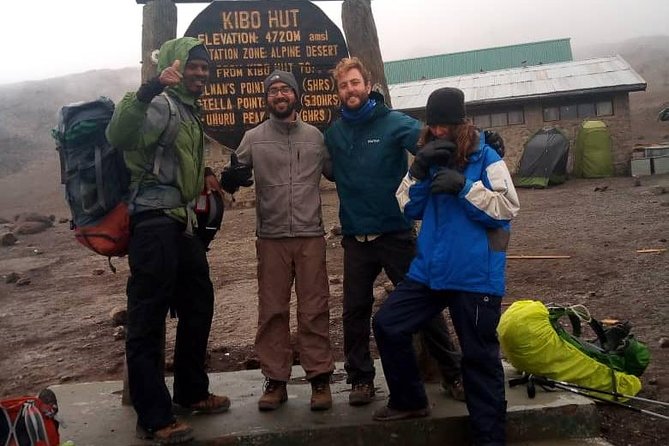
- Hut accommodation throughout: You sleep in dormitory-style mountain huts rather than carrying a tent or sleeping in a tent camp.
- Uhuru Peak at 5,895 meters: The summit day begins before dawn from Kibo Hut and ends with a long descent to Horombo.
- Moshi hotel pickup included: Transport to Marangu Gate is provided from the hotel you booked in Moshi town.
- Meals are covered: Breakfast, lunch, and dinner are provided during the trek.
- The five-day pace is demanding: The itinerary moves from 1,830 meters to 5,895 meters in a short time, with no separate acclimatization day.
- Park fees are extra: Kilimanjaro park charges are not included in the $1,080 price and must be paid directly or handled through the operator.
Why the Marangu Route attracts first-time climbers
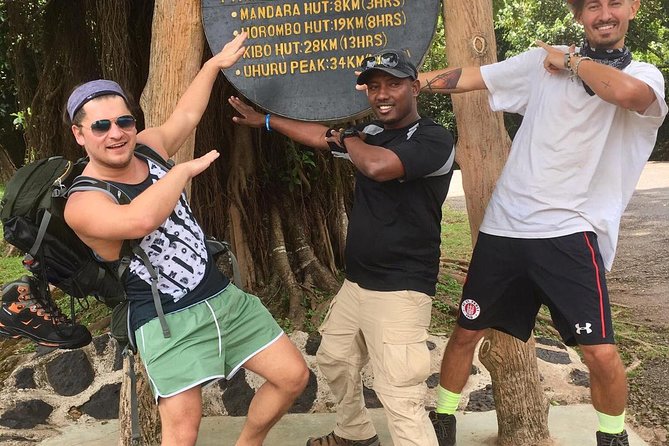
Marangu is often called the easier Kilimanjaro route because the trail is relatively direct and the overnight setup is less rugged. That description needs a little care. You still face high altitude, cold, darkness, loose footing, and a summit day that can last many hours.
The comfort comes from the huts. You do not need to sleep in a tent, and you do not need to pack camping shelter. That matters after a long day on the trail, especially when you are already tired and the air is thin. The huts do not turn Kilimanjaro into a gentle walk, but they make the evenings simpler.
The route follows the same path up and down, unlike some Kilimanjaro routes that ascend one side and descend another. I see that as both a strength and a weakness. You get a familiar trail on the way back, but you see less of the mountain than you would on a longer route.
This five-day version costs $1,080 per person. That price includes guide service, meals, trekking support, a certificate, and pickup from your Moshi hotel. It does not include park fees, flights, insurance, personal hiking equipment, airport transfers, or hotels before and after the climb. Add those costs before comparing it with other operators.
More Kilimanjaro routes:
- Kilimanjaro climb by Lemosho Route (7-day)
★ 5.0 · 651 reviews - Kilimanjaro climb, Machame Route (7-day)
★ 5.0 · 262 reviews - Kilimanjaro Climbing Lemosho Route 8 Days.
★ 5.0 · 186 reviews
Day 1: Marangu Gate to Mandara Hut
Your morning begins at 7:00 a.m. with pickup from your hotel in Moshi. At Marangu Gate, you register, meet the mountain crew, and receive a briefing before setting out.
The first day covers about 7 kilometers. You climb from 1,830 meters to 2,740 meters, with roughly four to five hours of walking. The path passes through rainforest, where the air is damp, the trees are thick, and the sound of the forest helps take your mind off the climb.
The itinerary names Marangu Falls, though the practical first-day goal is the trek from Marangu Gate to Mandara Hut. Admission tickets are not included in the listed stop information, and park fees are also excluded from the tour price, so ask exactly how these charges will be handled before you arrive.
Mandara is a sensible first night because the distance is manageable. You will have time to eat, settle into the hut, and prepare your clothing and daypack for the morning. The hut arrangement is the main comfort here, though sleeping quarters are dormitory-style rather than private rooms.
Your guide should set the tone on this first day. Walk slowly from the beginning. Many people make the mistake of treating the rainforest section as a warm-up race, then pay for it later.
Day 2: Mandara to Horombo at 3,690 meters
After breakfast, you walk 11 kilometers to Horombo Hut. The planned time is six to eight hours, and the trail changes noticeably as you leave the forest behind.
The thick trees give way to open moorland. You see more sky, more rock, and broader views toward Kilimanjaro and the surrounding country. This change makes Day 2 feel like a real mountain journey rather than a forest hike.
Horombo sits at 3,690 meters, high enough for altitude symptoms to appear. Headache, poor sleep, tiredness, and loss of appetite can affect you even if you are fit. The itinerary allows time to rest and acclimatize at the hut, but it does not include a full extra day at Horombo.
That point is important. A six-day Marangu itinerary usually gives the body more time to adjust, while this five-day plan keeps moving. I would choose the five-day schedule only if you understand that the shorter duration means a tighter altitude progression.
The support described around this operator is one of the appealing parts of the package. Guides named in past climbs include Victor, Thomas, Noah, Gabriel, Samson, Martin, and Budah. Jackson and his serving crew have also been praised for taking care of meals and camp routines. Your own crew may be different, so confirm the guide team before departure.
Day 3: Horombo to Kibo Hut
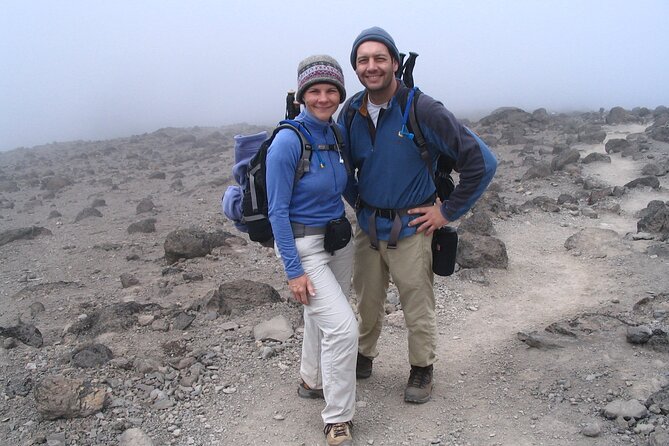
Day 3 covers 10 kilometers and takes about six to eight hours. You climb from 3,690 meters to 4,695 meters, entering a much barer section of the mountain.
The trees and taller plants fade away. The trail crosses a semi-desert zone with rocky ground and fewer plants. This is not a day for speed. The aim is to reach Kibo Hut with enough energy left for the summit attempt.
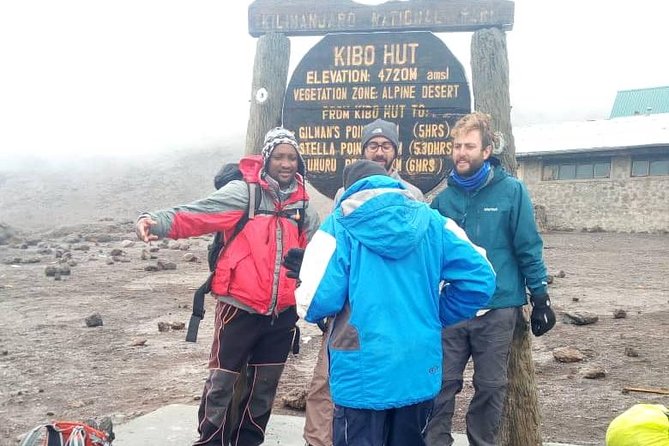
Kibo Hut is your launch point for Uhuru Peak. After arrival, you rest, eat, and organize your clothing for a very early start. Keep essential layers, gloves, headlamp, water, and snacks ready. The supplied information confirms meals during the trek, but it does not specify snack choices or equipment, so ask what food and drink support is provided.
The altitude at Kibo is already serious. You may feel short of breath while doing ordinary tasks. Move carefully, drink according to your guide’s advice, and tell the guide promptly if you feel unwell. A good mountain guide is not there only to point out the path. The guide also watches your pace and condition.
This night is likely to be short. The summit attempt begins in the early hours, and the next day combines the hardest climb with a long descent.
More five day trips in Moshi & Kilimanjaro:
- 5 Days Camping Tarangire, Serengeti & Ngorongoro crater & Visiting Maasai
★ 5.0 · 58 reviews - 5-Day Majestic Tanzania Safari – High End All Inclusive
★ 5.0 · 44 reviews - 5 Day Mid range Tanzania Safari
★ 5.0 · 34 reviews - 5 days Tanzania Camping Safari
★ 5.0 · 29 reviews
Day 4: Uhuru Peak and the long return to Horombo
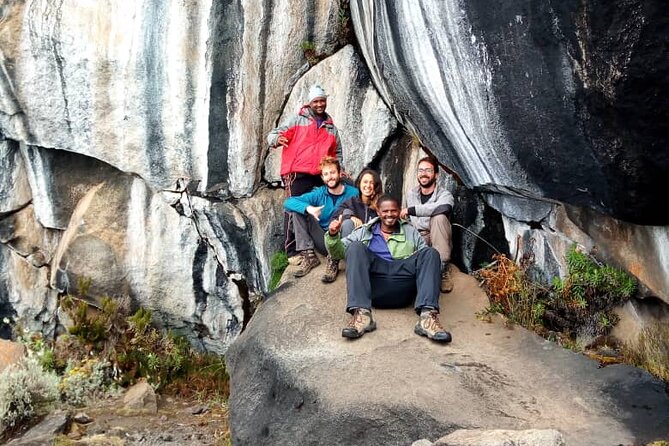
Summit day is the reason you are here, but it is also the day that demands the most patience.
From Kibo Hut, you climb about 4 kilometers to Uhuru Peak at 5,895 meters. The stated ascent takes five to seven hours. You leave in darkness, climb toward dawn, and reach the summit after a slow, demanding effort.
The reward is the sunrise view from the top, provided the weather cooperates. The experience is less about technical climbing than steady uphill movement at extreme altitude. Even a short distance can feel enormous when every step takes effort.
After celebrating at Uhuru Peak, you descend 14 kilometers to Horombo Hut. The listed descent time is five to six hours. Combined with the summit climb, this is a very long day, despite the itinerary displaying an approximate six-hour duration for the stop. Plan for the full range, not the shortest estimate.
This is where guide support matters most. Past groups have specifically praised guides including Gabriel, who gave close help to a climber struggling toward the summit, and Martin, who was credited with guiding a climber to Uhuru Peak. Another account singled out Budah for calm, professional support. These details suggest that personal attention is a major part of the experience, but you should still ask about guide-to-climber ratios and emergency procedures before booking.
Do not treat reaching the summit as the end of the day. You still need to descend to Horombo, eat, and recover. Your knees may complain more on the way down than they did on the ascent.
Day 5: Horombo to Marangu Gate
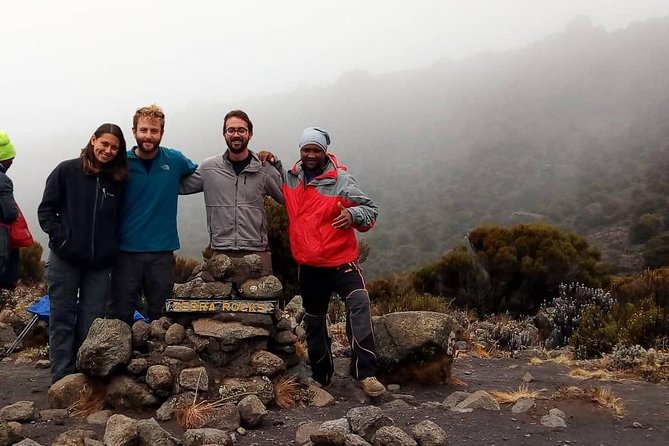
The final day covers 18 kilometers and takes about six to seven hours. You descend from 3,690 meters to 1,830 meters, passing back through the rainforest.
The green forest feels different after the high, bare slopes above Kibo. You have more air, more energy, and a clear end point. Wildlife sightings are possible according to the itinerary, though no specific animals are guaranteed.
At Marangu Gate, the trek ends and you are transferred back to Moshi. A trekking certificate is included, giving you a formal reminder of the achievement. The package does not include your hotel in town, so plan your post-climb night separately.
The final descent is not glamorous, but it is useful. You can reflect on the summit, the crew, and the sharp changes in climate as you move from high alpine terrain back into forest.
What the $1,080 price really covers
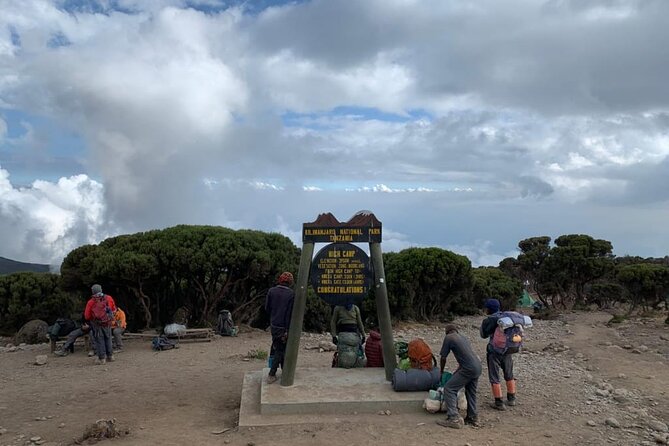
At $1,080 per person, this is not an all-in Kilimanjaro holiday. It is the core trekking package.
You receive:
- Pickup from your Moshi hotel to Marangu Gate
- A pre-trek briefing
- A professional Kilimanjaro guide
- Breakfast, lunch, and dinner during the trek
- A trekking certificate
- Camping fees, although the route description centers on hut accommodation
The wording around camping fees deserves clarification. Marangu is known for hut accommodation, so ask the operator what this line covers and whether hut charges are included in the final price.
You must budget separately for all Kilimanjaro park fees. You also pay for flights, airport transfers, hotels before and after the trek, travel or medical insurance, personal hiking gear, and crew tips.
That list can make the final cost much higher than the headline figure. Still, the package offers reasonable value if the quoted price is accurate and the park fees are clearly explained. Meals and Moshi pickup save you from arranging basic logistics on your own. The bigger question is not just price. It is whether the five-day schedule gives you a good chance of reaching the summit.
Guide support, group size, and the human side
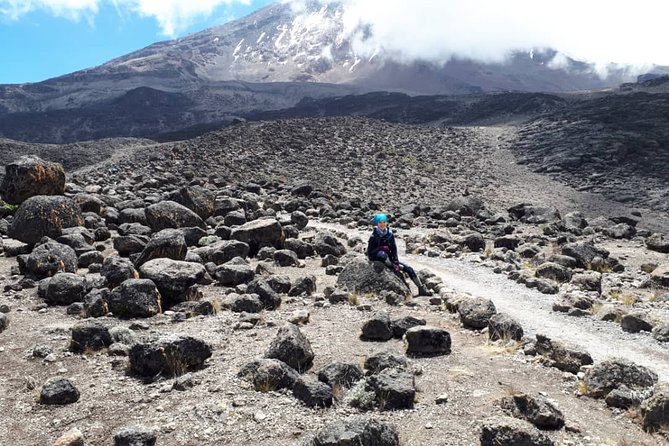
The operator is Africa Natural Tours. The supplied trip information allows groups of up to 100 people, which is a very large maximum. That does not mean your group will contain 100 climbers, but you should ask for the expected group size before paying.
Large groups can bring energy and shared motivation. They can also create slower administration at the gate and less individual attention unless the company divides people into smaller mountain teams.
The strongest praise connected with this experience concerns the crew. Names that appear repeatedly include Godfrey Ngaiza for communication and organization, Victor, Thomas, Noah, Gabriel, Samson, Martin, and Budah for guiding, and Jackson for food service. One account described a group of 24 friends being well looked after by several guides and servers. Another described a solo climber feeling safe and comfortable with constant checks from the guide team.
That kind of care is exactly what you want at altitude. I would still request clear answers about who will lead your climb, how many porters and guides are assigned, and how the company handles a climber who needs to turn back.
Tips for the crew are not included. Treat tipping as a separate part of your budget, and ask for the operator’s current guidance so you can plan fairly.
Who should choose this five-day climb?
This route suits you if you want the most direct Marangu schedule and value huts over tent camping. It is also a good fit if you prefer a package with meals, a briefing, a guide, and Moshi pickup already arranged.
You should have a moderate level of physical fitness. The distances are not extreme on every day, but the altitude changes quickly and summit day is long. You need to be comfortable walking for several hours on consecutive days.
I would be cautious about choosing this version if you are anxious about altitude, have limited hiking experience, or want a slower adjustment schedule. The six-day Marangu option mentioned in the supplied material may be worth comparing because the extra day can make the pace less rushed.
This is not a technical climbing course. The challenge comes from endurance, altitude, weather, and the length of the summit day. Personal hiking gear is not included, so arrive with suitable clothing and equipment or arrange rentals separately.
Booking details worth checking
Pickup is offered from a hotel you booked in Moshi town, and the scheduled start time is 7:00 a.m. Airport pickup and drop-off are not included. The activity ends back at the meeting point after the transfer from Marangu Gate.
Confirmation is provided when you book. The activity is near public transportation, but your own mountain transport is already handled if you are staying in Moshi and use the included pickup.
The operator allows free cancellation up to 24 hours before the local start time for a full refund. Cancellations or changes inside that window are not accepted for a refund. The climb also depends on good weather. If poor weather causes cancellation, you are offered another date or a full refund.
The published rating is 5 from 11 reviews, with a 100 percent recommendation figure. That is encouraging, though the sample is small, and several comments concern other Tanzania trips as well as Kilimanjaro. I would give the guide-support praise real weight, while still asking practical questions about fees, group size, and safety.
Should you book the 5-day Marangu Route?
Book it if you want hut accommodation, included meals, Moshi pickup, and a straightforward route to Kilimanjaro’s summit. The human support appears to be a major strength, and the named crew members have received warm praise for communication, care, and encouragement.
Think twice if your priority is the best possible acclimatization schedule. Five days is the shortest Marangu option described here, and the itinerary leaves little room for your body to adjust before the summit attempt.
Before paying, confirm the total price after park fees, the hut charges, your guide team, expected group size, tipping expectations, and the equipment you must bring. If those answers are clear and you are fit for long mountain days, this can be a practical first Kilimanjaro climb. If you want more breathing room, compare it with the six-day version.
FAQ
Where does the trek start?
The trek starts at Marangu Gate after pickup from your hotel in Moshi, registration, and a briefing.
What time does the activity start?
The scheduled start time is 7:00 a.m.
Where does the trek finish?
The trek finishes at Marangu Gate on Day 5, followed by a transfer back to Moshi. The activity ends at the meeting point.
Is accommodation included?
The route description provides hut accommodation at Mandara Hut, Horombo Hut, and Kibo Hut. The package information mentions camping fees, so confirm the exact accommodation charges before booking.
Are Kilimanjaro park fees included?
No. All Mount Kilimanjaro park fees are excluded. They can be paid directly to the park or through the tour operator.
Are meals included?
Yes. Breakfast, lunch, and dinner are provided during the trek.
Is airport pickup included?
No. Airport pickup and drop-off are not included.
What level of fitness do I need?
You should have a moderate level of physical fitness. The itinerary includes several days of hiking, a summit ascent to 5,895 meters, and a long descent on summit day.
Can I cancel for a full refund?
Yes. You can cancel at least 24 hours before the local start time for a full refund. Cancellations or changes made less than 24 hours before the start are not refunded.
Newly listed around Moshi & Kilimanjaro
- Climb Mount Kilimanjaro: 7 Days Machame Route★ 5.0 · 3 reviews
- 6 Days Mount Kilimanjaro Climbing via Rongai Route★ 5.0 · 3 reviews
- Explore 1 day Ngorongoro Crater Budget Group Safari from Arusha★ 5.0 · 3 reviews
- Mt. Kilimanjaro Day Hiking★ 5.0 · 3 reviews
- Chemka (Kikuletwa) Hot Springs, Tanzania★ 5.0 · 3 reviews
- Guided City tour of Moshi★ 4.3 · 3 reviews
- 8 Day Tanzania Family Safari★ 5.0 · 3 reviews
- Serengeti Safari with Sirikwa Travel★ 5.0 · 3 reviews
Kilimanjaro Climbs, compared.








Browse the lists this tour appears in