
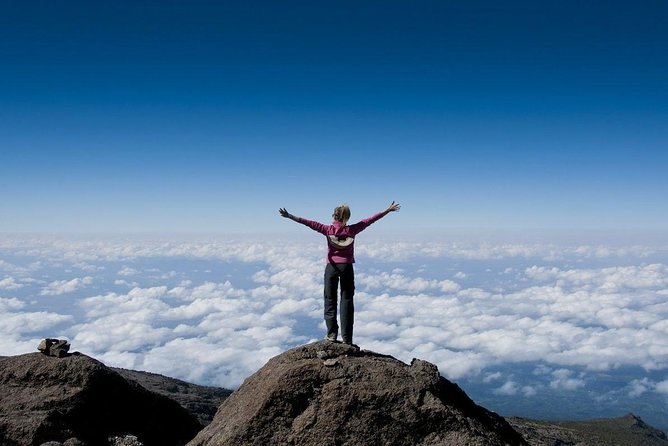
Reviewed · KILIMANJARO CLIMBS
5 days Marangu Route
The Marangu Route gives you the quickest standard path up Kilimanjaro, reaching 5,895 meters at Uhuru Peak in only five days. You sleep in mountain huts rather than tents, walk through rainforest and moorland, cross the stark Saddle, and make the summit attempt in the cold and dark.
I like the practical hut setup, which takes some weight off your shoulders after long walking days. I also like that the price includes airport transfers, hotel nights in Moshi, meals, porters, cooks, and emergency oxygen. The drawback is clear: five days is a fast climb, so your body has less time to adjust to altitude than it would on a longer route.
Key Points to Know Before Booking
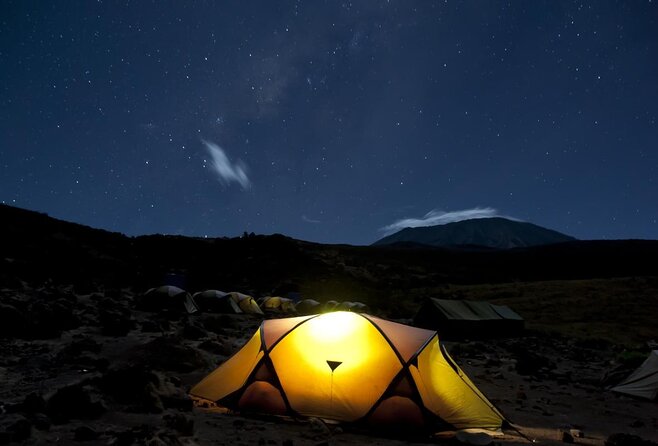
- Five-day summit schedule: The route reaches Uhuru Peak after only three nights on the mountain, followed by a very long summit day.
- Hut-based lodging: You sleep in mountain huts along the Marangu path, not in a conventional hotel.
- Maundi Crater viewpoint: A short side trip on the first day gives you views toward Kenya’s interior.
- Difficult summit day: Day four covers about 22 kilometers and can take 12 to 15 hours.
- Strong support team: The operation provides a guide, assistant guides, porters, a cook, meals, hot washing water, and fresh drinking water.
- Good package value: At $2,150 per person, the rate includes two Moshi hotel nights, airport transfers, park costs, and mountain staff wages.
Why the Marangu Route Appeals to Many Climbers
Marangu is often called the Coca-Cola Route because it is popular and has a well-maintained trail. That popularity does not make the mountain easy. You still face thin air, steep ground, cold nights, and a summit morning that tests your patience as much as your legs.
The route’s main selling point is speed. You reach the summit in five days, making it attractive if your Tanzania schedule is tight or if you prefer hut accommodation to camping. The huts also mean you do not need to carry a full tent and sleeping system, although you still need suitable personal trekking gear.
The tradeoff is acclimatization. The itinerary moves from Mandara Hut to Horombo, then Kibo, with no dedicated extra day at altitude. You may handle the walking well and still find the summit difficult because the ascent happens quickly. I would treat the five-day schedule as a serious high-altitude climb, not as a short sightseeing walk.
The support structure is one of the package’s strongest points. A qualified mountain guide leads the climb, with assistant guides, porters, and a cook handling the work that lets you focus on walking. The operation is also associated with organizer Wence and guides named Msafiri, Rama, and Allan. Ask before booking which members of the team will lead your departure.
More Kilimanjaro routes:
- Kilimanjaro climb by Lemosho Route (7-day)
★ 5.0 · 651 reviews - Kilimanjaro climb, Machame Route (7-day)
★ 5.0 · 262 reviews - Kilimanjaro Climbing Lemosho Route 8 Days.
★ 5.0 · 186 reviews
Day One: Marangu Gate to Mandara Hut
Your morning begins with breakfast and pickup from your Moshi lodge. The transfer takes you to Marangu Gate, where the park paperwork is completed before you start walking.
The first section passes through dense tropical rainforest. This is one of the most pleasant parts of the climb because the vegetation is thick, the air feels cooler, and you may catch sight of primates. The forest gives you a gentle introduction, but the five-hour walk still requires a steady pace.
Mandara Hut sits at the end of an 8.3-kilometer day. After settling in, you can walk with your guide to Maundi Crater. This viewpoint is a worthwhile extra because it provides a broad look toward the Kenyan interior and gives the first day more than a simple march to bed.
You should resist the temptation to judge the climb by this opening day. The rainforest section is scenic and manageable, but the altitude becomes a much bigger issue after Mandara. Drink the supplied water, eat properly, and use the first night to rest.
Day Two: Mandara to Horombo Through Moorland
Day two covers about 12.5 kilometers and takes around nine hours according to the schedule, though the listed walking time is approximately six hours. That difference tells you something useful: mountain timing is flexible, with breaks, meal stops, and pace affecting the total day.
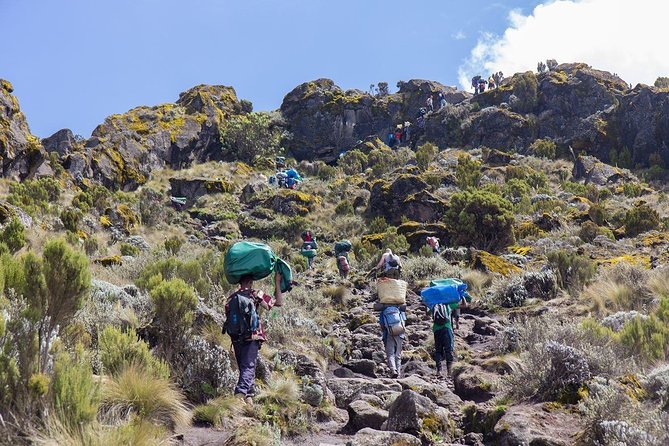
After leaving Mandara, you soon reach the timberline. The forest gives way to heath and moorland, with much less cover and a more open feel. Horombo Hut appears after roughly four to six hours of walking and sits at about 3,700 meters.
The setting around Horombo is one of the route’s highlights. You get views toward Mawenzi and Kibo, along with the broad plain of the Masai steppe. This is also the point where you may begin to notice altitude more clearly. A headache, poor sleep, or reduced appetite can appear even if your legs still feel strong.
The day is long enough to be tiring but not as punishing as the summit stage. Keep your pace slow and even. Your goal is not to arrive first. Your goal is to reach Kibo with enough energy for the final push.
Day Three: Horombo to Kibo Across the Saddle
The third day covers 9.5 kilometers and takes about seven hours. The trail passes the Last Water point, then continues across the Saddle, a broad plateau with almost no vegetation between Mawenzi and Kibo.
This is a striking change from the forest and moorland below. The Saddle feels exposed and bare, with the two major volcanic peaks giving the route its sense of scale. It is not the most technically complex section, but the altitude and lack of visual shelter can make the walk feel slow.
Kibo Hut is usually reached after six to seven hours. You eat an early evening meal and go to bed early because the summit attempt begins around midnight. That short night is an important part of the schedule. You will not be getting a full night of rest before the hardest day.
Kibo is where the five-day format becomes most demanding. There is no separate acclimatization day built into this plan. If you feel unwell, tell your guide. Emergency oxygen is included, but it is intended for emergencies only and is not a substitute for acclimatization or a way to force a summit attempt.
More five day trips in Moshi & Kilimanjaro:
- 5 Days Camping Tarangire, Serengeti & Ngorongoro crater & Visiting Maasai
★ 5.0 · 58 reviews - 5-Day Majestic Tanzania Safari – High End All Inclusive
★ 5.0 · 44 reviews - 5 Day Mid range Tanzania Safari
★ 5.0 · 34 reviews - 5 days Tanzania Camping Safari
★ 5.0 · 29 reviews
Day Four: The Midnight Climb to Uhuru Peak
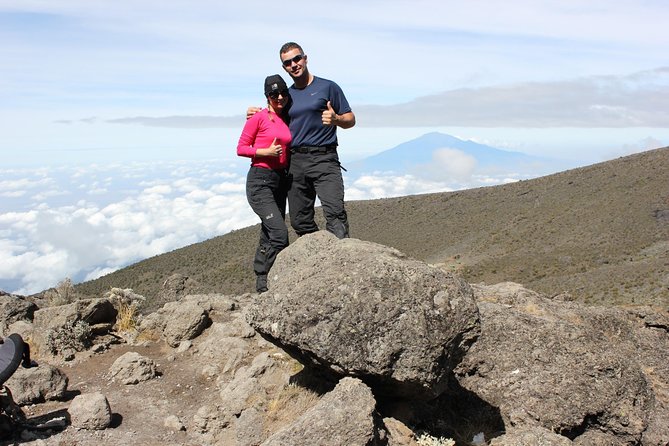
Day four is the heart of the trip and the point where the schedule becomes genuinely strenuous. You start around midnight and cover approximately 22 kilometers over 12 to 15 hours.
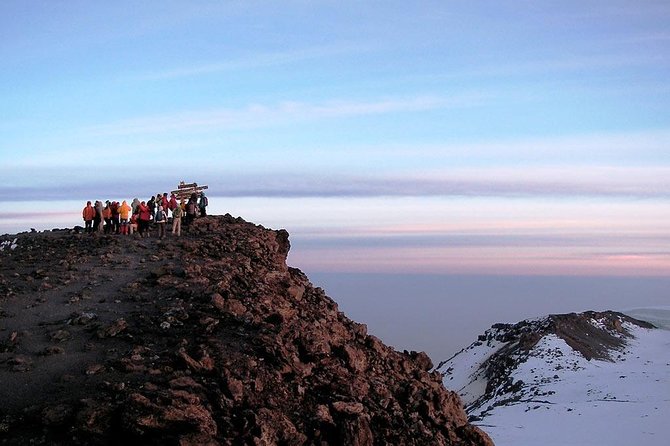
The first ascent takes you past Hans Meyer Cave at 5,220 meters. The trail then continues upward toward Gillman’s Point at 5,681 meters, the crater rim. Reaching the rim around sunrise can be a powerful moment. The light begins to warm the ground just as the cold night starts to lose its grip.
Gillman’s Point is not Uhuru Peak. From there, you still walk another one to two hours to reach the summit at 5,895 meters. The effort can feel surprisingly slow, and the thin air makes every rise in the trail count. Your guide’s pacing and judgment matter greatly here.
After reaching Uhuru Peak, you return to Kibo Hut for a warm meal and a short one to two-hour break. Then you continue down to Horombo Hut. This is a demanding design: summit, descend to Kibo, rest briefly, and keep going. You should expect exhaustion by the time you reach Horombo.
The reward is the summit itself, but do not overlook the descent. Many climbers focus so hard on getting up that they underestimate how much concentration is needed to walk down safely after a sleepless night.
Day Five: Horombo to Marangu Gate and Moshi
The final day covers about 20.8 kilometers and takes around eight hours. You descend through the heath and moor zone to Mandara Hut, where a warm lunch is planned.
From Mandara, the path returns to tropical rainforest. The vegetation feels especially welcome after the cold, open ground around Kibo. You continue to Marangu Gate at roughly 1,860 meters, complete the end-of-climb formalities, and transfer back to your Moshi hotel.
The supplied schedule describes about six hours of trekking before reaching the park gate, while the full day is listed at eight hours. Plan for the longer figure. After five days of walking, the final descent can be harder than expected, particularly after the summit night.
Back in Moshi, you have a warm shower and a chance to celebrate. The package includes a hotel night after the climb, with dinner and breakfast, so you do not need to arrange a same-day departure after returning from the mountain.
What the $2,150 Price Really Covers
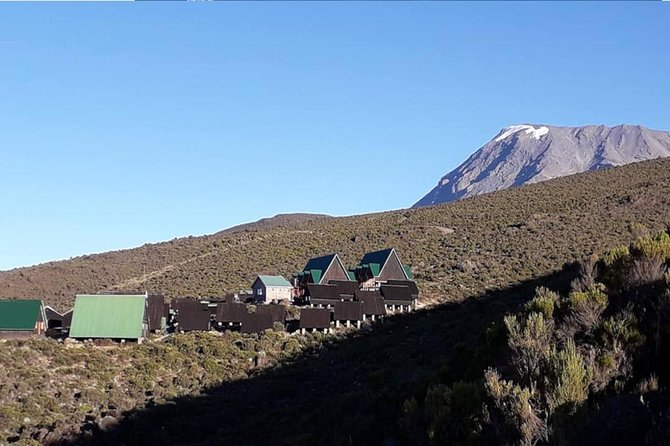
At $2,150 per person, this is not a bare-bones trail fee. The price includes all fees and taxes, airport transfers between Kilimanjaro Airport and Moshi, and hotel accommodation the night before and the night after the climb. Dinner and breakfast are included at those hotel stays.
On the mountain, you receive a qualified guide, assistant guides, porters, and a cook, with their wages included. Fresh drinking water and hot water for washing are also provided daily. Lunch is included on five days, while four breakfasts and four dinners are listed in the package.
That combination makes the price easier to justify. A self-arranged climb would still require park charges, transport, accommodation, food, and a properly organized support team. Here, those major costs are grouped together, and the staff wages are not left for you to negotiate at the end.
There are still extra expenses. Flights, visas, travel insurance, health insurance, personal medicine, snacks, water-purifying tablets, and meals or drinks not specified are your responsibility. Personal trekking gear is also not included, although some equipment can be rented from the provider’s Tanzania store.
A portable toilet is optional but highly recommended. It costs extra, but it may make hut life more comfortable. Ask for the current rental price and confirm exactly what personal gear is available before you arrive.
One detail deserves clarification: the package lists camping equipment such as tents, camp chairs, tables, and sleeping mattresses, while the Marangu plan describes hut accommodation. I would ask the operator what equipment is actually used on this departure and what sleeping items you must bring yourself.
The Human Side of the Climb
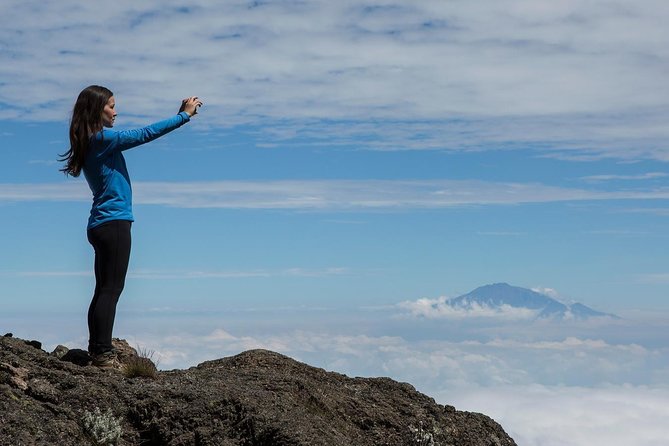
Kilimanjaro is not a solo exercise for most people. The guide sets the pace and helps manage the route, porters carry supplies, and the cook keeps meals moving through long days. That support changes the experience, but it does not remove the physical challenge.
The strongest praise for this operation centers on the staff’s friendliness and care. Names connected with the guiding team include Msafiri, Rama, and Allan, while Wence is identified as the organizer. One account also singled out the porters, cooks, guides, and organizer as making the climb feel comfortable during a difficult ascent.
You should still ask practical questions before departure. Confirm guide assignments, porter practices, the sleeping setup, meal arrangements, and the group’s emergency procedures. The activity is private, so only your own group participates, which can make pacing and communication easier than in a large shared departure.
The included emergency oxygen is a useful safety measure, but its purpose is limited. It is for emergencies only, not summit assistance. You should arrive prepared to walk slowly, report symptoms honestly, and accept your guide’s decisions about altitude and safety.
Who Should Choose This Route?
I would recommend this climb to someone with limited time who prefers huts and wants a package with transport, meals, accommodation, and staff support handled in advance. The private format also suits a couple, family group, or collection of friends who want the trip to remain within their own party.
It is less suitable if your main goal is the best possible acclimatization schedule. A longer Kilimanjaro route gives your body more time at increasing altitude, while this five-day plan moves quickly from the gate to the summit.
You should also be comfortable with long days. The summit day can run 12 to 15 hours, and the final day still covers about 20.8 kilometers. Basic fitness helps, but you also need patience, self-control, and the willingness to walk slowly.
The route’s hut format does not mean comfort in the ordinary hotel sense. You are still sleeping on a mountain, waking for a midnight start, and spending days above 3,000 meters. The huts reduce camping logistics, but they do not soften the altitude.
Final Verdict: A Good Value With a Serious Time Limit
I would book this five-day Marangu climb if you want the shortest standard schedule, prefer hut accommodation, and value an all-in package with Moshi hotels, airport transfers, meals, porters, cooks, and guides. The $2,150 rate covers the costly essentials and keeps the planning fairly simple.
I would pause before booking if this is your first high-altitude trek and you can add extra days. The main weakness is not the route or the support team. It is the fast ascent, followed by an extremely long summit day.
Ask the operator to confirm the guide team, hut arrangements, rental gear, portable toilet cost, and exact meal plan. If those details suit you and your schedule cannot stretch beyond five days, this is a practical way to attempt Kilimanjaro with strong logistical support and a clear understanding of the effort involved.
FAQ
How long is the Marangu Route experience?
The climb lasts approximately five days. The itinerary begins with pickup from a Moshi lodge and ends with a transfer back to the hotel after returning through Marangu Gate.
How high is Uhuru Peak?
Uhuru Peak is 5,895 meters, or 19,340 feet, above sea level.
Where do you sleep during the climb?
The route description provides overnight stays in mountain huts at Mandara, Horombo, and Kibo. Confirm the exact hut arrangements with the provider before departure.
Is airport transportation included?
Yes. Return transfers between Kilimanjaro Airport and Moshi are included.
Are hotel nights included?
Yes. The package includes the night before and the night after the climb at a Moshi hotel, with dinner and breakfast.
Is food included?
Lunch is included for five days. The package also lists four breakfasts and four dinners. Snacks, personal drinks, and meals not specified are not included.
Is emergency oxygen provided?
Yes. Emergency oxygen is included for emergencies only. It is not provided as summit aid.
Can the booking be canceled for a full refund?
Yes, if you cancel at least 24 hours before the experience start time. Cancellations or changes made less than 24 hours in advance are not accepted for a refund.
Newly listed around Moshi & Kilimanjaro
- Climb Mount Kilimanjaro: 7 Days Machame Route★ 5.0 · 3 reviews
- 6 Days Mount Kilimanjaro Climbing via Rongai Route★ 5.0 · 3 reviews
- Explore 1 day Ngorongoro Crater Budget Group Safari from Arusha★ 5.0 · 3 reviews
- Mt. Kilimanjaro Day Hiking★ 5.0 · 3 reviews
- Chemka (Kikuletwa) Hot Springs, Tanzania★ 5.0 · 3 reviews
- Guided City tour of Moshi★ 4.3 · 3 reviews
- 8 Day Tanzania Family Safari★ 5.0 · 3 reviews
- Serengeti Safari with Sirikwa Travel★ 5.0 · 3 reviews
Kilimanjaro Climbs, compared.








Browse the lists this tour appears in