
Reviewed · MOSHI & KILIMANJARO TOURS
7 Days Cultural and Wildlife Safari
The most unusual part of this seven-day Tanzania safari comes before the famous parks. You begin at Lake Natron, walking with a local Maasai guide through the Engaresero river valley, then watching flamingos gather around one of East Africa’s starkest lakes. Later, you hunt with the Hadzabe near Lake Eyasi, before reaching the lions, elephants, rhinos, and open plains of the Northern Safari Circuit.
I like the variety here. You get a waterfall walk and a cultural visit, not just long hours in a safari vehicle. I also like the private format, since only your own group takes part, giving you more say over the pace and time spent watching animals.
The main drawback is the schedule. This is a lot of Tanzania in seven days, with long drives between remote areas. The quoted price is $3,748 per person, so you should also confirm exactly which accommodation costs are covered, since the safari is described as using lodges and tented camps but the inclusion list does not itemize lodging.
Key points at a glance
- Lake Natron begins the trip with a Maasai-guided river walk, swimming or cooling off near Engaresero waterfalls.
- Millions of flamingos gather at Lake Natron, with the best chance of seeing large breeding colonies in the dry season.
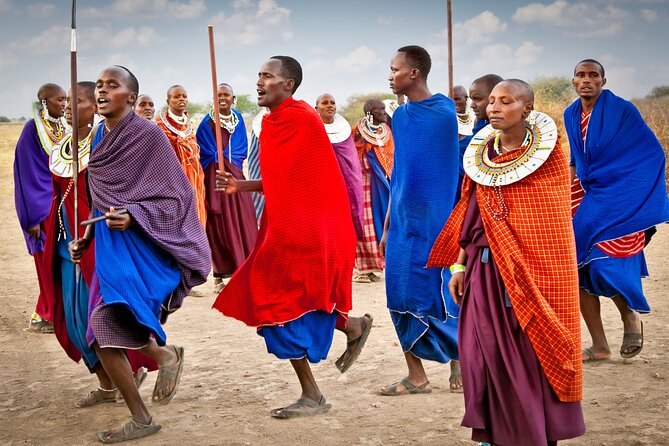
- Lake Eyasi offers direct cultural contact, including a hunt with the Hadzabe and time with the Datoga people.
- Serengeti and Ngorongoro bring the major wildlife, from lions and elephants to zebra, buffalo, hippos, and possible black rhino sightings.
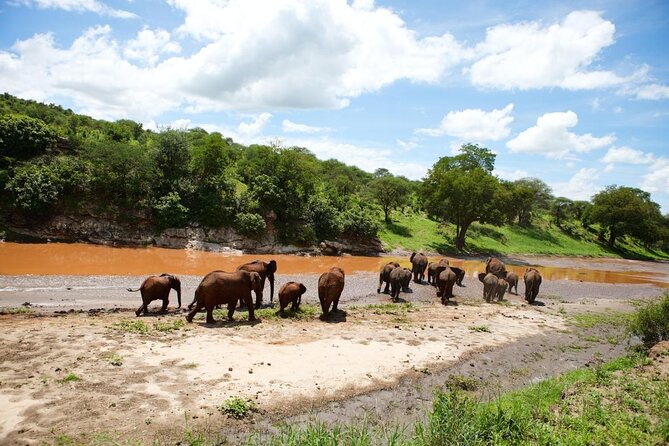
- Tarangire adds baobabs and elephant country, with a quieter feel than the parks closer to Arusha.
- The safari is private, with airport pickup, meals, bottled water, park fees and taxes, and Flying Doctor emergency evacuation listed as included.
Why this safari feels different from a standard park circuit
Many northern Tanzania safaris begin with Tarangire or Manyara and then work toward Ngorongoro and Serengeti. This trip takes a less usual opening route to Lake Natron. That choice adds real character, but it also means your first day depends heavily on your arrival time and road conditions.
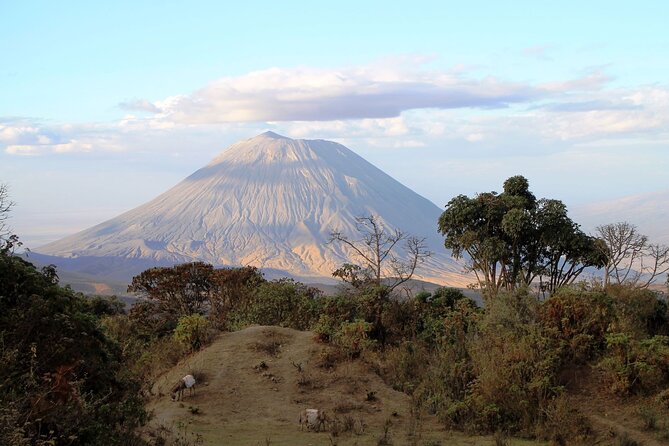
Lake Natron is a salty, shallow lake at the foot of volcanic country. Its setting is severe and beautiful, with wide open ground, red dust, distant peaks, and large bird colonies. It is not a polished resort stop. You come here for the setting, the flamingos, the Maasai connection, and the chance to see a more remote side of Tanzania.
At Engaresero, a local Maasai guide leads the walk through the river valley. The round trip takes about two to three hours and follows the riverbed toward a series of waterfalls. The water offers a welcome break from the heat, although you should be ready for an uneven walk and outdoor conditions.
This opening is best for you if you want some activity beyond sitting in a vehicle. It is less suitable if you arrive tired after a long international flight and expect an easy transfer straight to your room. Ask Gilmag Safaris how your arrival time affects the first day, particularly if your flight reaches Kilimanjaro late.
More Safaris in Moshi
- Safari Serengeti And Ngorongoro
★ 5.0 · 288 reviews - Big Five Safari In Tanzania
★ 5.0 · 99 reviews - Unforgettable Tanzania Safari And Zanzibar Beach
★ 5.0 · 97 reviews
Lake Natron’s flamingos and Engaresero waterfalls
The second morning begins early with a guided walk toward the southern part of Lake Natron. The purpose is not simply to look at the water. You are exploring a place where salt-loving plants, birds, wildlife, and semi-nomadic Maasai life meet.
The flamingo colonies are the star. Around two million flamingos are associated with Lake Natron during their annual breeding cycle, with numbers and visibility changing by season. The description specifically points to the dry season as a strong time for seeing birds gathered on the lake’s salty surface.
Keep expectations sensible. Flamingo numbers are not guaranteed on a particular morning, and the lake is remote. This is a nature outing, not a boardwalk attraction with fixed viewing platforms. Your experience depends on weather, water conditions, and the guide’s route.
The walk also includes a visit to an ancient footprint site said to date back roughly 120,000 years. That gives the morning a human story as well as a wildlife one. You are not just ticking off another lake. You are seeing a place linked to both early human history and present-day Maasai life.
After the lake visit, the route continues toward Lake Manyara National Park. The schedule says you will have a game drive there, but the exact length of that drive is not clear. Since the morning starts early and the transfer from Natron takes time, ask how many hours are planned inside Manyara.
Lake Manyara, the short stop with big scenery
Lake Manyara is known for its mix of groundwater forest, open grassland, lake edges, and woodland. That range of habitats can produce a good spread of wildlife in a relatively compact park. The broader safari description highlights monkeys in the forest, along with elephants among acacias and lions resting in trees.
This is an attractive contrast with Lake Natron. Natron is exposed, dry, and intensely bright. Manyara gives you thicker vegetation and a more enclosed feeling. The change helps keep the safari from becoming a string of similar-looking game drives.
The limitation is time. On this seven-day route, Manyara appears to be a connecting stop after the Natron morning rather than the main focus of a full day. If seeing Manyara’s forest wildlife is important to you, confirm the plan before booking. The program includes the park, but it does not clearly promise a full-day game drive there.
Lake Eyasi and the Hadzabe encounter
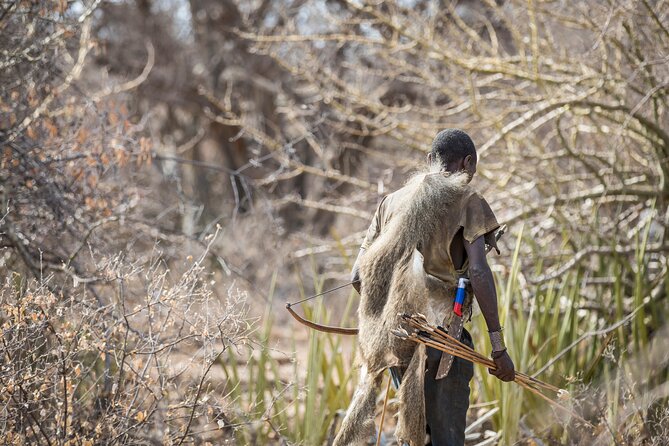
Day three moves to Lake Eyasi with a packed lunch and a visit with the Hadzabe. The Hadzabe are one of East Africa’s remaining hunter-gatherer communities, and the visit is built around seeing their hunting methods and daily way of life.
The hunt uses bows and arrows. The arrows are described as being treated with poison made from desert rose, while bowstrings traditionally use giraffe tendon. The Hadzabe also gather a wide range of fruits and berries. These details show how closely their food, tools, and movement remain tied to the surrounding country.
You also spend time with the Datoga people. That matters because the visit is not reduced to one brief performance or a single photo stop. The program gives you contact with two distinct communities around Lake Eyasi, though the exact length and format of each meeting should be clarified with the operator.
Approach this day with respect. You are entering a living community, not a museum. Keep your attention on the exchange rather than treating the hunt as entertainment. The supplied information presents this as a cultural activity with an authentic focus, but it does not explain photography rules, community payments, or how local consent is handled. Those are sensible questions to ask before departure.
For many people, this may be the most memorable day of the trip. The parks deliver extraordinary animals, but Lake Eyasi shows how people have adapted to this part of Tanzania over generations. It also breaks up the usual safari rhythm.
More Wildlife Tours in Moshi
- 7 Days Mid Range Tanzania Wildlife Safari
★ 5.0 · 31 reviews - Wildlife Safari Tanzania
★ 5.0 · 19 reviews - From Moshi or Arusha: Serval Wildlife Sanctuary Trip
★ 4.9 · 14 reviews - Moshi: Serval Wildlife Tour with food and drinks
★ 3.2 · 11 reviews
Olduvai Gorge and the road into Serengeti
Day four takes you toward Serengeti National Park through the Ngorongoro Conservation Area. The route includes a stop at the Ngorongoro rim, where you get your first broad view into the enormous volcanic crater.
You also stop at Olduvai Gorge Museum. The gorge is tied to the Leakey family’s work and to fossil discoveries reaching back nearly two million years. Fossilized bones and stone tools found in the area have helped researchers trace early human development in Africa.
This is an important stop because it gives context to the whole northern circuit. The parks are not only about animals. They sit in a part of the Rift Valley where the story of human origins is written into the ground. I would allow time to look beyond the famous wildlife checklist here.
Then the scenery opens into the Serengeti, whose name means endless plain. The scale changes quickly. The route itself becomes part of the experience, with broad grasslands and the sense that the horizon keeps moving away from you.
The drive can be tiring. The day combines the crater rim, Olduvai, and the onward journey to camp, so you should expect a substantial amount of time in the vehicle. That is the price of linking these remote sites in a single week.
Serengeti game drives in the Seronera area
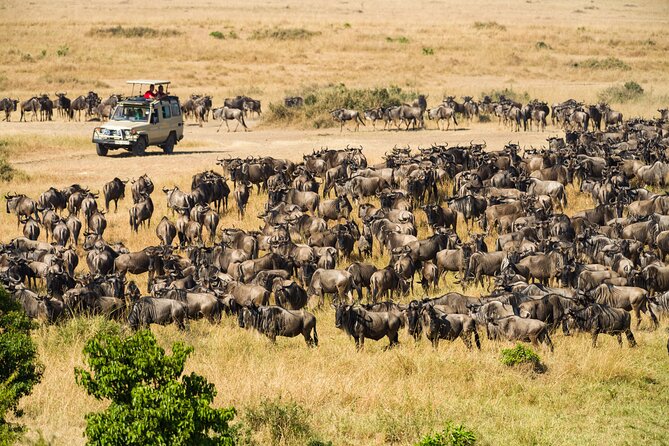
Day five is the safari’s main Serengeti day. You leave camp with lunch boxes and spend the day looking for wildlife across several habitats, including woodland, swamps, soda lakes, and short-grass plains.
Seronera is a useful base because it sits within reach of different parts of the Serengeti. The program notes that the wildebeest migration normally passes through the area in April, May, and November, but no month guarantees a particular sighting. Migration routes shift with rain, food, and water.
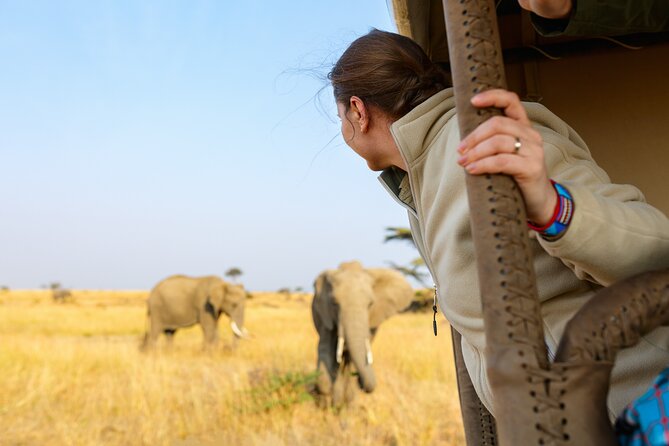
You can still expect strong resident wildlife outside migration periods. The listed possibilities include elephants, buffalo, gazelles, zebra, lions, and other predators. The Serengeti is a good place to watch relationships between animals rather than simply count species. A herd of zebra may lead you to wildebeest, and concentrations of grazing animals can attract lions and other hunters.
The guide makes a major difference on a day like this. Feedback about Gilmag Safaris specifically praises a guide named Erick for finding important animals and offering calm advice around lions. Erick may not be assigned to your group, so confirm your guide’s name and experience before departure. Still, the point is useful: animal-finding skill and sensible decisions matter more than a vehicle with fancy extras.
A full day in the Serengeti sounds generous, but the park is vast. You cannot cover every habitat in one outing. Your guide will need to balance distance, animal sightings, and the return to camp. The private format helps here because your group can discuss whether to stay longer at a good sighting or move on.
Descending into Ngorongoro Crater
Day six brings one of Tanzania’s most dramatic wildlife settings. You descend more than 600 metres into Ngorongoro Crater for a full-day tour, carrying a packed lunch.
The crater floor has permanent water and grazing, which helps support animals throughout the year. You may see wildebeest, zebra, buffalo, eland, warthogs, hippos, and large African elephants. Lake Magadi, a shallow alkaline lake in the crater’s southwest, is one of the main features and can attract wildlife and birds.
The crater is also one of the better places in Tanzania to look for black rhino. Seeing one is never promised, but the enclosed setting gives you a reasonable chance to search for this endangered animal. Your guide’s patience matters more than rushing from one sighting to the next.
Lunch at the hippo pool is a memorable idea, but follow every instruction from your guide. Hippos may look still from a distance, yet they are powerful and unpredictable. Keep food and personal movement controlled, and do not wander away from the vehicle or designated area.
Ngorongoro can feel crowded compared with the more open Serengeti. Many vehicles concentrate on the crater floor because wildlife is so reliable. That is a genuine tradeoff. You gain excellent animal potential, but you may lose some of the solitude that makes the Serengeti feel endless.
Tarangire’s baobabs and elephant herds
The final day is devoted to Tarangire National Park, with an early breakfast, a short drive, a game drive, lunch overlooking the Tarangire River, and an afternoon outing.
Tarangire is especially good for its elephant population and giant baobab trees. The park’s vegetation differs from the Serengeti and Ngorongoro, giving you another change of scenery at the end of the journey. Elephants moving among baobabs are exactly the kind of scene that stays with you after the trip.
Possible sightings include leopard, ostrich, lion, warthog, zebra, and cheetah. Wild dog is also mentioned as a fortunate sighting, but you should treat it as a bonus rather than a likely result.
The park is slightly off the most direct safari route, and that is part of its appeal. The schedule claims that many people leave it out in favor of parks closer to Arusha, but this itinerary gives it a full final day. The 12-hour duration makes for a long finish, especially after several early starts, yet it gives you a proper chance to see the park rather than treating it as a quick stop.
What the $3,748 price covers
At $3,748 per person, the price works out to roughly $535 per day. That is not a budget safari, but it covers a wide circuit with several major parks, private participation, meals, bottled water, taxes and fees, and emergency evacuation service.
The meal coverage is straightforward: breakfast is included on all seven days, lunch is included for seven meals, and dinner is included for six. Unlimited bottled mineral water is also listed, which is a practical benefit on long drives and warm walks.
Flying Doctor emergency evacuation is included. This does not replace ordinary travel insurance, but it is a reassuring safety feature for a remote safari route. You should still ask what insurance you need for medical treatment, trip interruption, baggage, and cancellation.
The biggest price question concerns accommodation. The safari is described as using lodges and tented camps, but accommodation is not separately listed in the included section. Before paying, ask for the names and standards of every overnight property and confirm that room or tent costs, park accommodation fees, and any required supplements are included.
Tips for the guide are not included. Set aside money for this separately, and ask Gilmag Safaris for its current tipping guidance. The guide is central to the experience, especially during game drives and cultural visits.
Private travel, airport pickup, and practical limits
The trip starts and ends at Kilimanjaro International Airport. Pickup is offered, and the activity is private, meaning only your own group participates. That is valuable for families, couples, or friends who want to control stops and avoid sharing a vehicle with strangers.
A private safari does not remove the physical demands. You will face early breakfasts, packed lunches, long road transfers, walking at Lake Natron, and several full days outside. Most people can participate, but the operator does not provide a detailed mobility assessment, so explain any limitations before booking.
Confirmation is normally provided at booking. If you book within 12 hours of travel, confirmation is subject to availability and may arrive later. The mobile ticket is convenient, but keep your passport, flight information, and booking details easy to reach at the airport.
The cancellation rule is strict. This experience is non-refundable and cannot be changed for any reason. Do not book until your flights, dates, and group plans are firm.
Who should choose this seven-day route
I would choose this trip if you want a broad introduction to northern Tanzania and care about more than the Big Five. Lake Natron and Lake Eyasi give the program a human and ecological range that a standard Serengeti and Ngorongoro route may not offer.
It suits you especially well if you value:
- A private vehicle and a trip designed for your own group
- Remote scenery and cultural contact
- A mix of walking, local guiding, and game drives
- The chance to visit four major national park areas
- A full Serengeti day and a full Ngorongoro Crater day
I would hesitate if you want slow travel. Seven days is enough to see a lot, but not enough to linger everywhere. Manyara receives less attention than Serengeti, and the transfer days can be demanding.
I would also compare the final price with other private safaris only after confirming accommodation. The value looks strongest when the quoted amount includes comfortable lodge and tented-camp stays, park access, meals, water, and transport without major extras.
Should you book it?
Book this safari if you want Tanzania’s greatest wildlife hits with unusual additions: flamingos at Lake Natron, a Maasai-guided waterfall walk, Hadzabe hunting traditions, Datoga culture, Olduvai Gorge, Serengeti plains, Ngorongoro wildlife, and Tarangire elephants.
Before you commit, get three points in writing: the exact accommodation, the planned time in Lake Manyara, and the name and safari experience of your guide. Ask if Erick is available if his schedule allows, and speak with Mary or the planning team about how the route fits your arrival flight.
If you accept early starts and long drives, this is an ambitious and rewarding way to see northern Tanzania. If you prefer a gentler pace, cut one or two remote stops and spend longer in the Serengeti.
FAQ
Where does the safari start?
The safari starts at Kilimanjaro International Airport in Tanzania.
Where does the safari end?
The activity ends back at the Kilimanjaro International Airport meeting point.
How long does the safari last?
The safari lasts approximately seven days.
Is airport pickup available?
Yes. Pickup is offered, and the stated meeting point is Kilimanjaro International Airport.
Is this a private tour?
Yes. Only your own group participates in the activity.
Which parks and areas are included?
The route includes Lake Natron, Lake Manyara National Park, Lake Eyasi, Serengeti National Park, the Ngorongoro Conservation Area and Crater, Tarangire National Park, and Olduvai Gorge.
Are meals included?
Yes. Seven breakfasts, seven lunches, and six dinners are included.
Is bottled water included?
Yes. An unlimited supply of bottled mineral water is included.
Are tips included in the price?
No. Tips for the guide are not included.
Can I cancel and receive a refund?
No. The experience is non-refundable and cannot be changed for any reason.
More Wildlife Tours in Moshi & Kilimanjaro
- 6 Days Essence of Tanzania Wildlife Safari
★ 5.0 · 8 reviews - 4 Days Wildlife Tanzania Adventure
★ 5.0 · 6 reviews - Tanzania Wildlife Encounters – 6 Days
★ 5.0 · 277 reviews - Zanzibar: Jozani nature walk and wildlife tour
★ 4.5 · 89 reviews
More Safaris in Moshi & Kilimanjaro
- 8-Day Essence of Tanzania Safari – Luxury
★ 5.0 · 72 reviews - Great Migration Safari In Tanzania
★ 5.0 · 71 reviews - Serengeti, Ngorongoro and Tarangire 4 Days Safari
★ 5.0 · 59 reviews - 6 Days 5 Night Safari
★ 5.0 · 57 reviews
Newly listed around Moshi & Kilimanjaro
- Climb Mount Kilimanjaro: 7 Days Machame Route★ 5.0 · 3 reviews
- 6 Days Mount Kilimanjaro Climbing via Rongai Route★ 5.0 · 3 reviews
- Explore 1 day Ngorongoro Crater Budget Group Safari from Arusha★ 5.0 · 3 reviews
- Mt. Kilimanjaro Day Hiking★ 5.0 · 3 reviews
- Chemka (Kikuletwa) Hot Springs, Tanzania★ 5.0 · 3 reviews
- Guided City tour of Moshi★ 4.3 · 3 reviews
- 8 Day Tanzania Family Safari★ 5.0 · 3 reviews
- Serengeti Safari with Sirikwa Travel★ 5.0 · 3 reviews
Moshi & Kilimanjaro Tours, compared.








Browse the lists this tour appears in