
Reviewed · MOSHI & KILIMANJARO TOURS
7 Day Grand Tanzania Safari
The main draw is simple: in seven days, you cover Tarangire, Lake Manyara, the Serengeti, and Ngorongoro Crater, giving you a strong chance to see Tanzania’s Big Five. You also get two days in the Serengeti, which matters because wildlife sightings improve when you are not rushing through this huge park.
I like the private format, since only your group takes part, and I like that transport, park entries, accommodation, and meals are arranged together. Guides named in past bookings include Godlove, Amos, Martin, and Idi, with Godlove and Amos receiving especially warm praise for careful driving, flexibility, and attention to safety.
The catch is the pace. This is a road-heavy safari with long drives and roughly six hours of activity on most days. Lunches may also be basic, and the hot-air balloon over the Serengeti costs extra.
Key points to know before booking
- Four major wildlife areas: Tarangire, Lake Manyara, Serengeti, and Ngorongoro all appear in one seven-day route.
- Two Serengeti days: You get a morning game drive, a return to camp for breakfast, and more time in the central Seronera area.
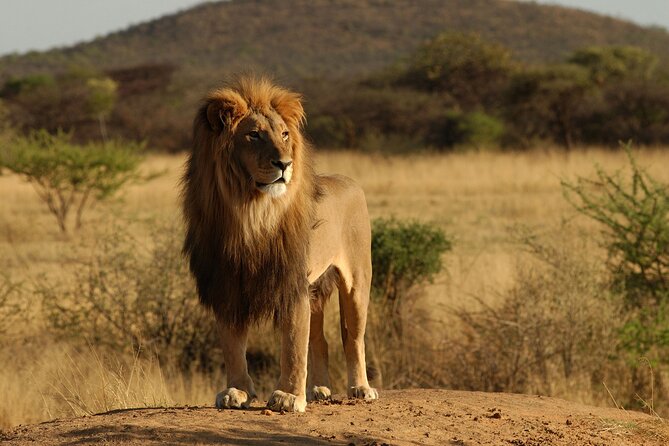
- Big Five potential: Lion, elephant, buffalo, rhino, and leopard are all possible, but no safari can promise every sighting.
- Private group experience: Your group participates alone, allowing requests to be discussed with your guide.
- Meals are included: Seven breakfasts and lunches, plus six dinners, are part of the package.
- Optional balloon flight: A Serengeti balloon ride can be arranged in advance for an additional charge.
A smart seven-day introduction to Tanzania
This safari works well if you want the classic northern Tanzania circuit without building a trip from several separate bookings. You begin near Kilimanjaro, move west through the national parks, spend two nights or extended time around the Serengeti, then finish at Ngorongoro before returning to Arusha.
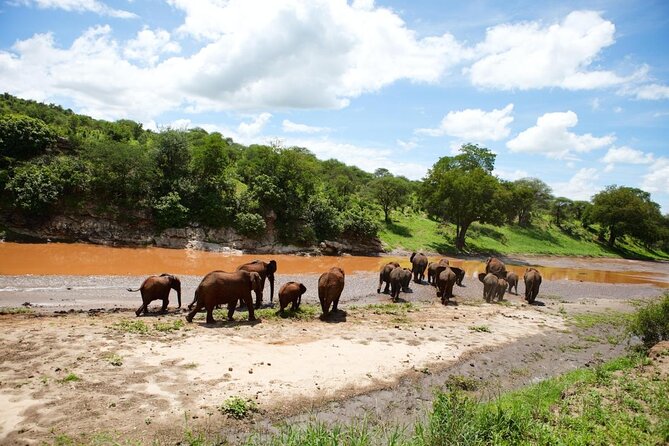
That route gives you variety. Tarangire brings elephants and baobabs. Lake Manyara adds a very different setting at the base of the Great Rift Valley. The Serengeti supplies wide-open plains and the best chance for repeated game drives. Ngorongoro gives you a compact crater floor where many animals can be found in one day.
At $2,800 per person, the value depends on what the price actually covers. Here, the package includes pickup, park admission where listed, transport, accommodation, and meals. That removes much of the work and uncertainty that can come with arranging a safari on your own.
Still, this is not a luxury lodge holiday. The route uses an inn and campsites, and the schedule is built around seeing parks rather than lingering at one property. If you want a polished, slow-paced stay with long afternoons at a lodge, this may feel busy. If you want maximum wildlife variety in one week, the pace makes sense.
More Safaris in Moshi
- Safari Serengeti And Ngorongoro
★ 5.0 · 288 reviews - Big Five Safari In Tanzania
★ 5.0 · 99 reviews - Unforgettable Tanzania Safari And Zanzibar Beach
★ 5.0 · 97 reviews
Day 1: Elephants and baobabs in Tarangire
The safari begins with an 8:00 a.m. pickup at Kilimanjaro International Airport. After a morning briefing, you drive for about two hours to Tarangire National Park.
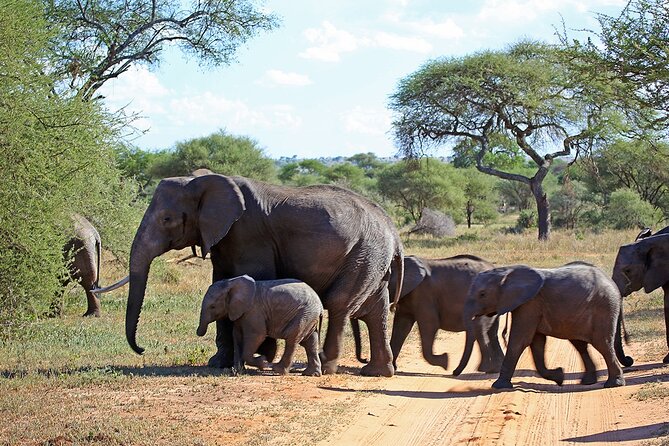
Tarangire is a fine first park because it feels immediately different from the more famous Serengeti. Giant baobabs rise above bush savannah, and seasonal marshes draw animals into a smaller area. The park is particularly well known for close elephant encounters.
From the open roof of the safari vehicle, you can watch elephants, buffaloes, zebras, and wildebeests. Lions often follow these herds. Leopards appear from time to time, while cheetah sightings are rare, so keep your expectations sensible.
The listed park visit lasts about six hours. That includes the drive and game viewing, so you should expect a full first day rather than a quick afternoon stop. You leave the park in the late afternoon and spend the night at Eileen’s Tree Inn.
I like this opening because it puts wildlife in front of you quickly. The drawback is that airport pickup, briefing, road time, and a park visit make for a long day, especially if you have just arrived in Tanzania.
Day 2: Lake Manyara beneath the Rift Valley
After breakfast, you head to Lake Manyara National Park for another day of game viewing. The park surrounds a massive, shallow soda lake that covers about two-thirds of its area. The water sits below the western escarpment of the Great Rift Valley, giving the drive a dramatic setting.
Manyara is known for its varied animal life and large elephant population. The park is also associated with tree-climbing lions, an unusual sight that depends entirely on luck and timing. Flamingos gather around the lake when conditions suit them, feeding on algae.
This day adds habitat variety to the trip. You are not simply repeating Tarangire. The lake, forested sections, open areas, and steep valley wall create a different setting for bird and animal viewing.
The planned visit runs about six hours. As with Tarangire, you should think of this as a proper safari day, not a short scenic stop. The schedule gives you a useful taste of Manyara, though some people may wish for more time here.
Day 3: The long road to the Serengeti
After an early breakfast, the route heads toward Serengeti National Park. The drive climbs through the Rift Valley before opening into the broad plains associated with the Serengeti.
This is one of the more demanding days. The Serengeti is far from the earlier parks, and the itinerary combines the transfer with game viewing. The reward is access to Tanzania’s oldest national park, founded in 1951 and at the center of a huge wildlife system that also connects with the Ngorongoro Conservation Area and Kenya’s Maasai Mara.
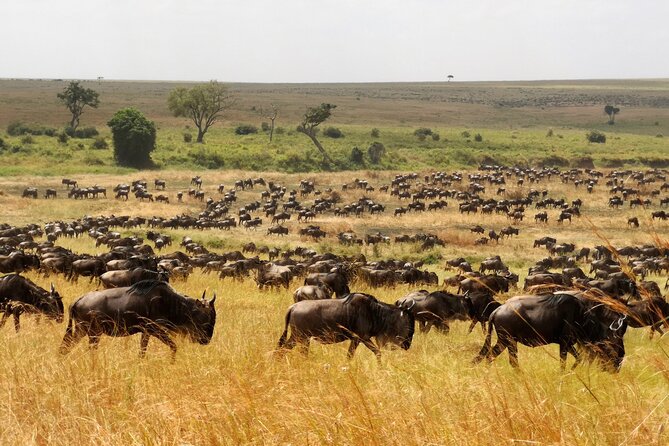
The annual movement of more than 1.4 million wildebeests, almost 300,000 Thomson’s gazelles, and around 200,000 zebras makes the Serengeti famous. But migration timing and location change, so you should not book this trip assuming the herds will be beside your vehicle.
You receive about six hours at the park on this day, with admission included as listed. The important value here is not just the number of hours. It is getting into the Serengeti early enough in the route to have more than one day in this enormous area.
More Safaris in Moshi & Kilimanjaro:
- 8-Day Essence of Tanzania Safari – Luxury
★ 5.0 · 72 reviews - Great Migration Safari In Tanzania
★ 5.0 · 71 reviews - Serengeti, Ngorongoro and Tarangire 4 Days Safari
★ 5.0 · 59 reviews - 6 Days 5 Night Safari
★ 5.0 · 57 reviews
Day 4: A full morning and afternoon around Seronera
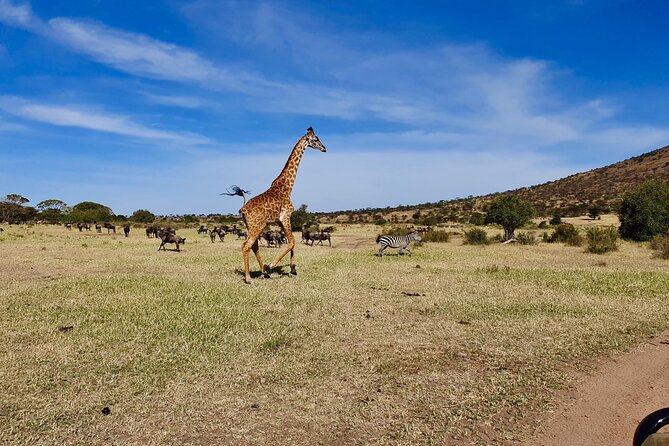
Day four gives you the safari rhythm many people hope for. You start with an early morning game drive, return to camp for breakfast, and then head out again for another drive into the central Serengeti.
Early morning is a useful time to be out because the itinerary is designed around the park’s waking hours. You also get a break at camp rather than spending every minute in the vehicle. After breakfast, the second drive carries on toward the Seronera area, the central part of the Serengeti.
This is likely to be one of the strongest days for animal watching because you are not spending the whole day on a major transfer. You have two separate drives and time to search for predators, herds, and the many smaller moments that make a safari memorable.
The itinerary describes an overnight campsite in the heart of the Serengeti. Camping keeps you close to the park experience, but it also means you should be comfortable with a simpler setup than you would find at a high-end lodge.
Day 5: Sunrise, a balloon option, and the road to Karatu
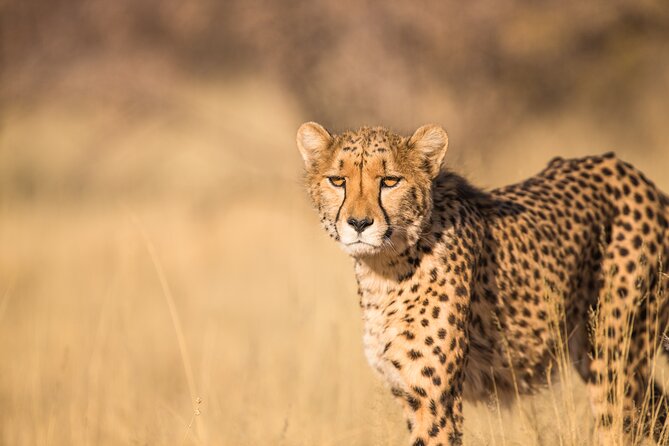
Day five begins early again. If you pay extra and arrange it ahead of time, you can take a hot-air balloon over the Serengeti plains. The flight is described as a silent ride over the waking bush, rivers, villages, and wildlife below.
The balloon is a special add-on, not part of the $2,800 price. It may appeal to you if you want a calm view after several days of bumpy roads and vehicle-based game drives. If you skip it, you take a sunrise game drive instead, return for breakfast, and continue viewing animals until lunch.
After lunch, the route heads toward Ngorongoro for the night, with an overnight stop in or near Karatu. Along the way, you may meet Maasai people and get a look at traditional life in the Ngorongoro Conservation Area.
This day balances wildlife and culture, but it is another long one. You are leaving the Serengeti while still trying to make the most of the morning, so the schedule favors variety over a relaxed finish.
Day 6: Down into Ngorongoro Crater
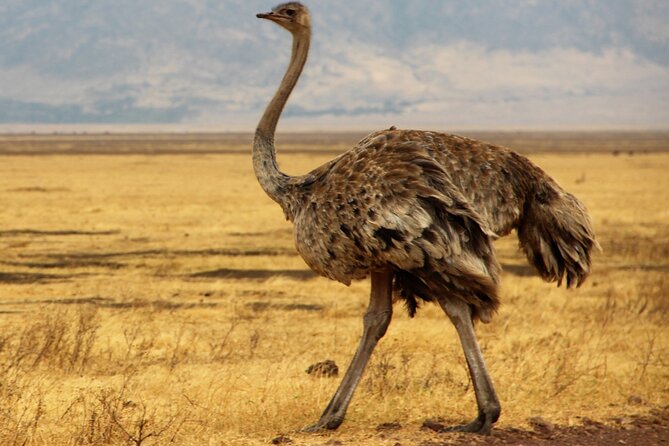
After breakfast at daybreak, you return to the Ngorongoro Conservation Area and drive down into the crater. The crater is the collapsed bowl of a massive volcano, and its enclosed floor supports more than 25,000 mammals.
The Big Five are all possible here: lion, elephant, buffalo, rhino, and leopard. You may also find spotted hyenas, rare wild dogs, and more than 500 bird species in the wider area. As always, the word possible matters. Wildlife is free to move, and a safari is a search rather than a stage show.
A picnic lunch is planned during the crater visit. You then leave the caldera in the afternoon and return to your accommodation for dinner and the night.
Ngorongoro is a powerful final game drive because the crater concentrates so much wildlife in one setting. It can also feel busy compared with the open Serengeti, and the day involves an early start, a descent, hours of viewing, and a climb out. The payoff is the chance to see several major species in a single compact area.
Day 7: Returning to Arusha
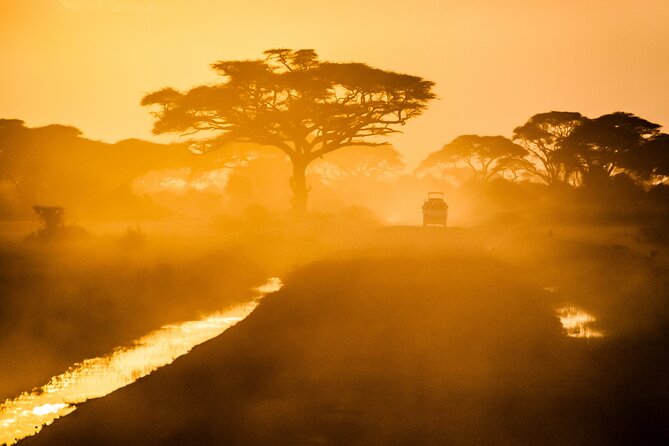
The final morning is easier. After a leisurely breakfast, you drive for about two hours back to Arusha, arriving around midday.
Drop-off is available in the city center or at the airport. This timing is useful if you are continuing your trip from Arusha, but you should be careful with any onward flight plans since the exact arrival time can shift with road conditions and the morning schedule.
The safari starts at Kilimanjaro International Airport and ends in Arusha or at the airport. That makes it a practical add-on before or after a Kilimanjaro climb, and one past booking used the safari as motivation after summiting the mountain.
What the private format changes
Only your group takes part in this activity. That gives you more room to discuss animal sightings, preferred stops, and the day’s pace with your guide than you might have on a large coach tour.
The guide can make a major difference. The people associated with this route include Godlove, Amos, Martin, and Idi. Godlove is praised for safety, wildlife knowledge, and listening to requests. Amos is described as going out of his way to help and keep the experience running well. Martin and Idi also received strong personal praise for guiding this route.
That does not mean you can select one of these guides when booking. It does mean you should ask who will lead your departure and what vehicle arrangement is planned. Since much of the experience happens on rough park roads, a good driver and clear communication matter as much as the itinerary.
Meals, camps, and the practical trade-offs
The package includes seven breakfasts, seven lunches, and six dinners. That is convenient on a route where you spend most days far from normal restaurants and shops.
Do not expect every meal to be a highlight. One lunch was specifically criticized, including a poor carrot sandwich, and that is useful information when setting expectations. Pack a few preferred snacks if permitted, and ask the operator what meals normally look like before you leave.
Accommodation includes Eileen’s Tree Inn on the first night, campsites in the Serengeti, and an overnight stop around Karatu. The camping was better than expected for at least one person, but the details of tent style, bathroom arrangements, and exact properties are not provided here.
That uncertainty is worth clearing up before payment. Ask for the full accommodation list, whether tents are permanent or mobile, and what facilities are available at each stop. The price can be good value, but only if the lodging level suits you.
Is $2,800 a fair price?
The strongest argument for the price is the amount of ground covered. You receive a seven-day private safari with four major wildlife areas, transport, park access as listed, accommodation, and most meals.
You also avoid the separate costs and planning involved in connecting Tarangire, Manyara, Serengeti, and Ngorongoro. For a first safari, that convenience has real value.
The weaker side is that the price does not include personal expenses or optional tours. The hot-air balloon is extra, and you may also want money for drinks, tips, souvenirs, or other items not included in the package.
Value also depends on your priorities. A person seeking the lowest possible cost may compare this with a group safari. Someone seeking premium lodges and more time in each park may find the accommodation too basic. For a private, full-route safari with a strong chance of Big Five sightings, the price is reasonable, provided you confirm the lodging and vehicle details.
Who should book this safari?
I would choose this route if you want a first look at northern Tanzania and prefer having one company handle the main arrangements. It suits wildlife fans, couples, families, and small groups who want a private vehicle and a broad mix of parks.
It also suits people combining Tanzania with Kilimanjaro. The airport pickup and Arusha finish make the route easy to connect with a climb or another northern Tanzania plan.
I would think twice if you dislike early mornings, long road transfers, basic lunches, or camping. The schedule is active almost every day, and wildlife sightings can never be guaranteed, even when the route offers excellent chances.
The overall rating is 4.9 from 13 ratings, with 100 percent recommendation shown for the experience. The most praised qualities are the guides, the organization, the large number of animals seen, and the relief of having lodging, meals, and transport handled together.
Should you book the 7 Day Grand Tanzania Safari?
Book it if you want maximum park variety in one week, a private setup, and a serious chance to see the Big Five. The two Serengeti days and the Ngorongoro crater visit are the heart of the trip, while Tarangire and Manyara add elephants, baobabs, flamingos, and a different range of habitats.
Before booking, confirm your guide, vehicle, campsite details, meal plan, and the extra cost of the balloon flight. If you are happy with long drives and a practical rather than luxurious style, this safari offers a well-packed introduction to Tanzania’s northern parks.
FAQ
Where does the safari start?
The safari starts at Kilimanjaro International Airport on Kilimanjaro Airport Road, Tanzania.
What time does pickup begin?
The stated start time is 8:00 a.m.
Where does the safari end?
You return to Arusha on day seven, with drop-off in the city center or at the airport.
Which parks and conservation areas are included?
The route includes Tarangire National Park, Lake Manyara National Park, Serengeti National Park, and the Ngorongoro Conservation Area.
Are meals included?
Yes. The package includes seven breakfasts, seven lunches, and six dinners.
Is the hot-air balloon ride included?
No. The Serengeti balloon ride is optional and available at an additional cost by prior arrangement.
Can the whole group participate privately?
Yes. This is a private tour or activity, and only your group takes part.
More week long trips in Moshi & Kilimanjaro
- Kilimanjaro climb by Lemosho Route (7-day)
★ 5.0 · 651 reviews - Kilimanjaro climb, Machame Route (7-day)
★ 5.0 · 262 reviews - Climbing Kilimanjaro through 7 days Machame Route
★ 5.0 · 151 reviews - 7 Days Kilimanjaro via Machame route affordable price
★ 5.0 · 110 reviews
Newly listed around Moshi & Kilimanjaro
- Climb Mount Kilimanjaro: 7 Days Machame Route★ 5.0 · 3 reviews
- 6 Days Mount Kilimanjaro Climbing via Rongai Route★ 5.0 · 3 reviews
- Explore 1 day Ngorongoro Crater Budget Group Safari from Arusha★ 5.0 · 3 reviews
- Mt. Kilimanjaro Day Hiking★ 5.0 · 3 reviews
- Chemka (Kikuletwa) Hot Springs, Tanzania★ 5.0 · 3 reviews
- Guided City tour of Moshi★ 4.3 · 3 reviews
- 8 Day Tanzania Family Safari★ 5.0 · 3 reviews
- Serengeti Safari with Sirikwa Travel★ 5.0 · 3 reviews
Moshi & Kilimanjaro Tours, compared.








Browse the lists this tour appears in