
Reviewed · MOSHI & KILIMANJARO TOURS
6 Days Mara River Crossing – The Great Migration
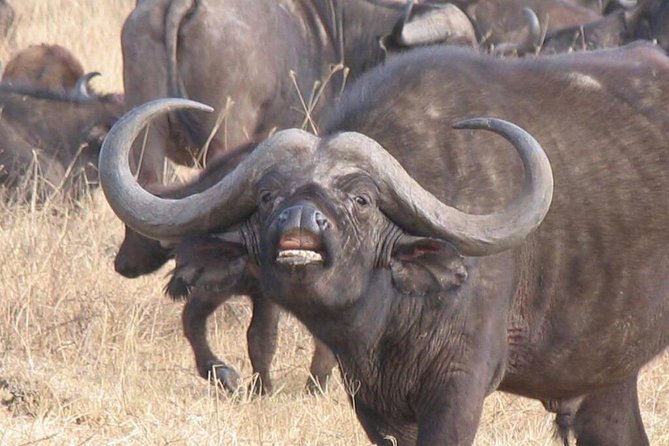
The main draw is simple: you spend two full days near the Mara River, where huge herds of wildebeest, zebra, and antelope may gather to cross. The timing of a river crossing cannot be guaranteed, but this plan gives you more than one chance, which matters when nature refuses to follow a schedule.
I like the range of scenery and wildlife, from Tarangire’s elephant country and baobabs to the open Serengeti and the concentrated animal viewing in Ngorongoro Crater. I also like the private format, since your group can focus on questions, sightings, and the pace that suits you.
The main drawback is the amount of driving. This is a busy six days, with long road days at the start and finish, plus several hours between camps. The migration is seasonal and unpredictable, so you should book this for the whole safari experience, not only for a guaranteed crossing.
Key points at a glance
- Two full Mara River days: Days 3 and 4 give you the best stated chance to watch the migration near the river.
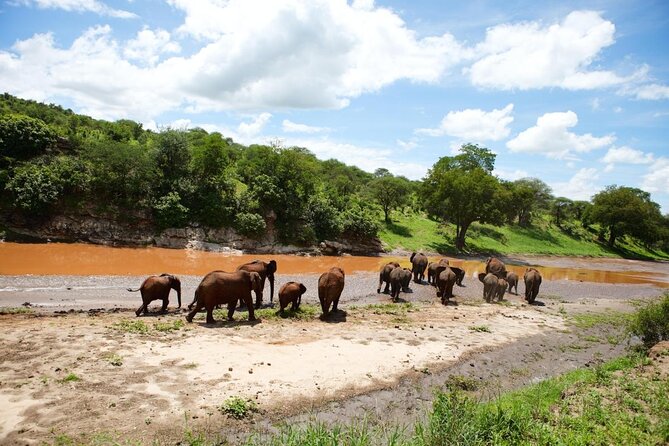
- Three major park areas: Tarangire, Serengeti National Park, and Ngorongoro Crater are all part of the route.
- Private safari vehicle: Only your own group participates, making it easier to ask questions and adjust attention during game drives.
- Five nights of included meals and lodging: Breakfast and dinner are included for five days, with lunch provided throughout the six-day program.
- Strong guide service: The guide is praised for knowing where to look for animals and answering questions clearly.
- Airport and hotel connections: Pickup is offered, with final drop-off at an Arusha hotel or Kilimanjaro International Airport.
Why the Mara River is worth the long road
The Great Migration is not one single event. It is a year-round movement of about 1.5 million herbivores around the Serengeti and Masai Mara ecosystem. Wildebeest, zebra, and antelope move in search of food and water, with birthing, courting, and mating forming part of the cycle.
The Mara River is the dramatic chapter most people picture. Herds gather, hesitate, and sometimes plunge into the water in a rush. Crocodiles and steep banks add danger, while the sheer number of animals creates the spectacle. Still, a crossing may happen at a different place or on a different day than expected. Sometimes the animals wait. Sometimes they turn back.
That uncertainty is not a flaw in the safari. It is the reason you need time in the right area. This trip allocates one full day heading north toward the Mara River, then another full day watching along the river. If you have only a few hours in the region, your odds of seeing the event are much thinner.
You should also keep expectations realistic about visibility. A river crossing is a wild event, not a scheduled performance. You may see thousands of animals cross, or you may watch herds gather without making the leap. Either way, the northern Serengeti offers more than one possible reward.
More six day trips in Moshi & Kilimanjaro:
- Kilimanjaro climb, Lemosho Route (6-day)
★ 5.0 · 129 reviews - Kilimanjaro climb, Marangu route (6-day)
★ 5.0 · 72 reviews - 6 Days 5 Night Safari
★ 5.0 · 57 reviews
Day 1: elephants and baobabs in Tarangire
Your safari begins with pickup from a hotel in or around Arusha, or from Kilimanjaro International Airport according to the meeting information. The drive to Tarangire takes about two and a half hours, with views of local communities and Tanzanian scenery along the way.
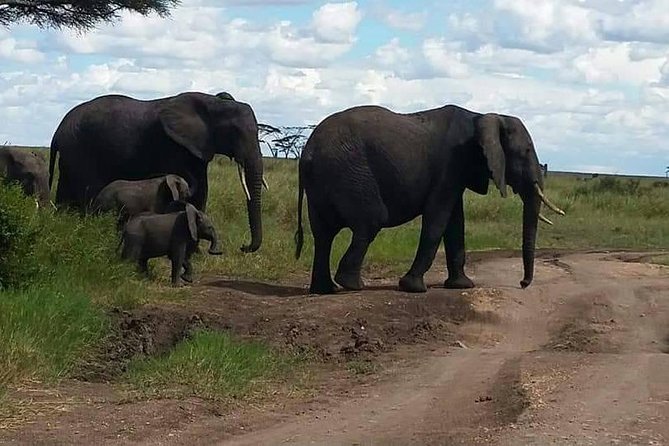
Tarangire is a good opening park because it brings you quickly into classic safari country. The park is known for large elephant numbers, enormous baobab trees, and tree-climbing African pythons. A full-day game drive gives you time to look beyond a quick checklist of animals and pay attention to the setting itself.
The first day is long, listed at about 12 hours. That includes the drive, park time, and the move to Sangaiwe Tented Lodge. You can swim at the lodge after arrival, a useful chance to cool off after a dusty day in the vehicle.
I like this first stop because it is not merely a transfer toward the Serengeti. Tarangire gives you a distinct park experience, especially if elephants and baobabs are high on your list. The tradeoff is that you finish the day tired, so do not plan a packed evening around it.
Day 2: entering the open Serengeti
After an early breakfast, you leave with a packed lunch and drive toward Serengeti National Park through the Ngorongoro Conservation Area. This is a major transfer day, but it also brings you into one of Africa’s best-known wildlife regions.
After arriving in the Serengeti, you have lunch and spend the afternoon on a game drive. The park’s open plains make it easier to understand the scale of the migration. You are not just looking for one famous animal. You are watching a moving system of herds and the predators that follow them.
You spend the night at Tanzania Bush Camp in central Serengeti. The camp provides a base for dinner and rest before the route turns north. Because this day includes an early start, several hours of driving, and an afternoon game drive, keep your schedule flexible and bring patience for time in the vehicle.
The route through the Ngorongoro Conservation Area adds variety, but it also means this is not a slow, leisurely day. The value comes from reaching the central Serengeti and positioning yourself for the migration rather than from spending the entire day at one viewing spot.
Day 3: heading north toward the Mara River
Day 3 shifts the safari from general Serengeti viewing to a specific goal. After breakfast, you spend the full day moving north in pursuit of the migrating animals and the Mara River.
This is where a private group can be especially useful. You can ask the guide to explain animal behavior, migration movement, or the signs that a herd may be gathering. The guide is praised for knowing where to look for animals and for answering questions, two skills that matter when sightings are spread across a large park.
The plan is to see thousands of animals crossing the river. You might find the herds already moving, or you might spend time waiting and watching. Do not judge the day only by whether every animal enters the water. The approach to a crossing, the nervous movement of the herd, and the pause before the rush can be just as gripping.
In the evening, you return to Tanzania Bush Camp in northern Serengeti. Dinner and a campfire give you time to settle after a full day outside. The sounds of the bush are part of the setting, but remember that this remains a safari camp, not a resort-style hotel.
A few more Moshi & Kilimanjaro days to compare
- Kilimanjaro climb by Lemosho Route (7-day)
★ 5.0 · 651 reviews - Safari Serengeti And Ngorongoro
★ 5.0 · 288 reviews - Kilimanjaro climb, Machame Route (7-day)
★ 5.0 · 262 reviews - Kilimanjaro Climbing Lemosho Route 8 Days.
★ 5.0 · 186 reviews
Day 4: a second full day along the river
After breakfast, you leave camp for another full day of game viewing along the Mara River. This is the most important scheduling choice in the whole program. You have a second opportunity to be in the right area if the herds did not cross on Day 3.
A second day also changes the rhythm. You are no longer simply arriving at a new park or camp. You can focus on the river, animal movement, and the guide’s decisions. If a crossing is taking shape, you have time to stay with the sighting rather than rushing away for the next stop.
The phrase high chances should not be read as a promise. Weather, water levels, herd movement, and animal behavior all affect the result. The safari provider also notes that poor weather can force a date change or cancellation, so conditions matter before and during the trip.
At the end of the day, you return to the northern Tanzania Bush Camp for dinner and another night. Two nights in the same area reduce the need to pack and unpack while you are focused on the migration.
Day 5: returning through the Serengeti
After breakfast, you leave with lunch boxes and drive back toward central Serengeti, with game viewing along the way. This is a useful reminder that the return route is still part of the safari. Animals do not stop appearing because you are leaving the river region.
The drive gives you a chance to notice how the Serengeti changes as you move south. Your guide can continue looking for wildlife en route, while you also get a final chance to appreciate the open plains before the itinerary turns toward Ngorongoro.
You return to Tanzania Bush Camp for dinner and a Serengeti sunset. The evening meal is described as taking place in the middle of the park, which gives the final central-Serengeti night a fitting close.
This is another long day, and the packed lunch keeps the schedule moving. If you prefer a very relaxed safari with short drives, this program may feel demanding. If you want to cover several major wildlife areas in six days, the pace is practical.
Day 6: wildlife in Ngorongoro Crater
The final morning starts very early. You leave camp, exit the Serengeti, and drive to the Ngorongoro Conservation Area before descending into Ngorongoro Crater for game viewing.
The crater offers a different kind of safari setting from the open Serengeti. Wildlife is concentrated within a contained natural area, giving you a strong final chance for animal viewing. The crater stop also adds a major Tanzanian landmark to a trip already centered on migration.
After the crater drive, you ascend, exit the conservation area, and continue to Arusha. Drop-off is available at a prebooked hotel or Kilimanjaro International Airport for a departing flight.
This final day is listed at about 12 hours, so flight timing needs care. Do not assume that any evening departure will work without confirming the drive schedule with African Overland. The airport drop-off is convenient, but the early start and long return drive make this a day for logistics, not lounging.
What the $3,606.16 price covers
At $3,606.16 per person, this is a major purchase. Its value depends on what you want from a Tanzania safari and on the fact that the price is for a private activity rather than a shared group departure.
The package includes all fees and taxes, five breakfasts, five dinners, and six lunches. It also covers the listed accommodation at Sangaiwe Tented Lodge and Tanzania Bush Camp, along with the planned park visits and game drives.
You are paying for more than a single river-viewing outing. The route includes Tarangire, central Serengeti, northern Serengeti, and Ngorongoro Crater. It also includes transport from the Arusha area or airport and final transfer back toward Arusha or Kilimanjaro International Airport.
Tips are not included, so budget separately for that. The listing does not give a detailed room category, vehicle specification, or exact private-guide name, so I would ask for those details before paying. That is especially sensible at this price.
The fact that the tour is commonly booked about 151 days ahead is useful planning information. Migration timing and northern Serengeti accommodation can make early planning important, but you should still confirm the exact dates and expected migration position before committing.
Guide quality and private-group value
The strongest praise for this safari centers on the guide’s animal-spotting ability, clear answers, and professional approach. That is not a small matter. In a huge park, a guide who knows where to search can make the difference between a quiet drive and a day full of useful sightings.
You will be able to ask questions throughout the trip because only your group participates. That can help if you want more time learning about migration behavior, or if you have a particular interest in elephants, birds, predators, or photography.
The operation is also described as well organized from airport pickup through final drop-off, with good food, comfortable accommodation, and friendly staff. Those practical details matter after long drives. A safari is much easier to enjoy when meals and transfers work as planned.
No individual guide name is provided, so I would request the assigned guide’s name before departure if that matters to you. The available details support confidence in the guiding service, but they do not tell you which person will lead your particular departure.
Who should book this safari
I would recommend this trip to you if the Mara River crossing is a top goal but you also want a wider northern Tanzania safari. You get three major wildlife areas instead of spending all six days in one region.
It suits people who are comfortable with early breakfasts, packed lunches, long drives, and a full day in a safari vehicle. A moderate level of physical fitness is requested, though the demanding part is mainly the length of the days and the repeated vehicle travel.
It also fits first-time safari visitors who want transport, meals, accommodation, park fees, and airport connections arranged in one package. The private format is useful for couples, families, friends, and small groups who value control over the conversation and daily focus.
I would hesitate if you need a guaranteed river crossing, dislike long road transfers, or want a slow luxury holiday with plenty of free time. The migration is wild, and the itinerary is built around chasing a moving event.
Practical details before you commit
Pickup is offered, with the meeting point listed as Kilimanjaro International Airport and a start time of 12:00 am. That midnight notation is worth clarifying, since the daily itinerary begins with hotel or airport pickup and Day 1 is a long safari day.
Confirmation is received at booking. Public transportation is nearby, although the safari itself is conducted by the private operator. Only your group participates.
The cancellation terms are strict. The experience is non-refundable and cannot be changed for any reason after booking. If poor weather causes cancellation, you are offered another date or a full refund. Given the cost, check your dates, flight plans, and travel insurance before making payment.
Pack for long days outside and changing conditions, but do not expect the weather alone to determine whether animals cross. The migration cannot be controlled by the operator, however carefully the route is planned.
Should you book the six-day Mara River safari?
Book it if you want a serious attempt at seeing the Great Migration while also visiting Tarangire and Ngorongoro Crater. The two full days near the Mara River are the strongest part of the plan, and the private guide format adds real value.
Before booking, confirm the exact migration dates, airport pickup time, guide assignment, accommodation details, and flight connection on Day 6. If you accept long drives and the uncertainty of nature, this is a powerful six-day introduction to northern Tanzania. If the crossing is your only goal, add extra days if your budget allows, since no safari can order a herd into the river.
FAQ
How long is the safari?
The safari lasts approximately six days. Day 1 and Day 6 are each listed at about 12 hours, while Days 2 through 5 are full-day safari programs.
Which parks and protected areas are included?
The route includes Tarangire National Park, Serengeti National Park, the Ngorongoro Conservation Area, and Ngorongoro Crater.
Will I definitely see a Mara River crossing?
No. The itinerary gives you two full days near the Mara River and describes high chances, but animal movement and weather cannot be guaranteed.
Is this a private tour?
Yes. Only your group participates in the activity.
What meals are included?
Five breakfasts, five dinners, and six lunches are included. Packed lunches are used on several driving and game-viewing days.
Where does pickup and drop-off take place?
Pickup is offered from a hotel in or around Arusha, and the meeting information lists Kilimanjaro International Airport. At the end, you can be dropped at a prebooked Arusha hotel or Kilimanjaro International Airport.
Are tips included in the price?
No. Tips are listed as not included.
Newly listed around Moshi & Kilimanjaro
- Climb Mount Kilimanjaro: 7 Days Machame Route★ 5.0 · 3 reviews
- 6 Days Mount Kilimanjaro Climbing via Rongai Route★ 5.0 · 3 reviews
- Explore 1 day Ngorongoro Crater Budget Group Safari from Arusha★ 5.0 · 3 reviews
- Mt. Kilimanjaro Day Hiking★ 5.0 · 3 reviews
- Chemka (Kikuletwa) Hot Springs, Tanzania★ 5.0 · 3 reviews
- Guided City tour of Moshi★ 4.3 · 3 reviews
- 8 Day Tanzania Family Safari★ 5.0 · 3 reviews
- Serengeti Safari with Sirikwa Travel★ 5.0 · 3 reviews
Moshi & Kilimanjaro Tours, compared.








Browse the lists this tour appears in