
Reviewed · KILIMANJARO CLIMBS
8 Days Lemosho Route Kilimanjaro Trekking
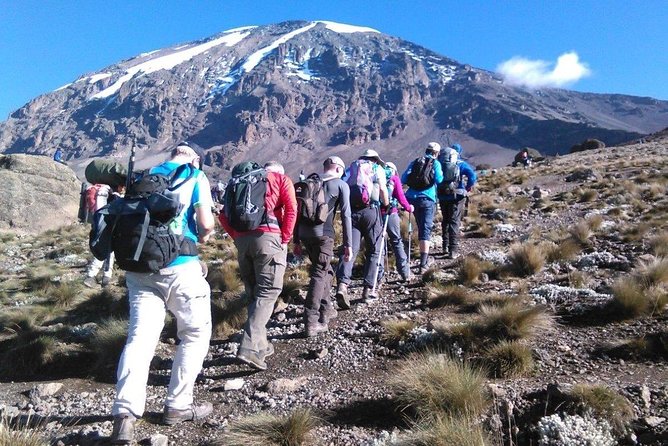
Kilimanjaro’s Lemosho Route earns its reputation by giving you several mountains in one climb: thick rainforest, open moorland, the broad Shira Plateau, volcanic rock, glaciers, and the final icy summit. It also begins quietly, with fewer people on the trail before joining the busier southern circuit.
I especially like the eight-day schedule, which gives your body more time to adjust to altitude, and the careful route design that climbs high to Lava Tower before sleeping lower at Barranco. I also like the local setup, with Erastus handling arrangements and Oliver serving as the main guide on reported departures. The main drawback is simple: summit day is very long, and the price does not include sleeping bags, climbing gear, airport flights, or lodging before and after the trek.
Key points to know before booking
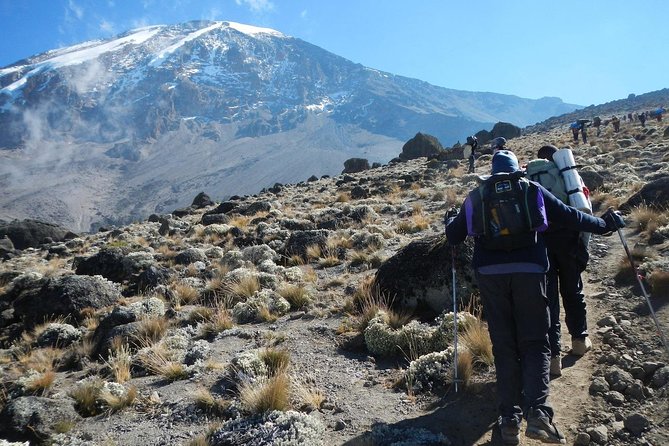
- Lemosho starts in rainforest and crosses the Shira Plateau, giving you Kilimanjaro’s broadest range of scenery.
- The eight-day plan uses an important acclimatization pattern, including a high point at Lava Tower followed by a lower night at Barranco.
- Summit day lasts about 15 hours in total, with roughly eight hours to Uhuru Peak and seven to eight hours down to Mweka.
- The Great Barranco Wall is a hands-on Class 2 section, but it is followed by a relatively short hiking day.
- The price includes camping, meals, porters, rescue fees, park costs, and taxes, but not sleeping bags, gear rental, tips, or personal expenses.
- This is a private trek, so only your group participates, with pickup from Arusha at 6:00 am.
Why the Lemosho Route is worth eight days
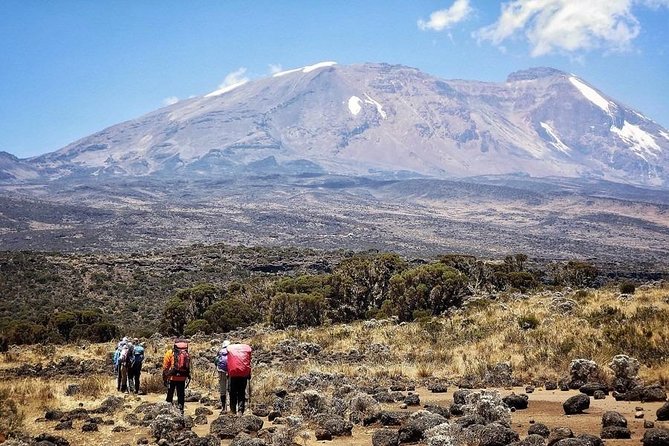
I like Lemosho because it does not rush you straight toward the summit. You begin on the western side of Kilimanjaro, pass through the forest, cross the Shira Plateau, and then curve around the southern side of the mountain. That route gives you changing scenery and a better sense of the mountain’s size.
The quieter opening also matters. Lemosho has low foot traffic until it joins the Machame route. You will not have the entire mountain to yourself, but the early section should feel more remote than the southern approach from the start.
The eight-day length is a practical choice. Kilimanjaro is not mainly a technical climbing challenge. The harder problem is altitude. A longer route gives you more time to walk slowly, rest at camp, and let your body respond before summit night.
That does not make the climb easy. You still finish at 5,895 meters, and the air near Uhuru Peak is thin. But compared with a shorter itinerary, this plan gives you a more sensible rhythm and a stronger acclimatization profile.
More Hiking Tours in Arusha
- 8-Day Small-group Lemosho Kilimanjaro Summit Trekking
★ 5.0 · 186 reviews - Mountain Kilimanjaro Day Hike
★ 5.0 · 102 reviews - Private Full Day Hiking Experience to Marangu Route
★ 5.0 · 61 reviews
Day 1: From Arusha to the Lemosho rainforest
Your day starts at 6:00 am with pickup in Arusha, after breakfast at your hotel and a briefing from the guide. The drive to Londorossi Park Gate takes about two hours, rising from roughly 1,400 meters in Arusha to 2,100 meters at the gate.
You complete entry formalities in the village near Londorossi, then ride for about another hour to the Lemosho trailhead. That extra transfer is worth noting. This is not a quick walk from town to trail, and the morning includes a fair amount of driving before your boots hit the path.
After lunch at the trailhead, you walk about 6 kilometers through undisturbed rainforest. The route takes three to four hours, ending at the first camp. It is a gentle introduction compared with later days, but the damp forest and rising trail can still make the first afternoon feel real.
Your first night is about getting used to camp life. The package includes a mess tent, mattress, cooking equipment, porters, dinner, and breakfast. Lunch is also included, which is useful because you do not need to carry a full supply of food for the route.
Day 2: Heather, volcanic rock, and Shira 1
The second day covers about 8 kilometers in roughly five to five and a half hours. The forest thins out and gives way to moorland, with tall grasses, heather, volcanic rock, and lichen hanging from the plants.
The trail rises over rolling ground and crosses several streams before reaching Shira Ridge. From there, you descend gently toward Shira 1 Camp. This change in scenery is one of Lemosho’s best features. In a single morning, you move from enclosed forest to open country with wide views.
The first clear sight of Kibo, Kilimanjaro’s main summit cone, comes across the plateau. It is a useful moment because the peak can look deceptively close. You still have several demanding days ahead, even when Kibo seems to sit just across the open ground.
This is a moderate day by Kilimanjaro standards, but the altitude is already beginning to matter. Walk slowly and keep your pace steady. There is no prize for reaching camp early and exhausted.
Day 3: Across the Shira Plateau to Moir Hut
Day 3 is longer, covering about 15 kilometers in five to seven hours, depending on the walking pace and camp arrangements. You cross Shira 2’s moorland meadows beside a stream, heading east toward the glaciered upper slopes and Northern Ice Fields.
Shira is one of the highest plateaus on earth, and its open setting makes this section feel much larger than the mileage suggests. You walk toward Kibo without climbing directly toward it all day. That gradual approach helps the route feel measured rather than rushed.
The day finishes at Moir Hut, a little-used site near Lent Hills. Walks on the Lent Hills provide an acclimatization option, though the day is already long enough that you should judge your energy carefully.
This camp also marks a shift in the character of the trek. The forest is far behind you, and the vegetation becomes lower and less generous. Nights are colder, the air is thinner, and simple jobs such as changing clothes or organizing a sleeping bag take more effort.
More Kilimanjaro routes:
- 7-Day Machame Kilimanjaro Summit Tour from Arusha
★ 5.0 · 125 reviews - From Arusha/Moshi: Kilimanjaro Hike Marangu Route Day Trip
★ 4.5 · 54 reviews - Mount Kilimanjaro Day Hike Through Marangu Route to Mandara Hut
★ 5.0 · 37 reviews - 6 Days: Hiking Kilimanjaro via Machame Route
★ 5.0 · 24 reviews
Day 4: Lava Tower, Arrow Glacier junction, and Barranco
Day 4 is one of the most useful days on the route. From Moir Hut, you climb east along a ridge, passing the junction toward Kibo before turning southeast toward Lava Tower, known as the Shark’s Tooth. The day covers about 7 kilometers and takes around seven hours.
The high point is roughly 16,000 feet at the Arrow Glacier junction. You do not sleep there. Instead, you descend to Barranco Hut at about 13,000 feet.
This is the classic acclimatization pattern of climbing high and sleeping lower. Even if you feel fine in the morning, the altitude may hit you at Lava Tower. Headache, nausea, fatigue, or poor appetite are signs to report to your guide rather than hide.
By the end of the day, you are close to the elevation where you started, but your body has spent time higher. That makes this day more valuable than its distance suggests. It can also be tiring because you gain and lose altitude over rocky ground.
Barranco is a memorable camp location below the steep wall. You have dinner, rest, and spend the night preparing for the next morning’s hands-on section.
Day 5: Over the Great Barranco Wall to Karanga
Day 5 covers only about 5 kilometers in four to five hours, but it begins with the route’s most visually intimidating feature: the Great Barranco Wall.
The wall is described as a Class 2 hike. In practical terms, you should expect to use your hands in places and pay attention to foot placement, but it is not presented as a technical climbing pitch. The view from the top includes Heim Glacier and a dramatic sense of being above the clouds.
After the wall, the trail moves through the Karanga Valley, with a series of ups and downs before reaching Karanga Camp at about 3,950 meters. This is a short day on paper, yet the altitude and uneven ground can make it feel substantial.
I like this stage because it gives you time to recover after the long approach through Lava Tower and Barranco. It also puts you close to Barafu, the final camp before the summit attempt. Use the afternoon for rest, food, and sorting your summit clothing rather than treating camp as sightseeing time.
Day 6: The exposed ridge at Barafu Camp
From Karanga, you climb about 4 kilometers in three to four hours toward Barafu Camp at 4,550 meters. The path joins the Mweka Route, which you use for the descent on the final two days.
Barafu means ice in Swahili, and the camp sits on a rocky, exposed ridge. There is no accessible water at Barafu, so this is the last water stop for porters before the summit attempt. That detail explains why the support team needs to prepare carefully and why you should conserve your own water.
The camp is exposed to wind and rock. Get familiar with the tent area before dark, since you may return after sunrise tired and cold. The early dinner is intentional. You need to lie down as soon as possible because the guide wakes you around 11:30 pm.
This is often the quietest part of the trek emotionally. You have climbed for days, but the summit still requires a night start, a steep ascent, and a very long descent. Eat what you can, organize your headlamp and warm layers, and follow the guide’s advice about pace.
Day 7: Stella Point, Uhuru Peak, and the long descent
Summit day begins around 11:30 pm with tea and biscuits. You start in darkness, heading northwest over stone scree. The first goal is Stella Point on the crater rim at about 5,685 meters.
The ascent to Stella Point takes about six hours. This is often the hardest part mentally and physically because you are walking uphill at night after limited sleep, with little oxygen and loose stone underfoot.
At Stella Point, you can watch the sunrise before continuing for about two more hours along a snow-covered trail to Uhuru Peak. The summit is 5,895 meters. The final stretch is not long by normal hiking standards, but at this height every step costs more.
The itinerary allows about eight hours to reach Uhuru Peak. After the summit, you descend for seven to eight hours toward Mweka, covering roughly 23 kilometers downhill. That combination makes this the toughest day by far.
You should think of the summit as only the midpoint of the day. Reaching Uhuru Peak is the obvious goal, but getting down safely matters just as much. The trail changes from stone scree and ice-capped summit conditions to lower mountain terrain as you descend.
You also receive a certificate at the park. Reaching Stella Point earns a green certificate, while reaching Uhuru Peak earns a gold certificate. The distinction is useful because Stella Point is a serious achievement in its own right, even though Uhuru is the summit goal.
Day 8: Mweka Gate, certificates, and the return to Arusha
After breakfast, the mountain crew holds a celebration with dancing and singing. You also present tips to the guide, assistant guides, chef or chefs, and porters. Tipping is not included in the price, so plan for this separately and carry the necessary money.
The final descent takes about three hours through forest to Mweka Gate, over roughly 15 kilometers. At the gate, all hikers sign their names to receive their completion certificates.
The listed route then continues toward Mweka village for about an hour and another 3 kilometers. The activity ends back at the meeting point in Arusha, although the exact transfer timing should be confirmed with the operator because the final descent, park formalities, and village transfer can take much of the day.
What the $2,700.52 price covers
At $2,700.52 per person, this is not a casual weekend hike, but the cost includes many of the expensive parts of a supported Kilimanjaro climb.
Included are camping equipment such as the mess tent, mattress, and cooking equipment. You also get park and parking fees, rescue fees, taxes and VAT, accommodation on the trek, a professional driver and guide, porterage, and seven breakfasts, seven dinners, and eight lunches.
The inclusion of rescue fees is important. It does not remove the risks of altitude, but it means a formal part of the mountain support cost is already built into the package.
You still need to budget for climbing gear rental if required, a sleeping bag, bath towels, tips, personal items, souvenirs, travel insurance, visa fees, international flights, and accommodation before and after the trek. Government increases in taxes or park fees can also be passed on to you.
The value depends on what you want. If you prefer a private group, full meal support, porters, and an eight-day route with solid acclimatization days, the package covers the core costs. If you already own camping equipment and plan to arrange your own lodging, the included items may matter less to you.
The people behind the mountain support
The strongest practical advantage here is the local Tanzanian operation. Erastus handles communication and trip arrangements, and he has been described as quick to respond through WhatsApp. That is useful when you need to adjust plans or clarify details before arrival.
Oliver is identified as the main guide on one of the departures, with John also part of the crew praised for helping make the trip memorable. Guide quality matters more on Kilimanjaro than polished marketing. You need clear pacing, honest altitude checks, and someone who can keep the group moving during the long summit night.
The trek is private, so your group is the only group participating in the activity. That gives you more control over pace and communication than a large shared departure, though the mountain schedule and park rules still set the basic structure.
Porters, assistant guides, and cooks are also part of the operation. Their work supports the camping, food, and carrying system that makes an eight-day route possible. Remember that tips are separate and should be treated as part of the real trip budget.
Who should choose this trek
I would point this route toward someone who wants the most scenic standard approach and is willing to spend eight days on the mountain. It suits hikers who value changing scenery, a quieter opening, and time for altitude adjustment more than the shortest possible itinerary.
It is also a good fit if you want a private trip and prefer dealing with a local company directly. The guide names and direct communication through Erastus are useful advantages for anyone who wants a clear contact before arriving in Tanzania.
You need to be ready for long walking days, cold nights, basic camp conditions, and the possibility that altitude will affect your summit attempt. The itinerary says most people can participate, but that should not be read as a promise that everyone reaches Uhuru Peak. Fitness helps, yet altitude affects people differently.
This is not the best choice if you want a relaxed holiday with only a little walking. The summit day alone requires a night start, about eight hours uphill, and up to eight hours descending.
Practical details before you commit
Pickup is offered from Arusha, with a stated start time of 6:00 am. Confirmation is received at booking, and the meeting point is also the end point for the activity. The location is near public transportation, though most participants will be using the provided pickup for the start.
Climbing gear and sleeping bags are available to rent, but the supplied details do not specify the rental prices. Ask for those costs before paying so the final budget does not surprise you.
The cancellation terms are strict. The experience is non-refundable and cannot be changed for any reason, so confirm your dates, travel insurance, visa needs, and pre- and post-trek lodging before booking.
Should you book the 8-day Lemosho Route?
I would book this trek if you want Kilimanjaro’s most varied route, prefer a private group, and can handle the cost of a fully supported eight-day climb. The rainforest, Shira Plateau, Lava Tower, Barranco Wall, and sunrise approach to Uhuru Peak give you a far better range of scenery than a route that simply races uphill.
I would pause if you are focused on keeping the total price low or if a 15-hour summit day sounds beyond your limits. Ask Mafie Adventures for current gear rental costs, the exact pre- and post-trek lodging plan, and the expected tipping arrangement before committing.
For a fit hiker who wants time to acclimatize and values direct local coordination, this is a strong option. The mountain will still demand patience, stamina, and a little humility, but the route gives you a fair chance to enjoy the climb rather than merely survive it.
FAQ
Where does the trek start and end?
The trek starts in Arusha, Tanzania, with pickup offered at 6:00 am. The activity ends back at the meeting point.
How long is the Lemosho trek?
The experience lasts approximately eight days.
Is this a private tour?
Yes. Only your group participates in the activity.
Is camping equipment included?
Yes. The package includes a mess tent, mattress, and cooking equipment, along with camping accommodation during the trek.
Are meals included?
Yes. The package includes seven breakfasts, seven dinners, and eight lunches.
Are climbing gear and sleeping bags included?
No. Climbing gear and sleeping bags are available to rent, but they are not included in the listed price.
Newly listed around Arusha
- 5-Day Private Safari Tour in Tanzania’s Wildlife★ 5.0 · 3 reviews
- 3 Days private safari Tarangire ,Ngorongroro crater &Manyara★ 5.0 · 3 reviews
- 3 Day Sharing Safari – Manyara, Ngorongoro Crater and Tarangire National Parks★ 5.0 · 3 reviews
- Tarangire National Park Day Trip★ 5.0 · 3 reviews
- 2 Days Tarangire and Ngorongoro Crater Tour★ 5.0 · 3 reviews
- 6 -Day Tarangire, Manyara, Serengeti & Ngorongoro★ 5.0 · 3 reviews
- 5 Days Group Camping Safari★ 4.7 · 3 reviews
- 4 Days Tanzania Safari★ 4.5 · 3 reviews
Kilimanjaro Climbs, compared.








Browse the lists this tour appears in