
Reviewed · KILIMANJARO CLIMBS
8 days Lemosho route Climbing Mt. Kilimanjaro
Kilimanjaro’s 8-day Lemosho route gives you a gradual approach to Africa’s highest mountain, beginning in quiet rainforest and crossing the Shira Plateau before joining the southern circuit. The route saves the summit for a long night of stone scree, sunrise at Stella Point, and the final push to Uhuru Peak.
I like the extra acclimatization built into the route, especially the high Lava Tower day followed by a lower night at Barranco. I also like the practical package: airport transfers, Moshi accommodation, tents, meals, treated water, porters, and an emergency kit are included.
The main catch is the price, $3,100 per person, and the physical demand. Eight days helps, but it does not make altitude sickness or summit night easy. You also need to budget for travel insurance, flights, and tips.
Key points to know before booking
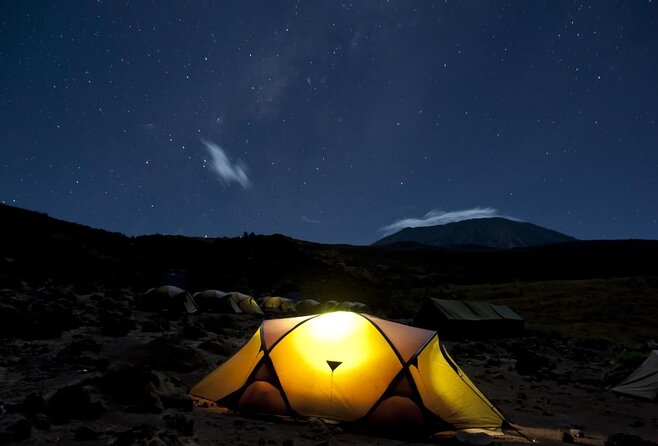
- Lemosho begins in rainforest: The first two days feel greener and quieter than the higher camps, with a steady climb toward Shira.
- Acclimatization is built into the route: You climb to Lava Tower at about 16,000 feet, then sleep lower at Barranco.
- Summit night is a full endurance test: Plan for about eight hours to Uhuru Peak, followed by a seven to eight-hour descent.
- A team of guides, porters, and a cook travels with you: Reviews specifically praise the support from guides Goodluck and Abraham, along with the wider mountain crew.
- The package covers major climbing costs: Park fees, camping, rescue fees, meals, water, tents, oxygen, and Moshi lodging are included.
- The group limit is 15 people: That is small enough for a more personal trip, though the exact group size may vary.
What the 8-day Lemosho route is really like
Lemosho is a good choice if you want a scenic route with time to adjust to altitude. It does not rush you straight upward. Instead, the route takes you through several of Kilimanjaro’s vegetation zones, each with its own feel and walking conditions.
You begin around Moshi, at an arranged start time of 8:30 am. The operator offers private transport from Kilimanjaro International Airport to your accommodation in Moshi, plus two nights of accommodation there. Transport to and from the Kilimanjaro gate is also covered.
That first night in Moshi matters. You can arrive, settle in, and receive the mountain briefing before the trail starts. Communication during the planning stage has been a strong point, with Naick, identified as the company owner, handling questions and itinerary changes for several bookings.
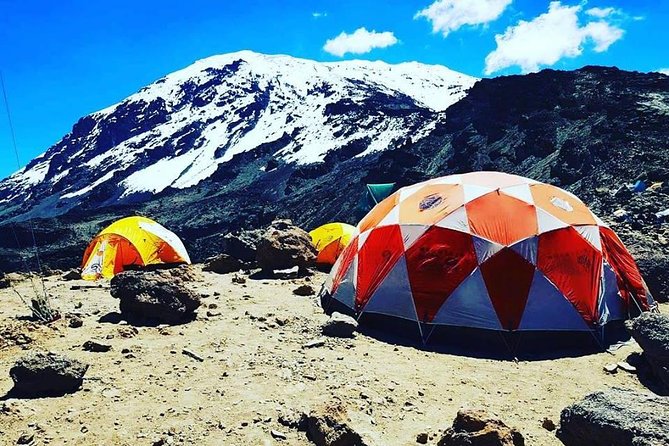
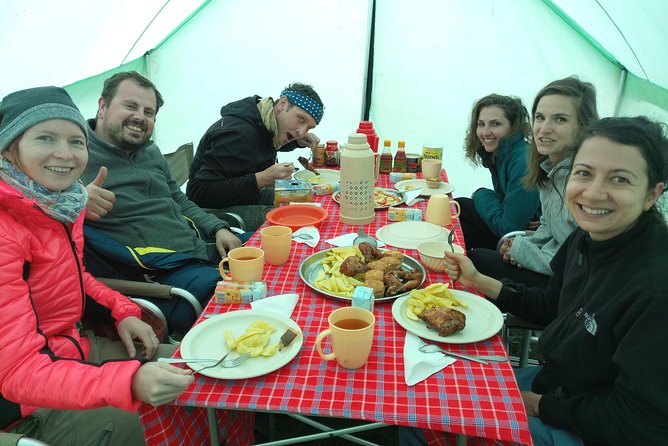
This is not a luxury mountain holiday. You sleep in four-season tents, wash with hot water, and eat at camp. Still, having a cook, treated drinking water, sleeping mats, and a support crew included removes many of the hard practical chores.
More Kilimanjaro routes:
- Kilimanjaro climb by Lemosho Route (7-day)
★ 5.0 · 651 reviews - Kilimanjaro climb, Machame Route (7-day)
★ 5.0 · 262 reviews - Kilimanjaro Climbing Lemosho Route 8 Days.
★ 5.0 · 186 reviews
Day 1: From Moshi to the Lemosho rainforest
After breakfast at your hotel, you meet your guide for a briefing and drive to Londorossi Park Gate at about 2,100 meters. Entry formalities take place near the village, then the drive continues for roughly another hour to the Lemosho trailhead.
The first hike covers about 6 kilometers and takes three to four hours. The habitat is rainforest, and the trail begins through relatively undisturbed forest before reaching the first campsite.
This is a gentle way to begin a major climb. You get your first feel for the walking pace without facing extreme altitude or a huge mileage day. The forest also gives Lemosho a stronger sense of entering the mountain from the outside world, rather than simply arriving at a high, crowded trailhead.
Lunch is provided, followed by the start of the hike, with breakfast, lunch, and dinner included for the day. You should still treat Day 1 as a real hiking day. Your boots, pack, and rain gear need to be working properly from the start.
Day 2: Climbing through heather to Shira 1
The second day covers about 8 kilometers in roughly five and a half hours. The forest gives way to moorland, with tall grasses, heather, volcanic rock, and lichen.
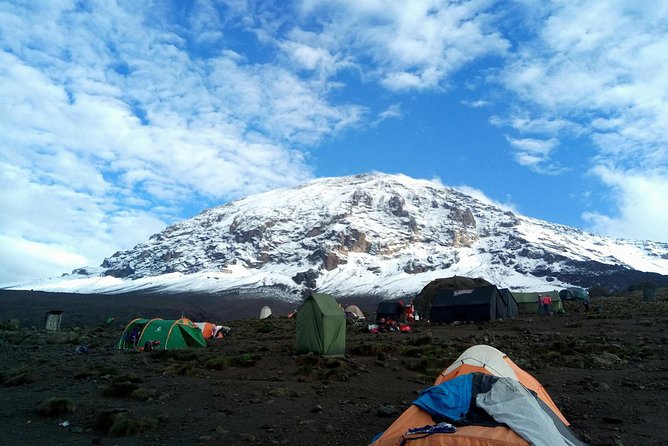
You climb through rolling ground and cross several streams before reaching Shira Ridge. From there, the trail drops gently to Shira 1 Camp. The view across the plateau toward Kibo, Kilimanjaro’s main summit cone, is one of the first major visual rewards of the route.
This day is longer than Day 1, but it is still a sensible progression. You are gaining altitude without trying to reach a very high camp too quickly. The change in vegetation also makes the route feel varied, which helps on a long trek.
The exposed moorland can feel more open than the forest. Weather may change quickly at altitude, so keep a waterproof layer and warm clothing accessible rather than buried in your duffel.
Day 3: Shira 2 and the quieter Moir Hut area
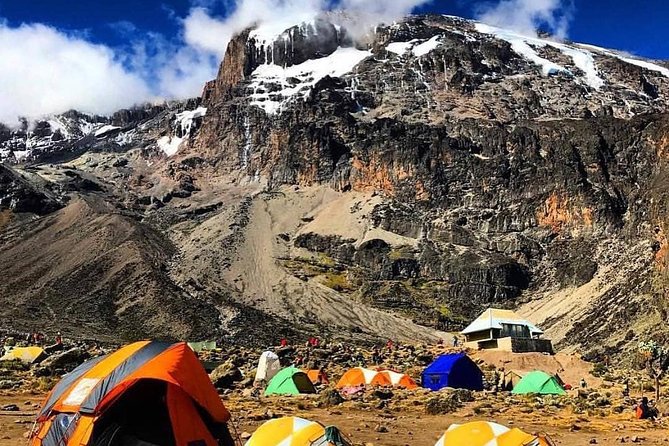
Day 3 is one of the most useful days for acclimatization. The stated distance is about 15 kilometers, with five to seven hours of hiking across moorland.
You first walk east toward Kibo across the Shira Plateau, passing Shira 2 Camp on moorland meadows beside a stream. The route then continues toward Moir Hut, a less-used camp at the base of Lent Hills.
Moir Hut is not simply a place to sleep. Walks on Lent Hills provide options for gaining height during the day and then returning to camp. That climb-high, sleep-lower pattern is valuable preparation for the summit attempt.
The Shira Plateau is also one of the special parts of this route. You have broad views toward the glaciered summit and the Northern Ice Fields, while the walking remains on high moorland rather than technical climbing terrain.
The drawback is the distance. Fifteen kilometers may sound manageable on paper, but altitude makes ordinary walking more tiring. Go slowly, drink regularly, and do not race ahead of the guide or group.
A few more Moshi & Kilimanjaro days to compare
- Safari Serengeti And Ngorongoro
★ 5.0 · 288 reviews - Climbing Kilimanjaro – Machame Route
★ 5.0 · 170 reviews - Climbing Kilimanjaro through 7 days Machame Route
★ 5.0 · 151 reviews - Kilimanjaro climb, Lemosho Route (8-day)
★ 5.0 · 148 reviews
Day 4: Lava Tower, Arrow Glacier junction, and Barranco
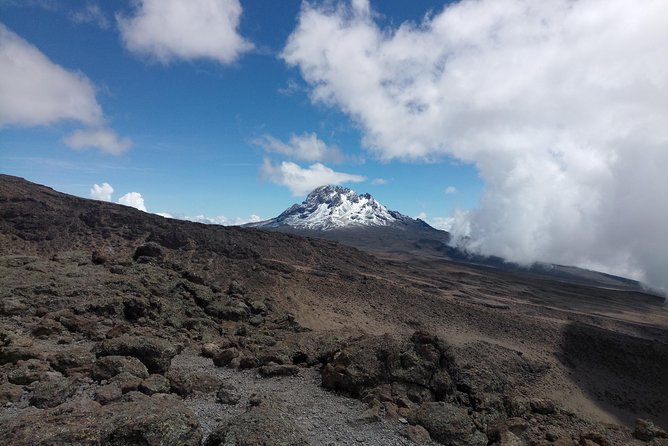
Day 4 is the key acclimatization day. You hike about 7 kilometers in roughly seven hours through semi-desert terrain.
From Moir Hut, the route rises along a ridge, passes the junction toward Kibo, and turns southeast toward Lava Tower, also called the Shark’s Tooth. The route reaches about 16,000 feet near the Arrow Glacier junction before descending to Barranco Hut at approximately 13,000 feet.
You finish the day at roughly the same elevation at which you began, but that is the point. Your body gets time at a higher altitude, then you sleep lower. This is one of the strongest features of the itinerary, and it is a major reason to choose eight days instead of a faster schedule.
Lava Tower can be physically demanding even though the mileage is not huge. The combination of climbing, altitude, and a later descent can leave you tired by dinner. At Barranco, you have time to rest and eat before the next morning’s wall climb.
Day 5: The Barranco Wall and Karanga Camp
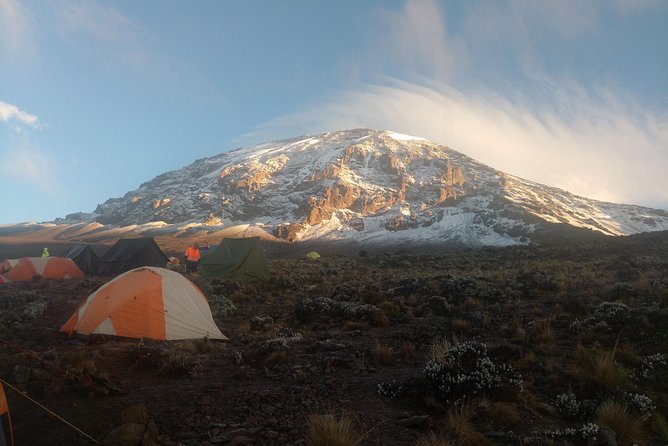
Day 5 covers about 5 kilometers in four to five hours through alpine desert. It starts with the Barranco Wall, which can look intimidating from below.
The route is described as a Class 2 hike. That means you may use your hands at points, but it is not presented as technical climbing requiring ropes. The wall is followed by a trail that rises and drops through the Karanga Valley before reaching Karanga Camp at 3,950 meters.
This is a short day by distance, but it is not a throwaway day. The wall gives you a more hands-on section of trail, and the view near the top includes the Heim Glacier and a position above the clouds.
Karanga is also strategically placed. You continue gaining altitude while keeping the walking day moderate. Dinner and washing facilities are provided at camp, although mountain washing is naturally basic rather than hotel-like.
Day 6: Barafu Camp and the wait for summit night
The sixth day is only about 4 kilometers and takes three to four hours. You hike through alpine desert toward Barafu Hut at approximately 4,550 meters.
The trail joins the Mweka Route, which you use during the descent. Barafu means ice in Swahili, and the camp sits on a rocky, exposed ridge. There is no accessible water at the camp, so this is the last water stop for porters before summit night.
The exposed setting is worth taking seriously. Your tent may face wind and rocky ground, and you should become familiar with the campsite before darkness. Keep your headlamp, warm layers, gloves, water, and summit snacks ready before you try to sleep.
Dinner is served early, and the intended bedtime is around 7:00 pm. Your guide gives a detailed briefing on preparing for the summit attempt. This short afternoon is less about sightseeing and more about eating, organizing your kit, and resting.
Day 7: Stella Point, Uhuru Peak, and the long descent
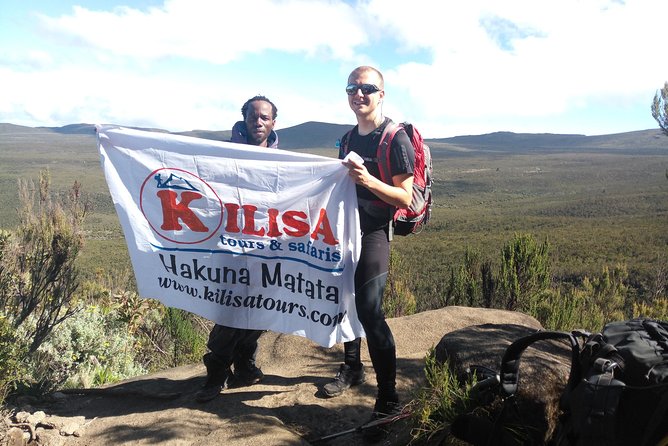
Summit day begins around 11:30 pm, when your guide wakes you for tea and biscuits. The ascent heads northwest over stone scree.
The climb to Stella Point at 5,685 meters takes about six hours. This is often the hardest mental section because it is dark, cold, steep, and slow. The itinerary allows about eight hours to reach Uhuru Peak, so you need patience rather than speed.
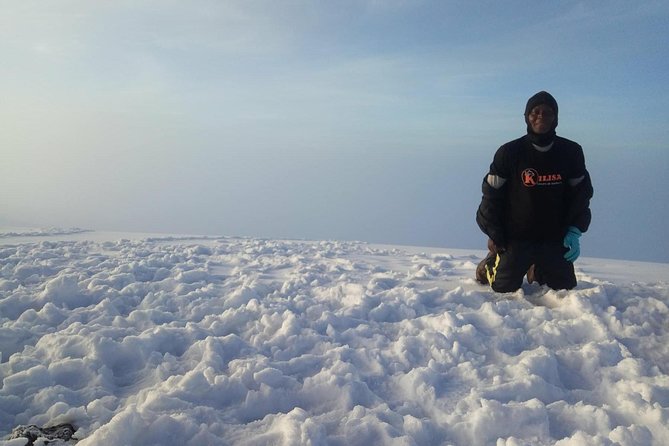
At Stella Point, you reach the crater rim and can pause for the sunrise. From there, the trail continues for about two hours over a snow-covered route to Uhuru Peak at 5,895 meters.
Reaching Uhuru earns a gold certificate, while reaching Stella Point earns a green certificate. That distinction is useful because it recognizes progress even if altitude or exhaustion prevents the final push to the summit.
The descent is not an easy victory lap. You cover about 23 kilometers downhill toward Mweka, with seven to eight hours allowed for the descent. Your legs may be tired, and the loose scree can make going down awkward. Good trekking poles, careful foot placement, and following your guide’s pace will help.
The provided schedule lists breakfast, lunch, and dinner for this day. Ask how meals are timed during summit day, since your appetite and energy needs will change during the overnight ascent and long descent.
Day 8: Mweka Gate, certificates, and back to Moshi
After breakfast, the mountain crew holds a celebration with dancing and singing. You also present tips to your guides, assistant guides, cook, and porters at this point.
Tipping is not included in the $3,100 price. It is also culturally expected within the climbing system, so discuss the recommended amount and how tips are divided before leaving Moshi. One past booking specifically found this part awkward, which is a good reason to ask clear questions early.
The final descent takes about three hours over approximately 15 kilometers through forest to Mweka Gate. You sign your name at the national park office and receive your completion certificate.
From the gate, you continue for about an hour and 3 kilometers to Mweka village. A hot lunch is served, followed by transport back to Moshi for showers and further celebration.
That return to town is one of the pleasures of the schedule. You finish with a proper meal and the chance to wash, rather than going directly from the mountain into an airport transfer.
What the $3,100 price covers
At $3,100 per person, this is a serious purchase, but the package includes many costs that can add up quickly on Kilimanjaro.
Included items are:
- Airport transfers to and from your Moshi accommodation
- Two nights of accommodation in Moshi
- Transport to and from the Kilimanjaro gate
- Park entry fees and camping fees
- Kilimanjaro rescue fees
- Government taxes and 18 percent VAT
- Guides, assistant guides, cook, and porters
- Four-season mountain tents and sleeping mats
- Three hot meals daily on the mountain
- Treated and filtered drinking water
- Hot water for washing
- Portable oxygen tanks and an oximeter
- An emergency first-aid kit
That list makes the price easier to judge. You are not paying only for a guide and a route. You are paying for permits, camp infrastructure, food logistics, porters, rescue coverage, transport, and a support system that must function far from town.
Flights and travel insurance are not included. Tips are also separate. Before booking, confirm what type of Moshi accommodation is provided and how the operator handles any changes to your arrival schedule.
Safety, guides, and the human side of the climb
The company places strong emphasis on safety and comfort, and the package includes oxygen, an oximeter, rescue fees, and first-aid supplies. These items do not remove the danger of altitude, but they show that the climb is organized around monitoring and emergency response.
The named guides Goodluck and Abraham received especially strong praise for leading a successful eight-day Lemosho climb. The wider team of cooks and porters also earned repeated approval for friendliness, helpfulness, and food.
You should still ask direct questions about the guide-to-climber ratio, daily health checks, porter welfare, and the tipping structure. The maximum group size is 15, but your actual departure could be smaller. A smaller group may make the pace and guide communication easier.
The most important safety habit is simple: walk slowly and report symptoms early. The route has acclimatization days, but no operator can guarantee a summit. Altitude affects people differently, even when they are fit.
Who should book this climb
This trek suits you if you have a strong level of physical fitness and can commit to eight demanding days outdoors. You should be comfortable walking for several hours, sleeping in mountain tents, handling cold conditions, and spending a long night climbing and descending.
It is a good match for someone who values a slower route and broad scenery over a quick summit attempt. The Lemosho approach offers rainforest, moorland, semi-desert, alpine desert, and summit scree in one continuous trip.
It may not suit you if you want hotel comfort, short hiking days throughout, or a fixed guarantee of reaching Uhuru Peak. Day 7 is particularly hard, and even a fit person can find the overnight summit effort exhausting.
The tour accepts mobile tickets, offers pickup, and has a maximum group size of 15. Confirmation is provided at booking. The cancellation terms allow a full refund when you cancel at least 24 hours before the local start time. If poor weather forces cancellation, you are offered another date or a full refund.
Should you book the 8-day Lemosho climb?
I would choose this route if your priority is a well-paced Kilimanjaro ascent with strong logistical support. The Lava Tower and Barranco acclimatization pattern is a real advantage, and the package includes the costly basics that many climbers need.
I would pause if the $3,100 price stretches your budget, or if you are not ready for the summit night and the 23-kilometer descent that follows. Ask about tipping, hotel details, group size, health checks, and meal arrangements before paying.
For a fit climber who wants the scenic western approach, professional mountain staff, and a full eight-day schedule, this is a sensible package. Just arrive prepared for a serious mountain, not a sightseeing walk.
FAQ
How long is the Kilimanjaro experience?
The climb lasts approximately eight days, beginning and ending in Moshi, Tanzania.
What is the price per person?
The listed price is $3,100 per person.
Where does the trek start and finish?
The activity starts in Moshi and ends back at the meeting point after the descent and return from Mweka.
What time does the activity start?
The listed start time is 8:30 am.
What meals are included?
Breakfast, lunch, and dinner are provided during the mountain trek. The package lists eight breakfasts, seven lunches, and seven dinners.
Are airport transfers included?
Yes. Private transport to and from Kilimanjaro International Airport and your Moshi accommodation is included.
Are flights and travel insurance included?
No. Flights and travel insurance are not included.
What happens if poor weather cancels the climb?
If the experience is canceled because of poor weather, you are offered a different date or a full refund.
Newly listed around Moshi & Kilimanjaro
- Climb Mount Kilimanjaro: 7 Days Machame Route★ 5.0 · 3 reviews
- 6 Days Mount Kilimanjaro Climbing via Rongai Route★ 5.0 · 3 reviews
- Explore 1 day Ngorongoro Crater Budget Group Safari from Arusha★ 5.0 · 3 reviews
- Mt. Kilimanjaro Day Hiking★ 5.0 · 3 reviews
- Chemka (Kikuletwa) Hot Springs, Tanzania★ 5.0 · 3 reviews
- Guided City tour of Moshi★ 4.3 · 3 reviews
- 8 Day Tanzania Family Safari★ 5.0 · 3 reviews
- Serengeti Safari with Sirikwa Travel★ 5.0 · 3 reviews
Kilimanjaro Climbs, compared.








Browse the lists this tour appears in