
Reviewed · KILIMANJARO CLIMBS
8 Day Kilimanjaro Private Climb via Lemosho Route
The best thing about this 8-day Lemosho climb is its steady rhythm. You begin in rainforest, cross moorland and rocky high country, then reach Uhuru Peak by headlamp. I like the route’s gradual ascent and its built-in acclimatization day, especially the climb high to Lava Tower before sleeping lower at Barranco Camp. I also like the private format, which lets the pace and attention fit your group.
The main catch is simple: this is a serious mountain trip, not a scenic walk. The summit day lasts about 12 hours, begins just after midnight, and combines cold, altitude, loose volcanic ash, and a long descent. You need moderate physical fitness, patience, and a willingness to accept that the mountain controls the timetable.
Key points to know before booking
- Eight days gives you time to adjust: The route uses a high point at Lava Tower followed by a lower overnight camp, a useful pattern for altitude adaptation.
- The route changes character every day: You move from rainforest to heather, semi-desert rock, glaciers, crater rim, and forest.
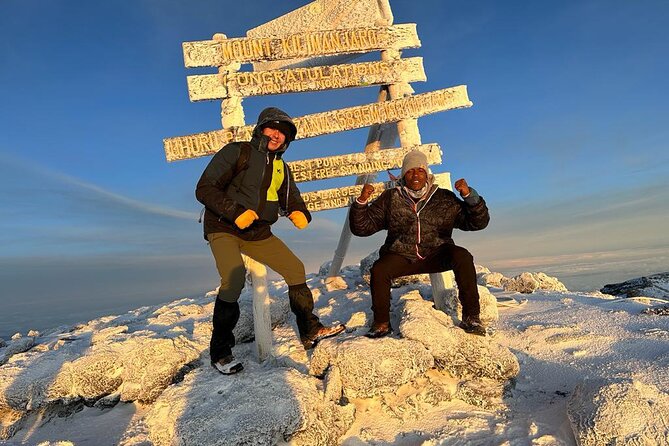
- Summit night is the test: You leave Barafu shortly after midnight, reach Stella Point around sunrise, then continue to Uhuru Peak.
- Private guiding keeps the experience personal: Only your group takes part, with guides and porters supporting the climb.
- The crew receives the strongest praise: Guides and porters, including names such as Emanuel, Wence, Nyokaa, Mality, Tammy, and Good Luck, are repeatedly singled out for care and encouragement.
- The price reflects a full mountain operation: At $3,250 per person, the package includes airport pickup, hotel arrangements, park access, camp support, meals, porters, and a certificate at the end.
Why the Lemosho Route earns eight days
Kilimanjaro is not a technical climbing mountain on this route, but its height makes it demanding. Uhuru Peak reaches 5,895 meters, and altitude is the main reason many strong hikers struggle. The Lemosho itinerary deals with this by taking you up slowly and giving your body time to catch up.
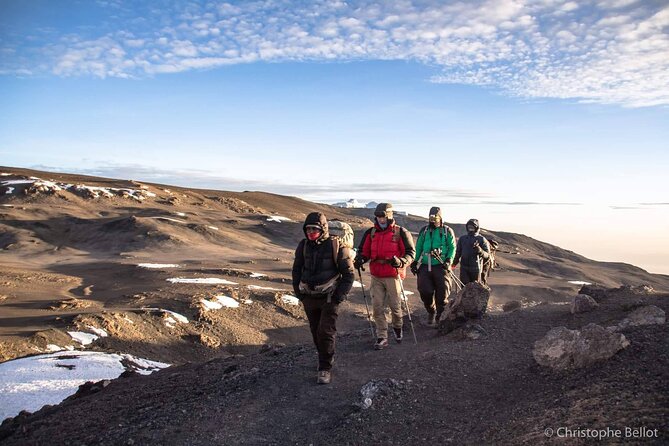
The route is also appealing because it does not feel the same from start to finish. The first days have forest and streams. Higher up, the trees thin into heather, then disappear into open rock and volcanic dust. By summit morning, you are walking through darkness toward the crater rim.
I see the eight-day schedule as a sensible middle ground. It is longer and generally gentler than a compressed route, but it is not an easy holiday. You still face long walking days, cold camps, basic mountain sleeping, and one very hard summit push.
More Kilimanjaro routes:
- Kilimanjaro climb by Lemosho Route (7-day)
★ 5.0 · 651 reviews - Kilimanjaro climb, Machame Route (7-day)
★ 5.0 · 262 reviews - Kilimanjaro Climbing Lemosho Route 8 Days.
★ 5.0 · 186 reviews
Day 1: Arrival in Moshi and a useful briefing
Your arrival begins at Kilimanjaro International Airport, where a driver meets you and takes you to Keys Hotel in Moshi. The hotel is on Uru Road, about 300 meters from the YMCA Hotel premises.
This first night matters more than it may seem. You have time for dinner, an overnight stay, and a briefing before heading into the park. A good briefing is where you should ask about pace, water, clothing, medication, altitude symptoms, and what to expect on summit night.
Do not confuse the airport meeting point with the mountain trailhead. The activity lists an 8:00 am start and pickup at Kilimanjaro Airport, but the first day itself is mainly arrival, orientation, dinner, and sleep in Moshi.
Day 2: Londorossi Gate to Mti Mkubwa Camp
After breakfast, you drive toward the western side of Kilimanjaro. Near the village by Londorossi Gate, you receive a packed lunch and can buy mineral water before the final approach.
The last 45 minutes to the gate use a rough forest track, so the 4WD transfer is not a luxury. It is practical transport for a road that can be bumpy and slow. At the gate, guides and porters organize supplies and complete registration with Tanzania National Parks Authority.
The hike begins in rainforest and takes about three hours to Mti Mkubwa, or Big Tree, Camp at 2,750 meters. The forest is a fine opening act, with thick vegetation, streams, and the chance to spot colobus monkeys.
Your tents are set up before you arrive, and the crew prepares drinking and washing water. That support makes a real difference after a first walking day, though you should still expect a simple camp rather than hotel comfort.
Day 3: Heather country and Shira 2 at 3,840 meters
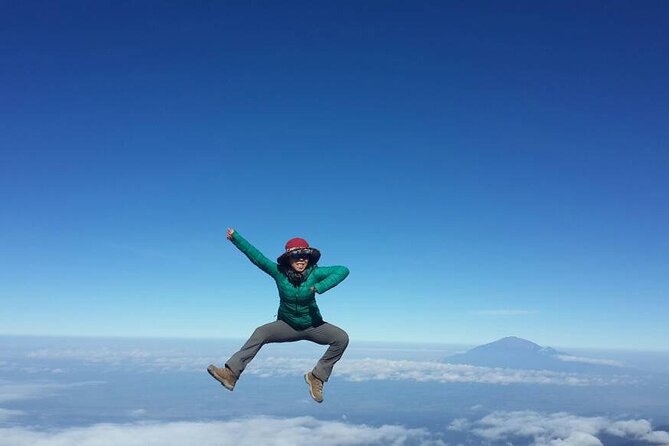
This is a longer day, about nine hours, as you leave the rainforest and enter the heather moorland zone. The trail crosses streams and opens onto a broad plateau leading to Shira 2 Camp at 3,840 meters.
The change in scenery is one of the pleasures of Lemosho. The trees fall away, the air feels thinner, and the route begins to look unmistakably high mountain. From camp, you have views toward the Western Breach and its glaciers to the east.
Shira 2 is exposed, and temperatures can drop below freezing at night. Your tent and meals are handled by the crew, but warm layers, dry socks, and a properly rated sleeping bag are essential. The nine-hour duration also makes this a day when a slow, steady pace is more useful than trying to gain time.
A few more Moshi & Kilimanjaro days to compare
- Safari Serengeti And Ngorongoro
★ 5.0 · 288 reviews - Climbing Kilimanjaro – Machame Route
★ 5.0 · 170 reviews - Climbing Kilimanjaro through 7 days Machame Route
★ 5.0 · 151 reviews - Kilimanjaro climb, Lemosho Route (8-day)
★ 5.0 · 148 reviews
Day 4: Lava Tower and the Barranco descent
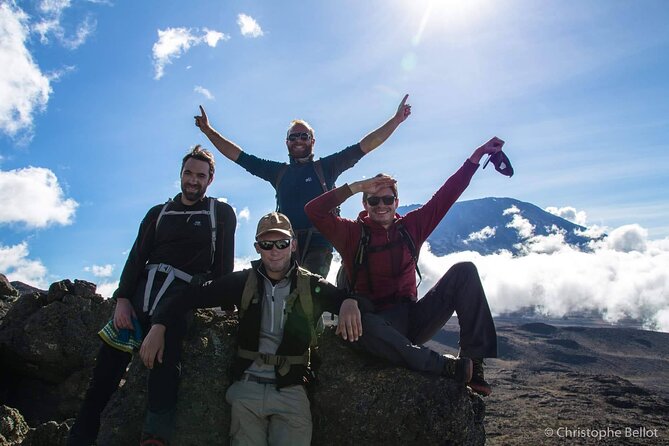
The fourth day is one of the smartest parts of the route. You walk east for roughly five hours through semi-desert and rocky ground to Lava Tower at 4,630 meters.
At this height, headaches and shortness of breath can begin. That does not automatically mean something is wrong, but it does mean you must tell your guide how you feel. The itinerary allows lunch at Lava Tower, and weather permitting, you may climb the rock formation.
Then comes the important part: you descend to Barranco Camp at 3,950 meters. This is the classic climb-high, sleep-lower pattern, giving your body exposure to greater altitude without making you spend the night at Lava Tower.
Barranco Camp is visually dramatic, with steep rock around the site and the Barranco Wall ahead. The descent is long enough to tire your legs, but it sets up the next day well. I would not treat the Lava Tower option as a required extra. If you feel altitude symptoms, resting and descending should take priority.
Day 5: The Barranco Wall and Karanga Valley
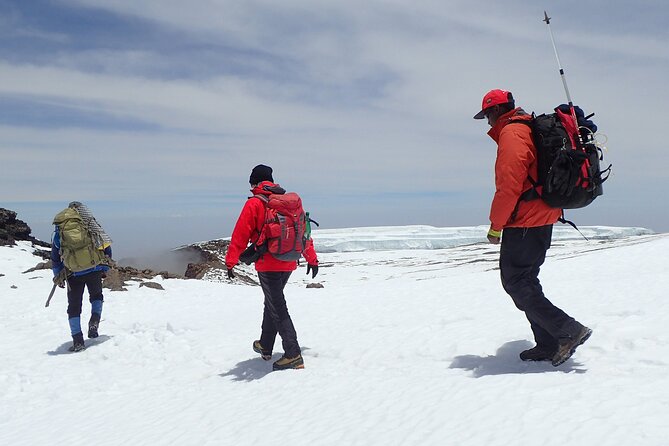
Day five is shorter, around five hours, and serves as an acclimatization day. The headline feature is the Great Barranco Wall.
It looks intimidating from below, but the route is described as a Class 2 hike and is generally easier than its appearance suggests. You use hands in places, but this is not presented as technical climbing. At the top, you can see Heim Glacier and look out across the clouds.
After the wall, the trail rises and falls through Karanga Valley before reaching Karanga Camp at 3,950 meters. This up-and-down walking can be tiring, particularly after the previous day, but the shorter schedule gives you more time to eat, wash, organize your kit, and rest.
This is also a day when guide support matters. Names such as Emanuel, Wence, Nyokaa, Mality, Tammy, Manu, and Good Luck appear frequently in the company’s praise, with particular attention to encouragement, safety, and personal care. Since this is a private trip, you can communicate directly rather than being lost in a large group.
Day 6: Barafu Camp and preparation for summit night
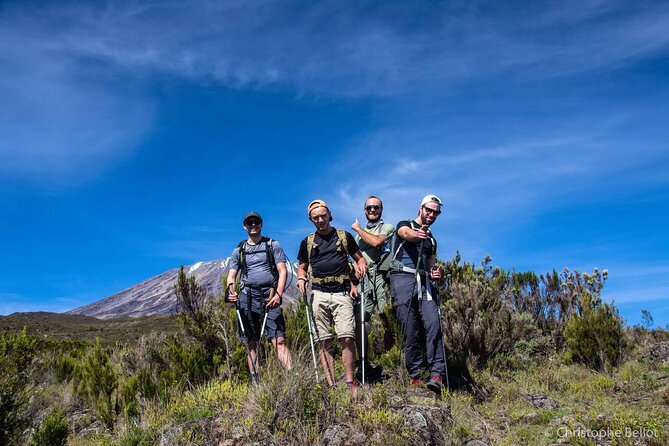
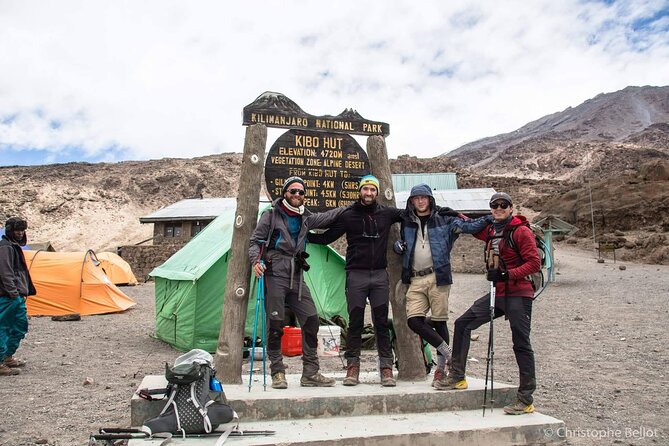
From Karanga, you ascend for about five hours to Barafu Camp at 4,550 meters. The trail joins the Mweka Route, which you later use for the descent.
Barafu means ice in Swahili, and the camp sits on a rocky, exposed ridge. There is no accessible water at the camp, so this is the last water stop for the porters. Your crew prepares drinking and washing water, but you should pay close attention to hydration because you will not have a natural water source at Barafu.
The tents are exposed to wind and rocks. Arriving with enough daylight to understand the campsite is useful, especially when you will be moving around in darkness later. You eat an early dinner, receive a detailed summit briefing, and are expected to sleep by about 7:00 pm.
That early bedtime sounds reasonable on paper. In practice, cold, nerves, altitude, and the excitement of the summit can make sleep difficult. Pack your headlamp, warm layers, gloves, snacks, and water where you can reach them without unpacking everything.
Day 7: Stella Point, Uhuru Peak, and the long way down
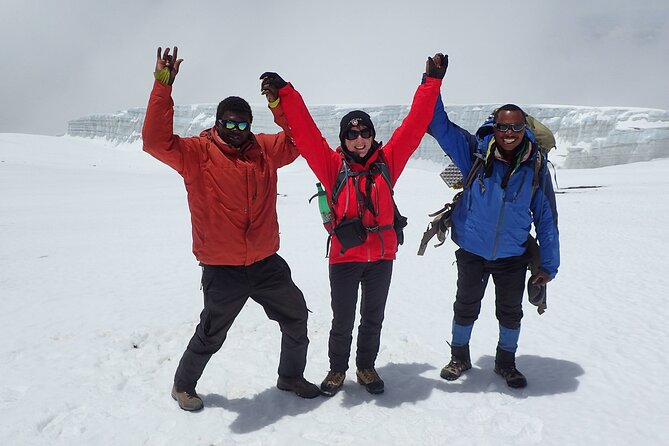
Summit day begins shortly after midnight. You climb frozen volcanic dust by headlamp toward Stella Point on the crater rim, a section that takes about six hours.
The timing is designed to bring you toward Stella Point around sunrise. From there, you continue for another hour or two to Uhuru Peak, the highest point of Kilimanjaro at 5,895 meters. The final stretch can feel slow because of altitude, cold, and fatigue. Your guide sets the pace, and the sensible approach is to keep moving steadily rather than chasing speed.
At the summit, you have time for photographs and a short celebration before beginning the descent. The downhill route is dusty and steep, and the volcanic ash may have thawed by then. You stop briefly at Barafu for tea, then continue for about three hours to Mweka Camp at 3,080 meters.
The full day lasts around 12 hours. That number deserves respect. Reaching the summit is only half the day, and the descent can be hard on tired knees and feet. Drink plenty of fluids, eat properly at supper, and expect to feel worn out.
Day 8: Mweka Gate and the return to Moshi
The last morning begins with a farewell ceremony from the porters. You then descend for about three hours through the forest to Mweka Gate.
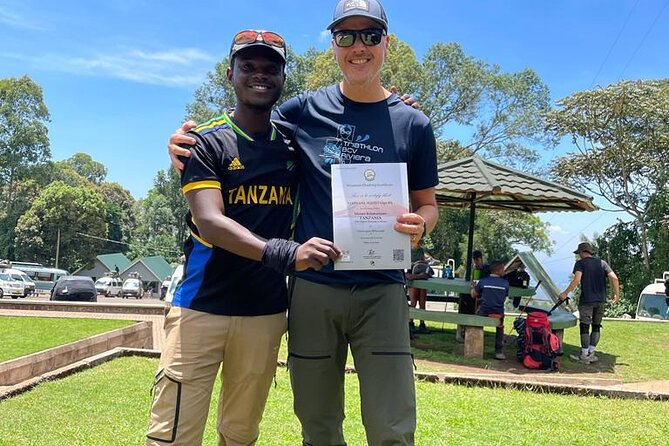
A driver takes you back to Keys Hotel in Moshi for a hot shower, a cold drink, a debrief, and your certificate of achievement. After several nights in exposed camps, that shower may feel like a major event.
The farewell is more than a cheerful finish. Porters carry supplies, establish camp, prepare water, and help make the route possible. The repeated appreciation for the crew’s warmth, humor, and attention is one of the clearest strengths of this operation.
Guides, porters, and the private format
Kilimanjaro Heroes Adventures presents itself as a small, Tanzanian company, and the personal style is a major reason to consider it. The strongest praise centers on the crew rather than on fancy facilities. Guides are described as attentive and encouraging, while porters and cooks are credited with keeping camp comfortable and meals going.
Specific names connected with positive experiences include Emanuel, Wence, Nyokaa, Mality, Tammy, Good Luck, Manu, Bubusha, Siza, and David. You cannot assume you will receive a particular guide unless the company confirms it, but asking about guide assignments before booking is sensible.
The private format means only your group participates. That can be excellent for a solo climber, couple, family, or group of friends. It also means the price is not based on sharing a fixed large-group experience. In one solo arrangement, the personal attention became an advantage rather than a problem.
Is $3,250 per person good value?
At $3,250 per person, this is not a bargain trek. It is also not simply the cost of a guide walking beside you. The price supports a multi-day park operation with airport pickup, a Moshi hotel night, park entry arrangements, guides, porters, tents, meals, water for drinking and washing, transport, and post-climb hotel access.
The value is strongest if you want a private climb and prefer an eight-day route with more time for altitude adjustment. You are paying for organization and manpower in a difficult setting, not just for the view from the top.
Ask the company exactly what equipment, tips, transfers, and extra hotel nights are included before paying. The provided details confirm the main operation, but they do not spell out every possible personal expense. A mobile ticket and booking confirmation make the process straightforward, while free cancellation applies if you cancel at least 24 hours before the local start time.
Who should book this climb?
I would point this trip toward a fit first-time Kilimanjaro climber who values a gradual route, private attention, and a strong support crew. It also suits couples, families, and friends who want to set their own group rhythm.
You should think twice if you dislike cold nights, rough roads, tents, long descents, or early starts. The route is scenic, but scenery does not remove the effects of 4,550-meter Barafu Camp or the 12-hour summit day.
A moderate fitness level is required. That phrase should not be read as permission to arrive unprepared. You need to be comfortable walking for several hours, handling uneven ground, and continuing after a short night.
Should you book the 8-day Lemosho climb?
I would book this experience if your priority is a scenic, gradual route with private guiding and plenty of crew support. The Lava Tower to Barranco pattern, the shorter Barranco Wall day, and the eight-day schedule give you a sensible chance to adjust before summit night.
The strongest reason to choose Kilimanjaro Heroes Adventures is the human side of the trip. Guides and porters are repeatedly praised for kindness, energy, and careful attention, and those qualities matter when you are cold, tired, or struggling with altitude.
Before booking, confirm the guide plan, what personal gear you must bring, and all costs beyond the $3,250 price. If you can handle the physical demands and accept basic mountain conditions, this is a well-shaped route to Africa’s highest summit.
FAQ
How long is the Kilimanjaro Lemosho climb?
The experience lasts approximately eight days, including the arrival night in Moshi and the return from Mweka Gate.
What is the price per person?
The listed price is $3,250 per person.
Where does the experience begin?
Pickup is offered from Kilimanjaro International Airport, also called JRO. The listed start time is 8:00 am.
Is the climb private?
Yes. This is a private activity, and only your group participates.
What fitness level is needed?
A moderate physical fitness level is required. The itinerary includes walking days of up to nine hours and a summit day of about 12 hours.
Which route does the climb use?
The climb uses the Lemosho Route, with descent by the Mweka Route during the final part of the trip.
How high is Uhuru Peak?
Uhuru Peak is 5,895 meters above sea level.
Does the price include park admission?
Admission tickets are included for each listed day of the itinerary.
What is the cancellation policy?
You can receive a full refund if you cancel at least 24 hours before the experience start time. Cancellations or changes made within 24 hours are not accepted for a refund.
Newly listed around Moshi & Kilimanjaro
- Climb Mount Kilimanjaro: 7 Days Machame Route★ 5.0 · 3 reviews
- 6 Days Mount Kilimanjaro Climbing via Rongai Route★ 5.0 · 3 reviews
- Explore 1 day Ngorongoro Crater Budget Group Safari from Arusha★ 5.0 · 3 reviews
- Mt. Kilimanjaro Day Hiking★ 5.0 · 3 reviews
- Chemka (Kikuletwa) Hot Springs, Tanzania★ 5.0 · 3 reviews
- Guided City tour of Moshi★ 4.3 · 3 reviews
- 8 Day Tanzania Family Safari★ 5.0 · 3 reviews
- Serengeti Safari with Sirikwa Travel★ 5.0 · 3 reviews
Kilimanjaro Climbs, compared.








Browse the lists this tour appears in