
Reviewed · KILIMANJARO CLIMBS
8 Day Kilimanjaro Lemosho Climb
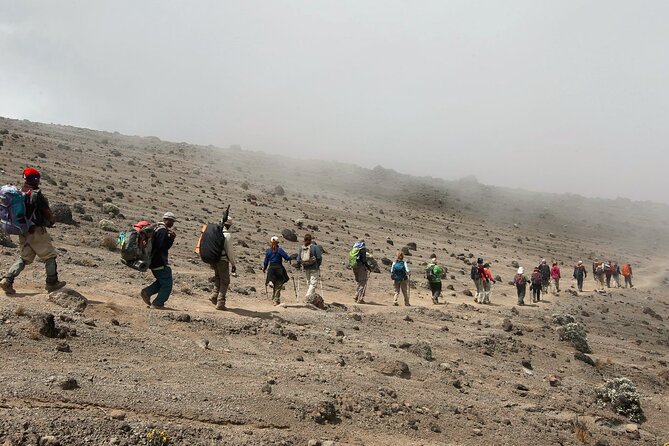
Kilimanjaro’s Lemosho Route gives you the mountain in chapters: wet rainforest, open moorland, volcanic desert, glacier views, and a brutal but rewarding summit night. The remote western start also keeps the early trail quieter than the better-known southern approaches.
I especially like the slow eight-day profile and the route’s strong acclimatization day at Lava Tower, followed by a descent into Barranco Valley. I also like the Barranco Wall, a hands-and-feet scramble that feels adventurous without ropes or technical climbing gear. The tradeoff is simple: summit night lasts about 18 hours, and the price does not include accommodation before or after the climb, insurance, tips, or personal mountain equipment.
Key points before you book
- Eight days gives your body more time to adjust: The route climbs high to Lava Tower, then sleeps lower in Barranco Valley.
- Lemosho begins in a remote western forest: You start far from Moshi and walk through thick rainforest before reaching the Shira Plateau.
- Barranco Wall adds real mountain character: You use your hands at times, but no previous climbing skill or special equipment is required.
- The summit day is the main test: Expect a midnight start, freezing conditions, loose volcanic scree, Uhuru Peak at 5,895 meters, and a long descent.
- The package is well equipped for a camping climb: Park fees, tents, meals, porters, a cook, medical checks, boiled water, and transfers are included.
- The human support is a major part of the experience: Guides including Mathayo, Calvin, Hamza, Isaac, and John have received strong praise for calm support and careful pacing.
Why Lemosho is such a good eight-day route
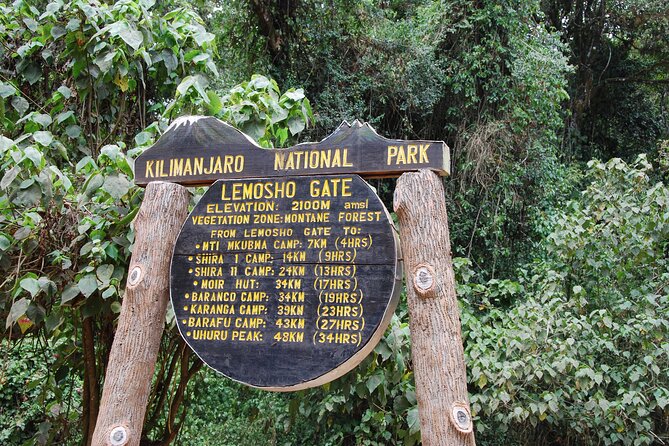
Lemosho is a fine choice if you want Kilimanjaro to feel like a gradual mountain journey rather than a quick march to the summit. You begin on the western side, where the trail passes through a forest reserve and sees fewer people because the access road is more remote.
The route also gives you a useful height pattern. You climb toward Lava Tower at 4,630 meters on the fourth day, then descend to Barranco Valley for the night. That climb-high, sleep-lower rhythm is valuable because altitude, not technical climbing, is the chief challenge on Kilimanjaro.
This is a non-technical climb. You do not need ropes, crampons, or previous mountaineering experience for the route as described. You do need strong physical fitness, patience, and the ability to walk for many hours at high altitude.
The tour is private, so only your own group participates. That can make a real difference when one person needs a slower pace, an extra rest, or more attention from the guide. Group discounts are offered, though the exact discount is not stated, so ask for the full price for your party before paying.
More Kilimanjaro routes:
- Kilimanjaro climb by Lemosho Route (7-day)
★ 5.0 · 651 reviews - Kilimanjaro climb, Machame Route (7-day)
★ 5.0 · 262 reviews - Kilimanjaro Climbing Lemosho Route 8 Days.
★ 5.0 · 186 reviews
Day 1: From Moshi to the Lemosho rainforest
The morning begins with a 9:00 a.m. transfer from the Moshi meeting point at Shah Tours, 6 Sekou Toure Way. You drive to Lemosho Gate, register with the park, and continue along a 4×4 track to the trailhead.
The first hike takes about four hours through thick rainforest. This is a damp, shaded start, with dense plant life and varied forest scenery. Rain is common, so the path may be slippery. Good footwear and trekking poles are useful here, particularly if the ground is wet.
The short route to camp winds steadily uphill. It is not the hardest day, but the combination of transport, park registration, humid forest, and a first day on foot can feel tiring. Keep your rain layer handy rather than buried in your duffel.
Days 2 and 3: Heather, moorland, and the Shira Plateau
On Day 2, you leave the forest fairly quickly. The vegetation thins as you enter the heather and moorland zone, and the route opens onto the Shira Ridge.
The hike takes around five hours. The reward is a wider view, including Shira Peak, one of Kilimanjaro’s three volcanic cones. Its broken, jagged form gives this western approach a look that is different from the more familiar views near the summit.
Day 3 crosses the Shira Plateau. You walk for about five hours through open high-country terrain, with Kibo, the highest cone, becoming more prominent. An optional extra hike can take you toward Shira Cathedral at 3,880 meters.
That optional hike is worth considering if you feel well and your guide agrees. It adds interest and height without forcing every climber into a longer day. If you are tired, skipping it is sensible. The goal is not to collect every viewpoint on the lower mountain, but to arrive at summit night healthy.
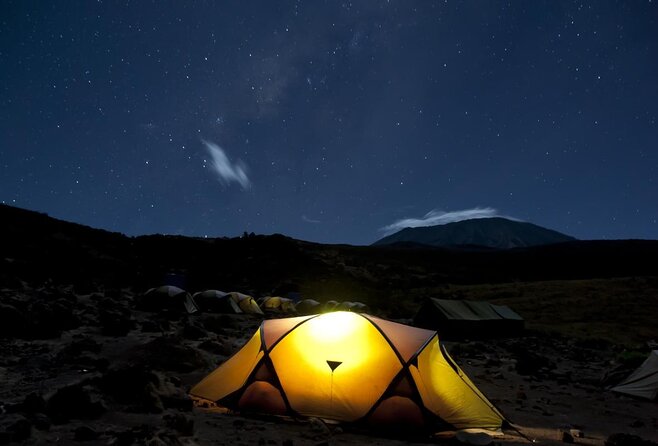
Camping on the plateau can feel exposed compared with the forest. You will have a four-season tent, dining tent, tables, chairs, and a basic foam mattress, but this is still mountain camping. The package includes a small personal wash basin and a hand-washing station, while toilets at camps are shared public facilities.
Day 4: Lava Tower and the Barranco Valley
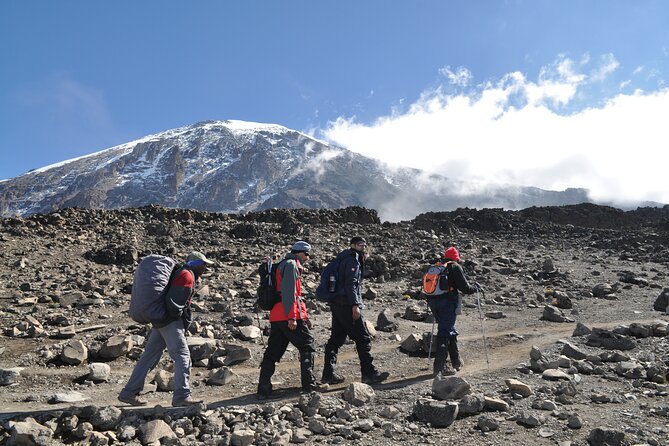
Day 4 is one of the most important days of the climb. The route heads toward Kibo, gradually crossing alpine desert and reaching Lava Tower at 4,630 meters, or 15,190 feet.
You spend time at a height higher than your camp that night. That is the point. The guide can watch how your body handles the thinner air, and you learn something useful about your own response to altitude.
After Lava Tower, the trail descends counterclockwise around Kibo into Barranco Valley. The descent is not a wasted effort. It helps with acclimatization and brings you to a lower sleeping elevation after a high point during the day.
This is also a memorable scenery day. Kilimanjaro senecios, large flowering mountain plants found on the mountain, appear in the valley. The full day takes about eight hours, making it one of the longer regular hiking days before the summit attempt.
Pay attention to how you feel here. A headache, nausea, unusual fatigue, or poor coordination should be reported to the guide. Shah Tours includes twice-daily health checks with guides and a medical oximeter, plus an emergency oxygen cylinder for every five climbers and a first aid kit. Those measures do not remove altitude risk, but they add sensible monitoring.
A few more Moshi & Kilimanjaro days to compare
- Safari Serengeti And Ngorongoro
★ 5.0 · 288 reviews - Climbing Kilimanjaro – Machame Route
★ 5.0 · 170 reviews - Climbing Kilimanjaro through 7 days Machame Route
★ 5.0 · 151 reviews - Kilimanjaro climb, Lemosho Route (8-day)
★ 5.0 · 148 reviews
Day 5: Scrambling up Barranco Wall
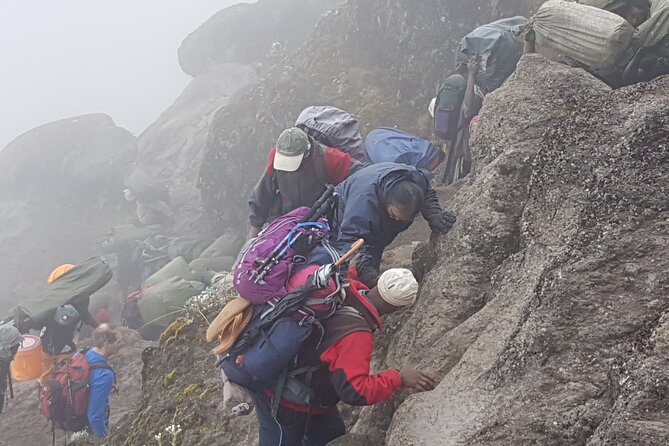
Barranco Wall is the route’s most distinctive hands-on section. You climb a steep rock face using your hands and legs in places, but it is described as a non-technical scramble, not a technical climb.
For many people, this is where the route begins to feel like a real mountain adventure. The climb is rewarded with views back toward camp and toward the Heim Glacier on Kibo. Your guide will set the pace and help with foot placement if the path feels awkward.
After the wall, the route winds through alpine desert toward Karanga Valley. You descend into the valley and then climb again to camp. The day takes about five hours, but the repeated ups and downs can make it feel more demanding than the time suggests.
Karanga Valley is the last water point on the route. From here onward, the crew carries the needed supply. You should treat your own water capacity seriously and confirm before departure what bottles or soft containers you will use. Metal and hard plastic water bottles are listed as excluded, and soft plastics are not permitted on the mountain, so clarify the approved setup during the equipment check.
Day 6: The quiet approach to summit camp
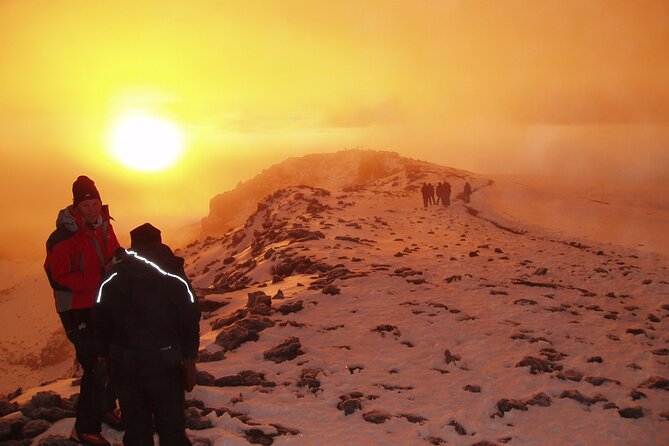
Day 6 is intentionally short, around four hours. You climb slowly through a mostly empty alpine desert toward the Kibo cone.
The path is not described as extremely steep, but the altitude changes how every slope feels. The slow pace is useful. You may get your first clear glimpse of Mawenzi Peak to the east, Kilimanjaro’s second volcanic cone.
The main value of this day is time. You reach summit camp with hours to rest, eat, organize your clothing, and prepare for a midnight departure. Do not waste that time trying to be heroic. Eat what you can, drink according to your guide’s advice, and make your gloves, headlamp, warm layers, and walking poles easy to reach.
Day 7: Uhuru Peak and the 18-hour summit push
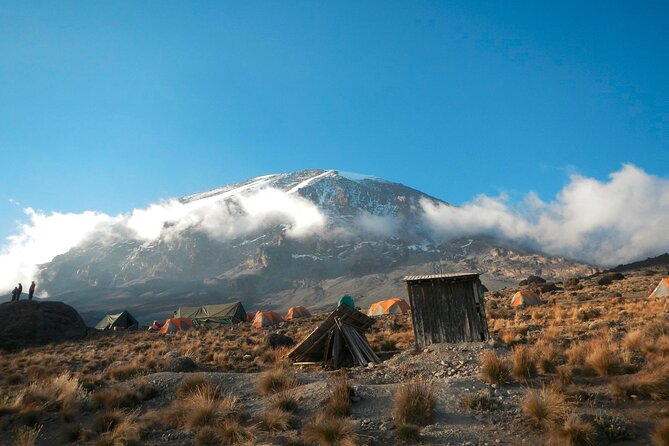
The summit attempt begins around midnight. You climb through Kilimanjaro’s arctic zone in darkness and cold, moving slowly over loose volcanic scree.
The route zigzags toward Stella Point on the crater rim at 5,685 meters, or 18,650 feet. This is a steep, difficult section, and the combination of darkness, cold, altitude, and unstable footing makes it the defining physical challenge of the climb.
From Stella Point, you continue along the rim to Uhuru Peak at 5,895 meters, or 19,341 feet, the highest point in Africa. The final distance is shorter than the approach to Stella Point, but it can still feel very hard. At this altitude, even a small rise demands focus.
Time at Uhuru Peak is usually brief because of the extreme height. After photos and a moment to take in the achievement, you descend to base camp for breakfast or brunch. Then you pack your gear and continue descending through the alpine desert.
The full day is listed at about 18 hours. That figure matters more than the summit label. You are not simply walking up to a viewpoint and returning to a hotel. You are making a night ascent, reaching the summit, returning to camp, eating, packing, and descending farther, all in one long effort.
Day 8: Down through the rainforest to Mweka Gate
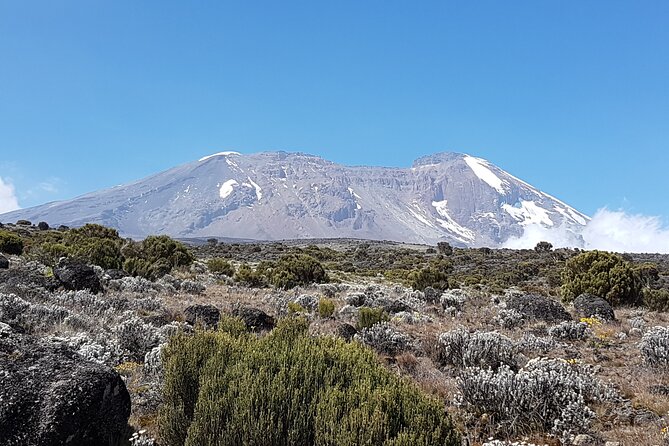
The final day takes about four hours and descends through the southern rainforest to Mweka Gate. The change from cold, open upper slopes to thick forest comes quickly and feels welcome after summit day.
A vehicle meets you at Mweka Gate for the return to Moshi. The crew generally leaves from the gate, so this is the point for farewells before returning to town.
The package includes one transfer from a Moshi-based lodge to the park gates and one transfer from the park gates back to a Moshi-based lodge per group. It also includes storage for luggage left behind during the climb. Accommodation itself is not included, so arrange your Moshi lodging separately.
What the $3,125 price covers
At $3,125 per person, this is not a bare-bones park entry package. The cost includes national park conservation, entry, camping, and rescue fees, as well as applicable taxes and VAT.
You also receive an English-speaking certified mountain guide or guides, with guide numbers set at the park authority’s minimum ratios. A porter carries up to 15 kilograms of your personal luggage. A specialist tent crew sets up camp, and a mountain cook and waiter handle meals and camp dining.
Breakfast, lunch, and dinner are included for all seven nights on the mountain. Eating utensils, bowls, cups, and cutlery are supplied. Boiled drinking water is included from the first camp onward, but water for the first trekking day is not included.
The camping setup includes a four-season tent, dining tent, chairs, tables, and a basic one-inch foam mattress. You will need your own sleeping bag, walking poles, duffel bag, and personal mountain clothing unless you arrange rentals or another solution separately.
The price also leaves out tips, drinks, alcohol, international flights, visas, insurance, and personal items. Extra single tents, personal porters, extra luggage porters, and comfort upgrades such as a private portable toilet or foldable bed cost more.
I see good value here if you want a supported climb with proper camp service and built-in altitude monitoring. I would not call it all-inclusive. Add the cost of lodging in Moshi, insurance, equipment, tips, and any visa or flight expenses before comparing it with another operator.
The tour also lists Kilimanjaro Porters Assistance Project monitoring for fair treatment standards. That is an important detail for anyone who wants the support crew treated properly. Ask how tipping is handled and request a clear porter load policy during your pre-climb briefing.
The guides and crew matter more than the scenery
The strongest praise for this climb centers on the staff. Mathayo Sanka, Calvin, Hamza, Isaac, and John are among the guides named in the supplied feedback, with repeated approval for calm encouragement, safety-minded decisions, careful pacing, and personal attention.
That is exactly what you need on Kilimanjaro. A guide who notices changes in your condition, insists on a manageable pace, and keeps communication clear can make the difference between a safe summit attempt and an early descent.
The crew includes porters, tent staff, a cook, and a waiter. The food receives particularly warm praise, with fresh meals and more choice than some climbers expected on a remote mountain camp. Do not assume restaurant variety, but you can expect prepared mountain meals rather than food you must cook yourself.
A pre-climb briefing and equipment check takes place in Moshi. Use it properly. Ask about your sleeping bag, rain gear, water containers, poles, headlamp, gloves, and the 15-kilogram luggage limit. A small problem found in Moshi is much easier to solve than the same problem at 4,000 meters.
Who should choose this climb
This route suits you if you want:
- A scenic approach with forest, Shira Plateau, volcanic desert, and glacier views
- More acclimatization time than a shorter route provides
- A private climb for your own group
- A non-technical route with one exciting scramble
- Full camp support, meals, porters, and guide-led health checks
- A serious physical challenge without ropes or advanced climbing equipment
It is less suitable if you dislike camping, shared toilets, long hiking days, cold nights, or uncertain weather. It is also not recommended for people with lung problems or known altitude-related medical conditions.
You should have a strong level of physical fitness. The route is non-technical, but that does not make it easy. Day 7 is an 18-hour effort, and the summit section is steep, cold, dark, and high.
Booking details worth checking before departure
Pickup is offered, and the listed meeting point is Shah Tours in Moshi at 9:00 a.m. Confirmation is received at booking. Since accommodation before and after the climb is not included, confirm exactly where the transfers begin and end if you book your own lodging.
Free cancellation is available up to 24 hours before the local start time for a full refund. Changes or cancellations inside that 24-hour window are not accepted for a refund.
The activity ends back at the meeting point after the return transfer. A mobile ticket is offered, and group discounts may be available. Ask for those details in writing, along with any costs for extra tents, equipment, or emergency services.
Should you book the 8-day Lemosho climb?
I would choose this climb if you want Kilimanjaro’s best mix of scenery, route variety, and acclimatization time. The western rainforest start, Shira Plateau, Lava Tower height check, Barranco Wall, and long summit night give the experience a clear sense of progression.
The main caution is cost planning. The $3,125 fee covers much of the mountain operation, but you still need to budget for personal gear, insurance, lodging, visas, tips, and other extras.
Book it if you are fit, comfortable with camping, and ready to accept a very long summit day. Skip it if you want a soft adventure, dislike shared facilities, or have a medical condition that makes high altitude unsafe. For a properly paced first Kilimanjaro climb, the eight-day Lemosho route offers a sensible and memorable way up the mountain.
FAQ
Where does the Kilimanjaro climb start?
The meeting point is Shah Tours at 6 Sekou Toure Way in Moshi, Tanzania. The scheduled start time is 9:00 a.m.
How long does the climb last?
The activity lasts approximately eight days. The daily hiking times range from about four hours to approximately 18 hours on summit day.
Is the Lemosho Route technical?
No. It is described as a non-technical camping route. Barranco Wall requires a hands-and-feet scramble, but no previous climbing experience or advanced equipment is required.
What height does the route reach?
Uhuru Peak is 5,895 meters, or 19,341 feet. The route also reaches Lava Tower at 4,630 meters and Stella Point at 5,685 meters.
Is this a private activity?
Yes. Only your own group participates in the activity.
Are meals included?
Yes. Breakfast, lunch, and dinner are included for seven days on the mountain. Eating utensils, bowls, cups, and cutlery are also supplied.
Is accommodation in Moshi included?
No. Pre-climb and post-climb accommodation are not included. Transfers begin and end with a Moshi-based lodge for the included group transport arrangements.
What equipment must I bring or arrange separately?
Personal equipment such as a sleeping bag, walking poles, duffel bag, and other mountain gear is not included. Extra single tents and comfort upgrades also cost more.
Can I cancel for a full refund?
Yes, if you cancel at least 24 hours before the experience start time, based on local time. Cancellations or changes made less than 24 hours before the start are not accepted for a refund.
Newly listed around Moshi & Kilimanjaro
- Climb Mount Kilimanjaro: 7 Days Machame Route★ 5.0 · 3 reviews
- 6 Days Mount Kilimanjaro Climbing via Rongai Route★ 5.0 · 3 reviews
- Explore 1 day Ngorongoro Crater Budget Group Safari from Arusha★ 5.0 · 3 reviews
- Mt. Kilimanjaro Day Hiking★ 5.0 · 3 reviews
- Chemka (Kikuletwa) Hot Springs, Tanzania★ 5.0 · 3 reviews
- Guided City tour of Moshi★ 4.3 · 3 reviews
- 8 Day Tanzania Family Safari★ 5.0 · 3 reviews
- Serengeti Safari with Sirikwa Travel★ 5.0 · 3 reviews
Kilimanjaro Climbs, compared.








Browse the lists this tour appears in