
Reviewed · KILIMANJARO CLIMBS
7 Days Kilimanjaro trek via Machame route
Kilimanjaro’s Machame Route gives you the mountain in changing chapters: mossy cloud forest, open moorland, high alpine desert, glaciers, and the dark, demanding push to Uhuru Peak. It is one of the most scenic ways up the mountain, but it is also a popular camping route, so you should expect company on the trail and around camp.
I like the route planning, especially the high-altitude day that climbs toward 4,530 meters before dropping to Barranco Camp for acclimatization. I also like the practical support: private waterproof tents, a mess tent with tables and chairs, cooks, purified water, airport transfers, and an experienced guiding team led by Gasto James.
The main consideration is the pace and physical demand. The summit attempt begins around midnight after a short night, and several days run for about six or seven hours. You need moderate fitness, patience, and a willingness to walk pole pole, slowly and steadily.
Key points before you book
- Barranco Wall is the route’s memorable obstacle: Expect about an hour and a half of scrambling, with hands used for balance in places.
- Day three is built for acclimatization: You climb high, reaching 4,530 meters, then descend to Barranco Camp rather than sleeping at the highest point.
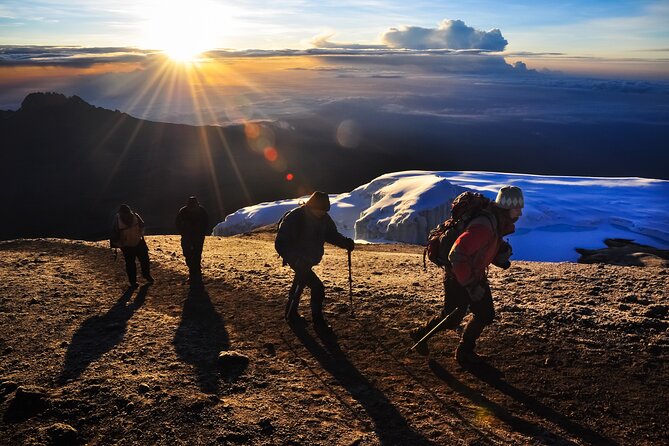
- The summit starts around midnight: The climb to Stella Point is steep and tiring, followed by a more gradual walk along the crater rim to Uhuru Peak.
- The scenery changes almost every day: You move from cloud forest and coffee-growing country to heather, high-altitude plants, barren rock, glaciers, and open views of Kibo and Mawenzi.
- Mountain support is part of the price: Tents, meals, park and rescue fees, guides, cooks, porters, drinking water, and transfers are included.
- You will not have the mountain to yourself: Machame is popular, which brings a social atmosphere but also more people at the camps and on the trail.
What the $2,800 price really covers
The listed price is $2,800 per person. That is a serious amount of money, but it covers the costly parts of a Kilimanjaro climb rather than just a guide and a walk.
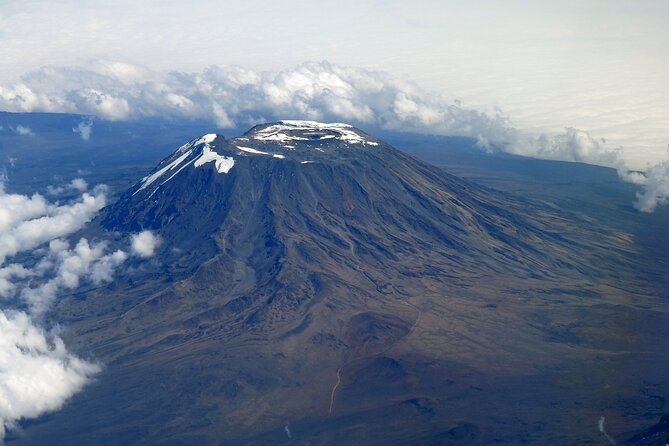
Your package includes park fees, rescue fees, professional mountain guides, porters and cooks, all meals on the mountain, private waterproof sleeping tents, a dining tent with tables and chairs, purified drinking water, airport transfers, and transport back to Arusha after the trek. Lunch is included for seven days, dinner for six, and breakfast for seven.
That matters because Kilimanjaro is not a simple self-supported hike. You are camping at altitude, carrying limited personal gear, and relying on a team to move shelter, food, cooking equipment, and supplies between camps. The mess tent is particularly useful. It gives you a proper place to eat, organize your bag, and get out of the weather instead of treating every meal as a quick stop inside your sleeping tent.
The price does not include personal climbing gear, tips, or visa fees. Plan for those separately. The gear exclusion is important: you need to confirm exactly what you must bring or rent before arriving. The supplied information does not list rental equipment, so do not assume boots, warm layers, sleeping bags, or trekking poles are included.
More Hiking Tours in Arusha
- 8-Day Small-group Lemosho Kilimanjaro Summit Trekking
★ 5.0 · 186 reviews - Mountain Kilimanjaro Day Hike
★ 5.0 · 102 reviews - Private Full Day Hiking Experience to Marangu Route
★ 5.0 · 61 reviews
Day one: Machame Gate to the cloud forest
The first day begins with a drive from Arusha toward Machame Gate. The journey takes about an hour and a half and passes coffee farms and villages, giving you a first look at the foothills before the serious walking begins.
At the gate, registration takes time. The guides, porters, and cooks also make final preparations, so you should not expect to leave the moment the vehicle arrives. This is a useful pause for checking water, adjusting your daypack, and settling into the slower rhythm of a mountain trek.
The trail climbs through Kilimanjaro’s cloud forest to Machame Camp, with about six hours of walking listed for the day. The forest is one of the best parts of the opening stage. Moss-covered trees give the route a cool, almost otherworldly feel, then the vegetation thins into heather, tall grasses, and wildflowers.
If the weather is clear, you may catch views of Kibo, the summit cone that remains your destination for the next several days. The first day is not only about distance. It is your chance to learn how the team walks, how the camp is organized, and how much water and clothing you need at different points in the day.
Day two: Shira Plateau and the first real altitude change
The second day includes several uphill stretches and takes about six hours. It can feel hot in clear weather, so keep water close and drink regularly rather than waiting until you feel thirsty.
As you climb, the forest gives way to high-altitude plants. The itinerary specifically identifies Scenecio kilimanjari and Lobelia deckenii, distinctive plants associated with Kilimanjaro’s upper zones. You will also find viewpoints looking down over the plains and forests, with Kibo and Mawenzi above you.
After lunch, the route continues onto the Shira Plateau. This broad area was formed when Kibo’s lava flows filled the Shira crater, and it feels very different from the enclosed forest of day one. Kibo is to the west and Mount Meru to the east, so clear conditions can bring wide mountain views.
Shira Camp is a good place to rest because the following day is longer and more demanding. The drawback is that the altitude begins to make ordinary tasks feel slower. Keep the evening simple, eat well, and avoid treating a comfortable camp as a sign that the hardest part is over.
Day three: the high climb to Barranco Camp
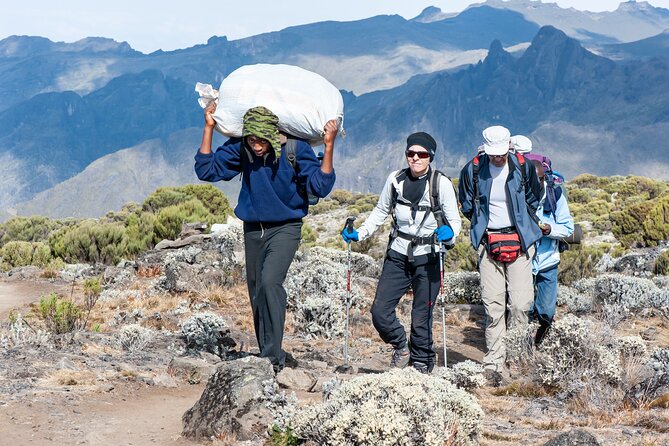
Day three is one of the smartest parts of the route. Although the final elevation gain is only about 110 meters, you climb 690 meters during the day and reach 4,530 meters before descending to Barranco Camp.
This up-and-down pattern is designed to help your body adjust to altitude. You gain height during the day, then sleep lower than the highest point reached. That makes this a long day, about seven hours, but not a wasted one. The route is teaching you how your body responds before summit night.
You begin by hiking east across the Shira Plateau, then reach the junction connecting the Shira and Lemosho routes. From there, the surroundings become more barren. After lunch, the route reaches its high point, followed by a quick descent to Barranco Camp.
Faster walkers can take a detour via Lava Tower, a 300-foot lava formation on the mountainside. Because this option adds an extra high point, ask the guide whether it suits your condition that day. The goal is not to collect every optional feature. The goal is to arrive at Barranco ready for the next stage.
Barranco Camp is a favorite among the mountain staff, and it is easy to understand why. The setting has drama, with the Barranco Wall rising nearby and Kibo dominating the view. It is also the camp where you can look back at the ground covered so far and see how quickly the mountain has changed.
More Kilimanjaro routes:
- 7-Day Machame Kilimanjaro Summit Tour from Arusha
★ 5.0 · 125 reviews - From Arusha/Moshi: Kilimanjaro Hike Marangu Route Day Trip
★ 4.5 · 54 reviews - Mount Kilimanjaro Day Hike Through Marangu Route to Mandara Hut
★ 5.0 · 37 reviews - 6 Days: Hiking Kilimanjaro via Machame Route
★ 5.0 · 24 reviews
Day four: scrambling over the Barranco Wall
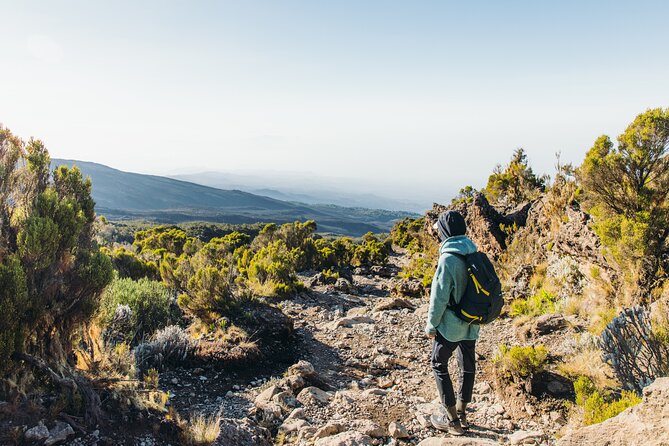
The day from Barranco Camp to Karanga Valley takes about seven hours, but the opening climb is the part you will remember. After breakfast, you face roughly an hour and a half of scrambling up the Barranco Wall.
This is not described as technical climbing, but it is more hands-on than the earlier trail. In places, you may use your hands to help with the ascent. Follow the guide’s line, take your time, and keep your daypack under control. The wall can feel intimidating from camp, yet the route is broken into manageable sections.
Once over the top, the trail becomes fairly level before dropping steeply into the green Karanga River Valley. That descent is a useful reminder that Kilimanjaro is not a steady staircase. You gain and lose height repeatedly, and your legs may notice the change more than the map does.
Karanga Camp prepares you for the move into the upper mountain. The day is not the longest by distance, but the scrambling and steep descent make it more tiring than a simple walking day.
Day five: alpine desert and Barafu Camp
The route to Barafu Camp takes about seven hours and crosses alpine desert with little vegetation. This is a stark contrast to the forest below. Kibo’s glaciers come into view, and you pass the junction where the Mweka descent route connects with the Machame trail.
The route also passes the Heim, Kersten, and Decken Glaciers. These features give the upper mountain a sense of scale, but the air and ground are becoming less forgiving. There is little shade or plant cover, and Barafu Camp offers a more exposed setting than the earlier camps.
From Barafu, you can see Kibo and Mawenzi peaks. This is also the point where the trek changes from a daytime hike into a summit operation. Dinner comes before an early night, with a wake-up around midnight for the final ascent.
Do not expect perfect sleep. The best plan is to eat, organize your headlamp and warm clothing, and rest for as long as you can. Ask your guide if you are unsure what to carry on the summit push. Extra weight will feel costly at this stage.
Day six: the midnight push to Uhuru Peak
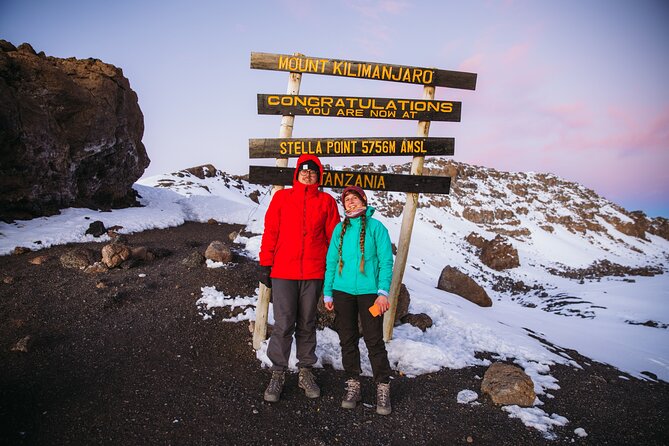
Summit day is the hardest and most emotional part of the trek. You start around midnight and walk by headlamp for about six hours toward the crater rim at Stella Point.
The trail is steep until Stella Point, making this the toughest section of the entire climb. Darkness hides much of the mountain, and the cold, altitude, and lack of sleep can make the hours feel long. Your guide’s job is especially important here. The team’s approach includes a slow pace, close attention, and steady encouragement.
Several people who have climbed with this team specifically praise Gasto James and his guides for their calm support, singing, and ability to keep the group moving. That human side matters on summit morning. A good guide cannot remove the altitude, but can help you maintain a safe pace and recognize when you need help.
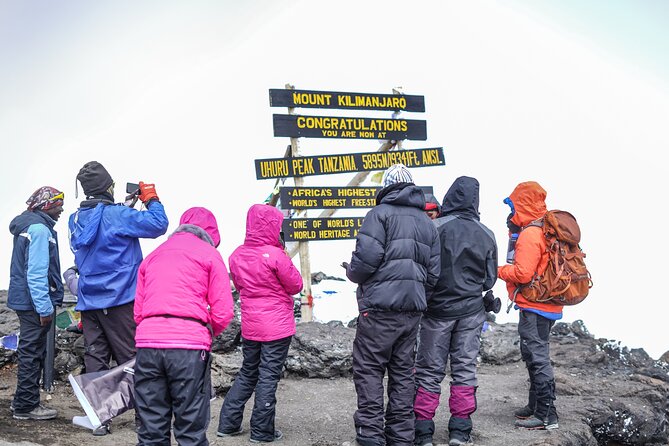
From Stella Point, the route to Uhuru Peak is more gradual. The crater-rim walk takes about an hour. The terrain may be less steep, but altitude still makes the effort tiring. At Uhuru Peak, you have time for photographs with your guide and group before beginning the descent.
The way down brings views of the crater, clouds, mountain slopes, and glaciers. You then descend toward Mweka Camp. The supplied schedule is shortened at this point, but the important practical fact is clear: summit day does not end at the peak. You still have a substantial descent and should save energy for it.
Day seven: through the forest to Mweka Gate
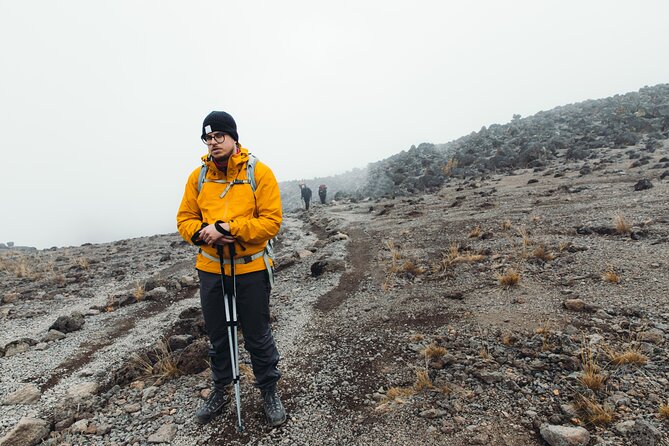
After breakfast, you finish the trek by walking through the forest to Mweka Gate. The final day is listed at about six hours, so it is not merely a quick stroll after the summit.
The trail can be slippery after rain. Use care on the descent, especially if your legs are tired from the previous day. At the lower station of Mweka Gate, vehicles meet you for the return journey to Arusha.
This last walk brings you back into thicker vegetation and a warmer, lower setting. It is a gradual return to ordinary life, but the route is still active and can be muddy underfoot.
Guides, food, and camp support
Mountain Warriors Tours and Safaris has been arranging Kilimanjaro and Meru climbs for almost twenty years, according to the supplied information. The team includes professional mountain guides, porters, and cooks, with Gasto James repeatedly identified as a lead guide.
The strongest praise centers on three things: summit encouragement, attentive support, and food. The meals are described as a high point, while the guides are credited with helping people who struggled reach the summit safely. You should still ask what meals normally include if you have allergies or dietary restrictions, since the package description does not spell that out.
Private mountain sleeping tents are included, along with a quality mess tent, tables, and chairs. Those details have real value after a wet or tiring day. Clean, purified drinking water is also included, so you do not need to rely on untreated mountain sources.
The atmosphere appears to be friendly and energetic, with singing sometimes part of the summit effort. That may suit you if you like warm group spirit. If you prefer a quiet, solitary mountain experience, Machame’s popularity and communal camps may feel less appealing.
Who should choose this Machame trek?
This trip suits you if you want varied scenery, a well-supported camping route, and a clear seven-day plan. It is also a good match if you value a guide-led approach and do not want to arrange park fees, camp logistics, meals, water, and transfers yourself.
You should have moderate physical fitness and be ready for six to seven hours of walking on most days. The summit night is the key test: it begins around midnight, follows a short sleep, and includes the steep climb to Stella Point.
Machame is not the best choice if you want an uncrowded route. The description openly notes that it is the most popular camping route overall, so fellow climbers will be part of the setting. That can create a lively atmosphere, but it may also mean more activity around camp.
The meeting information needs clarification. A start time of 7:30 pm is listed, while day one describes leaving Arusha at 9 am. Confirm the actual pickup and departure time before booking.
Booking, cancellation, and practical details
Pickup is offered, airport transfers are included, and the experience uses a mobile ticket. Confirmation is received at booking, and the activity is listed as private, meaning only your group participates in the tour arrangement.
The activity is near public transportation, though the trek itself quickly moves into a remote mountain setting. Visa fees and tips are separate, and you should settle your tipping expectations with the operator before departure.
Free cancellation is available up to 24 hours before the experience start time for a full refund. Cancellations or changes made within 24 hours are not accepted for a refund, and cut-off times use local time.
Should you book it?
I would choose this trek if your priority is a scenic route with strong practical support and a real chance to focus on walking rather than logistics. The included tents, cooks, meals, water, fees, transfers, and mess tent make the $2,800 price easier to justify, especially for a first Kilimanjaro climb.
Book it only after confirming the start time, personal gear requirements, dietary needs, and tipping arrangements. If you can handle long walking days, a midnight summit attempt, and the busy nature of Machame, this is a well-rounded route with especially strong guide support from Gasto James and the Mountain Warriors team.
FAQ
How long is the Kilimanjaro Machame Route trek?
The trek lasts approximately seven days, beginning with the drive from Arusha to Machame Gate and ending with transport from Mweka Gate back to Arusha.
What is included in the $2,800 price?
The price includes private waterproof sleeping tents, professional mountain guides, park and rescue fees, meals on the mountain, a mess tent with tables and chairs, purified drinking water, airport transfers, and transport arrangements connected with the trek.
Are meals included during the climb?
Yes. The package includes lunch for seven days, dinner for six days, and breakfast for seven days.
Is drinking water provided?
Yes. Clean, purified drinking water is included while you are on the mountain.
What is the hardest part of the route?
The steep climb toward Stella Point during the midnight summit attempt is described as the most challenging section. The Barranco Wall is also demanding and includes scrambling, with hands used for support in places.
Do I need good physical fitness?
You should have a moderate level of physical fitness. Daily hikes are listed at about six or seven hours, and summit day begins around midnight after limited sleep.
Is this a private activity?
Yes. The tour is listed as private, so only your group participates in the activity arrangement.
What is the cancellation policy?
You can cancel up to 24 hours before the experience start time for a full refund. Cancellations or changes within 24 hours are not accepted for a refund.
More week long trips in Arusha
- Tanzania Classic – 7 Days
★ 5.0 · 1,151 reviews - 7-Day Premium Luxury Tanzania Safari All-Inclusive
★ 5.0 · 426 reviews - Group Safari 7 Days in Tanzania’s Main Parks
★ 5.0 · 240 reviews - 7 Days Tanganyika Wilderness Safari
★ 5.0 · 159 reviews
Newly listed around Arusha
- 5-Day Private Safari Tour in Tanzania’s Wildlife★ 5.0 · 3 reviews
- 3 Days private safari Tarangire ,Ngorongroro crater &Manyara★ 5.0 · 3 reviews
- 3 Day Sharing Safari – Manyara, Ngorongoro Crater and Tarangire National Parks★ 5.0 · 3 reviews
- Tarangire National Park Day Trip★ 5.0 · 3 reviews
- 2 Days Tarangire and Ngorongoro Crater Tour★ 5.0 · 3 reviews
- 6 -Day Tarangire, Manyara, Serengeti & Ngorongoro★ 5.0 · 3 reviews
- 5 Days Group Camping Safari★ 4.7 · 3 reviews
- 4 Days Tanzania Safari★ 4.5 · 3 reviews
Kilimanjaro Climbs, compared.








Browse the lists this tour appears in