
Reviewed · KILIMANJARO CLIMBS
7 days Kilimanjaro climb via Machame route (Whiskey route)
Kilimanjaro’s Machame Route earns its Whiskey Route nickname honestly: it is scenic, rugged, and not the easy way up Africa’s highest mountain. Over seven days, you move from rainforest to moorland, alpine desert, and icy summit terrain, with the key acclimatization climb to Lava Tower followed by a descent to Barranco Camp.
I like two things right away. First, the route gives you Kilimanjaro’s best visual variety, from dripping forest and giant heather to glaciers, scree, and sunrise above the clouds. Second, the support package is strong: private four-season tents, a mess tent with tables and chairs, cooked meals, purified water, park fees, and an experienced guide team that has included Gasto, James, and David on different departures.
The tradeoff is clear: seven days is a serious schedule on a route already known for steep sections and a hard summit night. You need moderate fitness, patience, and a sensible attitude toward altitude. This is not a casual hike with a mountain view at the end.
Key points before you book
- The most scenic standard route: Machame crosses rainforest, moorland, the Shira Plateau, Lava Tower, Barranco, Karanga, and Barafu.
- The climb reaches 5,895 meters: The final ascent begins around 11:30 p.m. and continues through darkness, cold, scree, and thin air.
- Lava Tower is the acclimatization test: You climb to about 4,630 meters, then sleep lower at Barranco Camp.
- Camping is fully supported: You get private waterproof tents, a dining tent, meals, drinking water, and mountain staff.
- The group limit is 16 people: That keeps this a guided group climb without making it a large expedition.
- Budget $2,300, plus tips and gear: Park and rescue fees are covered, but flights, personal equipment, and staff tips are extra.
What the $2,300 price really covers
At $2,300 per person, this climb is not simply a permit and a guide. The price includes Kilimanjaro National Park fees, rescue fees, mountain guides, private four-season sleeping tents, a mess tent, all mountain meals, and clean purified drinking water.
That matters on Kilimanjaro. You are not carrying seven days of food, shelter, and water on your back. Porters handle much of the mountain logistics, while you carry your personal day gear and focus on walking steadily. The included mess tent, table, and chairs are especially useful after a wet or cold day. A meal eaten sitting down feels like a small luxury at altitude.
The package includes six dinners, seven breakfasts, and seven lunches, with large portions of fresh, nutritious food promised throughout the climb. Food is not a decorative extra here. You need regular calories for long walking days and the summit push, so a reliable kitchen team is part of the practical value.
You still need to budget for tips and personal climbing gear. Flights are also excluded. Tips are not a minor afterthought on a supported climb, so ask the operator for current guidance before departure and carry enough Tanzanian shillings or another accepted payment method for the mountain team.
More Kilimanjaro routes:
- 8-Day Small-group Lemosho Kilimanjaro Summit Trekking
★ 5.0 · 186 reviews - 7-Day Machame Kilimanjaro Summit Tour from Arusha
★ 5.0 · 125 reviews - Private Full Day Hiking Experience to Marangu Route
★ 5.0 · 61 reviews
Day 1: Machame Gate and the wet rainforest
After an early breakfast in Arusha, pickup takes you toward Machame Village. Arusha sits at about 1,400 meters, so the first drive also marks the shift from town to mountain country. In Machame Village, you can buy mineral water and collect a packed lunch.
The final road to Machame Gate depends on conditions. If the road is muddy, you may walk the last three kilometers, which takes about an hour. This detail matters during wet weather. Your climb can begin with a road-side slog before you even reach the formal trailhead.
At the gate, registration comes first. Then the route enters the rainforest almost at once. The forest is a dramatic opening, with dense vegetation and a trail that can become soggy, muddy, and slippery in rain. Waterproof boots, gaiters, and trekking poles are not decorative packing-list items on this day.
The walk takes about seven hours and ends at Machame Camp. A welcome lunch stop comes roughly halfway. The first day is not technically the highest or longest, but mud and a steady uphill grade can make it feel tiring. Walk slowly from the start. You have no prize for arriving early.
The forest is also where the Machame Route earns its reputation for scenery. You begin under a canopy and finish in a much cooler mountain environment, with the sense that the ordinary world has already fallen away below you.
Day 2: Moorland and the open Shira Plateau
Day two leaves the forest behind. After breakfast at Machame Camp, you climb for about an hour to the upper edge of the trees, then continue for roughly two hours through moorland at a gentler grade.
This is a welcome change after the mud. The route opens up, and the walking becomes more about steady altitude gain than squeezing between wet roots. After lunch and a rest, you follow a rocky ridge toward the Shira Plateau.
The day covers about nine kilometers and takes around six hours. Shira Camp sits at approximately 3,840 meters, in an exposed setting where temperatures can fall well below freezing. The porters boil water for drinking and washing, which is useful, though you should still expect basic mountain conditions rather than hotel comfort.
One of the day’s rewards is the view east toward the Western Breach and its glaciers. You are now west of Kibo, Kilimanjaro’s main summit cone. The scale changes here. The mountain feels less like a forest hike and more like a high-altitude expedition.
At camp, cold and wind become part of the routine. Keep your sleeping clothes dry, organize your bag before dark, and use the mess tent as a place to eat and prepare for the next morning. Small habits matter more as the air gets thinner.
Day 3: Lava Tower and the climb high, sleep low strategy
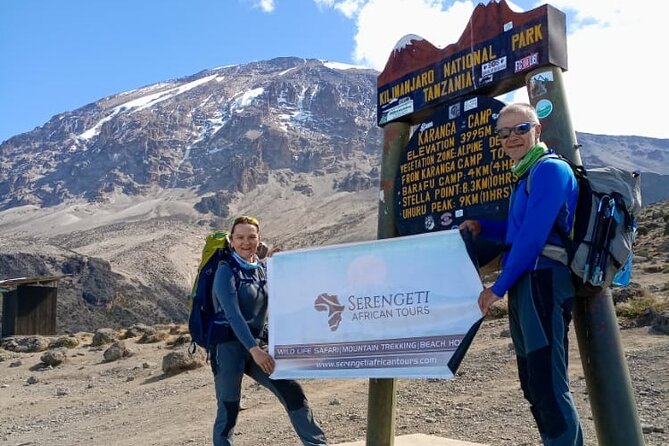
Day three is the route’s major acclimatization day. You walk east into a rocky semi-desert, heading toward Lava Tower at about 4,630 meters. The approach takes around five hours, followed by lunch in a designated area.
Some people first notice altitude symptoms here, including breathlessness, headaches, or irritability. That does not automatically mean you must stop, but it does mean you need to tell your guide exactly how you feel. Do not hide symptoms to protect your summit chances. The guides are there to make decisions based on your condition.
The trail to Lava Tower is rocky and demanding. After reaching the tower and eating lunch, you descend nearly 680 meters to Barranco Camp. This climb high, sleep lower pattern is one of the smartest features of the itinerary. You expose your body to higher altitude, then spend the night lower than the day’s maximum.
The day takes about six hours. It is tough because of the altitude and because the route does not simply go uphill to camp. The descent can feel frustrating when your legs are tired, but it serves a purpose.
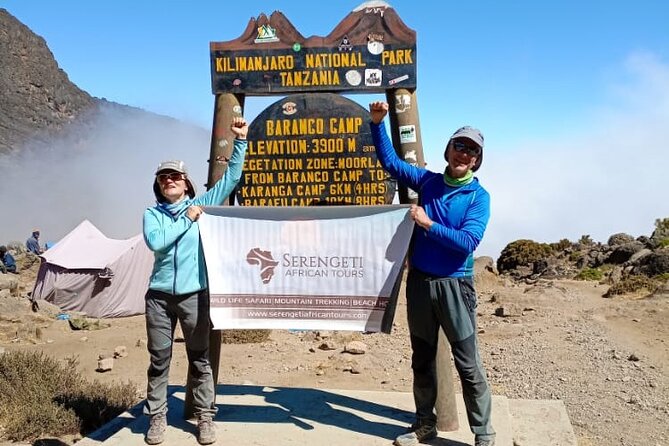
Barranco Camp is one of the most memorable places on the route. You arrive below the Great Barranco Wall, with the huge rock face waiting for the morning. The camp’s position turns the next day into a visual event, not just another uphill walk.
More week long trips in Arusha:
- Tanzania Classic – 7 Days
★ 5.0 · 1,151 reviews - 7-Day Premium Luxury Tanzania Safari All-Inclusive
★ 5.0 · 426 reviews - Group Safari 7 Days in Tanzania’s Main Parks
★ 5.0 · 240 reviews - 7 Days Tanganyika Wilderness Safari
★ 5.0 · 159 reviews
Day 4: The Great Barranco Wall and Karanga Valley
The fourth day is shorter, about four to five hours and roughly five kilometers, but it begins with one of Kilimanjaro’s famous obstacles: the Great Barranco Wall.
From below, the wall can look intimidating. In practice, the route is described as a Class 2 hike, and the challenge is usually more about careful footwork and confidence than technical climbing. You should expect hands-on sections and uneven rock, but this is still a guided trekking route rather than a rope-and-harness climb.
At the top, you get views toward Heim Glacier and a chance to look down on the clouds. This is one of the route’s strongest moments. The mountain begins to feel high and remote, yet the trail remains varied and engaging.
The path then rises and falls through the Karanga Valley. That up-and-down rhythm can surprise you. A short day on the schedule does not mean an effortless day for your legs.
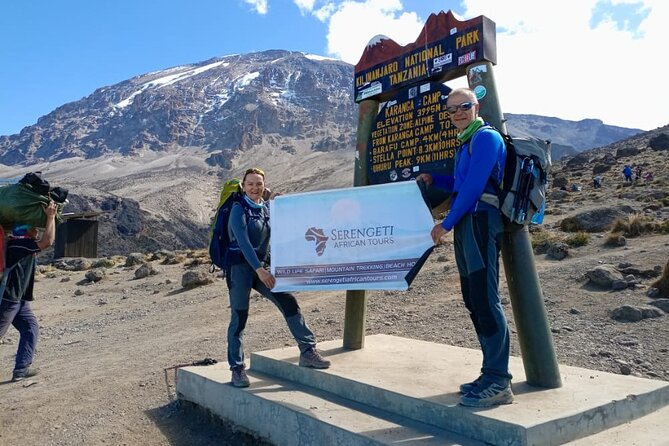
Karanga Camp sits at about 3,959 meters. The relatively short distance gives you time to eat, rest, and prepare for summit night. I like this day because it balances adventure and recovery. The Barranco Wall provides drama, while the limited distance helps your body adjust before the final camps.
Day 5: Barafu Camp and the final preparation
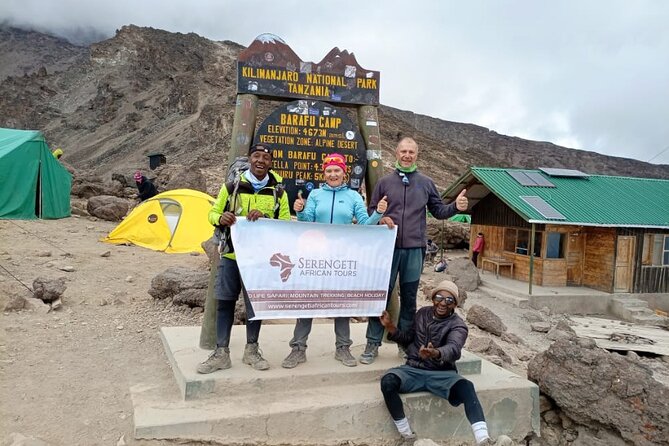
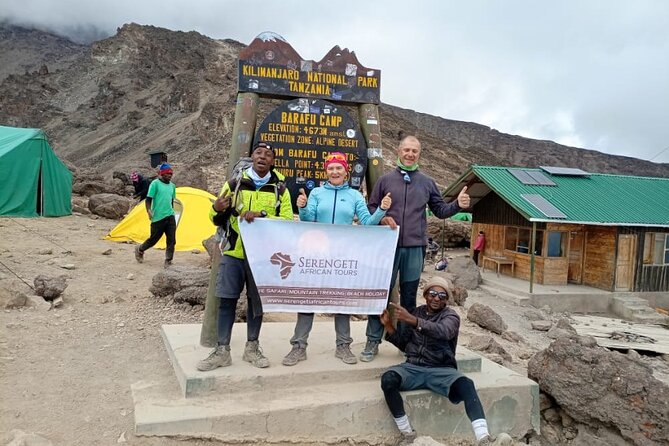
After breakfast, you leave Karanga and follow the trail toward Barafu Hut. The route intersects with the Mweka Route, which you use for the descent on the final two days.
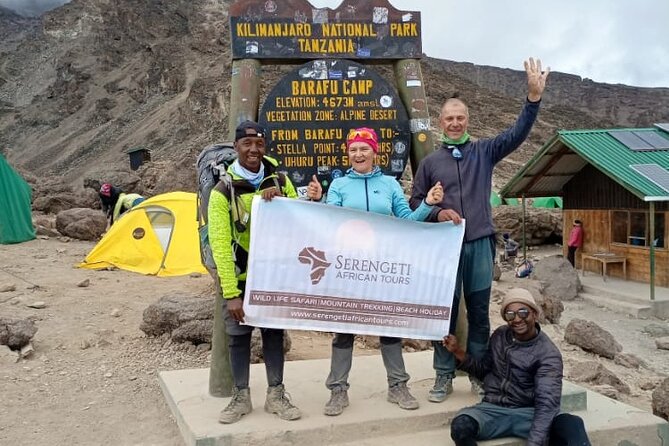
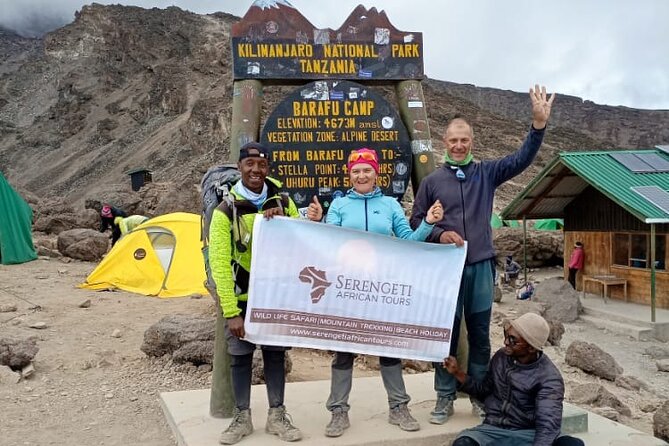
The walk is only about two to three hours and four kilometers, but altitude changes the effort. Barafu Camp sits around 4,550 meters on a rocky, exposed ridge. The Swahili word barafu means ice, an appropriate name for a cold and open campsite.
This is the last water stop for the porters. There is no accessible water at Barafu Camp, so the crew must carry what is needed. That detail explains some of the logistical work behind a supported climb and makes purified drinking water one of the most valuable inclusions in the package.
The tents are exposed to wind and rocks. You should get familiar with the campsite before dark, secure your equipment, and keep essential summit clothing close at hand. An early dinner follows, then rest.
The schedule can feel strange. You arrive at a high camp, eat early, and try to sleep before rising around 11:30 p.m. Do not expect a full night of sleep. The goal is to conserve energy, stay warm, and be ready for the hardest section of the climb.
Day 6: Stella Point, Uhuru Peak, and the long descent
Summit day begins in the middle of the night with tea and biscuits. You set off around 11:30 p.m., heading northwest through heavy scree toward Stella Point on the crater rim.
This six-hour climb to Stella Point is the mental and physical heart of the trip. The terrain is steep, loose, dark, and cold. Progress can feel painfully slow. Your guide’s pacing matters here, and the best approach is to take small steps, breathe steadily, and save energy for the final section.
At Stella Point, approximately 5,685 meters, you can stop briefly and watch sunrise if weather allows. The view above the clouds is a major reward, but do not treat Stella Point as the summit. Uhuru Peak is still ahead.
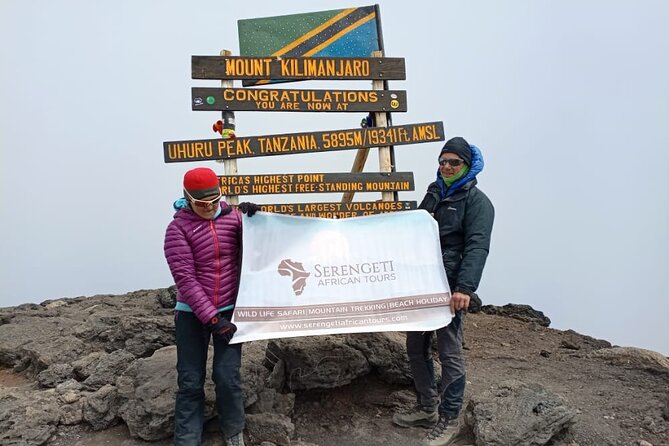
From Stella Point, snow is normally encountered along the two-hour ascent to Uhuru Peak. The summit is 5,895 meters. Time at the top depends on weather conditions, and you should follow the guide’s instructions rather than linger for photographs in severe cold or wind.
The summit success stories associated with this team repeatedly single out guides such as Gasto, James, and David for encouragement, pacing, and close attention. One account even describes a guide carrying a climber’s bag for much of the summit night. That sort of help can matter when altitude leaves you drained, but you should still pack lightly and carry only what you need.
After the summit, you descend to Barafu Camp for rest and food, then continue down to Mweka Camp. The exact rhythm can be exhausting because summit day combines a night ascent, a high point, and a long descent. It is the day to respect the mountain, not prove a point.
Day 7: Mweka Gate, certificates, and the return to Arusha
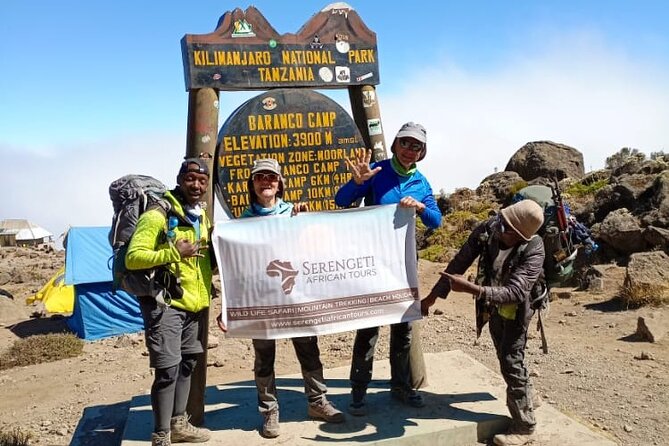
The final mountain walk takes about three hours and covers approximately 15 kilometers through forest. After breakfast, the mountain crew holds a celebration with dancing and singing.
This is also when you present tips to the guide, assistant guides, cooks, and porters. The moment has practical importance as well as emotional weight. A large support team makes the climb possible, and tipping is part of closing the experience responsibly.
At Mweka Gate, you sign your name to receive a completion certificate. Reaching Stella Point earns a green certificate. Reaching Uhuru Peak earns a gold certificate. From the gate, the route continues for about an hour, or three kilometers, to Mweka Village before returning to the meeting point.
That final forest walk can feel easy compared with summit night, but tired knees deserve care. Use trekking poles if you have them, keep your boots tied securely, and do not rush simply because the highest point is behind you.
Guides, porters, and the human side of the climb
The company emphasizes professional mountain guides and fair, ethical treatment of porters. That is important because a Kilimanjaro climb depends on a large working team, not only the person leading at the front.
Names connected with different departures include Lucas, who handles trip communication and planning, and mountain guides Gasto, James, and David. Your exact guide team can vary, so confirm names and responsibilities before setting out.
The strongest accounts of this climb focus on the staff’s care, humor, food, and persistence during difficult moments. I would pay attention to that when comparing operators. A low headline price means little if communication is poor or support on summit night is weak.
Ask how the company handles porter welfare, what weight limits apply, how tips are shared, and how many guides accompany your group. The stated maximum is 16 people, which is large enough to offer company but still manageable on a narrow trail.
Who should choose the seven-day Machame Route?
Choose this trip if you want the most scenic route among the standard options and prefer camping to hut accommodation. It suits people with moderate fitness, hiking or backpacking experience, or some previous exposure to high altitude.
You should be comfortable walking six or seven hours on several days, sleeping in cold camps, dealing with wet forest conditions, and starting the summit climb around midnight. The hardest parts are not only the distance. They include altitude, cold, darkness, loose rock, and the need to keep going after limited sleep.
If you are new to high-altitude trekking, the seven-day schedule deserves careful thought. Machame is already steep and demanding, and this itinerary gives you less time than longer versions of the route. A longer climb may offer better acclimatization, but that option is not part of this specific package.
Practical details before you commit
Pickup is offered from Arusha, and the activity ends back at the meeting point. The published start time is 12:00 a.m., while the first day’s plan describes pickup after an early breakfast, so confirm the exact pickup time and location before booking.
The group can include up to 16 people. Mobile tickets are offered, and group discounts may be available. Confirmation is provided at booking, and the meeting point is near public transportation.
The cancellation policy allows a full refund if you cancel at least 24 hours before the local start time. Cancellations or changes made inside that window are not accepted for a refund.
Pack for changing conditions, not one climate. You need personal climbing gear suitable for wet rainforest, freezing camps, and summit snow. The operator supplies tents, meals, water, and mountain infrastructure, but your clothing, boots, and personal equipment remain your responsibility.
Should you book this Kilimanjaro climb?
I would book this seven-day Machame climb if scenery, strong mountain support, and a classic Kilimanjaro route matter more to you than comfort or an easy schedule. The route delivers a fine progression from rainforest to glacier country, and the Lava Tower descent gives the itinerary a useful acclimatization pattern.
I would hesitate if you have little hiking experience, dislike camping, or want a relaxed ascent. The summit night is genuinely demanding, and seven days leaves less room for altitude adjustment than a longer program.
The best reason to choose it is the combination of route variety and a full support team. The main caution is just as important: no guide can remove the effects of altitude. Train sensibly, use the cancellation window if your plans change, confirm the gear requirements, and be honest with the guide if you feel unwell. For a fit and prepared climber seeking a tough but scenic route to Africa’s highest summit, $2,300 represents solid value, provided you also plan for tips, flights, and gear.
FAQ
How long is the Machame Route climb?
The climb lasts approximately seven days. The schedule moves from Arusha through Machame Camp, Shira Camp, Barranco Camp, Karanga Camp, Barafu Camp, the summit area, and down through Mweka.
What altitude does the climb reach?
Uhuru Peak is at 5,895 meters. Stella Point on the crater rim is approximately 5,685 meters, and Lava Tower reaches about 4,630 meters.
Is pickup included?
Pickup is offered from Arusha, Tanzania. The listed meeting point is in Arusha, and the activity ends back at that meeting point.
Are meals and drinking water included?
Yes. Breakfast, lunch, and dinner are included on the mountain, along with clean, purified drinking water. The package includes seven breakfasts, seven lunches, and six dinners.
Are tents included?
Yes. The climb includes private, waterproof, four-season mountain sleeping tents and a mess tent furnished with tables and chairs.
Are tips and climbing gear included in the price?
No. Tips, flights, and personal climbing gear are excluded. Park fees and rescue fees are included.
Newly listed around Arusha
- 5-Day Private Safari Tour in Tanzania’s Wildlife★ 5.0 · 3 reviews
- 3 Days private safari Tarangire ,Ngorongroro crater &Manyara★ 5.0 · 3 reviews
- 3 Day Sharing Safari – Manyara, Ngorongoro Crater and Tarangire National Parks★ 5.0 · 3 reviews
- Tarangire National Park Day Trip★ 5.0 · 3 reviews
- 2 Days Tarangire and Ngorongoro Crater Tour★ 5.0 · 3 reviews
- 6 -Day Tarangire, Manyara, Serengeti & Ngorongoro★ 5.0 · 3 reviews
- 5 Days Group Camping Safari★ 4.7 · 3 reviews
- 4 Days Tanzania Safari★ 4.5 · 3 reviews
Kilimanjaro Climbs, compared.








Browse the lists this tour appears in