
Reviewed · SERENGETI & NGORONGORO SAFARIS
6 Day Serengeti wildebeest migration Camping Safari
The great draw here is the mix: Serengeti migration country paired with Tarangire’s elephant-filled river and Ngorongoro’s wildlife-packed crater. I like that you spend two nights in the Serengeti, rather than rushing through it, and that a professional cook, camping gear, park fees, meals, and water are included. You get a proper northern Tanzania circuit, not just a quick dash to one famous park.
I also like the small maximum group of six and the open-roof 4×4, which gives you a clear view of the animals and scenery. Guides named in past feedback include Godfrey, also called Gody, David, Monika, and Calvin, with Calvin especially noted for his interest in birds and his use of identification books. The main caution is the $15,000 per-person price, which is a serious investment, and the Day 2 description needs clarification because it is labeled Lake Manyara but describes Ngare Sero, Lake Natron, and a Maasai waterfall walk.
Key points to know before booking
- Two full Serengeti days: Your route includes an arrival game drive and a full day focused on the migrating herds.
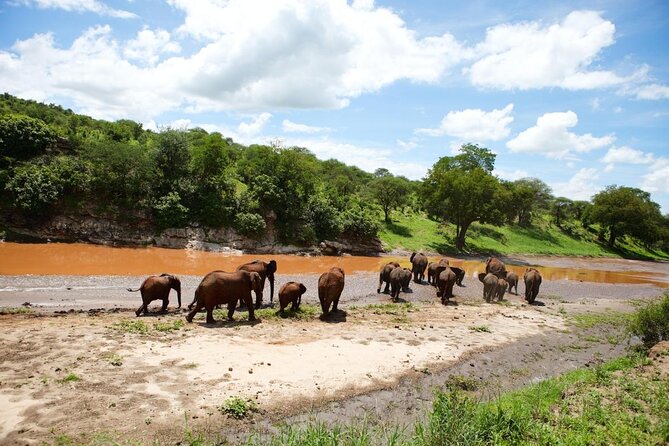
- Tarangire’s elephant country: Seasonal swamps, baobabs, lagoons, and the Tarangire River create strong wildlife viewing.
- A crater-edge campsite: You sleep above Ngorongoro before driving down into the caldera at daybreak.
- A small six-person group: The vehicle is capped at six participants, useful for space and a more personal guide relationship.
- Fully equipped camping: Tents, sleeping mats, chairs, tables, meals, water, a cook, and park fees are covered.
- Check the Day 2 route: The description combines Lake Manyara with Ngare Sero and Lake Natron, so ask exactly where the day goes.
What this six-day safari is really offering
This is a classic northern Tanzania wildlife circuit with a camping setup and a strong Serengeti focus. You begin in Arusha, travel through Tarangire and the Rift Valley, spend two nights in the Serengeti, then finish at Ngorongoro Crater before returning to Arusha.
The route works because each place gives you a different kind of safari scene. Tarangire is known for elephants and baobabs. The Rift Valley section adds Maasai culture, rough roads, waterfalls, and views toward Ol Doinyo Lengai. The Serengeti brings wide open grasslands and the possibility of following the wildebeest migration. Ngorongoro packs a remarkable range of animals into a much smaller area.
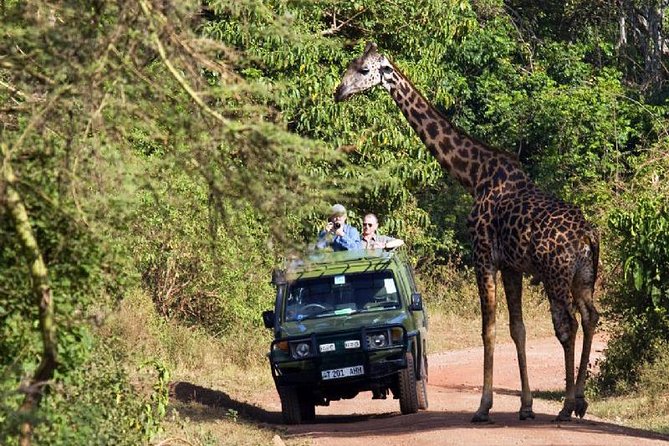
You travel in a 4×4 safari vehicle with an open roof. That matters. It lets you watch wildlife without looking through a side window, and it gives you a better view of birds, tall giraffes, and animals spread across the plains. The group limit is six, so you should have a reasonable chance of getting a window or roof-side position when the vehicle stops.
The camping is practical rather than luxurious. Safari tents, sleeping mats, chairs, tables, and a cook are included. You also receive meals according to the schedule and mineral water. This keeps the price from being only a park-entry and vehicle charge, but you should still be comfortable with early starts, long drives, dirt roads, and basic overnight conditions.
More Safaris in Arusha
- Balloon Safari & Bush Breakfast in Serengeti – Miracle Experience
★ 5.0 · 1,646 reviews - 4 Days Group Camping Safari
★ 5.0 · 1,101 reviews - 5 Days Group Camping Safari
★ 5.0 · 730 reviews
Day 1: Tarangire’s river, baobabs, and elephants
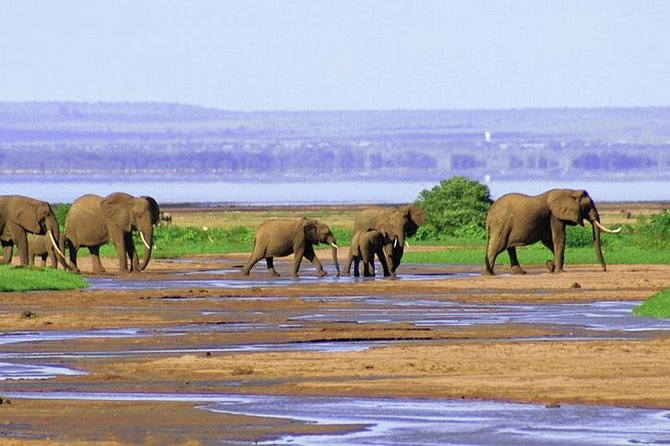
After a morning briefing, you head toward Tarangire National Park. The park’s seasonal swamps and lagoons feed into the Tarangire River, which helps draw animals during dry periods. That makes the first day a good introduction to wildlife viewing, especially if elephants are high on your list.
I like Tarangire because it has a clear sense of place. Baobab trees break up the savannah, and large elephant herds can gather near water. You might also see giraffes, bushbucks, hartebeests, gerenuks, fringe-eared oryx, buffaloes, zebras, and wildebeests.
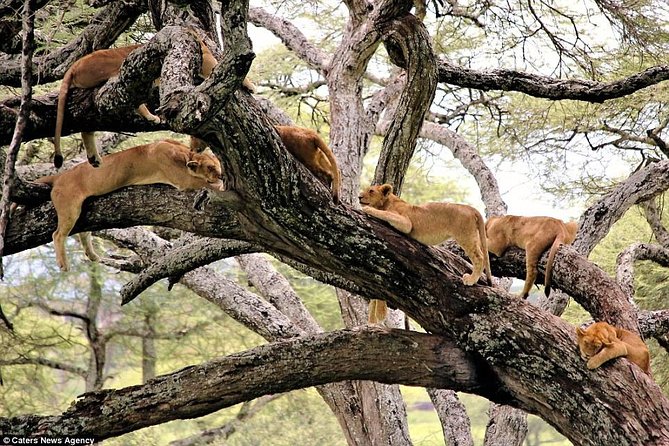
Predators follow the herbivores. Lions are possible, while leopards appear from time to time and cheetahs are rarely seen. That distinction is useful because safari descriptions can make every sighting sound equally likely. Here, elephants and general game are the stronger expectation, while a cheetah should be treated as a lucky bonus.
The open roof is especially useful in Tarangire. It gives you a full view of the large trees and scattered herds, not just a narrow look at one animal. Your guide’s skill in finding animals will matter, and the small group gives you a better setting for asking questions about what you see.
Day 2: A route that needs clarification before departure
The second day is the least clear part of the published plan. It is labeled Lake Manyara, but the detailed description says you leave Tarangire for Mto wa Mbu, then travel along a rough gravel road beside the Rift Valley Escarpment toward the Maasai village of Ngare Sero.
From there, the plan describes views toward Ol Doinyo Lengai, the Maasai holy mountain, and a distant pink area created by flamingos at alkaline Lake Natron. In the afternoon, you join a Maasai guide for a walk to a nearby waterfall before returning to camp.
That sounds like an interesting cultural and nature day, but it is not the same as a standard Lake Manyara National Park visit. The heading and the details do not fully match. I would ask Serengeti African Tours to confirm whether you enter Lake Manyara National Park, visit the Ngare Sero area, travel toward Lake Natron, or follow a route that combines some of these places.
The rough road is described as spectacular but very bumpy. You should take that seriously. This is not a smooth transfer day, and the road conditions may make the journey tiring. The payoff is a different side of Tanzania: Rift Valley views, Maasai country, a waterfall walk, and the chance to see the distant flamingo-colored edge of Lake Natron.
Breakfast, lunch, and dinner are included on this day. Since the walk is led by a Maasai guide, it adds a human element to a trip otherwise centered on vehicle-based wildlife viewing.
Day 3: Crossing into the endless Serengeti
You leave early and travel over adventurous dirt tracks as the vehicle climbs from the Rift Valley toward the Serengeti. The route is scenic, but it is also a long road day with rough sections. By midday, the plan is to reach the grassy plains.
The name Serengeti means endless plains in the Maasai language, and you will understand why once the grassland stretches out toward the horizon. This is one of the most memorable transitions on the trip. The setting changes from river country and Rift Valley escarpment to open savannah on a huge scale.
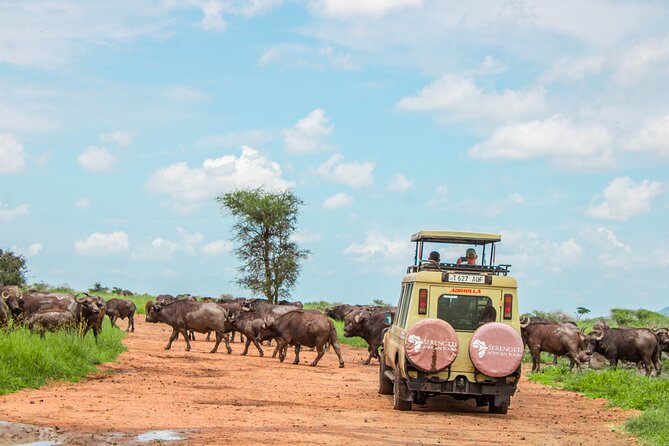
The Serengeti is famous for the annual movement of wildebeests and zebras in search of fresh grass and water. The important point is that the animals do not follow a fixed tour schedule. Rainfall shifts the herds from year to year, and your guide will decide where to look based on their location.
You spend the night at a campsite in the northern or central Serengeti. The exact area matters because the park is vast. A northern camp may suit a migration period when the herds are farther north, while a central camp places you near the Seronera area. Ask where the camps are expected to be at your time of travel.
More Serengeti and Ngorongoro itineraries:
- 3 Days Serengeti & Ngorongoro Group Camping Safari
★ 5.0 · 574 reviews - 5-Day Highlights mid-Range Crater, Serengeti, Tarangire
★ 5.0 · 296 reviews - 3-Day Classic Serengeti Safari
★ 5.0 · 263 reviews - Private 6-Day Tarangire Manyara Crater and Serengeti with Mid-Range Lodges
★ 5.0 · 238 reviews
Day 4: A full Serengeti game drive
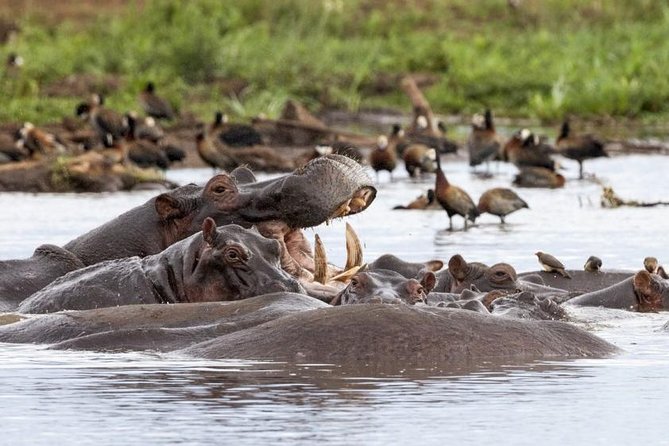
Day 4 is the heart of the safari. You spend the entire day on a game drive, with the route shaped by the position of the wildebeests and zebras. This flexible approach is more sensible than promising a particular crossing or herd location months in advance.
During the short rains in November and December, the herds generally move from northern hills toward southern plains. During the longer rains from April to June, they return north. Those are broad seasonal patterns, not guarantees. The migration is controlled by rainfall, and nature does not keep a booking calendar.
Predators often follow the grazing animals, so the same day may bring lions, leopards, or cheetahs. The Serengeti is also home to the Big Five: lion, elephant, buffalo, rhino, and leopard. Seeing all five is possible but never assured, especially the rhino and leopard.
You spend a second night in the Seronera area. That overnight is a real advantage. It avoids turning every Serengeti sighting into a race toward the next park, and it gives your guide more time to work the central part of the park.
A guide can make a large difference here. Godfrey, known as Gody, has been specifically praised for giving enough time at viewing areas and helping create a strong safari experience. Calvin has been noted for his interest in bird species and for carrying books to help identify what you see. The operator has also been associated with David and Monika. You cannot assume which guide will lead your departure, so ask in advance if a particular guide matters to you.
Day 5: More wildlife, then the Ngorongoro rim
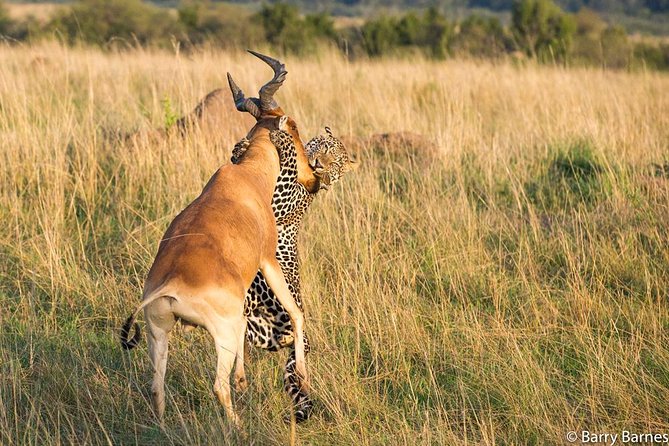
You begin with another Serengeti game drive, giving you one last chance to find animals missed the previous day. After lunch at a picnic site, you drive toward Ngorongoro Crater.
The first sight of the caldera comes from the rim. The crater opens below you, with a wide bowl roughly 20 kilometers across and more than 25,000 animals living inside it. The view is one of the trip’s major visual moments, but the overnight setting is also practical because you are already above the crater for the next morning’s descent.
You camp directly on the crater edge. The position brings excellent views, but it also means a cool or exposed night is possible. The information provided does not specify the tent type beyond safari tents, so ask what bedding is supplied beyond the listed sleeping mats and what extra clothing is sensible for the rim.
This day combines two different safari experiences. The Serengeti is broad and open, with wildlife spread across a huge area. Ngorongoro is enclosed by the caldera, so animals are easier to search for within a defined space. That contrast gives the trip a satisfying change of pace.
Day 6: Down into the crater at daybreak
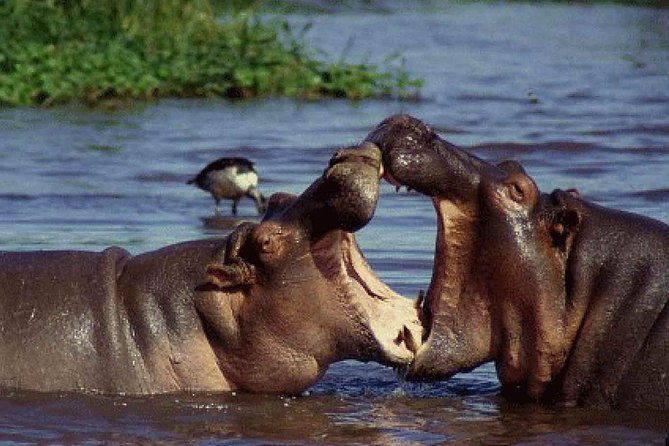
You rise early, eat breakfast, and drive down into Ngorongoro Crater. The early start is worthwhile because the crater offers a concentrated wildlife day before you return to Arusha in the afternoon.
Inside the caldera, you might see black rhinos, Grant’s gazelles, Thomson’s gazelles, lions, leopards, elephants, buffaloes, spotted hyenas, and mountain reedbucks in forested areas on the slopes. Rare wild dogs are also listed as a possibility, along with more than 500 bird species.
Again, the wording describes what you might see, not a fixed checklist. Rhinos, leopards, wild dogs, and some bird species require good timing and luck. The crater’s value is that its enclosed setting gives you a strong chance to see a wide range of animals during one intensive drive.
After a picnic lunch, you leave the caldera and travel back to Arusha, arriving in the early evening. Because the return is on the final day, I would avoid booking a flight or important connection that leaves soon after the stated arrival. The schedule says early evening, and safari road times can change.
Camping, food, and the daily rhythm
This is a camping safari, so your comfort depends partly on your attitude. You receive tents, sleeping mats, chairs, tables, and a professional English-speaking safari cook. The setup is far more organized than carrying your own backpack and searching for a place to sleep each night, but it is still not a lodge safari.
Meals are included according to the schedule. Breakfast, lunch, and dinner are listed on Days 2 through 5, while Day 1 has no meal schedule shown and Day 6 includes breakfast and lunch. The inclusion list also specifies four dinners, five breakfasts, and five lunches. Ask the operator to confirm the Day 1 meal arrangement and whether any meal is expected to be purchased separately.
Mineral water is included, which saves you from arranging your own supply. Personal spending money, tips, souvenirs, flights, visa fees, and optional activities are not included.
The start time is shown as 12:00 am, which may simply be a system setting rather than a useful departure instruction. Confirm the actual pickup time directly. Pickup is offered, and the tour begins in Arusha.
Is $15,000 a fair price?
At $15,000 per person, this is an expensive safari. The value depends on what that figure includes and whether the price is for a private departure, a shared six-person group, or a particular travel season. The listed maximum is six people, but the information does not say that the whole vehicle is reserved privately for you.
The package includes a 4×4 vehicle, an English-speaking professional guide, a safari cook, tented accommodation, camping equipment, meals, water, activities, and all listed national park fees. Those costs add up quickly in Tanzania, especially with multiple parks and several nights inside protected areas.
Still, you should compare the exact inclusions with other operators before paying. A six-day camping safari at this price deserves a clear written breakdown, including the Day 2 route, camp locations, vehicle arrangements, and whether the quoted amount changes with group size.
I would see the price as potentially worthwhile for someone who values a guided migration-focused route, a small group, and a fully handled camping operation. I would be cautious if you expect lodge comfort or if you are comparing this with a basic shared camping trip. The price is not modest, and the accommodation style remains simple.
Who will enjoy this safari most?
I would recommend this trip to you if your priority is wildlife and you want four distinct settings in one compact journey. It suits someone who likes long drives in exchange for changing scenery, early starts, tented nights, and the possibility of seeing animals rather than chasing a guaranteed checklist.
It also suits an amateur bird watcher. The tour includes more than 500 bird species in the Ngorongoro area, and Calvin’s bird knowledge and identification books may be useful if he is assigned to your group. Ask about the guide when booking.
The trip may be less suitable if you dislike bumpy roads or basic camping. Day 2 includes a particularly rough gravel route, and the Serengeti transfer also uses dirt tracks. You should be ready for a busy schedule rather than a relaxed retreat.
Most people can participate, and the group is limited to six. No specific accessibility details are given, so you should discuss mobility needs before booking.
Booking details and cancellation
Confirmation is provided at booking, and the tour offers mobile tickets. Public transportation is nearby, and pickup is offered in Arusha.
You can cancel at least 24 hours before the local start time for a full refund. Cancellations or changes made within 24 hours are not accepted for a refund. Tips, visa fees, flights, optional activities, and personal purchases remain your responsibility.
Should you book this six-day route?
Book it if you want a serious wildlife trip with two Serengeti nights, a strong chance of seeing elephants in Tarangire, a crater game drive, and the convenience of a cook and supplied camping equipment. The small group and the guide names associated with the operator are useful strengths, especially if your guide is as patient and engaged as Godfrey, Gody, David, Monika, or Calvin.
Before paying $15,000, get three things in writing: the exact Day 2 destination, the camp locations for your dates, and whether the six-person limit means a shared or private vehicle. Also confirm the first day’s meals and the actual pickup time.
If those details fit your plans and you are comfortable with camping and rough roads, this gives you a broad, wildlife-heavy taste of northern Tanzania. If you want predictable migration sightings, lodge beds, or a lower price, compare other options first.
FAQ
Where does the safari start and finish?
The safari starts in Arusha, Tanzania, with pickup offered. On Day 6, you leave Ngorongoro Crater after lunch and return to Arusha in the early evening.
How many people can join the tour?
The maximum group size is six travelers.
Which parks and areas are included?
The route includes Tarangire National Park, the Serengeti National Park, and the Ngorongoro Conservation Area. The Day 2 description refers to Lake Manyara in its heading, but describes Mto wa Mbu, Ngare Sero, Lake Natron, Ol Doinyo Lengai, and a waterfall walk, so confirm the exact route before booking.
What type of accommodation is provided?
You stay in safari tents. Camping equipment includes tents, sleeping mats, chairs, tables, and related items.
Are meals and water included?
Meals are included according to the schedule, along with mineral water. The stated inclusions list four dinners, five breakfasts, and five lunches. Day 1’s meal arrangement should be confirmed directly.
What is included in the price, and what is not?
The price includes the camping safari, 4×4 transportation, a professional English-speaking guide, a professional English-speaking safari cook, camping equipment, listed meals, mineral water, listed activities, and national park fees. Flights, visa fees, optional activities, tips, and personal purchases are not included.
More six day trips in Arusha
- Tanzania Wildlife Encounters – 6 Days
★ 5.0 · 277 reviews - 6 Days Private Budget Safari
★ 5.0 · 163 reviews - Tanzania Enticing Explorations – 6 Days
★ 5.0 · 106 reviews - 6 days Tanzania budget safari
★ 5.0 · 65 reviews
More camping safaris in Arusha
- 2 Days Tarangire and Ngorongoro Group Camping Safari
★ 5.0 · 146 reviews - 6 Days Tanzania Budget Camping Safari
★ 5.0 · 145 reviews - 3 Day Serengeti National Park & Ngorongoro Crater Camping Safari
★ 5.0 · 142 reviews - 3 Days Tarangire, Ngorongoro & Lake Manyara Group Camping Safari
★ 5.0 · 102 reviews
Newly listed around Arusha
- 5-Day Private Safari Tour in Tanzania’s Wildlife★ 5.0 · 3 reviews
- 3 Days private safari Tarangire ,Ngorongroro crater &Manyara★ 5.0 · 3 reviews
- 3 Day Sharing Safari – Manyara, Ngorongoro Crater and Tarangire National Parks★ 5.0 · 3 reviews
- Tarangire National Park Day Trip★ 5.0 · 3 reviews
- 2 Days Tarangire and Ngorongoro Crater Tour★ 5.0 · 3 reviews
- 6 -Day Tarangire, Manyara, Serengeti & Ngorongoro★ 5.0 · 3 reviews
- 5 Days Group Camping Safari★ 4.7 · 3 reviews
- 4 Days Tanzania Safari★ 4.5 · 3 reviews
Serengeti & Ngorongoro Safaris, compared.


Balloon Safari & Bush Breakfast in Serengeti – Miracle Experience
Read our review →




Private 6-Day Tarangire Manyara Crater and Serengeti with Mid-Range Lodges
Read our review →
5 Days Camping Tarangire, Serengeti & Ngorongoro crater & Visiting Maasai
Read our review →Browse the lists this tour appears in