
Reviewed · KILIMANJARO CLIMBS
5 Day Mount Kilimanjaro Climbing via Marangu Route
The most unusual feature of this five-day Kilimanjaro climb is simple: you sleep in mountain huts instead of tents. That means bunk beds, mattresses, pillows, dining halls, and basic washrooms on the route. You still need a sleeping bag, but you avoid carrying a tent or crawling out of one in the cold.
I like the gradual path and the practical hut setup. I also like the strong support system, with guides, cooks, porters, meals, private transport, and safety equipment included. The catch is altitude: five days is a short schedule for reaching 5,895 meters, so the climb can be harder than the route’s easy nickname suggests.
Key points to know before booking
- Hut beds replace camping: Mandara and Kibo Huts have 60 bunk beds each, while Horombo has 120.
- The summit push starts around midnight to 2 a.m.: Expect cold, darkness, scree, switchbacks, and a long descent on the same day.
- Marangu is the direct route: Its steady slope suits many hikers, but the ascent and descent use the same trail.
- Altitude is the main concern: The five-day plan leaves less time to adjust than longer Kilimanjaro routes.
- Meals and transport are included: Four breakfasts, four dinners, five lunches, private transport, park fees, and trailhead transfer are covered.
- Plan for mud and cold: Gaiters and trekking poles are strongly useful in the rainforest and on the descent.
What the five-day Marangu climb is really like
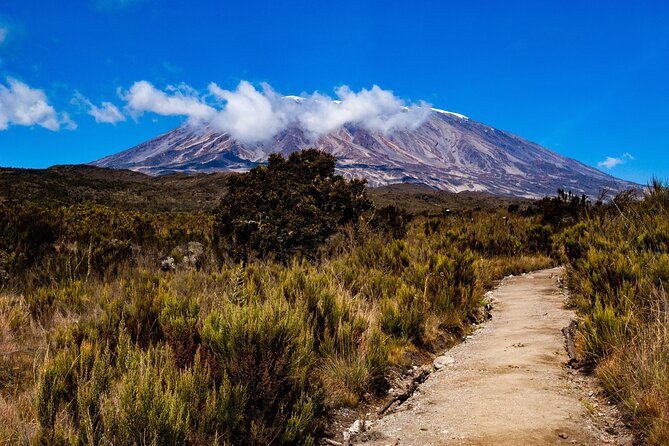
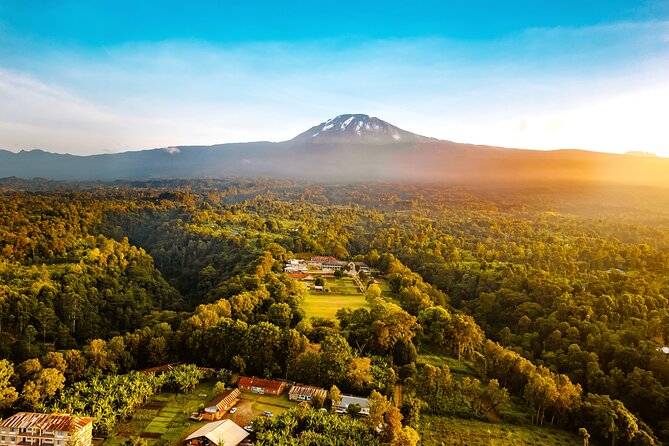
Marangu is Kilimanjaro’s oldest and most established route. It approaches the mountain from the southeast and follows a clear, direct trail through several distinct plant zones. You begin in thick rainforest, move into heath and moorland, cross a broad high-altitude saddle, then make the final push toward the crater rim and summit.
The route is often called the Coca-Cola Route. That nickname can make it sound easy, but you should not treat this as a casual hike. The path may be gradual compared with some alternatives, yet the short schedule puts real pressure on your body’s ability to handle altitude.
The price is $1,650 per person. That is a serious expense, but it covers the main operating costs of a guided Kilimanjaro climb: park fees and taxes, transport to and from the trail, hut accommodation, a climbing crew, meals, hiking and safety equipment, and private transportation. You still need to budget for crew tips, a visa, and international or internal flights.
The maximum group size is 15 people. That is large enough to include a mix of walking speeds, but small enough for the guide team to keep track of the group more easily than on a major mass-market departure.
More Kilimanjaro routes:
- Kilimanjaro climb by Lemosho Route (7-day)
★ 5.0 · 651 reviews - Kilimanjaro climb, Machame Route (7-day)
★ 5.0 · 262 reviews - Kilimanjaro Climbing Lemosho Route 8 Days.
★ 5.0 · 186 reviews
Day 1: Moshi to Mandara Huts through the rainforest
The morning begins in Moshi, with the activity start time listed as midnight. In practical terms, you should confirm the exact pickup arrangement with Kentau Safaris before the climb, since the first hiking section begins after about an hour of driving to Marangu and the Kilimanjaro National Park Gate.
At the gate, the crew handles permits and entry arrangements. This waiting period is part of the mountain routine. You’ll see porters and other climbing teams sorting supplies and getting ready for their own ascent. It can feel busy, but it also gives you time to check your pack and make sure your rain gear is within reach.
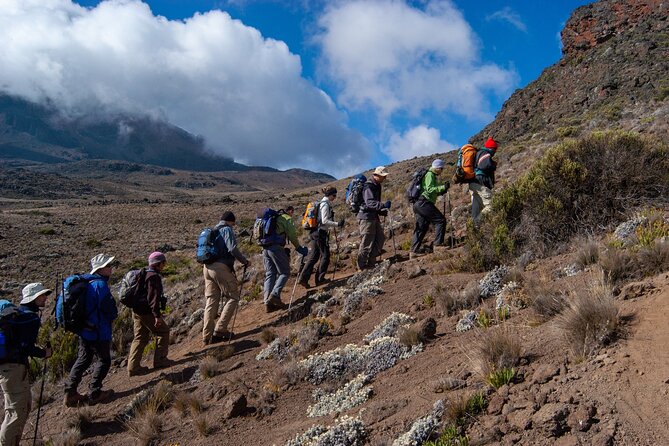
The first hiking section runs from about 1,830 meters to 2,740 meters and takes roughly five hours. The trail passes through rainforest, with wet ground, muddy patches, and slippery sections. This is where gaiters and trekking poles earn their place in your pack.
The forest is not just a warm-up. Your guide points out local plant life and wildlife as you walk, and the changing vegetation gives you your first clear sense of the mountain’s height. The route is often windy, damp, and shaded, so keep a waterproof layer handy even if the morning begins dry.
You sleep at Mandara Huts. The accommodation is dormitory style, with 60 bunk beds and mattresses and pillows supplied. A sleeping bag is still required. The huts have communal dining areas and basic washrooms, with better facilities at the lower elevations than higher on the mountain.
The first day is manageable for many people with moderate fitness, but do not rush. A steady pace helps you save energy for the days ahead and gives your body a better chance to begin adjusting to altitude.
Day 2: Heathland, giant plants, and Horombo Huts
Day two climbs from 2,740 meters to about 3,690 meters. The walking time is around seven hours, making this one of the longer regular days before the summit attempt.
After breakfast, you leave the rainforest behind and enter heathland. The vegetation becomes shorter and more open. Keep an eye out for giant lobelias and groundsels, plants that give this part of Kilimanjaro a look unlike an ordinary mountain trail.
The path continues into open moorland, where small shrubs replace the taller forest growth. You stop around the halfway point for lunch, with views toward Mawenzi. Mawenzi is Kilimanjaro’s jagged second peak, and its rocky outline adds a dramatic focal point to the day.
You reach Horombo Huts in the late afternoon. At about 3,690 meters, the air is noticeably thinner and temperatures begin to fall. Horombo is the largest hut stop on this route, with 120 bunk beds. It also has a communal dining hall and more basic facilities than you may be used to at home, but the hut system gives you a solid roof and a defined place to rest.
This is the point where the climb becomes less about distance and more about altitude. Move slowly, drink regularly, and tell your guide if you feel unwell. The supplied information calls for moderate physical fitness, but fitness alone does not guarantee an easy response to high elevation.
Day 3: The Mawenzi and Kibo saddle
Day three covers the climb from Horombo to roughly 4,695 meters. The walking time is about six hours. Compared with day two, the distance is shorter, but the altitude makes every step more demanding.
The heathland thins out and gives way to a stark, almost moonlike setting. You cross the wide saddle between Mawenzi and Kibo, the two major peaks of Kilimanjaro. It is a broad, open stretch, with little shelter and a clear view of the summit route ahead.
Lunch takes place along this section. The most useful part of the day is not only reaching the next hut, but seeing the climb you will attempt later that night. You can study the route toward Kibo and understand why the summit push requires patience. From this point, the mountain feels less like a long walk and more like a serious high-altitude climb.
Kibo Hut sits at about 4,695 meters. Facilities are very basic here. Expect long-drop toilets and buckets of water rather than the flushing toilets and running water available lower down. The dormitory has 60 bunk beds, and you receive a mattress and pillow, but your sleeping bag remains essential.
You need to rest as much as possible at Kibo. The summit attempt begins between midnight and 2 a.m., so dinner and sleep come early. The exact start time depends on the climbing plan and conditions, but you should expect a broken night and a long day that follows.
More five day trips in Moshi & Kilimanjaro:
- 5 Days Camping Tarangire, Serengeti & Ngorongoro crater & Visiting Maasai
★ 5.0 · 58 reviews - 5-Day Majestic Tanzania Safari – High End All Inclusive
★ 5.0 · 44 reviews - 5 Day Mid range Tanzania Safari
★ 5.0 · 34 reviews - 5 days Tanzania Camping Safari
★ 5.0 · 29 reviews
Day 4: Midnight switchbacks to Uhuru Peak
Day four is the hardest part of the experience. You climb from Kibo Hut at about 4,695 meters to the summit at 5,895 meters, then descend all the way to Horombo Huts at around 3,690 meters.
The first part takes place in darkness. You walk by headlamp through scree, a loose mixture of stones that can shift under your boots. The route follows a switchback pattern, which makes the climb longer but reduces the steepness of each turn.
Cold is a major factor. You need warm layers, gloves, a hat, and a way to keep water from becoming difficult to use. The climb may also involve snow. The supplied description rightly calls this section mentally and physically demanding. You are tired, the air is thin, and the summit can still feel far away even after hours of effort.
Gillman’s Point, on the crater rim, is a major milestone. From there, you may catch sunrise during a short rest. Faster hikers might see the sunrise from the summit, but you should not measure your own success by another person’s pace. On a mountain this high, a controlled pace matters more than speed.
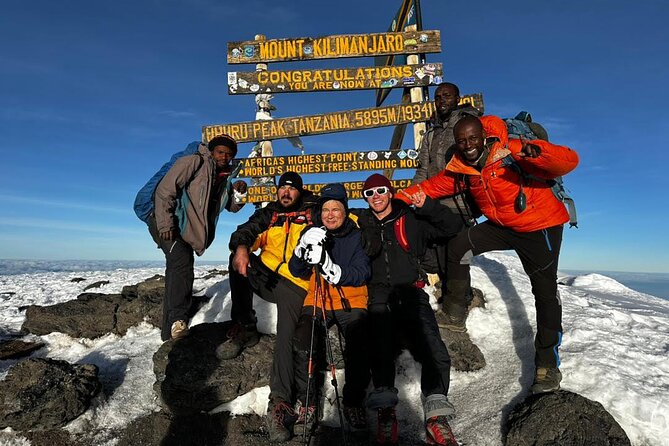
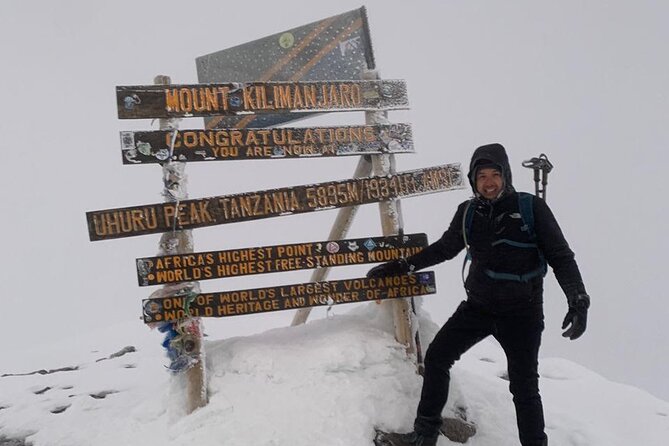
The summit is Uhuru Peak, at 5,895 meters. Reaching it is the emotional high point of the climb, but the work is not finished. After photographs and a brief rest, you begin the descent.
The return to Horombo is long. Loose ground can make the descent tiring on your knees and ankles, and the drop in elevation does not instantly remove the fatigue from the summit effort. Trekking poles are particularly useful here. You should also keep water and snacks accessible rather than burying them in your pack.
The itinerary lists about seven hours for the day, but the midnight start makes it feel like a full mountain day. Build your expectations around effort, not the clock.
Day 5: A muddy descent and the return to Moshi
After breakfast, you have a team appreciation and bonding ceremony before leaving Horombo. This is also when you say goodbye to the guides, cooks, and porters who supported the climb. Crew tips are not included, so bring cash and plan for this expense in advance.
The descent continues toward Mandara Huts, where you stop for lunch. From there, you follow the trail back through the rainforest to the Marangu Park Gate. The total walking time is about six hours.
The lower trail can be wet, muddy, and steep, even though you are heading downhill. Gaiters help keep mud out of your boots, while trekking poles reduce strain and improve balance. Do not pack these away just because the summit is behind you.
At the gate, you receive your summit certificate. A vehicle then takes you back to your hotel in Moshi, roughly a 45-minute drive. The return to warmer air and ordinary roads can feel almost as remarkable as the summit itself.
One practical point: the route uses the same trail for the climb and descent. That makes navigation straightforward, but it also means you do not get the changing scenery found on routes that descend by another path.
Hut life, meals, and the climbing crew
The hut system is the central selling point of Marangu. You sleep in dormitories rather than tents, which gives you a more stable place to eat and rest. Mattresses and pillows are supplied, but you must bring a suitable sleeping bag for cold nights at altitude.
Facilities change as you climb. Lower huts have flushing toilets and running water. Kibo Hut has long-drop toilets and bucket water, so you should be ready for a basic mountain setup. Bring hand sanitizer and keep your personal items organized, since dormitory accommodation offers less privacy than a tent.
The tour includes four breakfasts, four dinners, and five lunches. That removes much of the daily food planning from your hands. One of the strongest points in the available feedback is the quality of the meals, with the climbing group describing them as a welcome part of the experience.
The crew is another major part of the value. The company provides guides, cooks, and porters, and one solo climber specifically felt safe and comfortable as a woman supported by a mostly male team. That does not replace the need to ask questions before departure, but it suggests that the crew’s presence can make a real difference during a difficult summit attempt.
You should still clarify what hiking and safety equipment is supplied. The package says equipment is included, but it does not list every item. Bring your own well-tested boots, clothing, headlamp, water containers, and sleeping bag unless Kentau Safaris confirms otherwise.
Who should choose this route?
I would consider Marangu if you want the most direct five-day route with hut accommodation and a clear trail. It suits a person who prefers a bed and dining hall to a tent, wants meals and transport arranged, and has enough fitness for several long walking days.
It may also suit a solo climber who values a structured crew and a group capped at 15 people. The published feedback includes a solo woman who felt secure with the team and credited the crew with helping her reach the summit.
The route is less suitable if your main goal is gradual acclimatization. Five days is a compressed schedule. The direct path and steady slope may feel friendly, but altitude remains the real test. You should be honest about your fitness, prepare for a midnight start, and understand that no route can guarantee a summit.
Marangu is also not the best pick if you want fresh scenery every day. Since you ascend and descend along the same route, the visual variety is more limited than on routes with separate descent trails. Its strength is convenience and hut lodging, not maximum scenic variety.
Price, group size, and cancellation terms
At $1,650 per person, the cost makes the most sense if you use the included services. Park fees, taxes, private transportation, trailhead transfers, huts, meals, guides, porters, and safety equipment would be expensive and difficult to arrange separately.
The price does not include crew tips, visas, or flights. These are not minor details, so add them to your real budget before booking. You should also confirm the exact equipment list and pickup time, especially since the stated start time is 12:00 a.m.
The group limit is 15 people. That is a useful middle ground, though the experience may still feel different for a fast walker than for someone who needs a slower pace. Ask how the guides handle different walking speeds and how they monitor the group at altitude.
Free cancellation applies when you cancel at least 24 hours before the local start time. Cancellations inside that window are not refunded, and late changes are not accepted. The booking confirmation is issued at the time of booking.
Should you book the five-day Marangu Route?
Book this climb if hut accommodation matters to you, you want a well-established route, and you prefer a package that includes the main practical pieces. The combination of dormitory huts, included meals, private transport, and a support crew keeps the planning manageable.
Think twice if you are choosing Marangu only because it is called the easiest route. The five-day schedule gives you little spare time for altitude adjustment, and summit day is a hard overnight effort followed by a long descent.
For the right person, this is a straightforward and focused way to attempt Kilimanjaro. Bring patience, warm gear, gaiters, trekking poles, and realistic expectations. The mountain decides the final outcome, but good preparation gives you a much better chance of enjoying the climb.
FAQ
How long does the Kilimanjaro climb last?
The experience lasts approximately five days, beginning and ending in Moshi.
Where does the climb start?
The activity starts in Moshi, Tanzania. You are driven to the Marangu area and the Kilimanjaro National Park Gate before beginning the hike.
What is the highest point reached?
The summit elevation is 5,895 meters, or about 19,340 feet.
Do I sleep in tents?
No. Marangu is the only route described here that uses mountain huts instead of camping. The huts have dormitory-style bunk beds.
Are mattresses and pillows provided?
Yes. Mattresses and pillows are supplied in the huts. You still need to bring a sleeping bag.
Are meals included?
Yes. The package includes four breakfasts, four dinners, and five lunches.
Is transport included?
Yes. The package includes private transportation and transfer to the Kilimanjaro National Park trailhead gate. A vehicle returns you to your Moshi hotel after the descent.
What is not included in the price?
Crew tips, visa costs, internal flights, and international flights are not included.
How far in advance can I cancel for a full refund?
You can receive a full refund if you cancel at least 24 hours before the experience start time. Cancellations within 24 hours are not refunded.
Newly listed around Moshi & Kilimanjaro
- Climb Mount Kilimanjaro: 7 Days Machame Route★ 5.0 · 3 reviews
- 6 Days Mount Kilimanjaro Climbing via Rongai Route★ 5.0 · 3 reviews
- Explore 1 day Ngorongoro Crater Budget Group Safari from Arusha★ 5.0 · 3 reviews
- Mt. Kilimanjaro Day Hiking★ 5.0 · 3 reviews
- Chemka (Kikuletwa) Hot Springs, Tanzania★ 5.0 · 3 reviews
- Guided City tour of Moshi★ 4.3 · 3 reviews
- 8 Day Tanzania Family Safari★ 5.0 · 3 reviews
- Serengeti Safari with Sirikwa Travel★ 5.0 · 3 reviews
Kilimanjaro Climbs, compared.








Browse the lists this tour appears in