
Reviewed · SERENGETI & NGORONGORO SAFARIS
Tanzania 4 Days 3 Nights Budget camping safari to Serengeti and Ngorongoro
The big appeal here is simple: four days of serious wildlife viewing for a price far below a lodge-based safari. You spend two nights near Seronera in the Serengeti, then search the Ngorongoro Crater for lion, elephant, buffalo, zebra, hippo, and the much harder-to-find black rhino.
I like the practical setup: meals, camping, transport, and an English-speaking guide are included, and the pop-up roof gives you a clear view from the safari vehicle. I also like the chance to spend a full day in the Serengeti, rather than racing through it in a few hours. The main catch is the basic camping. Public campsites can mean no electricity, no hot water, and few comforts, while the advertised price does not include the $210 conservation and park fees.
Key points to know before booking
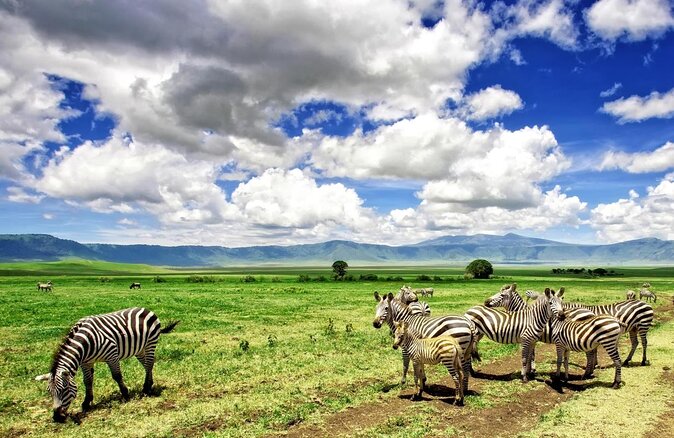
- Two nights in Seronera: The central Serengeti gives you strong access to lion, leopard, cheetah, hyena, zebra, wildebeest, and other wildlife.
- Ngorongoro adds a different kind of safari: The crater floor is compact and packed with animals, including a chance at the Big Five.
- Camping keeps the price down: Three nights of camping and all listed meals are included, but comfort is basic.
- The $740 price is not the full cost: Add the stated $210 conservation fees, paid in cash on the morning of the tour.
- Food is a real strength: The cook has handled special diets, including vegan meals, and the safari includes breakfast, lunch, and dinner.
- Long driving days are part of the deal: The first day takes about 10 hours, and the Ngorongoro day can run about 12 hours.
Why this safari offers good value at $740
At $740 per person, this is an affordable way to reach two of Tanzania’s headline wildlife areas. You get pickup and drop-off in Arusha, a safari Land Rover 4×4 with a pop-up roof, three nights of camping, bottled water, and nine listed meals. An English-speaking driver-guide is also included.
But you should calculate the real figure before you book. The tour information lists $210 total for Serengeti and Ngorongoro conservation fees, paid in cash on the morning of the tour. That brings the basic advertised total to about $950 per person before tips or optional extras.
There is a small wrinkle here. The description also refers to an upgrade that includes entry and conservation fees, so I would confirm exactly what your selected booking includes before departure. Ask for the final price in writing. That one question can prevent an unpleasant surprise in Arusha.
Even at the higher total, the value is reasonable if your priority is wildlife rather than comfort. A lodge safari costs more because you pay for permanent rooms, plumbing, electricity, and a quieter setting. This trip puts your money into park access, transport, a guide, and time among the animals.
The tradeoff is clear. You save on accommodation, not on safari hours. The days are long, but that is useful in parks as large as the Serengeti.
More Safaris in Arusha
- Balloon Safari & Bush Breakfast in Serengeti – Miracle Experience
★ 5.0 · 1,646 reviews - 4 Days Group Camping Safari
★ 5.0 · 1,101 reviews - 5 Days Group Camping Safari
★ 5.0 · 730 reviews
Day 1: Arusha to the Serengeti and an afternoon game drive
Pickup is scheduled for 8:00 a.m. in Arusha. From there, you drive toward Serengeti National Park with a picnic lunch, covering a large distance before reaching the park at around 3:00 p.m.
The Serengeti covers about 14,763 square kilometers, or roughly 5,700 square miles. That size explains both its magic and its challenge. You are entering a huge open area, not a compact animal park where sightings come every few minutes.
Once inside, the game drive continues toward the Seronera public campsite. This is not merely a transfer through the park. The route itself becomes part of the safari, and the guide can stop when animals appear along the way.
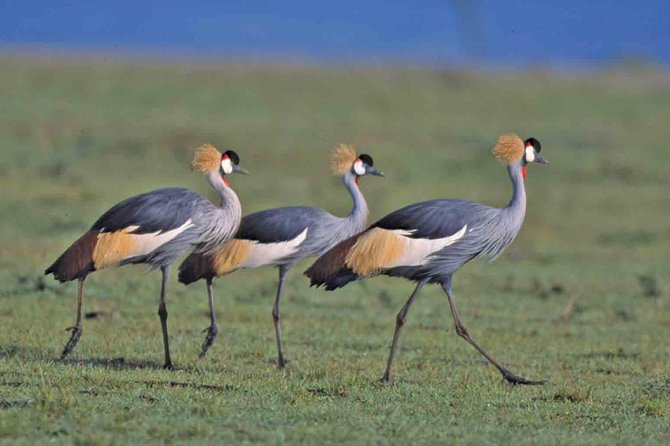
The central Serengeti is known for large cats and grazing herds. You might see lion, leopard, cheetah, buffalo, elephant, zebra, wildebeest, eland, wild dog, gazelle, and crocodile. Birdlife can include vultures, eagles, secretary birds, storks, cranes, guinea fowl, and other species.
Your first night is at Seronera. The setup is functional rather than polished. You sleep in camping accommodation, eat dinner prepared by the safari cook, and prepare for an early start the next morning.
The long first day is worth keeping in mind if you dislike sitting in a vehicle for hours. You leave Arusha in the morning and do not reach the Serengeti until midafternoon. Still, this schedule gives you an afternoon game drive instead of using the entire day only for transport.
Day 2: A full Serengeti day near Seronera
Day two is the strongest part of the trip for many people because it gives you morning and afternoon game drives in the Serengeti. You stay based at Seronera rather than packing up and moving again after breakfast.
The Serengeti name means endless plains in the Maasai language. That description is not poetic fluff. The park is genuinely vast, and the herds move across it. The annual wildebeest and zebra migration travels between the Serengeti and Kenya’s Maasai Mara, but the animals do not follow a timetable designed for your holiday.
That means migration viewing depends heavily on timing and location. The guide’s job is to track the herds and choose sensible areas to search, but no operator can promise a particular crossing or a certain number of animals. You should book this safari for the Serengeti itself, not only for a single migration scene.
The central plains are also good territory for predators. Lion, leopard, hyena, and cheetah may all be present, and the open terrain can make distant sightings possible. A guide with sharp eyes matters here. Thomas, named by the operator as one of its guides, was praised for spotting a rhino and locating the Big Five. Other named members of the team include Ely, Good Luck, and the Spanish-speaking guide Fazeel. Staff assignments can vary, so treat these names as examples of the team rather than a guaranteed lineup.
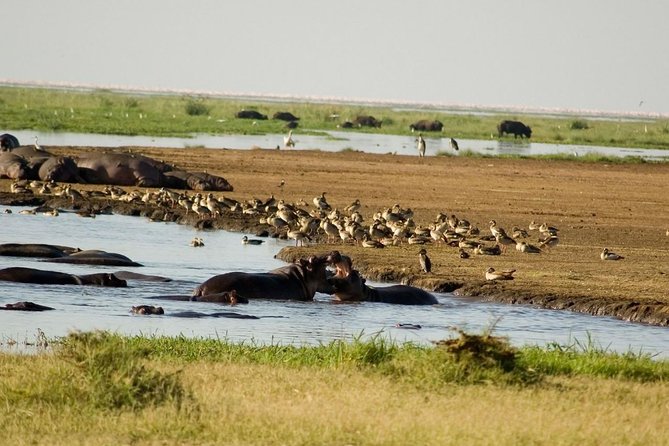
The day includes a stop at the Serengeti Hippo Pool, described as a watering place fed by the Seronera River. Expect about an hour there. Hippos are the main attraction, but the stop also gives you a break from searching the open plains.
Birdwatching adds another layer to the day. You might see ducks, geese, egrets, ibis, pelicans, herons, vultures, kites, cranes, secretary birds, and guinea fowl. You do not need to be a serious birder to enjoy this. A guide who points out the smaller creatures helps keep the long drives from becoming a parade of only large mammals.
The two nights at Seronera are also the trip’s main comfort warning. Public campsites may have no electricity, no hot water, and limited facilities. If a hot shower and a lit room are important to you, ask about upgrading to mid-range or luxury accommodation before you go. The operator says upgrades can be arranged early.
Day 3: From the Serengeti to the Ngorongoro rim
Day three begins very early, at about 6:00 a.m., with a morning game drive in the Serengeti. You return to camp around 9:00 a.m. for breakfast, check out, and continue toward the Ngorongoro Crater with lunch and wildlife viewing along the way.
This early departure gives you a useful chance to see animals when the day is fresh. It also makes the morning feel rushed. You are fitting in one last Serengeti search, breakfast, packing, and a long transfer on the same day.
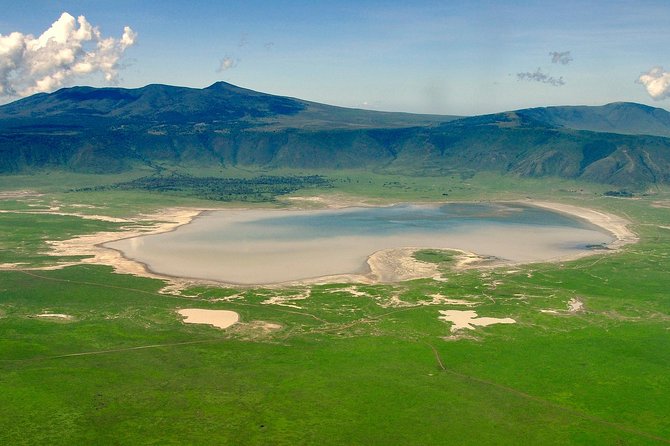
The Ngorongoro Crater is the world’s largest unbroken caldera, covering about 260 square kilometers and reaching a depth of roughly 610 meters. Its enclosed setting makes it very different from the wide-ranging Serengeti. Instead of searching across thousands of square miles, you descend into a contained area where many animals live.
The crater floor provides habitat for lion, hyena, wildebeest, zebra, black rhino, and small antelope. Elephant, buffalo, leopard, and other members of the Big Five are also listed as possible sightings. No sighting is certain, especially with leopard and rhino, but Ngorongoro gives you a strong chance to search for them in one concentrated area.
You spend the night near the crater rim after the day’s drive. The supplied schedule describes this day as lasting about 12 hours, so this is another demanding stretch. Pack patience, water, and something warm for the cooler high-altitude hours.
Olduvai Gorge is available as an optional stop for an extra museum fee. The tour details do not include that cost, so ask before adding it. If you are mainly interested in animals, you may prefer to keep your time for the crater and avoid adding another stop to an already full day.
More Serengeti and Ngorongoro itineraries:
- 3 Days Serengeti & Ngorongoro Group Camping Safari
★ 5.0 · 574 reviews - 5-Day Highlights mid-Range Crater, Serengeti, Tarangire
★ 5.0 · 296 reviews - 3-Day Classic Serengeti Safari
★ 5.0 · 263 reviews - Private 6-Day Tarangire Manyara Crater and Serengeti with Mid-Range Lodges
★ 5.0 · 238 reviews
Day 4: Descending into the crater floor
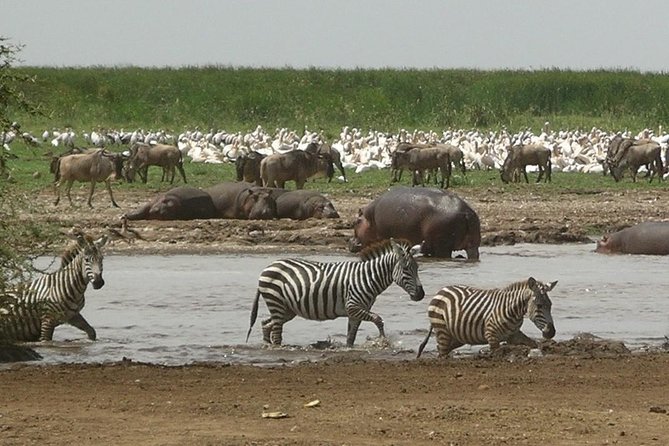
The final morning starts with breakfast and a drive to the Ngorongoro Crater at about 7:30 a.m. You descend to the crater floor for game drives, then stop for lunch at the Ngoitoktok spring picnic site.
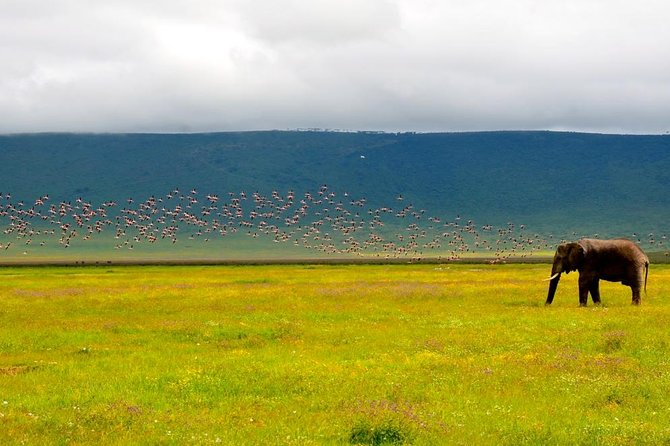
This is the trip’s most concentrated wildlife session. The crater can offer lion, leopard, buffalo, elephant, rhino, zebra, hippo, wildebeest, and hyena in one remarkable setting. Flamingos may gather on the soda lake, while geese, storks, vultures, and other birds add movement above the water.
The picnic stop at Ngoitoktok spring breaks up the game drive, but you should follow your guide’s instructions carefully whenever food is out in a wildlife area. The experience is designed around viewing animals from the safari vehicle, not walking freely among them.
After lunch, you continue viewing before ascending from the crater. The tour then drops you at a hotel or residence in Arusha. The final day is listed at about seven hours, which makes it shorter than the first three, though road conditions and time spent at sightings can affect the schedule.
The itinerary describes Ngorongoro activity on both day three and day four. In practical terms, day three takes you toward the crater and day four is the main crater-floor visit. Confirm the overnight location and exact sequence with the operator before departure, especially if you are arranging a connecting flight or hotel.
Camping, food, and the practical side of the trip
The camping is the reason this safari costs less than a lodge program. It is also the part you need to accept honestly. Public campsite accommodation may have basic washing facilities and little or no power. The lack of hot water and lighting has been a clear concern for some people who expected more comfort.
I would pack a headlamp, spare batteries, a power bank, warm layers, and a small towel. Those are practical suggestions based on the stated campsite conditions, not promises about what each camp provides.
Food appears to be one of the strongest parts of the setup. The safari includes three breakfasts, four lunches, and three dinners, along with bottled water. The cook has prepared very good meals in a camping setting, and vegan food has been accommodated successfully.
Tell the operator about dietary needs before departure. The tour offers an optional French, Spanish, or German guide for an additional $25 per day if requested early. Fazeel has been identified as a Spanish-speaking guide, but you should request your preferred language in advance rather than assume it will be available.
The vehicle is a safari Land Rover 4×4 with a pop-up roof. That roof is important. It lets you stand or sit higher for a clearer view of animals and birds while keeping you inside the vehicle. The stated maximum group size is 100 people, but that figure does not tell you how many people will share one vehicle. Ask about the expected vehicle size if personal space matters to you.
What makes the guiding important
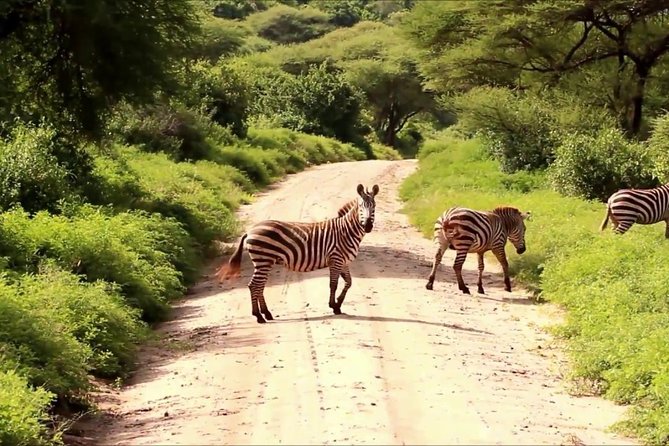
A safari guide does much more than drive. In the Serengeti, the guide reads the park, watches for movement, follows reports of animal locations, and explains how the ecosystem fits together.
The most useful praise for this operation centers on guide skill and ethics. Thomas was singled out for finding a rhino and locating the Big Five, while Ely and Good Luck were praised for guiding and cooking. Those details point to the kind of service that can make a budget safari work well: sharp animal spotting, clear communication, and a good meal at the end of a long day.
Do keep expectations realistic. Guides improve your odds, but they cannot control animal movement. The migration shifts, predators hide, and a leopard may remain out of sight. The right attitude is to value the search as much as the checklist.
The mention of ethical guiding is also encouraging. In a busy wildlife area, a respectful driver should avoid reckless approaches and allow animals space. Since the guide makes many decisions on the road, good judgment matters as much as finding the next lion.
Who should book this four-day safari
I would choose this trip if you want to see the Serengeti and Ngorongoro on a controlled budget, and you are comfortable with long drives and simple campsites.
It suits you especially well if:
- You want a first safari that includes two major parks.
- You care more about game drives than hotel comfort.
- You can manage early mornings and full days in a vehicle.
- You enjoy both large mammals and birdlife.
- You want cooked meals and a guide without arranging every detail yourself.
- You are willing to pay the additional conservation fees.
I would look at a mid-range or luxury upgrade if you need hot water, electricity, or a more comfortable night’s sleep. I would also ask detailed questions about group size, campsite facilities, the final fee total, and the guide language before paying.
Free cancellation is available if you cancel at least 24 hours before the local start time. Changes or cancellations inside that window are not accepted for a refund, so keep that deadline in mind when your Arusha plans are still shifting.
Should you book it?
Book this safari if wildlife access matters more to you than comfort. The combination of two Serengeti nights, a full game-drive day, Ngorongoro, meals, a 4×4 vehicle, and a guide gives you a lot for the base price.
Do not book it expecting a polished lodge holiday. The Seronera public campsite can be dark and basic, and the $210 conservation fee makes the actual cost higher than the headline figure. Confirm the fees and campsite arrangements before departure.
For a budget-minded first safari, I think the strengths outweigh the rough edges. You get real time in the Serengeti, a strong chance to search for the Big Five, and the crater’s dramatic concentration of wildlife. Just bring realistic expectations, a headlamp, and enough patience for the long road days.
FAQ
Where does the safari start and finish?
The safari starts with pickup in Arusha at 8:00 a.m. After the Ngorongoro game drive on day four, you are dropped at a hotel or residence in Arusha.
How long is the safari?
The experience lasts four days and three nights. The listed days run for about 10 hours, 10 hours, 12 hours, and seven hours respectively.
What accommodation is included?
Three nights of camping accommodation are included. The Seronera nights are at a public campsite. Mid-range or luxury accommodation may be available as an upgrade if requested early.
Are park and conservation fees included in the $740 price?
The tour information states that $210 total for Serengeti and Ngorongoro conservation fees is paid in cash on the morning of the tour. It also refers to an upgrade that includes entry and conservation fees, so confirm the exact fee arrangement before booking.
What meals are provided?
The package includes three breakfasts, four lunches, and three dinners. Bottled water is also included. Vegan meals have been provided when requested.
What animals might I see?
Possible sightings include lion, leopard, elephant, cheetah, buffalo, zebra, wildebeest, hyena, hippo, crocodile, gazelle, wild dog, and black rhino. The Big Five are present in the Ngorongoro Crater, but sightings are not guaranteed.
Is a non-English guide available?
English-speaking guiding is included. French, Spanish, or German guiding can be requested early for an additional $25 per day. The operator has also identified Fazeel as a Spanish-speaking guide.
Can I cancel for a full refund?
Yes, if you cancel at least 24 hours before the experience start time. Cancellations or changes made less than 24 hours before the start time are not accepted for a refund.
More four day trips in Arusha
- 4 Days Join Group tour Tarangire Serengeti and Ngorongoro crater
★ 5.0 · 219 reviews - 4-Day Safari from Arusha: Tarangire, Serengeti and Ngorongoro
★ 5.0 · 173 reviews - 4 Days safari Tour Tanzania
★ 5.0 · 159 reviews - 4 Days Tarangire Serengeti Ngorongoro Crater
★ 5.0 · 117 reviews
More camping safaris in Arusha
- 2 Days Tarangire and Ngorongoro Group Camping Safari
★ 5.0 · 146 reviews - 6 Days Tanzania Budget Camping Safari
★ 5.0 · 145 reviews - 3 Day Serengeti National Park & Ngorongoro Crater Camping Safari
★ 5.0 · 142 reviews - 3 Days Tarangire, Ngorongoro & Lake Manyara Group Camping Safari
★ 5.0 · 102 reviews
Newly listed around Arusha
- 5-Day Private Safari Tour in Tanzania’s Wildlife★ 5.0 · 3 reviews
- 3 Days private safari Tarangire ,Ngorongroro crater &Manyara★ 5.0 · 3 reviews
- 3 Day Sharing Safari – Manyara, Ngorongoro Crater and Tarangire National Parks★ 5.0 · 3 reviews
- Tarangire National Park Day Trip★ 5.0 · 3 reviews
- 2 Days Tarangire and Ngorongoro Crater Tour★ 5.0 · 3 reviews
- 6 -Day Tarangire, Manyara, Serengeti & Ngorongoro★ 5.0 · 3 reviews
- 5 Days Group Camping Safari★ 4.7 · 3 reviews
- 4 Days Tanzania Safari★ 4.5 · 3 reviews
Serengeti & Ngorongoro Safaris, compared.


Balloon Safari & Bush Breakfast in Serengeti – Miracle Experience
Read our review →




Private 6-Day Tarangire Manyara Crater and Serengeti with Mid-Range Lodges
Read our review →
5 Days Camping Tarangire, Serengeti & Ngorongoro crater & Visiting Maasai
Read our review →Browse the lists this tour appears in