
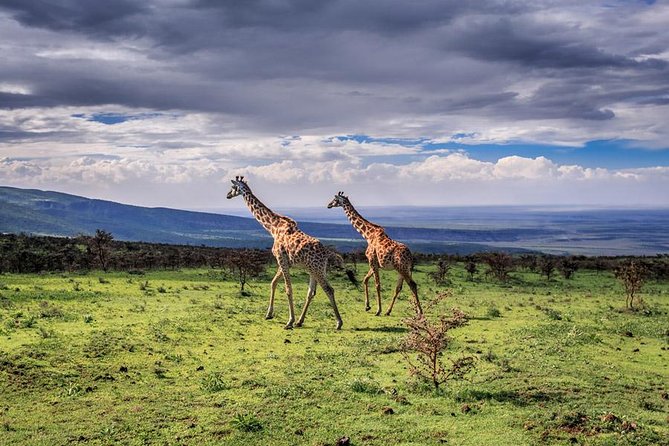
Reviewed · SERENGETI & NGORONGORO SAFARIS
4 Days Tarangire Serengeti Ngorongoro Crater
Tarangire elephants, Serengeti sunrise, and a crater floor 650 meters below the rim make this four-day Northern Circuit safari a strong short-trip plan. You move through three of Tanzania’s best wildlife areas without spending your whole holiday on the road, though the schedule is brisk.
I like the small group size, capped at seven, and the clear pricing. Park fees, transport, meals, bottled water, and camping are covered, which keeps the final cost easier to judge. I also like the human touch built into the operation: driver David and chef Richard are named in the group experience, with Richard preparing meals and David handling the long game-drive days.
The tradeoff is time. You spend long hours on rough park roads, and Day 2 is especially demanding as you travel from Tarangire toward Serengeti. If you want slow mornings, luxury lodges, or several nights in one place, this is not the right safari.
Key points to know before booking
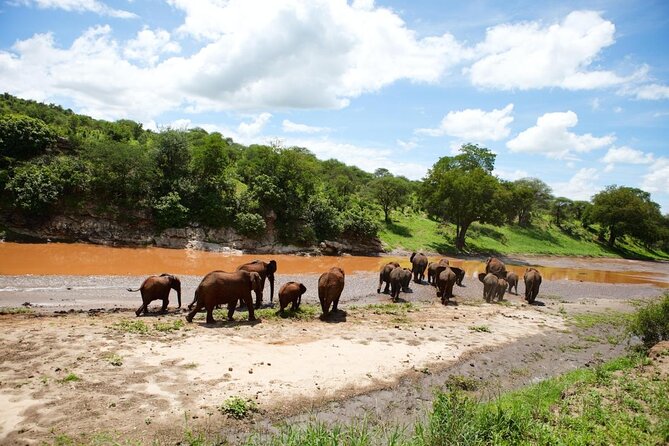
- Three major parks in four days: Tarangire, Serengeti, and Ngorongoro Crater are all included.
- Small shared group: The safari allows a maximum of seven people, useful for keeping the vehicle more manageable.
- Camping keeps the price down: At $900 per person, the package includes park fees, transport, meals, water, and camping arrangements.
- Early starts matter: Day 3 begins around 6 a.m. for a Serengeti sunrise game drive, so warm clothing is useful.
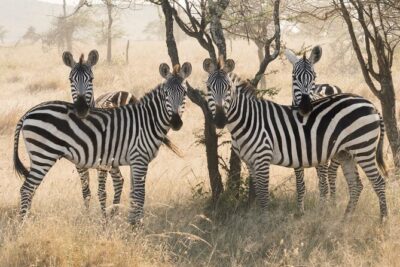
- The route is wildlife-focused: Expect elephants, buffalo, giraffe, zebra, impala, warthog, and possibly leopard or rhinoceros.
- Arusha is both start and finish: Pickup begins in Arusha, and the final drive returns you there.
Why this four-day route works
A short Tanzania safari can easily become a compromise. You either visit one park properly or rush through several. This program takes the second approach, but it chooses three parks that offer different kinds of wildlife viewing.
Tarangire is known here for elephant sightings and broad game-viewing opportunities. Serengeti gives you the classic open-country safari setting and a chance at an early-morning drive. Ngorongoro adds a compact crater environment where animals gather around permanent water.
I see the route as a sampler with real substance, not a relaxed stay. You get a taste of several major parks, but you must accept early starts, long transfers, and camping. The value comes from the range of places covered in a short period.
The advertised cost is $900 per person. That is easier to assess because the package includes all park fees, transport, meals, mineral water, and three dinners, four breakfasts, and four lunches. Tips and visas are extra. For a budget safari, those inclusions matter. Park fees alone can make a Tanzania trip expensive, and having meals covered prevents small daily costs from adding up.
The package also includes pickup in Arusha and ends back at the same meeting point. That makes it practical if you are staying in Arusha before and after the safari. It is less convenient if your wider trip begins or ends elsewhere, since no alternate start or finish is specified.
More Serengeti and Ngorongoro itineraries:
- Balloon Safari & Bush Breakfast in Serengeti – Miracle Experience
★ 5.0 · 1,646 reviews - 3 Days Serengeti & Ngorongoro Group Camping Safari
★ 5.0 · 574 reviews - 5-Day Highlights mid-Range Crater, Serengeti, Tarangire
★ 5.0 · 296 reviews
Tarangire National Park: elephants on the first day
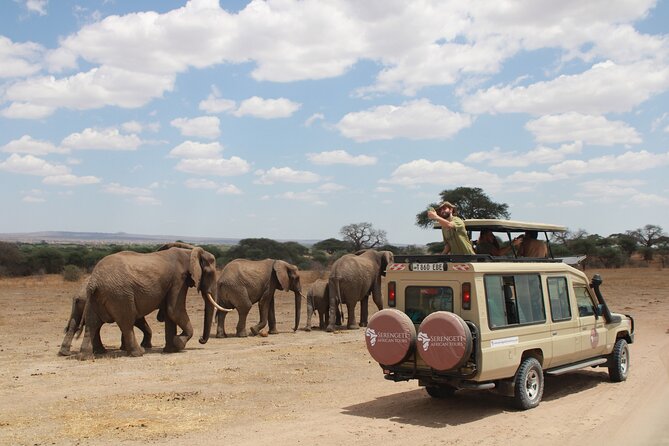
Day 1 starts after breakfast with pickup from your Arusha hotel. You drive directly to Tarangire National Park, carrying a picnic lunch and beginning a game drive once inside the park.
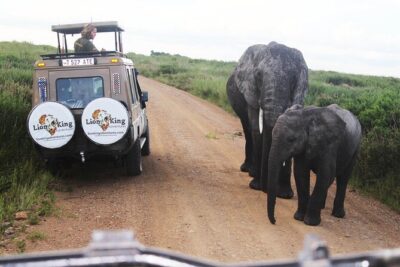
The main attraction described for Tarangire is its elephant population. You may see herds of 10 to 20 animals, with groups sometimes reaching 30. That can be a memorable first safari sight, especially when elephants are close enough to watch their family behavior from the vehicle.
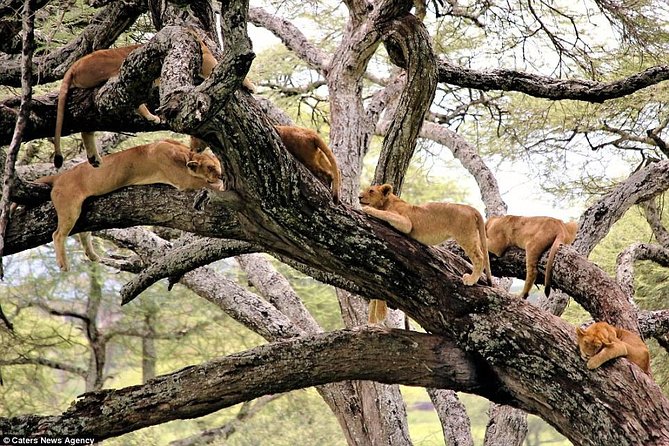
Keep your eyes above ground, too. The route specifically points to the possibility of leopard sightings in trees. Leopard sightings are never guaranteed, so this is a good place to practice scanning carefully rather than looking only at the most obvious animals.
Other possible sightings include buffalo, impala, zebra, warthog, and giraffe. That mix gives the day a useful range: large mammals, grazing animals, and smaller antelope. You continue the game drive into the late afternoon before heading to the campsite for dinner and overnight camping.
The listed driving and activity time is about six hours. That does not mean six hours of constant animal viewing. It includes movement through the park and the transfer to camp, so bring patience. A picnic lunch also means you should expect a field-style day rather than a restaurant stop.
Tarangire is a sensible first park because it gives you a strong chance of seeing large herds early in the trip. The drawback is that the first day begins with a long drive from Arusha, so you should not expect to arrive fresh and immediately settle into camp.
The road to Serengeti via the Rift Valley
Day 2 starts with an early breakfast and packing the camping gear into the safari vehicle. You then leave Tarangire and travel toward Serengeti via Manyara and the Rift Valley escarpments.
This is the trip’s major transfer day. The listed duration is about six hours, but road conditions, park access, stops, and the route itself can affect how the day feels. You are not simply moving between nearby parks. You are crossing a large part of northern Tanzania, with game viewing along the way.
An optional Maasai village visit is offered on the route to Serengeti. Since it is optional, confirm the details and any added cost before agreeing. This can add a cultural element to a wildlife-heavy trip, but you may prefer to keep moving if your priority is reaching Serengeti with more daylight.
You reach Serengeti around evening and continue with a game drive toward Seronera Campsite. That timing is useful because the drive into camp can become an introduction to the park itself. Instead of treating the transfer as a dead stretch, you may begin spotting wildlife as you enter the Serengeti area.
The day’s length is the main consideration. Packing camp, driving through the Rift Valley, and arriving near evening can make this feel like the least restful part of the safari. Still, this is the price of reaching the Serengeti on a four-day schedule.
Serengeti at sunrise on Day 3
Day 3 begins around 6 a.m., after a hot cup of coffee. You leave camp for a morning game drive in the central Serengeti, with sunrise as part of the experience.
Early morning is a sensible time for a game drive. The schedule gives you a chance to see the park before the day becomes hotter, and the light can make the open plains especially striking. The plan warns that mornings can be chilly, so pack warm layers. This is one of the few specific packing tips provided, and it is worth taking seriously.
You continue game viewing until around midday, then return to camp for a full breakfast and lunch combined into a late brunch. That arrangement reflects the practical rhythm of safari camping. Rather than breaking the best morning viewing time for a formal breakfast, you stay out longer and eat afterward.
After lunch, you leave Serengeti for the Ngorongoro Conservation Area. The route includes game viewing as you travel toward Simba Campsite, where dinner and overnight camping are arranged.
This day gives you the best balance of wildlife time and forward progress. You have a dedicated morning in Serengeti, then reach the Ngorongoro area before the crater visit on Day 4. The limitation is that you do not get a full second day in the park. If Serengeti is your main reason for visiting Tanzania, a longer Serengeti itinerary would give you more time and a better chance to explore beyond the central area.
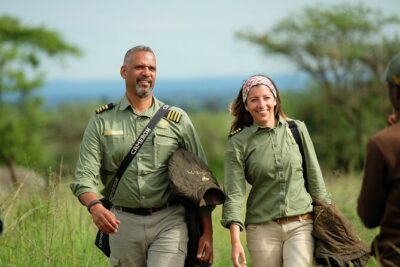
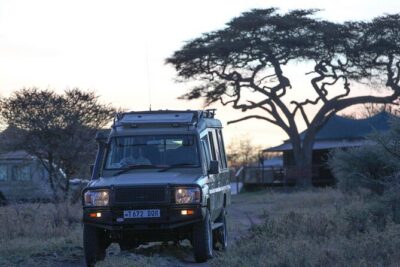
The safari team matters on a morning like this. A driver such as David is responsible for navigating, watching for animals, and keeping the group on schedule. A chef such as Richard handles the food side, which can make a basic camping program feel more comfortable. Names and staff can change, but the division of duties is important on a trip with early starts and long road days.
More four day trips in Arusha:
- 4 Days Group Camping Safari
★ 5.0 · 1,101 reviews - 4 Days Join Group tour Tarangire Serengeti and Ngorongoro crater
★ 5.0 · 219 reviews - 4-Day Safari from Arusha: Tarangire, Serengeti and Ngorongoro
★ 5.0 · 173 reviews - 4 Days safari Tour Tanzania
★ 5.0 · 159 reviews
Ngorongoro Crater and the 650-meter descent
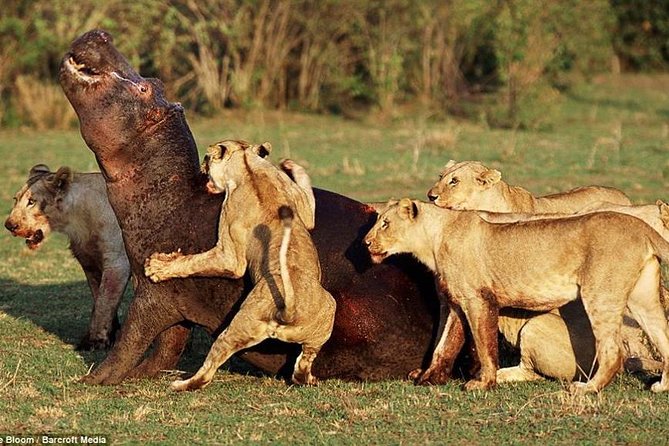
After breakfast on Day 4, you make a short drive to the descending gate and enter Ngorongoro Crater. The crater floor lies about 650 meters below the rim, creating one of the most concentrated wildlife settings on this route.
The plan calls for a half-day crater tour. The crater contains permanent water, so animals can remain in the area throughout the year, even though they are free to leave. That makes Ngorongoro a strong final stop because the chance of seeing a variety of wildlife is not tied only to seasonal movement.
Rhinoceros are possible, but not guaranteed. The same applies to every major animal sighting. The crater’s permanent water improves the odds of finding animals, but it does not turn wildlife viewing into a sure thing.
After the crater-floor drive, you ascend to the rim for lunch and then return to Arusha. The final day is listed at about five hours, though the crater drive and road conditions determine how quickly the return journey feels.
This is a compact visit rather than a full crater day. You get the descent, a half-day game drive, lunch, and the road back to Arusha. That is enough to make the crater a meaningful part of the safari, but not enough for a slow exploration of every area.
Camping, food, and the small-group setup
Camping is central to the price. You are not paying for a lodge-based safari, and the program is built around campsites, shared transport, and meals prepared during the trip. For some people, that is part of the appeal. The nights are tied more closely to the safari routine, and the lower price leaves room in the wider Tanzania budget.
The package includes all meals, mineral water, and the stated breakfast, lunch, and dinner schedule. Breakfast is early on several days, lunch may be a picnic or a late brunch, and dinner comes after the evening drive. You should think of food as fuel arranged around wildlife viewing, not a restaurant experience.
A maximum of seven people is a useful limit. A smaller group can make it easier to share viewing time and avoid a packed vehicle. It also means less personal space than a private safari, and the quality of the group dynamic will depend on the people booked for your departure.
The named team members, David and Richard, suggest a clear working partnership between driver and chef on at least one group departure. David’s driving and wildlife spotting shape the safari, while Richard’s cooking supports the long days. If having a specific guide is important to you, ask at booking if the same staff can be confirmed.
What the $900 price really covers
At $900 per person, this safari’s value is strongest for someone who wants the major Northern Circuit highlights without arranging each part separately. You receive transport, park fees, meals, water, camping, pickup in Arusha, and the return drive.
The price does not include tips or visas. Those are normal extra costs, but you should add them to your working budget. The package also does not describe lodge upgrades, private vehicles, airport transfers, or additional activities beyond the optional Maasai village visit.
A 4.9 rating from 117 ratings and a 97 percent recommendation figure provide a strong booking signal, but they should not replace practical questions. Ask about the exact campsite arrangements, vehicle details, pickup time, and who will guide your departure. The advertised maximum group size is seven, which is worth confirming if group space matters to you.
Free cancellation is available up to 24 hours before the local start time for a full refund. Changes or cancellations made inside that 24-hour window are not accepted for a refund under the stated terms.
Who should book this safari
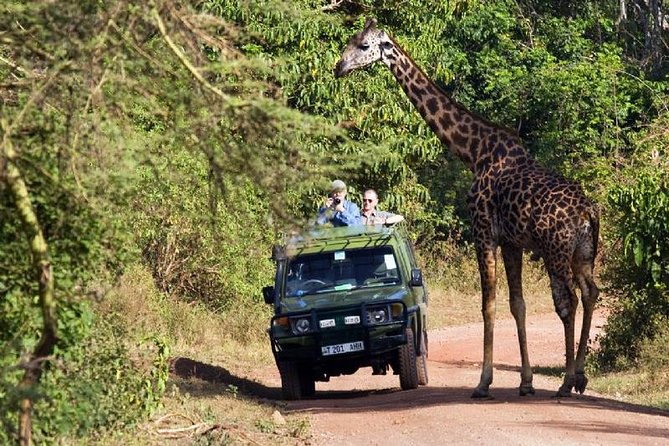
I would choose this trip if you have limited time in Tanzania and want three major wildlife areas in one compact route. It suits budget-conscious people who are comfortable with camping, shared transport, early starts, and several hours on the road.
It also works for first-time safari visitors who want a broad introduction. Tarangire offers elephant herds, Serengeti brings the open-park experience, and Ngorongoro provides a crater-floor finale with permanent water and a chance at rhinoceros.
I would hesitate if you dislike long transfers or want a calm pace. The schedule leaves little room for delays, extra stops, or a full second day in Serengeti. Families and older visitors may also want to consider how they handle early mornings, rough roads, and camping before booking.
The trip is capped at seven people, but it is still a group safari. If you want to decide every stop, linger at each sighting, or choose a private departure, this may feel too structured.
Should you book the four-day route?
Book it if your priority is maximum park variety for a fixed budget and short schedule. The inclusion of fees, meals, water, transport, and camping makes $900 easier to justify, and the route includes three of Tanzania’s most important safari areas.
Skip it if Serengeti deserves more of your time, or if you want lodge comfort and unhurried days. For the right person, this is an efficient, practical safari with strong wildlife potential. Go in ready for early mornings, long drives, and basic camping, and the four days can deliver a lot.
FAQ
Where does the safari start and finish?
The safari starts in Arusha, Tanzania, with pickup offered from your hotel. It ends back at the meeting point in Arusha.
How many people can join the group?
The activity has a maximum of seven participants.
Which national parks and wildlife areas are included?
The route includes Tarangire National Park, Serengeti National Park, and the Ngorongoro Crater within the Ngorongoro Conservation Area.
Are meals included?
Yes. The package includes breakfast, lunch, and dinner during the safari, along with mineral water. The stated inclusions are four breakfasts, four lunches, and three dinners.
Are park fees and transport included in the price?
Yes. Transport and all park fees are included. Tips and visas are not included.
Can I cancel for a full refund?
Yes, if you cancel at least 24 hours before the experience start time. Cancellations or changes made less than 24 hours before the start time are not accepted for a refund.
Newly listed around Arusha
- 5-Day Private Safari Tour in Tanzania’s Wildlife★ 5.0 · 3 reviews
- 3 Days private safari Tarangire ,Ngorongroro crater &Manyara★ 5.0 · 3 reviews
- 3 Day Sharing Safari – Manyara, Ngorongoro Crater and Tarangire National Parks★ 5.0 · 3 reviews
- Tarangire National Park Day Trip★ 5.0 · 3 reviews
- 2 Days Tarangire and Ngorongoro Crater Tour★ 5.0 · 3 reviews
- 6 -Day Tarangire, Manyara, Serengeti & Ngorongoro★ 5.0 · 3 reviews
- 5 Days Group Camping Safari★ 4.7 · 3 reviews
- 4 Days Tanzania Safari★ 4.5 · 3 reviews
Serengeti & Ngorongoro Safaris, compared.
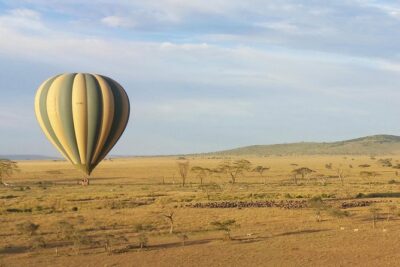
Balloon Safari & Bush Breakfast in Serengeti – Miracle Experience
Read our review →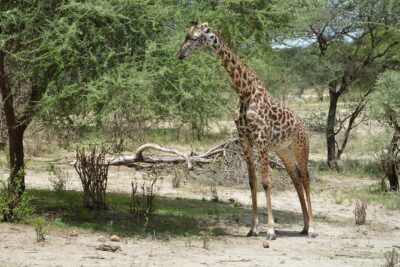

Private 6-Day Tarangire Manyara Crater and Serengeti with Mid-Range Lodges
Read our review →
5 Days Camping Tarangire, Serengeti & Ngorongoro crater & Visiting Maasai
Read our review →Browse the lists this tour appears in