

Reviewed · MAASAI VILLAGE VISITS
Masai Village Tour
The most interesting part of this Maasai village tour is its focus on daily life rather than a quick photo stop. From Arusha, you travel to Okikareti in Oldonyo Sambu, where the Maasai community shares its customs, farming methods, food preservation, and local business activities.
I like that lunch, water, and private transportation are included, since the village lies about 47 kilometers from Arusha. I also like the mix of cultural learning and light hiking, with a local Maasai zoo and small mountain climbs adding variety.
The main caution is that the experience may depend heavily on how much time your guide spends with the community. One account describes only about 30 minutes in the village, followed by an unstructured walk through the bush, so I would confirm the day’s plan before paying $200 per person.
Key points to know before booking
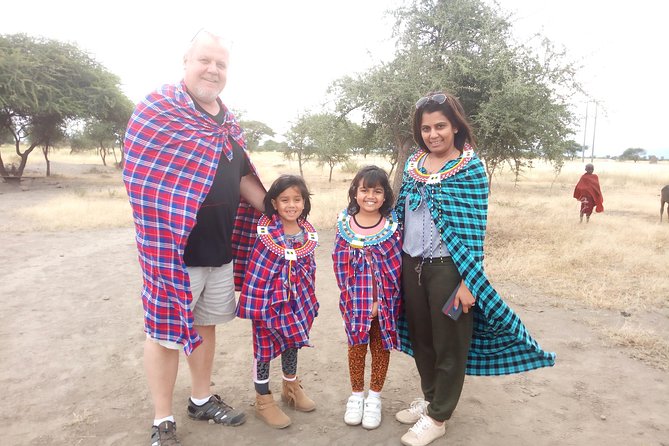
- Okikareti village visit: Meet Maasai community members and learn about their semi-nomadic way of life in Oldonyo Sambu.
- A five-hour outing from Arusha: Pickup begins at Mvuli Hotel at 7:30 am, with the village located about 47 kilometers away.
- Practical inclusions: Private transportation, water, lunch, and admission are included in the stated price.
- More than a cultural talk: The visit also covers crop growing, food preparation and storage, business activities, and a local Maasai zoo.
- Views from nearby hills: Short climbs provide photo opportunities and a look across the surrounding area.
- Small-group format: The maximum group size is 15 people, though the booking page does not promise a smaller group.
From Mvuli Hotel to Oldonyo Sambu
Your day starts at 7:30 am at Mvuli Hotel on Kundayo Road in Arusha. The drive to the Maasai communities takes you about 47 kilometers from the city, making this a half-day outing rather than a quick urban excursion.
Private transportation is a real advantage here. You do not need to arrange a taxi, work out a public transport connection, or worry about finding the village on your own. Water and lunch are also included, which helps keep the morning simple.
The stated duration is about five hours. That time includes the journey, the community visit, the local zoo, the agricultural and business demonstrations, and the hill walk. Because the schedule covers several activities, you should ask how the time is divided. A five-hour tour can feel full and useful, or it can feel thin if too much time goes to driving or wandering between stops.
The group limit is 15 people. That is small enough for a more personal outing than a large coach tour, but it is not necessarily an intimate private visit. The booking information says private transportation, not that the entire tour is private, so clarify this point if you want a one-party experience.
More Maasai village visits:
- 5 Days Camping Tarangire, Serengeti & Ngorongoro crater & Visiting Maasai
★ 5.0 · 229 reviews - Maasai village visit, Materuni waterfalls & coffee experience
★ 4.5 · 95 reviews - 7-Day Private Tanzania Safari with Sunset Walking on the Crater Rim and Maasai
★ 5.0 · 40 reviews
Meeting the Maasai community at Okikareti

The heart of the outing is Okikareti village in Oldonyo Sambu. The purpose is to meet Maasai people and learn about their culture, traditions, social life, and daily routines.
The value of this visit lies in the ordinary details. You are not simply looking at buildings or taking photographs. You are meant to hear how people grow food, prepare meals, store supplies, and earn money through local business activities. These subjects help you see the Maasai as a living community adapting to present-day needs, not as a display arranged only for tourists.
The tour describes the Maasai as semi-nomadic. That word matters. It points to a way of life shaped by movement, livestock, agriculture, family networks, and changing economic conditions. The visit may give you a clearer sense of how traditional practices fit alongside newer business ventures.
You should approach the meeting with patience and respect. The most useful questions will likely be about the practical subjects named in the tour plan: what crops are grown, how food is kept, which activities bring income, and how community life works. The more specific your questions, the more useful the conversation can become.
At the same time, the available information does not promise a long guided discussion, a formal cultural performance, or a particular village ceremony. Do not book this expecting a staged show unless Rupia Adventure confirms one. The experience is described as an educational community visit, not a guaranteed entertainment program.
Farming, food storage, and local business
The agricultural section gives the tour a useful practical edge. You can learn how local Maasai communities grow crops and how food is prepared and stored. These subjects are easy to overlook on a standard sightseeing trip, yet they often tell you more about a place than a short speech about customs.
Food preservation is especially relevant in a semi-nomadic setting. It connects directly to planning, movement, seasons, and household needs. The tour does not specify the exact foods or preservation techniques you will see, so treat this part as a chance to ask questions rather than a fixed demonstration with a guaranteed set of examples.
The local business element also adds needed present-day context. Maasai communities are not frozen in the past. The tour aims to show activities that support income and connect the village with the wider economy. Again, the exact businesses are not named, so the quality of this part will depend on the guide and the community members available on the day.
I would pay close attention to how the visit is presented. A good cultural tour gives people room to explain their own lives and avoids turning every object or activity into a souvenir moment. You can help by asking before taking close-up photos and by listening when the conversation moves beyond familiar tourist topics.
The local Maasai zoo
A local Maasai zoo is included as one of the stops. The supplied details do not explain its size, animal species, or layout, so you should keep expectations modest.
The zoo adds another way to look at the connection between the community and the natural world. It may be useful for families or anyone interested in local animals, but it is not described as a major wildlife park or safari. Do not compare it with Tanzania’s national parks. This is a small community attraction within a cultural outing.
The stop also breaks up the village visit. Five hours can feel long if every part consists of conversation, especially in warm weather. A short visit to the zoo may give you a change of pace before the hill walk.
Ask your guide what you are seeing and why the zoo exists. The tour description calls it a local Maasai zoo, but it does not state whether it focuses on rescue, education, community income, or another purpose. That missing context is worth seeking before you judge the stop.
A few more Arusha days to compare
- Balloon Safari & Bush Breakfast in Serengeti – Miracle Experience
★ 5.0 · 1,646 reviews - Tanzania Classic – 7 Days
★ 5.0 · 1,151 reviews - 4 Days Group Camping Safari
★ 5.0 · 1,101 reviews - 5 Days Group Camping Safari
★ 5.0 · 730 reviews
Climbing the nearby hills for views
The final active element is a climb up small mountains near the village. The walk is presented as a way to see the area from above and take photographs.
This is not described as a strenuous mountain trek. Still, you should expect uneven ground and some physical effort. The booking information says most people can participate, but it does not give a distance, elevation gain, trail surface, or fitness rating. Wear practical shoes and be ready for a walk rather than treating the outing as entirely vehicle based.
The views may be one of the day’s best rewards. From higher ground, you can understand the setting around Oldonyo Sambu in a way that is difficult from inside a village compound. The photo stop also gives the day a clear finish, with a chance to capture the hills and surrounding area.
The walk is also where the tour needs good direction. One negative account describes spending only half an hour at the village and then walking through bushes without a clear purpose. That is a serious concern because the hill walk should support the cultural visit, not replace it. Before departure, ask where the walk goes, how long it lasts, and which parts of the morning are community led.
What the $200 price really covers
The stated price is $200 per person. That is a high cost for a five-hour outing, so the value depends on the quality of the community visit and the amount of time spent there.
The price includes private transportation, water, lunch, and admission. Those inclusions remove several small costs and make the outing easier to arrange. You are also paying for access to a community outside Arusha and for the coordination needed to combine transport, cultural learning, the zoo, and the hill walk.
Still, the package does not automatically justify the price. If you receive a well-organized visit with meaningful time at Okikareti, clear explanations, a useful look at farming and food storage, and a properly guided walk, the cost may be reasonable for someone who values direct cultural contact.
If the village portion lasts only 30 minutes and the rest becomes an aimless bush walk, the value drops sharply. The negative account also refers to a $100 payment, while the stated current price here is $200, so confirm the exact amount, inclusions, and currency before booking. A mismatch in price is a good reason to ask for written details.
The 4.3 rating from 12 reviews suggests a generally positive but not flawless record. The sample is small, and the single detailed complaint raises a specific issue about time spent in the village. I would treat this as a tour that needs a little advance checking, not an automatic yes.
Who will get the most from this outing
This experience suits you if you want a short cultural excursion from Arusha and prefer meeting a local community to spending another day on a conventional wildlife drive. It also works well if you want several elements in one morning: conversation, agriculture, a small zoo, food, transport, and a scenic walk.
Families may appreciate the variety, though the physical demands of the hill section are not fully explained. Ask about the walking conditions if anyone in your group has mobility limits or dislikes uneven ground.
The tour also suits photographers, provided you see photography as part of a respectful visit rather than the main purpose. The village, nearby hills, and surrounding area offer planned photo opportunities, but the supplied details do not promise particular wildlife sightings or dramatic viewpoints.
You may want a different experience if you need a tightly timed schedule, a long formal lecture, or a clearly defined trek. You should also be cautious if you dislike cultural visits that depend on conversation and local availability. The tour does not list a detailed minute-by-minute plan, named guides, or guaranteed activities beyond the broad stops.
Useful questions to ask Rupia Adventure
I would contact Rupia Adventure before booking and ask a few direct questions:
- How long will the group spend inside Okikareti village?
- Who will lead the cultural discussion?
- Is the transportation private for your booking, or only arranged separately from the group?
- What does the local Maasai zoo contain?
- How long is the hill walk, and what kind of ground should you expect?
- Is the $200 price current, and does it include every listed meal, admission fee, and transfer?
- What happens if the community visit changes on the day?
These questions are not fussing over small details. They help you find out if the tour matches the description you want to buy.
The experience requires good weather. If poor weather cancels it, you can receive another date or a full refund. It also requires a minimum number of participants, and a cancellation for that reason brings the same choice of another date or a full refund.
You can cancel for a full refund up to 24 hours before the 7:30 am start. Changes or cancellations made less than 24 hours before departure are not accepted for a refund, so watch the local cut-off time.
Should you book the Maasai Village Tour?
Book it if you want a convenient half-day introduction to Maasai life near Arusha, and if the combination of village conversation, farming, food storage, local business, a community zoo, and hill views appeals to you. The included lunch, water, transport, and admission make the planning easy.
I would not book it without first confirming the schedule. The $200 price calls for a substantial village visit, not just a brief stop followed by an unclear walk. Ask Rupia Adventure to explain the timing and the hill route, then decide if the answer matches your expectations.
For the right person, this can be a worthwhile way to meet a community and see how tradition and present-day income activities fit together. Just make sure the cultural portion is the main event, as it should be.
FAQ
Where does the Maasai village tour take place?
The tour visits Okikareti village in Oldonyo Sambu, about 47 kilometers, or 30 miles, from Arusha.
Where is the meeting point?
Pickup starts at Mvuli Hotel on Kundayo Road in Arusha, Tanzania.
What time does the tour start?
The stated start time is 7:30 am.
How long does the experience last?
The tour lasts approximately five hours.
What is included in the price?
Private transportation, water, lunch, and admission are included in the stated $200 per person price.
How many people can join the tour?
The maximum group size is 15 people.
Can I cancel for a full refund?
Yes. You can cancel at least 24 hours before the experience start time for a full refund. Cancellations made less than 24 hours before the start are not refunded.
Newly listed around Arusha
- 5-Day Private Safari Tour in Tanzania’s Wildlife★ 5.0 · 3 reviews
- 3 Days private safari Tarangire ,Ngorongroro crater &Manyara★ 5.0 · 3 reviews
- 3 Day Sharing Safari – Manyara, Ngorongoro Crater and Tarangire National Parks★ 5.0 · 3 reviews
- Tarangire National Park Day Trip★ 5.0 · 3 reviews
- 2 Days Tarangire and Ngorongoro Crater Tour★ 5.0 · 3 reviews
- 6 -Day Tarangire, Manyara, Serengeti & Ngorongoro★ 5.0 · 3 reviews
- 5 Days Group Camping Safari★ 4.7 · 3 reviews
- 7-Day Mt. Kilimanjaro Hiking: Machame Route★ 5.0 · 3 reviews
Maasai Village Visits, compared.

5 Days Camping Tarangire, Serengeti & Ngorongoro crater & Visiting Maasai
Read our review →
Maasai village visit, Materuni waterfalls & coffee experience
Read our review →5 Days Camping Tarangire, Serengeti & Ngorongoro crater & Visiting Maasai
Read our review →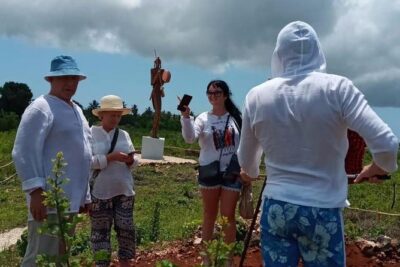
7-Day Private Tanzania Safari with Sunset Walking on the Crater Rim and Maasai
Read our review →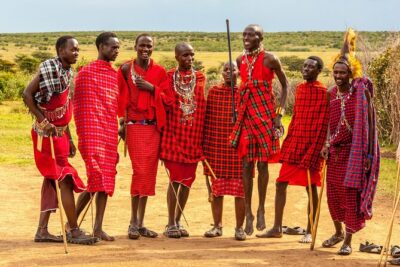
Maasai village visit and Chemka hot-springs with hot lunch.
Read our review →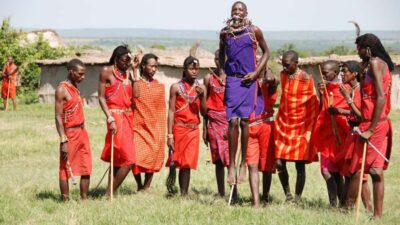
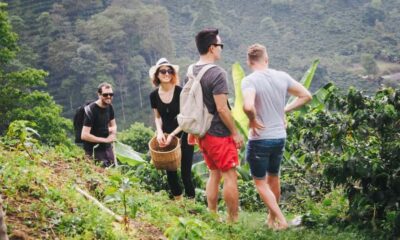
Kilimanjaro: Maasai Village Visit, Waterfalls, & Coffee Tour
Read our review →Browse the lists this tour appears in