
Reviewed · ARUSHA TOURS
5 Days Group Camping Safari
The big appeal here is the sheer variety packed into five days: elephant country in Tarangire, tree-climbing lions and flamingos at Lake Manyara, the wide Serengeti, and a final game drive in Ngorongoro Crater. I like the small group limit of six, which gives you a better chance to ask questions and get a clear view from the vehicle. I also like that park fees, meals, camping, water, and a professional guide are included in the $1,350 price.
The trade-off is time on the road. Four parks in five days means some long transfers and only a short stay in each place. Camping also means you need to pack light and prepare for cold nights, with temperatures possibly dropping to around 5°C.
Key points at a glance
- Four major parks in five days: Visit Tarangire, Lake Manyara, Serengeti, and Ngorongoro Crater on one tightly planned route.
- Small groups of up to six: The limited vehicle capacity makes it easier to see, hear, and speak with your guide.
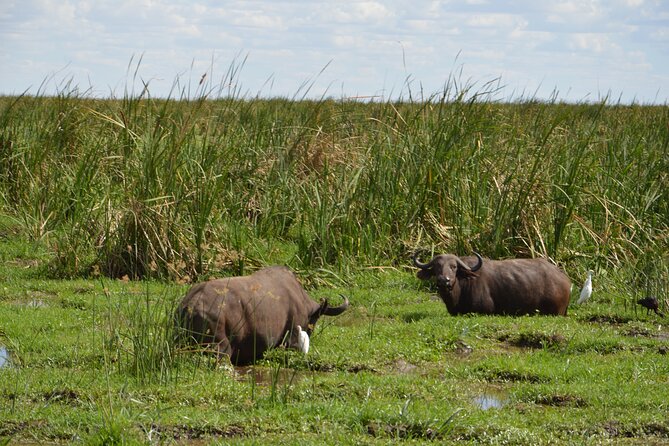
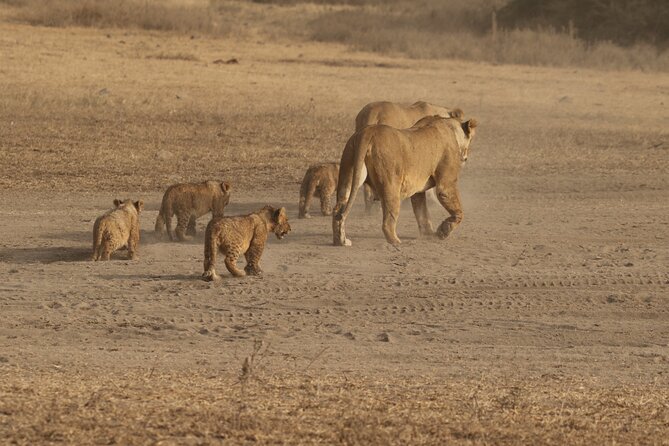
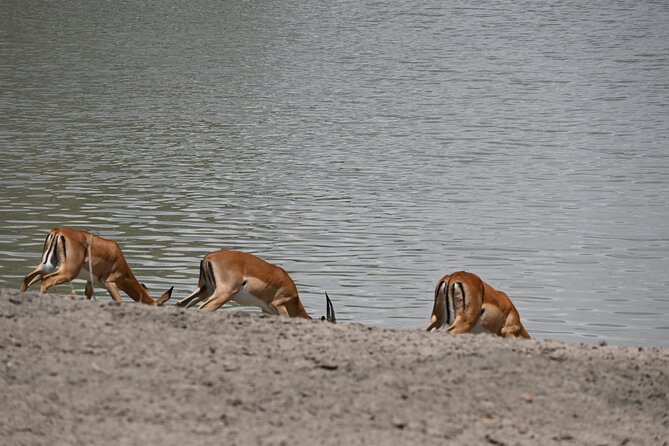
- Strong wildlife focus: Expect good chances for elephants, lions, giraffes, zebras, wildebeest, buffalo, flamingos, and possibly black rhino.
- Camping under African skies: Nights are spent at designated or private campsites, giving the trip a more direct connection with the bush.
- Guide quality matters here: Guide Emanuel received specific praise for patient driving and spotting a rare black rhino, while other feedback highlights excellent guiding across the trip.
- Pack for cold and dust: Neutral clothing, a warm jacket, mosquito repellent, binoculars, a towel, toilet paper, and a soft duffel will make the trip easier.
Four parks, one fast-moving safari
This is a classic northern Tanzania circuit, but the pace is brisk. In five days, you cover four of the country’s best-known wildlife areas, each with a different character.
Tarangire is known for large elephant herds and baobab trees. Lake Manyara brings forest, lake views, and a chance to see unusual tree-climbing lions. Serengeti offers the biggest sense of space and the possibility of migration season sightings. Ngorongoro Crater finishes the trip with dense wildlife viewing in a compact area.
I like this mix because you are not spending the whole safari in one type of setting. You get woodland, open plains, lake country, and the crater floor. The price also includes the costly basics that can add up quickly on a Tanzanian safari: park entrance fees, a 4×4 vehicle, guide service, meals, accommodation, and drinking water.
Still, this is not a slow, stay-put safari. You will transfer between parks, often on rough roads, and the itinerary gives you limited time to settle into any one area. If your top priority is the Serengeti, a longer trip with more nights there may suit you better. If you want a first taste of northern Tanzania and prefer to see several major parks, this route makes good sense.
More Safaris in Arusha
- Balloon Safari & Bush Breakfast in Serengeti – Miracle Experience
★ 5.0 · 1,646 reviews - 4 Days Group Camping Safari
★ 5.0 · 1,101 reviews - 5 Days Group Camping Safari
★ 5.0 · 730 reviews
Day 1: Elephants and baobabs in Tarangire
Your safari begins in Tarangire National Park, a fitting first stop because it offers some of Tanzania’s most memorable animal and plant life right away.
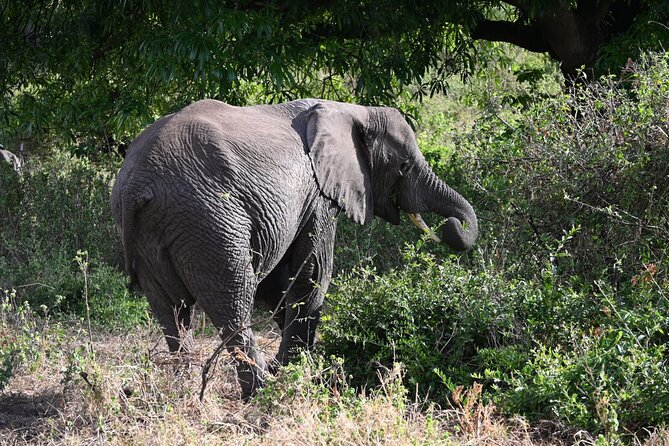
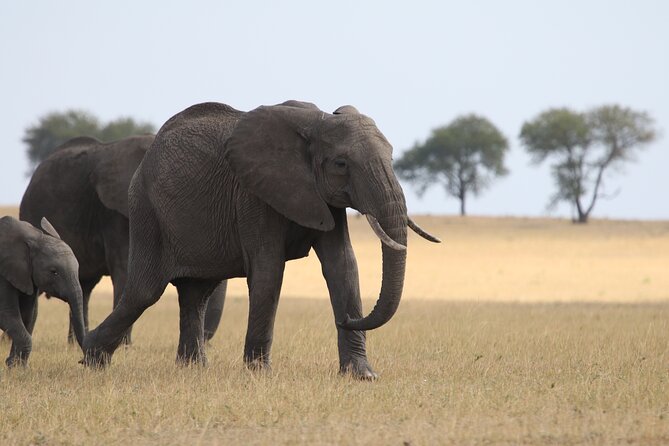
The park is especially famous for its elephants. You may see them moving in family groups, feeding near the road, or passing beneath the huge baobabs that give Tarangire much of its visual character. The park also supports lions, giraffes, zebras, and wildebeest, so your first game drive has plenty of variety.
The scenery here feels different from the open Serengeti. Tarangire’s trees and seasonal river areas create a more enclosed setting, and the baobabs give the park a distinctive shape. I would pay attention to the smaller details as well as the big animals: tracks, birdlife, and the way animals gather around water can make a game drive more rewarding.
You spend the night at a campsite surrounded by the sounds of the bush. That phrase should be taken literally. Camping gives you a closer sense of the setting than a lodge room, but it also means you should expect a simpler night and bring warm clothing. A jacket, thick socks, and a sweater are not optional luxuries here.
Day 2: Lake Manyara’s forest and flamingos
Lake Manyara National Park changes the mood of the trip. Its scenery includes lake country and wooded areas, with a different mix of wildlife from Tarangire.
The park is known for elephants, flamingos, and tree-climbing lions. Seeing a lion resting in a tree is never guaranteed, but it is one of the park’s signature possibilities. Flamingos can add a splash of color near the lake, although animal sightings always depend on conditions and timing.
I like the contrast between Manyara and Tarangire. The first day centers on dry-country scenery, elephants, and baobabs. The second gives you a chance to look up into the trees and across the water. That change helps keep a short safari from feeling repetitive.
After the game drive, you spend another night at a designated campsite. Meals are included, and mineral water is provided during the safari. You should still bring a reusable bottle if you prefer one, although the supplied details confirm mineral water rather than a refill system.
Day 3: The Serengeti and the wide-open plains
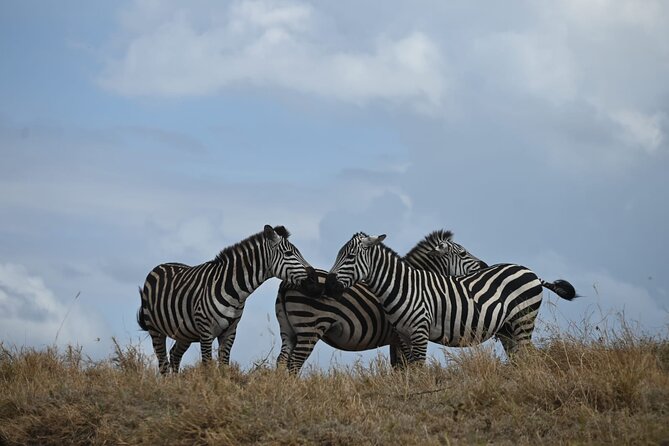
The Serengeti is the main event for many people, and it earns its reputation through scale. The park’s open plains make it easier to understand the famous images of wildebeest, zebras, lions, and other animals moving across seemingly endless grassland.
If your dates line up with the Great Migration, you might see one of nature’s most famous wildlife movements. The route does not promise a particular migration sighting, though, and you should think of it as a seasonal possibility rather than a guarantee. The Serengeti is still worthwhile outside the migration period because resident wildlife remains here throughout the year.
This is also your best chance on the itinerary to look for the Big Five in one broad area. Lions are a realistic possibility, along with elephants and buffalo. A black rhino sighting is much less common, which makes the specific report of one seen during this trip especially notable. Your guide’s skill matters greatly in a park this large, where an experienced eye can spot an animal before you do.
The small group limit helps here. With no more than six participants, you are not sharing the vehicle with a large crowd, and your guide can respond to questions and sightings more easily. One guide named Emanuel was praised for patient driving and a sharp eye, including spotting a rare black rhino and a pair of lions. Guide assignments can vary, but that detail gives you a useful idea of the standard you should hope for.
You camp at a private campsite in the Serengeti. This is one of the trip’s most appealing parts. After a full day looking for animals, you are not simply leaving the park behind for a town hotel. You remain close to the sounds and open skies of the area.
The catch is that a Serengeti visit this short can feel compressed. You get an afternoon and the following morning rather than several full days. If the Serengeti is your lifelong goal, you may wish you had more time. If it is one part of a larger northern circuit, the schedule gives you a worthwhile introduction.
More camping safaris in Arusha:
- 3 Days Serengeti & Ngorongoro Group Camping Safari
★ 5.0 · 574 reviews - 2 Days Tarangire and Ngorongoro Group Camping Safari
★ 5.0 · 146 reviews - 6 Days Tanzania Budget Camping Safari
★ 5.0 · 145 reviews - 3 Day Serengeti National Park & Ngorongoro Crater Camping Safari
★ 5.0 · 142 reviews
Day 4: One last Serengeti drive, then Ngorongoro highlands
Day four begins with an early morning game drive in the Serengeti. Early starts are useful because animals may be active before the heat of the day, and this is your last chance to search the park before moving on.
After the drive, you transfer toward the Ngorongoro Conservation Area. The journey brings a change in scenery as you leave the open plains and head into the highlands. The drive itself is part of the experience, but it also takes time, so you should be ready for a long day.
You camp for the night before the final crater visit. This overnight stop helps position you for an early game drive on day five. It also means the safari keeps moving almost every day, with little time for a relaxed morning or an unplanned break.
This is where expectations matter. A five-day camping safari is built around wildlife and coverage, not a leisurely holiday. You will gain access to four major parks, but you will also spend time riding in the vehicle and changing campsites.
Day 5: Ngorongoro Crater and the return to Arusha
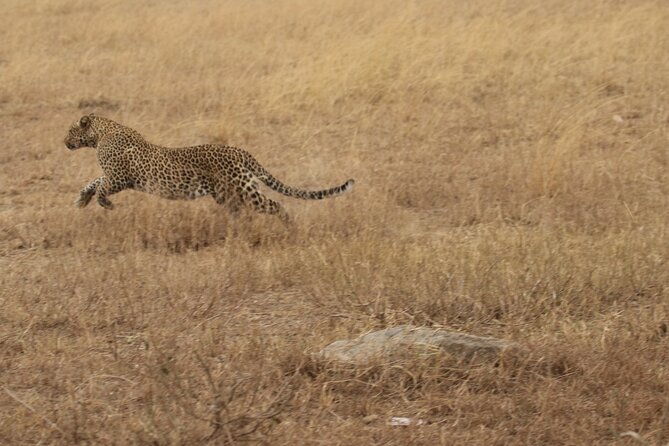
The final game drive takes place in Ngorongoro Crater, one of the most concentrated wildlife areas on the route.
The crater floor supports lions, elephants, buffalo, and the rare black rhino. Its enclosed setting can make wildlife viewing feel especially productive because animals live within a defined area rather than a vast open park. That does not mean sightings are automatic, but the crater is a strong place to finish a short safari.
You have a morning game drive, followed by a picnic lunch and the return journey to Arusha. The timing gives you a final wildlife session before heading back, though you should expect the trip to end after a full day rather than at a leisurely midday.
Ngorongoro is a satisfying finale because it offers a different experience from the Serengeti. The Serengeti gives you distance and scale. The crater gives you a compact setting with a high chance of seeing several species in one outing. If you are hoping for a black rhino, this is one of the places where your guide may focus attention, though no sighting can be promised.
Camping, meals, and the practical side
Camping is central to the experience, not just a cheaper substitute for a lodge. You sleep at designated or private campsites, including a site in the Serengeti, and spend your evenings under the African sky.
The supplied details do not describe tent size, beds, showers, or toilet arrangements, so I would ask Suricata Safaris for those specifics before paying. Bring a towel and toilet paper, as both are specifically recommended. That advice tells you to expect practical campsite facilities rather than hotel-style service.
Meals are included, and the food received strong praise. That matters on a busy safari day, when you need a dependable meal without arranging restaurants between game drives. Mineral water is also included during the safari.
The luggage limit is 10 kilograms per person. Use a soft duffel rather than a hard suitcase, and ask the company to store extra luggage at your hotel in Arusha. The storage option is useful if you are combining the safari with a longer trip and do not want to carry every item into the parks.
Pack neutral colors such as beige, white, and green. Bright colors are discouraged, and feeding or touching animals is not allowed. A high-mint mosquito repellent is recommended, along with a warm sweater, jacket, and socks for nights that can reach around 5°C.
Binoculars are worth bringing. The guide has one pair to share in the vehicle, but a shared pair is not as convenient as your own, especially when several people want to watch the same animal.
The vehicle and group size
Transportation is by 4×4 safari vehicle, which is the right kind of transport for rough park roads and long transfers. Your English-speaking guide drives and leads the game viewing, so the quality of that person will shape much of the trip.
The group is limited to six participants. I consider that a real benefit at this price. A smaller group means less crowding, easier conversation, and a better chance of getting help with camera angles or animal identification.
It does not mean the vehicle will feel spacious at every moment. You are still spending many hours seated in a safari vehicle, and the route includes several transfers. Anyone with serious back problems should avoid this trip, and it is not suitable for wheelchair users, babies under one year, or people over 95.
Pickup is included in Arusha. A company representative meets you at your accommodation reception with a sign bearing your name and gives you a short introduction. That is a simple detail, but it removes uncertainty at the beginning of a busy trip.
Is $1,350 a fair price?
At $1,350 per person, this is not a bargain-basement outing, but it offers a solid bundle for a five-day northern Tanzania safari. Park fees alone are a significant part of the cost of visiting these protected areas, and this package also includes the 4×4, guide, meals, water, and accommodation.
The value is strongest if you want a straightforward package and do not want to arrange each element separately. You also get access to four major parks in one trip, plus a small group rather than a large vehicle.
The value is weaker if you want lots of free time or several nights in one park. The itinerary covers a great deal of ground, and some of your budget is effectively paying for transfers between parks. A longer safari may cost more but give you better odds of seeing the Serengeti at a slower pace.
The high rating of 4.7 from three ratings is encouraging, and the strongest praise focuses on the areas that matter most: guiding, wildlife spotting, food, organization, and vehicle comfort. One booking received four stars rather than five, so I would treat the score as a good sign, not a guarantee that every detail will suit every person.
Who should book this safari?
I would recommend this trip to a first-time safari visitor who wants the major northern Tanzania parks in one efficient package. It also suits people who enjoy camping, like meeting a small group, and want meals and park fees handled in advance.
It is a good fit if you want a strong chance of seeing classic animals without paying for a private vehicle. The Big Five are possible, and the route offers especially good prospects for elephants, lions, giraffes, zebras, wildebeest, and buffalo.
I would think twice if you dislike early starts, rough roads, cold nights, or frequent changes of camp. The schedule is active, and the inclusion of four parks means you cannot expect every stop to receive equal time.
The safari is also not a good choice for anyone with back problems or limited mobility. The company lists it as unsuitable for wheelchair users, babies under one year, and people over 95.
Cancellation and planning notes
You can cancel up to 24 hours in advance for a full refund, and the reserve-now, pay-later option keeps your plans flexible. Availability controls the starting time, so check the schedule before building flights around the safari.
International and domestic flights, visas, and travel insurance are not included. You should arrange those separately and make sure your insurance covers the type of safari and camping activities involved.
Should you book the five-day camping safari?
Book it if you want maximum park variety in a short trip, a small group of no more than six, and a package that includes the major safari costs. The combination of Tarangire elephants, Manyara’s lake country, Serengeti plains, and Ngorongoro wildlife gives you a broad taste of northern Tanzania.
Before booking, ask about the exact camping setup, shower and toilet facilities, the assigned guide, and the daily driving times. If you are comfortable with a quick pace and simple nights, $1,350 offers a practical way to see four famous parks. If your dream is several unhurried days in the Serengeti, spend more time there and choose a longer itinerary instead.
FAQ
What parks does the five-day safari visit?
The safari visits Tarangire National Park, Lake Manyara National Park, Serengeti National Park, and the Ngorongoro Conservation Area, including a game drive in Ngorongoro Crater.
What is included in the price?
The price includes 4×4 safari transportation, a professional English-speaking guide, park entrance fees, mineral water during the safari, accommodation, and meals.
How large is the group?
The safari is limited to six participants.
Is pickup from Arusha included?
Yes. Pickup is included, and a company representative meets you at the reception with a sign or board showing your name.
What should I pack?
Bring neutral-colored clothing, a warm sweater, socks, a jacket, mosquito repellent with a high mint concentration, binoculars if you have them, a towel, toilet paper, and a soft duffel. The luggage limit is 10 kilograms per person.
Can I cancel the safari?
Yes. You can cancel up to 24 hours in advance for a full refund. You can also reserve now and pay later.
More five day trips in Arusha
- 5-Day Highlights mid-Range Crater, Serengeti, Tarangire
★ 5.0 · 296 reviews - 5 Days Camping Tarangire, Serengeti & Ngorongoro crater & Visiting Maasai
★ 5.0 · 229 reviews - Tanzania Simba Safari – 5 Days
★ 5.0 · 217 reviews - 5 Days Budget Private Safari, Tanzania
★ 5.0 · 191 reviews
Newly listed around Arusha
- 5-Day Private Safari Tour in Tanzania’s Wildlife★ 5.0 · 3 reviews
- 3 Days private safari Tarangire ,Ngorongroro crater &Manyara★ 5.0 · 3 reviews
- 3 Day Sharing Safari – Manyara, Ngorongoro Crater and Tarangire National Parks★ 5.0 · 3 reviews
- Tarangire National Park Day Trip★ 5.0 · 3 reviews
- 2 Days Tarangire and Ngorongoro Crater Tour★ 5.0 · 3 reviews
- 6 -Day Tarangire, Manyara, Serengeti & Ngorongoro★ 5.0 · 3 reviews
- Private 4×4 Vitara Safari in Arusha National Park★ 5.0 · 3 reviews
- 7-Day Mt. Kilimanjaro Hiking: Machame Route★ 5.0 · 3 reviews
Arusha Tours, compared.

Balloon Safari & Bush Breakfast in Serengeti – Miracle Experience
Read our review →






Browse the lists this tour appears in