
Reviewed · STONE TOWN TOURS
Stone Town Guided Historical Walking City Tour
Stone Town is best understood on foot, one tight alley at a time. This private, roughly three-hour walk takes you from the seafront and Old Fort to spice stalls, carved Zanzibar doors, Freddie Mercury’s former home, and the old slave market. I like the small-group format and the way the route mixes grand landmarks with ordinary street life.
I also like that guides such as Osman and Othman have been praised for clear explanations, patience, and a good sense of humor. The main caution is consistency: a few experiences have included late starts, rushed walking, quiet speech, or buildings closed for restoration. Confirm the meeting point and start time before you set out.
Key points at a glance

- Private three-hour walk: Your group explores with its own licensed local guide rather than joining a large crowd.
- A serious look at Zanzibar’s past: The old slave market and Anglican Cathedral offer the most sobering part of the route.
- Markets bookend the experience: Forodhani Gardens begins the walk, while Darajani Market closes it with food, goods, and local activity.
- Freddie Mercury connection: You see the exterior of the house linked with his childhood, with interior entry available for an extra fee.
- Strong guide potential: Osman, Othman, and other local guides have been praised for patient explanations and flexible service.
- Good value for first-time visitors: At $32.90 per person, the tour is most useful if you want context, orientation, and several major sights in one outing.
Why Stone Town works best with a guide
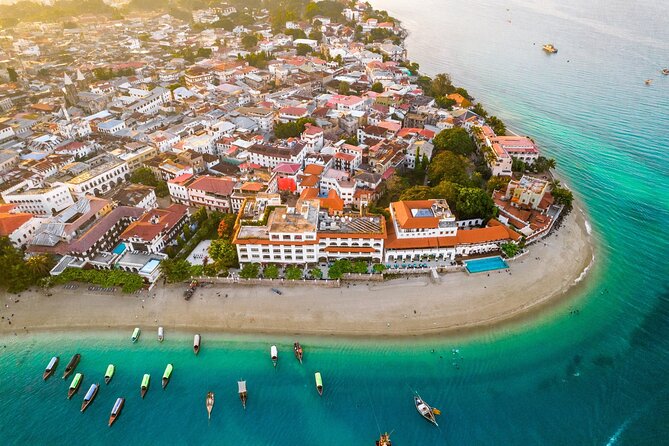
Stone Town can look confusing at first. Streets twist between coral-stone houses, shops, mosques, courtyards, and old palaces. A map helps, but it will not explain why one door is covered with brass studs, why a palace faces the sea, or how Zanzibar became a meeting point for African, Arab, Indian, and European cultures.
A local guide gives those details a place in the story. The route is not only a parade of old buildings. It connects the Sultanate, the Omani influence, the slave trade, colonial rule, rail transport, music, and present-day market life.
This is also a useful first activity after arriving in Zanzibar. You finish near the same central area where you begin, so you can return later to a market, restaurant, museum, or seafront spot you noticed during the walk. The tour is especially helpful if you prefer to ask questions as you go rather than read plaques on your own.
The private format matters. Your group can ask for more time at the market, pause for photos, or request extra explanation about a subject that interests you. Past guide experiences have varied, so I would still tell your guide at the start whether you want a history-heavy walk, more time for photography, or help understanding local life.
More History Tours in Zanzibar
- Zanzibar: Stone Town Historical Cultural Walking Guided Tour
★ 4.5 · 179 reviews - Stone Town Historical Walking Tour
★ 5.0 · 143 reviews - Stone Town’s Hidden History: Private Guided Walking Tour
★ 4.6 · 94 reviews
Starting at Forodhani Gardens
The stated meeting point is the People’s Palace Museum on Mizingani Road, near the seafront. From there, the route includes Forodhani Gardens, a waterfront park opposite the House of Wonders and beside the Old Fort.
Forodhani has two personalities. During the day, it is a place to stroll and get your first feel for Stone Town’s coastal setting. In the evening, food stalls bring the park to life as the Forodhani Night Market. The supplied timing notes indicate that a morning or afternoon tour sees the gardens in their quieter daytime form, while an evening visit may catch the market atmosphere.
The stop is listed at about 20 minutes. That is enough for an introduction and photographs, but not a full food tour. If you are hoping to eat at the night market, ask how the start time lines up with sunset and the evening stalls. Do not assume a daytime booking will include the full night market scene.
The House of Wonders and the Old Fort
The House of Wonders, also called Bayt al-Ajāʾib, is one of Stone Town’s most recognizable buildings. It faces Forodhani Gardens on Mizingani Road and is described as the largest and tallest structure in the old town.
Its position makes sense once you see it. The building sits between the Old Fort and the former Sultan’s Palace, now the Palace Museum area, with the seafront directly in front. A guide can explain how the building fits into the era of Sultan Barghash bin Said, who commissioned it during his reign.
You spend about 20 minutes here, and admission is not included. The practical point is that this is primarily an exterior and historical stop unless you arrange entry separately. Restoration work or restricted access can affect what you see, so do not plan the tour around a guaranteed interior visit.
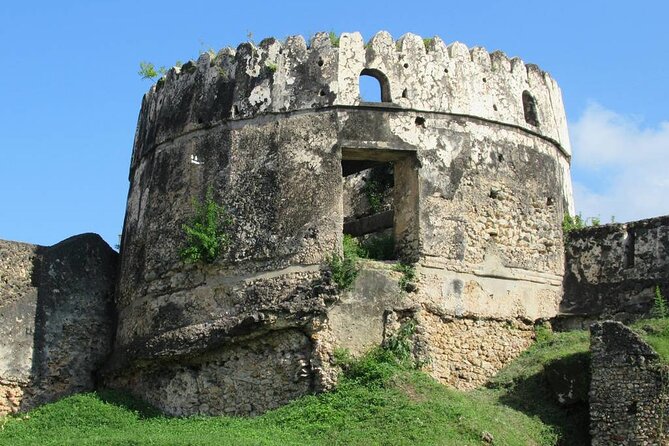
Next comes the Old Fort, or Ngome Kongwe. This is included and receives another 20-minute visit. Omani Arabs built it after the Portuguese were expelled in 1699. Later, it served as a garrison and prison, then as a railway terminal from 1905 to 1928.
The fort is a useful place to see how Stone Town changed over time. It was not built simply as a monument. Its roles shifted with Zanzibar’s political and transport needs. Today, its thick walls and central location make it one of the easiest landmarks to combine with the seafront and market areas.
Give yourself sturdy shoes here and throughout the tour. Three hours on Stone Town’s narrow streets is manageable for most people, but the walk is more enjoyable when you are not worrying about footwear or heat.
A short stop at Freddie Mercury’s Zanzibar home

Freddie Mercury was born in Zanzibar in 1946 as Farrokh Bulsara. His family lived in Stone Town while his father worked in the British colonial service, and the tour points out the exterior of the house associated with his childhood.
This is a quick stop, listed at about 15 minutes. You will learn about his early connection to Zanzibar and have time for a photograph outside. Entry into the house is optional and requires an extra payment, so the standard tour does not include a full museum visit.
I see this as a good cultural footnote rather than the main reason to book the walk. Queen fans will value it more than visitors with little interest in music. The short visit also means the guide can keep the route moving instead of turning a historical walking tour into a single-subject attraction.
Ask before the tour begins what the optional entry costs and whether the interior is open that day. That simple check can prevent confusion over extra charges.
More Walking Tours in Zanzibar
- Stone Town Private Walking Tour
★ 5.0 · 371 reviews - Zanzibar: 3 Hours Private Stone Town walking Tour with Guide
★ 4.6 · 301 reviews - Stonetown: Food Markets and Street Food Walking Tour
★ 4.7 · 151 reviews - Zanzibar Stone Town Walking Tour
★ 5.0 · 145 reviews
Walking the old streets and reading the doors

The longest section is a 45-minute walk through Stone Town itself. This is where the tour becomes less about individual sights and more about how the town fits together.
You pass street shops, small businesses, old buildings, and souvenir stalls. The guide also explains Zanzibar’s famous doors, including the details and symbols carved or fitted into them. These doors are not just attractive backdrops. They reflect the town’s mixed cultural influences and the status, taste, and wealth of the people who commissioned them.
This part can feel rushed if the guide tries to cover too many buildings. One past assessment described the walk as fast and noted that some buildings were left out. Restoration work can also block access or spoil the view of a facade. If you want to stop for photographs, say so early. A private group gives you more room to set the pace than a large shared tour.
Shopping is built into the route, but it is not a dedicated shopping excursion. You can browse souvenirs and local items, yet you should not expect long negotiations at every stall. The value here is the combination of movement, explanation, and orientation. By the end, you should have a better sense of which lanes and shops you want to revisit independently.
The old slave market and Anglican Cathedral

The stop at the former slave market is the most serious part of the tour. It takes about 20 minutes and is included.
The site, on Mkunazini Street, recalls the buying and selling of enslaved people in Stone Town. A guide explains how the trade operated and how it affected Zanzibar and the wider region. This is not a light sightseeing stop, and it should not be treated as one. Allow yourself time to listen rather than rushing through for photographs.
The Anglican Cathedral is connected with the former market site and adds another layer to the visit. The contrast between the religious building and the location of the old market makes the stop especially powerful. It gives you a chance to think about how places are remembered, marked, and presented today.
Some visitors have found this to be the strongest part of the walk because the guide’s explanation gives the site needed context. Others have felt that the overall tour offered too few details beyond this area. That difference may come down to the guide and the questions you ask. If this subject matters to you, tell your guide that you want a careful explanation rather than a quick stop.
Ending at Darajani Market

The walk ends with about 30 minutes at Darajani Bazaar, also called Estella Market or Marikiti Kuu. It is near the center of Stone Town and has operated since 1904, when Bomanjee Maneckjee built the market for Sultan Ali bin Hamud.
This is the most practical stop on the route. You see the daily trade in seafood, meat, fruit, grains, and spices, along with stalls and shops selling clothing, electronics, and other goods. The market is not arranged for sightseeing comfort. It can be crowded, noisy, and full of strong smells, which is precisely why it offers a more direct look at everyday commerce than a polished souvenir street.
Keep your belongings secure and stay close enough to hear your guide. You may want to buy spices or small gifts, but compare prices and remember that this is a working market first.
Ending here is convenient because you can continue exploring on your own after the official walk. The formal activity returns to the meeting point, but ask your guide about the exact end procedure if you want to remain at the market afterward. The written details identify the start and end as the same meeting point, while some past arrangements have included hotel pickup or airport drop-off. Treat those transport services as something to confirm, not as a standard part of this booking.
Guide quality and communication
The guide can make or break this experience. The tour promises a licensed local guide fluent in multiple languages, and several named guides have received warm praise for their patience, professionalism, humor, and command of Zanzibar’s past.
Osman has been described as professional, patient, and well informed. Othman has been praised for detailed explanations and a friendly sense of humor. Another guide was able to explain the city in an interesting way and answer questions clearly.
The picture is not perfect. One account described a guide who spoke quietly and with a strong accent, making parts of the explanation difficult to follow. Another found the guide friendly but not enthusiastic enough, while a separate experience felt too fast and missed some buildings.
Here is how I would improve your odds of a good walk:
- Tell the guide what interests you before leaving the meeting point.
- Ask for names, dates, and explanations when a building catches your eye.
- Speak up if the pace is too quick or the voice is hard to hear.
- Confirm which optional admissions cost extra.
- If a building is closed for restoration, ask what can be seen from outside and why it matters.
The operator has also shown flexibility in arranging changes and responding through WhatsApp. That is useful for complicated schedules, but punctuality has not been perfect in every reported experience. Arrive at the meeting point with a clear plan and contact details in hand.
Is $32.90 a fair price?
At $32.90 per person, this is a reasonable price for a private, guided city walk if you value local explanation and want several major stops covered in one morning or afternoon.
You are paying for a private group, a licensed multilingual guide, about three hours of walking, and included entry at selected stops such as Forodhani Gardens, the Old Fort, and the former slave market area. The House of Wonders does not include admission, and the inside of Freddie Mercury’s house costs extra.
The value is weaker if you mainly want to wander, take photographs, and shop. Stone Town can be explored independently, and the tour does not promise extensive interior access. It is also less attractive if your guide gives brief explanations or the walk starts late.
For a first visit, I think the price makes sense because the route covers subjects that are difficult to piece together alone: Omani rule, the former slave market, palace architecture, the railway, Zanzibar doors, and modern market life. For a return visit, I would book only if you want a private guide or a more focused theme.
Timing, comfort, and who should book
The activity lasts about three hours, with the listed stops adding up to roughly that time. The walk is suited to most people, and it is near public transportation, but you should expect continuous movement through the old town rather than a ride between attractions.
Choose a morning start for cooler conditions and a calmer look at the streets. Choose a later start if you want the possibility of seeing Forodhani Night Market, but confirm the timing because the gardens are different before sunset.
This tour suits you best if:
- You are visiting Stone Town for the first time.
- You want history explained in plain language.
- You prefer a private group and the ability to ask questions.
- You want a broad introduction rather than a single museum visit.
- You are comfortable walking for three hours and handling busy market streets.
It may not suit you if you want a slow architectural photography session, guaranteed interior access, or a tour built around food tasting. The route is broad, and some stops are brief.
Free cancellation is available if you cancel at least 24 hours before the local start time. Changes made inside that window are not accepted, and poor weather may lead to another date or a full refund.
Should you book the Stone Town walk?
Book it if you want a structured first look at Zanzibar’s old capital, especially the former slave market, Old Fort, Darajani Market, and the city’s distinctive doors. The private format and strong guide examples make it more appealing than a standard large-group walk.
Before paying, confirm the exact meeting place, the guide’s name, the language, the start time, and any extra admission fees. If the company assigns Osman or Othman, you can reasonably expect a guide with a record of patient and detailed explanations, though no guide is guaranteed by the activity details.
I would book this as an orientation tour, not as a complete museum day. It gives you the framework. Afterward, you can return to the places that caught your attention and explore them at your own pace.
FAQ
How long does the Stone Town walking tour last?
The tour lasts approximately three hours.
Where does the tour begin?
The stated meeting point is the People’s Palace Museum at R5QR+X6C, Mizingani Road, Zanzibar, Tanzania.
Where does the activity end?
The activity ends back at the meeting point.
Is this a private tour?
Yes. Only your group participates in the activity.
Is admission to the House of Wonders included?
No. Admission to the House of Wonders is not included.
Is entry to Freddie Mercury’s house included?
No. The standard visit shows the exterior. Entry inside is optional and requires an additional fee.
What language does the guide speak?
The tour uses a licensed local guide fluent in multiple languages. You should confirm your preferred language when booking.
Can I cancel for a full refund?
Yes, if you cancel at least 24 hours before the experience start time. Cancellations made less than 24 hours before the start are not refunded.
More Stone Town walks
- Zanzibar: Stone Town, Spice Tour, Prison Island with Lunch
★ 4.4 · 1,219 reviews - Zanzibar: Prison Island, Stone Town, & Spice Farm Tour
★ 4.5 · 579 reviews - Zanzibar; Prison Island, Nakupenda, StoneTown Tour with BBQ
★ 4.3 · 457 reviews - Zanzibar: Stone Town, Spice tour & Prison Island with Lunch
★ 4.6 · 453 reviews
Newly listed around Zanzibar
- Zanzibar: Nungwi/Kendwa Beach Sunset Dhow Cruise with Fruits★ 3.4 · 3 reviews
- Prison Island, Sea Turtles, Rock Restaurant & Relax in Beach★ 4.6 · 3 reviews
- Starfish Beach; The Rock; Kuza Cave; Paje Beach; Salaam Cave Tour★ 4.5 · 3 reviews
- Zanzibar: Half-Day Spice Farm Tour,the flavours of Zanzibar★ 4.7 · 3 reviews
- Joazani forest & Spice farm with lunch★ 5.0 · 3 reviews
- Nakupenda Island Snorkeling Sea trip & Lunch W/Transfer -Zanzibar★ 4.0 · 3 reviews
- Mnemba Island Snorkeling and Dolphin tour★ 5.0 · 3 reviews
- Zanzibar:Jozani forest, Spice farm with Swahili Cuisine clas★ 4.2 · 3 reviews
Stone Town Tours, compared.






Full-Day Private Stone Town +Spice Farm and Prison Island Tour
Read our review →
Browse the lists this tour appears in