

Reviewed · STONE TOWN TOURS
Zanzibar Stone town historical walking tour with Mohamed
Stone Town makes the most sense on foot, and this tour puts its strongest sights into a manageable three-hour route. You’ll move from Freddie Mercury’s birthplace to former sultan palaces, an old fort, the slave-market site, and Darajani Bazaar, with Mohamed explaining the story as you go.
I like the private format, since you can ask questions and shape the walk around your interests. I also like the low $30 price, which gives you a local guide for three hours without locking you into a large group.
The main consideration is pace. Several stops last only five to 15 minutes, and the listed schedule does not leave much time for long museum visits, careful shopping, or an unhurried lunch. If you want a slow architectural study, you’ll need to ask Mohamed to adjust the route.
Key points at a glance
- Freddie Mercury’s Zanzibar connection: Begin with the house associated with Farouk Bulsara, the singer later known as Freddie Mercury.
- Seven compact historical stops: The route links palaces, a fort, a former hospital, a market, and the former slave market.
- A private three-hour walk: Your group receives Mohamed’s full attention, with scope to adjust the tour to your interests.
- Darajani Bazaar in daily use: See where fish, meat, fruit, spices, and vegetables are sold from morning into the evening.
- Practical price and timing: At $30 per person, the tour is good value for a private introduction, especially if you want orientation before exploring alone.
- Flexible booking options: Morning and afternoon departures are available, with hotel pickup and drop-off offered from various locations.
Why this Stone Town walk works well

Stone Town can feel confusing at first. Its lanes turn sharply, major buildings sit close together, and the most important stories are not always obvious from the street. A private walk with Mohamed gives you a basic map of the town and helps connect the buildings to Zanzibar’s sultanate, trade, religion, and later public life.
The tour is also a useful first look rather than a full museum day. The total duration is about three hours, but the scheduled stops add up to less than an hour. The rest of the time is for walking between them, hearing explanations, seeing the streets, and possibly shopping or arranging lunch.
That balance will suit you if you want history without spending an entire day indoors. It may feel too brief if you want to read every display or linger at each site.
The posted price is $30 per person. For a private tour, that is a reasonable way to buy local context and save yourself the trouble of planning a route. The value improves if you are traveling with one or two other people, since the experience remains private while the price is charged per person.
A small bottle of water is included. Breakfast, lunch, coffee, and tea are not included, and the terms also exclude all fees and taxes. The listed stops show free admission, but I would still confirm with Mohamed what is covered if you want to enter a museum or building rather than view it from outside.
More History Tours in Zanzibar
- Zanzibar: Stone Town Historical Cultural Walking Guided Tour
★ 4.5 · 179 reviews - Stone Town Historical Walking Tour
★ 5.0 · 143 reviews - Stone Town’s Hidden History: Private Guided Walking Tour
★ 4.6 · 94 reviews
Freddie Mercury’s birthplace and the old palace quarter
The first stop is Freddie Mercury Museum, described as the house where he was born. Mohamed explains that his birth name was Farouk Bulsara, and that his father came from Iran and his mother from India. The stop connects Stone Town to one of the city’s best-known modern cultural figures and gives the walk an easy, personal starting point.
The scheduled time is five minutes, so expect a short introduction rather than a long museum visit. If Freddie Mercury is a main reason you booked, tell Mohamed at the start. You may want to give this stop more time and shorten one of the others.
From there, the tour goes to the House of Wonders, or Beit-el-Ajaib. This former sultan’s palace was built by Sultan Barghash and became known as the House of Wonders because it was the first house in Zanzibar with electricity.
The building now serves as a museum. The planned stop is seven minutes, which is enough for an explanation and photographs, but not enough for a detailed look at the museum displays. I would treat this as an architectural and historical introduction unless you specifically arrange extra time.
The palace also helps explain the political importance of Stone Town. You are not simply looking at an old building. You are seeing a place tied to the sultans who shaped Zanzibar’s government and trade.
Old Fort and People’s Palace in seven-minute slices
The Old Fort, known locally as Ngome Kongwe, was built by Arabs for defense against the Portuguese. Today, it has a more public role and is used for festivals, including Sauti za Busara, the reggae festival, and the Zanzibar International Film Festival.
This is a short six-minute stop. The fort is best understood as a link between military history and present-day cultural events. Mohamed can give you the basic story, but you should not expect enough time for a detailed exploration of every section.
The People’s Palace Museum comes next. It was formerly a sultan’s palace and is now a people’s museum created to present Zanzibar’s history, culture, and traditions. It also serves as a center for education and research.
The visit is scheduled for seven minutes. That makes it useful for orientation, particularly if you are new to Zanzibar, but the time is tight for reading exhibits. If you care most about museum collections, ask whether the route can be changed to include a longer visit here.
I appreciate that the itinerary includes both former royal buildings and public cultural institutions. Together, they show how Stone Town’s grandest spaces have shifted from private royal use toward public education and cultural life.
The former slave market and Anglican Cathedral
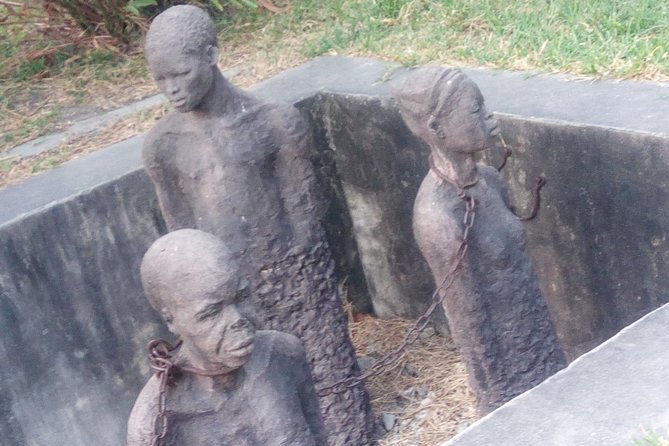
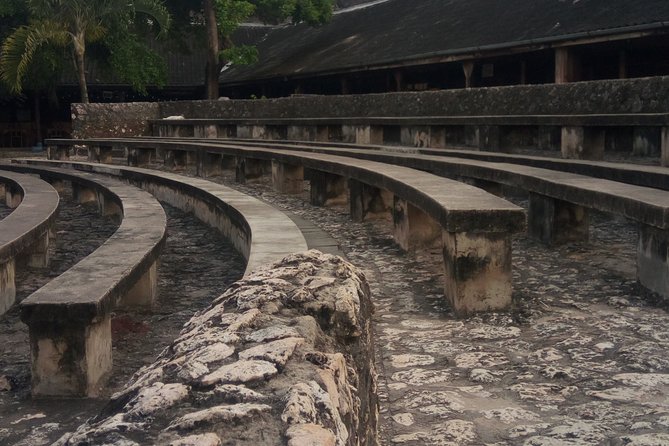
The most serious stop is the former slave market, now part of the Anglican Cathedral site. People were brought there from different parts of Africa and sold. The area is now preserved as a historical site.
The planned visit lasts 15 minutes, making it the longest stop on the route. That is appropriate. This part of Zanzibar’s past needs more than a quick photograph, and the extra time gives Mohamed room to explain what happened here.
You should expect this section to feel heavier than the palace and market stops. It is not decorative sightseeing. It is a place where Zanzibar’s role in the slave trade becomes concrete, and the setting calls for attention and respect.
The itinerary identifies the stop as Old Slave Market and Anglican Cathedral, so you can see both the former market site and the later religious landmark in the same area. Since entrance arrangements can vary, ask Mohamed whether the plan is to enter the cathedral, visit the historical area, or explain both from the surrounding site. The supplied details list the admission ticket as free, but all fees and taxes are generally excluded from the tour price.
More Walking Tours in Zanzibar
- Stone Town Private Walking Tour
★ 5.0 · 371 reviews - Zanzibar: 3 Hours Private Stone Town walking Tour with Guide
★ 4.6 · 301 reviews - Stonetown: Food Markets and Street Food Walking Tour
★ 4.7 · 151 reviews - Zanzibar Stone Town Walking Tour
★ 5.0 · 145 reviews
Darajani Bazaar: the most everyday part of the route
Darajani Bazaar is described as the old and first market in Zanzibar. It operates from morning into the evening and sells fish, meat, fruit, spices, vegetables, and other daily goods.
This is one of the most useful stops if you want to see Stone Town as a living town rather than a collection of monuments. The palace buildings tell you about rulers. Darajani shows you the daily business of buying food and supplies.
The scheduled visit is seven minutes, which is short for a market. You can still get your bearings and see the range of goods, but you may want more time if you enjoy food markets or plan to buy spices. The tour overview allows time to shop for souvenirs or purchase lunch, so speak up if you want to linger.
I would avoid planning a fixed lunch reservation immediately after the walk. The route includes shopping and lunch time as possibilities, but they are not included, and the exact amount of free time will depend on your guide and the interests of your group.
The Old Dispensary and Stone Town’s changing architecture
The final listed sight is the Old Dispensary, a former hospital built by Tharia Topan. It is now a historic building.
The stop lasts five minutes, so Mohamed will likely focus on the building’s purpose and appearance rather than offer a long architectural lecture. Even so, it rounds out the route nicely. You will have seen royal residences, a defensive fort, a religious site, a market, and a former hospital, all within one compact town.
Stone Town’s appeal comes partly from these changes in use. Buildings that once served sultans, soldiers, patients, or merchants now function as museums, festival spaces, markets, or historic landmarks. A guide helps you see those layers instead of treating every old facade as the same.
What Mohamed’s private guiding adds
A private tour matters most in Stone Town because you can ask for the kind of explanation you actually want. You might care about Freddie Mercury, sultan history, architecture, the slave trade, markets, or shopping. Mohamed can focus the three hours rather than follow a fixed group script.
The tour information identifies Mohamed as the guide, and feedback about the experience describes him as punctual and decent, even on a booking made only the night before. That is useful if your plans are changing quickly, though last-minute availability should never be assumed.
The tour offers several morning and afternoon departure times. An early departure may be more comfortable if you want to avoid the strongest heat, while an afternoon walk may fit better around a morning at the beach. The exact departure choice is one of the practical advantages here.
Hotel pickup and drop-off are offered from various locations, but the stated meeting point is the Old Fort on Mizingani Road, and the activity ends back at the meeting point. Because those details appear together, I would confirm your pickup arrangement before booking and not assume every hotel transfer is automatic.
Walking comfort, group size, and what to bring
This is a walking tour through a historic town. The available information says most travelers can participate, service animals are allowed, and the meeting area is near public transportation. It does not give a precise walking distance or promise a particular surface condition, so wear comfortable shoes and bring sun protection.
The private format means only your group participates. That gives you more control over pauses, questions, and the balance between monuments and shopping. It also means the quality of the experience depends heavily on how clearly you explain your priorities at the beginning.
Bring some money if you want lunch or souvenirs. Those costs are separate from the $30 tour price. The included water is helpful, but one small bottle may not be enough for everyone during a warm three-hour walk, so plan accordingly.
All listed stop admission tickets are marked free. Still, the general terms say fees and taxes are not included, so check before booking if you expect any paid entry, food, drinks, or extra purchases.
Who should book this Stone Town experience
I would recommend this tour to a first-time visitor who wants a clear introduction to Stone Town without committing to a full-day program. It is also a good fit for couples, families, and small groups who prefer to ask questions privately and set their own pace.
The route suits you if you want a mix of famous names and ordinary city life. Freddie Mercury’s birthplace and the House of Wonders provide recognizable landmarks. The former slave market gives the walk historical weight. Darajani Bazaar supplies the daily local scene.
You may want a different arrangement if your priority is extensive museum time. The short stop lengths favor a broad overview. Likewise, if you mainly want free time for shopping or lunch, tell Mohamed early so the historical stops do not consume the entire schedule.
The current score is 4.7 out of 5 from six posted ratings. That is encouraging, but it is still a small sample, so I would place more weight on the practical strengths: private guiding, punctual service noted in the feedback, flexible departure times, and a well-chosen central route.
Cancellation and booking details worth knowing
You receive confirmation at booking. Free cancellation is available if you cancel at least 24 hours before the local start time. Cancellations or changes made inside that 24-hour window are not accepted for a refund.
The experience depends on good weather. If poor weather forces cancellation, you are offered another date or a full refund. That policy is sensible for a walking tour, but it makes it important to check the forecast before the final cancellation deadline.
Should you book Mohamed’s Stone Town walk?
Book it if you want a private, affordable introduction to Stone Town, especially on your first day in Zanzibar. Three hours is enough to connect the main landmarks, hear the essential stories, and get a feel for the market before exploring independently.
I would book with two requests: confirm the hotel pickup details, and tell Mohamed which stops deserve extra time. At $30 per person, this is a strong value for a private orientation, but it works best when you accept its limits. It is a guided overview, not a slow museum tour or a dedicated food-and-shopping excursion.
FAQ
How long does the Zanzibar Stone Town tour last?
The walking tour lasts approximately three hours.
Who is the guide?
The guide is Mohamed, and the experience is provided by Africa’s Home Tours & Safaris.
Is this a private tour?
Yes. Only your group participates, so you receive the guide’s attention without joining a larger group.
Where does the tour start and finish?
The stated meeting point is the Old Fort on Mizingani Road in Zanzibar. The activity ends back at the meeting point.
Are food and drinks included?
A small bottle of water is included. Breakfast, lunch, coffee, and tea are not included.
What is the cancellation policy?
You can cancel at least 24 hours before the local start time for a full refund. If poor weather cancels the experience, you are offered a different date or a full refund.
More Stone Town walks
- Zanzibar: Stone Town, Spice Tour, Prison Island with Lunch
★ 4.4 · 1,219 reviews - Zanzibar: Prison Island, Stone Town, & Spice Farm Tour
★ 4.5 · 579 reviews - Zanzibar; Prison Island, Nakupenda, StoneTown Tour with BBQ
★ 4.3 · 457 reviews - Zanzibar: Stone Town, Spice tour & Prison Island with Lunch
★ 4.6 · 453 reviews
Newly listed around Zanzibar
- Zanzibar: Nungwi/Kendwa Beach Sunset Dhow Cruise with Fruits★ 3.4 · 3 reviews
- Prison Island, Sea Turtles, Rock Restaurant & Relax in Beach★ 4.6 · 3 reviews
- Starfish Beach; The Rock; Kuza Cave; Paje Beach; Salaam Cave Tour★ 4.5 · 3 reviews
- Zanzibar: Half-Day Spice Farm Tour,the flavours of Zanzibar★ 4.7 · 3 reviews
- Joazani forest & Spice farm with lunch★ 5.0 · 3 reviews
- Nakupenda Island Snorkeling Sea trip & Lunch W/Transfer -Zanzibar★ 4.0 · 3 reviews
- Mnemba Island Snorkeling and Dolphin tour★ 5.0 · 3 reviews
- Zanzibar:Jozani forest, Spice farm with Swahili Cuisine clas★ 4.2 · 3 reviews
Stone Town Tours, compared.






Full-Day Private Stone Town +Spice Farm and Prison Island Tour
Read our review →
Browse the lists this tour appears in