
Reviewed · MOSHI & KILIMANJARO TOURS
Pedal power the villages on foothills of Mt. Kilimanjaro
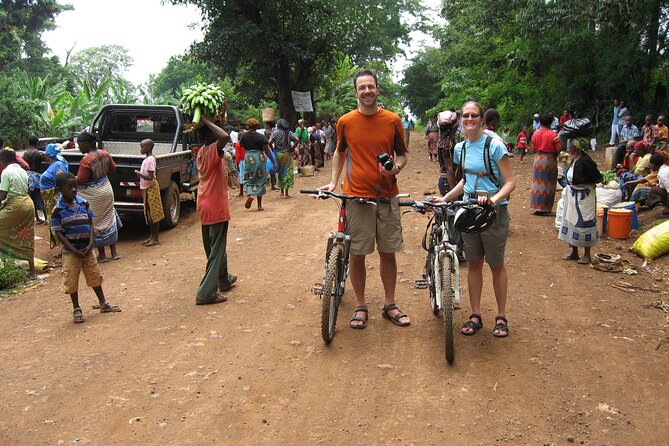
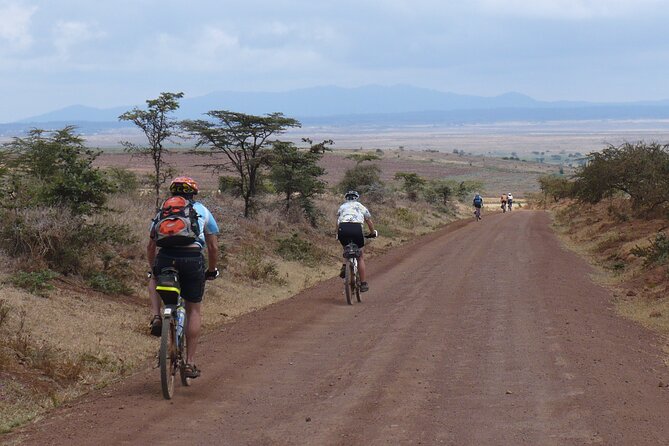
The best part of this Moshi cycling tour is that it takes you away from the usual safari route and into the working villages beneath Mt. Kilimanjaro. You pedal through banana and coffee farms, stop at local centers and markets, and learn how the Chagga people live on these fertile foothills.
I like the steady mix of riding and cultural stops, and I like that your fee includes a mountain bike, helmet, guide, water, and lunch. Guides such as Sait and Charles bring a personal touch, with Charles especially noted for explaining Tanzanian history, tribal culture, coffee, and Kilimanjaro legends. The main catch is fitness: this is not a gentle town ride, and private transportation is not included.
Key points at a glance
- Ride through working Chagga villages: You pass banana and coffee farms rather than simply viewing Kilimanjaro from a distance.
- Meet local life along the way: Stops can include village centers, markets, and a local school.
- Learn about Tanzanian coffee at Mweka: The plantation visit adds useful context to one of the region’s best-known products.
- Bring intermediate cycling ability: The tour lasts about five to six hours and requires a moderate level of fitness.
- Lunch and water are included: You receive a lunch box and one liter of bottled water, useful on a warm ride.
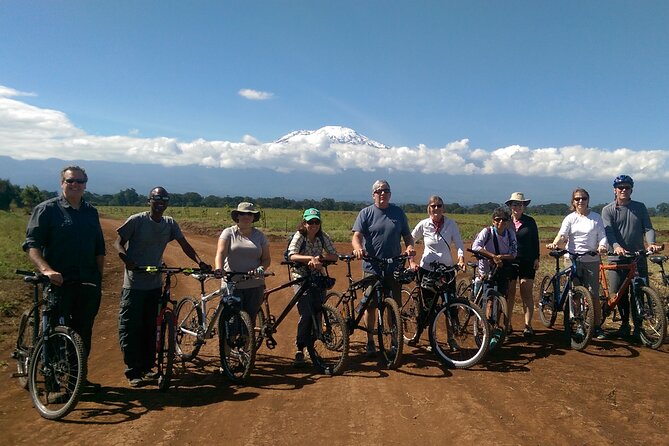
- A private group experience: Only your own party participates, with a mountain bike guide leading the outing.
Why this ride gives you a closer look at Kilimanjaro
Moshi is often treated as a staging point for climbing Mt. Kilimanjaro. That is a mistake if you have an extra day. The lower slopes are home to farms, schools, markets, and villages where daily life continues under the mountain’s shadow.
This tour lets you see that setting at bicycle speed. You have time to notice the farm paths, stop to listen, and ask questions. A vehicle can get you from one place to another, but a bicycle makes the distance part of the experience.
The route focuses on Kibosho Magharibi and Mweka, two areas on the Kilimanjaro foothills. The ride is not presented as a summit view excursion, and you should not book it only because you expect clear mountain photographs. Weather can affect visibility, and the emphasis is on villages, coffee, Chagga culture, and local history.
That focus makes the outing a good companion to a safari or Kilimanjaro climb. You are not just looking at northern Tanzania. You are learning how people use the land.
A few more Moshi & Kilimanjaro days to compare
- Kilimanjaro climb by Lemosho Route (7-day)
★ 5.0 · 651 reviews - Safari Serengeti And Ngorongoro
★ 5.0 · 288 reviews - Kilimanjaro climb, Machame Route (7-day)
★ 5.0 · 262 reviews
Starting near Moshi and getting organized
The listed starting point is Mr. Price Village on Kilimanjaro Road. The tour runs from about 8:30 AM to 2:30 PM, giving you a half-day program with enough time for riding and several stops.
Pickup is offered in the tour details, but private transportation is also listed as not included. You should confirm the exact pickup arrangement before booking. If you are meeting at the stated starting point, plan that part of the morning carefully rather than assuming a private vehicle will collect you from your hotel.
The tour ends in Moshi town at Coffee Union Cafe on Arusha Road, Lindi Street. That end point is useful if you want to continue exploring town or arrange your next activity from there.
Tell the operator your height when booking. The company uses that information to help provide a suitable bicycle size. This is a small detail, but it matters on a ride lasting several hours. A poorly sized bicycle can turn an enjoyable outing into a tiring one.
You receive a mountain bike and helmet. The exact bicycle model is not specified, so you should not expect a particular brand or suspension setup. The important point is that equipment is supplied, which saves you from arranging a rental separately.
Riding through Kibosho Magharibi
The longer portion of the route takes place around Kibosho Magharibi. You ride in and out of local villages and pass through banana and coffee farms. This is the part of the tour that gives you the strongest sense of place.
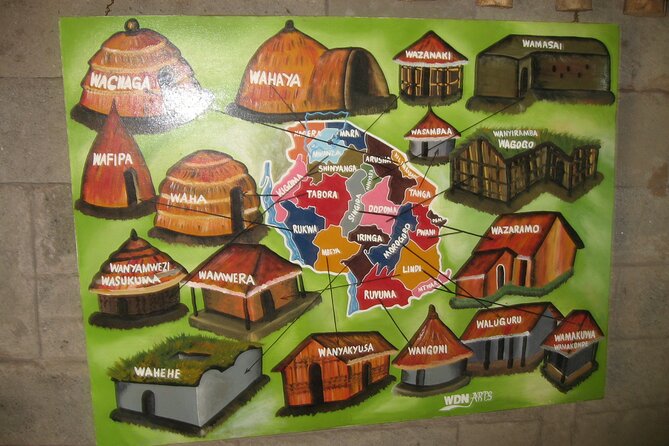
The Chagga have long lived on the slopes of Kilimanjaro, where the climate and volcanic soil support farming. The tour connects that setting with stories about the Chagga people, Tanzania’s past, coffee production, and the legends tied to the mountain.
Do not expect a polished attraction at every stop. The appeal is precisely that the route passes through ordinary village life. A village shopping center, school, or market may be modest, but each gives you a chance to see how the area functions beyond the major tourist sites.
The school stop can be especially interesting if you want a better understanding of community life. The supplied details do not promise a formal classroom visit or a meeting with teachers, so keep your expectations sensible. Treat it as a brief stop along the route, not a staged performance.
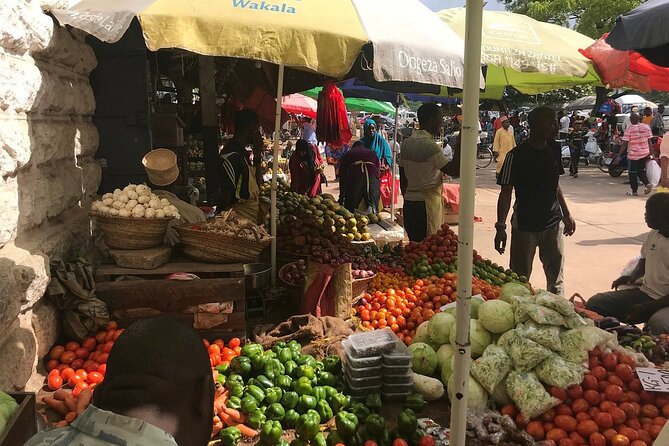
The same applies to markets and village centers. You may have a chance to observe local commerce and ask your guide about what you see. Shopping is not described as a major part of the tour, so bring curiosity rather than expecting a large craft market.
A guide is central here. Sait has been associated with this cycling experience and is described as patient, with a strong focus on showing the real life of Moshi. Charles is also associated with the operator and has been praised for explaining history, culture, and different Tanzanian tribes. Your guide may be one of them, but the booking information does not guarantee a particular person.
Coffee, bananas, and the working foothills
The farms are not just scenery between stops. They explain why people settled and continue to work on these slopes. Bananas and coffee are part of the local economy and help define the character of the foothills.
The banana farms also add variety to the ride. You move through cultivated areas, village roads, and local centers rather than staying on one type of track. The tour description does not give a technical route grade or a precise distance, so you should ask the operator about current conditions if you are concerned about hills or road surfaces.
The experience requires intermediate cycling skills and moderate fitness. That wording should guide your decision. You need to be comfortable riding for several hours and handling a mountain bike outside a smooth city setting. If you rarely cycle, this is probably not the right day tour for you.
The length is listed as five to six hours, with about three hours assigned to the Kibosho Magharibi portion and one hour to Mweka. The remaining time allows for riding between areas, stops, lunch, and the normal pace of a guided outing.
You do not need to be an athlete, but you should be prepared for a full morning of physical activity. Wear practical clothing, use sunscreen, and bring any personal items you need during the ride. The supplied information confirms one liter of bottled water and a lunch box, but not extra snacks or specialized cycling gear.
A change of scene while you are in Moshi & Kilimanjaro:
- Kilimanjaro Climbing Lemosho Route 8 Days.
★ 5.0 · 186 reviews - Climbing Kilimanjaro – Machame Route
★ 5.0 · 170 reviews - Climbing Kilimanjaro through 7 days Machame Route
★ 5.0 · 151 reviews - Kilimanjaro climb, Lemosho Route (8-day)
★ 5.0 · 148 reviews
What happens at Mweka coffee plantation
The Mweka stop lasts about an hour and centers on coffee plantation sightseeing. Here, the guide explains the history of coffee in Tanzania and its place in the area.
This stop gives the tour a useful change of pace. After riding through villages and farms, you get a closer look at one crop and the story behind it. If you drink coffee at home, this is a chance to connect that daily habit with the people and agriculture of northern Tanzania.
The details do not specify a full coffee tasting, roasting demonstration, or purchase opportunity. Do not book this expecting a dedicated coffee workshop. Instead, think of Mweka as an educational plantation visit folded into a broader cycling and culture tour.
The location also helps tie together the themes of the day. You see the farms, hear about Chagga life, and learn how coffee became important in Tanzania. The guide’s explanations will shape how much you get from this stop, so it is worth asking questions rather than simply taking photographs.
Lunch, water, and the value of the $55 price
At $55 per person, the price is reasonable for a private, guide-led half-day outing that includes a bicycle, helmet, lunch box, and one liter of bottled water. You are paying for more than a bicycle rental. The guide, route planning, cultural interpretation, and stops make up much of the value.
Lunch has received particular praise for being generous. The menu is not specified, so you should not assume a particular dish or special dietary arrangement. If you have dietary restrictions, ask in advance.
The price looks strongest for a small group that wants a private experience. Only your group participates, so you are not tied to the pace of a large bus or a mixed cycling class. A solo traveler may find the per-person price less attractive than a group of two or more, but the private format still offers flexibility.
Private transportation is not included, and that is the main extra cost to consider. Since pickup is mentioned but not clearly defined, confirm whether the operator can collect you, where that pickup begins, and whether an additional fee applies.
The tour ends at Coffee Union Cafe in Moshi, which can help reduce the need for another transfer after the ride. Still, the transport details deserve attention before you commit.
The guides can shape the whole day
This is a guide-dependent experience. The cycling itself is only one part of the appeal. The other part is the conversation while you ride and the explanations at the villages, school, market, and plantation.
Sait is described as patient and focused on showing everyday life in Moshi. That is useful on a cultural outing, where you may need time to understand what you are seeing. A patient guide can also make a difference if your riding pace is slower than expected.
Charles is associated with Safari by Leo, a family-owned safari and cultural tour company. He has been described as a strong source of information on Tanzanian history and tribal culture. The supplied account also identifies the company as connected with Leo and Charles, giving the operation a personal, family-run character.
You should not assume Charles or Sait will lead every departure. Ask who is scheduled for your date if the guide is important to your decision. Either way, the quality of the day will depend on how clearly the guide explains local customs and how well the pace fits your group.
Who should book this cycling tour
I would choose this tour if you want active cultural sightseeing rather than a vehicle-based excursion. It suits people who enjoy stopping often, asking questions, and seeing places that are part of daily life.
It is also a good fit if you have already spent time on safari and want something different. The villages and farms give you another side of northern Tanzania, while the coffee stop adds a clear theme to the day.
Families with older children may consider it, but the moderate fitness requirement matters. The information does not give a minimum age, child-bike details, or trailer availability, so ask before booking for anyone who is not comfortable on a mountain bike.
I would hesitate if you want a gentle ride, a precise cycling route, or a full coffee-tasting program. The distance, terrain, and bicycle specifications are not provided. Intermediate ability is the safest assumption.
This also may not be ideal if your schedule is tight. Five to six hours is a substantial block of time, and transport arrangements could add more time at the beginning or end.
Weather and cancellation details to know
The experience requires good weather. If poor weather forces cancellation, you are offered another date or a full refund.
You can cancel for a full refund if you do so at least 24 hours before the start time. Changes or cancellations inside that window are not accepted for a refund. Since the route is outdoors and the timing is fixed around daylight hours, check the weather forecast and make your decision early.
Confirmation is provided when you book. The activity is near public transportation, though the details do not identify a specific bus or route. Again, confirm the most practical way to reach Mr. Price Village if private transport is not arranged.
Should you book it?
Book this tour if you want to combine exercise, coffee, village life, and Chagga culture in one day near Moshi. The strongest reasons are the private format, included equipment and lunch, and the chance to see the foothills at a slower pace.
Before paying, confirm the pickup plan, ask who will guide your group, provide your height for bicycle sizing, and be honest about your fitness. If those details suit you, the $55 price offers a useful and personal way to experience the communities below Kilimanjaro.
FAQ
Where does the cycling tour start?
The listed starting point is Mr. Price Village on Kilimanjaro Road, Tanzania.
Where does the tour end?
The tour ends at Coffee Union Cafe on Arusha Road, Lindi Street, in Moshi town.
How long does the experience last?
The tour lasts approximately five to six hours. The Kibosho Magharibi portion is listed as three hours, and the Mweka coffee plantation stop is listed as one hour.
What is included in the price?
The price includes use of a bicycle, a helmet, a mountain bike guide, a lunch box, and one liter of bottled water.
Is private transportation included?
Private transportation is listed as not included. Pickup is offered in the tour details, so confirm the exact pickup arrangement before booking.
Do I need cycling experience?
You should have intermediate cycling skills and a moderate level of physical fitness.
Is this a private tour?
Yes. Only your own group participates in the activity.
Will I visit a coffee plantation?
Yes. The tour includes sightseeing at a coffee plantation in Mweka and information about coffee’s history in Tanzania.
Should I provide my height when booking?
Yes. You should provide your height so the operator can help arrange a suitable bicycle size.
What happens if the weather is poor?
If the tour is canceled because of poor weather, you are offered a different date or a full refund. You can also cancel at least 24 hours before the start time for a full refund.
Newly listed around Moshi & Kilimanjaro
- Climb Mount Kilimanjaro: 7 Days Machame Route★ 5.0 · 3 reviews
- 6 Days Mount Kilimanjaro Climbing via Rongai Route★ 5.0 · 3 reviews
- Explore 1 day Ngorongoro Crater Budget Group Safari from Arusha★ 5.0 · 3 reviews
- Mt. Kilimanjaro Day Hiking★ 5.0 · 3 reviews
- Chemka (Kikuletwa) Hot Springs, Tanzania★ 5.0 · 3 reviews
- Guided City tour of Moshi★ 4.3 · 3 reviews
- 8 Day Tanzania Family Safari★ 5.0 · 3 reviews
- Serengeti Safari with Sirikwa Travel★ 5.0 · 3 reviews
Moshi & Kilimanjaro Tours, compared.







