
Reviewed · MOSHI & KILIMANJARO TOURS
5 Days Lodge Safari.
The real draw here is the concentrated run through three of Tanzania’s finest wildlife areas: Lake Manyara, the Serengeti, and Ngorongoro Crater. I like the chance to see flamingos and tree-climbing lions at Manyara, then spend a full day in the Serengeti rather than treating it as a quick crossing. I also like the tiny group size, with a maximum of two people.
The trade-off is the pace. Several days involve roughly eight hours on the road, and animal sightings can never be promised. The plan is ambitious, especially if you want a slow safari with long breaks rather than a busy circuit.
Key points at a glance
- Three major parks in five days: Lake Manyara, Serengeti National Park, and Ngorongoro Crater.
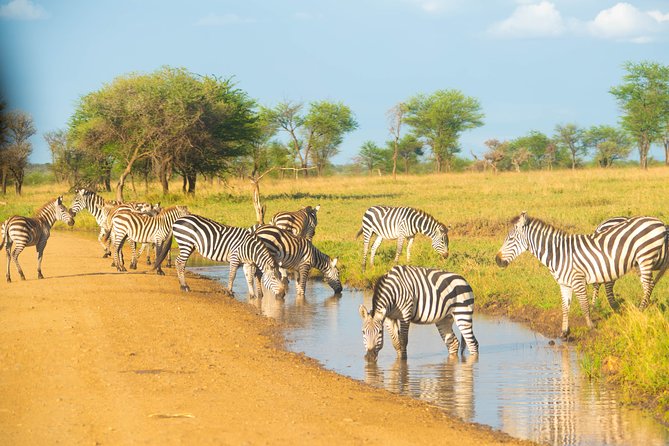
- A full Serengeti game-drive day: Day three gives you more time to search for predators, elephants, big cats, and migrating herds.
- A maximum of two people: The small vehicle group should make it easier to share viewing preferences and ask questions.
- A crater filled with wildlife: Ngorongoro offers a compact setting where zebra, buffalo, lions, hyenas, birds, and the rare black rhino may all appear.
- Lodge-based comfort: Four breakfasts, five lunches, and four dinners are included, with lodge nights rather than camping.
- A high-cost, tightly packed safari: At $2,309.54 per person, the value depends heavily on the quality of guiding, accommodation, and park time.
Why this Northern Circuit route works
Tanzania’s Northern Circuit gives you several very different wildlife settings in one trip. Lake Manyara is compact and watery, the Serengeti spreads across enormous grasslands, and Ngorongoro places wildlife inside an ancient volcanic caldera.
That variety matters. You are not simply repeating the same game drive for five days. At Manyara, you look for birds, monkeys, elephants, giraffes, and tree-climbing lions among forest and lake habitats. The Serengeti gives you open plains and the possibility of following animal movement over a much wider area. Ngorongoro then offers a concentrated wildlife experience, with steep crater walls enclosing a remarkable range of species.
This route also suits you if you have only five days available. It does not attempt to cover every Northern Circuit park. Instead, it focuses on three famous stops and gives the Serengeti a full day, which is a sensible choice for a first safari.
Still, you should understand the rhythm. This is a road-based safari, not a fly-in lodge holiday. Long transfers are part of the deal, and the itinerary uses early starts, picnic lunches, and game drives that can run for most of the day.
More Safaris in Moshi
- Safari Serengeti And Ngorongoro
★ 5.0 · 288 reviews - Big Five Safari In Tanzania
★ 5.0 · 99 reviews - Unforgettable Tanzania Safari And Zanzibar Beach
★ 5.0 · 97 reviews
Day one: flamingos and forest at Lake Manyara
Pickup is scheduled for 9:00 a.m. from your hotel. The first park is Lake Manyara National Park, a relatively small protected area with a surprising range of habitats.
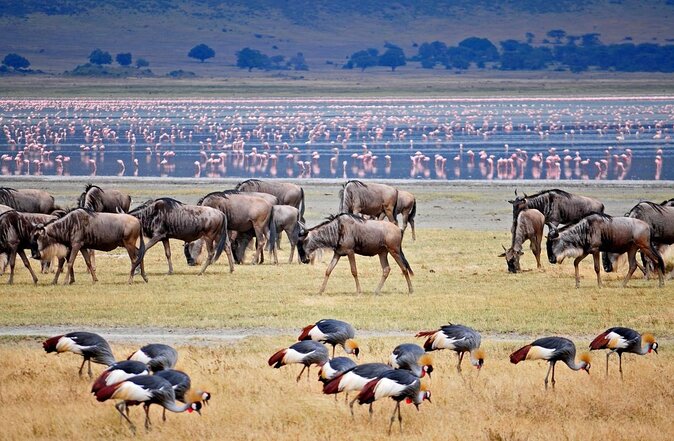
The shallow, alkaline lake attracts flamingos and other water birds. The park is also home to hundreds of bird species, so this is a particularly good opening day if you enjoy birdlife as much as large mammals. You might see thousands of pink flamingos gathered around the water, though bird numbers and positions naturally change.
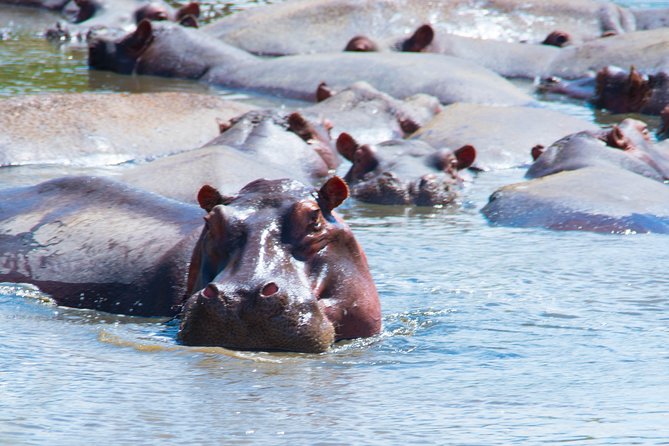
Away from the lake, the park includes grassy plains, forest, and the escarpment. This mix gives you a good chance of seeing elephants, giraffes, buffaloes, hippos, wildebeests, warthogs, baboons, and monkeys. Tree-climbing lions are one of the park’s signature sights, though they are never guaranteed to be in the trees when you arrive.
The open-roof safari vehicle is useful here. It gives you a better viewing platform than a closed car, especially when animals are spread across the grass or birds are above the vehicle. You should also expect a long first day, listed at about seven hours, including the park visit and travel.
Lake Manyara is not as vast as the Serengeti, and some people may find it less dramatic if their main goal is big-cat viewing. Its strength is variety. You get a quick lesson in how water, woodland, plains, and the escarpment support different animals.
Day two: entering the Serengeti by road
After breakfast, you head toward the Serengeti. The route passes through fertile crater highlands, where you may see fields growing wheat, corn, and coffee. This change from cultivated land to open savannah is part of the pleasure of the journey.
By midday, the plan is to reach Serengeti National Park. The Serengeti is Tanzania’s largest park, with short-grass plains, savannah, thick bush, swamps, and lakes. The name means plains in the language of the Maasai, and the open country makes the meaning easy to understand.
The drive to your lodge is also a game drive. That is important because you are not spending the entire day simply sitting on a highway. You may begin spotting animals before reaching your accommodation, although the number and location of sightings depend on the season and the guide’s route.
The Serengeti is famous for the annual movement of wildebeest and zebras in search of fresh grass and water. The herds do not follow a fixed timetable. During the shorter rains in November and December, they move from northern hills toward southern plains. During the longer rains from April to June, they generally move north again.
You should not book this safari only for a particular migration date unless the operator confirms the expected area. Rainfall changes from year to year, and the herds can be far from the place you imagined.
The second day is listed at about eight hours. You should expect a fair amount of driving, but that is the price of reaching the Serengeti overland. The lodge gives you a bed at the end of the day, and dinner is included.
Day three: a full day searching the Serengeti
Day three is the heart of the trip. You spend the full day on a Serengeti game drive, rather than leaving after a short morning visit.
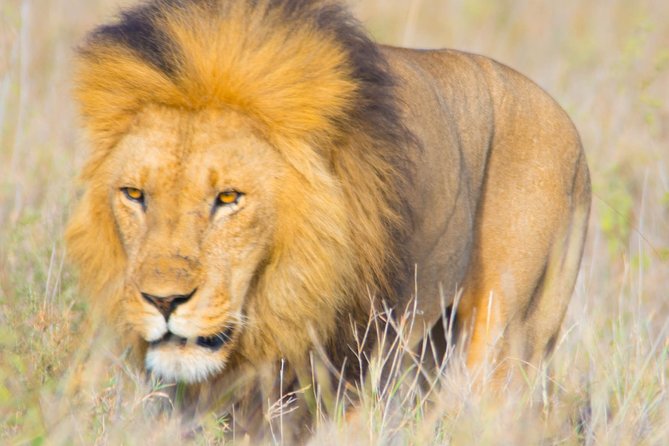
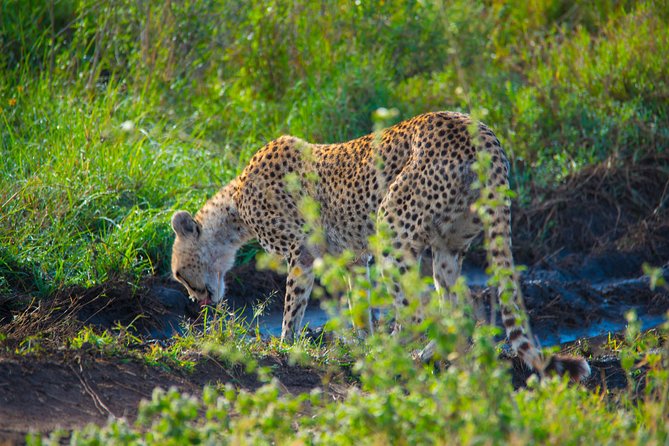
A full day gives your guide more time to adjust the route. You might spend time around water in the dry season, search open plains for grazing herds, or look toward areas where predators may be active. Lions, leopards, elephants, buffaloes, zebras, wildebeests, giraffes, hyenas, and many birds are all possible, but no safari can promise a fixed list.
The timing of the migration matters, but the Serengeti is worth visiting outside the main movement of the herds. Resident wildlife remains, and the park’s changing habitats create different viewing opportunities throughout the year.
A visit to the Serengeti Visitor Centre is possible. It offers information about the park’s past and the research carried out by the Frankfurter Zoological Society. This can add useful context to the game drive, though you may prefer to use every available hour in the vehicle if wildlife is your main priority.
Your guide matters greatly on this day. Bujo Tours has used guides including Anthony, who is described as having 15 years of game-drive experience, and Michael, who was praised for punctual pickup, friendliness, and answering questions. Guide assignment can change, so you should not assume one particular person is included unless Bujo confirms it.
The small group limit is a real advantage. With only two people, you have a better chance of agreeing on how long to stay at a sighting and when to move on. That flexibility is valuable when you are watching an animal rather than simply collecting photographs.
More lodge safaris in Moshi & Kilimanjaro:
- 6 Days 5 Nights lodge safari Tarangire, Manyara, Serengeti & Ngorongoro Crater
★ 4.5 · 10 reviews - 4 Days Lodge Safari
★ 5.0 · 8 reviews - 3 Days Lodge Safari
★ 5.0 · 7 reviews - 6- Day Adventure Lodge safari to see Migration
★ 4.5 · 5 reviews
Day four: from Seronera to the crater rim
After breakfast, you continue through the Serengeti, with the Seronera Valley as a key area. During the dry season, animals gather near water, and you might see predators hunting or waiting for an opportunity.
This is another long day, listed at about eight hours. After lunch at a picnic spot, you gradually head toward Ngorongoro Crater. The contrast is striking: the broad Serengeti gives way to the high crater country and the enormous bowl of the caldera.
Ngorongoro Crater is roughly 20 kilometers wide and forms part of a UNESCO World Heritage Site. More than 20,000 animals are said to live in the crater, which helps explain why it is such a reliable wildlife stop within a short itinerary.
The overnight stay is possibly on the crater rim. If that lodging arrangement is confirmed for your departure, the setting should be one of the trip’s most memorable parts. You may have a wide view over the caldera and a sunset from high above the crater floor.
The word possibly matters here. You should confirm the exact lodge before booking if the crater-rim location is important to you. Lodge quality and position can affect how much value you feel you receive from the price.
Day five: descending into Ngorongoro Crater
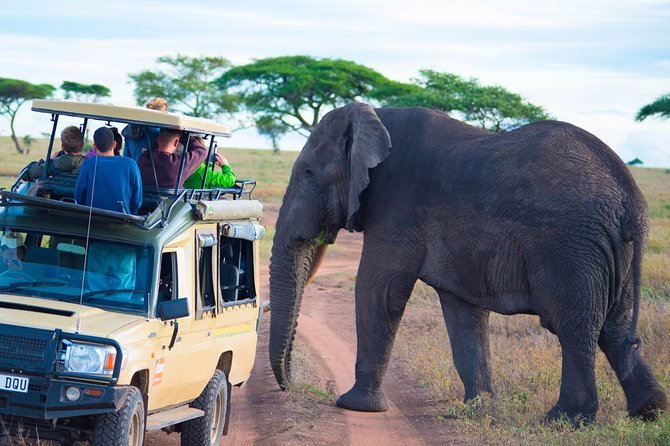
The final day starts early. After breakfast, you drive down the steep route into Ngorongoro Crater for an extended game drive.
The crater’s appeal is both scenic and practical. Its enclosed form brings many animals into one broad area, making it possible to see a varied range of species without covering the huge distances required in the Serengeti.
You might see zebras, buffaloes, lions, elephants, hyenas, waterbucks, bushbucks, eland, and more than 500 bird species. The rare black rhino is also present, though spotting one requires luck and a good search. The crater is one of the better places on this route to look for several members of the Big Five in one day, but you should not expect to see all five.
After the game drive and picnic lunch, you leave the caldera in the early afternoon. The drive back to Moshi or Arusha is expected to bring you in during the early evening. The final listed activity lasts about five hours, though the total return journey can feel longer depending on the exact drop-off point and road conditions.
This final day is efficient but not leisurely. You get a major wildlife stop before returning to town, but there is little spare time for delays.
What the $2,309.54 price really buys
At $2,309.54 per person, this is a serious investment. The price makes more sense if you value private or near-private guiding, lodge accommodation, park access, vehicle transport, and meals across five days.
The maximum of two people is one of the strongest value points. Larger safari groups can lower the price, but they also mean less control over stops and more opinions about when to leave an animal sighting. Here, you should have a more personal arrangement, assuming the two-person maximum is maintained for your booking.
Five lunches, four dinners, and four breakfasts are included. Alcoholic drinks, soft drinks, personal spending, tips, visa fees, international flights, and immunization documents are not included. Yellow fever documentation is recommended for visa processing on arrival, so you should check the current entry requirements before setting off.
The supplied information does not specify the lodge names, room standards, park fees, or exact vehicle details beyond the open roof. I would ask Bujo for those details before paying. At this price, the accommodation and inclusions should be clear in writing.
You also need to budget for guide tips and personal expenses. A mobile ticket and hotel pickup are offered, and confirmation is provided at booking. The stated start time is 9:00 a.m., but the first day may involve adjustments based on your hotel and route.
Who will get the most from this safari
I would recommend this trip to you if you want the classic Northern Circuit in a compact five-day format. It is especially suitable for a couple or two friends who want a small group and prefer lodges to camping.
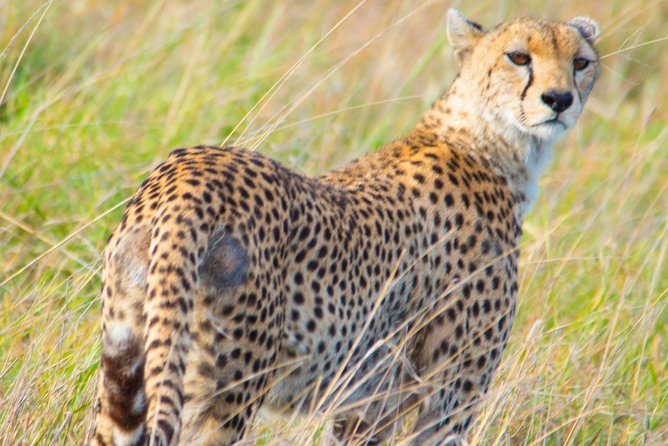
It also works well for first-time safari visitors who want a mix of birds, elephants, big cats, open plains, and a dramatic crater. The itinerary gives you enough time in the Serengeti to make the park more than a brief photo stop.
You may want a longer safari if you dislike long drives or want a slower schedule. You may also prefer another plan if your only goal is to see all of the Big Five, since wildlife sightings depend on season, weather, and luck. One guest described not seeing every Big Five animal, while still enjoying the five-day trip and the authentic accommodation.
The route is not designed around luxury extras or free afternoons. It is built around park time, road transfers, lodge nights, and meals. That makes it practical, but busy.
Booking advice and cancellation terms
Bujo Tours offers free cancellation when you cancel at least 24 hours before the local start time. Within 24 hours, the payment is not refunded, and changes are not accepted.
Most people can take part, according to the supplied information. No detailed accessibility information is provided, so you should contact Bujo before booking if you have mobility concerns or need a specific vehicle arrangement.
Should you book the five-day lodge safari?
Book it if you want three major Northern Circuit parks, a full Serengeti day, and a two-person vehicle arrangement in only five days. The combination of Lake Manyara’s birdlife, the Serengeti’s open plains, and Ngorongoro’s concentrated wildlife gives you a strong first taste of northern Tanzania.
Think twice if $2,309.54 stretches your budget, if you want named lodge details before committing, or if long road days will spoil the experience for you. Ask Bujo to confirm the guide, lodges, pickup point, vehicle, park fees, and exact return location.
For the right pace, this is a focused and wildlife-heavy safari. It asks you to accept early starts and long drives in exchange for three very different parks and a small, personal group.
FAQ
How long is the safari?
The safari lasts approximately five days, with activities listed for about seven to eight hours on the first four days and about five hours on the final day.
Where does the safari start?
Pickup is offered in Moshi, and the stated start time is 9:00 a.m. The return is to Moshi or Arusha in the early evening on day five.
Which parks and protected areas are included?
The route visits Lake Manyara National Park, Serengeti National Park, Ngorongoro Conservation Area, and Ngorongoro Crater.
How many people can join the safari?
The tour has a maximum of two travelers.
Are meals included?
Yes. Five lunches, four dinners, and four breakfasts are included.
Are drinks included?
Alcoholic drinks and soft drinks are not included.
Can I cancel for a full refund?
Yes, if you cancel at least 24 hours before the local start time. Cancellations within 24 hours are not refunded.
Is the safari suitable for most people?
The supplied information says most people can participate. It does not provide detailed accessibility information, so contact Bujo Tours if you have specific mobility or participation needs.
More five day trips in Moshi & Kilimanjaro
- 5 Days Camping Tarangire, Serengeti & Ngorongoro crater & Visiting Maasai
★ 5.0 · 58 reviews - 5-Day Majestic Tanzania Safari – High End All Inclusive
★ 5.0 · 44 reviews - 5 Day Mid range Tanzania Safari
★ 5.0 · 34 reviews - 5 days Tanzania Camping Safari
★ 5.0 · 29 reviews
More Safaris in Moshi & Kilimanjaro
- 8-Day Essence of Tanzania Safari – Luxury
★ 5.0 · 72 reviews - Great Migration Safari In Tanzania
★ 5.0 · 71 reviews - Serengeti, Ngorongoro and Tarangire 4 Days Safari
★ 5.0 · 59 reviews - 6 Days 5 Night Safari
★ 5.0 · 57 reviews
Newly listed around Moshi & Kilimanjaro
- Climb Mount Kilimanjaro: 7 Days Machame Route★ 5.0 · 3 reviews
- 6 Days Mount Kilimanjaro Climbing via Rongai Route★ 5.0 · 3 reviews
- Explore 1 day Ngorongoro Crater Budget Group Safari from Arusha★ 5.0 · 3 reviews
- Mt. Kilimanjaro Day Hiking★ 5.0 · 3 reviews
- Chemka (Kikuletwa) Hot Springs, Tanzania★ 5.0 · 3 reviews
- Guided City tour of Moshi★ 4.3 · 3 reviews
- 8 Day Tanzania Family Safari★ 5.0 · 3 reviews
- Serengeti Safari with Sirikwa Travel★ 5.0 · 3 reviews
Moshi & Kilimanjaro Tours, compared.








Browse the lists this tour appears in