
Reviewed · ARUSHA TOURS
Private Walking Tour with Giraffes
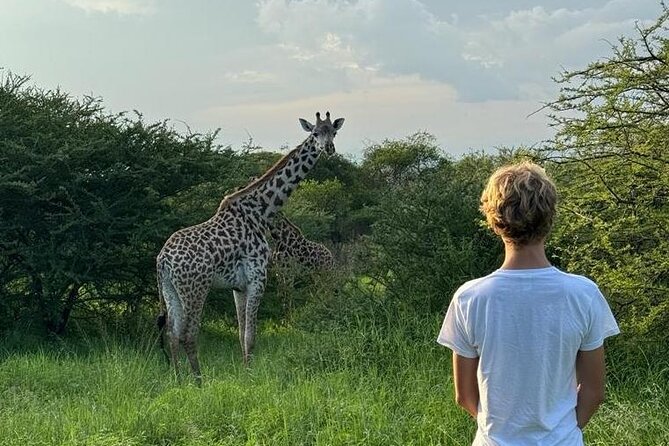
Walking with giraffes only a few feet away is the headline here, but the more lasting part of this Arusha experience is the lesson behind it. The Arusha Giraffe Centre links giraffe care with land regeneration, sustainable farming, and education for local children. You are not simply stopping for photographs. You are learning why wildlife, the environment, and the community must be considered together.
I like two things in particular. First, the private format gives you time to ask questions and move at a comfortable pace. Second, guides such as Jerome, Nic, and Nick bring useful experience in wildlife studies, teaching, and agriculture. The main consideration is that the visit is short, about 1 hour 20 minutes, and the approach road may feel rough or surprising.
Key points to know before booking
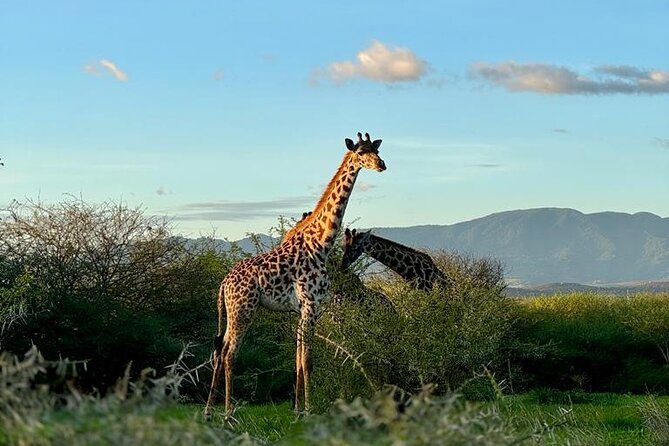
- Giraffes can come within a few feet of you: The encounter takes place on foot in a natural setting, not only from behind a viewing barrier.
- The conservation lesson is central: You learn about wildlife, land regeneration, communities, and the centre’s Eco-Ag approach.
- Your group stays private: Only your party takes part, so you can ask questions without competing with a large crowd.
- Morning or afternoon timing is available: That makes it easier to fit the visit around other plans near Arusha.
- The centre is close enough for a half-day plan: You can pair it with another nearby activity, such as the cultural centre, according to the information provided.
- Plan for a moderate walk: Anyone can join, but you should be comfortable walking outdoors for around 75 minutes.
A close encounter with Arusha’s giraffes
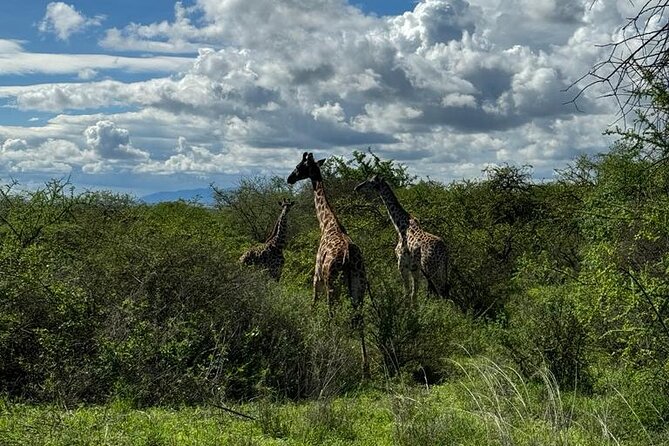
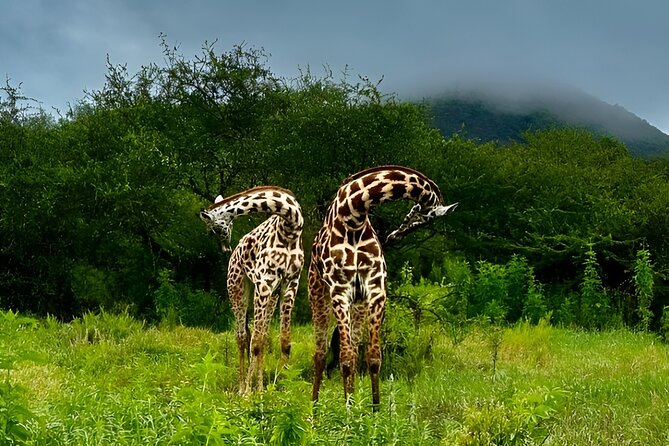
The Arusha Giraffe Centre offers a different kind of wildlife visit from a standard vehicle safari. Instead of watching animals from a distant road, you walk through a sanctuary area and may find giraffes coming within roughly five feet of you.
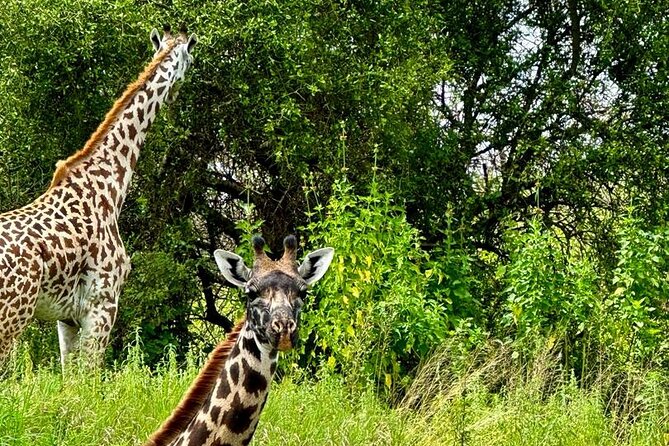
That closeness changes the mood. You notice the animals’ height, slow movements, and calm presence in a way that is harder to appreciate from a safari vehicle. The experience is still guided, so you are not left to guess how close to stand or how to behave around the giraffes.
The setting is described as bush and natural habitat rather than a formal city zoo. That matters if you want a more active encounter, though you should keep your expectations sensible. This is a short walking visit at a conservation centre, not a full-day safari with a long list of wild species.
The centre’s giraffes are part of a wider effort to prepare animals for life outside the farm and support their protection. The focus is not only on seeing them. It is also on showing how conservation can work on the ground.
More Walking Tours in Arusha
- Arusha Guided Walking City Tour, Culture, Lifestyle & History
★ 5.0 · 150 reviews - 7-Day Private Tanzania Safari with Sunset Walking on the Crater Rim and Maasai
★ 5.0 · 40 reviews - 4 Days lodge safari Tarangire , Ngorongoro crater & Walking
★ 5.0 · 39 reviews
The first hour: education before the animals
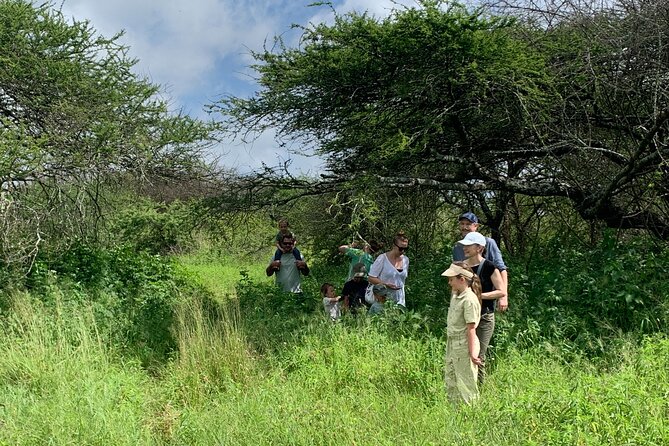
The visit begins with a guided tour through the education centre. This opening section explains the three connected concerns at the heart of the project: wildlife, the environment, and the community.
That order is useful. You first hear why giraffe populations are under pressure and how damage to land can affect wildlife. You then look at the centre’s proposed answer, called Eco-Ag, which connects farming methods with the recovery of natural areas.
Nick has been praised for explaining agriculture and development in Tanzania with clear enthusiasm. Another guide, described as a former teacher with a bachelor’s degree in wildlife studies, brought a strong background to the discussion. Jerome has also guided the walk, with a particular focus on land regeneration, giraffes, and other animals.
The guides named in the available information are not simply there to point at animals. They explain why the centre was created and how its work relates to local families and future generations. Education for local children is a major theme, since the project sees young people as important to the future of conservation.
I find this part especially valuable for visitors who want more than a quick animal photograph. You leave with a clearer idea of why habitat loss is tied to farming, and why a conservation centre may work with communities instead of treating wildlife protection as a separate issue.
The presentation can also make the visit feel more serious than the title suggests. If you are looking only for a brief animal encounter, the education session may feel like a lot of information. If you want to understand the purpose behind the place, it gives the giraffe walk much more meaning.
The walking portion: close, calm, and guided
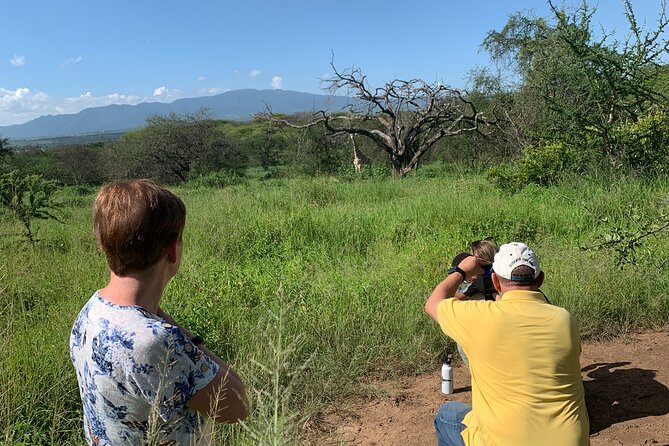
After the education section, you head outside for the walk. The complete stop is listed at about 1 hour 15 minutes, while the overall experience is described as roughly 1 hour 20 minutes. Allow a little flexibility, since conversation and time with the giraffes can affect the pace.
The most memorable detail is the distance. One account describes walking within five feet of the giraffes, while another says the group was able to stay with them for a long time. The exact encounter will depend on the animals and conditions that day, but the format is designed for a close view on foot.
The animals are described as calm rather than fierce, but that does not mean you should treat them like tame farm animals. Follow the guide’s instructions, keep your movements measured, and let the giraffes determine how close they want to come. A guide is important here because the visit should remain respectful to the animals.
The walk is also a chance to notice more than giraffes. Jerome’s tour, for example, included discussion of other animals and the wider land. The centre’s work is presented as an attempt to restore a functioning natural area, not simply to place giraffes in an attractive enclosure.
During the rainy season, the centre may look especially green. That can make the walk more scenic, though weather also affects whether the activity runs. The centre requires good weather and will offer another date or a full refund if poor conditions force a cancellation.
Why the conservation message matters
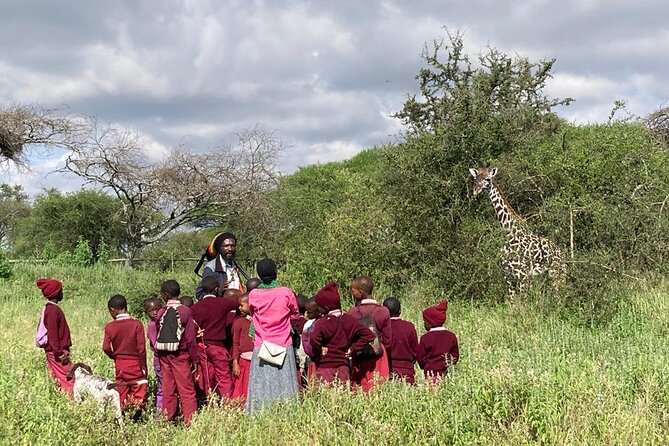
Giraffes are easy to admire, but the project asks you to look beyond their appearance. The centre connects their future to the health of the land and to farming practices that can either damage or help restore habitat.
The Eco-Ag idea is important because it treats agriculture as part of the conservation question. If local communities need productive farmland, protecting wildlife requires practical ways to support people while reducing harm to natural areas. The centre’s work aims to show possible methods rather than simply asking people to stop using land.
The project has also been developed over many years. The couple behind the centre has dedicated 17 years to building the conservation area, according to the information available. That long effort helps explain why the visit includes education, agriculture, wildlife care, and community work instead of focusing only on animal viewing.
You may also hear about rewilding and land regeneration. These ideas can sound abstract in a classroom, but here they are tied to a real place and a real conservation project. The centre gives you a chance to see how restoring land may help bring back natural systems and improve conditions for wildlife.
I appreciate that the message includes local children. Conservation projects need future support, and education gives young people a role in what happens next. This is one reason the visit suits families particularly well. Children get the excitement of standing near giraffes, while the educational setting gives parents something more substantial to discuss afterward.
A change of scene while you are in Arusha:
- Balloon Safari & Bush Breakfast in Serengeti – Miracle Experience
★ 5.0 · 1,646 reviews - Tanzania Classic – 7 Days
★ 5.0 · 1,151 reviews - 4 Days Group Camping Safari
★ 5.0 · 1,101 reviews - 5 Days Group Camping Safari
★ 5.0 · 730 reviews
What the private format changes
At $55 per person, this is not the cheapest possible way to see a giraffe. Its value comes from the combination of a private guide, an education session, and a close walking encounter.
A private booking means only your group takes part. You can ask as many questions as you like, which is useful if your group includes children or if you have a particular interest in wildlife, agriculture, or conservation. It also avoids the stop-and-start feel that can come with a large group.
The private format does not make the visit longer. You still have an approximately 80-minute experience, so the price is best judged against the quality of access and instruction rather than time alone.
For a solo visitor or couple, $55 may feel like a fair charge for a focused conservation visit. For a family, the total cost rises quickly, but the private setup can make it easier to keep children engaged. You are paying for an experience with a clear purpose, not a full safari day.
The activity is also practical if you have limited time in Arusha. A morning or afternoon start lets you fit it around other plans. The centre can work as a half-day outing, and the information provided suggests pairing it with the cultural centre for a fuller day nearby.
Getting there and preparing for the walk
The meeting point is the Arusha Giraffe Centre at 21 Giraffe Centre Road, Moita, Tanzania. The activity ends at the same place, so you should arrange your own way to the centre unless your broader travel plans include transportation separately.
The approach may surprise you. One account describes the road as all-terrain, so do not assume the final stretch will feel like a smooth city drive. Ask your driver to allow enough time and confirm that they know the exact meeting point.
You should wear practical outdoor clothing and shoes suitable for a moderate walk. The information does not set out a strict clothing list, but this is a bush walk, not a polished indoor attraction. Comfortable footwear will matter more than dressing up.
The centre says anyone can join, while also advising a moderate level of physical fitness. Those two points fit together: the walk is broadly accessible, but you should be comfortable spending about an hour outdoors on foot.
The mobile ticket is convenient. You will receive confirmation at booking, which helps when arranging a driver or fitting the visit between other Arusha activities.
Morning or afternoon: which should you choose?
The experience offers morning and afternoon options, so the best choice depends on your wider schedule. The available information does not promise that one period provides better giraffe activity than the other, so I would choose based on your transport and other plans rather than assume a wildlife advantage.
A morning visit can be useful if you want to keep the rest of the day open. An afternoon visit may suit you if you are arriving in Arusha earlier or combining the centre with another nearby stop.
Rainy-season conditions may make the grounds especially green and attractive. At the same time, the activity depends on good weather, so keep your schedule flexible if possible. If bad weather cancels the visit, you can receive a full refund or move to another date.
Because the walk is short, this is easy to add before or after another activity. Just avoid packing your schedule too tightly. The education session is part of the experience, and rushing away would undercut one of its best features.
Who will get the most from this experience?
I would recommend the Arusha Giraffe Centre to several kinds of visitors:
- Families who want a close animal experience with an educational purpose
- First-time safari visitors looking for an introduction to Tanzanian wildlife
- Couples who prefer a private, quiet activity to a large group outing
- Visitors interested in conservation, sustainable agriculture, or land restoration
- Anyone with a spare half-day near Arusha who does not have time for a full safari
It is especially good for people who enjoy asking questions. Guides such as Jerome, Nic, and Nick have different backgrounds in wildlife, teaching, and agriculture, and the private arrangement gives you room to make use of that experience.
I would be more cautious if you want a broad wildlife count. The focus is giraffes and conservation education, not a guaranteed catalogue of many species. You should also consider the short duration and the potentially rough approach road.
Practical value and final decision
The best reason to book is the mix of closeness and purpose. You may walk within a few feet of giraffes, but you also learn why the centre links wildlife protection to farming and local communities. That gives the visit more substance than a simple photo stop.
The $55 price is reasonable if you value a private guide and a conservation project with a clear educational aim. It is less compelling if you are comparing it only by minutes or expecting a substitute for a full safari.
I would book this as a half-day addition to an Arusha stay, especially for families, couples, and anyone with a serious interest in wildlife protection. Confirm your transport to Moita, allow for an uneven approach road, wear walking shoes, and leave enough time to listen before and after the giraffe encounter.
You can cancel for a full refund up to 24 hours before the start time. Changes or cancellations inside 24 hours are not accepted for a refund, and poor weather brings the option of a new date or full repayment.
FAQ
Where does the walking giraffe tour start and finish?
It starts at the Arusha Giraffe Centre, 21 Giraffe Centre Road, Moita, Tanzania. The activity ends back at the same meeting point.
How long does the experience last?
The experience lasts approximately 1 hour 20 minutes. The guided visit at the centre is listed as about 1 hour 15 minutes.
Is this a private activity?
Yes. Only your group participates, so you can ask the guide questions throughout the visit without joining a larger group.
Can I choose a morning or afternoon visit?
Yes. Morning and afternoon tour times are available.
What level of fitness is needed?
A moderate level of physical fitness is recommended because the experience includes a walking safari around the centre. Anyone can join, according to the provided information.
What happens if bad weather cancels the visit?
The experience requires good weather. If poor weather causes cancellation, you can choose another date or receive a full refund.
Newly listed around Arusha
- 5-Day Private Safari Tour in Tanzania’s Wildlife★ 5.0 · 3 reviews
- 3 Day Sharing Safari – Manyara, Ngorongoro Crater and Tarangire National Parks★ 5.0 · 3 reviews
- 3 Days private safari Tarangire ,Ngorongroro crater &Manyara★ 5.0 · 3 reviews
- Tarangire National Park Day Trip★ 5.0 · 3 reviews
- 6 -Day Tarangire, Manyara, Serengeti & Ngorongoro★ 5.0 · 3 reviews
- 2 Days Tarangire and Ngorongoro Crater Tour★ 5.0 · 3 reviews
- 5 Days Group Camping Safari★ 4.7 · 3 reviews
- 7-Day Mt. Kilimanjaro Hiking: Machame Route★ 5.0 · 3 reviews
Arusha Tours, compared.

Balloon Safari & Bush Breakfast in Serengeti – Miracle Experience
Read our review →






Browse the lists this tour appears in