
Reviewed · ARUSHA TOURS
Private Traditional Pottery Class near Arusha
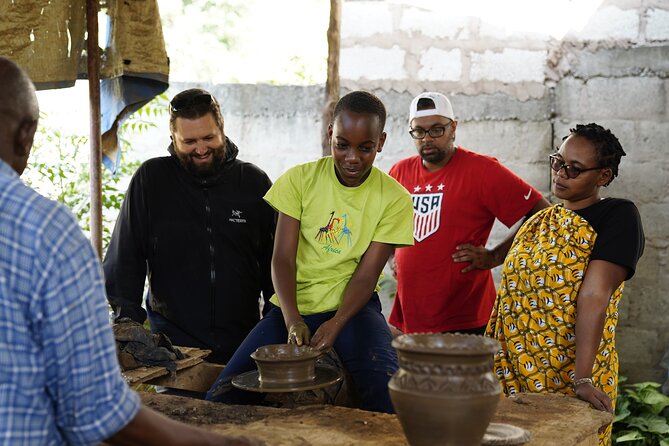
Tanzania’s red earth becomes your souvenir in this hands-on class near Arusha. In Tengeru, local potters show you how to prepare clay, shape it on a foot-powered wheel, trim the form, and fire it in a traditional kiln. I like the direct contact with Meru culture and the chance to make something useful, not just buy another carved keepsake.
I also like the connection with The Small Things, a local project supporting vulnerable children and families. Guides such as Reuben help explain the community setting, while artist Kitomary has earned praise for his patient pottery instruction. The main caution is practical: the meal information is inconsistent, and pickup from Arusha is not included, so confirm those details before booking.
Key points before you book
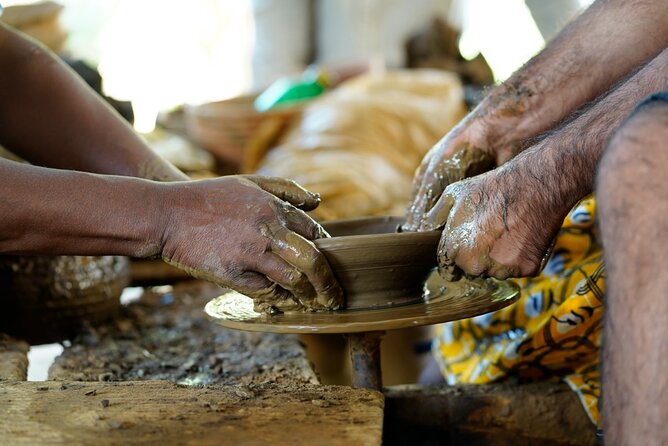
- Shape clay on a foot-powered wheel: You learn a traditional method rather than using a modern electric studio wheel.
- Meet local potter Kitomary: He teaches the clay work and shows how to turn raw material into a finished object.
- Visit The Small Things first: Your day includes time at a community project supporting children and families.
- Learn about the Meru people: A local guide adds cultural and historical context to the pottery session.
- Take home your own creation: The class is built around making a personal memento from locally mined clay.
- Keep the group small: The maximum is eight people, which should allow hands-on time at the wheel.
From community work to a Tengeru pottery bench
The experience begins at The Small Things, where you learn about its work with orphaned and vulnerable children and local families. This first stop gives the class a wider purpose. You are not simply arriving at a craft workshop, making a cup, and leaving. You get a look at how community support fits into the day.
The information provided does not give a fixed length for this visit, so expect the exact balance between the community stop and pottery lesson to depend on the group and local arrangements. If this part matters to you, ask how much time is planned there when you confirm the booking.
After that, you go together to Tengeru. The setting is near Arusha, but pickup is not included from local hotels or from the city. You will need to arrange your own way to the unnamed meeting point in Tanzania, then return there when the activity ends.
That detail matters. The class lasts about two hours, but your total outing takes longer if you include transport and the visit to The Small Things. Plan it as a half-day-style activity rather than trying to squeeze it between two tightly timed appointments.
More workshops and classes in Arusha:
- NGO Lifted Strong – Traditional Tanzanian Cooking Class
★ 5.0 · 39 reviews - Arusha: Traditional Tanzania Cooking Class & Food Market Tour
★ 5.0 · 34 reviews - Cooking and Sewing & Jewelry Workshops in Arusha
★ 5.0 · 14 reviews
Working with locally mined clay
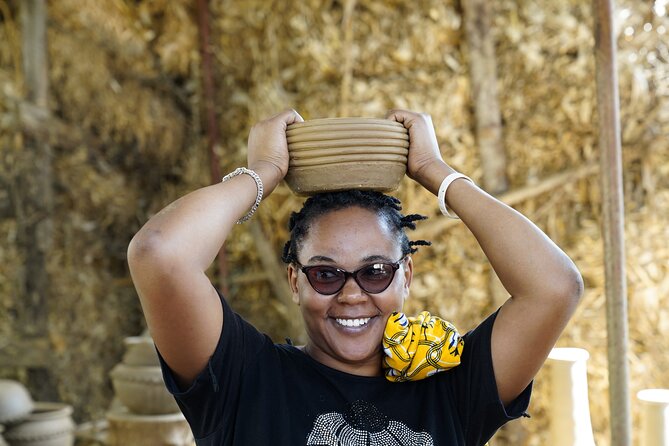
The class starts with the material itself. Local clay is prepared with tools supplied by the host, so you do not need pottery experience or specialist clothing. The teaching covers preparation, turning, trimming, and firing, giving you a useful look at the full process rather than only the wheel work.
Pottery can look easy until your hands meet the clay. The foot-powered wheel requires coordination, and your form may wobble before it begins to hold together. That is part of the appeal. You are learning a traditional craft, not following a polished factory-style demonstration where every object comes out perfect.
The local potters guide you through the basic movements. The teaching appears to work well for families, solo participants, and small groups. One family of five was able to make a pot each, and one child also had the chance to milk a cow during the wider visit. That extra rural contact is not guaranteed, but it shows that the outing can include more than a formal lesson.
You should wear clothes that can handle dust and clay. The supplied information does not state whether aprons or washing facilities are available, so it is sensible to ask ahead and dress simply. Closed shoes are also a practical choice for a working pottery area, though no specific footwear rule is provided.
The foot-powered wheel is the star
The wheel is powered by your foot, not electricity. That changes the pace of the lesson. You have to keep the wheel turning while using both hands to center and shape the clay, and the process gives you a clear sense of how much skill traditional potters bring to a task that may look simple from the outside.
The instructor does the difficult movements slowly enough for you to follow. Kitomary, identified as the artist leading the pottery work, has been praised for his ability to explain clay and help participants create their own objects. Andrew and Reuben have also been associated with guiding the experience, with Reuben receiving especially warm praise for his work with families and solo participants.
The strongest part of the class is its personal scale. With no more than eight people, you are less likely to be lost in a large demonstration. A small group also makes it easier to ask for help when your clay collapses or your rim starts to lean.
Still, do not book this expecting a professional studio lesson with a guaranteed showroom finish. Your result will reflect the short format and your own hand skills. That is fine for a holiday memento, but anyone hoping to produce a flawless dinner service should choose a longer course.
Trimming, firing, and taking your piece home
Once the shape is formed, you learn how to trim it. This step gives the object cleaner lines and helps remove excess clay. It is also where you begin to see the rough form become a proper vessel.
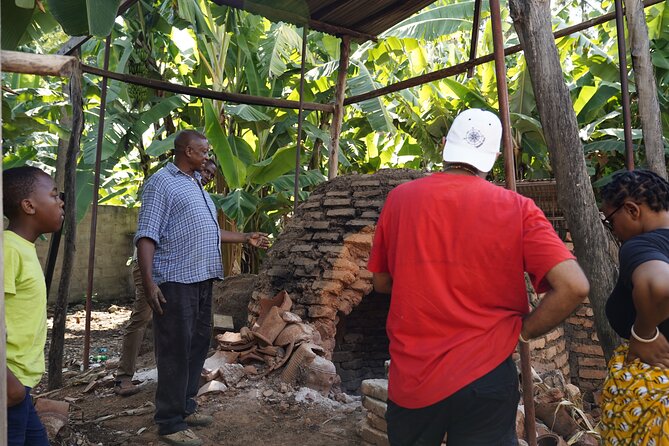
The final stage is firing in a traditional kiln. The class description says you can take your pottery home as a personal souvenir, which gives the activity a satisfying finish. Ask the provider how the timing works on your chosen day. The available details do not explain how long firing takes, or whether every piece is fired and handed over during the two-hour visit.
That is worth clarifying before you arrive, especially if you leave Arusha soon after the class. A freshly made clay object may need handling time, drying, or a later collection arrangement. The experience is presented as one where you take your creation home, but the exact handover process is not stated.
The object itself is valuable because it records your participation. It may be uneven, small, or plainly handmade. That is precisely what separates it from a shop-bought souvenir. You can remember the feel of the clay, the effort of controlling the foot wheel, and the local instruction behind the finished piece.
A few more Arusha days to compare
- Balloon Safari & Bush Breakfast in Serengeti – Miracle Experience
★ 5.0 · 1,646 reviews - Tanzania Classic – 7 Days
★ 5.0 · 1,151 reviews - 4 Days Group Camping Safari
★ 5.0 · 1,101 reviews - 5 Days Group Camping Safari
★ 5.0 · 730 reviews
Meru culture adds meaning to the craft
A local guide explains the history and culture of the Meru tribe during the experience. This is an important part of the outing because pottery is not presented as an isolated tourist trick. It is tied to local skills, materials, and village life.
The cultural talk is likely to be most useful when you ask questions. You can ask how the clay is mined, what kinds of pots are traditionally made, and how pottery fits into everyday life. The supplied information does not promise a formal lecture or a set list of cultural topics, so the conversation may develop naturally around the work and the place.
That informal style suits this experience. You are sitting with local potters, handling local clay, and watching a traditional kiln rather than touring a museum display. At the same time, stay respectful. The visit includes a community project and a working local setting, so approach it as a meeting with people rather than a staged village performance.
The class has also been described as a close look at village life, with a respectful connection between tourism and community support. I would choose it for that reason, not just for the object you bring home. The pottery is the activity, but the exchange with the people around it is the lasting part.
What the $50 price really covers
The price is $50 per person. For that fee, you receive the pottery instruction, clay, tools, equipment, bottled water, and the guided visit to The Small Things. The group limit of eight improves the value because hands-on teaching works best when the instructor can reach each person.
The price also includes more than a basic craft class. You are paying for local guidance, the use of traditional equipment, cultural explanation, and a community connection. If you are comparing it with a short souvenir workshop, this offers more substance.
There are two cost points to watch. Pickup from Arusha or your hotel is not included, so add your transport cost. Lunch is also unclear in the supplied details. One section says lunch is provided, while another says it is not included and can be arranged at The Small Things for an extra $10. Treat lunch as an optional $10 addition unless the provider confirms otherwise.
Bottled water is included, but do not assume that means a full meal. If you need lunch, settle the arrangement before the day begins. Small questions like this prevent the kind of disappointment that can cloud an otherwise good outing.
Group discounts are available, which makes the class more attractive for families or friends. A group of five has already suited the format, and the eight-person maximum keeps the activity from feeling crowded.
Who will enjoy this class most
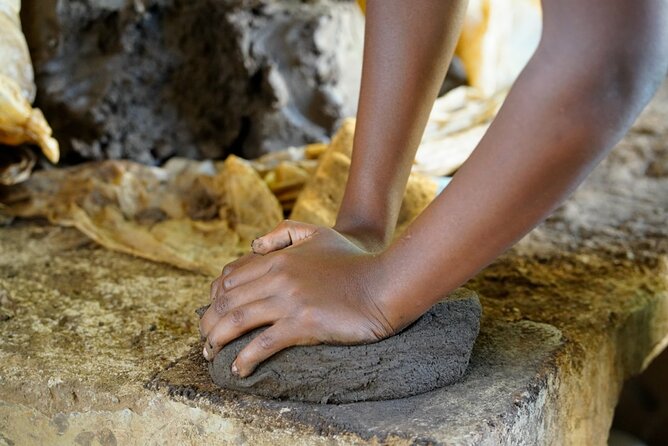
I would recommend this to anyone who prefers making something to looking at something. It is a good fit for solo visitors, couples, families, and small groups who want a slower, more personal activity near Arusha.
Children can take part, though the data does not give a minimum age. Parents should ask the provider about age suitability before booking, especially because the class involves clay tools, a foot-powered wheel, and a traditional kiln.
It also suits people who want community contact handled in a direct, respectful way. The visit to The Small Things gives the day a social purpose, and the activity supports local potters and the community project connected with it.
You may want to skip it if you have only a short gap before a safari departure, if you dislike hands-on work, or if you need a guaranteed restaurant lunch and hotel transfer. It is also not the best choice for anyone who wants a polished finished piece with no uncertainty about collection or firing time.
Most participants can take part, and service animals are allowed. The meeting point is near public transportation, but the exact transport instructions are not provided, so confirm the location clearly before setting out.
Timing, weather, and cancellation
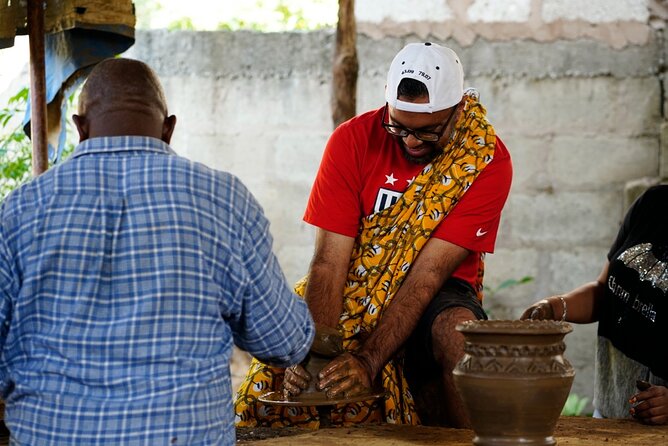
The activity runs for approximately two hours, though the opening visit and transport mean you should leave extra time in your schedule. It begins and ends at the same meeting point.
Confirmation is sent at booking. You can cancel for a full refund up to 24 hours before the start time. Changes or cancellations inside that 24-hour window are not accepted for a refund.
The class requires good weather. If poor weather causes cancellation, you are offered another date or a full refund. Since the experience includes movement between sites and traditional outdoor-style work, check the forecast and keep your plans flexible.
Should you book the Tengeru pottery class?
Book it if you want an authentic, practical afternoon near Arusha and like the idea of supporting a local community project while learning a traditional craft. The small group, foot-powered wheel, Meru cultural context, and local clay make this more personal than a standard souvenir stop.
Before paying, confirm three things: the meeting point and transport, the lunch arrangement, and when your fired piece will be ready to take home. If those details suit your schedule, the $50 price is fair for a class that combines instruction, materials, water, cultural context, and community contact.
FAQ
Where does the pottery class take place?
The experience takes place in Tengeru, near Arusha, Tanzania. It begins with a visit to The Small Things before continuing to the pottery setting.
How long does the activity last?
The pottery experience lasts approximately two hours. The total time may be longer when you include the visit to The Small Things and your transport to and from the meeting point.
Is transportation from Arusha included?
No. Pickup from local hotels or Arusha is not included. You must arrange transport to the meeting point.
What is included in the $50 price?
The price includes bottled water, clay, tools, equipment, and materials. It also covers the pottery instruction and guided elements of the activity.
Is lunch included?
The provided details conflict on this point. Lunch can be supplied at The Small Things for an additional $10, so confirm the meal arrangement before booking.
Can I take my pottery home?
Yes. The activity is designed for you to take home your pottery creation. Ask how firing and collection work on your chosen date.
How many people can join?
The maximum group size is eight people.
Do I need pottery experience?
No experience requirement is stated. The local potters teach you how to prepare, turn, trim, and fire the clay.
Is the class suitable for most people?
Most people can participate, and service animals are allowed. The supplied details do not specify a minimum age.
What happens if bad weather cancels the class?
You will be offered a different date or a full refund if poor weather causes cancellation. For your own cancellation, you must cancel at least 24 hours before the start time for a full refund.
Newly listed around Arusha
- 5-Day Private Safari Tour in Tanzania’s Wildlife★ 5.0 · 3 reviews
- 3 Days private safari Tarangire ,Ngorongroro crater &Manyara★ 5.0 · 3 reviews
- 3 Day Sharing Safari – Manyara, Ngorongoro Crater and Tarangire National Parks★ 5.0 · 3 reviews
- Tarangire National Park Day Trip★ 5.0 · 3 reviews
- 6 -Day Tarangire, Manyara, Serengeti & Ngorongoro★ 5.0 · 3 reviews
- 2 Days Tarangire and Ngorongoro Crater Tour★ 5.0 · 3 reviews
- 5 Days Group Camping Safari★ 4.7 · 3 reviews
- 7-Day Mt. Kilimanjaro Hiking: Machame Route★ 5.0 · 3 reviews
Arusha Tours, compared.

Balloon Safari & Bush Breakfast in Serengeti – Miracle Experience
Read our review →






Browse the lists this tour appears in