
Reviewed · STONE TOWN TOURS
Walking Tour to The heart of Zanzibar ( STONE TOWN CITY)
Stone Town’s story is best understood on foot, where a few steps can carry you from an old sultan’s palace to a spice stall, a cathedral built over a slave market, or a narrow lane lined with carved wooden doors. This three-hour walk brings those contrasts together, with Arabic and British colonial history at its core. I especially like the small group limit of eight and the way the route mixes major sights with everyday streets.
I also like the practical range of the walk. You get the House of Wonders, Old Fort, Anglican Cathedral, Darajani Bazaar, and Freddie Mercury’s former home without paying extra admission fees. The possible drawback is the stated 8:00 pm start, which means some market activity and building interiors may feel different in the evening, so confirm the exact timing before you set out.
Key points at a glance
- A compact history walk: See major Stone Town landmarks in about three hours.
- The old slave market: Spend the longest stop, 45 minutes, learning about Zanzibar’s role in the slave trade.
- A small group: The tour accepts no more than eight people, giving you a better chance to ask questions.
- Local streets and Darajani Bazaar: Move beyond monuments into food, fish, meat, spice, and souvenir areas.
- Ali as a useful local contact: The guide is described as friendly, professional, honest, and willing to help with questions outside the planned route.
- Straightforward value: At $40 per person, taxes, fees, and bottled water are included, while food and snacks cost extra.
Why Stone Town makes a strong walking tour
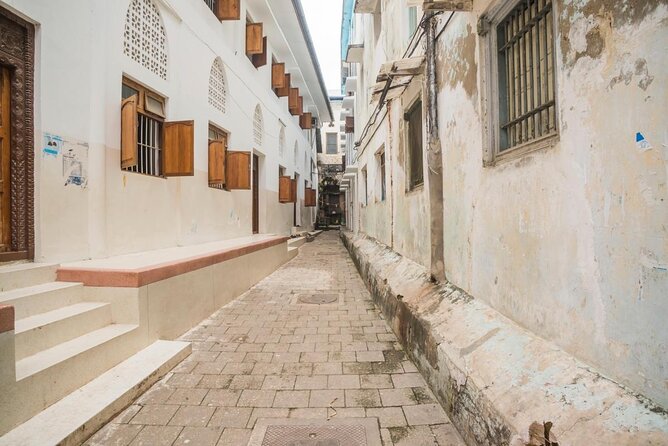
Stone Town is not a place you understand well from a car window. Its narrow streets, small shops, food stalls, and famously carved doors reward slow walking. The route also gives you a useful way to read the city’s layers: Portuguese fortifications, Omani Arab rule, the sultanate, British influence, the slave trade, and modern Zanzibar all appear within a fairly small area.
I like this kind of city tour because the guide can connect details that otherwise seem unrelated. A palace is not just a grand building. A market is not just a place to buy spices. A cathedral is not just a church. Here, each stop helps explain how trade, religion, colonial power, and local life shaped Stone Town.
The group limit matters. With a maximum of eight people, you should have more room to hear the guide in busy lanes and ask about details that catch your eye. The experience is offered with pickup, but the stated meeting point is the Old Fort on Mizingani Road, and the walk returns there at the end. Confirm pickup arrangements when booking rather than assuming transport is included.
More Walking Tours in Zanzibar
- Stone Town Private Walking Tour
★ 5.0 · 371 reviews - Zanzibar: 3 Hours Private Stone Town walking Tour with Guide
★ 4.6 · 301 reviews - Zanzibar: Stone Town Historical Cultural Walking Guided Tour
★ 4.5 · 179 reviews
House of Wonders and the sultan’s world

The first stop is the House of Wonders, also known as Beit-el-Ajaib. You have about 10 minutes here, with admission included. The short visit is designed to explain Arabic and British influence, along with the building’s unusual name.
The guide also points out an old dhow made without nails and a sultan’s throne. Those details give the stop a human scale. Instead of only hearing about the sultanate in broad terms, you get objects connected to travel, ceremony, and royal life.
Ten minutes is not long, so think of this as an introduction rather than a full museum visit. It works well at the beginning because it sets up the political and cultural themes that appear again at the palace, cathedral, market, and fort. If you want to study the building at length, you may need separate time in Stone Town.
The House of Wonders is also useful for understanding why Stone Town feels different from many East African cities. Its architecture reflects contact across the Indian Ocean, with Arab influence alongside later British rule. The tour does not ask you to memorize dates. Instead, it gives you a few concrete objects and explanations to help you notice those layers as you walk.
Freddie Mercury’s Zanzibar connection
The next stop takes around 10 minutes and focuses on Freddie Mercury’s former home in Zanzibar. The guide explains his origins and connection to the island.
This is a short stop, but it adds a modern cultural thread to a route otherwise focused on older history. Freddie Mercury is known around the world, and seeing the place associated with his early life helps connect Stone Town to a wider story of migration, music, and identity.
The information provided describes this as a private house. That matters. You should expect a brief exterior-focused visit or explanation, not assume you will enter a full museum or personal residence. The admission is listed as included, but the stop is still best treated as a look at the location and its story rather than a long indoor exhibition.
I like the change of pace here. After royal history and colonial architecture, the walk moves to a recognizable twentieth-century figure. It gives you another reason to keep your eyes open in the lanes, since Stone Town’s importance is not limited to its oldest buildings.
The old slave market and Anglican Cathedral
The 45-minute stop at the former slave market and Anglican Cathedral is the emotional and historical center of the walk. Here, you learn where enslaved people came from, how they were transported, how Zanzibar functioned as a major slave market, and what the underground chambers were like.
The stop also explains why the site was associated with the whipping post. That detail can be difficult, but it is important. A visit to Stone Town should not treat the city’s beauty as the whole story. The carved doors and ocean trade existed alongside exploitation, and this stop gives that painful history proper attention.
The cathedral was built on the site of the old slave market. That physical overlap makes the history easier to grasp. You are not studying an abstract chapter in a book. You are standing in a place where one system was replaced, marked, and remembered through another building.
The 45-minute allocation is sensible. This subject needs time for explanation and questions, and it is the one stop where rushing would weaken the experience. You may find the material confronting, especially when the guide explains the chambers and the journey of enslaved people. Still, I consider this essential context, not an optional extra.
The tour is strongest when the guide explains how Zanzibar fitted into regional and overseas trade networks without losing sight of the people who suffered. Ali has been described as professional, friendly, and very familiar with the town. For this particular stop, clear explanations and a respectful tone matter more than a rapid list of facts.
More Stone Town walks:
- Zanzibar: Stone Town, Spice Tour, Prison Island with Lunch
★ 4.4 · 1,219 reviews - Zanzibar: Prison Island, Stone Town, & Spice Farm Tour
★ 4.5 · 579 reviews - Zanzibar; Prison Island, Nakupenda, StoneTown Tour with BBQ
★ 4.3 · 457 reviews - Zanzibar: Stone Town, Spice tour & Prison Island with Lunch
★ 4.6 · 453 reviews
Darajani Bazaar and the texture of daily life

Darajani Bazaar receives about 15 minutes. It is described as Zanzibar’s first modern market and includes fish, meat, and spice areas.
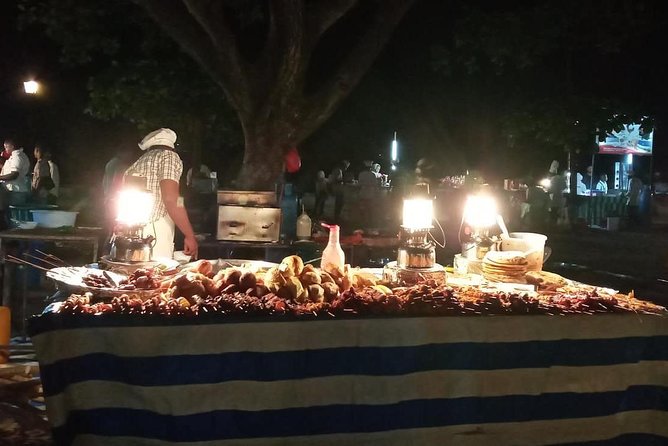
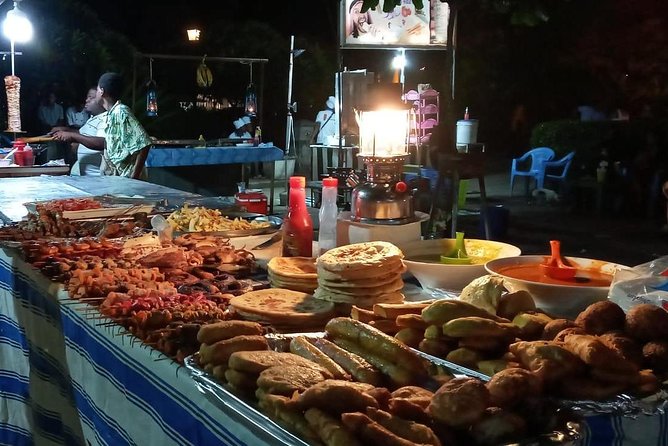
This is where the tour moves from formal landmarks into working Stone Town. You can expect a more practical look at what people buy and sell, with strong sights and smells from food and spice areas. The market helps explain why Zanzibar has long been tied to commerce across the Indian Ocean.
The name Darajani is also explained during the visit. That small piece of local language and place knowledge is useful because it turns a market name into part of the city’s identity rather than a label on a map.
Fifteen minutes is enough for an introduction, but not a long shopping session. If you want to buy spices, snacks, or souvenirs, keep the walk moving and return later with time to compare prices. Food and snacks are not included in the $40 price, so any tasting or purchases come from your own budget.
The listed 8:00 pm start deserves attention here. An evening visit may offer a different market atmosphere from a morning visit, and some stalls or sections may not operate in the same way late in the day. Ask the provider to confirm the schedule and what will be open at the planned time. The route description clearly promises the market, but exact conditions can depend on the hour.
The Old Fort and the Portuguese chapter

The final listed stop is the Old Fort, or Ngome Kongwe, with about 20 minutes allocated. The guide explains its connection to the Portuguese presence along the Tanzanian coast and the fort-building history that stretched from Mombasa to Zanzibar.
This is a good closing point because the fort gives you a solid stone reminder of coastal power struggles. Stone Town’s history was shaped by control of ports and sea routes, not just by life inside the city. The fort helps you picture that wider coastal setting.
The tour begins and ends at the Old Fort on Mizingani Road. That makes the meeting point easy to understand and gives you a familiar location at the close of the walk. Since the experience is on foot, wear comfortable shoes and be ready for narrow streets rather than a smooth sightseeing route.
Twenty minutes is enough for a guided orientation, though not necessarily for every corner or detail. The value comes from the explanation of the fort’s role and its place in the region’s history. If you are interested in military architecture, you may want to return on your own after the tour.
What the $40 price really covers

At $40 per person, this is a reasonable price if you want a guide to organize the history and admissions in one compact outing. All fees and taxes are included, as is bottled water. You are not paying only for a walk through public streets. You are also paying for interpretation at five named sites and for a route that connects them into one story.
The value is strongest for a first visit. In three hours, you get royal history, colonial influence, the slave trade, local commerce, modern cultural history, and fortifications. Doing the same route alone could cost less, but you would need to research the sites, find the correct locations, and decide how to connect them.
The price does not include lunch or snacks. It also does not include bicycle use, although this is a walking experience and bicycles are not needed for the planned route. Set aside extra money if you want market food, drinks beyond the supplied water, or souvenirs.
The small group is another part of the value. A maximum of eight people is more manageable than a large city group, particularly in Stone Town’s tight lanes. You may be able to hear the guide more clearly and ask for explanations about specific doors, streets, or buildings.
Guide style and the Ali factor
Ali is the guide name associated with this experience, and the strongest praise centers on his manner as much as his historical explanations. He is described as reliable, honest, friendly, professional, and willing to help with questions or requests beyond a fixed tour plan.
That flexibility can be useful in Zanzibar. You may arrive wanting only a Stone Town walk and then need advice about another activity. Ali has also been associated with Prison Island outings, including explanations about its history and giant tortoises. That does not mean another excursion is part of this booking, but it suggests he may be a useful local contact if you have wider plans.
One especially practical point is the sense of safety and personal attention described by a solo woman who used the guides. I would still use normal city precautions, but a small group and a guide who knows the streets can make the walk feel easier to manage.
The tour should suit you if you enjoy asking questions. The route contains many subjects, and the short stop times mean the experience depends on a guide who can explain clearly without losing the group. If you prefer to linger for photographs or read every display at your own pace, the planned schedule may feel brisk.
Timing, comfort, and small practical matters
The stated duration is about three hours. That is long enough to cover the main points without using an entire day, and it leaves you free for another activity afterward. Because the route is on foot, comfortable shoes are more useful than formal clothing.
Pickup is offered, but the published start and end point is the Old Fort. Confirm the pickup location and the 8:00 pm start before booking. The evening timing is the main detail I would clarify, especially because the route includes a market and historical buildings.
Confirmation is received at booking. Service animals are allowed, the tour is near public transportation, and most people can participate. The experience requires good weather. If poor weather cancels it, you can choose another date or receive a full refund.
Free cancellation is available if you cancel at least 24 hours before the start time. Cancellations or changes made less than 24 hours before the start are not refunded or accepted, and the cut-off follows Zanzibar’s local time.
Who should book this Stone Town walk?
I would choose this tour if you are visiting Zanzibar for the first time and want a clear introduction rather than a long, specialized history program. It suits couples, families with older children, solo visitors, and small groups who want a guide nearby but do not want a large coach-style outing.
It is also a good match if you care about context. The route does not stop at pretty architecture. It addresses slavery, royal power, colonial influence, trade, religion, and modern culture. That gives you a more honest view of Stone Town.
You may want another option if you need a daytime market visit, a long museum session, or a slower photography walk. The schedule is compact, and the listed evening start could limit what you see operating at Darajani Bazaar. Ask about that before paying.
Should you book it?
Book this Stone Town walking tour if you want five major stops, a small group, included admission fees, and a guide who can explain the city’s difficult history in plain terms. The old slave market and cathedral alone provide important context, while the market, fort, House of Wonders, and Freddie Mercury stop keep the route varied.
I would confirm the start time and pickup details first, then book if the evening schedule works for you. At $40, it offers solid value for a three-hour introduction, especially if you want help connecting Stone Town’s landmarks instead of simply photographing them.
FAQ
How long does the Stone Town walking tour last?
The tour lasts approximately three hours.
How much does the tour cost?
The price is $40 per person.
Where does the tour start and finish?
It starts at the Old Fort on Mizingani Road in Zanzibar and ends back at the meeting point.
What time does the tour start?
The stated start time is 8:00 pm.
What is included in the price?
All fees and taxes are included, along with bottled water.
Can I cancel for a full refund?
Yes. You can cancel at least 24 hours before the experience start time for a full refund. Cancellations made less than 24 hours before the start are not refunded.
Newly listed around Zanzibar
- Zanzibar: Nungwi/Kendwa Beach Sunset Dhow Cruise with Fruits★ 3.4 · 3 reviews
- Prison Island, Sea Turtles, Rock Restaurant & Relax in Beach★ 4.6 · 3 reviews
- Starfish Beach; The Rock; Kuza Cave; Paje Beach; Salaam Cave Tour★ 4.5 · 3 reviews
- Joazani forest & Spice farm with lunch★ 5.0 · 3 reviews
- Zanzibar: Half-Day Spice Farm Tour,the flavours of Zanzibar★ 4.7 · 3 reviews
- Nakupenda Island Snorkeling Sea trip & Lunch W/Transfer -Zanzibar★ 4.0 · 3 reviews
- Mnemba Island Snorkeling and Dolphin tour★ 5.0 · 3 reviews
- Zanzibar:Jozani forest, Spice farm with Swahili Cuisine clas★ 4.2 · 3 reviews
Stone Town Tours, compared.






Full-Day Private Stone Town +Spice Farm and Prison Island Tour
Read our review →
Browse the lists this tour appears in