

Reviewed · STONE TOWN TOURS
StoneTown Tours
Stone Town makes more sense when someone helps you read its streets. StoneTown Tours takes you to the Old Fort, former slave market, House of Wonder, Forodhani Garden, Hamamni Persian Baths, and carved Zanzibar doors, with Ibrahim Juma Said serving as your guide.
I like the private format, since your group can ask questions and request help without being tied to a large crowd. I also like that the tour focuses on both major landmarks and small details such as carved doors, while the $30 price includes fees and taxes. The main caution is the unclear duration of roughly 3 to 30 minutes, which seems unusually short for this list of sights, so confirm the actual length before paying.
Key points to know before you book
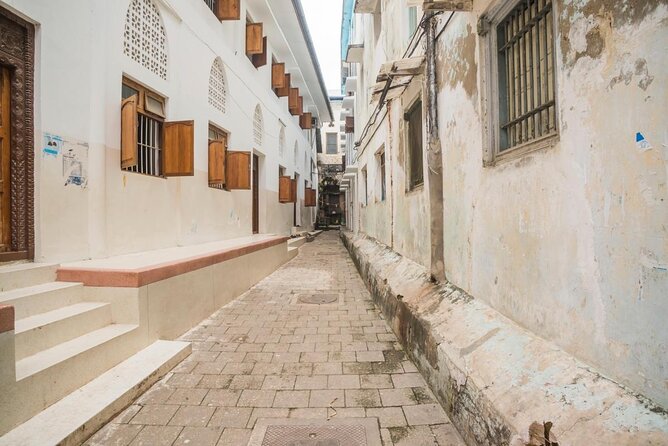
- Private tour format: Only your group takes part, giving you more freedom to ask questions and set the pace.
- Six major Stone Town sights: The route includes the Old Fort, former Old Slave Market, House of Wonder, Forodhani Garden, Hamamni Persian Baths, and carved doors.
- Historical storytelling: Ibrahim Juma Said guides you through the area and explains the background of selected places.
- $30 per person: Fees and taxes are included, which makes the price easier to judge before booking.
- Accessible setup: The tour is wheelchair accessible, service animals are allowed, and the meeting point is near public transportation.
- One practical warning: Keep your booking confirmation handy, since one booking involved confusion over entrance fees and transport arrangements.
A first look at Stone Town’s character

Stone Town is best understood as a place where everyday streets carry several layers of Zanzibar’s past. The route brings together forts, religious and commercial spaces, former slave-trade sites, baths, gardens, and decorated homes.
You are not simply ticking off monuments. You are moving through a compact old quarter where a heavy doorway, a worn wall, or a narrow passage can be as telling as a formal museum. A guide helps connect those details, especially when the buildings are not marked in a way that makes their importance obvious.
StoneTown Tours is designed for that kind of introduction. Ibrahim Juma Said meets your group and leads you through the area, telling historical stories along the way. The activity ends back at the meeting point, so you are not left to work out a separate finish point in an unfamiliar part of town.
The private setup matters here. You can ask Ibrahim to explain a place again, spend more time on a subject that interests you, or ask for help with the route. The supplied information also says the guide can accommodate requests, although no fixed custom itinerary is promised.
More Stone Town walks:
- Zanzibar: Stone Town, Spice Tour, Prison Island with Lunch
★ 4.4 · 1,219 reviews - Zanzibar: Prison Island, Stone Town, & Spice Farm Tour
★ 4.5 · 579 reviews - Zanzibar; Prison Island, Nakupenda, StoneTown Tour with BBQ
★ 4.3 · 457 reviews
Old Fort: the tour’s strongest landmark
The Old Fort is one of the clearest starting points for understanding Stone Town. Its thick walls and defensive purpose give you an immediate sense of the town’s strategic importance, and it provides a strong visual contrast with the homes and markets nearby.
I would pay attention to how the fort fits into the wider street plan. The point is not only the building itself, but also what it says about protection, control, and the changing uses of central Stone Town.
Your guide’s historical explanation is especially useful here because the fort can otherwise seem like a simple block of old masonry. Ask Ibrahim what changed over time and how the fort relates to the other landmarks on the route. The information provided does not promise a formal lecture or a set amount of time at each stop, so the depth of the explanation may depend on your questions and the pace of your group.
The former Old Slave Market and a difficult past
The former Old Slave Market is an important stop, but it is also the point where the tour’s subject matter becomes most serious. A visit here should not be treated as a quick photo stop. The site connects Stone Town to the human cost of the Indian Ocean slave trade and to Zanzibar’s role in regional commerce.
You can expect Ibrahim to provide historical stories about some of the places you visit. The exact details and length of the discussion are not specified, so ask direct questions if you want more context about the market, the people affected, or the buildings that remain.
This stop gives the tour moral weight. The Old Fort may be the most instantly recognizable structure, but the former slave market helps explain why Stone Town’s past cannot be reduced to attractive architecture and oceanfront scenery.
The tour information does not say that admission to every individual site is included, only that all fees and taxes are included in the booking. Because one booking involved a dispute over entrance fees, keep your confirmation available and ask what is covered before entering any paid area. That small bit of preparation can prevent an awkward pause during an otherwise worthwhile visit.
House of Wonder and the changing city
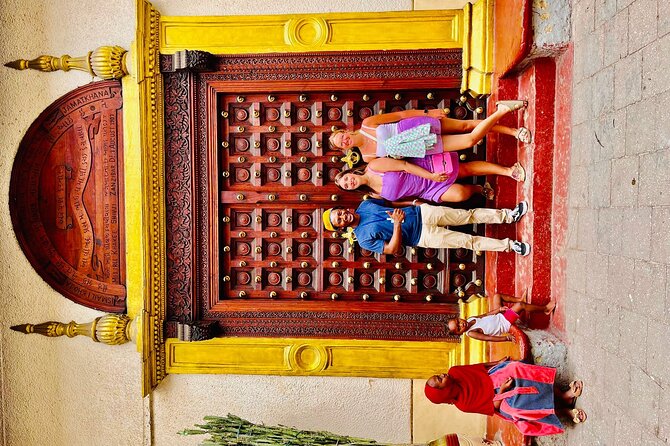
The House of Wonder, also known as Beit-al-Ajaib, is another major stop on the route. Its name hints at the impression it was intended to make, and its scale helps you see how important Stone Town once was as a seat of power and public life.
The provided details do not specify the current condition of the building or whether you go inside. That matters because the experience may be primarily an exterior explanation rather than a room-by-room visit. Ask Ibrahim what access is available on the day of your tour.
Even from outside, the House of Wonder can help you compare the grand public buildings with the quieter residential streets. StoneTown Tours does well to place this stop alongside carved doors and Hamamni Persian Baths, since the route moves from large civic landmarks to more personal details of daily life.
A few more Zanzibar days to compare
- From Zanzibar: Mikumi Safari Day Trip with Flights and Meal
★ 4.7 · 1,470 reviews - Zanzibar: Quad Bike Adventure departing from Kendwa or Nungwi
★ 4.9 · 1,233 reviews - From Kendwa: Mnemba Boat Trip and Dolphin Snorkel Adventure
★ 4.8 · 1,043 reviews - From Zanzibar: Day Selous Game Reserve Safari with Flights
★ 4.7 · 1,025 reviews
Forodhani Garden and the open-air side of Stone Town
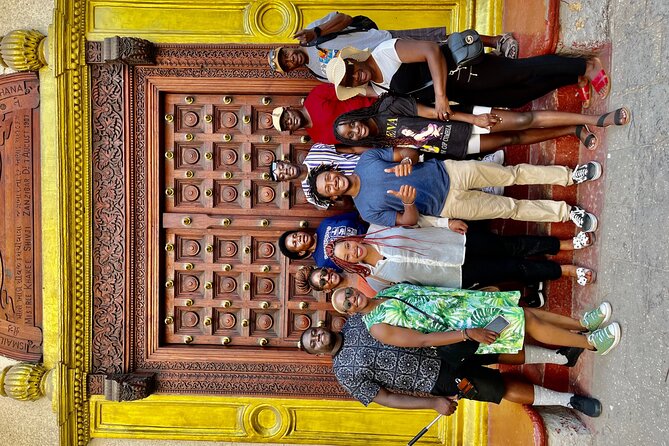
Forodhani Garden gives the route a change of mood. Instead of a fort, market site, or formal building, you get an open public space tied to the social life of Stone Town.
The supplied itinerary calls it Forodhani Garden, while the overview uses Foodchain Garden. Treat these as the same planned stop, and confirm the meeting or walking sequence if the name causes confusion when you book.
I like having this kind of pause in the route. Gardens and public squares show you how a historic district functions beyond its monuments. You can consider how people move through the waterfront side of town, where commerce and social activity meet, and how the garden differs from the enclosed courtyards and old buildings elsewhere on the walk.
No food tasting is promised, so do not book this as a culinary tour. The stop is part of the historical and cultural route, not a package of meals or market samples. That distinction is useful if you are comparing StoneTown Tours with a dedicated food walk.
Hamamni Persian Baths, room by room

The Hamamni Persian Baths are among the more distinctive stops because the route includes wandering through various rooms. This gives you a chance to see a different kind of historic space, one designed around bathing, privacy, heat, and social custom rather than defense or government.
The baths can be easy to overlook if you are exploring without a guide. Their significance is not always obvious from the outside, and the sequence of rooms makes more sense when someone explains how the place was used.
This is also where the stated private format may be most helpful. You can ask Ibrahim about the purpose of each room instead of moving through quickly with a large crowd. Still, the tour does not give a detailed room list or guarantee a set amount of time inside, so the visit may be fairly brief.
If you have limited mobility, ask about the route and surfaces before starting. The activity is described as wheelchair accessible, which is a useful advantage, but no detailed information is provided about ramps, steps, doorway widths, or the exact route through the baths. Service animals are allowed.
Carved Zanzibar doors and the details between landmarks

The carved Zanzibar doors may be the most personal part of the experience. Large public buildings tell you about power, but doors tell you about the families, trades, beliefs, and ambitions that shaped individual homes.
Look up as you walk. The value of this stop comes from noticing details that you might otherwise pass without a second glance. StoneTown Tours specifically includes the carved doors rather than limiting the route to headline attractions, and that makes the experience feel more connected to the lived-in city.
The information provided does not identify particular doors or promise access to private homes. You will be seeing the doors as part of the walking route, with the guide explaining their significance where appropriate. Do not expect a workshop or a hands-on carving demonstration.
This part of the tour is also a reminder to keep the pace manageable. Stone Town’s old streets are best taken slowly, and a private group can usually pause more easily than a large one. The published physical-fitness requirement is moderate, so sensible shoes and a steady pace are worthwhile.
What the $30 price really gives you

At $30 per person, the main value is the guide’s time and the convenience of having someone lead your group through several historic places. You are paying for a private activity, historical explanations, a planned route, and included fees and taxes.
That can be a fair price if you want a focused introduction to Stone Town and would rather not organize the route yourself. It is especially useful on a first visit, when the Old Fort, former slave market, House of Wonder, baths, garden, and carved doors may blur together without context.
The value is less clear if you expect a long tour with extensive interior access. The stated duration of 3 to 30 minutes is too short or too imprecise for a route containing this many stops. I would ask for the exact start and finish time before booking, and I would also confirm which entrance charges are included.
The tour is generally well regarded, with a 5 out of 5 rating from 70 reviews and a 99 percent recommendation figure. Those numbers suggest strong overall satisfaction, especially with the guide’s care and service, but they do not remove the need to clarify the unusual timing and entry arrangements.
The guide and the private group advantage
Ibrahim Juma Said is identified as the experience provider and guide. One strong account describes him as attentive, good at English, and able to explain the city while taking care of the group. That combination matters in Stone Town, where a helpful guide can make the route feel calm rather than confusing.
You get a private tour rather than a shared group activity. Only your group participates, which gives you a better chance to ask about the slave market, the baths, or the meaning behind the doors.
The private format does not guarantee that every request can be granted. It does mean the guide can respond to your interests more directly than a fixed large-group tour. If you want more time at one stop, say so early.
There was also one serious service problem connected to a taxi pickup. The guide reportedly disappeared for 15 to 20 minutes, and the group then waited more than half an hour for a return taxi. The provider explained that the taxi was hired separately and was not owned by the tour company, and that the transport request created confusion.
The practical lesson is simple: treat the walking tour and any taxi arrangement as separate matters unless your booking clearly combines them. Keep the confirmation on your phone, confirm who is responsible for transport, and do not assume a hired taxi is operated by StoneTown Tours.
Timing, access, and what to confirm
The published operating information shows Monday hours of 8:30 a.m. to 6 p.m. The date range listed runs from February 5, 2020, through June 18, 2026. Since the available schedule information is narrow, check that your requested date and start time fit the current operating hours.
The mobile ticket is useful because you can keep the booking details on your phone. Bring that confirmation with you, especially because of the past confusion over entrance fees.
The tour is near public transportation, so the meeting point should be practical to reach. The supplied details do not identify a street address or a landmark at the meeting point, so make sure you have the exact meeting instructions before setting out.
Wheelchair access and permission for service animals make this tour more suitable for a wider range of visitors. Still, the route includes old buildings and historic spaces, and no precise information is given about steps or surfaces. If you use a wheelchair, contact the provider in advance with your specific access needs rather than relying only on the general accessibility label.
The tour requires moderate physical fitness. That likely reflects walking through the old quarter and moving among several stops, but the exact distance is not provided. Comfortable footwear is a sensible choice.
Weather and cancellation terms
This experience requires good weather. If poor weather causes cancellation, you are offered another date or a full refund.
You can cancel for a full refund up to 24 hours before the local start time. Cancellations made within 24 hours are not refunded, and changes within that same period are not accepted.
That policy is reasonable for a small private operation, but it makes timing important. If your plans in Zanzibar are uncertain, do not wait until the last day to adjust the booking.
Who will get the most from this tour?
I would choose StoneTown Tours if you want a private introduction to the old quarter and prefer a guide to organize the route. It suits first-time visitors, couples, families, and small groups who want to ask questions as they go.
It also suits anyone interested in architecture and social history rather than only scenic views. The combination of the slave market, baths, carved doors, fort, civic buildings, and public garden gives you several ways to understand Stone Town.
It may not suit you if you need a precisely timed, long-format sightseeing tour. The duration needs clarification, and the tour does not promise meals, a dedicated taxi, or guaranteed interior access to every landmark.
I would also think twice if your schedule allows no room for confusion. The taxi problem described above was not part of the core walking route, but it shows why you should confirm the meeting point, finish arrangements, and transport responsibility in advance.
Should you book StoneTown Tours?
Book it if you want a private, guide-led introduction to Stone Town for $30 per person, with the main landmarks and smaller architectural details covered in one outing. Ibrahim Juma Said’s personal attention and the route through the former slave market, Hamamni Persian Baths, and carved doors give the tour more substance than a simple fort-and-photo walk.
Before booking, confirm three things: the exact duration, which entrance fees are included, and whether any requested taxi service is separate from the tour. If those points are clear, this is a sensible way to get your bearings and understand the old quarter without worrying about getting lost.
FAQ
How much does StoneTown Tours cost?
The price is $30 per person. Fees and taxes are included in the booking.
How long does the tour last?
The published approximate duration is listed as 3 to 30 minutes. Because that range is unusually short for the number of sights included, confirm the exact length before booking.
Is this a private tour?
Yes. Only your group participates in the activity.
Which places are included?
The route includes the Old Fort, former Old Slave Market, House of Wonder, Forodhani Garden, Hamamni Persian Baths, and carved Zanzibar doors.
Who leads the tour?
The experience provider is Ibrahim Juma Said. He meets your group and leads the route through Stone Town.
Is the tour wheelchair accessible?
Yes. The experience is described as wheelchair accessible, and service animals are allowed. Specific details about steps, surfaces, and access inside individual buildings are not provided.
Can I cancel for a full refund?
Yes. You can cancel at least 24 hours before the local start time for a full refund. Cancellations or changes made within 24 hours are not accepted or refunded. If poor weather causes the tour to be canceled, you are offered another date or a full refund.
Newly listed around Zanzibar
- Prison Island, Sea Turtles, Rock Restaurant & Relax in Beach★ 4.6 · 3 reviews
- Zanzibar: Nungwi/Kendwa Beach Sunset Dhow Cruise with Fruits★ 3.4 · 3 reviews
- Starfish Beach; The Rock; Kuza Cave; Paje Beach; Salaam Cave Tour★ 4.5 · 3 reviews
- Zanzibar: Half-Day Spice Farm Tour,the flavours of Zanzibar★ 4.7 · 3 reviews
- Joazani forest & Spice farm with lunch★ 5.0 · 3 reviews
- Nakupenda Island Snorkeling Sea trip & Lunch W/Transfer -Zanzibar★ 4.0 · 3 reviews
- Zanzibar:Jozani forest, Spice farm with Swahili Cuisine clas★ 4.2 · 3 reviews
- Mnemba Island Snorkeling and Dolphin tour★ 5.0 · 3 reviews
Stone Town Tours, compared.





Full-Day Private Stone Town +Spice Farm and Prison Island Tour
Read our review →
Browse the lists this tour appears in