

Reviewed · STONE TOWN TOURS
Stone Town Walking Tour with Hassan
Stone Town’s best stories are packed into a few narrow streets, where a sultan’s palace, a former slave market, a lively food garden, and a coffee corner can sit within a short walk of one another. This private tour with Hassan gives you a clear way to connect those places instead of wandering past them without context.
I like the tour’s wide historical range, from Portuguese fortifications and Omani sultans to the slave trade and Freddie Mercury. I also like the private format and the guide’s flexible approach. The main consideration is that most museum and church admission fees are extra, so the $25 price is not the full cost if you enter several sites.
Key points at a glance

- Three hours in central Stone Town: The route covers 12 important sites, with enough time for a broad introduction rather than one long museum visit.
- Hassan leads a private walk: Your group has the guide’s attention, and the tour can be flexible in pace and explanation.
- A strong mix of subjects: Expect sultans, Portuguese rule, religion, markets, slavery, architecture, and Zanzibar’s modern cultural links.
- Darajani Bazaar adds everyday life: Fish, spices, meat, fruit, and vegetables bring the city’s daily rhythm into the tour.
- Most admission fees are separate: The House of Wonders, Freddie Mercury Museum, churches, Old Slave Market, Old Dispensary, mosque, and People’s Palace list entrance charges as excluded.
- Good value for a first visit: At $25 per person, the walk is priced reasonably for a private, guided overview, especially if you want history explained as you go.
Why Stone Town works best on foot
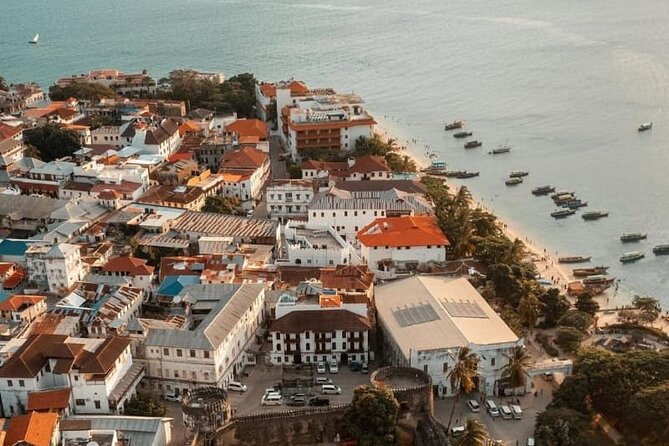
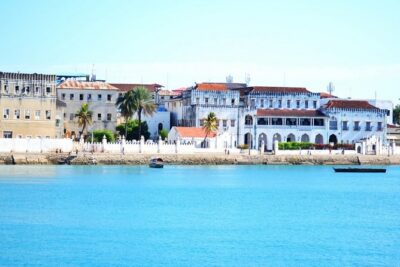
Stone Town is the historic core of Zanzibar City and a UNESCO World Heritage site. Its buildings reflect several cultures and periods, including Portuguese influence, Omani rule, Islamic traditions, Christian missionary work, British administration, and modern Tanzanian life.
A walking tour makes sense here because the sights are close together, yet the city can be confusing at first. Streets bend, buildings face small squares, and many important details are easy to miss. Hassan’s role is not only to lead you from one address to the next. He gives the buildings a place in the larger story of Zanzibar.
The route begins and ends at Forodhani, near the waterfront. The advertised stops add up to a little under two and a half hours of scheduled visits, leaving the rest of the roughly three-hour outing for walking and transitions. That is a useful balance. You get a lot of coverage without spending the whole morning inside one attraction.
Because this is a private activity, only your group participates. That matters if you want to ask about Zanzibar’s politics, daily life, religion, or history without holding up a large group. Hassan is also described as flexible and informative without letting the tour drag, a useful combination for a city walk.
More Walking Tours in Zanzibar
- Stone Town Private Walking Tour
★ 5.0 · 371 reviews - Zanzibar: 3 Hours Private Stone Town walking Tour with Guide
★ 4.6 · 301 reviews - Zanzibar: Stone Town Historical Cultural Walking Guided Tour
★ 4.5 · 179 reviews
Starting beside the House of Wonders
The House of Wonders is one of Stone Town’s most recognizable buildings. Sultan Barghash bin Said commissioned it in the 19th century, and it became a ceremonial palace and reception hall. It once held the distinction of being Stone Town’s largest and tallest building.
The building faces Forodhani Gardens and sits between the Old Fort and the People’s Palace Museum. Its location makes it a useful first lesson in how the old city is arranged around the waterfront and the former centers of royal power.
The scheduled visit is brief, about 10 minutes, and admission is not included. That short stop is best treated as an exterior introduction unless you choose to pay for entry. Ask Hassan to point out the building’s role in the sultanate and its relationship to the nearby palace and fort.
Forodhani Gardens and the Old Fort
Forodhani Gardens is known today for its evening food market, when local people and tourists come for a simple meal. During a daytime tour, you may not see the full night market atmosphere, but the space still helps you understand Stone Town’s connection to the waterfront.
The gardens were laid out in 1936 to mark the silver jubilee of Sultan Khalifa. The stop lasts about 17 minutes, and admission is included. It is a good place to ask Hassan about the difference between Stone Town as a historic district and Zanzibar City as a living capital.
Next comes the Old Fort, also called Ngome Kongwe. The Portuguese built the original fortification in the 16th century, and later Omani rulers adapted it. It is often described as the oldest building in Stone Town and is now used for Zanzibar festivals.
The stop lasts about 10 minutes, with admission included. The fort is not just a military relic. It shows how control of Zanzibar changed hands and how old structures can take on new public uses. The tour does not promise a long interior visit, so you should see this as a concise orientation rather than a full fort tour.
Freddie Mercury’s Zanzibar connection
Freddie Mercury was born in Zanzibar Town on September 5, 1946. He later became the British singer and songwriter best known as the lead vocalist and pianist of Queen.
The Freddie Mercury Museum is a short stop of about seven minutes, and entry is not included. That timing tells you what to expect: a quick look at the connection between the musician and Zanzibar, not an extended music museum visit.
I like this stop because it adds a modern cultural thread to a route otherwise focused on palaces, churches, mosques, and trade. It also gives the tour some variety. If Freddie Mercury is a major reason you want to visit the museum, budget for the separate ticket and consider asking whether the short scheduled stop is enough for your interests.
More Stone Town walks:
- Zanzibar: Stone Town, Spice Tour, Prison Island with Lunch
★ 4.4 · 1,219 reviews - Zanzibar: Prison Island, Stone Town, & Spice Farm Tour
★ 4.5 · 579 reviews - Zanzibar; Prison Island, Nakupenda, StoneTown Tour with BBQ
★ 4.3 · 457 reviews - Zanzibar: Stone Town, Spice tour & Prison Island with Lunch
★ 4.6 · 453 reviews
St. Joseph’s Cathedral and Zanzibar’s Christian history
St. Joseph’s Roman Catholic Cathedral began construction in 1863. French missionaries from Réunion were involved, but work stopped after graves were found on the site. Construction resumed about 30 years later, and the first Mass was held at Christmas in 1898.
The stop is listed at seven minutes, with admission extra. That is enough for a short explanation and perhaps a look at the exterior, but not a detailed architectural study. The cathedral is important because it shows that Stone Town’s story is not only about sultans and Islam. Missionaries, French connections, and Catholic communities also shaped the city.
As with other religious sites, dress and behavior should be respectful. The supplied details do not specify a formal dress code, so your guide is the best person to ask before entering.
Jaws Corner, where the city slows down
Jaws Corner is described as the heart of town and a meeting place where local people and tourists drink coffee and joke together. The scheduled stop is only three minutes, and it is free.
That sounds brief, but the point is less about sightseeing than about seeing how Stone Town’s public life works. Historic cities are not just collections of grand buildings. They also depend on small gathering places, familiar routines, and social habits.
Do not expect a full coffee break here based on the listed timing. Think of it as a quick stop and a chance to ask Hassan about everyday life in Zanzibar.
The Old Slave Market and Anglican Cathedral
The former slave market is one of the most serious stops on the route. Enslaved people were brought from different countries and sold here until the market was closed around 1873 by Sultan Barghash.
The site later became an Anglican church, built under Edward Steere, the third Bishop of Zanzibar, who served from 1874 to 1882. Steere died of a heart attack in the building next door and was buried behind the altar.
The combined stop lasts about 20 minutes, with admission not included. This is the longest scheduled visit on the walk, and rightly so. The site asks you to confront a painful part of Zanzibar’s past, while the church reflects the effort to mark that history through a new religious building.
I would not rush this stop. Listen carefully to Hassan’s explanation, and allow the location to speak for itself. The account of slavery can be difficult, but it is essential to understanding Zanzibar’s place in Indian Ocean trade and the forces that shaped the island.
Darajani Bazaar and the working city

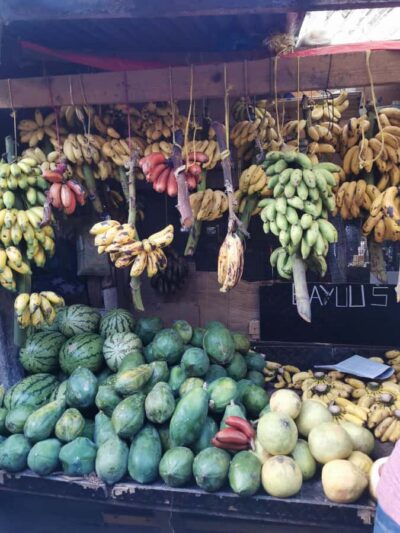
Darajani Bazaar is the largest of Stone Town’s central market structures. British architect J. H. Sinclair designed it in an eclectic style, and it opened in August 1904.
The market once faced the creek and contains sections for fish, spices, meat, fruit, and vegetables. The scheduled stop lasts about 15 minutes, and admission is included.
This is one of the most useful parts of the walk for anyone who wants to see more than monuments. A market shows you what people buy, sell, cook, and carry home. It also gives you a break from palace history. The visit is short, so you may not have time to inspect every section or shop. Keep your group close and follow Hassan’s lead through the market.
The Old Dispensary and Indian Ocean connections
The Old Dispensary was commissioned in 1887 by Tharia Topan as a charitable hospital for poor people. When he died in 1891, the building was unfinished. His widow resumed work, but financial problems halted construction again in 1893. After a family dispute, the building was sold, and the new owner completed it in 1894.
The stop lasts about 15 minutes, with entry fees excluded. The story gives you a glimpse of philanthropy, family business, and the role of private money in public buildings.
The name can be misleading if you expect a working medical facility. This is a historic building, and the value lies in its origin and architecture. Ask Hassan to explain how the building fits into Stone Town’s wider trading connections and community life.
Malindi Mosque and the old customs house
Malindi Mosque, also called Ijumaa or Friday Mosque, dates from the 19th century. Zanzibar’s mosques are often plain compared with buildings that use large domes and tall minarets. This mosque was renovated in a modern Arabesque style in 1994.
The visit is listed at about nine minutes, and admission is not included. It is a useful reminder that Islamic architecture in Zanzibar does not follow one single visual formula. As with the cathedral, you should treat the mosque as an active religious place and follow guidance about entry and dress.
The Old Customs House dates from about 1865. It was first built as a home for Zam Zam, a daughter of Seyyid Said, the first Sultan of Zanzibar, and her husband, Sayyid Humud bin Ahmed of the Busaidy family.
After changes in the family, the building later became the Customs House. In 1928, the customs authority moved from the Forodhani area to the port, and this family home served as the new Customs House until 1987.
The scheduled stop is 18 minutes, with admission included. This building links private royal life with the administration of trade. It also helps explain why the waterfront was so important to Stone Town’s economy.
The People’s Palace closes the historical circle
The People’s Palace Museum, once known as the Sultan’s palace, was built by Seyyid Said bin Sultan in the 1830s for members of the royal family. It was his second palace after Mtoni Palace.
The building was damaged during the Anglo-Zanzibar War of 1896 and reduced to about half its original size. It remained an Al Busaidy palace until the Zanzibar Revolution of 1964, when Sultan Jamshid was overthrown. It later became the People’s Palace and was used as government offices before opening as the Palace Museum in 1994.
The scheduled stop is about 20 minutes, and admission is extra. This is a strong final stop because it brings together the themes introduced throughout the walk: royal power, war, revolution, and the shift from sultanate to modern government.
If you want a detailed palace visit, the extra admission and limited tour time are worth considering. The walk gives you the setting and essential story, but you may need more time on your own to examine the exhibits.
What the $25 price really covers
At $25 per person, this is a fair price for a private, three-hour guided introduction to Stone Town. You are paying for Hassan’s time, route planning, historical explanations, and the convenience of having one person connect 12 places into a coherent story.
The bottle of water is included. Transport from your hotel to Forodhani is not included, although the provider asks you to send an advance message if your hotel is in Stone Town and you want pickup arrangements discussed.
The main extra cost is admission. Fees are listed as excluded at several stops, including the House of Wonders, Freddie Mercury Museum, St. Joseph’s Cathedral, the Old Slave Market and Anglican Cathedral, the Old Dispensary, Malindi Mosque, and the People’s Palace Museum.
You can still get value from the walk without entering every building, but check your priorities before booking. If you want interiors, displays, and extended museum time, expect to pay more and perhaps return to selected sites afterward.
Who should book this Stone Town walk
I would choose this tour if you are visiting Stone Town for the first time and want a broad introduction in a short period. It suits people who prefer explanations over simply taking photographs, especially anyone interested in Zanzibar’s royal history, trade, religion, slavery, and modern culture.
It is also a good fit for couples, families, and small private groups who want to ask questions at their own pace. Hassan’s English-language guiding, flexible manner, and ability to discuss politics and daily life make the tour more useful than a simple building-by-building walk.
You may want something else if your main goal is a slow architectural study, a full food tour, or long museum visits. The schedule is active, and several stops last only seven to 10 minutes. That keeps the tour moving, but it limits time inside individual attractions.
The activity is confirmed when you book, and it is near public transportation. Most people can participate. It requires good weather, and you can cancel for a full refund up to 24 hours before the start time. Cancellations or changes within 24 hours are not refunded or accepted.
My recommendation
Book Stone Town Walking Tour with Hassan if you want an affordable, private overview led by someone who can explain both the monuments and the wider life of Zanzibar. The strongest features are the range of stops, the thoughtful treatment of the former slave market, the market visit, and Hassan’s clear, flexible style.
Go in knowing that $25 does not cover most entry tickets, and that the listed times favor breadth over depth. For many visitors, that is the right trade: take the walking tour first, then return on your own to the palace, slave market, Freddie Mercury Museum, or another site that catches your interest.
FAQ
Where does the Stone Town Walking Tour with Hassan start?
The tour starts at Forodhani, Zanzibar, Tanzania.
Where does the tour end?
The activity ends back at the meeting point at Forodhani.
How long does the walking tour last?
The tour lasts approximately three hours.
What is included in the tour price?
The price includes a professional certified English-speaking guide and a bottle of water.
Is transportation from my hotel included?
No. Transport from your hotel to the meeting point is not included. If your hotel is in Stone Town, you should send an advance message to discuss pickup.
Is this a private tour?
Yes. Only your group participates in the activity.
Are admission tickets included?
Admission varies by stop. Some stops list entry as included, but admission is not included at several museums, churches, the former slave market and Anglican Cathedral, the Old Dispensary, Malindi Mosque, and the People’s Palace Museum.
Is the tour available in English?
Yes. The tour includes a certified professional guide in English.
How far in advance is the tour usually booked?
The experience is booked an average of 33 days in advance.
What is the cancellation policy?
You can cancel at least 24 hours before the start time for a full refund. Cancellations or changes made less than 24 hours before the start are not accepted and are not refunded. If poor weather causes the tour to be canceled, you will be offered another date or a full refund.
Newly listed around Zanzibar
- Zanzibar: Nungwi/Kendwa Beach Sunset Dhow Cruise with Fruits★ 3.4 · 3 reviews
- Prison Island, Sea Turtles, Rock Restaurant & Relax in Beach★ 4.6 · 3 reviews
- Starfish Beach; The Rock; Kuza Cave; Paje Beach; Salaam Cave Tour★ 4.5 · 3 reviews
- Zanzibar: Half-Day Spice Farm Tour,the flavours of Zanzibar★ 4.7 · 3 reviews
- Joazani forest & Spice farm with lunch★ 5.0 · 3 reviews
- Nakupenda Island Snorkeling Sea trip & Lunch W/Transfer -Zanzibar★ 4.0 · 3 reviews
- Mnemba Island Snorkeling and Dolphin tour★ 5.0 · 3 reviews
- Zanzibar:Jozani forest, Spice farm with Swahili Cuisine clas★ 4.2 · 3 reviews
Stone Town Tours, compared.
Full-Day Private Stone Town +Spice Farm and Prison Island Tour
Read our review →
Browse the lists this tour appears in