

Reviewed · STONE TOWN TOURS
Stone Town Secrets: A walking Tour Zanzibar
Stone Town is easiest to understand on foot, but its narrow lanes can feel like a puzzle. This private walk brings you from the Old Fort through Darajani Bazaar and the former slave market, then adds a cultural stop tied to Freddie Mercury. Guide Omar is known for a lively style, clear explanations, and a willingness to adjust the pace.
I like the small private format, which lets you spend more time on architecture, shopping, or history instead of following a fixed group. I also like the range: local fish and spices at the bazaar, a serious look at the slave trade, and a modern music connection. The main drawback is that three hours goes quickly, so some museums and landmarks may receive only a brief look.
Key points to know before you book
- Private walk with Omar: Your group has a guide rather than a large crowd, with room to ask questions and set the pace.
- Darajani Bazaar: See fish, fruit, vegetables, spices, vendors, and the old market structure at the heart of Stone Town.
- Slave-trade history: Visit the slave monument, chambers, and Anglican Cathedral, where auctions took place.
- Freddie Mercury connection: The final stop focuses on the musician’s Zanzibar birthplace and former family home.
- Three hours on foot: The schedule covers a lot, so wear practical shoes and expect a brisk sightseeing pace.
- Useful inclusions: Bottled water and the Old Slave Market entrance fee are covered, and Stone Town hotel pickup can be requested in advance.
Starting at the Old Fort in Stone Town
The tour begins at the Old Fort on Mizingani Road, a sensible meeting point near the waterfront and the main historic center. You finish back at the same location, which makes the experience easy to fit around time in port or a day based in Stone Town.
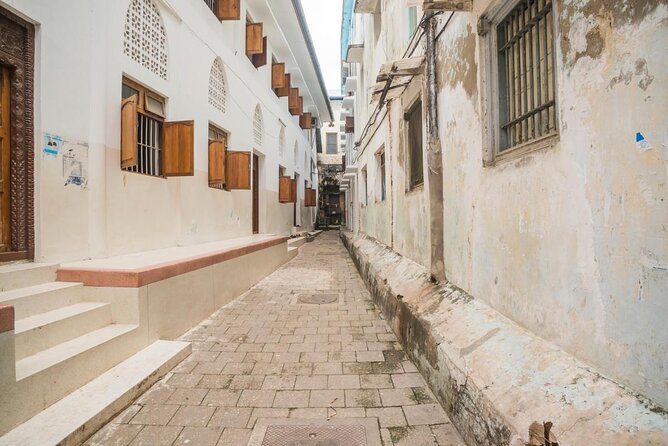
I like beginning here because you enter the old city from a clear landmark rather than trying to find a guide in one of the smaller lanes. Once you leave the open road, Stone Town changes character quickly. Streets narrow, buildings press close together, and it becomes less obvious which turn leads to the next major sight.
That is where a private guide earns his fee. You can walk Stone Town alone, but it is easy to pass important places without knowing what you are seeing. A good guide also gives the lanes a human scale, explaining how the town’s architecture, markets, religion, and trade shaped one another.
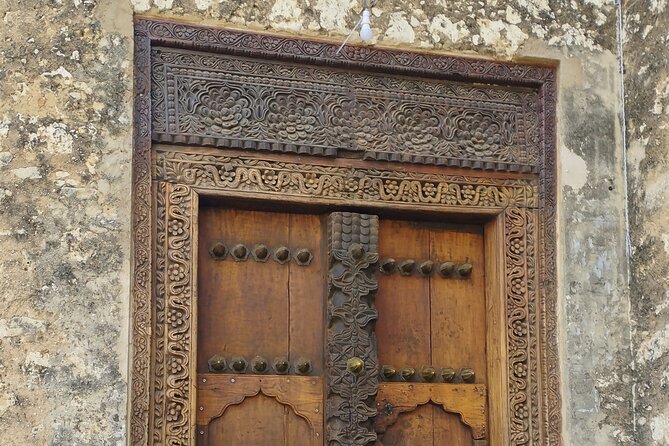
The first Stone Town portion is listed at about 30 minutes, but the whole walk depends on how your group uses its time. If you are especially interested in doors, carved details, or local textiles, tell Omar early. If history matters most, ask him to spend more time on the older parts of the town.
More Walking Tours in Zanzibar
- Stone Town Private Walking Tour
★ 5.0 · 371 reviews - Zanzibar: 3 Hours Private Stone Town walking Tour with Guide
★ 4.6 · 301 reviews - Zanzibar: Stone Town Historical Cultural Walking Guided Tour
★ 4.5 · 179 reviews
Darajani Bazaar: Zanzibar’s everyday market

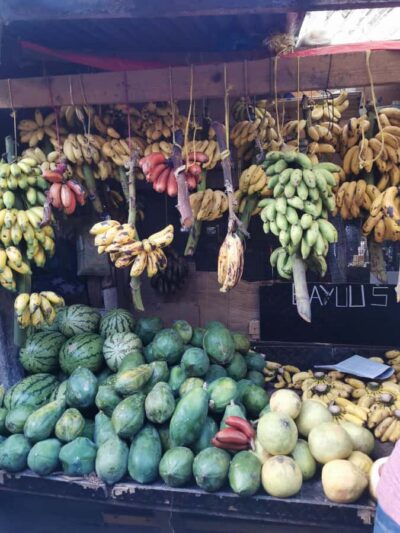
Darajani Bazaar is the most sensory part of the walk. You will see fish from the Indian Ocean, including fish auctions, along with spices supplied by local farmers, fruit, and vegetables. The market is not arranged as a polished attraction. It is a working place where local vendors sell food and people shop for daily needs.
The planned visit lasts about an hour, making this the longest stop. That extra time matters. You can look closely at the market’s structure, watch vendors at work, and ask how the old market helped connect Stone Town with the newer part of town.
The market also gives you a better feel for local dress and daily life. You may see male vendors selling fish and produce, as well as women wearing traditional Zanzibari clothing, hijab, or face coverings. These details are easy to miss if you hurry through with a camera.
I would keep your attention on the guide here. The market can be crowded and active, and Omar’s role is not just to point out food stalls. He can explain the building, the old division between Stone Town and New Town, and how the bazaar fits into Zanzibar’s wider trading past.
There is a practical point to remember: this is a market, not a quiet museum. Fish displays and auctions may not suit every visitor, and the setting can be humid or strong-smelling. If you prefer architecture or shopping, say so. The private setup gives you a better chance to shape the stop around your comfort level.
The former slave market and Anglican Cathedral
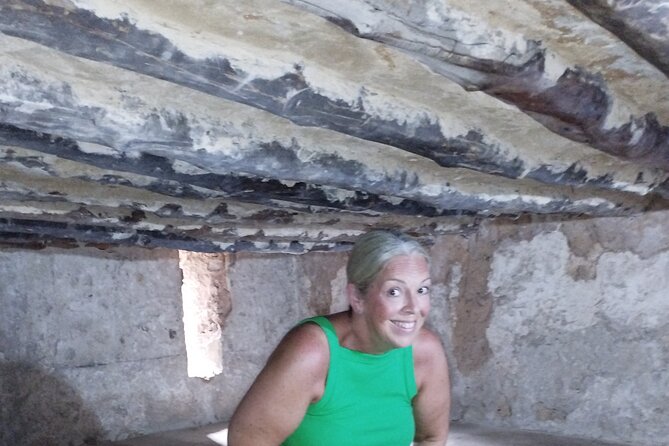
The next hour turns to Zanzibar’s most difficult history. You will see the slave monument, the former slave chambers, and the Anglican Cathedral connected with the site where slave auctions took place. The guide explains the East African slave trade and the role Zanzibar played within it.
This is not a light sightseeing stop, and it should not be treated as one. The chambers and monument give physical form to a history that can otherwise feel distant. Omar’s job here is especially important because the meaning of the site depends on context, not just on looking at old walls.
I appreciate that the tour places this visit after the bazaar. Darajani shows a living market and the continuing importance of trade in Stone Town. The slave-market visit then helps you consider the darker side of the commercial systems that shaped the island.
Give yourself room to listen. The subject can be emotionally heavy, and an hour allows for more than a quick photograph. You can ask questions about the buildings, the auctions, and the wider East African slave trade rather than treating the monument as a simple stop on a checklist.
The entrance fee to the Old Slave Market is included. That makes the price easier to judge, especially for visitors who want historical context rather than only scenic streets. Still, the experience is not designed as a full museum day. You should expect a guided introduction and explanation within the three-hour walking route.
Freddie Mercury’s Zanzibar connection
The final stop adds a very different note. Freddie Mercury was born in Zanzibar in 1946, and the Freddie Mercury Museum is located in the former family home in Stone Town. The museum presents personal items and memorabilia, including photographs, handwritten lyrics, and material connected with his career in Queen.
The itinerary labels this stop as Freddie Mercury Statue, while its description focuses on the museum and the former family home. That difference is worth checking when you book, particularly if seeing the museum interior is important to you.
The scheduled time is about 30 minutes. That is enough for a focused look at Freddie Mercury’s Zanzibar connection, but not a long music-history visit. I would see this as a compact cultural finish rather than the main reason to choose the tour.
It works well at the end because it shows another layer of Stone Town’s identity. The town is not only about old buildings and colonial-era trade. It is also tied to a twentieth-century musician known around the world. For Queen fans, this stop may be the most personal part of the walk. For everyone else, it offers a short change of pace after the slave-market visit.
More Stone Town walks:
- Zanzibar: Stone Town, Spice Tour, Prison Island with Lunch
★ 4.4 · 1,219 reviews - Zanzibar: Prison Island, Stone Town, & Spice Farm Tour
★ 4.5 · 579 reviews - Zanzibar; Prison Island, Nakupenda, StoneTown Tour with BBQ
★ 4.3 · 457 reviews - Zanzibar: Stone Town, Spice tour & Prison Island with Lunch
★ 4.6 · 453 reviews
A guide who keeps the walk personal
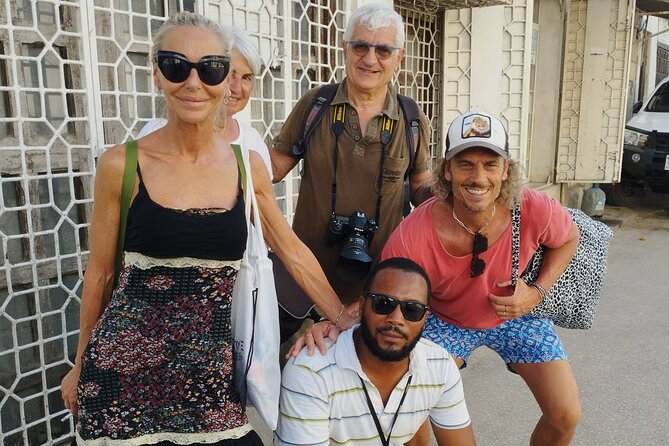
The strongest reason to choose this experience is the guide. Omar is repeatedly described as funny, polite, flexible, and well prepared. He is also praised for explaining Stone Town in an entertaining way without losing sight of its history and culture.
That balance matters. A guide who only recites dates can make a walking tour feel like a lecture. A guide who jokes constantly can make serious sites feel shallow. Omar’s approach appears to sit between those two extremes, with humor used to keep the walk engaging and clear explanations used when the subject calls for care.
He is also associated with strong language skills, including English and Italian. One account specifically praises his Italian, and another describes him as easy to understand in English. If language is important to your booking decision, confirm the available guide and language before paying, since guide assignments can change.
The private format gives you practical control. You can ask for a slower pace, request more time for shopping or textiles, or focus on architecture. You can also ask for help with local food suggestions. Omar has been described as someone who can point visitors toward local restaurants, though that is an added recommendation rather than a listed part of this walking tour.
What $30 buys you
At $30 per person, this is a reasonable price for a three-hour private tour, particularly if you are sharing it with family or friends. You are paying for a local guide, bottled water, the Old Slave Market entrance fee, and a route that connects several important parts of Stone Town.
The value is strongest if you want interpretation. Walking through Stone Town costs nothing, but understanding why a market, church, monument, and family home matter is harder without help. A private guide also reduces the risk of losing time in the maze of lanes.
The value is weaker if you prefer to wander alone or spend a long time inside one museum. The schedule moves through four sections, and the market and slave-market visits take the largest blocks of time. The Freddie Mercury stop is short, and the general Stone Town portion is not assigned a full day.
Hotel pickup is available from Stone Town hotels, but you need to request it and send a message in advance. The stated meeting point remains the Old Fort, so clarify the pickup arrangement before the start time. The activity uses a mobile ticket, and confirmation is provided when you book.
Who will get the most from this walk
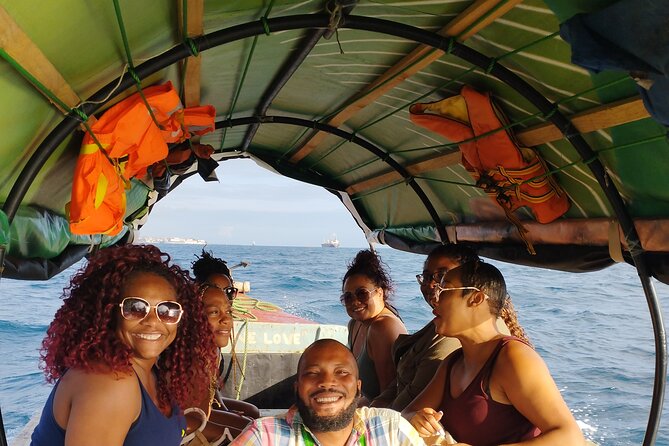
I would choose this tour if you have only a few hours in Zanzibar and want a strong first orientation to Stone Town. It suits first-time visitors who want both daily life and major historical sites, rather than a narrow architecture tour.
It is also a good fit for couples, families, or friends who want a guide focused on their group. The private setting is useful if one person wants markets, another wants history, and someone else is mainly interested in Freddie Mercury.
History-minded visitors should be prepared for the former slave market. The subject is serious, and the visit may be uncomfortable, but it is an important part of understanding Zanzibar. If you want only relaxed sightseeing, this may not be the right route.
The walk is listed as suitable for most people, and service animals are allowed. Since the experience lasts about three hours and takes place on foot, practical shoes, sun protection, and water are sensible, even though bottled water is supplied. The route is near public transportation, which helps if you are not staying in the old center.
Timing, pace, and small practical cautions
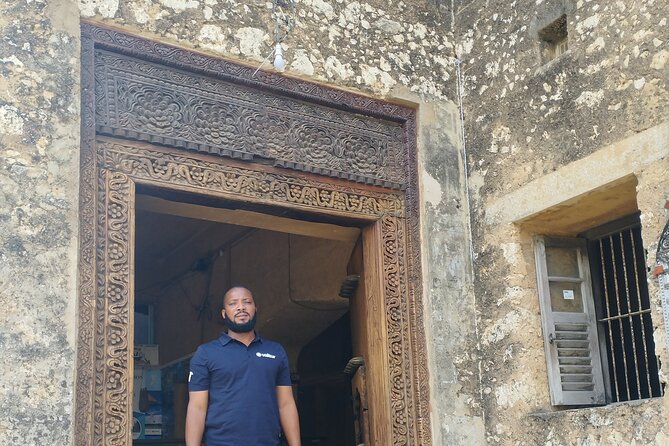
The tour is usually booked about 39 days ahead, so you should reserve early if your Zanzibar dates are fixed. That lead time does not change the walk itself, but it suggests that popular travel periods may fill before arrival.
Allow the full three hours. A private guide can adjust the pace, but the route includes a market, a historical site, old streets, and a Freddie Mercury stop. You will get more from it if you avoid scheduling another tight appointment immediately afterward.
The tour ends where it starts, at the Old Fort. That is convenient, but it also means you should not assume a transfer to another part of the island is included. Stone Town hotel pickup may be arranged only when requested ahead of time.
Free cancellation is available up to 24 hours before the local start time. Changes or cancellations made inside that window are not accepted for a refund.
Should you book Stone Town Secrets?
I would book this walk if you want a well-rounded introduction to Stone Town with a private guide who can explain the city in an approachable way. The strongest combination is the Darajani Bazaar, the serious slave-market history, and Omar’s flexible guiding style.
I would think twice if your main goal is a long Freddie Mercury museum visit, extensive shopping, or a slow architectural study. Three hours gives you a useful overview, not an exhaustive tour.
For most first-time visitors, $30 is fair value for the private attention, entry fee, water, and clear route through a confusing city center. Ask ahead about the exact Freddie Mercury stop and hotel pickup, then book with enough time for the market and the history to sink in.
FAQ
How long does the Stone Town walking tour last?
The tour lasts approximately three hours.
How much does the tour cost?
The listed price is $30 per person.
Is this a private tour?
Yes. Only your group participates in the activity.
Where does the tour begin?
The meeting point is the Old Fort on Mizingani Road in Zanzibar, Tanzania.
Where does the tour end?
The activity ends back at the Old Fort meeting point.
Is hotel pickup available?
Pickup from Stone Town hotels can be requested, but you need to contact the provider and send a message in advance.
What is included in the price?
Bottled water, a professional tour guide, and the entrance fee for the Old Slave Market in Zanzibar are included.
Does the tour visit the former slave market?
Yes. The route includes the slave monument, slave chambers, and the Anglican Cathedral connected with the site of the slave auctions.
Can I cancel for a full refund?
Yes, if you cancel at least 24 hours before the experience begins. Cancellations or changes made less than 24 hours before the local start time are not accepted for a refund.
Newly listed around Zanzibar
- Zanzibar: Nungwi/Kendwa Beach Sunset Dhow Cruise with Fruits★ 3.4 · 3 reviews
- Prison Island, Sea Turtles, Rock Restaurant & Relax in Beach★ 4.6 · 3 reviews
- Starfish Beach; The Rock; Kuza Cave; Paje Beach; Salaam Cave Tour★ 4.5 · 3 reviews
- Zanzibar: Half-Day Spice Farm Tour,the flavours of Zanzibar★ 4.7 · 3 reviews
- Joazani forest & Spice farm with lunch★ 5.0 · 3 reviews
- Nakupenda Island Snorkeling Sea trip & Lunch W/Transfer -Zanzibar★ 4.0 · 3 reviews
- Mnemba Island Snorkeling and Dolphin tour★ 5.0 · 3 reviews
- Zanzibar:Jozani forest, Spice farm with Swahili Cuisine clas★ 4.2 · 3 reviews
Stone Town Tours, compared.

Full-Day Private Stone Town +Spice Farm and Prison Island Tour
Read our review →
Browse the lists this tour appears in