
Reviewed · STONE TOWN TOURS
Stone Town Foodie Walk
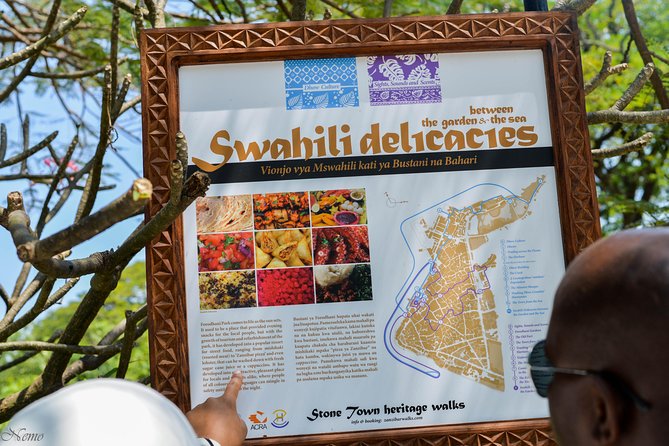
Stone Town’s best stories often come from what people eat. This three-hour walk starts at Forodhani Garden with traditional coffee and sweet snacks, then leads through narrow streets, a bakery, local food stops, and Darajani Market. You get history with every bite, not just a list of monuments.
I like the small maximum of five people, which gives your guide room to answer questions and adjust the pace. I also like the range of tastings: boflo bread, Zanzibar urojo, hand-pressed sugarcane juice, tropical fruit, and other snacks. The main catch is simple: this is a walking tour on old streets, so you need moderate fitness, and hotel pickup may cost extra.
Key points to know before booking
- Start with coffee at Forodhani Garden: Meet beside the Indian Ocean while your guide explains the plan and introduces local flavors.
- Taste Zanzibar’s mixed food culture: Urojo, Indian-influenced snacks, bakery bread, sugarcane juice, and fruit show how many outside influences shaped island cooking.
- Small groups make a difference: The maximum is five people, with private tours also available.
- Expect about three hours on foot: The route ends at Darajani, so plan your next stop from there rather than expecting a return to your hotel.
- The $40 price covers a lot of food: Bottled water, snacks, tastings, and a professional guide are included, but lunch and some transfers are not.
- Dress for Stone Town and local custom: Keep shoulders and knees covered, and wear comfortable clothing for walking.
Starting beside the Indian Ocean at Forodhani Garden
Your meeting point is Forodhani, a handy place to begin because it puts you close to the water and the heart of Stone Town. The tour opens with traditional coffee and sweet snacks while your guide gives a short briefing.
That first pause matters. You are not rushed straight into a maze of streets. You have time to meet the guide, settle into the group, and get a first taste of Zanzibar before the walking begins.
The guide then frames the food as part of the island’s past. Zanzibar sits at a crossroads in the Indian Ocean, and its cooking reflects contact with nearby regions and former colonizers. The point is not to turn lunch into a lecture. It is to help you understand why Indian-style dishes, local breads, tropical produce, and drinks made from island crops appear side by side.
Forodhani is also a useful place to get your bearings. After the tour, you will know where the waterfront sits in relation to the inner streets of Stone Town. If you are staying in the area, this early orientation can make the old quarter easier to explore on your own.
More Walking Tours in Zanzibar
- Stone Town Private Walking Tour
★ 5.0 · 371 reviews - Zanzibar: 3 Hours Private Stone Town walking Tour with Guide
★ 4.6 · 301 reviews - Zanzibar: Stone Town Historical Cultural Walking Guided Tour
★ 4.5 · 179 reviews
Following Stone Town’s food story through narrow streets
The route moves through inner Stone Town with a trained guide. You will hear about the food customs of the archipelago while walking between historic buildings and small local businesses.
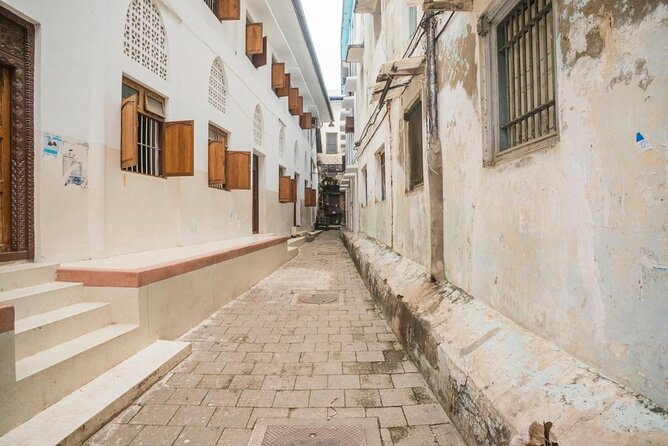
Stone Town can feel confusing at first. Its streets twist, change names, and sometimes narrow to little more than a passage between old walls. That is part of the appeal, but it can also make a self-guided search for food hit or miss. A local guide helps you spend less time guessing and more time tasting.
The tour also points out places where local residents eat. This is useful if you want more than a single organized meal. Your guide can show you food joints worth remembering later, giving you options for lunch, dinner, or a quick snack after the walk.
Guides named Haj and Mussawir have led this experience. Haj is noted for meeting promptly at the clearly marked starting point and taking the group through less obvious food stops. Mussawir is described as giving a strong introduction to Zanzibar’s food and Stone Town tips. The guide you receive may vary, but these details suggest that the quality of the walk depends heavily on the individual leading it.
A good question to ask during the tour is how a dish fits into daily life. You will get more from the experience if you ask about ingredients, when people eat certain foods, and which stops are useful for a later meal.
Boflo bread and the everyday bakery stop
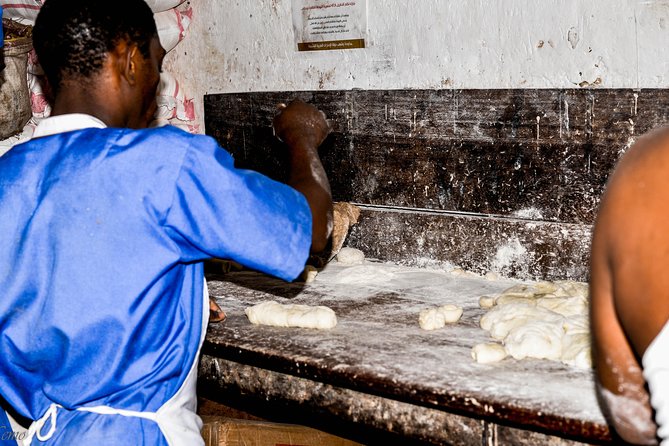
One of the planned tastings is boflo bread at a local bakery. This is a modest stop, but it gives the tour a practical side. You are not sampling only dishes made for visitors. You are getting a look at a familiar bakery item and the kind of food people can pick up during an ordinary day.
Bread is also a good counterpoint to the more strongly seasoned dishes later in the walk. It gives your palate a break and helps you notice how texture and preparation change from one stop to the next.
The bakery may be busy, and the stop is not presented as a sit-down meal. Think of it as a quick taste in the middle of the route. If you prefer long restaurant visits, this format may feel brisk. If you want to cover more ground, it works well.
The food portions appear generous across the full tour, but lunch is not included. You should eat lightly before meeting the group, though you should not arrive hungry enough to feel uncomfortable during the walking. A full meal can come later, since the route ends at Darajani.
Trying Zanzibar urojo, a local favorite
The Indian Zanzibar urojo mix is one of the more distinctive tastings on the route. Urojo is often associated with Zanzibar’s street-food culture, and here it gives you a direct taste of the island’s Indian influence.
This is the kind of dish that can be hard to identify from a menu if you do not already know what to look for. Your guide can explain what goes into the mix and how locals eat it. That context is worth as much as the tasting itself, since you will understand what makes it part of Zanzibar rather than simply another spicy snack.
Food preferences may affect how much you enjoy this stop. The tour description does not promise substitutions for allergies, dietary restrictions, or dislikes, so you should raise those concerns before booking. It is also wise to tell the guide early if you need to avoid a particular ingredient.
Urojo helps show why this walk is more useful than a generic sightseeing route. You are not just passing old doors and carved details. You are learning how trade, migration, and neighboring food traditions appear in everyday dishes.
More Stone Town walks:
- Zanzibar: Stone Town, Spice Tour, Prison Island with Lunch
★ 4.4 · 1,219 reviews - Zanzibar: Prison Island, Stone Town, & Spice Farm Tour
★ 4.5 · 579 reviews - Zanzibar; Prison Island, Nakupenda, StoneTown Tour with BBQ
★ 4.3 · 457 reviews - Zanzibar: Stone Town, Spice tour & Prison Island with Lunch
★ 4.6 · 453 reviews
Hand-pressed sugarcane juice on the route

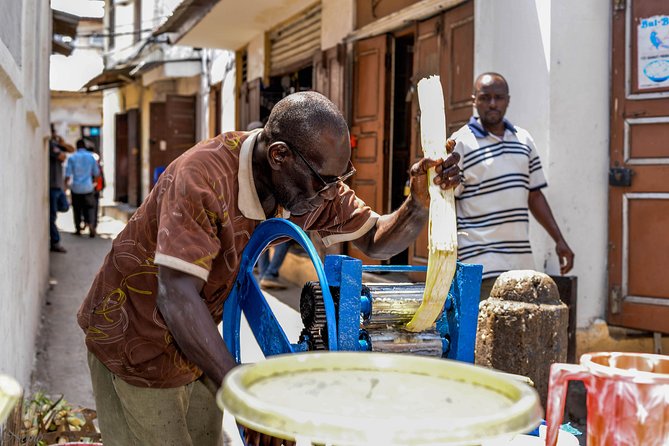
The sugarcane juice stop adds a cool, fresh drink to the tasting list. You will sip juice made with a hand press, which lets you see a simple preparation method rather than receiving a packaged drink.
This is one of the more memorable details because the drink connects the food to the work behind it. You see the cane being pressed and get a sense of how a common local crop becomes a street refreshment.
Bottled water is also included, and it is worth carrying it as you walk. Stone Town’s heat can make three hours feel longer than expected, especially if you are not used to walking in Zanzibar. The tour is not a vehicle-based food crawl. You will be outside for most of the time, moving between stops.
The route’s walking nature is both its strength and its limitation. You get a better feel for the streets and small food sellers, but you do not get much rest. Wear comfortable shoes and avoid planning a physically demanding activity immediately afterward.
Seasonal fruit at Darajani Market

The market visit brings the tour to Darajani, where you will taste seasonal tropical fruit and see a more active side of Stone Town’s food trade. Seasonal produce changes, so the exact fruit is not fixed. That uncertainty is part of the point: you taste what is available rather than following a rigid menu.
Markets teach you things restaurants often hide. You can see how produce is sold, notice the range of ingredients used in local cooking, and watch daily commerce unfold around you. Your guide’s explanations help turn a quick market walk into something more meaningful.
Darajani is also the tour’s end point. This is useful if you want to continue exploring from there, but less convenient if you assume you will be returned to your hotel. Check your route before booking and decide how you will get back.
The market may feel crowded and noisy, and the walk may be less polished than a restaurant tasting. That is not a flaw for everyone. If you prefer real local settings over carefully arranged food presentations, this stop should be one of the tour’s strongest moments.
What the $40 price really covers
At $40 per person, the walk offers solid value if you want both food and orientation. The price includes the professional guide, food tastings, snacks, bottled water, and GST. You are paying for several small tastings plus a guided route through Stone Town, not simply for one meal.
The amount of food can be substantial. The planned stops include coffee and sweets, boflo bread, urojo, sugarcane juice, and fruit, along with other snacks. One direct tip is to avoid booking this immediately after a large breakfast. You may not need another full meal during the walk.
Still, lunch is not included. You should budget for a separate meal if you want something more filling, especially after reaching Darajani. Transportation to and from attractions is also not included in the basic price.
Pickup needs careful attention. Pickup and drop-off are offered from designated meeting points, while hotel pickup in Stone Town costs extra for private tours. Pickup from beach hotels also carries an additional charge. If you are staying outside Stone Town, ask about the exact transfer cost before you finalize the booking.
For a private walk, the price calculation may change, but the benefit is greater control over the pace and conversation. A shared group is capped at five, so you still get a personal feel without paying entirely for a private guide.
Why the five-person limit matters
A maximum of five people is unusually helpful on a food walk. Small vendors and narrow streets are easier to manage, and your guide can keep everyone together without turning the experience into a procession.
I also value the chance to ask practical questions. You can ask where to eat later, how a dish is prepared, or which market ingredients are common at home. In a large group, those small conversations often disappear.
The tour can be private or shared, depending on the booking arrangement. Children must be accompanied by an adult, and the child rate applies only when sharing with two paying adults. That makes the pricing less flexible for a family traveling with only one paying adult, so check the terms before booking.
The walk suits solo visitors, couples, and small groups who want a food introduction soon after arriving. It is also useful for anyone who finds Stone Town’s layout hard to read. You leave with both a fuller stomach and a better sense of where local food fits into the city.
Practical clothing, timing, and meeting advice
Wear casual clothing that covers your shoulders and knees. This respects local culture and keeps you suitably dressed for markets, bakeries, and neighborhood streets.
Moderate physical fitness is required. You should be comfortable walking for roughly three hours, with stops for tasting and conversation. The exact duration is listed as two to three hours, while the route description presents it as a three-hour walk.
Confirmation arrives when you book, and the experience is offered with a mobile ticket. The tour is commonly booked about 12 days ahead, so do not leave it until the last minute if your schedule is tight.
You can cancel for a full refund up to 24 hours before the start time. Changes or cancellations made less than 24 hours before the start are not accepted for a refund.
Who will enjoy this Stone Town walk most
I would choose this tour if you want your first Stone Town outing to combine food, local context, and basic orientation. It is especially well suited to people who prefer small tastings at several stops instead of sitting in one restaurant.
It also fits curious eaters who want to try dishes they might not order alone. The urojo, sugarcane juice, bakery bread, and seasonal fruit offer a broad introduction without requiring you to plan every stop yourself.
You may want another option if you dislike walking in heat, need guaranteed dietary substitutions, or want a full lunch included in the price. It is also not the best fit if your main goal is a formal architectural tour, since the food story leads the route.
The excellent 4.9 rating from 14 reviews and 100 percent recommendation record point to a very strong small-group experience, but the sample is still modest. I would put more weight on the clear itinerary, small group size, and guide-led format than on the score alone.
Should you book the Stone Town Foodie Walk?
Book it if you want an efficient first taste of Stone Town and you value local food stops over a formal restaurant meal. For $40, the number of tastings, bottled water, guide service, and three hours of walking make the price reasonable, especially for a small group of no more than five.
Before booking, confirm any pickup charge, plan for a separate lunch, and tell the operator about dietary needs. If you can handle the walking and arrive ready to sample several foods, this is a practical way to meet Stone Town through its bakeries, market, drinks, and everyday dishes.
FAQ
Where does the Stone Town Foodie Walk start?
The walk starts at Forodhani in Zanzibar, at Forodhani Garden beside the Indian Ocean.
Where does the tour end?
The tour ends at Darajani in Stone Town.
How long does the walk last?
The experience lasts about two to three hours, with the main route described as a three-hour walking tour.
How many people can join?
The maximum is five people per booking and five people per tour. Private tours are also available.
What food and drinks are included?
Planned tastings include traditional coffee, sweet snacks, boflo bread, Indian Zanzibar urojo, hand-pressed sugarcane juice, and seasonal tropical fruit. Other snacks are also included.
Is lunch included?
No. Lunch is not included, so plan and budget for a separate meal.
Is hotel pickup included?
Pickup and drop-off from designated meeting points are offered. Hotel pickup in Stone Town costs extra for private tours, and pickup from beach hotels also costs extra. Hotel pickup and drop-off are not included in the basic price.
What should I wear?
Casual clothing is suitable, but shoulders and knees should be covered to respect local culture.
Can I cancel for a refund?
Yes. You can cancel at least 24 hours before the local start time for a full refund. Cancellations or changes made less than 24 hours before the start are not accepted for a refund.
More Food Tours in Zanzibar
- Stonetown: Food Markets and Street Food Walking Tour
★ 4.7 · 151 reviews - Authentic Street Food Tours in Stone Town, Zanzibar
★ 5.0 · 46 reviews - Stone Town Evening Walk Tour With Visit Food Markets
★ 4.5 · 28 reviews - Zanzibar:Stone town Street food market walking tour,transfer
★ 4.5 · 9 reviews
Newly listed around Zanzibar
- Prison Island, Sea Turtles, Rock Restaurant & Relax in Beach★ 4.6 · 3 reviews
- Zanzibar: Nungwi/Kendwa Beach Sunset Dhow Cruise with Fruits★ 3.4 · 3 reviews
- Starfish Beach; The Rock; Kuza Cave; Paje Beach; Salaam Cave Tour★ 4.5 · 3 reviews
- Zanzibar: Half-Day Spice Farm Tour,the flavours of Zanzibar★ 4.7 · 3 reviews
- Joazani forest & Spice farm with lunch★ 5.0 · 3 reviews
- Nakupenda Island Snorkeling Sea trip & Lunch W/Transfer -Zanzibar★ 4.0 · 3 reviews
- Zanzibar:Jozani forest, Spice farm with Swahili Cuisine clas★ 4.2 · 3 reviews
- Mnemba Island Snorkeling and Dolphin tour★ 5.0 · 3 reviews
Stone Town Tours, compared.






Full-Day Private Stone Town +Spice Farm and Prison Island Tour
Read our review →
Browse the lists this tour appears in