
Reviewed · ARUSHA TOURS
Multi-Day Camping Safari Experience in Arusha
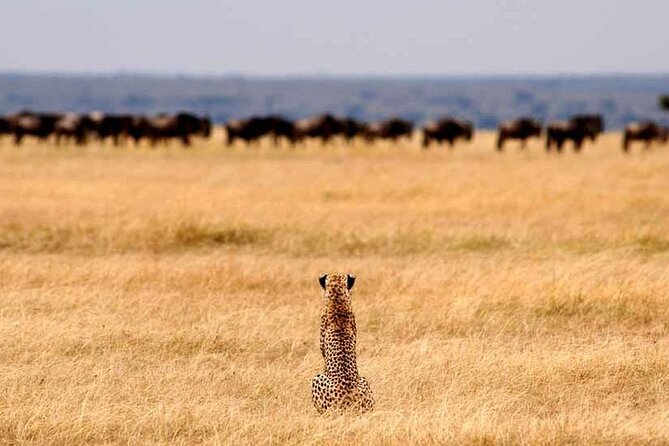
The main event here is the wildebeest calving season in Ndutu, where thousands of animals gather on short grass between December and April. Around February, the plains can fill with newborn calves, zebra, lions, cheetahs, hyenas, and other predators. It is one of Tanzania’s most dramatic wildlife periods, but timing matters.
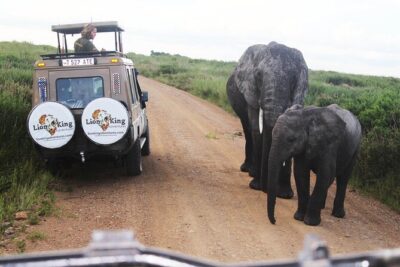
I like the compact group size, with no more than six people, and the pop-up-roof jeep, which gives you a clear view for photos and wildlife watching. I also like the broad route: Tarangire, Ndutu, Serengeti, Ngorongoro Crater, and Lake Manyara all appear in six days. The drawback is the amount of driving and the basic nature of camping, so this suits you best if wildlife matters more than comfort.
Key points before you book
- Ndutu is the focus: The southern Serengeti and Lake Ndutu area are visited during the December to April migration period, with February usually linked to the main calving window.
- Predator action can be intense: Newborn wildebeest create strong opportunities to see lions, cheetahs, hyenas, and leopards hunting.
- Six national park days cover a lot: Tarangire, Serengeti, Ngorongoro, and Lake Manyara are included, but expect long road days.
- Camping keeps the price in check: You receive meals, water, park fees, and a safari jeep, but camping is not a luxury lodge experience.
- Small groups matter: The vehicle holds a maximum of six people, giving you more room and a better chance of reaching the viewing side of the jeep.
- Guide experience is central: Names praised in past feedback include Robert, Swalehe, and Raymond, though you should confirm your assigned guide before departure.
Why Ndutu makes this safari different
Many northern Tanzania safaris focus on the classic Big Five route. This one adds a seasonal purpose: following the wildebeest during calving. That changes the feel of the trip. You are not simply ticking off parks. You are looking for herds, newborns, predators, and the changing position of the migration.
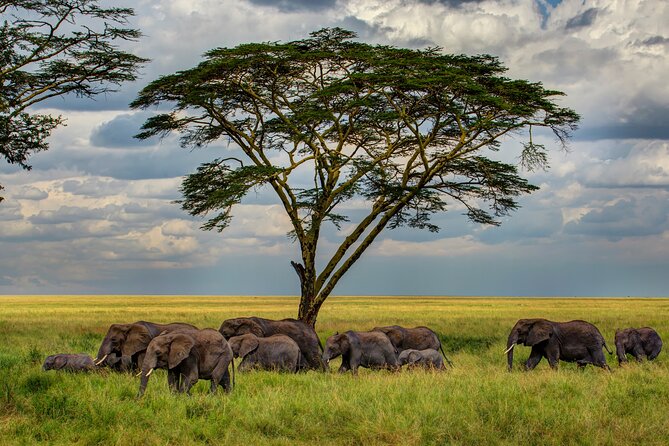
Ndutu sits within the southern Serengeti ecosystem, with part of the area inside the Ngorongoro Conservation Area. The setting includes soda lakes, swamps, woodland, and open short-grass plains. Each habitat changes what you might see. Open grass gives you wide views of herds, while woodland and wet areas can hold elephants, birds, and resident animals.
The calving period is not equally strong across the entire December to April season. The most concentrated birth period is described as a short window around February, lasting roughly three weeks. If seeing very young calves is your main goal, ask the operator for the expected conditions around your dates before paying the balance.
There is a trade-off. Wildlife sightings can never be promised, and a migration safari is less predictable than a zoo visit. Herds move with rainfall and grazing conditions. You may see thousands of animals spread across the plains, or you may spend time driving between areas in search of them.
More Safaris in Arusha
- Balloon Safari & Bush Breakfast in Serengeti – Miracle Experience
★ 5.0 · 1,646 reviews - 4 Days Group Camping Safari
★ 5.0 · 1,101 reviews - 5 Days Group Camping Safari
★ 5.0 · 730 reviews
Day 1: Tarangire’s elephants and baobabs
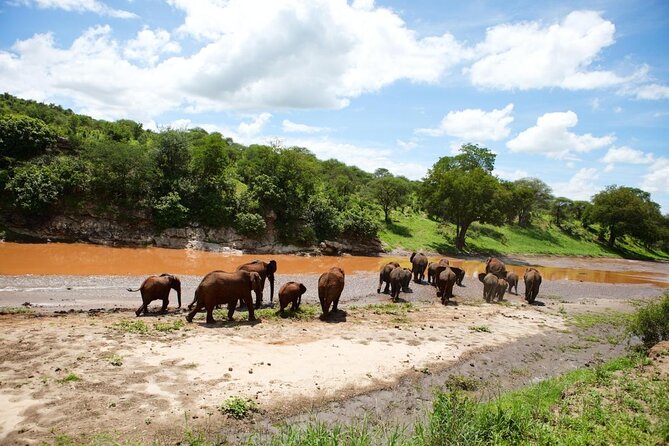
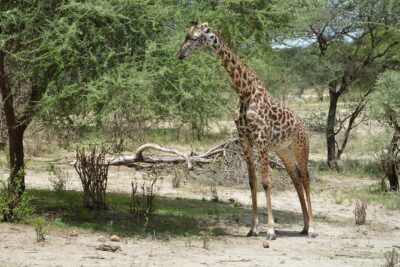
After breakfast in Arusha, pickup takes you toward Tarangire National Park for a game drive of about eight hours. Tarangire is known for large elephant herds, baobab trees, tree-climbing lions, and the Tarangire River, which provides a vital water source during dry periods.
This is a strong opening day because the park offers a distinct setting from the Serengeti. Instead of endless short grass, you get a mix of trees, river country, and striking baobabs. The river helps concentrate wildlife in dry seasons, making that period especially useful for animal viewing.
The long day is worth noting. You will be combining the road from Arusha with a substantial park visit, so this is not a slow arrival day. Pack sun protection, keep your camera ready, and expect the jeep to be your main base for much of the day.
The description lists admission tickets as included, and the package also covers taxes and other fees. That makes the first day easier to budget, since you are not expected to handle park charges separately.
Days 2 and 3: Full attention on Ndutu
After breakfast on Day 2, the route heads toward the Ndutu area. The afternoon includes a game drive, with about five hours scheduled for the day. This is when the safari shifts from a broad northern Tanzania circuit to its main seasonal purpose.
Lake Ndutu is alkaline, like many lakes in the Rift Valley. Wildlife uses the lake and nearby habitats, and the surrounding area can hold elephants, birds, wildebeest, zebras, and resident game. The most important feature is not the lake alone. It is the short grass around it, which supports large herds during the calving season.
Day 3 gives you a full day in Ndutu, with about nine hours of game viewing. This is the day that gives the migration idea room to work. You can spend more time following herds, checking open grasslands, and looking across swamps, woodland, and soda lakes rather than rushing to another park.
The open plains can be thrilling and unsettling. Newborn wildebeest can run within minutes and usually become strong enough to keep pace with the herd after about three days. That quick start is essential for survival, since the exposed grass offers little cover from predators.
You could see lions, cheetahs, hyenas, or leopards, and the chance of a kill is described as particularly good in this season. Still, you should keep your expectations sensible. A predator may be nearby without hunting, and a leopard remains difficult to spot even with a skilled guide.
This is where the guide can make a real difference. Past praise has singled out Robert for his ability to read the area, wildlife, and local culture. Swalehe has also been praised for working hard to find major species, including the Big Five. Those names are useful when you speak with the company, but they should not be treated as a guarantee of your departure guide.
Day 4: Sunrise in the Serengeti, then toward Ngorongoro
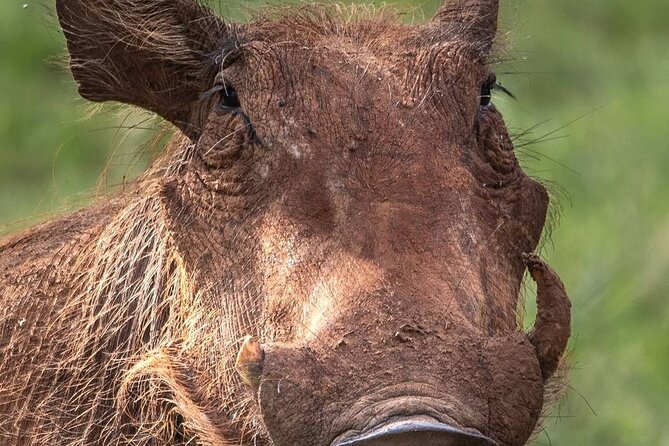
Day 4 starts early, with breakfast at about 5:45 a.m. You take an early morning game drive until roughly 11:30 a.m., then return to camp for a hot lunch and to pack the vehicle.
The early start gives you a chance to see the Serengeti in cooler morning light. It also means a demanding rhythm. You will be up before sunrise, out on a game drive, back for lunch, and then driving and viewing wildlife again as you head toward the Ngorongoro area.
The afternoon continues as a game drive while the vehicle moves toward Simba Campsite for dinner and overnight accommodation. The day is listed at around seven hours, but road conditions, wildlife stops, and the route can affect the actual timing.
I like this structure because it uses the morning well instead of wasting a prime wildlife period in camp. The downside is that you change camp after a busy day, so keep your overnight items easy to reach and do not pack your whole bag into the bottom of your luggage.
More camping safaris in Arusha:
- 3 Days Serengeti & Ngorongoro Group Camping Safari
★ 5.0 · 574 reviews - 2 Days Tarangire and Ngorongoro Group Camping Safari
★ 5.0 · 146 reviews - 6 Days Tanzania Budget Camping Safari
★ 5.0 · 145 reviews - 3 Day Serengeti National Park & Ngorongoro Crater Camping Safari
★ 5.0 · 142 reviews
Day 5: Down into Ngorongoro Crater
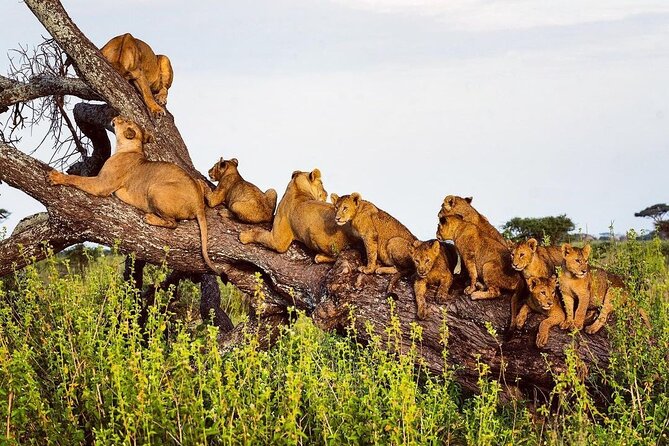
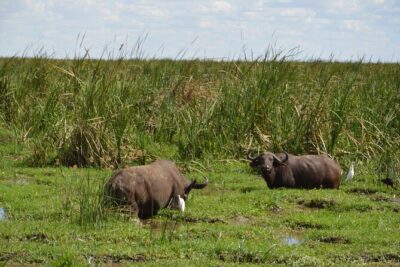
An early breakfast is followed by a visit to the Ngorongoro Conservation Area and a descent of about 600 meters into the famous crater. The crater floor has year-round water and grazing, so it supports a wide range of animals, including wildebeest, zebra, buffalo, eland, warthog, hippo, and elephants.
The crater gives you a different kind of wildlife viewing from Ndutu. Instead of searching across a broad moving ecosystem, you are in a contained natural basin where animals gather around water and feeding areas. Lions, hyenas, jackals, cheetahs, and sometimes leopards are among the predators you may look for.
Lake Magadi, a shallow alkaline lake in the southwestern part of the crater, is another planned stop. Flamingos, hippos, and other water birds may be present. The lake adds a useful bird-watching element to a day that otherwise focuses heavily on large mammals.
The crater is one of the busiest and most tightly scheduled parts of many northern Tanzania circuits. This itinerary gives it about eight hours, which allows a serious visit, but it is still only one day. You will not have unlimited time at every viewing point.
The descent and return also make this a physically tiring day, even though you spend most of it in the vehicle. Bring layers, water, and something warm for early morning. The included unlimited drinking water is especially practical on long game drives.
Day 6: Lake Manyara and a final change of scenery
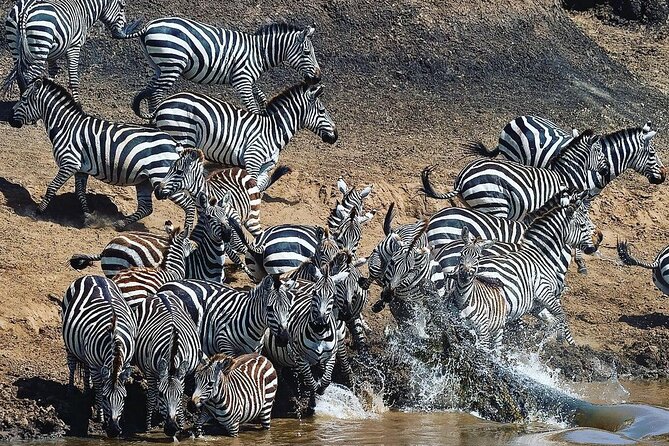
The final day heads to Lake Manyara National Park after breakfast, with about nine hours scheduled. The park is known for a scenic lake covering much of its area, the wall of the Great Rift Valley, forest and open habitats, and more than 400 bird species.
Manyara is a good closing park because it differs from both Ndutu and Ngorongoro. The circuit is more compact, and the setting combines lake views, woodland, escarpment scenery, and bird life. Pink-hued flamingos may gather around the lake, along with hippos and other water birds.
The park is also known for tree-climbing lions, although the provided schedule does not promise a sighting. As with all wildlife on this trip, your guide’s timing and the conditions on the day will matter.
Nine hours is a substantial final day. Depending on your onward plans, ask exactly where the tour ends and what time you should expect to arrive. Pickup is offered, but the available details do not specify airport transfer timing or a particular drop-off location.
Camping, meals, and the safari vehicle
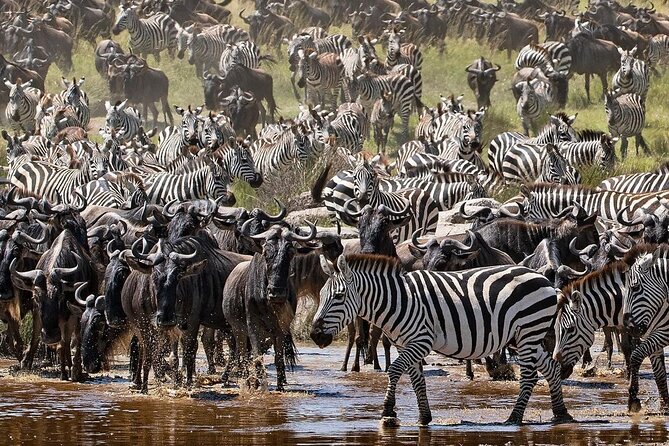
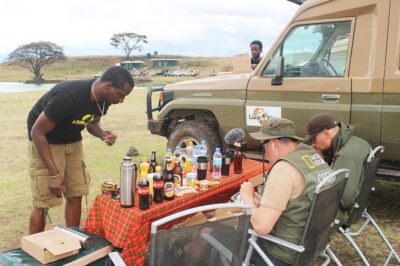
This is a camping safari, so you should choose it for access and value rather than hotel-style comfort. The package includes breakfast on all six days, six lunches, and five dinners. Unlimited drinking water is included, which saves both money and the trouble of carrying enough bottled water for long drives.
The food appears to be one of the stronger parts of the experience. Several comments praise the meals as delicious and better than expected. That matters on a six-day route with early starts, long drives, and full game-viewing days.
The pop-up-roof safari jeep is another important inclusion. You can stand or sit beneath the raised roof for a broad view, which is much better than watching wildlife through a closed side window. A group limit of six should also reduce crowding inside the vehicle.
WiFi on board is included. Treat it as a useful extra, not the reason to book the safari. Connectivity can vary on a route covering remote parks, and the information provided does not promise a particular speed or coverage area.
Alcoholic drinks, personal items, tips, visas, and air tickets are not included. Plan those costs separately. Tips are customary in safari settings, but the amount is not specified here, so ask the operator for current guidance before leaving home.
Is $1,496 a good value?
At $1,496 per person, this is not a bargain day trip, but the price covers a large amount of ground and several major park experiences. You receive pickup, park fees and taxes, a safari vehicle, WiFi, water, 18 listed meals, and five dinners. You also get a small group rather than a large shared vehicle.
The strongest value comes from the route. Tarangire, Ndutu, the Serengeti, Ngorongoro Crater, and Lake Manyara would be expensive to arrange independently once vehicle hire, guiding, park access, meals, and camps are added.
The cost makes more sense if your priority is the migration. A standard safari that skips southern Serengeti may be simpler, but it could miss the calving focus. On the other hand, if you want relaxed mornings, high-end rooms, or fewer hours on the road, this package may feel too busy.
The itinerary also mentions a biking adventure in Mto wa Mbu, but the six daily stops do not explain when it happens, how long it lasts, or what equipment is supplied. Ask for clarification before booking if the bike ride is important to you.
Who will enjoy this trip most?
I would recommend this safari to you if you want a wildlife-first trip with a clear seasonal theme. It is a good fit for photographers, first-time safari visitors, families with older children, and anyone who prefers a small group over a private luxury itinerary.
It also suits people who are happy with camping and long days in a jeep. You need patience. Some of the best moments may be a distant herd, a bird on the lake, or a long wait near a predator rather than a constant parade of animals.
I would be more cautious if you dislike early starts, rougher road travel, or changing camps. Six days is efficient, but it is not leisurely. The route covers several parks, and the Ndutu section is seasonal, so the exact wildlife experience depends heavily on your dates.
Past feedback repeatedly praises communication, organization, friendly service, and guides such as Raymond, Robert, and Swalehe. Raymond is also described as handling safari logistics and offering helpful hospitality. When booking, ask who will lead your vehicle, what camping facilities are provided, and how the operator handles changes caused by wildlife movement or road conditions.
Should you book the Ndutu camping safari?
Book it if you want the best chance of seeing the southern Serengeti during calving season and you value a broad route, included meals, and a small vehicle more than luxury. The combination of Ndutu, Tarangire, Ngorongoro, and Manyara gives you a strong range of habitats in six days.
Think twice if your dates fall outside the main calving period or if you need a soft bed and short transfer days. Before confirming, verify the exact camping setup, your guide, the Mto wa Mbu biking details, and the final drop-off arrangements.
For a practical, wildlife-heavy introduction to northern Tanzania, this is a well-priced option. Its best moments should come from timing, patience, and the skill of the guide, not from polished hotel comforts.
FAQ
How long is the safari?
The experience lasts approximately six days.
Where does the safari begin?
The safari is based in Arusha, and pickup is offered.
What is the main focus of the safari?
The main focus is following the Great Serengeti wildebeest migration during the calving season, especially in the Ndutu and southern Serengeti areas.
When is the calving season covered?
The safari is designed for travel from December through April. The main calving period is described as a shorter window around February, lasting about three weeks.
Which parks and protected areas are visited?
The route includes Tarangire National Park, Serengeti National Park, the Ndutu area, the Ngorongoro Conservation Area and Crater, and Lake Manyara National Park.
How many people can join the safari?
The maximum group size is six people.
What type of vehicle is included?
A pop-up-roof safari jeep is included.
Are meals included?
Yes. The package includes six breakfasts, six lunches, and five dinners.
Is drinking water included?
Yes. Unlimited drinking water is included.
Are park fees and taxes included?
Yes. All fees and taxes are included in the package price.
Is the Mto wa Mbu biking adventure included?
The experience description refers to a biking adventure in Mto wa Mbu, but the daily schedule does not provide details about its timing or equipment. Confirm this directly before booking.
Is WiFi available?
Yes. WiFi on board is included.
What is not included?
Tips, visas, air tickets, personal-use items, and alcoholic drinks are not included.
Can I cancel for a full refund?
You can cancel at least 24 hours before the experience start time for a full refund. Cancellations or changes made less than 24 hours before the start time are not accepted for a refund.
Newly listed around Arusha
- 5-Day Private Safari Tour in Tanzania’s Wildlife★ 5.0 · 3 reviews
- 3 Days private safari Tarangire ,Ngorongroro crater &Manyara★ 5.0 · 3 reviews
- 3 Day Sharing Safari – Manyara, Ngorongoro Crater and Tarangire National Parks★ 5.0 · 3 reviews
- Tarangire National Park Day Trip★ 5.0 · 3 reviews
- 2 Days Tarangire and Ngorongoro Crater Tour★ 5.0 · 3 reviews
- 6 -Day Tarangire, Manyara, Serengeti & Ngorongoro★ 5.0 · 3 reviews
- 5 Days Group Camping Safari★ 4.7 · 3 reviews
- 7-Day Mt. Kilimanjaro Hiking: Machame Route★ 5.0 · 3 reviews
Arusha Tours, compared.
Balloon Safari & Bush Breakfast in Serengeti – Miracle Experience
Read our review →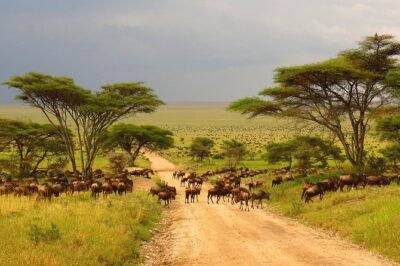
Browse the lists this tour appears in