

Reviewed · STONE TOWN TOURS
Guided Stone Town Tour In Zanzibar
Stone Town’s greatest appeal is how much history is packed into a short walk. In roughly 2 to 3 hours, you move from the former slave market and Anglican Cathedral to fish stalls, carved doors, old forts, rooftop views, and the house linked with Freddie Mercury. The route connects major sights with ordinary Zanzibar life, rather than keeping you inside a museum bubble.
I like the private format, since your group can ask questions and move at a comfortable pace. I also like the mix of serious history and everyday places, especially Darajani Bazaar and Jaws Corner. The main consideration is pace: ten stops in a short tour means several visits are brief, and the Freddie Mercury Museum entry costs an extra $8.
Key points to know before you book
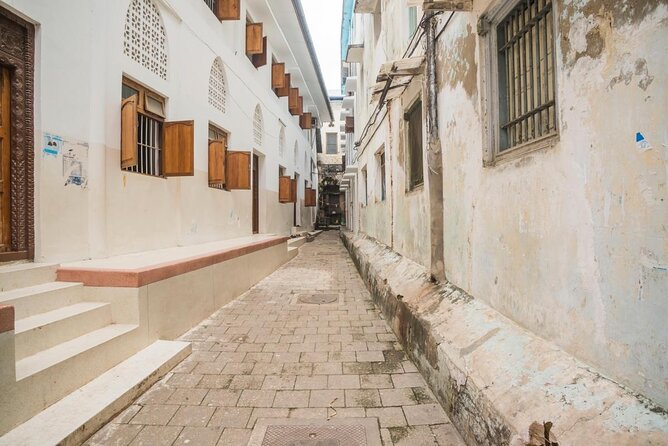
- The former slave market sets the tone: You see the slave chambers and monument while hearing about Zanzibar’s role in the history of slavery.
- Darajani Bazaar adds real street life: Fish, meat, spices, fruit, and local food give the walk a strong sense of place.
- The tour is private: Only your group takes part, with an official licensed guide.
- Historic sights come quickly: Old Fort, House of Wonders, Saint Joseph’s Cathedral, and Forodhani Gardens are all covered, but most stops last 10 to 15 minutes.
- Freddie Mercury’s home is a photo stop unless you pay extra: The $8 museum admission is not included.
- Ali has shown flexibility: When an arrival was delayed, he waited without making an issue of it.
Why this short Stone Town walk works

Stone Town can feel confusing at first. Narrow lanes twist between old buildings, markets, mosques, churches, cafés, and seafront squares. A guided walk helps you connect the pieces quickly, especially if you have only one day in Zanzibar City.
This experience is less about entering every building and more about understanding how the town fits together. You get a broad introduction to Zanzibar’s history, with stops tied to trade, slavery, religion, music, architecture, and daily life.
The tour begins and ends at Mizingani Seafront Hotel on Mizingani Road. Pickup is offered, but the stated meeting point gives you a clear place to start. Since the activity is private, you are not joining a large crowd with a fixed script. That matters in Stone Town, where a few extra minutes at a doorway or market stall can make the walk easier and more enjoyable.
The listed price is $23.44 per person. That is good value if your group wants a guide to explain the sights rather than simply walk past them. The price includes the official licensed guide, but not lunch or the Freddie Mercury Museum entrance. If you want only a quick orientation, the cost is reasonable. If you expect long indoor visits at every attraction, you may find the schedule too tight.
More Stone Town walks:
- Zanzibar: Stone Town, Spice Tour, Prison Island with Lunch
★ 4.4 · 1,219 reviews - Zanzibar: Prison Island, Stone Town, & Spice Farm Tour
★ 4.5 · 579 reviews - Zanzibar; Prison Island, Nakupenda, StoneTown Tour with BBQ
★ 4.3 · 457 reviews
Starting with slavery at the Anglican Cathedral
The first stop lasts about 40 minutes, making it the longest part of the tour. That is appropriate. The former slave market and Anglican Cathedral are not places to rush through.
Your guide explains the history of slavery, shows you the slave chambers, and points out the monument. This gives the tour a serious beginning and helps you understand that Zanzibar’s past is not only about beautiful buildings and ocean views.
The site also shows how different layers of history can occupy the same small area. The Anglican Cathedral was built on the former market site, so the visit brings together religious change, colonial-era construction, and the memory of people who were held and sold there.
Allow yourself to listen closely here. The subject is difficult, but it gives the rest of the walk more meaning. Once you understand the importance of Zanzibar as a trading center, the markets, old buildings, and seafront take on a different weight.
Darajani Bazaar and the smells of daily life
The next stop is Darajani Bazaar, with about 15 minutes set aside for the visit. Your guide points out fish, meat, spices, fruit, and local food while explaining the history of the market.
This is one of the most useful stops for getting beyond postcard Zanzibar. You see the working side of Stone Town, where people shop for ordinary meals and ingredients. The sights and smells may be strong, particularly around fish and meat, so this is not a polished food hall. That is exactly why it feels important to the walk.
Fifteen minutes is enough for an introduction, but not enough for a slow market exploration. Keep your expectations realistic. You will get an explanation and a quick look rather than a full food tour or a chance to browse every stall.
If you want to buy spices or snacks, ask your guide when there is time to pause. The official schedule keeps moving, and lunch is not included.
Freddie Mercury’s Zanzibar connection
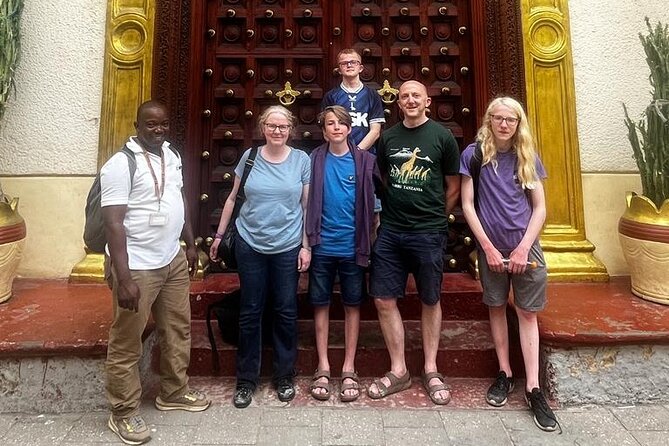
The Freddie Mercury stop lasts about 10 minutes. Your guide shows you the house connected with him and gives a short account of his life.
This is a compact visit, best understood as a point of interest rather than a full museum experience. The listed tour does not include entry to the Freddie Mercury Museum, which costs $8. You should decide before arrival if that extra visit matters to you.
The stop works well for music fans and for anyone interested in the many cultural connections found in Stone Town. It also gives the tour a lighter change of subject after the former slave market and market visit.
Because the stop is short, the included portion appears to focus on seeing the house from outside and hearing the basic story. Pay the additional fee only if you specifically want the museum visit. At $23.44, the tour remains fairly priced without that add-on.
A few more Zanzibar days to compare
- From Zanzibar: Mikumi Safari Day Trip with Flights and Meal
★ 4.7 · 1,470 reviews - Zanzibar: Quad Bike Adventure departing from Kendwa or Nungwi
★ 4.9 · 1,233 reviews - From Kendwa: Mnemba Boat Trip and Dolphin Snorkel Adventure
★ 4.8 · 1,043 reviews - From Zanzibar: Day Selous Game Reserve Safari with Flights
★ 4.7 · 1,025 reviews
Forodhani Gardens and the seafront pause
Forodhani Gardens receives about 10 minutes. Your guide gives a short explanation of the area, then allows about five minutes for photos and a break.
This is a useful breathing space in the middle of a compact walking route. You can look across the seafront, take pictures, and let the earlier history settle before continuing into more buildings and side streets.
The stop is not presented as a full evening food experience. You are not promised a long tasting session or a meal. Think of it as a short orientation to an important public space and a chance to rest your feet.
That short break matters because the itinerary packs ten stops into a small window. Comfortable shoes and water would be sensible, though the tour details do not specify what is supplied.
Old Fort and the House of Wonders
The Old Fort, also called Ngome Kongwe, takes about 15 minutes. Your guide gives a short account of the fort and walks with you through important parts of the area.
The fort offers a look at Stone Town’s defensive past. You are not simply pointed toward the walls and sent on your way. The guide helps identify why the site matters and how it fits into the wider town.
After the fort comes the House of Wonders, with about 10 minutes for a brief history and an outside look around the area. The schedule is short, so you should not expect a detailed interior tour. Still, seeing these two major landmarks together helps you read the town’s public architecture.
This is where a guide adds value. Without context, old stone buildings can blur together. With a clear explanation, you begin to separate fortifications, ceremonial buildings, religious sites, and private houses.
Jaws Corner and local coffee culture
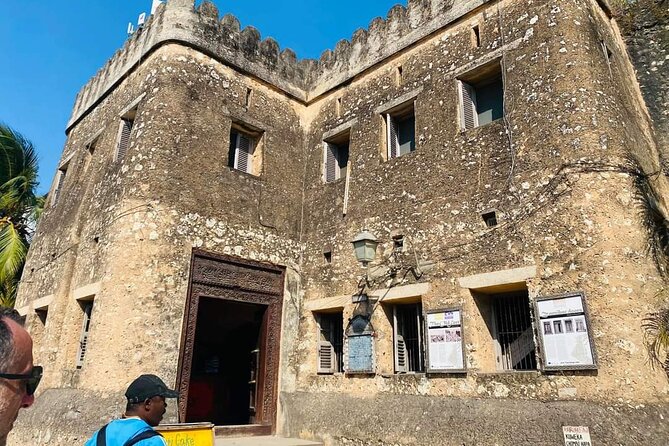
Jaws Corner is a 10-minute stop at a local café. Your guide explains the culture of the place and Zanzibar more generally, and you may have the chance to taste local coffee.
This is a small but telling part of the route. The tour is not limited to grand monuments. A local café gives you a glimpse of how people meet, talk, and spend time in the town.
The coffee tasting is optional and should be treated as a possible extra moment, not the main purpose of the tour. The stop is brief, so you may only have time for a quick taste or short pause.
I like this kind of stop because it makes the walk feel less like a checklist. You get a public square, a market, a church, and a café, not just formal attractions.
Saint Joseph’s Cathedral and the town’s religious mix
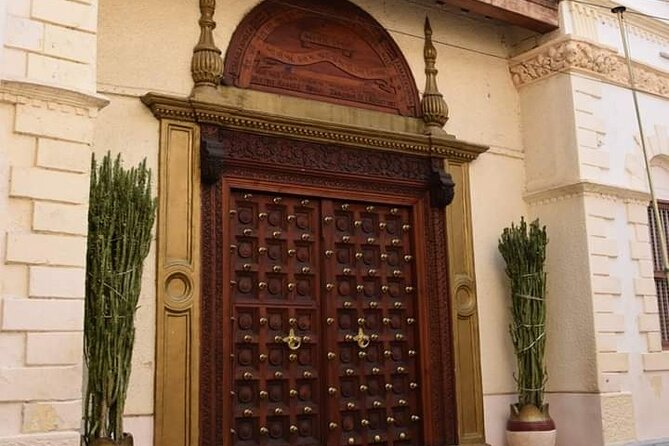
Saint Joseph’s Cathedral is another 10-minute stop. Your guide explains its history, and you may enter if you are interested.
The cathedral adds another religious layer to Stone Town. Earlier, the Anglican Cathedral connected the former slave market with Christian history. Saint Joseph’s offers a separate chance to see how Catholic architecture forms part of the town’s built character.
The visit is short, so your time inside may be limited. Dress and behave respectfully, as you would in any active place of worship. The tour details do not specify an entry fee, and the stop is listed as free.
This is also a good point to ask questions about the different architectural influences in Stone Town. The walk later focuses directly on Indian and Arab details, but the cathedral helps broaden that picture.
Swahili doors and a rooftop view
At The Swahili House, your guide shows you carved Zanzibar doors that reflect Indian and Arab styles. You are also taken to one of the rooftop terraces for a view over Stone Town.
The doors are among the most memorable details on the route. They turn ordinary entrances into records of wealth, trade, taste, and cultural connection. Your guide can help you notice the carving rather than treating each doorway as background decoration.
The rooftop terrace adds a change in perspective. From street level, Stone Town is a maze of lanes and façades. From above, you can better understand the town’s density and see how the old buildings sit together.
Ten minutes is not long for both doors and a rooftop view. Keep your camera ready, and listen while your guide explains what you are seeing. This stop is particularly useful for anyone interested in architecture or photography.
Emerson Spice and the final architecture lesson
The Emerson Spice stop also lasts about 10 minutes. Your guide explains the different architectural styles found in Stone Town and Zanzibar, then accompanies you inside some buildings to see their details.
This is a fitting late stop because the earlier sights have already given you examples to compare. By now, you have seen religious buildings, a fort, a market, historic houses, and public spaces. The explanation at Emerson Spice helps bring those examples together.
The experience is not an architecture course, and the schedule allows only a short visit. Still, it gives you a practical way to look at Stone Town after the tour ends. Notice the doors, balconies, walls, and changes in style as you continue exploring on your own.
The chance to enter some buildings is useful. Many of Stone Town’s best details are easy to miss from the lane, and a guide can show you how the interiors relate to the outside architecture.
A private format with a flexible guide
The activity is private, so only your group participates. That is a strong feature for couples, families, and small groups who want to ask questions without holding up strangers.
The experience provider offers French-speaking and English-speaking guides. Ali is one guide associated with the tour, and his handling of a delayed arrival shows practical flexibility. When the group informed him of the delay, he waited without making it a problem.
That kind of flexibility is valuable in Zanzibar, where arrival times can shift. Still, you should contact the provider if you are running late rather than assuming the guide will know. The meeting point is Mizingani Seafront Hotel, and the activity ends back there.
Most people can participate, and service animals are allowed. The tour is near public transportation. The supplied information does not give details about step-free access, so anyone with specific mobility needs should confirm the route before booking.
Timing, cost, and who will like it
The tour costs $23.44 per person and lasts about 2 to 3 hours. For that price, you receive a licensed guide and a wide introduction to Stone Town’s major themes.
The value is strongest if you want orientation. You can learn where the main sights are, hear the basic stories behind them, and return later to places that deserve more time. It is less suitable if you prefer to spend 30 minutes inside each attraction or stop often for food and shopping.
The itinerary is tightly packed:
- The former slave market receives about 40 minutes.
- Darajani Bazaar takes about 15 minutes.
- Most other stops last 10 minutes.
- The Old Fort receives about 15 minutes.
- The tour returns to the starting point.
Lunch is not included. The Freddie Mercury Museum costs an additional $8. Other listed stops have no admission fee.
Free cancellation is available if you cancel at least 24 hours before the start time. Inside that window, the amount is not refunded and changes are not accepted. The experience also depends on good weather. If poor weather cancels it, you are offered another date or a full refund.
Should you book this Stone Town tour?
Book it if you want a low-cost, private introduction to Stone Town with a guide who can explain the difficult history, point out market life, and help you notice the town’s Indian, Arab, African, and European influences.
I would especially choose it for a first visit, a short stay, or a group that wants a personal guide without paying for a full-day program. The former slave market, Darajani Bazaar, carved doors, and rooftop terrace give the tour more substance than a simple landmark walk.
Skip it if you want a slow museum day, a long food tour, or extensive time inside every building. The pace is brisk, and the Freddie Mercury Museum requires an extra $8. For most people seeking a practical first look at Stone Town, the mix of history, daily life, architecture, and private guiding makes the $23.44 price a sensible choice.
FAQ
Where does the tour start?
The tour starts at Mizingani Seafront Hotel, R5RR+9MJ, Mizingani Road, Zanzibar, Tanzania.
Where does the tour end?
The activity ends back at the meeting point.
How long does the Stone Town tour last?
The tour lasts approximately 2 to 3 hours.
Is pickup available?
Pickup is offered.
Is this a private tour?
Yes. Only your group participates in the activity.
What type of guide is included?
An official licensed guide is included. English-speaking and French-speaking guide services are offered by the provider.
Is the Freddie Mercury Museum entrance included?
No. The museum entrance is not included and costs $8.
Is lunch included?
No. Lunch is not included in the tour price.
Can I cancel for a full refund?
Yes, if you cancel at least 24 hours before the experience start time. Cancellations made less than 24 hours before the start time are not refunded.
What happens if bad weather cancels the tour?
If poor weather causes cancellation, you are offered a different date or a full refund.
Newly listed around Zanzibar
- Zanzibar: Nungwi/Kendwa Beach Sunset Dhow Cruise with Fruits★ 3.4 · 3 reviews
- Prison Island, Sea Turtles, Rock Restaurant & Relax in Beach★ 4.6 · 3 reviews
- Starfish Beach; The Rock; Kuza Cave; Paje Beach; Salaam Cave Tour★ 4.5 · 3 reviews
- Zanzibar: Half-Day Spice Farm Tour,the flavours of Zanzibar★ 4.7 · 3 reviews
- Joazani forest & Spice farm with lunch★ 5.0 · 3 reviews
- Nakupenda Island Snorkeling Sea trip & Lunch W/Transfer -Zanzibar★ 4.0 · 3 reviews
- Mnemba Island Snorkeling and Dolphin tour★ 5.0 · 3 reviews
- Zanzibar:Jozani forest, Spice farm with Swahili Cuisine clas★ 4.2 · 3 reviews
Stone Town Tours, compared.






Full-Day Private Stone Town +Spice Farm and Prison Island Tour
Read our review →
Browse the lists this tour appears in