
Reviewed · DAR ES SALAAM TOURS
Dar es Salaam History and Architectural Tours
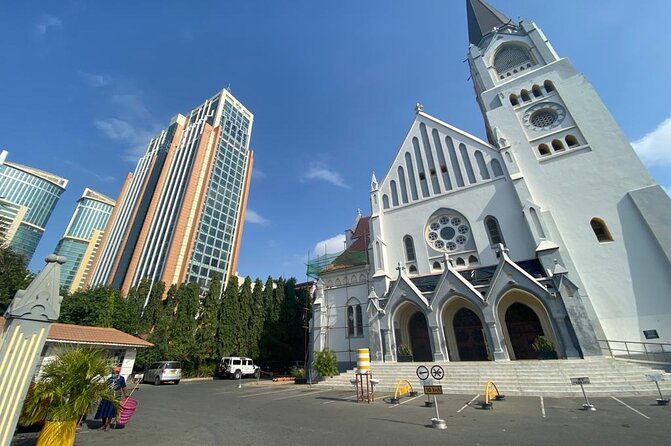
Dar es Salaam reveals itself through contrasts: a 1903 cathedral built where the city’s first mosque once stood, palm-fringed churches, tribal homes, fish sellers, carved ebony, and modern shopping under one busy city day. This private seven-hour tour gives you a broad look at the city rather than limiting you to one historic quarter.
I like the range of stops, especially the way the Village Museum and National Museum put buildings, art, and national history into context. I also like having Bernard as your guide. He brings in religion, music, architecture, society, and everyday life, so the city feels like more than a string of photo stops.
The main consideration is pace. Nine stops in about seven hours is a full schedule, and Dar es Salaam traffic can eat into sightseeing time. Mlimani City Mall is also a modern shopping stop rather than a historic sight, so this tour suits you best if you want a wide city survey, not a slow walk through old buildings.
Key points to know before booking
- A city tour with real range: See churches, museums, markets, a woodcarving center, a fish market, a mall, and a working art cooperative in one day.
- Bernard supplies the context: He explains Dar es Salaam’s history, architecture, religion, society, music, and art in a personal, conversational way.
- Private transport keeps the long route manageable: Pickup is offered, and only your group takes part.
- Lunch, snacks, water, and entrance fees are included: That makes the $150 price easier to assess, especially for a first day in the city.
- The schedule is packed: Allow for traffic, heat, and short visits at some locations rather than expecting a relaxed museum day.
- The tour is best for first-time visitors: You get an introduction to many sides of Dar es Salaam before choosing where to return on your own.
A seven-hour introduction to Dar es Salaam
This is not a narrow architecture walk. It is a private driving tour that uses buildings, markets, museums, and art to explain how Dar es Salaam developed. You move from colonial-era religious buildings to traditional homes, from the fishing trade to modern commerce, then finish with the bright, highly recognizable Tingatinga painting style.
The day begins at 9:00 a.m. Pickup is offered, and private transportation is included. That matters here because the stops are spread across the city. You are not simply strolling from one building to the next, and having a vehicle saves energy in Dar es Salaam’s heat.
Bernard is the guide named in the tour information, and his strongest role is interpretation. He connects architecture with belief, trade, colonial rule, local customs, art, and daily life. If you ask questions, you should have room to shape the conversation around the subjects that interest you most, since this is a private outing rather than a fixed group excursion.
More History Tours in Dar es Salaam:
- Bagamoyo Historical Tour – Everyday
★ 5.0 · 13 reviews - Bagamoyo Historical Tour – Everyday
★ 4.4 · 8 reviews - Private Tour in Historical Dar es Salaam with Lunch
★ 4.5 · 6 reviews
St. Joseph’s Cathedral and Azania Front Lutheran Church
The first two stops make a useful pair. St. Joseph’s Cathedral was built in 1903 on the same site as the city’s first mosque. That single fact gives you an immediate sense of Dar es Salaam’s layered religious and urban past. The cathedral is a short 30-minute visit, enough time for an introduction, a look at the architecture, and a little explanation without turning the morning into a long church tour.
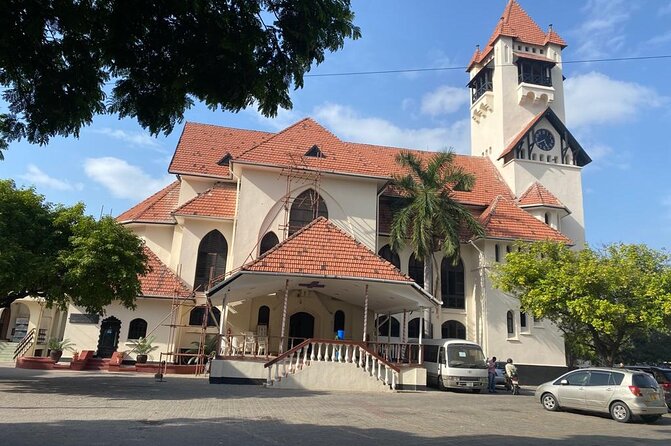
Next comes Azania Front Lutheran Church, also scheduled for 30 minutes. Its Bavarian style, palm trees, and influences from churches in Latin America and India make it different from the cathedral. You get a quick lesson in how imported designs were adapted to a tropical port city.
These visits are most useful when Bernard explains what you are looking at. On your own, you might see two attractive religious buildings. With context, you can compare their origins, design, and place in the city’s story. Dress and behave respectfully at both sites, since they are active religious places rather than decorative monuments.
Village Museum: traditional homes from across Tanzania
The Village Museum gives you an hour to look beyond Dar es Salaam’s urban center. It presents traditional homes and living conditions linked to a number of Tanzanian tribes. The format is hands-on, which makes it easier to understand how houses were built and used than a room full of small labels would be.
I especially like this stop for anyone who is visiting Tanzania for the first time. Dar es Salaam can quickly fill your attention with traffic, commerce, and modern buildings. The Village Museum widens the picture and shows the variety of domestic traditions found across the country.
One hour is a sensible amount of time, though the stop may feel brief if you want to inspect every structure carefully. Treat it as an introduction to Tanzanian building traditions and daily life, not a full ethnographic study. Bernard’s explanations are important here because the houses make more sense when you learn how they relate to climate, materials, family life, and local customs.
Mwenge Woodcarvers Market and the work of buying art
At Mwenge Woodcarvers Market, you have about an hour to see carved statues, masks, chests, and other objects made from strong black ebony wood. This is one of the most practical stops on the tour if you want to take home Tanzanian art.
The market is not only about looking. It is a place to compare pieces, ask questions, and consider what kind of souvenir has real meaning for you. The selection can make the stop feel more commercial than the museums, but that is also part of its purpose. You see how local carving is presented to people shopping for art and gifts.
Take your time before buying. Look closely at the carving, ask about the wood, and compare several pieces rather than choosing the first appealing mask or chest. Since the tour description does not set a spending limit or promise shipping services, handle purchases as a personal shopping matter. The $150 tour price covers the tour, not artwork.
A few more Dar es Salaam days to compare
- Dar es Salaam: City Tour
★ 4.7 · 159 reviews - Dar es Salaam City Center: Walking Tour
★ 4.8 · 102 reviews - Dar es Salaam City Tour – Everyday
★ 5.0 · 64 reviews - MIKUMI NATIONAL PARK – 3 Days
★ 4.5 · 63 reviews
Kivukoni Fish Market and Dar es Salaam’s working waterfront
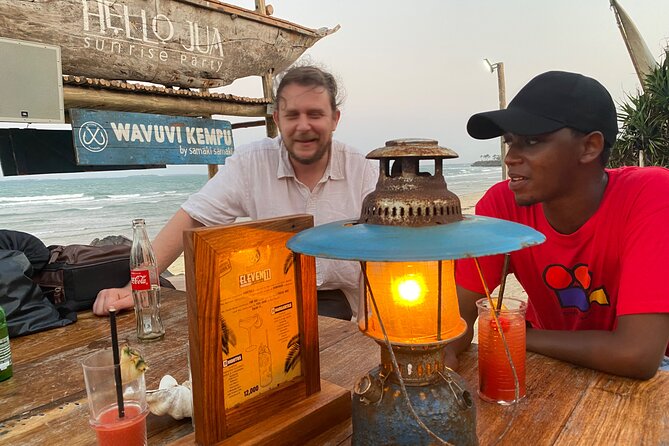
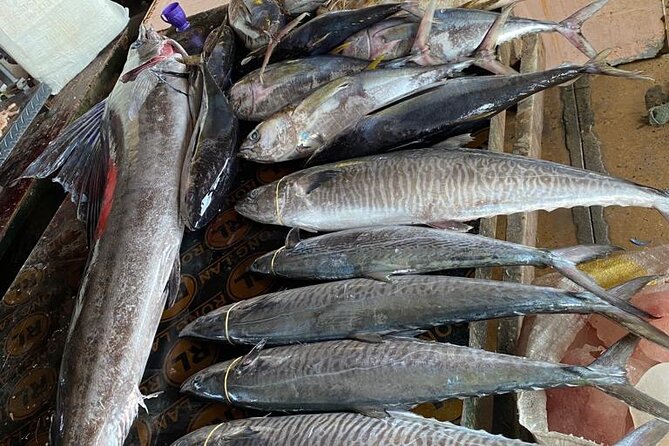
Kivukoni Fish Market brings you into the city’s fishing economy. The 30-minute visit is short, but it gives you a look at freshly caught seafood, sellers, buyers, and the trade that helps feed Dar es Salaam.
This is a more immediate experience than a museum. You can expect a working market rather than a polished attraction. That means noise, movement, strong smells, and wet surfaces may be part of the setting. Wear practical shoes and keep your belongings secure without making the stop feel like a staged performance.
The market also adds balance to the architectural theme. Buildings tell part of a city’s story, but food and trade show how the city functions today. If you are interested in local cuisine, this is a good point to ask Bernard about seafood, market customs, and the dishes you might try later.
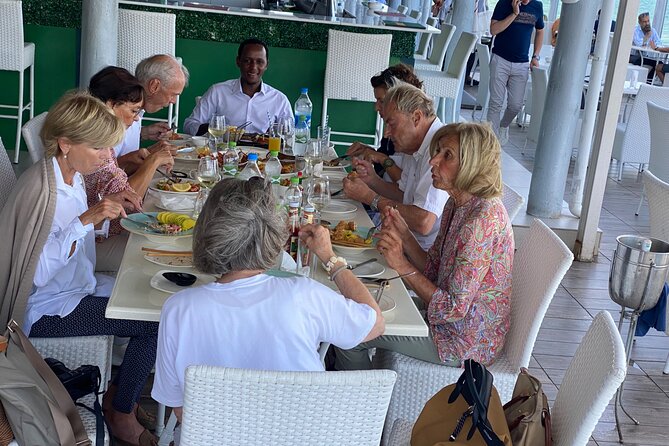
Snacks are provided before lunch at one of the stops. Local lunch is included as well. One account of the day places lunch at Akemi, a revolving restaurant with wide city views, though the exact lunch venue should be confirmed when booking. Dinner is not included because the tour ends in the evening.
National Museum of Tanzania and the larger national story
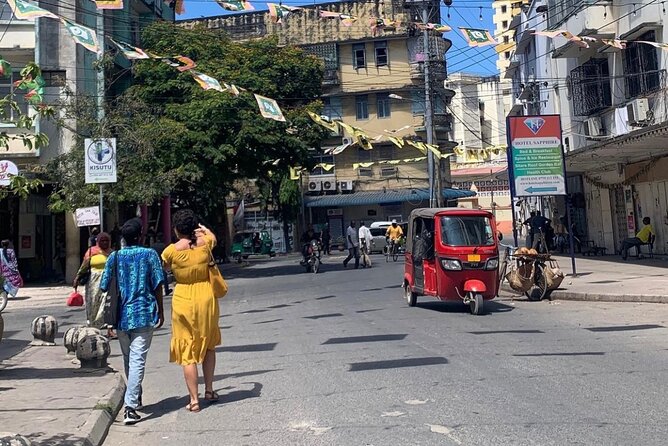
The National Museum receives one hour. It is part of a group of five Tanzanian museums created to preserve and present the country’s history and natural environment. This stop gives the day a national frame after the city-specific visits.
I like the order of the day here. You first see living traditions at the Village Museum, then art and commerce at Mwenge and Kivukoni, and then get a more formal museum setting. The National Museum can help connect local observations with Tanzania’s wider past and natural world.
An hour is enough for a focused visit, but not for every exhibit in depth. Ask Bernard which sections deserve your attention if time is tight. The tour aims for breadth, so you should expect a guided overview rather than several quiet hours spent reading every display.
Kariakoo Market and the scale of city commerce

Kariakoo Market spreads across many city blocks and contributes greatly to Dar es Salaam’s commercial life. The scheduled one-hour visit is one of the day’s larger blocks of time, and it should help you understand the city as a trading center rather than only a historic port.
This is likely to be one of the most energetic parts of the route. Kariakoo is a working market, so conditions may be crowded and fast-moving. Keep your attention on where you are walking, follow Bernard’s directions, and do not expect a calm browsing experience.
The value here is scale. Mwenge focuses on carved art, and Kivukoni focuses on fish. Kariakoo gives you a much wider look at everyday buying and selling across a large urban district. It is also a useful place to ask about what residents buy locally and how the market fits into Dar es Salaam’s economy.
Mlimani City Mall: a modern counterpoint

Mlimani City Mall, on Sam Nujoma Road in Ubungo, covers about 30,000 square meters. The one-hour stop shows a different Dar es Salaam, one of large modern retail spaces, national brands, services, and contemporary city life.
This is the least historic stop, and that is worth saying plainly. If your ideal tour is all old buildings, museums, and traditional neighborhoods, an hour at a shopping mall may feel like time that could have been used elsewhere. If you want to understand the city as it is now, the contrast is useful.
You can use the stop for a break from the heat and markets. It may also be convenient for browsing, but the tour does not promise a particular shopping activity or discount. Think of Mlimani City as a modern urban counterpoint, not as a major cultural attraction.
Tingatinga paintings and a strong finish in color
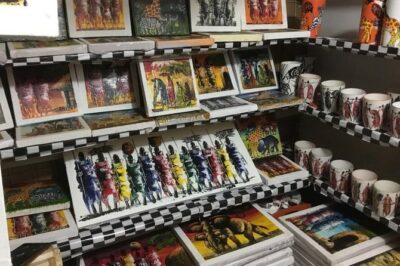
The final stop is the Tingatinga Arts Cooperative Society, scheduled for 30 minutes. Tingatinga painting developed in Tanzania during the second half of the 20th century. The work is known for strong colors, often painted on masonite, and its light, portable format has made it popular with international buyers.
This is a good final stop because it leaves you with a clear visual memory of Tanzania. After churches, museums, markets, and traditional houses, you finish with a living art style that is both local and easy to carry home.
Half an hour gives you time to see the paintings and learn about the style, but it is not a full art workshop. Ask about the artists and the painting process if those subjects interest you. As with the woodcarvers market, artwork purchases are separate from the tour price.
What the $150 price really covers
At $150 per person, this is not a bargain-priced orientation bus. It is a private, full-day-style city experience with private transportation, admission fees, bottled water, snacks, and local lunch included. You also avoid paying separately at nine stops, which makes the price easier to judge.
The strongest value comes if you are new to Dar es Salaam, have limited time, or prefer a guide to explain what you are seeing. A private vehicle is particularly useful because the route covers churches, museums, markets, and shopping areas in different parts of the city.
The value is weaker if you want to spend long periods at one museum or shop slowly at the markets. You are paying for range, transport, and interpretation. You are not paying for a quiet specialist architecture walk or an entire day devoted to one neighborhood.
Bottled water is a practical inclusion. Dar es Salaam can be hot, and water is especially welcome on a schedule with market visits and outdoor walking. Alcohol is not included. If you want drinks later, the guide can take you to bars or sports bars, with an additional cost of about $30 to $50 per person and an age limit of 18 and above. Dinner is also separate, with good restaurant meals described as costing about $30 to $50.
Pace, comfort, and who should book
You should book this tour if you want a first orientation to Dar es Salaam and like moving between different types of places. It suits curious adults, families, couples, and small private groups who want history, architecture, culture, shopping, and food in one organized day.
It also works well if you prefer asking questions without a large group around you. Only your group participates, and private transport makes the long route easier than arranging separate taxis between every stop.
You should think twice if you dislike busy markets, heat, or frequent transitions. The nine-stop plan is ambitious. The listed visits add up to about six and a half hours before driving time, meals, and any changes on the road, so the schedule will feel full.
Service animals are allowed, and the tour is near public transportation, though private transport is provided. Most people can participate. The booking confirmation is received at the time of booking, and free cancellation is available until 24 hours before the start time. Cancellations or changes made less than 24 hours before 9:00 a.m. are not refunded or accepted.
Final recommendation
I would choose this tour for a first day in Dar es Salaam, especially if Bernard is available to guide it. His strength is connecting architecture with religion, art, music, society, and the city’s changing daily life.
The best reason to book is the range: one day takes you from a cathedral and Lutheran church to tribal homes, ebony carving, fish trading, national exhibits, Kariakoo commerce, modern retail, and Tingatinga art. The main tradeoff is speed. If you want depth at fewer sites, choose a shorter, more focused tour. If you want to get your bearings across the whole city and have lunch, transport, water, snacks, and entry fees handled, this is a strong choice.
FAQ
How long does the tour last?
The tour lasts approximately seven hours.
What time does the tour start?
The scheduled start time is 9:00 a.m.
Is this a private tour?
Yes. Only your group participates in the private activity.
Is pickup available?
Yes. Pickup is offered.
How much does the tour cost?
The listed price is $150 per person.
Is lunch included?
Yes. Local lunch is included in the tour price.
Are entrance fees included?
Yes. All listed admission fees and taxes are included.
Is bottled water provided?
Yes. Bottled water is provided during the tour, which is useful in Dar es Salaam’s heat.
What places are visited?
The route includes St. Joseph’s Cathedral, Azania Front Lutheran Church, Village Museum, Mwenge Woodcarvers Market, Kivukoni Fish Market, National Museum of Tanzania, Kariakoo Market, Mlimani City Mall, and Tingatinga Arts Cooperative Society.
Can I cancel for a full refund?
Yes, if you cancel at least 24 hours before the experience start time. Cancellations made less than 24 hours before the start time are not refunded, and changes within that period are not accepted.
Newly listed around Dar es Salaam
- Mikumi Np Mid Range Tour 3 Days★ 5.0 · 3 reviews
- Private Mikumi Adventure★ 4.5 · 3 reviews
- Ruaha National Park And Mikumi National Park Budget Safari 6 Days 5 Nights★ 5.0 · 3 reviews
- 3 Days 2 Nights Private Safari Tour in Mikumi★ 5.0 · 3 reviews
- Day Trip To Bagamoyo From Dar Es Salaam ..historical town★ 4.5 · 3 reviews
- Dar es Salaam City tour and Beach Leisure – 9 hours★ 5.0 · 3 reviews
- Mikumi National Park Day Trip by Train From Dar Es Salaam★ 5.0 · 4 reviews
- 3-Day at Dar es Salaam To Selous GR (Nyerere NP) Game, Boat & Walking Safari★ 5.0 · 4 reviews
Dar es Salaam Tours, compared.


Private Full-Day Trip to Mikumi National Park from Dar es Salaam
Read our review →Browse the lists this tour appears in