
Reviewed · DAR ES SALAAM TOURS
Bagamoyo Historical Tour – Everyday
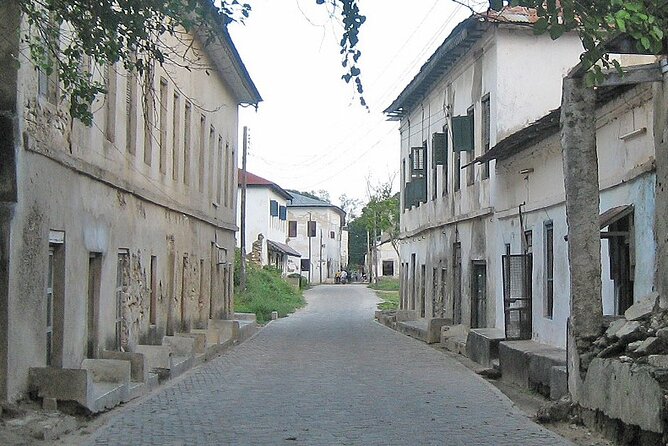
Bagamoyo was once the main gateway between the East African coast and the interior. This full-day trip brings that past into focus through Kaole Ruins, the former slave prison, German colonial buildings, and the Catholic mission linked with Dr. Livingstone. It is a history-heavy outing, but the coastal setting and easy pace keep it from feeling like a classroom.
I like the mix of sites: ancient tombs and a mosque at Kaole, then 19th-century colonial and Christian landmarks in Bagamoyo itself. I also like the drive out of Dar es Salaam, which lets you watch the city thin into quieter coastal communities. The main drawback is the guide’s English. One booking reported difficulty understanding the commentary, so clear communication is worth confirming before you go.
Key points
- Kaole Ruins: See 30 tombs and one of East Africa’s oldest mosques at an archaeological site south of Bagamoyo.
- Slave-trade history: Visit the prison where enslaved people were held before being moved through the port.
- German colonial remains: Explore the 1897 Old Boma and German First World War graves.
- Christian heritage: Visit the Catholic Museum, Dr. Livingstone’s former resting place, and the First Cross from 1867.
- A quieter coastal day: Leave Dar es Salaam behind for Bagamoyo’s beaches, hotels, and slower rhythm.
- Practical comfort: Enjoy hotel pickup, air-conditioned transport, bottled water, and soft drinks during the eight-hour outing.
Why Bagamoyo matters beyond its beaches
Bagamoyo is about 65 kilometers north of Dar es Salaam, on the coast opposite Zanzibar. It was once the formal capital of German East Africa and one of the most important ports along the east-central African coast.
That location explains the town’s complicated past. Trade, religion, colonial rule, and the movement of enslaved people all passed through Bagamoyo. You are not visiting one neatly preserved old quarter. Instead, you move between scattered places that show how different forces shaped the town.
The name is often linked to Bwagamoyo, meaning Here I throw down my heart. The phrase captures the despair tied to the slave trade, especially for people forced away from their homes with no hope of return. That part of the visit can be difficult, but it gives the rest of the day a serious purpose.
I would choose this tour if you want context for Tanzania’s coast rather than a simple beach break. Bagamoyo’s shoreline is pleasant, but the real value is understanding why this small coastal town mattered so much.
More History Tours in Dar Es Salaam:
- Dar es Salaam History and Architectural Tours
★ 5.0 · 36 reviews - Bagamoyo Historical Tour – Everyday
★ 5.0 · 13 reviews - Private Tour in Historical Dar es Salaam with Lunch
★ 4.5 · 6 reviews
The drive north from Dar es Salaam
Your day begins with pickup at your hotel. The driver waits in the lobby with a sign bearing your name, a useful detail in a busy city where finding the right vehicle can take time.
The ride is in an air-conditioned vehicle, and water and soft drinks are included. Meals are not included, so plan for that when you book. The outing lasts about eight hours, including the drive and the visits around Bagamoyo.
The road also gives you a sense of change. As you leave Dar es Salaam, the crowded city atmosphere gradually gives way to a calmer coastal setting. One particularly positive account praised Michael for safe driving and good company on the journey, noting how the mood relaxed after leaving Dar es Salaam.
You should treat the road time as part of the experience, not just a transfer. It offers a view of daily life between the city and the old port. Still, traffic can affect how much time you have at each stop, and the total day will feel long if you prefer short sightseeing outings.
Kaole Ruins and the old Arab settlement
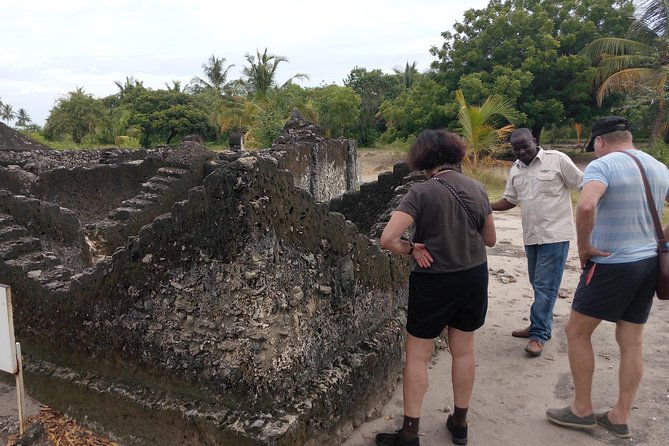
Kaole Ruins lie about five kilometers south of Bagamoyo. This is one of the most important stops because it takes you further back than the colonial buildings in town.
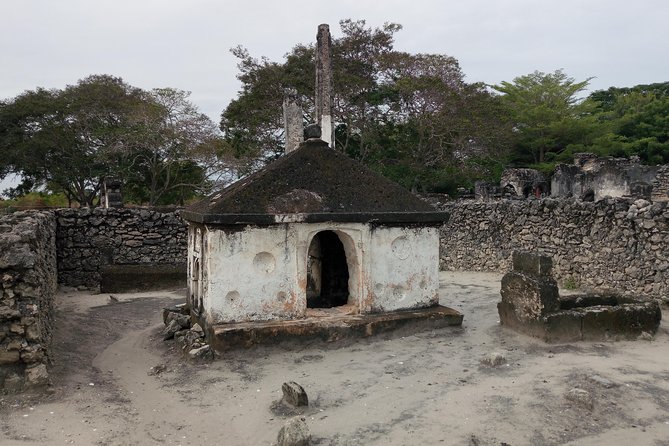
The remains belong to an ancient Arab settlement that declined after the Portuguese arrived in the 15th century. The site includes 30 tombs and what is described as the oldest mosque in East Africa. The ruins are not a grand, rebuilt monument. Their appeal comes from the fragments and the story they reveal about early coastal trade and the religious connections across the Indian Ocean.
A guide adds real value here. Without explanation, tombs and low stone remains can be hard to read. With context, you can begin to picture Kaole as a working settlement linked to wider trade routes, rather than a few isolated ruins in the countryside.
This stop suits you if you enjoy archaeology and older layers of history. It may be less satisfying if you expect a large museum, a fully restored city, or a long list of objects on display. The site’s power comes from what has survived and from the setting, not from polished presentation.
Bagamoyo’s slave-trade sites
The visit to the former slave prison is the most emotionally serious part of the day. Enslaved people were held there during the slave and ivory trade before being moved onward through the port.
The walls and rooms help make the subject physical. Instead of hearing only dates and names, you are confronted with the confined spaces connected to human suffering. The stop also makes the meaning of Bagamoyo’s name harder to treat as a piece of local trivia.
Expect this visit to be sober rather than entertaining. That is appropriate. A good guide should explain the trade and its impact without turning suffering into spectacle.
The tour description focuses on the hardships of enslaved people, but it does not provide a detailed timetable for this stop or specify exactly how long you remain inside. Your guide’s explanation will shape much of what you take away, which makes clear English and historical accuracy important considerations when booking.
A few more Dar Es Salaam days to compare
- Dar es Salaam: City Tour
★ 4.7 · 159 reviews - Dar es Salaam City Center: Walking Tour
★ 4.8 · 102 reviews - Dar es Salaam City Tour – Everyday
★ 5.0 · 64 reviews - MIKUMI NATIONAL PARK – 3 Days
★ 4.5 · 63 reviews
Old Boma and the German colonial chapter
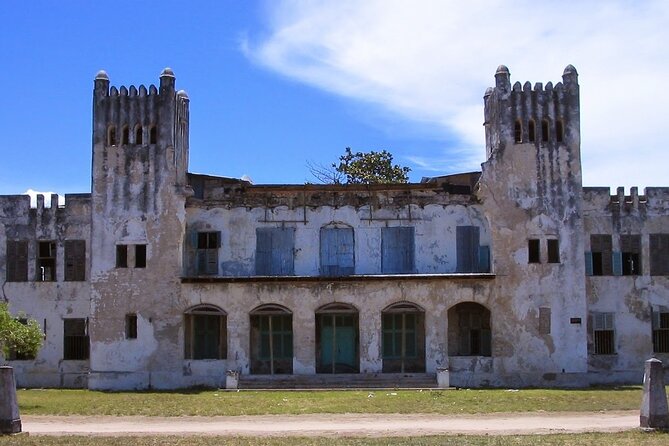
Bagamoyo’s past did not end with the earlier coastal trade. At the Old Boma, you see a statehouse built by the Germans in 1897.
The building later passed to the British after the First World War. That change gives the site a compact lesson in colonial power. The structure is not simply an old German building. It also points to the handover of authority that followed the war and to Bagamoyo’s role in the administration of German East Africa.
I like this stop because it adds political history to the day. Kaole shows an older coastal world, while the Old Boma shows how European rule was imposed and then reshaped. Seeing both on the same outing helps you connect the centuries rather than treating each place as a separate attraction.
The colonial remains are best approached with realistic expectations. This is not presented as a large palace complex with extensive displays. The appeal lies in the building’s purpose, age, and place in Bagamoyo’s story.
German war graves and the cost of empire
The tour also takes you to the tombs of German leaders who died during the First World War. These graves add another layer to the colonial story.
They are a quiet counterpoint to the Old Boma. At the statehouse, you see administration and authority. At the graves, you see the human cost of military conflict and colonial ambition.
This stop may appeal most if you are interested in the First World War in Africa, German colonial rule, or military history. The available information does not specify the number of graves or the length of the visit, so do not expect a full battlefield tour. It is one piece of a broader historical route.
Taken together, the Old Boma and the German graves help you see that Bagamoyo was not important only because of trade. It was also a place where foreign powers built institutions, competed for control, and left lasting marks on the town.
The Catholic Museum and Livingstone’s connection
The Catholic Museum traces the roots of Christianity in Bagamoyo. It is also associated with the former resting place of Dr. David Livingstone, the famous explorer.
That connection gives the museum strong appeal for anyone interested in missionary work, exploration, or the wider story of European contact with East Africa. The tour also includes the First Cross, erected by French missionaries in 1867.
The cross is a simple but powerful marker. It represents the arrival and spread of Christianity in a town already shaped by African, Arab, Indian Ocean, and European connections. The museum gives you a chance to consider that history through a religious lens, after seeing trade and colonial sites earlier in the day.
This section of the tour is likely to work best with a guide who can explain the setting rather than simply point out objects. One booking praised the guide for covering immigration, leaders, education, art, geography, and the town’s wider role. Those subjects suggest that the commentary can go well beyond a list of buildings when communication is strong.
Guides, driving, and the quality of the commentary
The experience includes an English-speaking guide and a separate driver may be involved. Michael was specifically praised for safe driving and for making the road trip pleasant. Sedic was also singled out for providing extended commentary on Bagamoyo and Tanzania.
You should not assume that exact team members are guaranteed for every departure, but their names are useful points of reference when confirming your booking. The strongest feedback focuses on the guide’s historical knowledge and the driver’s handling of the road.
There is also a clear warning to keep in mind: one booking rated the tour lower because the guide’s English was difficult to understand. That does not cancel out the positive reports, but it matters here because so much of the value depends on spoken explanation.
If history is your main reason for going, ask the operator to confirm the guide’s English ability and the planned stops. Dove Adventure Tanzania operates the experience, and communication with the agency has been described as smooth. A quick message before the tour can help set expectations.
What the $187 price means
At $187 per person, this is not a bargain-priced sightseeing ride. The price needs to be judged against what is included: hotel pickup, air-conditioned transport, an English-speaking guide, water, and soft drinks for an eight-hour private-feeling day.
The cost makes more sense if you are staying in Dar es Salaam and want transport, a driver, and historical interpretation handled in one booking. You avoid arranging your own road transport and fitting several separated sites together.
Meals and alcohol are not included. Since the day is long, you need to budget for food separately. The supplied details do not state where or when a meal stop takes place, so ask before departure if lunch planning matters to you.
For a solo visitor, $187 can feel steep. For two or more people sharing the value of a dedicated vehicle and guide, the outing may make better financial sense. I would compare the price with the cost and effort of arranging a car and guide independently, not with the price of a short city attraction.
Who should book this day trip
I would recommend Bagamoyo to you if you enjoy difficult history, archaeology, colonial-era sites, and long-form guiding. It is especially useful early in a Tanzania coast itinerary because it gives you background for the region’s trade, religion, and foreign rule.
It also suits you if Dar es Salaam feels tiring and you want a slower day outside the city. The coastal setting, beaches, and hotels provide a change of pace, even though the main focus remains historical.
Families with older children may appreciate the variety, but the slave-trade material calls for thoughtful preparation. The tour is wheelchair accessible, which broadens its usefulness, though the supplied details do not describe the exact surface conditions at each archaeological site.
I would not make this your first choice if you want a relaxed beach day with minimal structure. The beaches are part of Bagamoyo’s appeal, but this is primarily a guided history tour. Nor would I choose it if you need a very precise schedule, since the eight-hour duration includes road travel and several stops.
Booking details worth knowing
The tour runs every day and lasts eight hours. Starting times depend on availability, so check the schedule before choosing your date.
Hotel pickup is included, with the driver waiting in the lobby under your name. The tour is conducted in English, and the experience is wheelchair accessible according to the supplied details.
You can cancel up to 24 hours in advance for a full refund. A reserve-now, pay-later option is also available, which helps if your Dar es Salaam plans are still changing.
The rating is 4.4 from eight bookings, with especially strong praise for the historical commentary, the driver, and the smooth communication with the operator. The one recurring caution is not about the places themselves but about guide communication, so that is the detail I would clarify first.
Should you book the Bagamoyo Historical Tour?
Book it if you want to understand Tanzania’s coast through real places: an ancient mosque, slave-trade prison, German statehouse, war graves, Catholic mission, and the First Cross. The range of stops is the tour’s greatest strength, and the trip out of Dar es Salaam adds a welcome change of pace.
Think twice if your priority is a cheap outing, a long beach stay, or a short and tightly timed excursion. At $187 per person, the value rests on the guide and transport as much as the sites. Confirm the English-speaking guide, ask about the meal plan, and go with enough time to let Bagamoyo’s difficult past sink in.
FAQ
Where is Bagamoyo located?
Bagamoyo is in Tanzania’s Pwani Region, about 65 kilometers north of Dar es Salaam on the coast opposite Zanzibar.
How long does the tour last?
The tour lasts eight hours.
What sites are included?
The route includes Kaole Ruins, the former slave prison, the Old Boma, German First World War graves, the Catholic Museum, Dr. Livingstone’s former resting place, and the First Cross erected in 1867.
Is hotel pickup included?
Yes. The driver waits in your hotel lobby with a sign showing your name.
What is included in the price?
The price includes air-conditioned transportation, an English-speaking guide, water, and soft drinks. Meals and alcohol are not included.
Can I cancel the tour and get a refund?
Yes. You can cancel up to 24 hours in advance for a full refund. A reserve-now, pay-later option is also available.
Newly listed around Dar Es Salaam
- Mikumi Np Mid Range Tour 3 Days★ 5.0 · 3 reviews
- Private Mikumi Adventure★ 4.5 · 3 reviews
- Ruaha National Park And Mikumi National Park Budget Safari 6 Days 5 Nights★ 5.0 · 3 reviews
- 3 Days 2 Nights Private Safari Tour in Mikumi★ 5.0 · 3 reviews
- Day Trip To Bagamoyo From Dar Es Salaam ..historical town★ 4.5 · 3 reviews
- Dar es Salaam City tour and Beach Leisure – 9 hours★ 5.0 · 3 reviews
- Mikumi National Park Day Trip by Train From Dar Es Salaam★ 5.0 · 4 reviews
- 3-Day at Dar es Salaam To Selous GR (Nyerere NP) Game, Boat & Walking Safari★ 5.0 · 4 reviews
Dar es Salaam Tours, compared.


Private Full-Day Trip to Mikumi National Park from Dar es Salaam
Read our review →Browse the lists this tour appears in