
Reviewed · STONE TOWN TOURS
Stone Town Tour, Prison Island and Spice Tour with Lunch
Stone Town’s narrow lanes, carved wooden doors, and difficult past give this outing its strongest character. In one day, you move from old sultanate buildings to a working spice farm, then across the water to Changuu Island and its giant tortoises.
I like the three-part design because it covers Zanzibar’s history, food culture, and nature without making you arrange separate taxis and boats. I also like the spice farm, where you smell and taste cloves, cinnamon, vanilla, cardamom, fruit, and other crops before sitting down to a Swahili lunch.
The trade-off is time. Nine hours is a full day, and Stone Town can feel brief if you want long visits inside every building. Shared departures also require at least four participants and may include hotel pickup delays.
Key points at a glance
- Stone Town’s carved doors and narrow lanes: Walk through the old center and see Arab, Indian, Persian, and European influences in its buildings.
- A hands-on spice farm visit: Smell, touch, and taste cloves, nutmeg, cinnamon, vanilla, turmeric, black pepper, fruit, and more.
- A Swahili lunch is included: The meal gives the farm visit a useful culinary finish rather than ending with only a demonstration.
- Changuu Island’s giant tortoises: See Aldabra tortoises, including animals that can be more than 100 years old and weigh up to 200 kilograms.
- Hotel pickup and one-day convenience: Transport, guide service, entry fees, water, and lunch are included in the $125 price.
- Language and group choice: The tour is offered with English, French, Italian, or German guiding, with a private group option available.
Why this day works as a Zanzibar introduction
This tour brings together three very different sides of Unguja. Stone Town shows you how Zanzibar grew as an Indian Ocean port. The spice farm explains the island’s food and farming traditions. Changuu Island adds a short boat ride and close contact with giant tortoises.
That mix makes sense if you have limited time. You do not spend the entire day on one subject, and you get a useful first look at the island before deciding where to return on your own.
The current score is 4.8 out of 5 from six posted ratings, with the strongest enthusiasm directed at the spice farm, the French-speaking guides, and the sheer amount covered in roughly nine hours. One lower rating still described the Stone Town history, especially the slave-trade story, as worthwhile. That balance feels fair: the day is rewarding, but not every stop will match every expectation.
More Stone Town walks:
- Zanzibar: Stone Town, Spice Tour, Prison Island with Lunch
★ 4.4 · 1,219 reviews - Zanzibar: Prison Island, Stone Town, & Spice Farm Tour
★ 4.5 · 579 reviews - Zanzibar; Prison Island, Nakupenda, StoneTown Tour with BBQ
★ 4.3 · 457 reviews
Walking through Stone Town’s narrow lanes
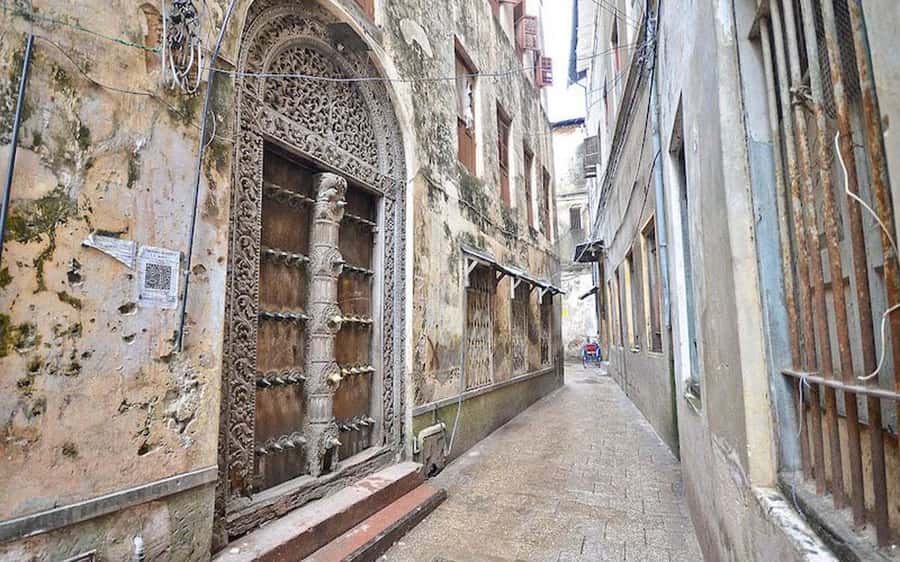
Stone Town is best understood on foot. The old center is a maze of narrow streets, limestone buildings, traditional shops, markets, and old Arab mansions. Your guide leads you through this tight urban fabric rather than showing it to you only through a vehicle window.
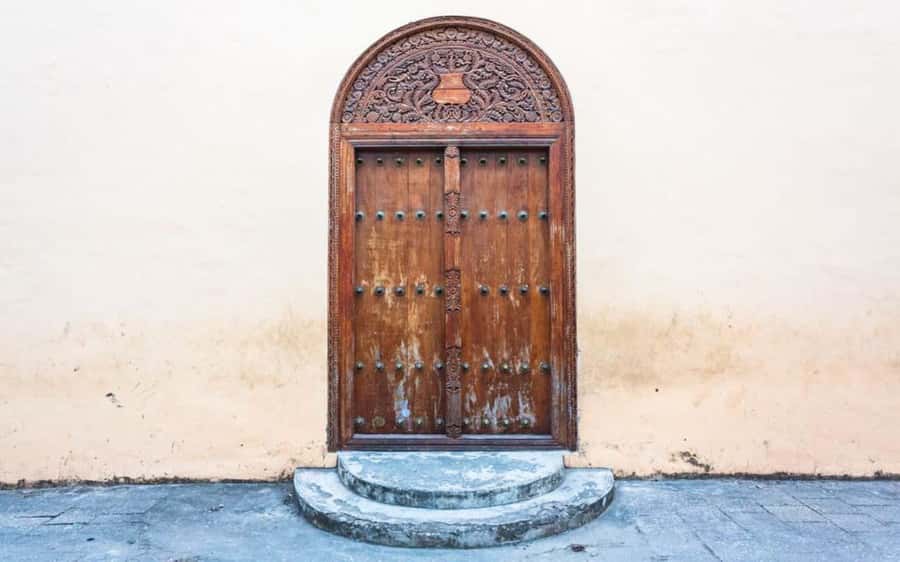
Look closely at the doors. Intricately carved Zanzibari hardwood doors are among the most memorable details in the town, and they reveal the wealth and cultural connections of the families who once lived behind them. Arab, Indian, Persian, and European design ideas meet here, often within a short walk.
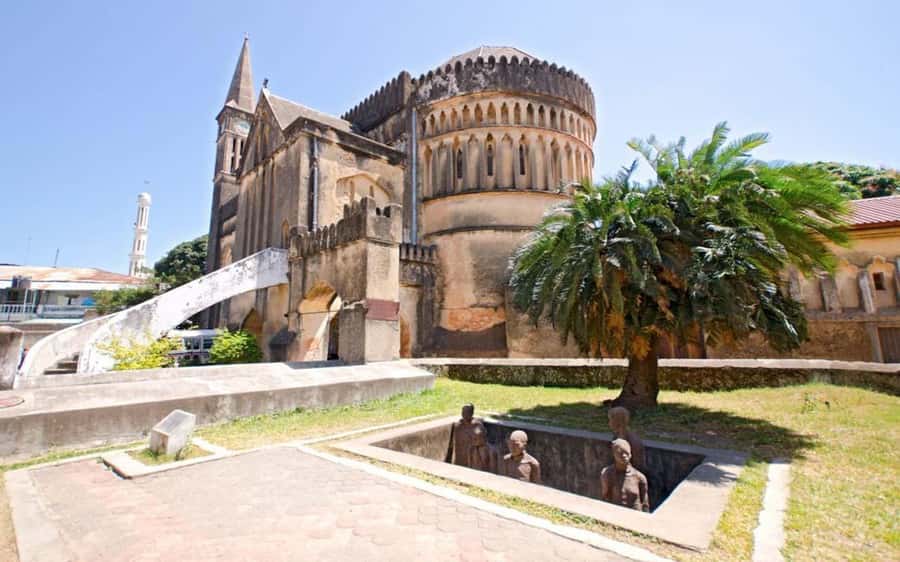
The tour includes major historical sights such as the former slave market, Sultan’s Palace, and old Arab mansions. The former slave market is not a light subject, but it gives necessary context to Zanzibar’s role in the Indian Ocean slave trade. The visit is particularly useful if you want more than pretty architecture and shopping streets.
You should expect walking on uneven or confined streets, though the supplied information does not specify the exact route or number of interior visits. Stone Town can also feel different from what you imagine from photographs. One rating described the town as worthwhile but not quite as expected, while still giving the whole day a top score. I would treat the town as an atmospheric guided walk, not as a museum tour with long, detailed stops inside every building.
A patient guide matters here. One German-language account specifically praised the guide for being well informed and patient during shopping. That is useful because Stone Town walks can easily turn into a rushed march if you want time to look at doors, stalls, or shops.
The story behind Zanzibar’s Spice Island name
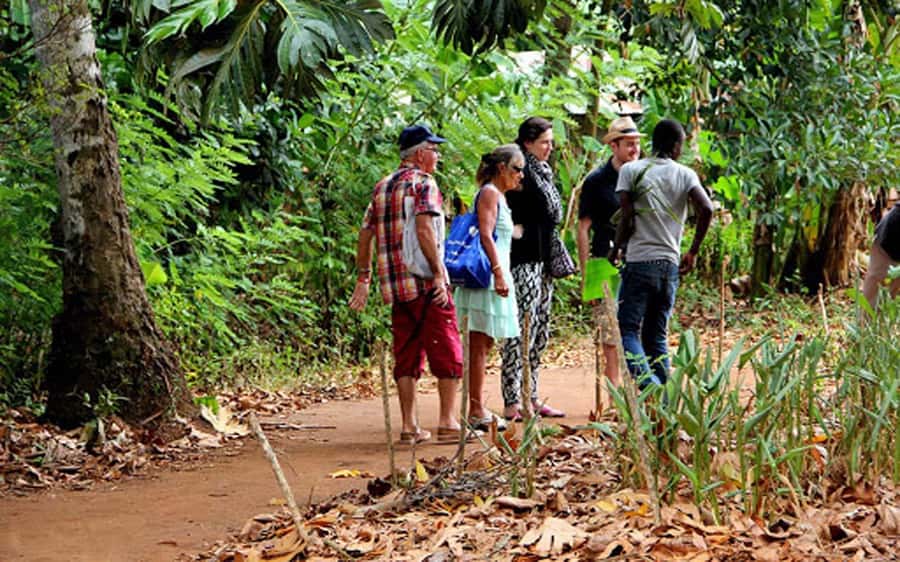
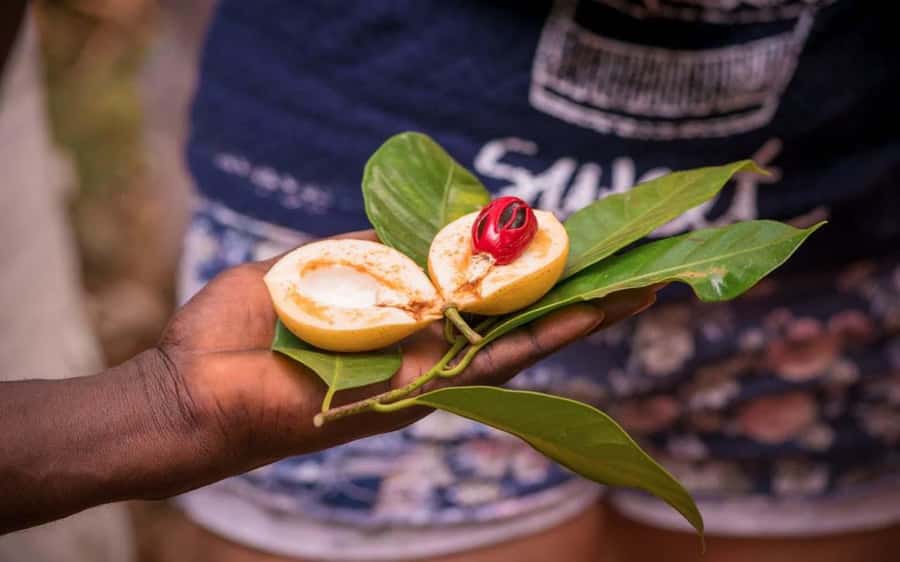
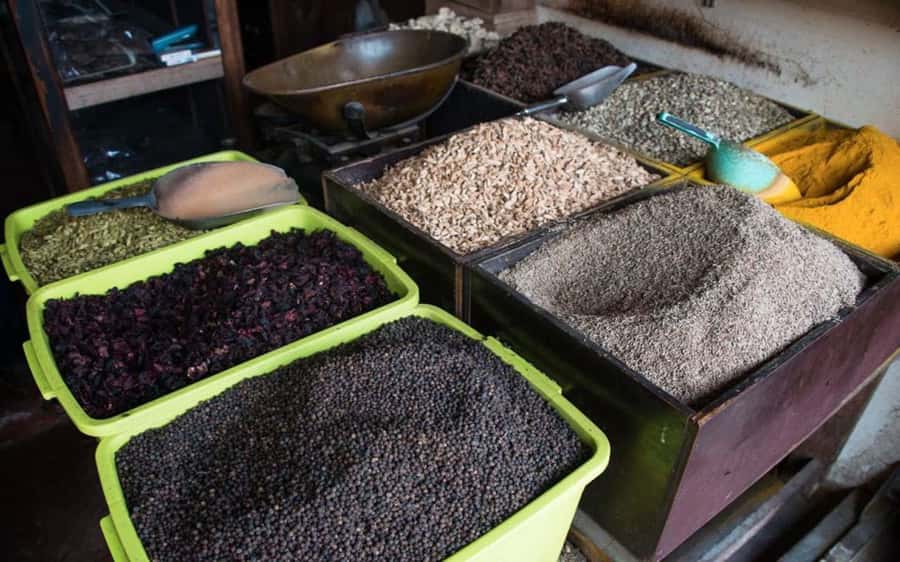
After Stone Town, the tour heads to an organic spice plantation. This is where the day becomes very physical and sensory. Instead of hearing only a list of crops, you smell, touch, and taste them during a guided farm walk.
The selection includes cloves, nutmeg, cinnamon, vanilla, cardamom, turmeric, black pepper, chili, lemongrass, coconuts, papaya, cassava, and other tropical plants. You may find that familiar kitchen ingredients look very different before they reach a market or spice jar.
The farm also connects food with island history. Tropical crops and spices were introduced and developed through Indian Ocean trade, including the role of Portuguese traders in the 16th century. Your guide explains traditional uses and cultivation, giving the visit more substance than a quick stop for souvenir shopping.
This is the most consistently praised part of the day. The strong response makes sense because the farm gives you things to do: smell a leaf, handle a spice, taste fruit, and compare ingredients. One French-speaking participant especially enjoyed the fruit, while another simply singled out the spice tour as a favorite.
Do not expect a large agricultural production tour unless your guide explains otherwise. The provided details describe an organic plantation and a guided walk, but they do not promise a specific farm size, harvesting activity, or product demonstration. The value comes from the close look at crops and their uses.
Swahili lunch among the spices
Lunch is served at the farm and is included in the price. That is a practical plus, since the schedule leaves little room for finding a restaurant between Stone Town, the plantation, and the boat trip.
The meal is described as Swahili cuisine with spice-based flavors. It gives you a chance to connect the ingredients you have just seen with Zanzibar’s cooking traditions. For many people, that will be more useful than tasting isolated fruit or smelling raw spices without seeing how they work in a meal.
The supplied information does not list individual dishes or dietary alternatives. If you have food restrictions, ask about them before booking or tell the provider in advance. Water and soft drinks are included, but bringing extra water is still sensible in Zanzibar’s strong sun.
More Prison Island trips:
- Zanzibar: Prison Island and Nakupenda Boat Trip with Lunch
★ 4.1 · 882 reviews - Zanzibar: Prison Island & Nakupenda Boat Tour with BBQ Lunch
★ 4.4 · 554 reviews - Zanzibar: Stone Town, Spice tour & Prison Island with Lunch
★ 4.6 · 453 reviews - Zanzibar: Prison Island & Nakupenda Sandbank Tour with Lunch
★ 4.2 · 265 reviews
Crossing to Changuu Island
In the afternoon, you take a boat from Stone Town to Prison Island, also called Changuu Island. The crossing adds a change of pace after the morning walk and the farm visit. Bring a hat, sunscreen, sunglasses, and water shoes or sturdy non-slip footwear for boarding and getting off the boat.
Changuu is best known for its Aldabra giant tortoises, originally brought from the Seychelles. Some are more than 100 years old and weigh up to 200 kilograms. Their size alone makes this a memorable stop, especially if you have never seen giant tortoises at close range.
You also learn about the island’s former use as a prison for rebellious slaves in the 1860s. That historical layer links Changuu to Stone Town’s more difficult past, though the island visit itself focuses strongly on the tortoises.
The boat ride and island stop are not a full beach holiday. The experience is built around the crossing, the tortoises, and the island’s history. If your main goal is swimming or extended time by the sea, this itinerary may feel too packed.
One German-language rating found Prison Island especially enjoyable, while also calling Stone Town simply fine. That fits the structure of the day. Changuu offers a clear visual highlight, while Stone Town asks for more patience and attention to context.
What $125 includes, and where the value lies
At $125 per person, this is not the cheapest way to see one attraction. It is a reasonable package if you want all three parts and prefer not to organize separate transport, guides, entry fees, lunch, and a boat trip.
The price includes hotel pickup and drop-off, a guide, water, entry fees, taxes, and Swahili lunch. That list matters. Separate costs can add up quickly when a day includes city transport, a plantation visit, an island crossing, and return transfers.
The value is strongest for first-time visitors staying outside central Stone Town, families with older children, and people who want a planned day with a guide. It is less compelling if you have already explored Stone Town, visited a spice farm, or arranged a boat to Changuu.
A private group is available, which may suit couples or families who want more control over walking speed and shopping time. Shared tours require at least four participants. If that minimum is not reached, the coordinator contacts you to reschedule. Shared pickup can also mean waiting while the driver collects people from different hotels.
The rating pattern points to a useful fact: the best part of the value is not just the number of sights. It is the combination of guide service and logistics. A French-language participant praised the guides as kind and capable, along with the driver. Language choice can make a real difference during the Stone Town history section and at the farm, where many plants and uses are explained in quick succession.
Getting through a long day comfortably
Plan for heat and walking. A hat, sunglasses, sunscreen, and comfortable footwear are basic needs. Water is supplied, but extra water can help, especially if you prefer to drink often.
Wear shoes that are safe for the boat. Water shoes or sturdy non-slip footwear are recommended, and that advice is worth following. Boat boarding and disembarking can be less stable than walking on a paved street.
Hotel pickup begins at your reception, so wait there at least five minutes before departure. On a shared tour, build in patience at the start. Pickup times can stretch as the driver visits several hotels.
The total duration is nine hours, but the exact starting time depends on availability. Since this is a full-day plan, avoid scheduling another major activity for the evening. You will have three distinct stops, road transfers, a boat crossing, lunch, and the return to your hotel.
The experience is not suitable for babies under one year, people over 95, or people over 70 according to the stated restrictions. Those age limits are unusually specific, so check them carefully before booking. The provided information does not give further accessibility details, such as wheelchair access or the exact walking conditions inside Stone Town.
Who will enjoy this tour most
I would choose this outing if you want a broad first look at Zanzibar rather than a slow, specialist visit. It suits you if you enjoy history but also want food, farming, animals, and a short boat trip in the same day.
It is especially useful for:
- First-time visitors who want Stone Town explained by a guide
- People staying outside Stone Town who value hotel transport
- Couples and families who want lunch and entry fees handled
- Visitors who prefer English, French, Italian, or German guiding
- Anyone curious about where familiar spices and tropical fruit come from
You may want another plan if you prefer long museum visits, relaxed beach time, or independent wandering. Stone Town gets a structured introduction here, not an entire day to explore at your own pace.
The driver’s style is also worth watching. One Swiss-language account noted that taxi drivers in Zanzibar can drive aggressively and advised speaking up if the style feels uncomfortable. You should do the same. A polite request for slower or more careful driving is reasonable, especially on a long day with several road transfers.
Should you book the Stone Town, Prison Island, and Spice Tour?
Book it if you want convenience and variety. The $125 cost covers a lot: a guided Stone Town walk, a spice plantation, lunch, a boat trip, Changuu Island, tortoise viewing, transport, entries, water, and taxes. The spice farm is the clearest reason to choose this particular combination, while the tortoises provide the strongest wildlife moment.
Skip it if your priority is a slow, detailed study of Stone Town or a restful day near the water. The schedule is full, and shared pickup can add waiting time.
For most first-time visitors with only a day available, I would consider this a solid introduction. Choose a private group if you want more control over pace, and select your preferred guide language carefully. Bring sun protection, non-slip shoes, and enough patience for a long but varied day.
FAQ
How long does the tour last?
The experience lasts nine hours, including the Stone Town walk, spice farm visit, lunch, Prison Island boat trip, and return hotel transfer.
Is hotel pickup included?
Yes. Pickup and drop-off at your hotel are included. You should wait at the hotel reception at least five minutes before the scheduled departure.
What languages are available?
Guiding is available in English, French, Italian, and German.
Is lunch included?
Yes. A Swahili lunch at the spice farm is included, along with water and soft drinks.
What is the price?
The listed price is $125 per person. Entry fees, taxes, guide service, transport, water, and lunch are included.
What will I see in Stone Town?
The walking tour includes narrow streets, local markets, traditional shops, colonial-era architecture, carved Zanzibari hardwood doors, the former slave market, Sultan’s Palace, and old Arab mansions.
What spices and crops are included at the farm?
The farm visit can include cloves, nutmeg, cinnamon, vanilla, cardamom, turmeric, black pepper, chili, lemongrass, coconuts, papaya, cassava, and other spices, herbs, and tropical fruit.
What is Prison Island called locally?
Prison Island is also known as Changuu Island. It is home to Aldabra giant tortoises, some more than 100 years old and weighing up to 200 kilograms.
Can I cancel or pay later?
You can cancel up to 24 hours before the tour for a full refund. The reserve-now, pay-later option lets you book without paying at the time of reservation.
More lunch stops in Zanzibar
- Mnemba Island: Dolphin Swim & Snorkeling with Optional Lunch
★ 4.3 · 591 reviews - Zanzibar: Safari Blue Lagoon Trip with Snorkeling and Lunch
★ 4.5 · 336 reviews - Zanzibar: Prison Island and Nakupenda Sandbank With Lunch
★ 4.2 · 208 reviews - Zanzibar: Mnemba island Snorkeling & Boat Tour with Lunch
★ 4.3 · 132 reviews
More spice farm mornings
- Full-Day Private Stone Town +Spice Farm and Prison Island Tour
★ 4.5 · 216 reviews - Spice Tour + Stone Town Tour + Prison Island
★ 4.5 · 130 reviews - Zanzibar: Spice Tour & Stone Town Walking Tour
★ 4.8 · 115 reviews - Zanzibar: Stone Town & Spice Farm Tour with Lunch
★ 4.5 · 97 reviews
Newly listed around Zanzibar
- Zanzibar: Nungwi/Kendwa Beach Sunset Dhow Cruise with Fruits★ 3.4 · 3 reviews
- Prison Island, Sea Turtles, Rock Restaurant & Relax in Beach★ 4.6 · 3 reviews
- Starfish Beach; The Rock; Kuza Cave; Paje Beach; Salaam Cave Tour★ 4.5 · 3 reviews
- Joazani forest & Spice farm with lunch★ 5.0 · 3 reviews
- Zanzibar: Half-Day Spice Farm Tour,the flavours of Zanzibar★ 4.7 · 3 reviews
- Nakupenda Island Snorkeling Sea trip & Lunch W/Transfer -Zanzibar★ 4.0 · 3 reviews
- Mnemba Island Snorkeling and Dolphin tour★ 5.0 · 3 reviews
- Zanzibar:Jozani forest, Spice farm with Swahili Cuisine clas★ 4.2 · 3 reviews
Stone Town Tours, compared.






Full-Day Private Stone Town +Spice Farm and Prison Island Tour
Read our review →
Browse the lists this tour appears in