

Reviewed · STONE TOWN TOURS
Stone Town walking Tour
Stone Town makes sense on foot. Its narrow lanes bring you from a fortress to a former slave market, from a sultan’s house to a spice market, with African, Arab, Indian, and European influences showing up in the buildings and streets. The tour’s strongest point is George Zanzibar, also called Dadju, who keeps the visit personal and welcomes questions.
I like the way this tour joins major sights with ordinary city life, especially Darajani Bazaar and Forodhani Gardens. I also like the private format: your group can ask about history, shopping, or the places that catch your eye instead of following a fixed script.
The main consideration is cost at the stops. The $25 price covers a guide and bottled water, but entrance fees, taxes, and some listed admissions are extra. You also walk for three to four hours, so good shoes and moderate fitness matter.
Key points to know before you book

- A private walking visit: Only your group takes part, giving you room to ask questions and request more detail on subjects that interest you.
- Six named stops: The route includes the Old Fort, Old Slave Market and Anglican Cathedral, Freddie Mercury Museum, Darajani Bazaar, Forodhani Gardens, and Hamamni Persian Baths.
- A guide who focuses on your questions: George Zanzibar, also known as Dadju, is described as friendly, attentive, and willing to explain local history and help with shopping interests.
- Several admission fees are extra: The Old Fort, Darajani Bazaar, and Forodhani Gardens are listed without an admission charge, while the former slave market, Freddie Mercury Museum, and Persian Baths may require payment.
- A useful short introduction to Stone Town: In three to four hours, you get a broad look at Zanzibar’s past, architecture, markets, and food culture, though not a long visit at every stop.
- Easy cancellation terms: You can receive a full refund if you cancel at least 24 hours before the start time.
Why Stone Town works best as a walking tour
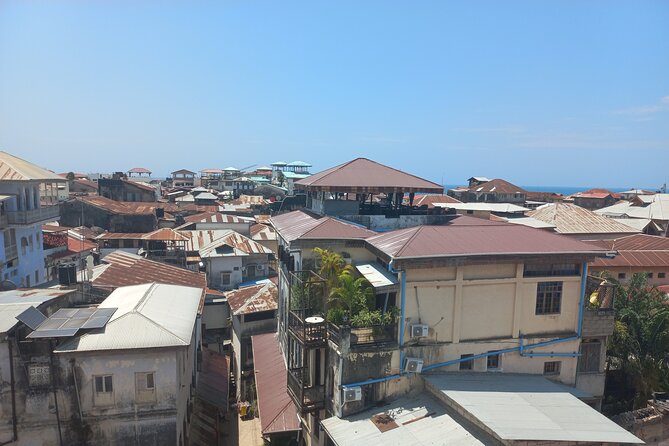
Stone Town is not a place you understand from a vehicle window. The appeal is in the turns: a carved doorway, an old house, a market lane, or a change in street life from one block to the next. Walking lets you see the mixture of cultures that shaped Zanzibar without reducing the city to a list of monuments.
This route covers several parts of that story. The Old Fort represents military power and the island’s strategic position. The Anglican Cathedral addresses the slave trade and its aftermath. The Freddie Mercury Museum connects Stone Town with a modern global figure. Darajani Bazaar brings you into the daily rhythm of the city, while the Persian Baths point to the influence of Zanzibar’s ruling sultans.
I find the private setup especially useful here. Stone Town raises questions that do not always fit neatly onto a plaque: who built a house, why a market is in a certain location, or how Arab, African, Indian, and European connections affected Zanzibar. The guide is encouraged to give full explanations and let you ask what you want to know, which can make the walk feel less like a lecture.
The starting point is Jamal’s Shawarma, at R5QQ+RMV in Zanzibar. The walk returns to that same meeting point. No private transport is included, and bicycle use is not included either, so plan to arrive at the meeting point independently and expect the main experience to happen on foot.
More Walking Tours in Zanzibar
- Stone Town Private Walking Tour
★ 5.0 · 371 reviews - Zanzibar: 3 Hours Private Stone Town walking Tour with Guide
★ 4.6 · 301 reviews - Zanzibar: Stone Town Historical Cultural Walking Guided Tour
★ 4.5 · 179 reviews
The Old Fort: 30 minutes inside Stone Town’s landmark stronghold
The Old Fort, known locally as Ngome Kongwe, is the clearest opening to Stone Town’s political past. You have about 30 minutes here, enough for the guide to explain its role and for you to look around without letting one stop consume the whole afternoon.
The fort is listed with free admission, which helps keep the base price reasonable. Its value is not only the structure itself. It gives you a physical sense of how important Zanzibar was to rulers and traders moving through the Indian Ocean.
I would use this first stop to ask George or Dadju for a simple timeline of Zanzibar. The route later moves through slavery, royal history, religion, and modern popular culture, so an early overview can help you connect the pieces.
Thirty minutes is also a useful limit. If you want a long, quiet architectural study, this tour may feel quick. If you want a clear introduction before moving into the lanes, the timing is practical.
The former slave market and Anglican Cathedral: 45 minutes of difficult history
The visit to the Old Slave Market and Anglican Cathedral is scheduled for about 45 minutes. This is the most serious part of the walk, and it deserves more attention than a quick photograph.
The stop focuses on the history of slavery in Zanzibar. The cathedral adds another layer to the site, bringing religious and social change into the same space. It is a place where the guide’s explanation matters greatly, since the significance is not always obvious from the building alone.
Admission is not included. The tour information does not give the exact fee, so keep extra money available and confirm the current charge before entering. That small bit of planning prevents an awkward pause during the walk.
I would not treat this stop as entertainment. Give yourself time to listen, ask direct questions, and take in the setting respectfully. For many people, this is the point that changes Stone Town from an attractive old district into a place with hard, important history.
Freddie Mercury Museum: a modern link to Zanzibar

The Freddie Mercury Museum is scheduled for 30 minutes and focuses on the singer’s house and history. The stop gives the route a change of pace after the former slave market and cathedral.
You can expect a compact visit rather than a long museum session. Admission is not included, so the $25 tour price does not cover entry. If this museum is a priority for you, ask the guide how much time is available and whether the current entrance fee fits your budget.
The stop works because it shows that Stone Town is not only about forts and old royal buildings. It also connects the city with a famous twentieth-century figure and gives you another way to think about Zanzibar’s place in the wider world.
The attraction may be most useful for fans of Freddie Mercury, but even if you are not one, it adds variety to the route. I would see it as a short cultural stop rather than the central reason to book the walk.
More Stone Town walks:
- Zanzibar: Stone Town, Spice Tour, Prison Island with Lunch
★ 4.4 · 1,219 reviews - Zanzibar: Prison Island, Stone Town, & Spice Farm Tour
★ 4.5 · 579 reviews - Zanzibar; Prison Island, Nakupenda, StoneTown Tour with BBQ
★ 4.3 · 457 reviews - Zanzibar: Stone Town, Spice tour & Prison Island with Lunch
★ 4.6 · 453 reviews
Darajani Bazaar: ten minutes with Zanzibar’s everyday market life
Darajani Bazaar is the main market of Zanzibar, with particular attention to local spices. The scheduled visit is only 10 minutes, so keep your expectations realistic. This is an introduction, not an extended shopping trip.
The short stop can still be useful. A market tells you more about daily life than a polished monument does, and the spice focus gives you a direct connection to one of Zanzibar’s best-known products. You might ask the guide about what you are seeing, how to identify different spices, or where to buy something you genuinely want.
The private format is helpful here because shopping questions can be personal. You may care about spices, food, or small gifts, while someone else may want to keep moving. The guide’s stated focus on your needs means you can raise those interests during the walk.
Do not assume the 10-minute slot allows for careful browsing or extended bargaining. If buying something matters to you, ask whether the guide can suggest extra time or explain how the route will handle it. The published schedule is tight.
Forodhani Gardens: a brief stop before the food market
Forodhani Gardens receives about 15 minutes and is described as the setting for a night market with dinner and refreshments. The stop is listed as free.
The timing suggests that the tour introduces the area rather than builds in a full meal. If your walk takes place near the evening, this is a natural place to discuss what you might eat or drink afterward. The route gives you the setting, but you should not assume that dinner is included in the $25 price.
I like this stop because food is part of understanding a place. It also gives the walking tour a lighter moment after the more serious historical sites. Still, 15 minutes is short, so treat it as an orientation and possible refreshment stop, not a guaranteed dining experience.
Hamamni Persian Baths: 30 minutes with the sultans’ architectural legacy
Hamamni Persian Baths is scheduled for 30 minutes and is described as a historical house. The stop reflects the Persian influence connected with Zanzibar’s ruling history and gives the route another kind of architecture to examine.
Admission is not included. As with the slave-market site and Freddie Mercury Museum, you should budget for an additional entrance fee and confirm the current amount before the visit.
This stop may appeal most if you enjoy buildings and the details of how people once lived. Ask the guide to explain what the baths were used for, how they fit into the history of the sultans, and how they compare with the other historic houses on the route.
The itinerary also refers to the historical house of Sultan Barghash and two additional historical-house stops, but it does not provide names or durations for those visits. I would ask for clarification at the beginning so you know which houses are included and how much time the full walk allows.
George Zanzibar and the value of a private guide
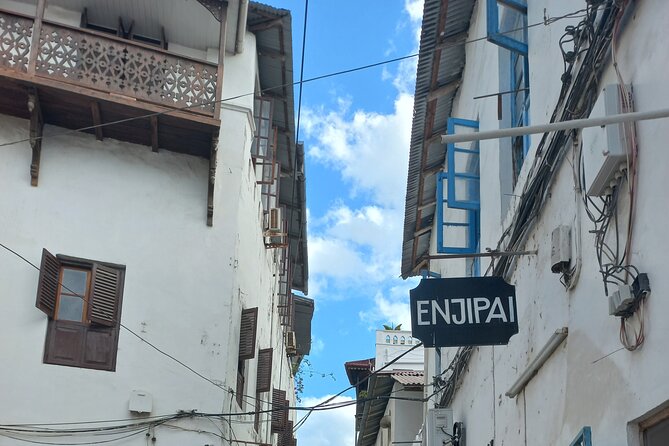
The strongest reason to choose this experience is the guide relationship. George Zanzibar, also called Dadju, is presented as someone who gives attention to individual needs, explains island history, and leaves room for questions. Several direct comments describe him as friendly, polite, caring, and willing to help with both sightseeing and shopping interests.
That matters in Stone Town. A guide can turn a confusing maze of streets into a connected story, but only if you feel comfortable speaking up. Tell George what you already know, what you want explained, and how much time you want at markets or historic buildings.
The private format also gives you more control than a large group walk. You do not have to wait for strangers at every doorway, and the guide can adjust the conversation to your interests. The tradeoff is that the tour’s quality depends strongly on the guide assigned and on how clearly you communicate your priorities.
The available comments use both George and Dadju, so confirm the guide’s name when you book or meet at Jamal’s Shawarma. That is a simple way to avoid confusion at the start.
Is $25 a fair price for three to four hours?
At $25 per person, this is a reasonable price for a private three to four-hour introduction to Stone Town, especially because a guide and bottled water are included. You are paying for local explanation and route planning, not just access to buildings.
The headline price is not the final cost if you enter the former slave market, Freddie Mercury Museum, or Hamamni Persian Baths. All fees and taxes are also excluded, and no transportation is provided. The Old Fort, Darajani Bazaar, and Forodhani Gardens are listed without admission charges, but you should still carry money for food, drinks, shopping, and any entrance fees.
I see the best value for someone who wants a broad first look at the city. You get history, architecture, the market, a food area, and a modern cultural stop in one outing. If you want lengthy museum visits, extensive shopping, or a slow architectural study, you may find the schedule too compressed.
Who will enjoy this Stone Town walk most?
I would recommend this experience to a first-time visitor who wants help making sense of Stone Town. It also suits anyone who prefers a private conversation to a large organized group, or who wants to ask specific questions about history and local life.
It is a good fit for people interested in:
- Zanzibar’s sultanate and Persian connections
- The history of slavery on the island
- African, Arab, Indian, and European cultural influences
- Freddie Mercury and his connection to Stone Town
- Spices, markets, food, and shopping
- A short city introduction before spending more time independently
You need moderate physical fitness because the activity lasts three to four hours and is a walking tour. The information provided does not specify accessibility arrangements, so ask directly if you have mobility needs or require a particular pace.
I would be less likely to choose it if your main goal is a relaxed food tour, a full museum day, or private transport from your hotel. Those are not included. The experience is strongest as a guided overview with several focused stops.
Booking details, timing, and cancellation
Confirmation is provided when you book. The meeting point is Jamal’s Shawarma, R5QQ+RMV, Zanzibar, Tanzania, and the walk ends back there.
Bring comfortable walking shoes, water beyond the included bottle if you need it, and enough money for entrance fees, refreshments, and possible purchases. Since the itinerary includes a former slave market, religious history, royal buildings, and markets, modest and respectful clothing is a sensible choice.
You can cancel for a full refund up to 24 hours before the experience starts. Cancellations or changes made less than 24 hours before the start time are not refunded or accepted, and the cut-off follows local Zanzibar time.
Should you book this tour?
I would book this walk if you want a personal, good-value introduction to Stone Town and care more about local explanation than a polished, tightly scripted presentation. The combination of the Old Fort, slave-market history, Freddie Mercury Museum, Darajani Bazaar, Forodhani Gardens, and Hamamni Persian Baths gives you a useful cross-section of the city.
Before paying, I would confirm which guide will lead the walk, which historical-house stops are included, and the current admission fees. If you are comfortable with a few extra costs and a fairly active three to four hours, this is a practical way to meet Stone Town through its streets, buildings, markets, and difficult past.
FAQ
How long does the Stone Town walking tour last?
The tour lasts approximately three to four hours.
What is the price of the tour?
The price is $25 per person.
Is this a private tour?
Yes. Only your group takes part in the activity.
Where does the tour start?
The meeting point is Jamal’s Shawarma, R5QQ+RMV, Zanzibar, Tanzania.
Where does the tour end?
The tour ends back at the same meeting point.
Is bottled water included?
Yes. Bottled water and a guide are included.
Are entrance fees included?
No. All fees and taxes are excluded. Admission is specifically not included for the Old Slave Market and Anglican Cathedral, Freddie Mercury Museum, and Hamamni Persian Baths.
Can I cancel for a full refund?
Yes. You can cancel at least 24 hours before the experience start time for a full refund. Changes or cancellations made less than 24 hours before the start time are not accepted or refunded.
Newly listed around Zanzibar
- Prison Island, Sea Turtles, Rock Restaurant & Relax in Beach★ 4.6 · 3 reviews
- Zanzibar: Nungwi/Kendwa Beach Sunset Dhow Cruise with Fruits★ 3.4 · 3 reviews
- Starfish Beach; The Rock; Kuza Cave; Paje Beach; Salaam Cave Tour★ 4.5 · 3 reviews
- Zanzibar: Half-Day Spice Farm Tour,the flavours of Zanzibar★ 4.7 · 3 reviews
- Joazani forest & Spice farm with lunch★ 5.0 · 3 reviews
- Nakupenda Island Snorkeling Sea trip & Lunch W/Transfer -Zanzibar★ 4.0 · 3 reviews
- Mnemba Island Snorkeling and Dolphin tour★ 5.0 · 3 reviews
- Zanzibar:Jozani forest, Spice farm with Swahili Cuisine clas★ 4.2 · 3 reviews
Stone Town Tours, compared.






Full-Day Private Stone Town +Spice Farm and Prison Island Tour
Read our review →
Browse the lists this tour appears in