

Reviewed · STONE TOWN TOURS
Stone Town and Spice Tour in Zanzibar
Stone Town’s narrow streets tell Zanzibar’s story in quick, vivid chapters: the slave trade, sultans, Indian Ocean commerce, music, food, and Swahili life. This tour links the city’s major sights with a visit to Jambo Spice Farm, giving you both urban history and a taste of the countryside in about five hours.
I like the private format, since your group can move at its own pace and ask direct questions. I also like the pairing of Darajani Bazaar with the spice farm: one shows how food reaches the table, and the other shows where many familiar aromas begin. The main consideration is pace. Six stops plus transport leave limited time for lingering, and the slave market ticket costs an extra $8.
Key points to know before booking
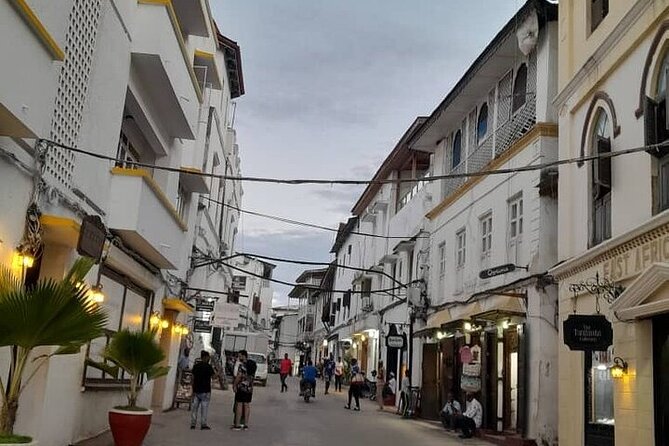
- Two different sides of Zanzibar: Walk through Stone Town in the morning, then ride to Jambo Spice Farm near Kizimbani.
- A private group experience: Only your party takes part, with private transportation included.
- Strong guide focus: Mohamed, Ali, and Sayafri are names associated with the guiding team, with praise for clear explanations and friendly service.
- The slave market ticket costs extra: Admission is listed separately at $8, despite the general inclusion of fees and taxes.
- Five hours with an early start: Meet at the Old Fort at 8:30 am and return there at the end.
- Lunch is optional: You can arrange lunch at the spice farm for an additional cost.
Why this Stone Town and spice pairing works
Many Zanzibar excursions force you to choose between a city walk and a countryside visit. This one combines both. You begin among coral-stone buildings and busy market lanes, then leave the old city for a farm where spices are grown, handled, and explained in a more direct way.
I find that contrast useful. Stone Town gives you the political and social story of Zanzibar, while Jambo Spice Farm adds a sensory layer. You do not just hear about cloves, cinnamon, or other spices in the abstract. You see a working farm setting and take part in an interactive presentation run by local people.
The price is $68 per person. For a private five-hour outing with transport, a guide, and the included spice farm visit, that is a reasonable package, particularly if you are traveling with family or friends and value a dedicated guide. It is less attractive if you only want a quick Stone Town walk, since several city sights can be seen independently.
The tour begins at 8:30 am at the Old Fort on Mizingani Road. That starting point is practical because the fort is easy to identify and sits near several central Stone Town sights. The activity ends back at the same meeting point. Pickup is offered, but confirm the exact pickup arrangement when booking if you are staying outside the immediate center.
More Stone Town walks:
- Zanzibar: Stone Town, Spice Tour, Prison Island with Lunch
★ 4.4 · 1,219 reviews - Zanzibar: Prison Island, Stone Town, & Spice Farm Tour
★ 4.5 · 579 reviews - Zanzibar; Prison Island, Nakupenda, StoneTown Tour with BBQ
★ 4.3 · 457 reviews
The old slave market and Anglican Cathedral
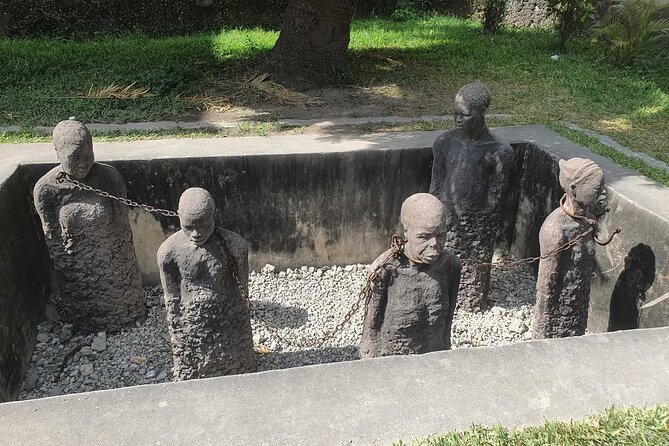
The first major stop is the old slave market, beside the Anglican Cathedral. This is the most emotionally difficult part of the day, and it deserves more than a quick photograph. The site marks Zanzibar’s role in the Indian Ocean slave trade and helps explain why the island became such an important commercial center.
You have about 50 minutes here, enough time for your guide to explain the site and its place in Zanzibar’s past. The cathedral adds another layer, since it was built on the former market area and now forms part of the memorial setting.
Admission is not included in the advertised price. The separate charge is $8, so budget for it if you want the full visit. The information supplied for the tour also says all fees and taxes are included, so this is one point I would clarify before departure. The safest assumption is that the slave market entry fee is extra.
This stop may not suit very young children or anyone looking for a light sightseeing morning. For most adults, though, it gives the rest of Stone Town more meaning. The market, forts, palaces, and old lanes were not simply built for decoration. They grew from trade systems that affected East Africa, Arabia, India, and Europe.
Darajani Bazaar, where Zanzibar shops for food
Darajani Bazaar brings you back into daily life. Built by Bomanjee for Sultan Ali, the market deals mainly in food: seafood, meat, grains, and spices. It is a good place to notice the practical side of Zanzibar’s culture after the solemn first stop.
You have 40 minutes here. That is enough for a guided walk and a look at the main sections, though not enough for a slow market study. I would keep your attention on the smells, products, and movement around you rather than expecting a polished shopping hall.
The connection with the spice farm is useful. At Darajani, spices appear as market goods mixed with other food supplies. Later, you see the farm setting and learn more about their origins. The two stops make more sense together than either would alone.
Your guide can also help explain what you are seeing. Guides associated with this experience include Mohamed and Ali, both praised for clear explanations of Zanzibar’s past and coastal culture. The exact guide is not guaranteed, so ask for the guide’s name at the start and tell them which subjects interest you most.
Forodhani Gardens and the House of Wonders
Forodhani Gardens takes you to the waterfront edge of Stone Town. The garden is a historic public space, and from here you can also see the House of Wonders, one of the city’s most recognizable old buildings.
The scheduled visit lasts about 30 minutes. Think of this as a short orientation stop, not a long museum visit. It gives you a chance to connect Stone Town’s streets with the sea, which has always shaped the city’s trade and culture.
The House of Wonders is part of the view and historical setting, but the tour information does not promise interior admission. If you are hoping to go inside, check what is open on the day. The value here comes mainly from the guide’s explanation and the city’s waterfront setting.
Forodhani also helps break up the walking route. Stone Town can feel tightly packed, with lanes that twist and narrow without warning. A pause near the open waterfront gives you a different sense of the city before the tour moves on.
More spice farm mornings:
- Zanzibar: Stone Town, Spice tour & Prison Island with Lunch
★ 4.6 · 453 reviews - Full-Day Private Stone Town +Spice Farm and Prison Island Tour
★ 4.5 · 216 reviews - Spice Tour + Stone Town Tour + Prison Island
★ 4.5 · 130 reviews - Zanzibar: Spice Tour & Stone Town Walking Tour
★ 4.8 · 115 reviews
Freddie Mercury’s Zanzibar connection
The Freddie Mercury Museum stop adds a modern and personal note to a tour otherwise centered on older buildings and trade. The singer associated with Queen was born in Zanzibar, and the visit includes the area around his former home on Shangani Street.
You have around 40 minutes. The tour information describes a chance to visit his house, but it does not specify exactly which rooms or exhibits are included, so do not assume a full museum admission is part of the package. Confirm the current entry arrangement if this stop is especially important to you.
I like the change of subject here. Zanzibar is not only a place of sultans, markets, and colonial-era buildings. Its cultural connections continue into the modern world, and Freddie Mercury’s birthplace gives the walk a recognizable link for music fans.
At the same time, this is a short stop. If you are a serious Queen follower, you may want to arrange extra time separately. On this half-day route, the museum area works best as one part of a broader Stone Town introduction rather than the main event.
The Old Fort, your meeting point and final city landmark
The Old Fort, also called Ngome Kongwe or the Arab Fort, is both the first meeting point and one of the final scheduled sights. Built as a defensive structure, it is described as the oldest building in Zanzibar and remains one of the city’s main attractions.
The planned visit lasts 20 minutes. That is brief, but it can work well after several earlier stops. Your guide can point out the fort’s role in the city and help you understand how it fits with the nearby waterfront buildings.
Because the tour starts and ends here, take a moment at the beginning to get your bearings. If your guide is meeting you at the fort, this is also a good time to confirm the order of the morning and ask when the vehicle transfer to the farm will take place.
The short fort visit reflects the overall design of the tour. You are sampling the major pieces of Stone Town, not studying one building at museum length. That makes the experience useful for a first visit, but less suitable if you prefer a slow architectural tour.
The drive to Jambo Spice Farm
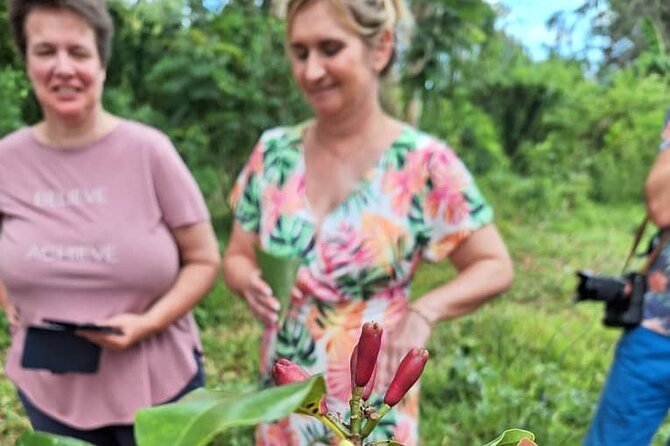
After the city walk, private transportation takes you to Jambo Spice Farm at Kizimbani, roughly 6 to 7 kilometers from Stone Town. The ride is important because it changes the setting completely. You leave the dense old city and reach a farm area where Zanzibar’s famous spice trade becomes easier to understand.
The farm visit lasts about two hours, the longest single stop of the day. It is included in the tour price, unlike the separately listed slave market ticket.
The experience is described as interactive and locally run. You can expect an explanation of spices and a chance to learn through direct presentation rather than only listening to a guide list names. The local staff are a major part of the appeal, especially if you want to connect Zanzibar’s food culture with the island’s agricultural traditions.
The tour information does not provide a full list of every spice grown or every activity offered, so keep expectations sensible. You will learn about spices during a relatively short visit, not spend an entire day on a farm. The two-hour allocation gives the farm enough room to feel worthwhile without taking over the whole excursion.
Lunch can be arranged at the spice farm before or after the visit, but it is not included. If you want lunch there, ask about the price and timing in advance. Adding a meal may make the day easier, since the tour starts in the morning and continues through the farm visit.
What the guide adds to the day
The strongest part of this experience is likely to be the guide rather than any single building. Stone Town has plenty of sights, but the streets make more sense when someone explains the links between African, Arab, Indian, and coastal Swahili communities.
The guiding team connected with the experience includes Mohamed, Ali, and Sayafri. Sayafri is also associated with the tour company, SayafriTours. The supplied comments give special attention to guides who are modest, considerate, friendly, and good at explaining human history, slave trade, Bantu communities, and coastal culture.
That matters because the itinerary moves quickly. A guide who gives clear context can turn a series of short stops into a connected story. I would tell your guide at the start if you care most about architecture, slavery and abolition, music, food, or everyday Swahili life. A private tour gives you a better chance to shape the conversation.
Do not expect a formal lecture at every stop. The appeal is a personal walking tour followed by local farm interaction. Ask questions, especially at Darajani Bazaar and the spice farm, where a little explanation can make ordinary products much more interesting.
Timing, walking, and practical comfort
The total duration is about five hours. The listed stop times add up to roughly four hours and 40 minutes, leaving a little room for walking between sights, getting into the vehicle, and making the trip to and from the farm.
You should be ready for a fair amount of walking in Stone Town. The tour information says most people can participate, but it does not give a detailed accessibility statement. Since the route includes old streets, a market, historic buildings, and a farm visit, ask the operator about your specific mobility needs before booking.
The private vehicle is a useful feature. You do not have to manage a separate taxi between the city and Kizimbani, and your group can stay together. Pickup is offered, while the published meeting point is the Old Fort. Confirm whether pickup from your accommodation is included for your location.
The tour is near public transportation, but private transport is already part of the package. That makes public buses or taxis less important unless you are arranging your own way to the start.
Who will get the most from this tour
I would choose this experience if you are visiting Zanzibar for the first time and want a compact introduction to both Stone Town and the island’s spice identity. It is also a good match for couples, families, and small groups who prefer a private guide instead of joining a large departure.
History-minded visitors will value the old slave market and the explanations of Zanzibar’s coastal communities. Food lovers will appreciate the link between Darajani Bazaar and Jambo Spice Farm. Music fans get a short Freddie Mercury connection, while photographers have several contrasting settings, from the old fort to the waterfront and farm.
I would look elsewhere if you want a full-day Stone Town study, a long visit inside museums, or a relaxed farm day with no city walking. The schedule is designed for coverage. You see many important places, but you will not spend an hour at every one.
Is $68 a fair price?
At $68 per person, the value depends on how much you use the private format. The package includes private transportation, the guide, the spice farm admission, and taxes and fees as listed. You still need to account for the $8 slave market entry and any lunch at the farm.
For a solo visitor, the price may feel high compared with a basic walking tour. For two or more people, private transport and direct guiding make the cost easier to justify. You are also saving the trouble of arranging a separate ride to Kizimbani.
The price is strongest for someone who wants a single organized morning with both city and countryside. If you already have transport and only want to explore Stone Town, you may find a shorter walking tour better value.
Booking and cancellation details
Confirmation is sent at booking, and the experience can be canceled for a full refund if you cancel at least 24 hours before the 8:30 am start time. Cancellations or changes made inside that window are not accepted for a refund, and cut-off times follow Zanzibar local time.
The activity is offered by SayafriTours. Since it is private, only your group participates. I would confirm three details before the day begins: the pickup point, the exact guide, and whether you want to add lunch at Jambo Spice Farm.
Should you book it?
Book this tour if you want a well-packed first look at Zanzibar, with serious Stone Town history followed by a local spice-farm visit. The best reasons are the private vehicle, the direct guide contact, and the strong connection between the city market and the farm.
Go in knowing that the pace is brisk, the slave market ticket costs extra, and the Freddie Mercury stop may be more of a short area visit than a long museum experience. If that balance suits you, $68 is a sensible price for a five-hour introduction. Ask for a guide who can explain the subjects you care about, and the day should give you a useful foundation for exploring more of Zanzibar on your own.
FAQ
How long does the Stone Town and Spice Tour last?
The experience lasts approximately five hours.
What time does the tour start?
The scheduled start time is 8:30 am.
Where does the tour begin?
The published meeting point is the Old Fort on Mizingani Road in Zanzibar.
Where does the tour end?
The activity ends back at the Old Fort meeting point.
Is pickup available?
Yes, pickup is offered. Confirm the exact pickup arrangement for your accommodation when booking.
Is transportation included?
Yes. Private transportation is included, and only your group takes part in the activity.
Is the old slave market admission included?
No. Admission to the slave market is listed separately at $8.
Is lunch included?
No. Lunch is not included, but it can be arranged at the spice farm before or after the tour.
Can I cancel for a full refund?
Yes, if you cancel at least 24 hours before the experience start time. Cancellations or changes made less than 24 hours before the start are not accepted for a refund.
Newly listed around Zanzibar
- Zanzibar: Nungwi/Kendwa Beach Sunset Dhow Cruise with Fruits★ 3.4 · 3 reviews
- Prison Island, Sea Turtles, Rock Restaurant & Relax in Beach★ 4.6 · 3 reviews
- Starfish Beach; The Rock; Kuza Cave; Paje Beach; Salaam Cave Tour★ 4.5 · 3 reviews
- Zanzibar: Half-Day Spice Farm Tour,the flavours of Zanzibar★ 4.7 · 3 reviews
- Joazani forest & Spice farm with lunch★ 5.0 · 3 reviews
- Nakupenda Island Snorkeling Sea trip & Lunch W/Transfer -Zanzibar★ 4.0 · 3 reviews
- Mnemba Island Snorkeling and Dolphin tour★ 5.0 · 3 reviews
- Zanzibar:Jozani forest, Spice farm with Swahili Cuisine clas★ 4.2 · 3 reviews
Stone Town Tours, compared.






Full-Day Private Stone Town +Spice Farm and Prison Island Tour
Read our review →
Browse the lists this tour appears in