

Reviewed · STONE TOWN TOURS
Stone Town tour
Stone Town reveals its story in a compact walk: an old fort, a former slave market, a cathedral, and food markets all sit within a few streets. This three-hour private tour gives you a guide to handle the route and explain what you are seeing instead of leaving you to decode the maze alone.
I like the small private format, since your group can set its own pace, and I like the direct local arrangements by WhatsApp, which can make meeting up simple. The included entry fees also keep the $20 price easy to understand. One caution: the House of Wonders is under reconstruction, so you can see the building but cannot enter it, and one solo customer found the guide’s English difficult to follow.
Key points at a glance

- The Old Slave Market takes about an hour: You see the former chambers, a slavery exhibition, the memorial, and the Anglican Cathedral.
- House of Wonders is currently closed inside: The building remains an important Stone Town landmark, but reconstruction blocks entry.
- Darajani Bazaar brings daily life into the tour: The route includes spice, fish, meat, and vegetable sections.
- It is a private activity: Only your group participates, which is useful for families, couples, and guests who prefer a quieter walk.
- The price is $20 per person: Fees and taxes are included, but food, drinks, and transport to the starting point are extra.
- English ability may vary: Clear communication matters, so confirm the meeting details and guide arrangements before you set out.
Why this three-hour walk works in Stone Town
Stone Town is easier to understand when you connect its grand buildings with its ordinary streets. A fort tells you about military power. A cathedral and slave-market memorial confront the painful trade that shaped Zanzibar. The market shows how the town still functions today.
That mix is the main reason I would consider this tour. You are not spending three hours on monuments alone. The route moves from major landmarks into Darajani Bazaar, where spices, produce, fish, and meat make the town feel like a living place rather than an open-air museum.
The tour is private, so you will not be folded into a large group. That matters in narrow streets and crowded market aisles. You can ask questions as you go, pause when you need to, and avoid the awkwardness of trying to keep up with strangers.
The published price is $20 per person. For a guided walk lasting about three hours, that is a fair rate, especially because fees and taxes are included. The value depends on what you want from the guide. If you mainly need directions, Stone Town is walkable enough to explore on your own. If you want context at the slave-market site and help making sense of the older buildings, the fee is easier to justify.
More Stone Town walks:
- Zanzibar: Stone Town, Spice Tour, Prison Island with Lunch
★ 4.4 · 1,219 reviews - Zanzibar: Prison Island, Stone Town, & Spice Farm Tour
★ 4.5 · 579 reviews - Zanzibar; Prison Island, Nakupenda, StoneTown Tour with BBQ
★ 4.3 · 457 reviews
Meeting at Mizingani Road
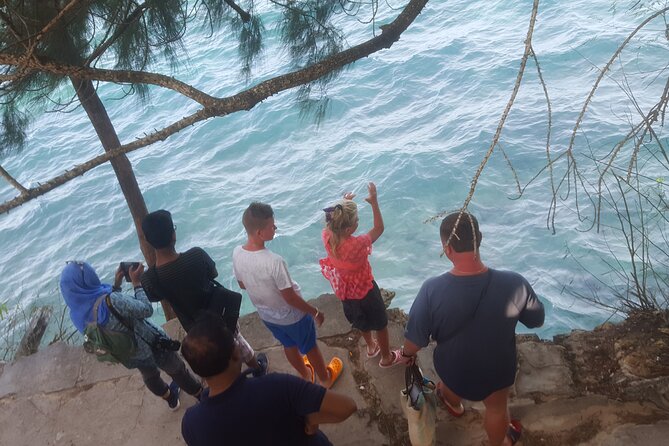
The walk begins on Mizingani Road and ends on Darajani Street near Darajani Market. That is a useful design because the route finishes in one of Stone Town’s main commercial areas, where you can continue exploring or arrange your next stop.
Pickup is offered, but transport to the starting point is not included in the price. Confirm exactly what pickup means for your booking before you go. The supplied details identify Mizingani Road as the start, so do not assume a hotel transfer is automatically covered.
The tour operates from 9:00 a.m. to 4:00 p.m. The timing matters in a market district. A morning start may give you a cooler walk, while a later departure fits better if your accommodation schedule is tight. The tour itself lasts about three hours, though the listed stop times add up to slightly less, so allow room for walking between sites, explanations, and pauses.
Arrangements can be made online and directly through WhatsApp. That direct contact is handy in Zanzibar, but I would use it to confirm three practical points: the exact meeting place, the start time in local time, and the language level of the guide assigned to you.
Old Fort: a short opening lesson
The first stop is the Old Fort, or Ngome Kongwe. You have about 10 minutes here, with no admission charge.
The fort introduces Stone Town’s strategic position and its connections with Arab rule. The supplied description links the site with the holding of enslaved people before they were sent to prison. That makes this more than a quick photo stop, though 10 minutes is brief.
I would treat the Old Fort as an orientation point rather than a full fort visit. Listen to the explanation, look at the structure, and use the moment to understand how the town’s defensive buildings fit into its past. If you want extended time inside the fort, this tour may move too quickly for you.
Because the stop is free, it does not add to the cost. The real value comes from the guide’s explanation. This is also an early chance to decide whether the guide’s English is easy for you to follow. If it is not, ask politely for slower speech or repetition while there is still time to adjust the tour.
House of Wonders: an important building seen from outside
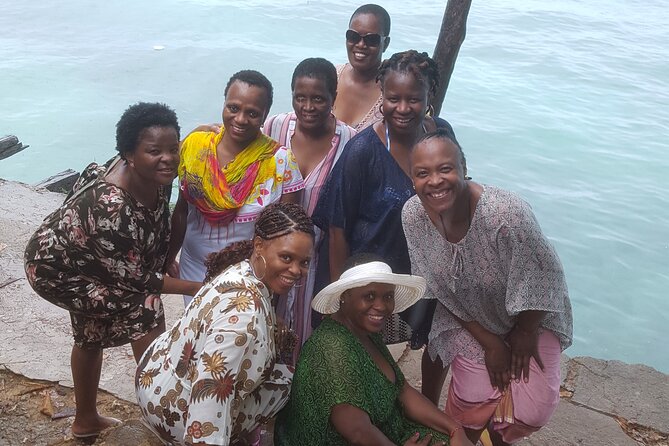
The House of Wonders, known as Beit-el-Ajaib, is scheduled for about 15 minutes. It is described as the largest and tallest building in Stone Town and currently houses, or is intended to house, the Museum of History and Culture of Zanzibar and the Swahili Coast.
There is one major limitation: reconstruction means the entrance is not available. You should not book this walk expecting a museum visit inside the House of Wonders. The building is still worth identifying because of its size and place in Stone Town, but this part of the tour is mainly an exterior explanation.
That change affects the tour’s value in a small but important way. The headline can suggest a museum stop, while the actual experience is a short look at a closed building. I appreciate that the current conditions are stated clearly. You can set the right expectation and avoid disappointment.
The stop has no separate admission cost. Use it as a bridge between the fort and the more substantial visit to the Old Slave Market. You will get the most from it if you focus on the building’s role in the town rather than waiting for an indoor exhibit that is not accessible now.
A few more Zanzibar days to compare
- From Zanzibar: Mikumi Safari Day Trip with Flights and Meal
★ 4.7 · 1,470 reviews - Zanzibar: Quad Bike Adventure departing from Kendwa or Nungwi
★ 4.9 · 1,233 reviews - From Kendwa: Mnemba Boat Trip and Dolphin Snorkel Adventure
★ 4.8 · 1,043 reviews - From Zanzibar: Day Selous Game Reserve Safari with Flights
★ 4.7 · 1,025 reviews
The Old Slave Market and Anglican Cathedral

The Old Slave Market is the emotional center of the walk, and the tour allows about one hour here. Admission is included.
You see an exhibition about the history of slavery in Africa, the former slavers’ chambers, and a monument commemorating slavery in Zanzibar. The setting asks for patience and attention. This is not a light sightseeing stop, and a good guide should give you space to take in the information without rushing from one display to the next.
The former chambers are especially important because they connect a large historical subject with a physical place. The memorial adds another layer, while the exhibition helps explain how slavery affected Zanzibar and the wider region. I would not judge this portion by how many objects you see. Its value is in the setting, the interpretation, and the chance to confront an essential part of the island’s past.
The visit ends with the Anglican Cathedral and the Bishop’s grave. That pairing reflects how the site changed over time. A place tied to the slave trade became a Christian religious site, leaving several layers of Zanzibar’s history close together.
Plan for a serious hour. Wear comfortable shoes and choose clothing suitable for entering a religious building. The provided details do not set out a dress code, so you should ask the guide if you are unsure. Since this is the only listed stop with an included admission ticket, it is also the part that gives the clearest financial reason for taking a guided tour rather than simply walking past the buildings.
Darajani Bazaar: spices, produce, fish, and meat
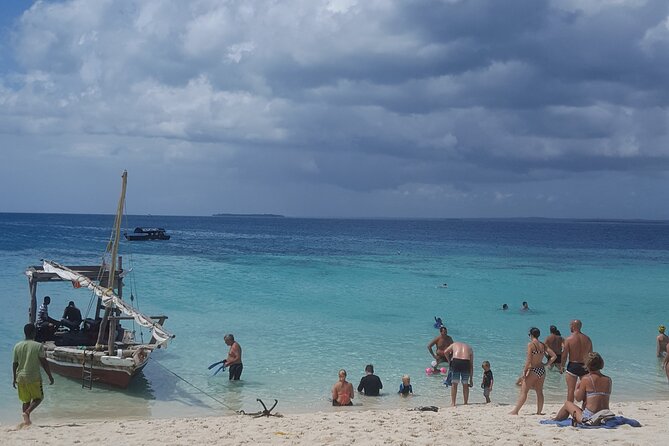
The final stop is Darajani Bazaar, the biggest bazaar in Stone Town. You spend about 40 minutes here, with no admission fee, and the walk ends on Darajani Street.
The bazaar includes a spice market, fish and meat market, and vegetable market. This is where the tour shifts from formal landmarks to daily commerce. You will see the kinds of goods that support local households and restaurants, and you may find the market more immediately engaging than a quick look at a closed museum.
The guide’s presence helps you read the place. A spice market can otherwise become a blur of colors and aromas. The fish, meat, and vegetable sections also require awareness of your surroundings, since markets are working places rather than staged attractions. Keep your belongings secure and follow the guide’s lead in crowded areas.
You are not given food or drinks as part of the tour, so budget separately if you want to buy something. The details do not promise tastings, and I would not expect a food tour. Think of Darajani as a guided market visit, not a meal.
Ending here gives you flexibility. You can spend more time at the market after the official walk, continue along Darajani Street, or arrange transport onward. Since the tour does not include transport from the start, make sure you also know how you will leave the area.
The guide makes or breaks the experience

The strongest point in the feedback is the guide’s friendly and informative approach. One customer also found the online and WhatsApp arrangements quick and easy. That direct communication can be useful when you need to clarify a meeting point or adjust small details before the walk.
Still, guide quality is not identical on every departure. A solo customer reported difficulty understanding the guide’s English and felt uncomfortable with personal questions near the end. That is worth taking seriously, particularly if you are booking alone.
You can reduce the risk by confirming that the guide can explain the tour clearly in English and by stating your preferred level of personal conversation. If you have trouble understanding, ask for shorter explanations and repetition. If questions become too personal, say so directly and return the conversation to Stone Town.
The private format gives you more control than a shared group. It also means there is no group around you to help fill gaps if communication is difficult. For that reason, the guide’s language skills matter more here than they might on a large tour where you could follow along visually.
Who will get the most from this tour

I would recommend this experience to you if you have only a few hours in Stone Town and want the main sites connected by a clear route. It suits first-time visitors who want historical context, especially at the Old Slave Market, without committing to a full-day program.
It also works well for couples, families, and small private groups. The tour is wheelchair and stroller accessible, and most people can participate. It is near public transportation, though transport to the starting point is not included.
You may prefer a self-guided walk if you want to spend a long time at the Old Fort, wait for the House of Wonders to reopen, or browse Darajani Bazaar without a set schedule. The listed stops are focused and efficient, not leisurely in-depth visits to every building.
Solo visitors should think carefully about the private format. It can feel personal and convenient, but there is no larger group to provide company. Confirm the guide and communication details in advance, then use the free-cancellation window if the arrangements do not feel right.
Cost, access, and what to bring
At $20 per person, the tour offers a simple cost structure. All fees and taxes are included, and the Old Slave Market admission is covered. Food, drinks, and transport to the starting point are not included.
Bring comfortable footwear for a three-hour urban walk. Carry water, since refreshments are not part of the experience, and keep a little extra money available for the market. A phone is useful for your mobile ticket and WhatsApp communication with the guide.
The activity accepts service animals and is listed as accessible for wheelchairs and strollers. Stone Town markets can still be active and crowded, so accessibility on paper does not tell you every detail about movement through each section. If you use a wheelchair or stroller, confirm the route and any specific needs before the start.
Free cancellation is available if you cancel at least 24 hours before the local start time. Within 24 hours, you should expect no refund, and late changes are not accepted.
Should you book the Stone Town tour?
Book it if you want a private introduction to Stone Town, value a guide at the Old Slave Market, and like finishing in Darajani Bazaar. The $20 price is reasonable for the three-hour route, included fees, and small-group attention.
Skip it if your main goal is to enter the House of Wonders, take a slow museum tour, or spend the whole afternoon shopping. The building is under reconstruction, and the scheduled stops move at a steady pace.
My practical advice is simple: confirm the meeting point, transport arrangements, and the guide’s English before the day. If those details suit you, this is a useful, compact way to connect Stone Town’s difficult past with its everyday market life.
FAQ
How long does the Stone Town tour last?
The tour lasts approximately three hours.
How much does the tour cost?
The price is $20 per person.
Is this a private tour?
Yes. Only your group participates in the activity.
Where does the tour start?
The meeting point is on Mizingani Road in Zanzibar, Tanzania.
Where does the tour end?
The tour ends on Darajani Street near Darajani Market in Stone Town.
Can I enter the House of Wonders?
No. The House of Wonders is currently under reconstruction, so entrance to the building is not available.
Are admission fees included?
All fees and taxes are included. The Old Slave Market admission is included, while the Old Fort and Darajani Bazaar have no admission charge.
What is the cancellation policy?
You can cancel for a full refund up to 24 hours before the experience starts. Cancellations and changes made within 24 hours are not refunded or accepted.
Newly listed around Zanzibar
- Prison Island, Sea Turtles, Rock Restaurant & Relax in Beach★ 4.6 · 3 reviews
- Zanzibar: Nungwi/Kendwa Beach Sunset Dhow Cruise with Fruits★ 3.4 · 3 reviews
- Starfish Beach; The Rock; Kuza Cave; Paje Beach; Salaam Cave Tour★ 4.5 · 3 reviews
- Zanzibar: Half-Day Spice Farm Tour,the flavours of Zanzibar★ 4.7 · 3 reviews
- Joazani forest & Spice farm with lunch★ 5.0 · 3 reviews
- Nakupenda Island Snorkeling Sea trip & Lunch W/Transfer -Zanzibar★ 4.0 · 3 reviews
- Mnemba Island Snorkeling and Dolphin tour★ 5.0 · 3 reviews
- Zanzibar:Jozani forest, Spice farm with Swahili Cuisine clas★ 4.2 · 3 reviews
Stone Town Tours, compared.






Full-Day Private Stone Town +Spice Farm and Prison Island Tour
Read our review →
Browse the lists this tour appears in