

Reviewed · ZANZIBAR TOURS
Walking City Tour in Zanzibar Island
Stone Town is easiest to understand when someone helps you read it. Behind the narrow lanes and carved doors are layers of African, Arab, Indian, Persian, and European influence, plus stories tied to trade, faith, music, and the slave trade. This private walking tour gives you a local guide to connect those pieces.
I like two things especially: the route covers major sights without turning the walk into a rushed checklist, and the private format lets you ask for changes. Guide Juma Amir, named in one of the tour’s strongest reviews, adjusted the route for a solo woman who had already seen some listed stops. That kind of flexibility is useful.
The main drawback is time. Two and a half hours passes quickly, and several stops last only 15 minutes. The Freddie Mercury Museum entrance is not included, so you should confirm the current admission cost if you want more than a photo stop.
Key points about this Stone Town walk
- A private guide for your group: You are not folded into a large party, so questions and route changes are easier.
- Six central Stone Town stops: The walk includes the Old Slave Market, Freddie Mercury House, Darajani Bazaar, Old Fort, and Tippu Tip’s House.
- A strong history focus: The guide explains Zanzibar’s links to African, Arab, Indian, Persian, and European cultures.
- Slave market admission included: Entry to the Old Slave Market and Anglican Cathedral is covered.
- Freddie Mercury admission is separate: The stop includes family background and the birthplace connection, but not the museum ticket.
- Simple meeting arrangement: You start and finish at Cape Town Fish Market Zanzibar, near Forodhani.
Why Stone Town works best on foot
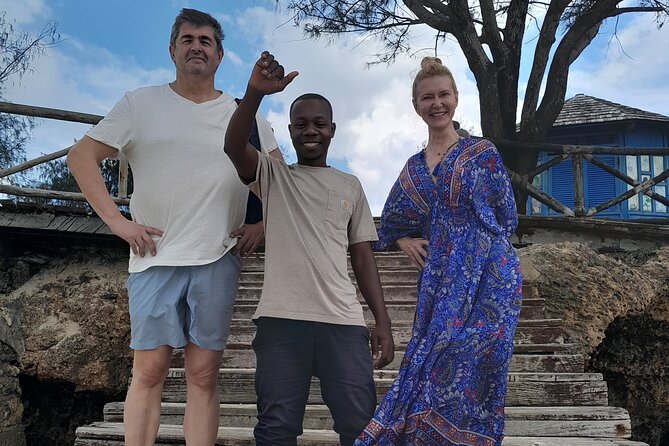
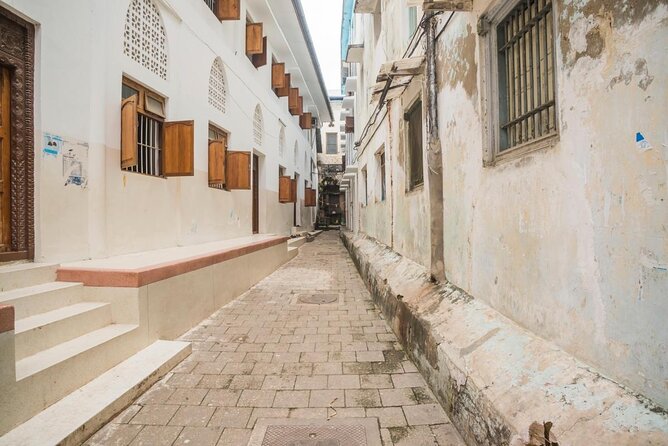
Stone Town covers about 50 hectares and contains more than 2,000 limestone buildings. Its lanes can feel confusing at first, with turns leading into courtyards, markets, mosques, shops, and waterfront streets. A private guide saves you from spending half your visit simply trying to figure out where you are.
The value is not just navigation. Stone Town’s buildings reflect several cultures at once, and the details can be easy to miss without explanation. A carved wooden door may show Indian influence, while a building’s layout points to Arab or Swahili traditions. The guide’s job is to connect those details to the wider story of Zanzibar.
The town received UNESCO World Heritage status in 2000. That label matters here because Stone Town is not one polished monument surrounded by modern streets. It is a working district where historic buildings, markets, homes, and daily business share the same tight space.
You will walk rather than ride between the stops. Wear practical shoes, bring sun protection, and carry only what you need. The tour includes bottled water, which is a small but welcome touch in Zanzibar’s heat.
More Walking Tours in Zanzibar
- Stone Town Private Walking Tour
★ 5.0 · 371 reviews - Zanzibar: 3 Hours Private Stone Town walking Tour with Guide
★ 4.6 · 301 reviews - Zanzibar: Stone Town Historical Cultural Walking Guided Tour
★ 4.5 · 179 reviews
Meeting at Forodhani and finding your bearings
The tour begins at Cape Town Fish Market Zanzibar, listed as the Forodhani meeting point. It also ends there, so you do not need to arrange a separate return transfer after the walk.
The supplied operating hours show the activity as available Monday through Sunday throughout the stated booking period. The actual walk lasts about two hours and 30 minutes. Since the listed stops add up to that time, this is a compact route with little room for long unscheduled pauses.
That timing can work well if you have a morning or afternoon free, or if you want an introduction before exploring farther on your own. It is less suitable if you want to linger at every site, spend a long time shopping, or take a full museum visit.
Because this is a private activity, only your group participates. You can ask for more explanation at a place that interests you, though doing so may mean less time at another stop. I would tell the guide at the start if history, architecture, markets, or Freddie Mercury matters most to you.
The old lanes and the shape of Stone Town
The first hour introduces Stone Town as a whole. Expect a walk through narrow streets lined with limestone buildings and distinctive Zanzibari doors. The route brings together architecture, street life, and the history of the town rather than treating each sight as an isolated attraction.
This opening section gives you useful context for everything that follows. You learn why Stone Town became a meeting point for African, Arab, Indian, Persian, and European influences, and how that mix appears in its buildings and public spaces.
The strength of this part is its range. You may move from an old doorway to a busy street, then toward a major landmark or market. The tradeoff is that one hour cannot provide a detailed look at every building. Think of it as a guided orientation with meaningful stops, not a specialist architecture tour.
The town’s narrow layout is part of its charm, but it also means you should expect uneven pacing. Your guide may pause often to point out details, yet the walk still covers several subjects in a short time. Ask questions as you go instead of saving them all for the end.
The Anglican Cathedral and Old Slave Market
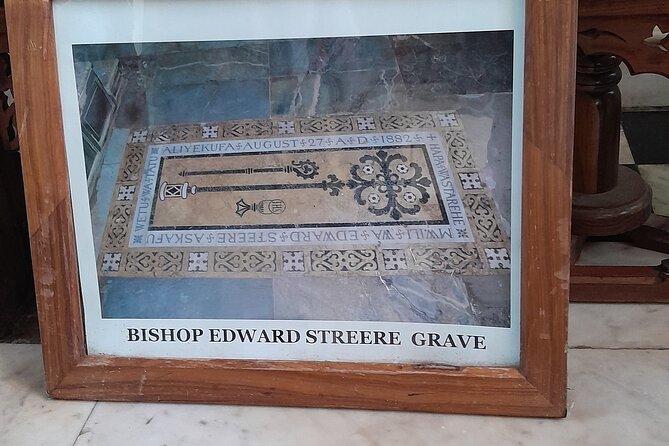
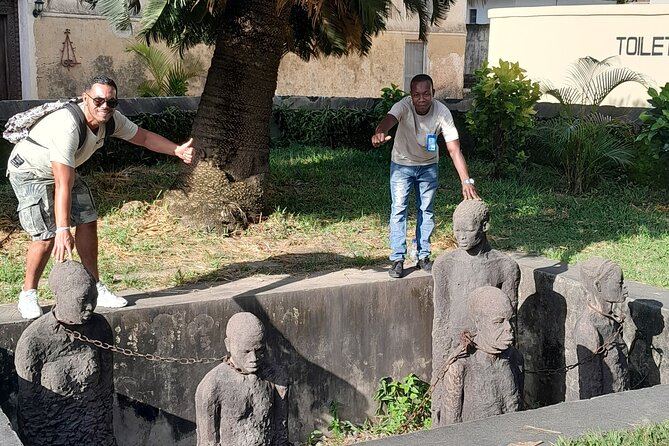
This 30-minute stop is the most serious part of the walk. The Anglican Cathedral occupies the site of the old slave market, connecting the building to one of Zanzibar’s darkest historical chapters. Admission is included, so you do not have to decide at the entrance whether to pay an additional fee.
The visit gives you a chance to understand Zanzibar’s role in the East African slave trade. This subject can be difficult, but it is essential to understanding the island’s past and its links with the wider region. The guide provides the historical setting while you see the site itself.
You should allow the stop your full attention. It is not simply another photo opportunity between the market and Old Fort. The cathedral and former market site ask you to consider how trade shaped the town, who benefited from it, and who suffered.
Thirty minutes is enough for an introduction, but not for an extensive museum visit. If this is the main reason you are booking, tell the guide in advance so the discussion can receive proper attention. The included entrance fee improves the tour’s value, particularly for visitors who want historical substance rather than a quick walk through the center.
A change of scene while you are in Zanzibar:
- From Zanzibar: Mikumi Safari Day Trip with Flights and Meal
★ 4.7 · 1,470 reviews - Zanzibar: Quad Bike Adventure departing from Kendwa or Nungwi
★ 4.9 · 1,233 reviews - Zanzibar: Stone Town, Spice Tour, Prison Island with Lunch
★ 4.4 · 1,219 reviews - From Kendwa: Mnemba Boat Trip and Dolphin Snorkel Adventure
★ 4.8 · 1,043 reviews
Freddie Mercury House and the story behind the name

The Freddie Mercury stop lasts about 15 minutes. The house is presented as the birthplace of the singer, and the guide explains his family background and the influences connected to his early life.
For music fans, this gives Stone Town a personal link to a global figure. You are not only looking at a name on a sign. You are placing Mercury’s family story within Zanzibar, the island where his life began.
The short timing matters. You should expect a brief visit and photo opportunity rather than a long museum session. Admission to the Freddie Mercury Museum is not included, so check the price before booking if you want to enter.
This stop also shows the tour’s broad appeal. It moves from slavery and religious history to popular music without pretending Stone Town has only one identity. If Freddie Mercury is your priority, ask how much time can be devoted to the house and museum. If not, the stop remains a quick landmark within a larger historical walk.
Darajani Bazaar and everyday Zanzibar
Darajani Bazaar provides a change of pace. The 15-minute stop focuses on the market’s name, origins, and place in local commerce and culture. You get a short introduction to the traditions and activity connected with this central shopping area.
A market is often where a city feels most immediate, but 15 minutes is not enough to explore every aisle or shop. You are likely to get an orientation rather than a full food or shopping tour. If you want to buy something, ask the guide where you should return after the official walk.
The market also helps connect Stone Town’s past with its present. The old streets are not just preserved scenery. They remain part of everyday life, and Darajani is one of the clearest places to see that.
I like having this stop after the heavier history of the cathedral. It gives the route a more ordinary, local rhythm. Still, keep your expectations realistic: the tour explains the bazaar, but the schedule does not leave much time for browsing.
Old Fort and the town’s defensive past

The Old Fort, also called Ngome Kongwe, receives about 15 minutes. The guide explains who built it and why it mattered. Its position within the town makes it an efficient stop during a walking route.
The fort helps you see Zanzibar as a strategic port, not only a cultural center. Its walls point to the island’s need for defense and to the outside powers that competed for control in the region.
Fifteen minutes will give you the main story and a look at the site, but not an extended architectural study. You may want to return later if you prefer to explore at your own speed. Since admission is free, that second visit would not require another ticket based on the information provided.
The stop works best when you listen for the larger theme: Stone Town’s buildings were shaped by trade, power, religion, and movement. The fort is one more piece of that complicated picture.
Tippu Tip’s House and a difficult legacy

The final listed stop is Tippu Tip’s House. Tippu Tip, also known as Hemed bin Mohammed, was involved in the East African slave trade. He captured people from villages in the region and transported them to Zanzibar as part of the wider trade network.
This stop is valuable because it puts a name and place to the forces discussed at the Old Slave Market. Rather than treating slavery as an abstract subject, the walk links it to an individual and to the island’s commercial past.
The stop lasts about 15 minutes and includes admission. The short visit means the guide will focus on the essential facts. Ask questions if you want to understand how Tippu Tip fit into Zanzibar’s trade networks, but remember that extra discussion may reduce time elsewhere.
Taken together, the cathedral and Tippu Tip’s House give the tour moral and historical weight. They also require a respectful attitude. This is not a route built only around attractive doors and famous names.
What the private format adds
Private guiding changes the feel of a short city walk. You can ask why a building looks the way it does, request more detail on a painful subject, or explain that you have already seen one of the listed sites.
That flexibility is not theoretical. Juma Amir adjusted the route for a solo female participant who had already visited some published stops and wanted other historic places. The same option may help you if you have limited mobility, a particular interest in architecture, or only a short time in Stone Town.
The private setup also suits people who dislike large groups moving at one pace. You can hear the guide more easily and make decisions together. The compromise is that a private tour depends heavily on the individual guide and on how clearly you state your priorities.
The strongest praise attached to this experience centers on the guide’s ability to explain local history and answer questions. Another review describes the guide as extremely informed about the area and its past. If you want a quiet walk with no discussion, this may feel too structured around explanation. If you want context, it is a good match.
Price, timing, and overall value
At $33 per person, the tour is reasonably priced for a private 2.5-hour experience that includes bottled water, a professional Zanzibar guide, and Old Slave Market entrance fees. The value improves for couples, families, or friends who want a dedicated guide without committing to a longer excursion.
The price does not cover personal expenses or admission to the Freddie Mercury Museum. Those exclusions are not surprising, but they matter when you set your budget. You should also remember that the short stops limit how much independent exploring is included.
The tour is booked, on average, about 10 days in advance. That suggests you should not leave it until the last moment if your Stone Town schedule is fixed. Confirmation arrives at booking, and the activity is near public transportation.
Most people can participate according to the supplied information. No special accessibility details are provided, so you should contact the provider if you need specific assistance with walking conditions or the route.
Free cancellation is available until 24 hours before the start time for a full refund. Cancellations or changes inside that 24-hour window are not refunded or accepted, with cut-off times based on local Zanzibar time.
Who should book this Stone Town walk?
I would choose this tour if you want a clear first look at Stone Town, prefer a private guide, and care about the meaning behind the buildings. It suits solo visitors, couples, families, and small groups who want to ask questions without competing with a large crowd.
It is especially useful for a solo woman who wants a guided afternoon or evening walk and values a guide who can adjust the plan. The experience has a 5 out of 5 rating from 123 reviews and a 100 percent recommendation figure, with particular praise for guide flexibility and historical explanation.
You may want something else if your main goal is shopping, photography, or a long museum visit. The route covers many subjects, but its 15-minute stops are brisk. Freddie Mercury fans should budget separately for museum admission, and market lovers may prefer more time at Darajani Bazaar.
Should you book it?
Book this walking tour if you want Stone Town’s major stories tied together by a private local guide. The Old Slave Market, Tippu Tip’s House, Old Fort, Darajani Bazaar, and Freddie Mercury House create a varied route, while the private format gives you room to shape the conversation.
Skip it if you already know Stone Town well or want several hours at one museum or market. For a first visit, though, $33 buys a practical introduction, included admission to the Old Slave Market, bottled water, and the chance to see the town through Juma Amir’s flexible guiding style.
FAQ
How long does the Walking City Tour in Zanzibar Island last?
The tour lasts approximately two hours and 30 minutes.
What is the price of the tour?
The listed price is $33 per person.
Is this a private tour?
Yes. Only your group participates in the activity.
Where does the tour start?
The tour starts at Cape Town Fish Market Zanzibar, at the Forodhani area of Zanzibar.
Where does the tour finish?
The activity ends back at the meeting point.
Is bottled water included?
Yes. Bottled water is included in the tour.
Is admission to the Old Slave Market included?
Yes. The Old Slave Market entrance fee is included.
Is Freddie Mercury Museum admission included?
No. Admission to the Freddie Mercury Museum is not included.
Can I cancel for a full refund?
Yes. You can cancel at least 24 hours before the start time for a full refund. Cancellations or changes made less than 24 hours before the start time are not refunded or accepted.
Newly listed around Zanzibar
- Zanzibar: Nungwi/Kendwa Beach Sunset Dhow Cruise with Fruits★ 3.4 · 3 reviews
- Prison Island, Sea Turtles, Rock Restaurant & Relax in Beach★ 4.6 · 3 reviews
- Starfish Beach; The Rock; Kuza Cave; Paje Beach; Salaam Cave Tour★ 4.5 · 3 reviews
- Zanzibar: Half-Day Spice Farm Tour,the flavours of Zanzibar★ 4.7 · 3 reviews
- Joazani forest & Spice farm with lunch★ 5.0 · 3 reviews
- Nakupenda Island Snorkeling Sea trip & Lunch W/Transfer -Zanzibar★ 4.0 · 3 reviews
- Mnemba Island Snorkeling and Dolphin tour★ 5.0 · 3 reviews
- Zanzibar:Jozani forest, Spice farm with Swahili Cuisine clas★ 4.2 · 3 reviews
Zanzibar Tours, compared.








Browse the lists this tour appears in