
Reviewed · STONE TOWN TOURS
Zanzibar Stone Town Private Walking Tour
Stone Town’s best stories are packed into a few crooked streets. On this private walk, you move from Forodhani Gardens to the old Arab Fort, the Palace Museum, the Old Dispensary, and the Anglican Cathedral, with the city’s spice-scented lanes tying it all together. Abdul and Abdulrazak are names linked with this guiding service, and Mcha, Mohammad, and Omar have also led tours.
I like the small private format, which lets you ask questions and set the pace, and I like the mix of major landmarks with street-level details. The three-hour length works well as a first look at Stone Town. The main consideration is that the walk covers historic sites from the outside and along the route, but the exact amount of indoor time should be confirmed before booking.
Key things to know before you go
- Three hours on foot: The route links Stone Town’s main waterfront and historic sights in a compact walking experience.
- Private guiding: Only your group participates, so you can ask questions and request a pace that suits you.
- A serious historical focus: The Old Slave Market and Anglican Cathedral introduce Zanzibar’s involvement in the East African slave trade and the later Christian response.
- A strong architectural mix: Portuguese, Arab, Indian, and early Christian influences appear across the route.
- Good value at $26 per person: For a private guide and included fees and taxes, the price is modest, though lunch costs extra.
- Flexible planning matters: The meeting point is at Cape Town Fish Market by Forodhani Gardens, and the tour finishes there, so confirm any hotel pickup directly.
Why Stone Town works best on foot
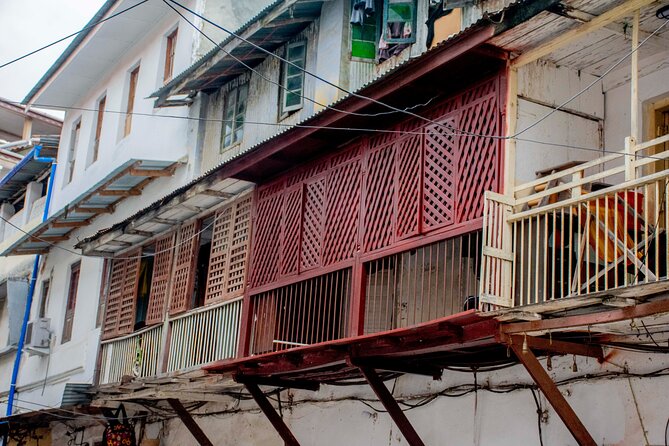
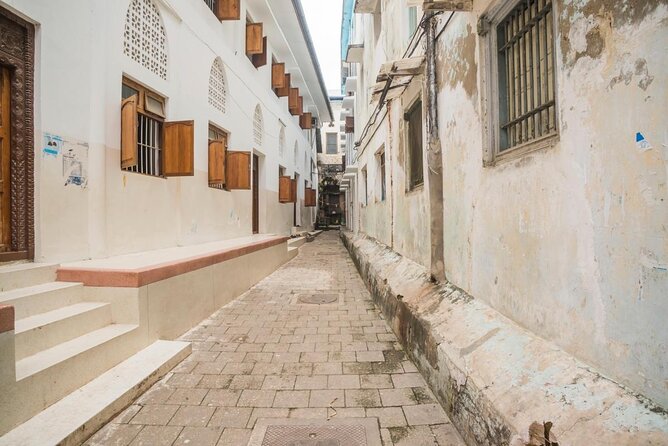
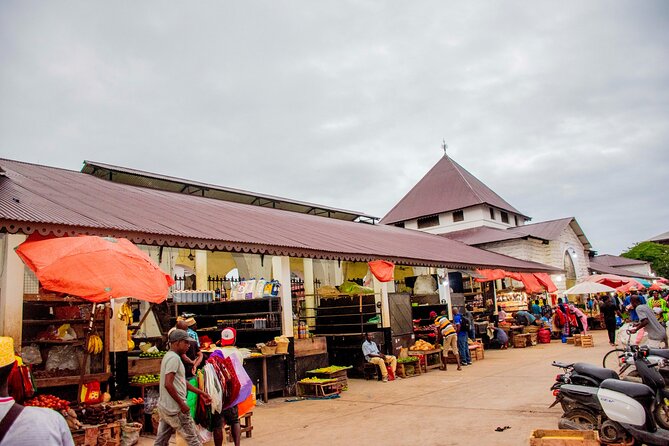
Stone Town can look confusing at first. Its streets twist through old buildings, open toward the sea, then narrow again into lanes filled with shops, homes, and passing pedestrians. A map shows you where you are, but it does not explain why a doorway looks Indian, why a fort sits beside the waterfront, or how a palace became part of modern Zanzibar’s story.
That is where a guide helps. You get the basic route, but the real value comes from having someone connect buildings to the people who used them. The tour brings together the island’s Portuguese, Arab, African, Indian, and European influences without forcing you to sort out the details alone.
I would use this walk early in a Zanzibar stay. It gives you a mental map of Stone Town, and later visits to the waterfront, markets, or museums make more sense. It is also a sensible choice if you have only a few hours between other plans.
The walk is private, not a large group outing. That matters in Stone Town, where a guide can stop when you want a closer look at a carved doorway or move on when a site does not hold your interest. Families, couples, and solo visitors can all benefit from that flexibility.
More Walking Tours in Zanzibar
- Stone Town Private Walking Tour
★ 5.0 · 371 reviews - Zanzibar: 3 Hours Private Stone Town walking Tour with Guide
★ 4.6 · 301 reviews - Zanzibar: Stone Town Historical Cultural Walking Guided Tour
★ 4.5 · 179 reviews
Starting at Forodhani Gardens by the waterfront
The meeting point is Cape Town Fish Market Zanzibar, at Forodhani Gardens. Forodhani is a small park in Stone Town’s historic center, close to the sea and within easy reach of several important buildings.
It is a practical place to begin because the waterfront gives you an immediate sense of Stone Town’s setting. The route starts in an open area, then moves into the denser old city, where streets and buildings quickly become the main attraction.
The tour information says the activity ends back at the same meeting point. Some guests have also arranged hotel pickup with the guide, but that is not listed as a standard inclusion, so you should confirm it when booking rather than assume it is part of the $26 price.
From Forodhani Gardens, you are already near the Arab Fort and House of Wonders ruins. That keeps the first part of the walk efficient and leaves more time for explanations instead of long transfers.
The Arab Fort and Stone Town’s Portuguese beginnings
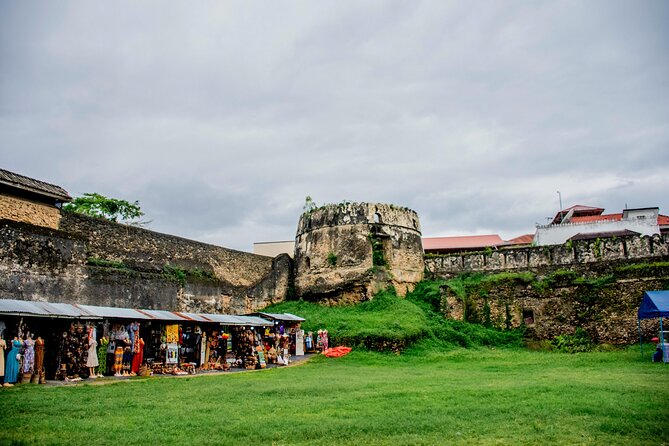
Fuerte Viejo De Zanzibar, usually called the Arab Fort, is one of the oldest buildings in Stone Town. The structure was originally built by the Portuguese in the 17th century and later became associated with Omani Arab rule.
That layered past is one of the most useful ideas on this tour. A quick look at the fort can tell you that Zanzibar’s story is not a single chapter. Control of the island shifted, trade routes changed, and different communities left their mark on the city.
The fort also gives you a strong sense of Stone Town’s defensive past. You do not need to be an architecture specialist to appreciate its heavy walls and position near the waterfront. Your guide can explain why this spot mattered and how it fits into the city’s wider story.
The practical limit is time. Three hours is enough for an introduction, but not enough to study every section of the fort at length. If you want an extended visit inside, ask how much time is planned here before the walk begins.
House of Wonders ruins and the lost royal center
The route passes the ruins of the House of Wonders, one of Stone Town’s most famous buildings. The name itself raises questions, and part of the guide’s job is to explain how it came about and why the building became known across East Africa.
The House of Wonders was connected with the sultan’s court and became famous for its scale and modern features. Here, the important point is not just the building’s appearance. It is the idea of Stone Town as a royal and trading center that once looked outward across the Indian Ocean.
Today, the ruins also show how fragile historic buildings can be. You see an important landmark in a damaged state rather than a perfectly restored monument. That can be disappointing if you expect a polished palace, but it also makes the stop more honest and thought-provoking.
I would listen closely here. A short explanation about the building’s name, purpose, and condition adds much more than a quick photograph from the street.
More Stone Town walks:
- Zanzibar: Stone Town, Spice Tour, Prison Island with Lunch
★ 4.4 · 1,219 reviews - Zanzibar: Prison Island, Stone Town, & Spice Farm Tour
★ 4.5 · 579 reviews - Zanzibar; Prison Island, Nakupenda, StoneTown Tour with BBQ
★ 4.3 · 457 reviews - Zanzibar: Stone Town, Spice tour & Prison Island with Lunch
★ 4.6 · 453 reviews
Palace Museum and the story of the sultans
Next comes the Palace Museum, also known as the Sultan’s Palace. This stop shifts the focus from defense and public power to royal life.
The palace helps explain how Zanzibar was governed and how the sultanate shaped Stone Town. It also gives you a way to connect the grand buildings around the waterfront with the people who lived and worked within them.
The supplied details confirm the Palace Museum as a stop, but they do not specify how long you spend inside or whether admission beyond the tour’s included fees is required. Ask your guide about the planned visit if the museum interior is a priority for you.
Even from the outside, the palace adds useful context. The route is not just a parade of old facades. It links the buildings to Zanzibar’s political past, which is what turns a walk into a history lesson with streets attached.
The Old Dispensary and Stone Town’s mixed architecture
The Old Dispensary is another key point on the route. Its detailed exterior reflects the mixture of styles that makes Stone Town so distinctive.
This part of the walk is especially useful if you like buildings but do not want a technical lecture. Your guide can help you notice how Indian, Arab, African, and European influences appear side by side. The city’s architecture is a record of trade, migration, religion, and colonial contact.
The Old Dispensary also helps balance the grand royal buildings. Stone Town was not only a place of palaces and forts. It was a working city, shaped by commerce, medicine, homes, shops, and public life.
Bring your attention down to street level. Look at doorways, balconies, shutters, and decorative details as you walk. The route may not provide a long stop at every building, so it helps to stay alert between the named sights.
The Old Slave Market and Anglican Cathedral
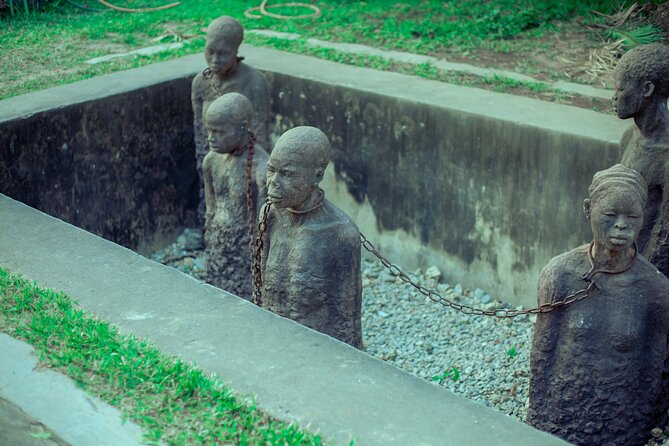
The most serious stop is the Old Slave Market and Anglican Cathedral. This is where the tour confronts Zanzibar’s role in the East African slave trade.
The cathedral is described as the most prominent example of early Christian architecture in East Africa. Its location is deeply symbolic. It was built on the site of the old slave market, linking a place of human suffering with a later Christian institution and a public effort to mark the end of the trade.
You should expect this section to be sobering. It is not simply another attractive historic building. The site asks you to think about the people who were captured, sold, confined, and transported through Zanzibar.
A good guide can make this history clear without turning it into a list of dates. The feedback connected with this operation repeatedly praises the guides’ explanations of Zanzibar’s past and their ability to connect that past with present-day life. That combination is valuable here, since the city is still lived in, not sealed off as a museum.
If this subject matters to you, ask how much time will be spent at the cathedral and former market area. The tour is only about three hours, and the number of stops means each place receives a limited share of the clock.
A guide who shapes the quality of the walk

The guide is the most important part of this experience. The service is associated with Abdul, Abdulrazak, and Mcha, with Mohammad and Omar also named in connection with tours. Abdul is described as warm, lively, fluent in English, and especially good at explaining both Zanzibar’s history and present-day life.
That kind of guide can change the feel of Stone Town. You are more likely to ask questions, pause at an unusual detail, or understand why a place matters beyond its appearance. Families have also found Abdul comfortable to be around, including with children.
The strongest praise focuses on reliability, friendliness, safety, and depth of explanation. One solo woman specifically valued the support she received from Abdul from her arrival in Zanzibar, including ferry pickup. That does not mean every booking includes transport or arrival assistance, but it does suggest you can discuss extra arrangements with the provider.
There is also evidence of flexibility. Guests have adjusted the walking tour around a ferry departure, and some have booked additional customized trips after the Stone Town visit. Again, treat this as something to request, not a guaranteed feature.
What the $26 price really buys you
At $26 per person, this is a low-cost way to get a private introduction to Stone Town. The price includes all fees and taxes, and only your group takes part. For a couple or small family, that is a better value than a private vehicle tour if your main goal is understanding the old city on foot.
The price does not include lunch. That is not a major flaw for a three-hour walk, since adding a meal would make the timing less tidy. Still, budget separately if you want to eat afterward, and do not assume food is part of the booking.
The value depends on what you want. If you only need directions and a list of buildings, you can walk Stone Town without paying. If you want clear explanations, help with the city’s complicated past, and a route that joins the main sights, the fee is reasonable.
The tour also has strong practical value for a first visit. You get an introduction without committing to a full day, and you can use the guide’s suggestions to plan later time in Stone Town or other parts of Zanzibar.
Timing, comfort, and smart planning
The walk lasts about three hours. That is long enough to cover the principal sights but short enough to fit around a ferry, a wider Zanzibar day trip, or an arrival schedule.
Stone Town’s streets can be confusing, and walking means you should wear comfortable shoes and carry water. Those are sensible preparations for any city walk, though the supplied information does not specify the surface, shade, or exact pace.
Most people can take part, and the activity is private. If someone in your group has mobility needs, ask the provider about the precise route before booking because the available details do not describe street conditions or step-free access.
Confirmation is sent within 48 hours of booking, subject to availability. That makes it wise to book ahead if your schedule is tight. The average booking lead time is 28 days, though you should not read that as a required advance period.
Free cancellation is available until 24 hours before the start time for a full refund. Cancellations or changes within 24 hours are not refunded or accepted, using Zanzibar local time for the cutoff.
Who will get the most from this walk
I would recommend this tour to a first-time Stone Town visitor who wants the city explained rather than simply photographed. It suits couples, families, and solo visitors who prefer a private guide and want room for questions.
It is also a good match for anyone interested in Zanzibar’s connections to the Indian Ocean, the sultanate, religious change, and the slave trade. The route brings those subjects together in a compact way.
You may want something else if you prefer a slow museum visit with long indoor stops. Three hours and several landmarks create a brisk introduction. You will see a lot, but you should not expect an exhaustive study of every building.
The tour is also less suited to someone who wants lunch, transport, or a full-day schedule included. Those services are not part of the stated package, though the provider may be able to arrange other trips or adjustments separately.
Should you book the Zanzibar Stone Town Private Walking Tour?
I would book it if you want a reasonably priced private introduction to Stone Town with a guide who can explain both its architecture and its difficult past. The best parts are the compact route, the serious historical focus, and the chance to speak directly with a local guide such as Abdul, Abdulrazak, or Mcha.
Before paying, confirm who will guide your group, how much time is planned inside the Palace Museum or cathedral, and whether hotel pickup is possible. If those details match your needs, $26 per person buys a useful first layer of understanding, not just a walk through old streets.
FAQ
How long does the Stone Town walking tour last?
The tour lasts approximately three hours.
How much does the tour cost?
The listed price is $26 per person.
Is this a private tour?
Yes. Only your group participates in the activity.
Where does the tour start and finish?
It starts at Cape Town Fish Market Zanzibar, at Forodhani Gardens in Stone Town. The activity ends back at the meeting point.
Are fees and taxes included?
Yes. All fees and taxes are included. Lunch is not included.
Can I cancel for a full refund?
Yes, if you cancel at least 24 hours before the experience start time. Cancellations or changes made less than 24 hours in advance are not refunded or accepted.
Newly listed around Zanzibar
- Zanzibar: Nungwi/Kendwa Beach Sunset Dhow Cruise with Fruits★ 3.4 · 3 reviews
- Prison Island, Sea Turtles, Rock Restaurant & Relax in Beach★ 4.6 · 3 reviews
- Starfish Beach; The Rock; Kuza Cave; Paje Beach; Salaam Cave Tour★ 4.5 · 3 reviews
- Zanzibar: Half-Day Spice Farm Tour,the flavours of Zanzibar★ 4.7 · 3 reviews
- Joazani forest & Spice farm with lunch★ 5.0 · 3 reviews
- Nakupenda Island Snorkeling Sea trip & Lunch W/Transfer -Zanzibar★ 4.0 · 3 reviews
- Mnemba Island Snorkeling and Dolphin tour★ 5.0 · 3 reviews
- Zanzibar:Jozani forest, Spice farm with Swahili Cuisine clas★ 4.2 · 3 reviews
Stone Town Tours, compared.






Full-Day Private Stone Town +Spice Farm and Prison Island Tour
Read our review →
Browse the lists this tour appears in