
Reviewed · STONE TOWN TOURS
Unique private Stone Town tour & Prison Island tour in Zanzibar
Prison Island gives this tour its strongest opening: you cross the water in a comfortable wooden boat to see the old prison ruins and spend time with the island’s giant tortoises. Back in Stone Town, your private guide, usually Haji, leads you through a maze of lanes that are easy to lose yourself in.
I like the combination of island history and living city life. You get the quiet ruins and tortoises first, then the fish market, spice stalls, slave chambers, cathedral, and old fort. I also like the private format, since Haji can focus on your interests, explain Zanzibar’s past in detail, and speak German very well when needed.
The main caution is timing. The advertised duration is about two hours, but the stops cover Prison Island and a long list of Stone Town sights. Ask in advance how much time is planned at each place, and confirm the meeting arrangement if you are staying outside central Stone Town.
Key points to know before booking
- Prison Island combines ruins with giant tortoises, giving you both a historical stop and time to see the animals at close range.
- Stone Town’s route covers major landmarks, including the former slave market, Anglican Cathedral, Darajani Bazaar, Old Fort, House of Wonders, and Sultan’s Hamam.
- Haji is the named guide, and the experience is especially useful if you want detailed history or German-language guiding.
- A private group means a more personal pace, with room to ask questions or focus on architecture, shopping, textiles, or daily life.
- The meeting point is Forodhani Park at 9:00 am, while hotel meet and greet is included for hotels in Stone Town.
- The $60 price includes boat, guide, water, entrance fees, and service charge, but not lunch or hotel transport outside the stated Stone Town arrangement.
Why the Prison Island opening works
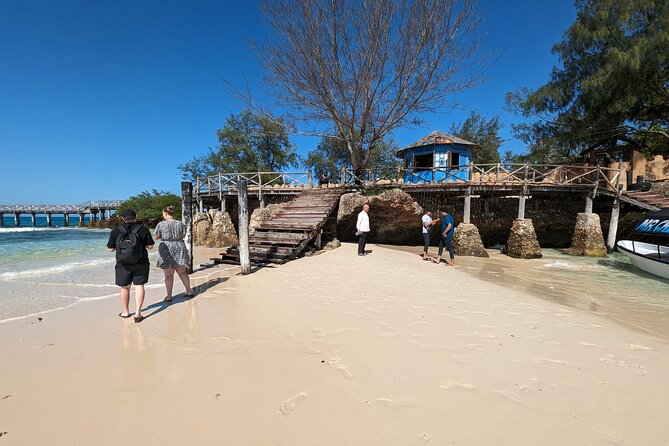
The tour begins at Forodhani Park, the waterfront gathering point in Stone Town. From there, you take a wooden boat to Changuu Private Island, commonly called Prison Island. The crossing is part of the appeal. It shifts the setting from crowded lanes and old stone buildings to open water and a small island with a very different feel.
The island stop is planned for about one hour, with admission included. You will see the prison ruins, often described as the old slave prison, and hear about the building’s past. The remains are not simply a photo stop. They give your guide a place to explain how Zanzibar’s history connects to slavery, trade, colonial rule, and the wider Indian Ocean world.
The other main draw is the tortoise enclosure. You have time to see the animals and, according to the tour details, play with or touch them. That makes this stop work well for families, though you should still follow the guide’s instructions about handling the tortoises. The animal encounter is memorable, but the historical setting gives the visit more weight than a standard wildlife stop.
I would not book this part expecting a long beach excursion or a full snorkeling trip. The stated program focuses on the prison ruins and tortoises. If you want extended time in the water, ask before booking, since that is not part of the advertised plan.
The boat ride also depends on conditions. The experience requires good weather, and poor weather can lead to a new date or a refund. That is sensible for a boat crossing, but it means you should avoid scheduling this as your final possible activity before a flight.
More Stone Town walks:
- Zanzibar: Stone Town, Spice Tour, Prison Island with Lunch
★ 4.4 · 1,219 reviews - Zanzibar: Prison Island, Stone Town, & Spice Farm Tour
★ 4.5 · 579 reviews - Zanzibar; Prison Island, Nakupenda, StoneTown Tour with BBQ
★ 4.3 · 457 reviews
Reading Stone Town through a local guide
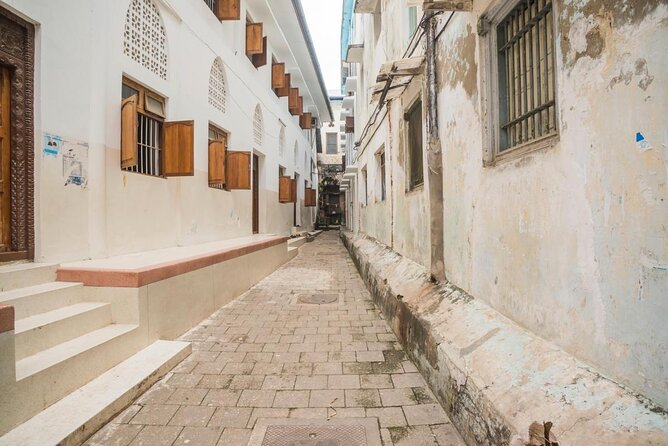
Stone Town is compact, but its lanes can be confusing. Buildings crowd the streets, routes bend without warning, and major sights are often tucked behind plain doorways or narrow passages. A private guide is useful here for more than directions. You get someone who can connect the buildings to Zanzibar’s political, religious, and commercial past.
Haji is the guide most closely associated with this experience. His strongest qualities, based on the information available, are his command of Zanzibar’s history, his friendly and reliable manner, and his ability to explain clearly in German. Some arrangements also involve a driver or another guide, so confirm who will lead your particular outing if having Haji personally is important to you.
The private format changes the mood. You are not trying to keep up with a large group or waiting for a dozen people to finish photographs. You can ask about architecture, local customs, slavery, religion, shopping, or everyday life. The guide can also leave space for your own interests rather than delivering the same speech at every stop.
That flexibility has limits. The main historical route is fairly set because the principal buildings are central to a first visit. You can express preferences, but you should not expect every street or building in Stone Town to be covered in a short tour.
Darajani Bazaar, where Stone Town shops for itself
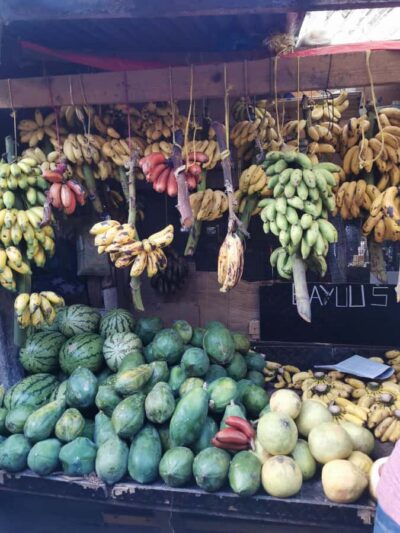
Darajani Bazaar is listed as a short stop of about ten minutes, with no entrance fee. In that brief visit, you see the fish market, meat market, and stalls selling spices and fruit.
This is a useful counterpoint to the grand historic buildings. It shows Stone Town as a working town, not just a preserved quarter for sightseeing. The smells, displays, and daily trade give you a more direct sense of how people buy food and how the island’s agricultural and coastal life reaches the city.
Ten minutes is not much. You will get an introduction rather than a slow market exploration. If you want to browse, photograph produce, or shop for spices, ask Haji if the schedule can be adjusted. Since this is a private tour, there may be some room to shape the stop, but the total program still has many places to cover.
Use care in the market. Keep your belongings close, follow local etiquette, and ask before photographing people. A guide can help you understand what you are seeing and avoid turning a working market into a stage set.
The former slave market and Anglican Cathedral
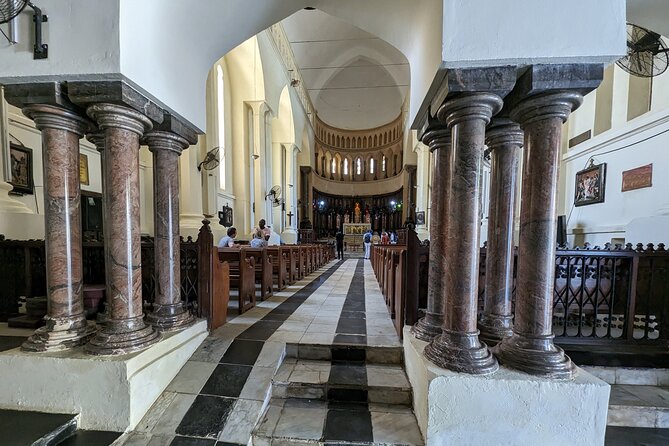
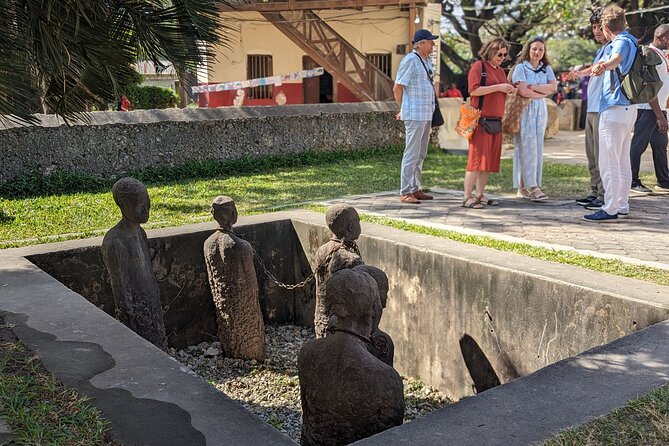
The former slave market is one of the most important stops. The visit includes the Anglican Cathedral, the underground slave chambers, and the slave monument. Admission is included, and the planned visit lasts about 30 minutes.
This is the part of the tour that deserves your full attention. Zanzibar’s past is not only about sultans, carved doors, and ocean trade. The slave market site forces you to confront the human cost behind that history. The chambers are especially difficult because the confined spaces make the subject physical rather than abstract.
Haji’s explanations about slavery are repeatedly praised in the supplied material, including his ability to answer questions and explain the subject in German. That matters here. A guide can provide context, but you should also expect a serious stop rather than light sightseeing.
The cathedral adds another layer. It occupies the former market area, placing religious architecture beside a site of exploitation. The slave monument provides a modern memorial focus. Taken together, these elements make this more than a quick old-building visit.
The half-hour schedule may feel short if you want to read every display or spend time reflecting. If this subject is central to your interest in Zanzibar, tell the guide at the start. You may prefer to give this stop more time and shorten one of the exterior photo stops.
More Prison Island trips:
- Zanzibar: Prison Island and Nakupenda Boat Trip with Lunch
★ 4.1 · 882 reviews - Zanzibar: Prison Island & Nakupenda Boat Tour with BBQ Lunch
★ 4.4 · 554 reviews - Zanzibar: Stone Town, Spice tour & Prison Island with Lunch
★ 4.6 · 453 reviews - Zanzibar: Prison Island & Nakupenda Sandbank Tour with Lunch
★ 4.2 · 265 reviews
Sultan’s Hamam and the city’s former rulers
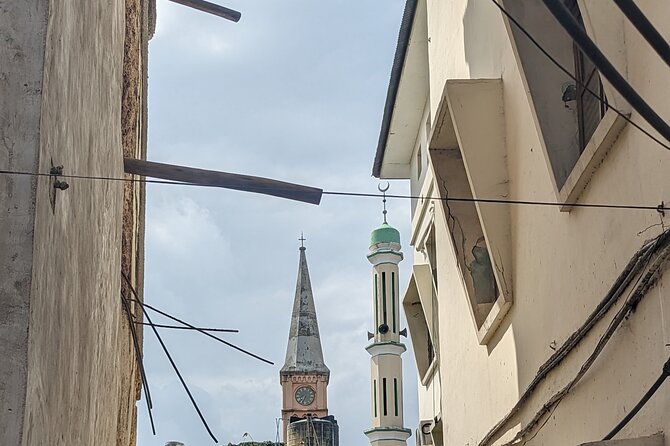
The route also includes the former Sultan’s Hamam, where you see the building and hear its history. The information does not specify an interior visit, so treat this as an exterior or brief heritage stop unless your guide confirms otherwise.
This kind of stop helps explain the city’s changing rulers and social structure. Stone Town’s buildings are not all the same age or purpose. Some served royal households, some supported trade, and others were places of worship or public life. A good explanation makes the street itself easier to read.
Do not expect a museum-style visit at every location. Several stops are described as seeing a building from outside and learning its story. That is normal for a compact walking tour, but it is worth knowing if you prefer long interior visits.
Freddie Mercury’s birthplace, seen from outside
You will see the house identified as the birthplace of Freddie Mercury from the outside and hear more about its connection to Zanzibar. It is a small stop, but it adds a modern cultural note to a route otherwise shaped by much older events.
The appeal is personal and quick. Music fans will want the photograph and the connection to a globally known figure born on the island. The limitation is clear: the program specifies an exterior view, not entry into a museum or private home.
I like this stop because it breaks up the historical sequence. It reminds you that Stone Town is not frozen in the era of sultans and colonial buildings. Its story also includes people and influences that reached far beyond Zanzibar.
Old Fort and the open-air theater

The Old Fort, or Ngome Kongwe, is another central landmark. The visit is listed at about ten minutes and includes seeing the fort and its open-air theater. There is no admission fee stated for this stop.
The fort is a good place to understand Stone Town’s defensive side. Its heavy walls contrast with the delicate details found on many doors and houses. The open-air theater gives the complex a current public function rather than leaving it as a silent ruin.
Again, ten minutes is an introduction. You will see the main setting and get its story, but you may not have time for a careful architectural inspection. If you enjoy old masonry, ask for a little breathing room here, especially if the fort is one of your priorities.
House of Wonders and the white arch

The House of Wonders is viewed from outside, with more history provided by the guide. The route also includes a garden, the old customs area, and the white arch.
These short exterior stops help you understand the shape of Stone Town without requiring a long museum visit. The House of Wonders is one of the city’s best-known landmarks, while the customs area points to the commercial systems that supported Zanzibar’s port. The white arch adds one more architectural detail to a route already full of carved stone, old walls, and formal facades.
The key word is from outside. If you arrive expecting to tour the House of Wonders’ interior, you could be disappointed. Ask about current access and repair work before the tour, since the program only promises an exterior view.
What the $60 price really covers
At $60 per person, the value depends on how much you want a private guide rather than a basic walk around town. The price includes bottled water, a professional guide, all entrance fees and service charges, and the wooden boat to Prison Island. For a private group, that is a fair package if you intend to visit both the island and the major Stone Town sights in one outing.
You do not pay separately for the Old Fort, Darajani Bazaar, or the exterior stops. The former slave market and Prison Island admissions are included as well. That makes the final cost easier to predict.
Lunch is not included. Hotel pickup and drop-off are also not included in the general inclusions, although a meet and greet from any hotel in Stone Town is listed. The practical reading is this: the official meeting point is Forodhani Park, and you should confirm exactly where your guide will meet you if you are staying at a Stone Town hotel. If you are staying elsewhere, arrange your own transport to the start.
Group discounts are available, which may improve the price for families or larger private parties. The activity is mobile-ticketed, and confirmation is received at booking.
Timing, comfort, and who will enjoy it
The published start time is 9:00 am, and the activity ends back at the meeting point. The stated duration is approximately two hours, though the number of listed stops makes the actual pace important. Prison Island alone is planned for one hour, followed by the market, cathedral and slave chambers, Old Fort, and several exterior sights.
I would treat the schedule as a compact overview rather than a slow, museum-heavy day. Wear comfortable shoes, carry sun protection, and bring water even though a bottle is included. The route combines a boat ride, market streets, and walking over old urban surfaces.
Most people can participate, and the activity is private, meaning only your group joins. That suits families, couples, and small groups who want to ask questions without a fixed public-group pace. It also works well for anyone interested in slavery, architecture, local customs, or Zanzibar’s political history.
German speakers have a particular reason to consider it. Haji is described as speaking German very well, and that can make complex historical subjects easier to discuss. English-language ability is not specifically detailed in the supplied information, so confirm your preferred language when booking.
The tour may be less suitable if you want a relaxed beach day, extensive shopping time, or long visits inside every building. It is also not the right choice if your main goal is snorkeling or swimming around Prison Island. The focus is history, landmarks, markets, and tortoises.
Communication and reliability
The tour can be arranged with mobile communication, and the available information highlights quick WhatsApp communication, punctuality, and flexibility. Haji is also described as polite, non-intrusive, and willing to respond to individual interests.
One practical point deserves attention. In at least some arrangements, a colleague has led the tour instead of Haji. That does not automatically make the experience poor, but if you are booking specifically for Haji’s historical explanations or German, ask directly who will accompany you.
Free cancellation is available up to 24 hours before the local start time. Late cancellations and changes are not accepted for a refund. Since the boat requires good weather, keep an eye on conditions and leave some flexibility in your Zanzibar schedule.
Should you book this Stone Town and Prison Island tour?
I would book it if you want a private first look at Zanzibar’s history and prefer a guide to connect the pieces. Prison Island gives you ruins and tortoises, while Stone Town adds markets, slavery, royal buildings, religious sites, and modern cultural links. The mix is strong, especially for a first visit.
I would not book it without clarification if you expect a full-day outing, hotel transfers from a distant beach resort, or long interior visits. Confirm the exact duration, the guide’s identity, language, meeting point, and the amount of time allowed at each stop.
For $60 per person, the boat, admissions, water, and private guiding make good sense for a small group. The best reason to choose it is not simply the number of sights. It is the chance to ask direct questions and make sense of a complicated place without getting lost in Stone Town’s lanes.
FAQ
How much does the Stone Town and Prison Island tour cost?
The price is $60 per person. Group discounts are available.
How long does the experience last?
The advertised duration is approximately two hours. The schedule includes about one hour on Prison Island, a 10-minute Darajani Bazaar stop, a 30-minute former slave market and Anglican Cathedral visit, and several additional Stone Town sights.
What time does the tour start?
The stated start time is 9:00 am.
Where does the tour begin?
The meeting point is Forodhani Park in Zanzibar’s Stone Town. The activity ends back at the meeting point.
Is hotel pickup included?
A meet and greet from any hotel in Stone Town is included. General hotel pickup and drop-off are not listed as included, so confirm the arrangement if you are staying outside central Stone Town.
What is included in the price?
The price includes bottled water, a professional guide, entrance fees and service charges, and a comfortable wooden boat to Prison Island.
Is lunch included?
No. Lunch is not included.
Is this a private tour?
Yes. Only your group participates in the activity.
Can I cancel for a full refund?
Yes, if you cancel at least 24 hours before the experience start time. Cancellations or changes made less than 24 hours in advance are not refunded. If bad weather causes cancellation, you will be offered another date or a full refund.
Newly listed around Zanzibar
- Zanzibar: Nungwi/Kendwa Beach Sunset Dhow Cruise with Fruits★ 3.4 · 3 reviews
- Prison Island, Sea Turtles, Rock Restaurant & Relax in Beach★ 4.6 · 3 reviews
- Starfish Beach; The Rock; Kuza Cave; Paje Beach; Salaam Cave Tour★ 4.5 · 3 reviews
- Zanzibar: Half-Day Spice Farm Tour,the flavours of Zanzibar★ 4.7 · 3 reviews
- Joazani forest & Spice farm with lunch★ 5.0 · 3 reviews
- Nakupenda Island Snorkeling Sea trip & Lunch W/Transfer -Zanzibar★ 4.0 · 3 reviews
- Mnemba Island Snorkeling and Dolphin tour★ 5.0 · 3 reviews
- Zanzibar:Jozani forest, Spice farm with Swahili Cuisine clas★ 4.2 · 3 reviews
Stone Town Tours, compared.

Full-Day Private Stone Town +Spice Farm and Prison Island Tour
Read our review →
Browse the lists this tour appears in