

Reviewed · STONE TOWN TOURS
Stonetown Private Half-day Walking Tour
Stone Town’s narrow lanes tell several stories at once: royal power, Indian Ocean trade, the slave trade, music, food, and daily island life. This private walk brings those threads together, from the Old Slave Market and Anglican Cathedral to the home linked with Freddie Mercury.
I like the private format, since you can ask questions and adjust the pace instead of marching behind a large group. I also like the mix of serious history and ordinary Zanzibar life, especially Darajani Bazaar and the stop for Swahili food at Lukmaan Restaurant.
The main consideration is pace. Eight stops in roughly four hours and 45 minutes leaves limited time at some sites, and admission to the Old Slave Market is not included. You should also expect a lot of walking in warm weather.
Key points to know before you book
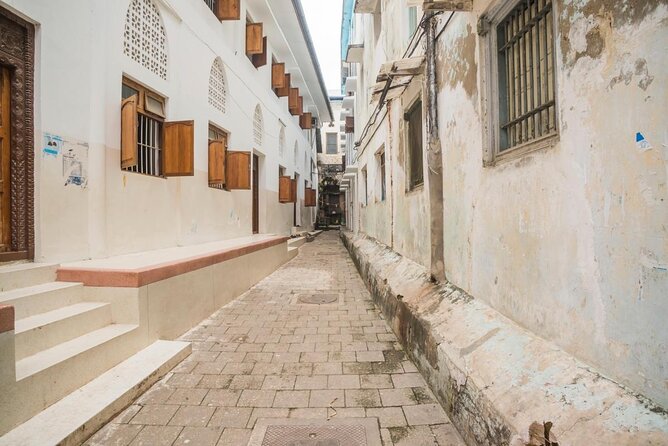
- A private walk through Stone Town: Only your group takes part, with a guide and room for questions or small changes.
- Eight stops in one outing: The route covers major sights, markets, museums, a garden, and a local restaurant.
- A serious look at slavery: The Old Slave Market and Anglican Cathedral provide the tour’s most sobering historical stop.
- Local shopping at Darajani Bazaar: You can look for spices and other goods at local prices, with the guide helping explain the market.
- Food is part of the plan: Lukmaan Restaurant offers a chance to try Swahili dishes and take a refreshment break.
- A guide who can shape the experience: Osman is one named guide associated with the tour, and the pace can be adapted to your interests.
Why Stone Town works best on foot
Stone Town is made for slow movement. Its lanes are tight, its buildings sit close together, and its major sights are spread through an area where walking gives you a better sense of place than simply passing by in a vehicle.
This is not a tour built around one grand monument. It is a chain of stops that shows how Zanzibar’s past and present sit side by side. You move from the former slave market to the produce and spice stalls, then to a museum about Freddie Mercury, an old fort, grand civic buildings, a waterfront garden, and a popular restaurant.
The private setup matters here. Stone Town can feel confusing at first, and a guide helps you connect the places rather than treating them as isolated photo stops. You can ask about the buildings, the island’s past, local food, or anything else that catches your attention.
The walk lasts about four hours and 45 minutes, though the listed stop times add up to slightly less than that. That gives you some useful breathing room for moving between sites, questions, and the occasional pause. Still, this is a full half-day, not a quick orientation stroll.
More Walking Tours in Zanzibar
- Stone Town Private Walking Tour
★ 5.0 · 371 reviews - Zanzibar: 3 Hours Private Stone Town walking Tour with Guide
★ 4.6 · 301 reviews - Zanzibar: Stone Town Historical Cultural Walking Guided Tour
★ 4.5 · 179 reviews
The Old Slave Market and Anglican Cathedral
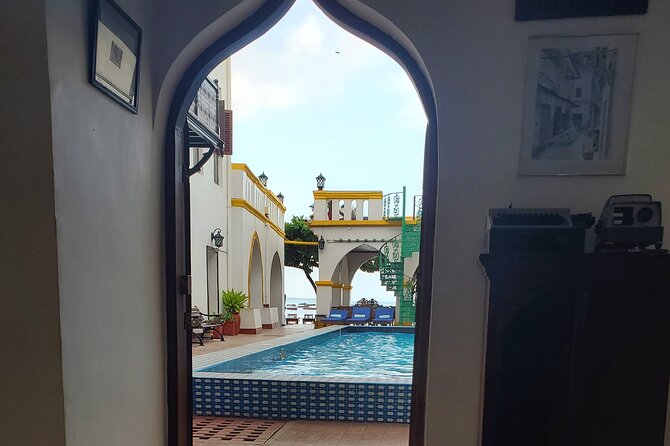
The tour begins with one of Stone Town’s most difficult places. The former slave market is now associated with the Anglican Cathedral, built on the site where enslaved people were once bought and sold.
The stop lasts about 35 minutes. Admission is not included, so you should be ready to pay separately if you want to enter the paid areas. The site offers a direct way to learn about Zanzibar’s role in the regional slave trade and the later abolition of slavery.
I consider this an important opening because it gives the rest of the walk context. Stone Town’s beautiful doors and grand buildings can be easy to admire without asking how wealth was made. This stop brings that harder question into view.
The visit may feel more reflective than entertaining, and that is appropriate. You are not simply checking off an old building. You are learning about people who were bought, sold, confined, and transported. Allow yourself time to take in the site rather than treating it as a fast photo stop.
Darajani Bazaar and Zanzibar’s everyday trade
Darajani Bazaar shifts the mood from formal history to daily commerce. It is described as one of the best-known markets along the East African coast and is also known locally for spices sold at low local prices.
The market is free to enter, and the planned visit lasts about 35 minutes. You can expect a more practical, sensory stop here, with shopping and observation taking equal roles. The guide can help you understand what you are seeing and point out spices or goods worth a closer look.
If you want to buy spices, ask about prices before purchasing and compare a few stalls. The phrase cheap local price does not mean every price is automatically the best one for you, especially if you are buying a large package or several items.
Darajani is also useful for seeing Stone Town as a living town rather than an open-air museum. You may find food, household goods, and local trade happening around you. Keep your belongings secure in any crowded market, and wear shoes suited to walking rather than shopping displays.
Freddie Mercury’s Stone Town connection
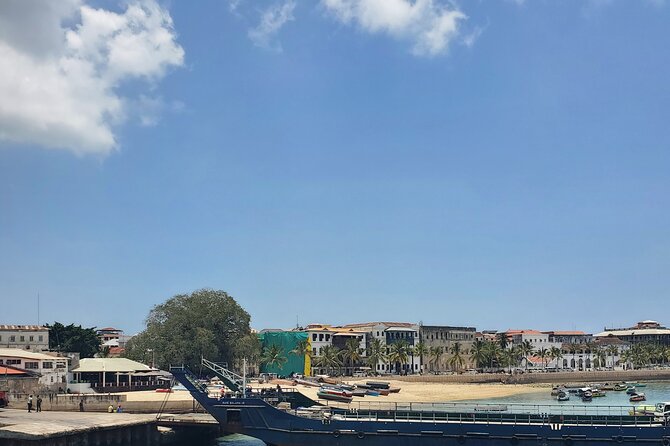
The Freddie Mercury Museum offers a different kind of history. The stop focuses on Freddie Mercury’s life and on the house where he reportedly lived for about nine years while in Zanzibar.
You have about 30 minutes here. The museum is listed as free within this tour, though the tour information does not provide details about individual exhibits or any separate entrance arrangements. If Freddie Mercury or Queen is a major reason for your interest, ask the guide what the visit includes before setting your expectations too high.
This stop works well because it adds a personal and cultural story to the larger account of Stone Town. After slavery, trade, and political power, you get a connection to a world-famous musician whose early life is tied to the island.
I would treat this as a compact stop rather than a major museum visit. Thirty minutes is enough for an introduction and some questions, but not necessarily for an extended exhibition. It is a good fit for music fans and a pleasant change of subject during the walk.
More Stone Town walks:
- Zanzibar: Stone Town, Spice Tour, Prison Island with Lunch
★ 4.4 · 1,219 reviews - Zanzibar: Prison Island, Stone Town, & Spice Farm Tour
★ 4.5 · 579 reviews - Zanzibar; Prison Island, Nakupenda, StoneTown Tour with BBQ
★ 4.3 · 457 reviews - Zanzibar: Stone Town, Spice tour & Prison Island with Lunch
★ 4.6 · 453 reviews
Old Fort, from Portuguese construction to Arab military use
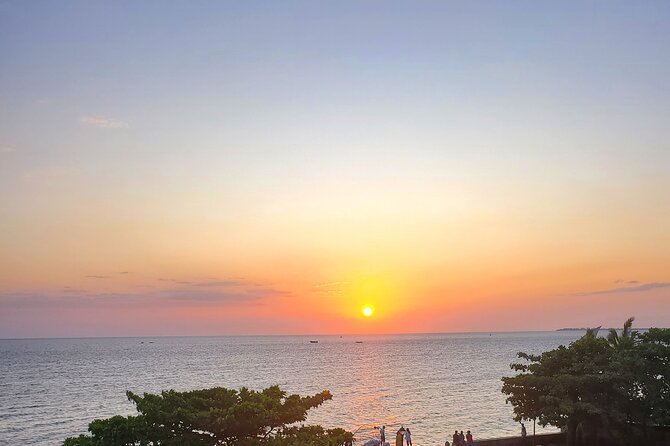
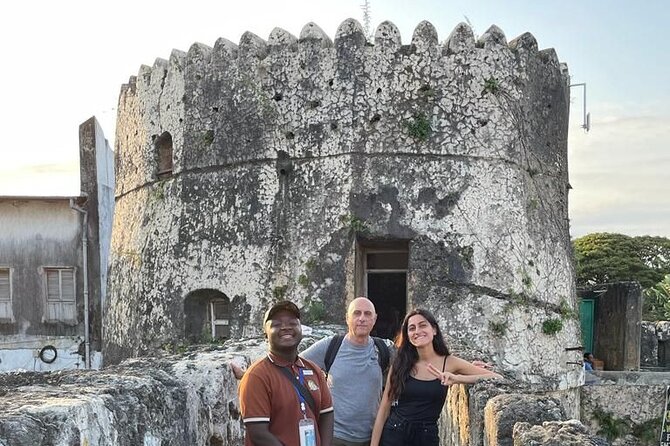
The Old Fort, also called Ngome Kongwe, is one of Stone Town’s oldest buildings. The Portuguese first constructed it around the 15th century, and Arabs later rebuilt it in the 19th century as a military camp.
The scheduled visit lasts about 30 minutes, with no admission charge listed. The fort gives you a chance to see how control of Zanzibar changed over time. Its walls are not just old masonry. They reflect the island’s position along major Indian Ocean routes and the competition for power in the region.
Do not expect a long guided archaeological visit based on the information provided. The stop is short, so its value will come from the guide’s explanation and your chance to look around. If you enjoy old defensive buildings, this should be one of the more satisfying parts of the route.
The fort also helps break up the denser street walking. You get a more open historic site before moving on to the larger civic buildings and waterfront.
People’s Palace Museum, also called the House of Wonders

The People’s Palace Museum is also identified as the House of Wonders. The building is noted for early modern features in Zanzibar, including electricity, an electric lift, and piped water.
The scheduled visit is about 30 minutes and is listed as free. The museum offers a look at island life, government, technology, and changing standards of comfort. It is a useful reminder that Zanzibar was connected to international trade and new technology while many places were still developing basic infrastructure.
The tour information uses both People’s Palace Museum and House of Wonders for this stop, so you may want to confirm the current name and entrance arrangements when booking. That is especially sensible because historic buildings can change use or access over time.
A half-hour visit should give you a strong introduction, but it is not enough for a slow museum study. Listen closely to the guide, since the explanation may be more useful than simply walking through rooms without context.
Old Dispensary and the city’s medical past

The Old Dispensary was built as a modern medical facility serving Zanzibar and other coastal areas of East Africa. The tour gives this stop about 30 minutes, with no admission fee listed.
This building adds another practical layer to Stone Town’s past. You have already seen sites tied to religion, trade, royalty, and military power. The dispensary shows how public health and medical treatment also formed part of the town’s development.
The stop is best understood through its connection to the people who used it. Ask your guide how the building functioned and who it served. The provided information does not list specific interiors or exhibits, so consider it an architectural and historical pause rather than a guaranteed full museum visit.
It is also a good place to slow down and look at Stone Town’s layered design. The old buildings are not all grand palaces. Some were made for ordinary services that helped the city function.
Forodhani Gardens at the waterfront
Forodhani Gardens is planned as a 35-minute stop. In the evening, it becomes a local food market where residents and visitors can sample Zanzibar dishes, and it is also a place for sunset views.
Timing matters here. The schedule says the garden comes before the Lukmaan Restaurant stop, but it does not specify the tour’s starting hour. If you want the evening food market or golden-hour light, confirm that the start time matches those aims.
Forodhani can give the walk its most relaxed outdoor moment. After historic sites and busy streets, the waterfront offers room to pause and watch the day change. The food market is particularly useful if you want to compare street food with the restaurant meal later in the route.
The tour does not state that food at Forodhani is included. Treat it as an opportunity to buy something separately rather than part of the $35 tour price. Your guide can help you understand what is available, but the supplied details do not identify specific dishes or vendors.
Swahili food at Lukmaan Restaurant
Lukmaan Restaurant is the final planned stop, with about 45 minutes for refreshments and a chance to try Swahili food from Zanzibar.
This is one of the tour’s most practical features. A food break gives you a chance to sit down, ask more questions, and connect the earlier history with the island’s present-day culture. Food is often where geography and history become easiest to understand, and Zanzibar’s position on the coast is reflected in its cooking.
The information does not say that a meal is included in the tour price, so budget for anything you order. The stop is described as free admission, which means entering the restaurant does not carry a ticket charge. It does not mean food is covered.
Forty-five minutes is a sensible amount of time for refreshments, but you should not assume it is a formal cooking class or tasting menu. You are going to a well-known local restaurant for a chance to eat Swahili food, not for an elaborate culinary program.
What $35 means for the value
At $35 per person, this tour is priced reasonably for a private half-day experience that brings together eight stops and a local guide. The value is strongest if you want orientation, historical context, and help navigating Stone Town without hiring a guide just for your group.
The price does not appear to cover food at Lukmaan Restaurant or the admission fee at the Old Slave Market. You may also choose to spend money at Darajani Bazaar or Forodhani Gardens. Include those extras when planning your budget.
A private tour usually costs more than joining a large group, but it can be worth it in Stone Town because you can ask questions and adjust the pace. One useful feature is the ability to adapt if you want to make your own stop. That flexibility was specifically highlighted in the feedback, along with the guide’s unhurried approach.
The current rating is 5 out of 5 from 21 reviews, with 100 percent recommending the experience. That is a small sample, but it points to a clear strength: communication and guiding. Osman is named as a particularly strong guide, and the company is praised for reaching out before the tour.
You should receive confirmation when booking, and pickup is offered. The stated meeting point is Stone Town, and the activity ends back there. Since the exact pickup arrangements are not detailed, confirm where your group will meet before the day begins.
Walking comfort, weather, and flexibility
You need to be comfortable walking for most of the outing. The duration is long enough that footwear matters, and Stone Town’s narrow lanes make a walking tour more practical than a vehicle-based route.
The tour requires good weather. If poor weather cancels it, you are offered another date or a full refund. That policy is useful in Zanzibar, where a wet day can change the comfort of a walking route quickly.
The tour is private, and most people can participate. Service animals are allowed, and the area is near public transportation. The information does not give details about step-free access, pavement quality, seating at every stop, or restroom availability, so ask the provider if those points matter to you.
The guide can adapt the walk to some degree, but eight stops still create a fairly set framework. If you prefer spending an hour in one museum or market, tell the guide early. If you want to see all eight places, accept that several visits will be introductions rather than long explorations.
Who should book this Stone Town walk?
I would choose this tour if you are visiting Zanzibar for the first time and want a broad introduction in one half-day. It suits couples, families, and small private groups that prefer questions and a flexible pace over a fixed large-group schedule.
It also works well for people with mixed interests. One person can care about slavery and architecture, another about Freddie Mercury, and another about food and markets. The route gives each person at least one strong reason to pay attention.
You may want something else if you dislike walking, want a specialist history tour, or prefer to spend most of your time shopping and eating. The itinerary covers a lot, but no single stop receives a very long visit.
Should you book it?
Book this Stone Town walk if you want an efficient, private introduction with real variety. The best reasons are the eight-stop route, the local market and food breaks, and the chance to shape the walk with a guide such as Osman.
Before paying, confirm the meeting point, pickup details, start time, and which admissions or meals you will pay for separately. If you are happy with a brisk overview rather than long museum visits, $35 offers solid value. If you want a slower, specialist tour, look for a more focused option.
FAQ
How long does the Stone Town walking tour last?
The experience lasts approximately 4 hours and 45 minutes.
How much does the tour cost?
The listed price is $35 per person.
Is this a private tour?
Yes. Only your group participates in the private activity.
Where does the tour start and end?
It starts in Stone Town, Zanzibar, and ends back at the meeting point.
Is pickup available?
Yes, pickup is offered. The specific pickup arrangements should be confirmed when booking.
Is admission to the Old Slave Market included?
No. Admission to the Old Slave Market and Anglican Cathedral stop is not included.
Are meals included at Lukmaan Restaurant?
The information does not state that food is included. The stop provides time for refreshments and Swahili food, so you should expect to pay for anything you order.
What happens if bad weather cancels the tour?
If the experience is canceled because of poor weather, you will be offered another date or a full refund. You can also cancel up to 24 hours before the start time for a full refund.
More half day trips in Zanzibar
- Zanzibar: Nungwi Turtle Aquarium Guided Half-Day Trip
★ 4.4 · 197 reviews - Prison Island: Private Half-Day Tour
★ 4.0 · 132 reviews - From Zanzibar: Half-Day Prison Island Tour
★ 4.1 · 49 reviews - Half-Day Kuza Cave Swimming Adventure and Cooking Class
★ 4.5 · 44 reviews
Newly listed around Zanzibar
- Zanzibar: Nungwi/Kendwa Beach Sunset Dhow Cruise with Fruits★ 3.4 · 3 reviews
- Prison Island, Sea Turtles, Rock Restaurant & Relax in Beach★ 4.6 · 3 reviews
- Starfish Beach; The Rock; Kuza Cave; Paje Beach; Salaam Cave Tour★ 4.5 · 3 reviews
- Zanzibar: Half-Day Spice Farm Tour,the flavours of Zanzibar★ 4.7 · 3 reviews
- Joazani forest & Spice farm with lunch★ 5.0 · 3 reviews
- Nakupenda Island Snorkeling Sea trip & Lunch W/Transfer -Zanzibar★ 4.0 · 3 reviews
- Mnemba Island Snorkeling and Dolphin tour★ 5.0 · 3 reviews
- Zanzibar:Jozani forest, Spice farm with Swahili Cuisine clas★ 4.2 · 3 reviews
Stone Town Tours, compared.






Full-Day Private Stone Town +Spice Farm and Prison Island Tour
Read our review →
Browse the lists this tour appears in