
Reviewed · STONE TOWN TOURS
Stone Town City Tour
Stone Town’s story is written into its doors, forts, markets, and worn palace walls. This private walking tour takes you from the former Slave Market and Anglican Cathedral to the House of Wonders, Sultans’ Palace Museum, Old Arab Fort, and the old Dispensary, while also showing you daily life in the lanes.
I like the flexible route, since you can focus on shopping, culture, the slave trade, antiques, or David Livingstone’s time in Zanzibar. I also like the private format and hotel pickup, which make it easier to set your own pace and ask direct questions.
The main caution is the loose timing. The experience is described as lasting from two to eight hours, while the detailed itinerary lists eight hours and the start time is shown as 12:00 am. Confirm the pickup hour and intended length before you set out.
Key points to know before walking Stone Town
- Former Slave Market and Anglican Cathedral: A serious, essential stop for understanding Zanzibar’s role in the slave trade and its later abolition.
- Flexible private itinerary: Your guide can adjust the route for shopping, antiques, culture, or specific historical interests.
- Major landmarks in one walk: The route can include the House of Wonders, Sultans’ Palace Museum, Old Arab Fort, and old Dispensary.
- Everyday Stone Town life: Markets, fish, bread, fruit, vegetables, children at play, and local traders bring the tour into the present.
- Hotel pickup included: This saves you from arranging a separate transfer to the old city.
- $100 per person: The price makes the most sense when you value a private guide and use the flexible format for several hours.
Why Stone Town works best with a guide
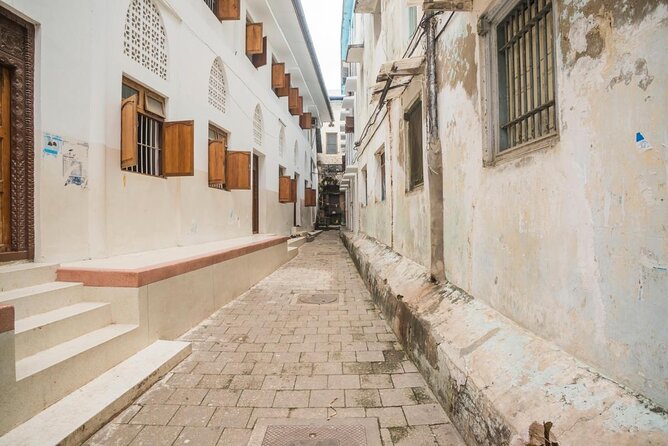
Stone Town is not a place you understand by ticking off buildings from a map. Its narrow streets turn often, and several important sites sit close together but belong to very different chapters of Zanzibar’s past.
A guide gives those buildings a useful order. You can follow the trail of sultans, enslaved people, explorers, merchants, and ordinary families rather than seeing each stop as a separate photo opportunity.
The tour also connects the grand buildings to the street outside. You might move from a palace museum to a market where fish is piled for sale, then pass wicker baskets filled with fresh bread and stalls stacked with fruit and vegetables.
That mix is one of the strongest parts of the experience. You are not kept inside a polished historic district. You see Stone Town as a working part of Zanzibar City, with commerce, children, food, and local movement continuing around the old monuments.
More Stone Town walks:
- Zanzibar: Stone Town, Spice Tour, Prison Island with Lunch
★ 4.4 · 1,219 reviews - Zanzibar: Prison Island, Stone Town, & Spice Farm Tour
★ 4.5 · 579 reviews - Zanzibar; Prison Island, Nakupenda, StoneTown Tour with BBQ
★ 4.3 · 457 reviews
Former Slave Market and Anglican Cathedral
This is likely to be the most important and emotionally demanding part of the walk. The former Slave Market and the Anglican Cathedral place Zanzibar’s involvement in the slave trade at the center of the visit.
The cathedral is not simply another old building. Its presence beside the former market reflects the effort to mark and confront a painful period in the island’s past. Your guide can explain the events that shaped Zanzibar and show you where they happened, giving the subject a physical setting rather than leaving it as an abstract lesson.
Allow yourself time here. If you prefer a relaxed sightseeing walk with little serious history, this section may feel heavy. That is also why it matters. A visit to Stone Town that skips this story would leave out one of the clearest keys to understanding the city.
Because this is a private tour, you can ask for more explanation or move on when you have had enough. That control is useful, especially for families or groups with different comfort levels.
House of Wonders and the Sultans’ Palace Museum

The House of Wonders and Sultans’ Palace Museum bring you into the world of Zanzibar’s ruling sultans. These buildings help explain the political and royal side of the city, after you have already encountered the darker commercial history of the slave trade.
The palace stops can be visually impressive, but you should keep expectations measured. Parts of the old palaces are described as being in poor condition or under renovation, so the experience may be more about the setting, architecture, and stories than a perfectly restored interior.
That is not a reason to skip them. Weathered walls and incomplete buildings can show how much of Stone Town’s built past has changed over time. Your guide’s explanation becomes especially useful here, since the meaning of a room or façade is not always clear from the outside.
If you care about architecture, royal life, or the way Zanzibar connected with Arab and Indian influences, ask your guide to give these stops extra time. If you have only two hours, you may need to choose between palace sites and the market streets.
Old Arab Fort and the old Dispensary
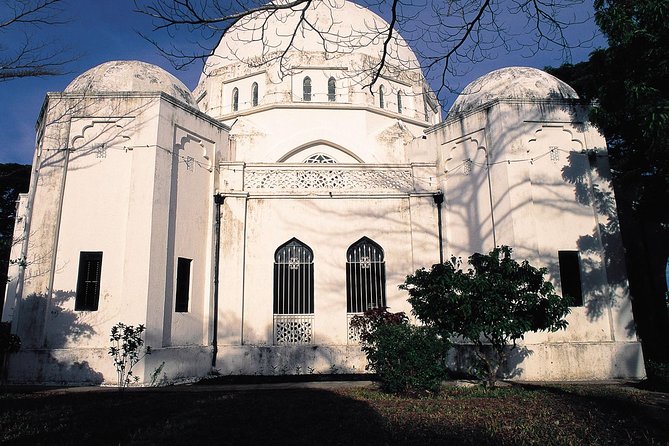
The Old Arab Fort offers another view of Stone Town’s power and defense. It belongs to a different part of the city’s story than the palace buildings, and it helps give the walking route some variety.
The old Dispensary adds another architectural marker to the route. Together, these stops show why Stone Town is best understood as a meeting place of several traditions rather than a single-style historic quarter.
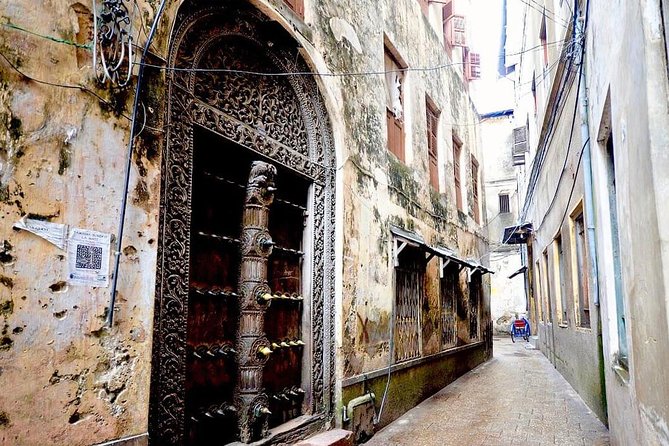
You will also see distinctive Indian and Arab doors along the way. These details may be easy to miss when you are trying to keep up with a route, so take a moment to look closely at the entrances, woodwork, and worn surfaces.
The fort and Dispensary are useful stops for orientation, but they may not fill a full afternoon on their own. Their value increases when your guide links them to the people, trade, and changing city around them.
A few more Zanzibar days to compare
- From Zanzibar: Mikumi Safari Day Trip with Flights and Meal
★ 4.7 · 1,470 reviews - Zanzibar: Quad Bike Adventure departing from Kendwa or Nungwi
★ 4.9 · 1,233 reviews - From Kendwa: Mnemba Boat Trip and Dolphin Snorkel Adventure
★ 4.8 · 1,043 reviews - From Zanzibar: Day Selous Game Reserve Safari with Flights
★ 4.7 · 1,025 reviews
Markets, seafood, bread, and daily life

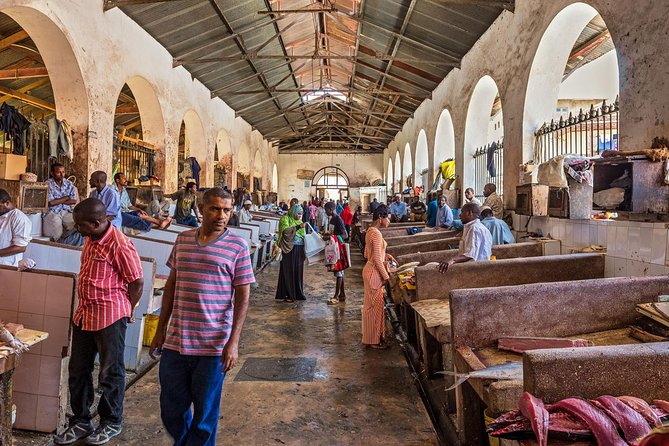
The walking route does not stop at monuments. It takes you through markets where seafood and fish are piled for sale, bread sits in wicker baskets, and fruit and vegetables are arranged in neat stacks.
This is where the tour becomes most immediate. You can see what Stone Town sells, eats, and moves through its streets today. The market scenes may be lively and crowded at times, but the tour information emphasizes respectful traders and a functioning local economy rather than a staged display for visitors.
Keep your attention on the details. A fish market tells you something different from a palace. Bread in baskets says something different from a fort. The point is not only to photograph the stalls, but to see how the old city remains useful to the people who live and work there.
The route also gives you a window into family life, with children playing in the streets. That small detail helps prevent the historic center from feeling like an open-air museum with nobody at home.
Choosing a two-hour walk or a full eight-hour route
The advertised duration ranges from two to eight hours, and that flexibility can be a real advantage. A short version could suit you if Stone Town is one part of a busy Zanzibar itinerary or if you mainly want a first look at the principal sites.
A longer version gives the guide room to follow your interests. You could spend more time at the slave trade sites, examine palace buildings, browse for antiques and souvenirs, follow the story of David Livingstone, or stop in market areas.
The detailed schedule describes an eight-hour experience and includes an admission ticket, so confirm exactly what duration you are booking. The listing also gives a start time of 12:00 am, which is unusual for a city walking tour and may be a display error or a placeholder. Ask the operator to confirm the local pickup time before booking around it.
This is one case where a direct message is worth the effort. You want to know whether $100 per person covers a short private walk or a longer day with the main admissions included.
A private format that can fit your interests
Only your group participates in this private activity. That changes the feel of the visit in practical ways.
You can ask the guide to slow down at a palace, explain the slave trade in greater detail, or spend more time looking for antiques and souvenirs. A fixed group tour may keep moving, while this format is intended to adapt to your priorities.
The tour is specifically aimed at a broad mix of interests. A shopaholic can focus on old objects and souvenirs. A culture enthusiast can spend more time in the markets and streets. A history buff can follow the sultans, enslaved people, explorers, and David Livingstone.
That breadth is helpful, but it also means you should speak up. A flexible tour works best when you tell the guide what you want. If you say nothing, you may receive a general overview rather than the specialist route you had in mind.
The booking information says most people can participate and that the tour is near public transportation. Hotel pickup is offered, which is useful if you are not staying close to Stone Town.
What $100 per person buys you
At $100 per person, this is not the cheapest way to take a quick look at Stone Town. The value depends on how much of the private format you use.
The price includes hotel pickup and an admission ticket is listed for the Stone Town stop. Personal expenses and beverages are not included, so you should budget separately for anything you buy during the walk.
For a private tour lasting several hours, the cost may be reasonable if your group wants a route shaped around particular interests. It is less compelling if you only want to see a few exterior landmarks and take photographs.
The strongest value comes from the guide’s role. A building-by-building walk can feel thin without context, while the guide can connect the former market, cathedral, royal buildings, fort, markets, and old streets into one story.
You also avoid spending your limited time working out a route on your own. That matters in a city where the appeal lies in the spaces between the headline sights.
What the three published experiences suggest
The available feedback points to three practical strengths: prompt timing, professional arrangements, and local-style guiding. One experience combined the city tour with a sunset dhow cruise, and the arrangements were described as well timed.
A second visit praised the guide for showing Stone Town from a local point of view. That is exactly the quality to seek here. The buildings are important, but the market stalls and side streets are what keep the tour connected to present-day life.
A third account took a more reserved view. It treated a visit to the capital as necessary for understanding the island, but found some palaces nearly ruined or under renovation and felt the experience was mainly about doors, streets, and historic buildings.
That balanced view is useful. Do not book this expecting every site to look newly restored. Book it for the chance to understand the city through its surviving buildings, worn surfaces, markets, and stories.
One booking contact named in the feedback is Paul, while Abraham replied to another experience under Bohobe Travels. The information does not confirm which guide will lead your specific walk, so use those names as points of reference only and ask who your guide will be.
Practical tips for making the walk work
Wear comfortable shoes. The tour follows winding streets, and even a short version involves walking between several parts of the old city.
Bring water and plan for your own beverages, since drinks and personal items are not included. You may also want to leave room in your budget for souvenirs or antiques if shopping becomes part of your route.
Tell the guide at the start if you want the slave trade, royal history, markets, architecture, shopping, or David Livingstone to receive the most attention. The route is flexible, but the guide needs your priorities to shape it well.
If your schedule is tight, choose the main historical stops first. The former Slave Market and Anglican Cathedral, House of Wonders, Sultans’ Palace Museum, Old Arab Fort, and old Dispensary form the core of the historic route.
If you have most of the day, allow time for the markets and ordinary street scenes. That is where you will see the city functioning beyond its monuments.
The confirmation arrives when you book, and free cancellation is available up to 24 hours before the start time for a full refund. Changes or cancellations made inside that window are not accepted, and poor weather or too few bookings can lead to a different date or a refund.
Who should book this Stone Town tour
I would recommend it to a first-time visitor who wants the city explained rather than simply photographed. It also suits a private group with mixed interests, since the route can bend toward shopping, architecture, culture, or serious historical subjects.
Families may appreciate the private setting because the pace and level of detail can be adjusted. Couples who want a broad introduction to Zanzibar City can also use the tour as a starting point for later independent walks.
It is less suitable if you want a fully restored palace experience, a guaranteed specialist guide by name, or a tightly timed two-hour itinerary without confirming the details first. The condition of some buildings and the unclear duration are part of the decision.
Should you book it?
Book this tour if you want Stone Town’s major landmarks tied to the slave trade, sultans, explorers, and modern market life. The private format, hotel pickup, and adaptable route give it more value than a basic point-to-point sightseeing walk.
Before paying, confirm the guide’s name, pickup time, intended duration, and which admissions are covered. If you do that, the tour should give you a useful first understanding of Stone Town, with enough flexibility to match your interests and energy.
FAQ
Where does the Stone Town City Tour take place?
The tour takes place in Stone Town, Zanzibar City, Tanzania. The route covers historic buildings, winding streets, markets, and parts of present-day street life.
How long does the tour last?
The stated duration ranges from two to eight hours. The detailed schedule describes an eight-hour experience, so confirm the exact length when booking.
What time does the tour start?
The listed start time is 12:00 am. Because this is unusual for a city walking tour, confirm the local pickup time with Bohobe Travels before the day of the tour.
Is hotel pickup included?
Yes. Hotel pickup is included, and the tour is also described as being near public transportation.
Is this a private tour?
Yes. Only your group participates in the private activity.
What places can I see?
The route can include the former Slave Market and Anglican Cathedral, House of Wonders, Sultans’ Palace Museum, Old Arab Fort, old Dispensary, markets, and the winding streets of Stone Town.
Are drinks and personal expenses included?
No. Personal items and beverages are not included.
Can I cancel for a full refund?
You can cancel at least 24 hours before the experience start time for a full refund. Cancellations or changes made less than 24 hours before the start time are not accepted.
Newly listed around Zanzibar
- Zanzibar: Nungwi/Kendwa Beach Sunset Dhow Cruise with Fruits★ 3.4 · 3 reviews
- Prison Island, Sea Turtles, Rock Restaurant & Relax in Beach★ 4.6 · 3 reviews
- Starfish Beach; The Rock; Kuza Cave; Paje Beach; Salaam Cave Tour★ 4.5 · 3 reviews
- Joazani forest & Spice farm with lunch★ 5.0 · 3 reviews
- Zanzibar: Half-Day Spice Farm Tour,the flavours of Zanzibar★ 4.7 · 3 reviews
- Nakupenda Island Snorkeling Sea trip & Lunch W/Transfer -Zanzibar★ 4.0 · 3 reviews
- Mnemba Island Snorkeling and Dolphin tour★ 5.0 · 3 reviews
- Zanzibar:Jozani forest, Spice farm with Swahili Cuisine clas★ 4.2 · 3 reviews
Stone Town Tours, compared.






Full-Day Private Stone Town +Spice Farm and Prison Island Tour
Read our review →
Browse the lists this tour appears in