
Reviewed · SERENGETI & NGORONGORO SAFARIS
3 Days Serengeti Park & Ngorongoro Crater Adventure Safari
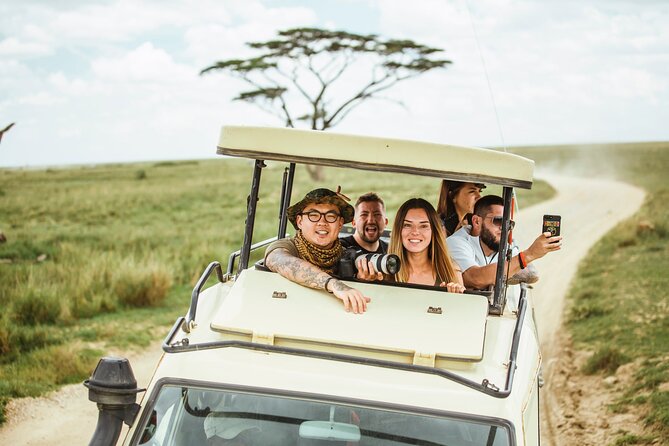
The best reason to choose this safari is simple: in only three days, you reach both the wide Serengeti plains and the wildlife-packed floor of Ngorongoro Crater. You camp in public sites, eat meals prepared for the group, and keep the trip private rather than joining a large shared vehicle.
I like the flexible private format, and I like that camping equipment, drinking water, park activities, meals, taxes, and airport transfers are bundled into the price. The company owner, Rickson, and guides such as Samwel and Stanley have been praised for friendly service, careful planning, strong animal spotting, and airport pickup.
The trade-off is the pace. Arusha to the Serengeti is a long road journey, and this plan gives you limited time in each park. If you want slow mornings, luxury lodges, or several days for the migration, choose a longer safari.
Key points to know before booking
- Two famous parks in three days: You see Serengeti National Park and Ngorongoro Crater in one compact trip.
- Private budget camping: Your group travels alone, but sleeps at public campsites rather than private lodges.
- Early starts matter: Game viewing begins early, especially on the final morning at the crater.
- Olduvai is optional: You may add the archaeological gorge and museum, or visit the shifting sands, on Day 2.
- The price covers a lot: At $1,432.44 per person, the package includes transport, accommodation, food, water, activities, taxes, and airport transfers.
- Expect a real road safari: The route includes long transfers, picnic lunches, and game drives en route, not just wildlife viewing at the parks.
Why this three-day route works
This is a greatest-hits safari for someone with limited time in northern Tanzania. You get the Serengeti, the country’s best-known wildlife park, followed by Ngorongoro Crater, one of Africa’s most concentrated wildlife areas.
The private setup changes the feel of the trip. You are not locked into the preferences of a large group, and the itinerary can be adjusted because only your party takes part. That may help if you want more time at a sighting, need a slower start, or want to add Olduvai Gorge.
Still, private does not mean leisurely. The route covers a lot of ground. Day 1 starts with breakfast at 6:30 a.m., hotel pickup around 7 a.m., and a drive from Arusha toward the Serengeti. You carry a packed picnic lunch and take game drives on the way, including the route by the Ngorongoro Crater rim.
At this price, the appeal is not polished luxury. It is access. You pay for a private vehicle and a full safari program while using public campsites with toilets, bathrooms, solar electricity, and hot or cold showers. That is a sensible middle ground for people who want a genuine camping trip without carrying their own gear.
More Safaris in Arusha
- Balloon Safari & Bush Breakfast in Serengeti – Miracle Experience
★ 5.0 · 1,646 reviews - 4 Days Group Camping Safari
★ 5.0 · 1,101 reviews - 5 Days Group Camping Safari
★ 5.0 · 730 reviews
Day 1: The road from Arusha to the Serengeti
The first morning sets the rhythm for the entire safari. You leave Arusha early, with breakfast already handled and lunch packed for the road. The drive toward Serengeti National Park is part transfer and part wildlife outing, with game viewing en route.
The Serengeti covers about 14,763 square kilometers, or roughly 5,700 square miles. That scale matters. You are not entering a small reserve where every animal is close to the gate. The park feels open and enormous, and reaching the best areas takes time.
The route passes via the Ngorongoro Crater rim, giving you an early look at one of the region’s great natural features before you return to it on Day 3. The itinerary lists about six hours for the stop, but you should think of this as a full road-and-game-drive day rather than a short park visit.
The Serengeti is famous for its seasonal herds of wildebeest and zebra. The timing in this plan is important:
- December through March is associated with the southern Serengeti and the Conservation Area.
- April and May are linked with the Western Corridor.
- June and July often bring activity toward the northern Serengeti.
- October and November can place animals around Lobo and the Loliondo controlled area.
These movements are not a guarantee of sightings, but they explain why the same safari can feel different at different times of year. If the migration is your main goal, ask the operator to match the route to current animal movements before you book.
Camping in the Serengeti gives the first night a more direct feel. You are staying at a public campsite, not a fenced luxury compound. That means fewer comforts than a lodge, but it also places you closer to the sounds and atmosphere of the park. One account describes the excitement of camping with hyenas nearby, which tells you what kind of experience this is: memorable, but not completely quiet.
Day 2: Early wildlife and the move to Ngorongoro
Day 2 begins with a very early morning game drive. This is one of the strongest parts of the itinerary because early hours are set aside for wildlife before breakfast at around 9 a.m. You then continue with a packed lunch toward the Ngorongoro Crater rim, stopping for game viewing along the way.
The change in scenery is part of the pleasure. The Serengeti is about distance and open plains. Ngorongoro is more enclosed, with the crater rim giving you a dramatic sense of height and scale. You spend the night at a campsite on or near the rim, ready for the crater descent the next morning.
You can also choose to visit Olduvai Gorge. The site is linked with early stone tool discoveries and the archaeological work of Louis and Mary Leakey. A small museum explains the finds and their connection to the study of human evolution.
Olduvai is a good choice if you want more than animal sightings. It adds cultural and archaeological context to a trip that otherwise focuses heavily on wildlife. The shifting sands are another optional choice, though the supplied details do not specify the exact timing or added cost. Confirm those points before departure.
The main drawback is that optional stops compete with game-drive time. On a three-day safari, you cannot treat every activity as a full visit. If animals are your top priority, keep Olduvai as a backup rather than assuming you can fit everything comfortably.
Day 3: Ngorongoro Crater at its busiest
The final morning starts with breakfast at 6 a.m., followed by a descent to the crater floor. Ngorongoro Crater measures about 19.2 kilometers across and reaches roughly 610 meters deep. Its floor covers about 304 square kilometers.
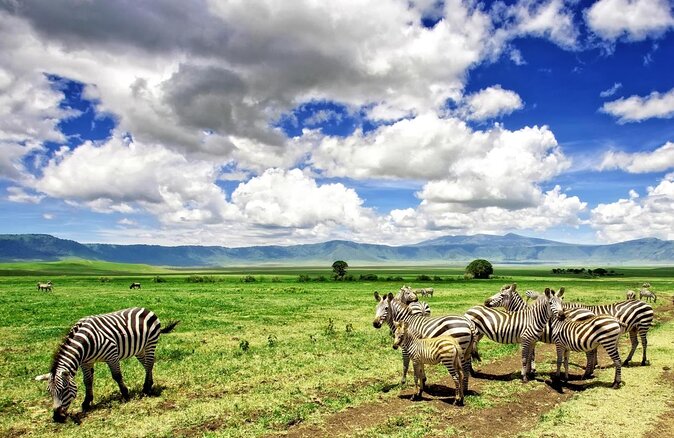
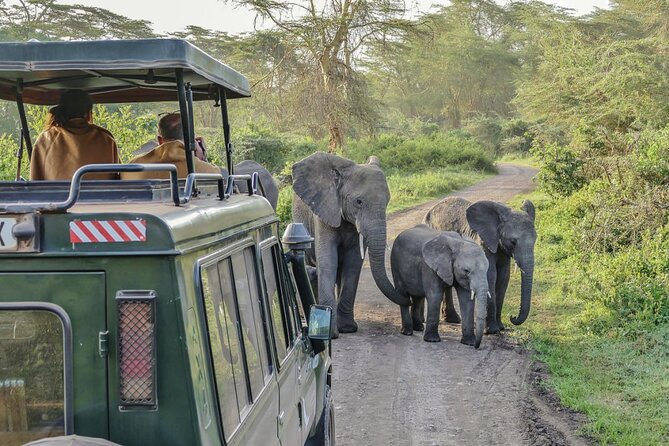
The crater is known for a high concentration of wildlife in a relatively contained area. A year-round water supply and available grazing support wildebeest, zebra, buffalo, eland, warthog, hippo, and African elephants. Predators include lions, hyenas, jackals, and cheetahs. The area is also home to some of Tanzania’s remaining black rhinos.
That list explains why the crater works so well at the end of a short safari. You do not need to cover the huge distances found in the Serengeti to have a chance of seeing several types of animals. The setting also gives you a strong contrast: Serengeti openness first, crater walls and concentrated wildlife later.
The six-hour stop leaves time for a substantial game drive, but not an unlimited one. You will want to be ready on time, keep breakfast efficient, and accept that the schedule has to keep moving. After the crater visit, the tour ends according to the arrangements made with the operator, including the included round-trip airport transfer.
More Serengeti and Ngorongoro itineraries:
- 3 Days Serengeti & Ngorongoro Group Camping Safari
★ 5.0 · 574 reviews - 5-Day Highlights mid-Range Crater, Serengeti, Tarangire
★ 5.0 · 296 reviews - 3-Day Classic Serengeti Safari
★ 5.0 · 263 reviews - Private 6-Day Tarangire Manyara Crater and Serengeti with Mid-Range Lodges
★ 5.0 · 238 reviews
Camping comfort, food, and practical expectations
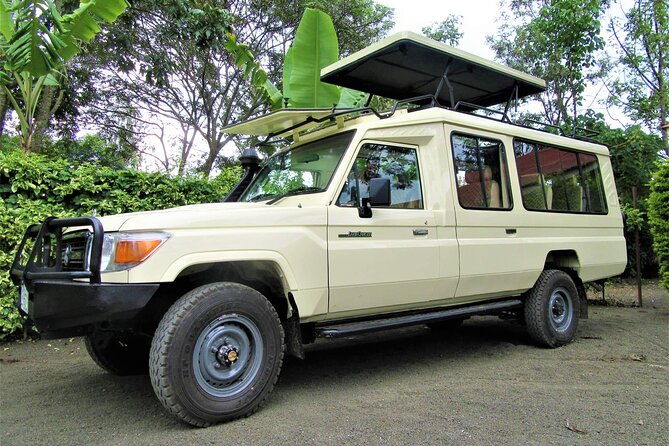
Camping is the key to understanding the price. Equipment is provided, so you do not need to bring a full camping setup. Public campsites have built toilets and bathrooms, solar electricity, and hot or cold showers.
Those facilities make the trip more manageable, but this is still basic accommodation. You should not expect a private bathroom, lodge-style service, or the same privacy you would have at a tented camp. The experience suits you best if you see camping as part of the safari rather than as a compromise you must endure.
Meals are included as listed: two breakfasts, three lunches, and two dinners. Lunches are packed on the first two days, which fits the long drives and game drives. Accounts connected with the operator give the cook special credit for tasty food, a helpful manner, and making camping nights more comfortable.
Drinking water is supplied on all days. Personal items, souvenirs, travel insurance, visa costs, international flights, and tips are not included. Set aside money for those items, and confirm any optional Olduvai or shifting sands fees before you leave.
What private transport adds
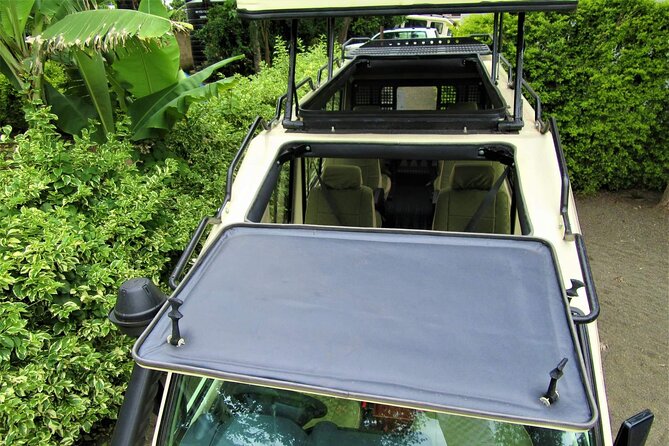
Only your group takes part, which gives you more control than a shared safari. You can discuss the pace, ask to spend longer at an animal sighting, and make use of the flexible itinerary. The exact vehicle details are not provided, so ask the operator what type of safari vehicle will be used and how many people your private group can accommodate.
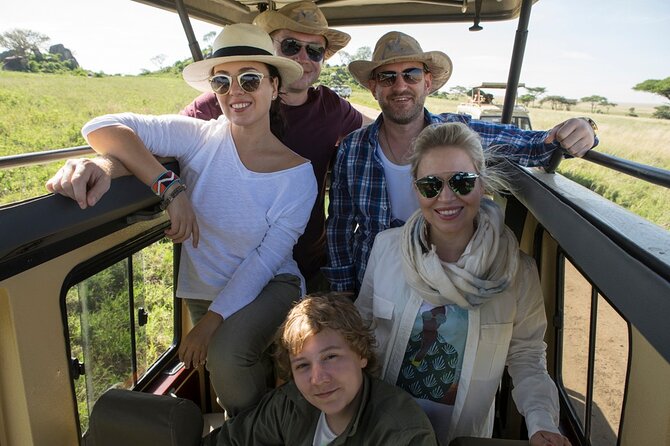
The private format is especially useful for families and friends. A family with two children completed a longer trip with the company and found the journey suitable for the children. That does not guarantee every child will enjoy the long drives, but it shows that the operator has handled family groups.
Guides connected with the company include Samwel and Stanley. Samwel has been described as good at balancing the group’s wishes with active guiding, while Stanley has been praised for finding many animals. Rickson, the owner, is described as easy to communicate with and involved in planning. Your assigned guide may be different, so treat these names as useful points of reference, not a promise.
One fair caution comes from a separate camping experience with the operator: departures were not always exactly on time, and the guide’s animal explanations could have been fuller. That is worth remembering on a tight three-day schedule. Ask for a clear pickup time, confirm the route, and tell your guide what matters most to you.
Is $1,432.44 good value?
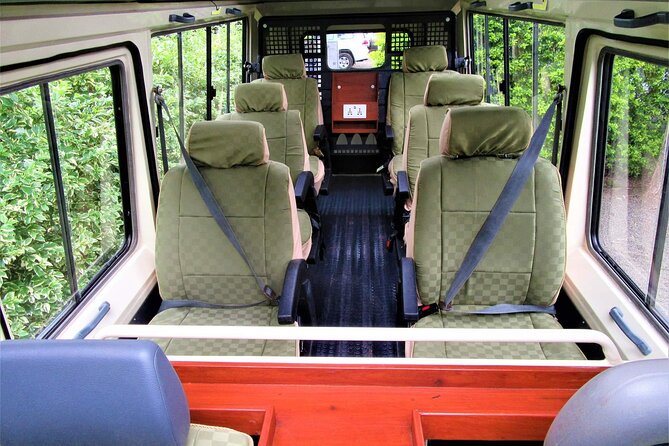
The price is high compared with a basic shared camping trip, but the comparison is not quite equal. This is a private safari with transport from Arusha, accommodation, camping equipment, meals, drinking water, park activities, taxes, and airport transfers included.
The price is strongest if you are splitting the private vehicle with several people. You get privacy without paying for a luxury lodge itinerary. The package is also VAT inclusive, which reduces the chance of unexpected tax charges.
Value depends on your priorities. I would consider it good value for a small group that wants the two headline parks, does not need upscale lodging, and wants the operator to handle equipment and meals. I would be less enthusiastic if you have only three days in Tanzania but expect long hours of wildlife viewing every day. The travel time between areas takes a meaningful share of the schedule.
A longer safari may offer better value per wildlife day, especially if migration timing is important. But if you have a short stop in Arusha, this plan gives you a clear route and covers the two major destinations efficiently.
Who should book this safari
I would recommend it most strongly to:
- First-time safari visitors who want Serengeti and Ngorongoro in one trip.
- Couples, families, or friends who value a private vehicle.
- People comfortable with public campsites and basic facilities.
- Visitors who want a budget approach without organizing tents, meals, and park transport themselves.
- Anyone who likes having some choice over the pace and optional stops.
I would think twice if you dislike early mornings, long road journeys, or simple camping. I would also choose a longer itinerary if the wildebeest migration is the central reason for your trip, since animal locations change by season and three days leaves little room for adjustment.
The operator offers free cancellation when you cancel at least 24 hours before the start time. Changes or cancellations inside that window are not accepted for a refund. Confirmation is provided at booking, and the activity is offered daily during the stated operating period.
Should you book it?
Book this safari if you want a private, practical route through two major parks and you are happy to trade lodge comfort for a lower-cost camping setup. The strongest parts are the park selection, included meals and equipment, private planning, and the chance to add Olduvai Gorge.
Do not book it expecting a slow, luxurious holiday. The schedule is demanding, the first transfer is long, and public camping requires a flexible attitude. Ask about your vehicle, assigned guide, exact pickup time, campsite locations, and optional-stop costs before paying.
For a short first safari from Arusha, this is a sensible package with real value. For a deeper Serengeti experience, add more days.
FAQ
Where does the safari begin?
The safari begins with pickup from your hotel in Arusha, generally around 7 a.m. on Day 1.
How long is the experience?
The safari lasts approximately three days.
Is this a private tour?
Yes. Only your group takes part in the activity.
Are camping tents and equipment provided?
Yes. Camping equipment is provided as part of the safari.
What are the campsites like?
The public campsites have solar electricity, built toilets and bathrooms, and hot or cold showers.
Are meals included?
Yes. The package includes two breakfasts, three lunches, and two dinners, as specified in the daily plan.
Is drinking water included?
Yes. Drinking water is provided on all days.
Is Olduvai Gorge included?
Olduvai is listed as an optional visit on Day 2. Confirm any extra details or charges with the operator before the safari.
What is not included in the price?
International flights, personal items, souvenirs, travel insurance, visa fees, and tips are not included.
Can I cancel for a full refund?
Yes, if you cancel at least 24 hours before the experience starts. Cancellations or changes made less than 24 hours before the start time are not accepted for a refund.
More three day trips in Arusha
- 3 Day Serengeti National Park & Ngorongoro Crater Camping Safari
★ 5.0 · 142 reviews - 3 Days Tarangire, Ngorongoro & Lake Manyara Group Camping Safari
★ 5.0 · 102 reviews - 3 Days Private Safari – manyara, Ngorongoro & Tarangire
★ 5.0 · 94 reviews - 3 Days Small Group Safari to Serengeti NP and Ngorongoro Crater Tour in Tanzania
★ 5.0 · 77 reviews
Newly listed around Arusha
- 5-Day Private Safari Tour in Tanzania’s Wildlife★ 5.0 · 3 reviews
- 3 Day Sharing Safari – Manyara, Ngorongoro Crater and Tarangire National Parks★ 5.0 · 3 reviews
- 3 Days private safari Tarangire ,Ngorongroro crater &Manyara★ 5.0 · 3 reviews
- Tarangire National Park Day Trip★ 5.0 · 3 reviews
- 6 -Day Tarangire, Manyara, Serengeti & Ngorongoro★ 5.0 · 3 reviews
- 2 Days Tarangire and Ngorongoro Crater Tour★ 5.0 · 3 reviews
- 5 Days Group Camping Safari★ 4.7 · 3 reviews
- 7-Day Mt. Kilimanjaro Hiking: Machame Route★ 5.0 · 3 reviews
Serengeti & Ngorongoro Safaris, compared.


Balloon Safari & Bush Breakfast in Serengeti – Miracle Experience
Read our review →




Private 6-Day Tarangire Manyara Crater and Serengeti with Mid-Range Lodges
Read our review →
5 Days Camping Tarangire, Serengeti & Ngorongoro crater & Visiting Maasai
Read our review →Browse the lists this tour appears in