
Reviewed · ARUSHA TOURS
6-day Private Camping Safari Tour from Kilimanjaro Airport
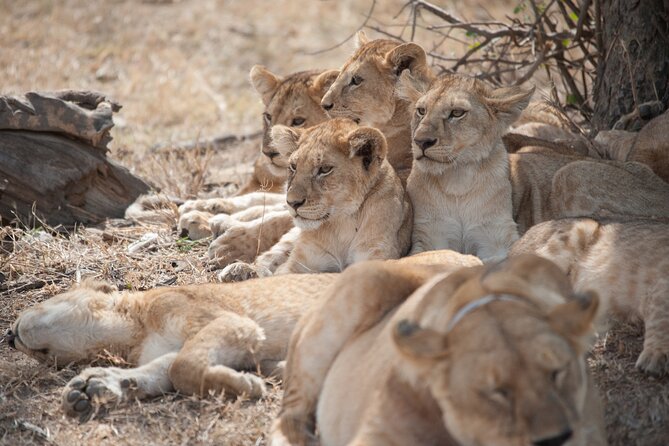
The great appeal here is the sweep of northern Tanzania in one trip: Tarangire’s elephants, the Serengeti’s open plains, Ngorongoro Crater, and Lake Manyara all appear in six days. You spend several days around Seronera, the Serengeti’s central wildlife area, rather than rushing through the park in a single afternoon.
I like the private format, since your group can ask questions, adjust the pace, and spend more time with an interesting animal sighting. I also like the practical camping setup and freshly cooked meals, including lunches served with real dishes instead of piles of disposable plastic. The main caution is the amount of driving: this is an active safari with long days, not a soft-paced lodge holiday.
Key points before you book
- Four major wildlife areas: Tarangire, Serengeti, Ngorongoro Conservation Area, and Lake Manyara are included.
- Three nights around central Serengeti: You get full game-drive time in the Seronera area, which is useful for finding a broad mix of wildlife.
- Private vehicle and private group: Only your own party participates, with a certified guide assigned to the safari.
- Camping with full meals: Six breakfasts and lunches, plus five dinners, are included.
- Airport pickup: Pickup is offered from Kilimanjaro Airport, giving you a straightforward start in Arusha.
- Free cancellation: You can cancel up to 24 hours before the start time for a full refund.
Why this safari works as a six-day circuit
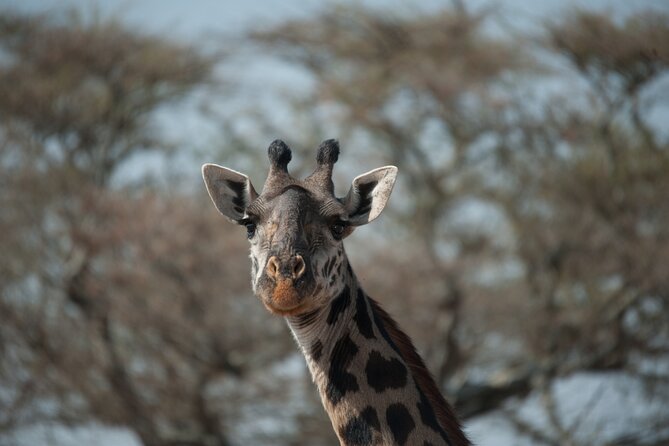
Northern Tanzania rewards a route that changes scenery and habitat. Tarangire has giant baobabs and a strong elephant presence. The Serengeti offers distance and scale, with animals spread across huge grasslands. Ngorongoro brings you into a compact crater where wildlife can be easier to find. Lake Manyara adds woodland, lake, and birdlife.
You see a lot in six days, but you also spend plenty of time in the vehicle. Most listed days involve about six hours of touring, and some game drives run from early morning until late afternoon. Roads and park tracks can make the journey tiring, especially on the transfers between Tarangire, Serengeti, and the Ngorongoro area.
That tradeoff is the point of this trip. You are not staying in one park and hoping the animals come to you. You are moving through several famous habitats, with a guide and driver who can explain what you are seeing and help spot animals at a distance.
The private arrangement matters here. You are not sharing the safari with an unknown group, so the guide can respond to your interests. If you care most about elephants, cats, birds, or photography, say so early. Guides named on recent departures include Lewis, Damien, Fredy, Max, Amiry, and Frank, also known as Jumbe. Your exact team will depend on the departure.
More Safaris in Arusha
- Balloon Safari & Bush Breakfast in Serengeti – Miracle Experience
★ 5.0 · 1,646 reviews - 4 Days Group Camping Safari
★ 5.0 · 1,101 reviews - 5 Days Group Camping Safari
★ 5.0 · 730 reviews
Day 1: Tarangire and its famous elephant country
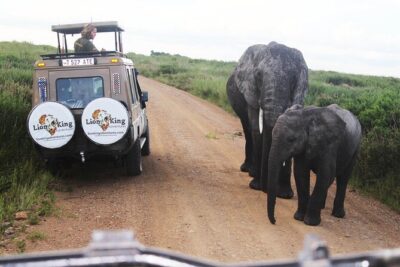
After an early breakfast, you head to Tarangire National Park for a full day of game viewing with a picnic lunch. The park is especially famous for elephants, and large herds may gather around water sources or scrape at dry riverbeds when conditions are harsh.
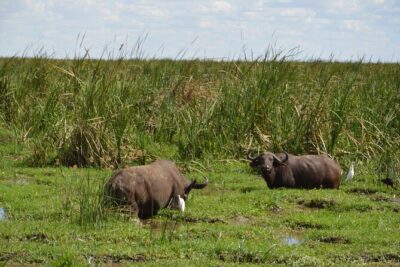
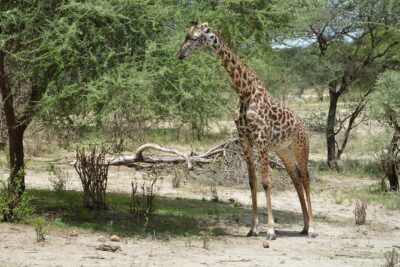
Tarangire is a good first park because it gives you a quick introduction to the northern safari circuit. You may see zebra, wildebeest, buffalo, impala, gazelle, hartebeest, eland, and other plains animals. The park also attracts migrant animals during the dry season, so the exact mix changes with the time of year.
I would pay attention to the smaller details here. Tarangire is not only about a large elephant herd. Watch how animals use the river corridor, how grazing species stay alert, and how different herds share the same water area without acting alike.
The day ends with dinner and an overnight stay at Lilac Campsite. Camping keeps the price lower than a full lodge itinerary, but it also means you should be comfortable with simple accommodation and a safari schedule that begins early. The supplied details describe this as a private camping trip, though some departures are also described as lodge or glamping arrangements. Confirm your exact accommodation style before paying.
Day 2: Crossing the Ngorongoro area into the Serengeti
You leave after breakfast with a picnic lunch and travel toward Serengeti National Park through the Ngorongoro Conservation Area. This is one of the longer transfer days, but it is far from wasted time. You begin to see the country change as the route opens toward the Serengeti.
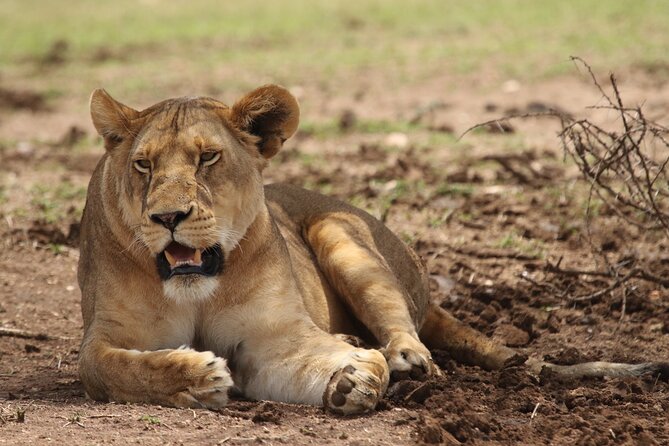
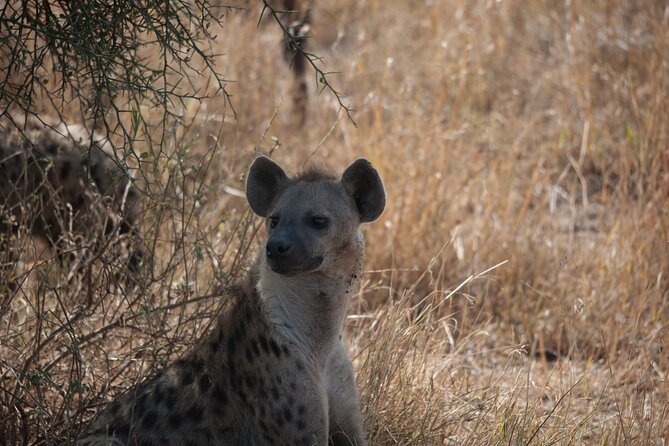
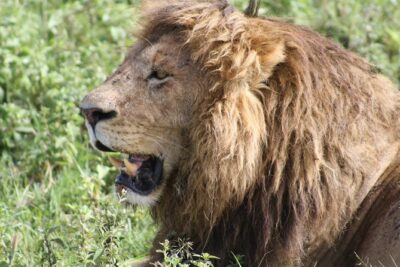
The planned wildlife possibilities include lion, leopard, cheetah, hyena, elephant, caracal, honey badger, and African wild dog. Sightings are never guaranteed, and the rarest animals depend heavily on timing and luck. Still, the guide’s ability to read tracks, scan open ground, and communicate with other safari vehicles can make a real difference.
You spend the night at Seronera Campsite in central Serengeti. That location is useful because the Seronera area is known for its river and year-round water, which draws many species. After a long road day, being positioned inside the park gives you a better launch point for the next morning.
The practical lesson is to keep your expectations realistic. Day 2 is partly a transfer and partly a moving game drive. You will see scenery and may see animals along the way, but it is not the same as a dedicated full day in the park.
Days 3 and 4: Making the most of central Serengeti
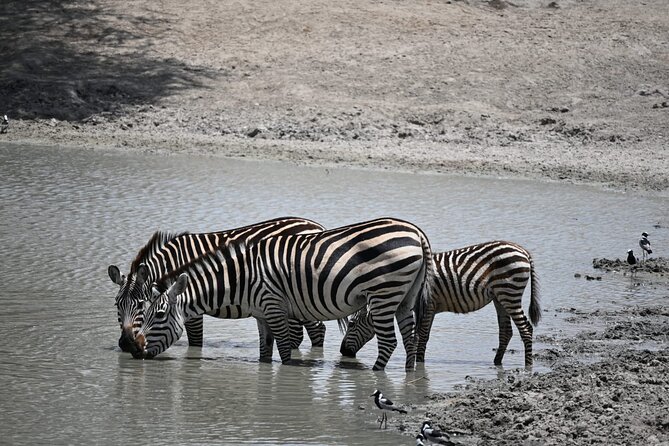
Day 3 is the safari’s main wildlife day. After breakfast, you set out from camp for a full-day game drive with a picnic lunch. There is a short midday break, then the drive continues into the afternoon before returning to Seronera for dinner.
This is where the itinerary earns its keep. Instead of spending only a few hours in the Serengeti, you have repeated chances to search the same broad area. The Seronera River supports a wide range of species, and central Serengeti is a sensible base for looking for big cats and grazing herds.
Guides are often the difference between simply seeing an animal and understanding the scene. Lewis is praised for explaining the animals and the country, while Damien is noted for careful driving and finding wildlife. Fredy is described as both a strong animal spotter and an entertaining guide. Those qualities matter on a long day when a small shape in the grass may turn out to be a hyena, lion, or cheetah.
Day 4 continues the focus on central Serengeti. The route description repeats Seronera and the central park area, so treat this as another full day of game viewing rather than a completely separate attraction. The benefit is extra time. You can revisit productive areas, follow up on a sighting, or spend longer watching animal behavior instead of racing to check off a park.
You may also be in the Serengeti during part of the wildebeest migration, depending on your dates. The migration moves through different parts of the ecosystem throughout the year, so no fixed itinerary can promise a particular crossing or herd location. If the migration is your main goal, ask the operator how the route fits the expected seasonal movement before booking.
More camping safaris in Arusha:
- 3 Days Serengeti & Ngorongoro Group Camping Safari
★ 5.0 · 574 reviews - 2 Days Tarangire and Ngorongoro Group Camping Safari
★ 5.0 · 146 reviews - 6 Days Tanzania Budget Camping Safari
★ 5.0 · 145 reviews - 3 Day Serengeti National Park & Ngorongoro Crater Camping Safari
★ 5.0 · 142 reviews
Day 5: One last Serengeti drive, then Ngorongoro
The morning begins with more game viewing in central Serengeti. This gives you a final chance to search for animals before leaving the park, and it avoids making the Serengeti visit feel like a single long transfer.
After lunch, you continue to your accommodation in the Ngorongoro Conservation Area. The change in setting is striking. You leave the wide Serengeti plains and move toward the highland area around the crater, where the next day’s main attraction is a crater-floor game drive.
The itinerary lists Ngorongoro Crater as part of this stage, but the detailed schedule places the lodge transfer on Day 5 and Lake Manyara on Day 6. Because the supplied schedule repeats some stops and labels, confirm exactly when the crater descent takes place. This is a small but important planning point, especially if you want a full crater visit rather than a viewpoint or transfer through the conservation area.
Ngorongoro is one of the strongest parts of the route for people who want many animals in a concentrated area. The crater is not a small zoo, and sightings still depend on conditions, but the enclosed setting often makes the search feel more focused than in the vast Serengeti.
Day 6: Lake Manyara and a different kind of safari
After breakfast at the lodge, the driver is scheduled to collect you between 8:30 and 9:00 a.m. You travel with a picnic lunch to Lake Manyara National Park for an extended game drive.
Manyara gives you a change of pace and habitat. The park is known for birdlife, zebra, buffalo, and the possibility of seeing tree-climbing lions. That last sighting is never certain, but the park’s reputation makes it an appealing addition for anyone interested in unusual animal behavior.
I like the way Manyara rounds out the trip. Tarangire and Serengeti are largely associated with open-country wildlife, while Manyara offers a different setting and a strong bird-watching angle. If you enjoy photography, carry a lens or binoculars suited to both distant animals and smaller birds.
The information provided does not specify the final drop-off point or exact end time. If you have a flight, another tour, or a hotel reservation after the safari, ask for a firm finishing plan before departure. The advertised pickup is useful, but the end-of-tour arrangements deserve equal attention.
Camping, meals, and the daily routine
This is a camping safari, so you should expect function over luxury. You sleep at campsites such as Lilac and Seronera, with dinner after the day’s drive and breakfast before the next morning’s departure.
The meal plan includes six breakfasts, six lunches, and five dinners. Lunch is generally carried as a picnic during game drives. Several departures had a dedicated cook, with James, Musa, Salim, and Jeremias among the names associated with the safari teams.
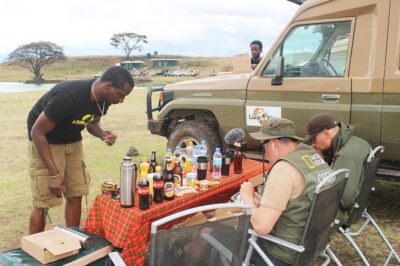
Food seems to be a real strength of the operation. Freshly prepared meals and proper dishes are specifically highlighted, along with less plastic waste. That may sound like a small detail, but after hours on dusty tracks, a hot and well-prepared dinner matters a great deal.
The routine is early starts, long drives, short breaks, and evening meals at camp. Pack for comfort rather than fashion. A refillable water bottle, sun protection, insect repellent, a light jacket, and a small day bag will make the hours in the vehicle easier. The supplied information confirms meals, but it does not specify drinks, camping equipment, or personal gear, so ask what you need to bring.
Guides, drivers, and the private vehicle
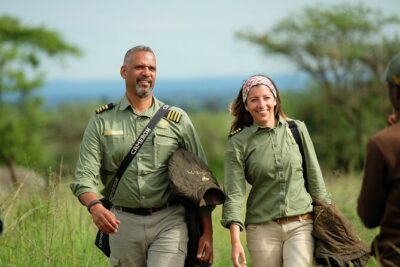
A certified guide is included, and the strongest praise goes to the people leading the vehicles. The names associated with the trips include Lewis, Damien, Fredy, Max, Amiry, and Frank, also called Jumbe. Daniel is described as handling briefings and coordination, including helping people get organized after airport pickup.
That human side is important. A safari guide does more than point at animals. You need someone who can explain behavior, answer questions, drive sensibly, and remain patient when the search takes time. Reports of guides spotting all of the Big Five are encouraging, but you should remember that wildlife is unpredictable.
Because the activity is private, only your group participates. This is particularly useful for families, photographers, and anyone who wants to ask many questions without holding up a larger party. It can also be a good fit for a group with its own rhythm, such as people who prefer longer stops or a quieter vehicle.
The phrase private does not mean short or effortless. You still cover large distances, follow park rules, and work around daylight and animal movement. The private format gives you flexibility, not control over nature.
Is $2,400 per person good value?
At $2,400 per person, this is a major travel purchase. Its value depends on what is included in your final booking and how much you value seeing four major areas in one organized trip.
You are paying for six days, a private safari format, a certified guide, airport pickup, three major Serengeti-focused days, meals, campsite stays, and transport through a demanding route. Organizing those transfers, park visits, food, and accommodation yourself would take time and would not necessarily cost less.
The biggest value is the range. Tarangire, Serengeti, Ngorongoro, and Manyara each offer a different setting, and the trip gives the Serengeti more than a brief drive-through. The main compromise is comfort. A lodge-based safari may be easier on the body, while this camping version gives you a more basic setup and a lower-cost way to cover the circuit.
Check the final inclusions carefully. The itinerary marks some admission tickets as included and others as free, which is not fully consistent. Ask the company to spell out park fees, campsite charges, vehicle costs, drinks, airport transfers, and any accommodation changes in writing.
Who should book this safari?
I would recommend it to you if you want a broad northern Tanzania safari, prefer a private group, and are happy with long days and camping. It suits first-time safari visitors who want the famous parks without arranging a complex route themselves.
It is also a good match for people who care about animal spotting and guide interaction. The teams associated with this trip have been praised for humor, explanations, organization, and finding difficult sightings. Families can participate, and the additional information says most people can take part.
I would think twice if you need a slow schedule, luxury rooms, or very precise timing. The itinerary contains repeated descriptions and some unclear labels around Ngorongoro, so you should confirm the day-by-day plan before booking. You should also confirm the final drop-off and the exact camping standard.
Should you book it?
Book this safari if your priority is seeing a lot of northern Tanzania in six days, with private guiding and enough Serengeti time to make repeated wildlife searches worthwhile. The strongest reasons are the four-park route, the private format, capable guide teams, and good camp cooking.
Choose another style if you want a polished lodge holiday or dislike long road transfers. For everyone else, $2,400 can be fair value, provided the final inclusions and Ngorongoro schedule are clearly confirmed. Free cancellation is available up to 24 hours before the start time, which gives you a useful safety net while plans are still taking shape.
FAQ
Is airport pickup included?
Pickup is offered, and the tour begins from Kilimanjaro Airport for the route through Arusha and northern Tanzania.
How long does the safari last?
The experience lasts approximately six days.
Is this a private tour?
Yes. Only your group participates in the private tour or activity.
Which parks and protected areas are included?
The route includes Tarangire National Park, Serengeti National Park, the Ngorongoro Conservation Area, Ngorongoro Crater, and Lake Manyara National Park.
What meals are included?
The package includes six breakfasts, six lunches, and five dinners.
Is a guide included?
Yes. A certified guide is included.
Can I cancel for a full refund?
You can cancel at least 24 hours before the experience start time for a full refund. Cancellations or changes made less than 24 hours in advance are not accepted for a refund.
More six day trips in Arusha
- Tanzania Wildlife Encounters – 6 Days
★ 5.0 · 277 reviews - Private 6-Day Tarangire Manyara Crater and Serengeti with Mid-Range Lodges
★ 5.0 · 238 reviews - 6 Days Private Budget Safari
★ 5.0 · 163 reviews - Tanzania Enticing Explorations – 6 Days
★ 5.0 · 106 reviews
Newly listed around Arusha
- 5-Day Private Safari Tour in Tanzania’s Wildlife★ 5.0 · 3 reviews
- 3 Days private safari Tarangire ,Ngorongroro crater &Manyara★ 5.0 · 3 reviews
- 3 Day Sharing Safari – Manyara, Ngorongoro Crater and Tarangire National Parks★ 5.0 · 3 reviews
- Tarangire National Park Day Trip★ 5.0 · 3 reviews
- 2 Days Tarangire and Ngorongoro Crater Tour★ 5.0 · 3 reviews
- 6 -Day Tarangire, Manyara, Serengeti & Ngorongoro★ 5.0 · 3 reviews
- 5 Days Group Camping Safari★ 4.7 · 3 reviews
- 4 Days Tanzania Safari★ 4.5 · 3 reviews
Arusha Tours, compared.
Balloon Safari & Bush Breakfast in Serengeti – Miracle Experience
Read our review →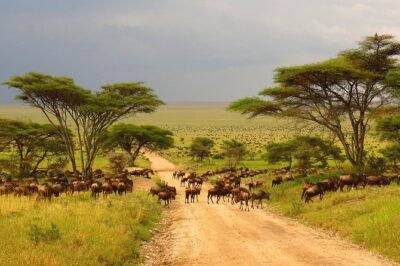
Browse the lists this tour appears in